
7 Best Rollers For Oil Based Paint in 2026
This post contains affiliate links. As an Amazon Associate, we earn from qualifying purchases.
The Purdy WhiteDove Roller Covers are the best overall rollers for oil based paint, thanks to their lint-free woven Dralon fabric and solvent-resistant polypropylene core. For semi-smooth surfaces, the Wooster Pro/Doo-Z Roller Cover delivers excellent pickup and release, while the Purdy Jumbo Mini Parrot Roller Cover excels on smooth finishes like cabinets and trim.
Oil-based paints demand a roller that won’t leave lint behind or degrade from harsh solvents. A cover with the wrong nap or core material can ruin a project with stray fibers, uneven texture, or a swollen core that slips on the frame.
This guide is research-based, drawing on manufacturer specifications, expert recommendations, and patterns in owner feedback. We evaluated seven rollers to help you choose the right cover for your surface, paint type, and project.
Top 7 Rollers For Oil Based Paint in the Market
Certain content that appears on this site comes from Amazon. This content is provided "as is" and is subject to change or removal at any time.
The Best Rollers For Oil Based Paint, Reviewed
Purdy WhiteDove Roller Covers

What We Like
- Lint-free woven Dralon fabric
- Works with oil-based paints
- Durable polypropylene core resists solvents
- Handcrafted in the USA
Trade-offs
- 1/2-inch nap limits very smooth surfaces
A 1/2-inch nap and woven Dralon fabric mean this cover picks up enough oil-based paint to cover drywall, ceilings, and floors without leaving lint behind. The polypropylene core stands up to solvents, so you can keep rolling through a long session without the sleeve collapsing or bending. For anyone painting semi-smooth to semi-rough surfaces with oil-based coatings, this is the cover that balances paint load and finish quality.
The 1/2-inch nap is thicker than the Wooster Pro/Doo-Z’s 3/8-inch nap, so it holds more paint for walls and ceilings but is less suited for fine detail work on cabinets or trim. For those surfaces, a shorter nap cover like the Wooster is a better match. The WhiteDove’s woven fabric resists lint, and the three-pack gives you a spare for color changes. For oil-based paint on semi-smooth to semi-rough surfaces, this cover balances paint load and finish quality.
Wooster Pro/Doo-Z Roller Cover

What We Like
- Shed-resistant woven fabric reduces lint
- Double-thick polypropylene core resists solvents
- 3/8 in. nap for semi-smooth surfaces
- Excellent paint pickup and release
Trade-offs
- 3/8 in. nap too thin for rough textures
- Core resists cracking but not described as solvent-proof
A 3/8-inch nap is well-suited for semi-smooth surfaces like lightly textured walls and ceilings, holding enough paint for even coverage without leaving a heavy texture. The shed-resistant woven fabric helps minimize lint for a cleaner finish, and the double-thick polypropylene core resists water, solvents, and cracking for reliable performance with various paints. This cover works with all paints, enamels, primers, urethanes, and epoxies for interior and exterior projects.
The trade-off is that the 3/8-inch nap is designed for semi-smooth surfaces only. For rougher textures like popcorn ceilings or stucco, a thicker nap would be needed; the Wooster Wool Professional Roller Cover listed in the guide has a 1-inch nap for those jobs. But for a smooth, professional-looking coat on lightly textured areas, this cover provides excellent paint pickup and release, making application efficient and consistent.
Purdy Jumbo Mini Parrot Roller Cover
What We Like
- Woven mohair prevents lint
- Polypropylene core resists solvents
- Handcrafted in the USA
- Designed for very smooth surfaces
Trade-offs
- 1/4-inch nap limited to very smooth surfaces
- Small 4-1/2-inch width covers slowly on large walls
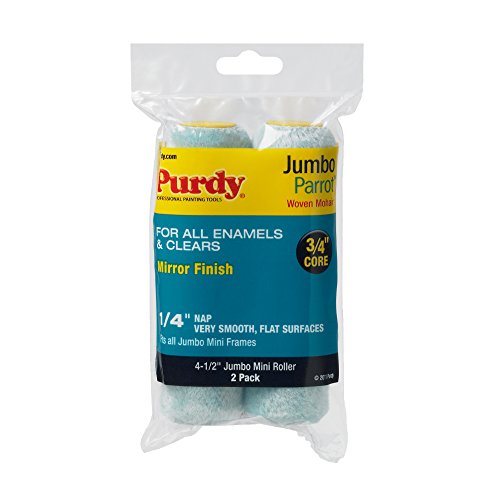
A woven mohair cover with a 1/4-inch nap is built for one thing: a mirror-like finish on ultra-smooth surfaces. The dense, lint-free fabric works with latex and oil-based paints, stains, and clear coats, so cabinets, doors, and trim can get a high-gloss look. The polypropylene core resists all paints, stains, and solvents, which extends the cover’s life through multiple uses. For anyone who wants that furniture-grade finish without buying a sprayer, this is the tool that delivers.
At 4-1/2 inches wide, this mini roller is built for detail work, not wide-open walls, a standard 9-inch roller like the Purdy WhiteDove covers more ground per pass. The 1/4-inch nap is designed for very smooth and flat surfaces, so you’ll want a different nap for textured walls. It works best on doors, cupboards, and metal, where a larger roller would be clumsy.
Shur-Line Microfiber Roller Cover
What We Like
- Works with oil and latex paints
- Shed-proof microfiber keeps stray fibers out of wet paint
- Dense microfiber holds more paint than standard covers
Trade-offs
- 1/4 in nap only for semi-smooth surfaces
- Not suited for rough or textured walls
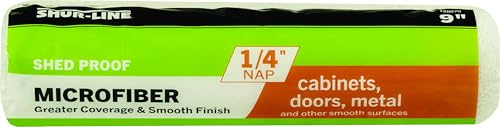
The trade-off is the short 1/4-inch nap, which is matched to semi-smooth surfaces only. If you are painting rough drywall or textured ceilings, this cover will not hold enough paint or reach into the texture. For those jobs, a thicker nap like the Wooster Pro/Doo-Z Roller Cover’s 3/8-inch nap would be a better fit. But for smooth surfaces where you want a tight, professional-looking finish without lint or fuzz, this Shur-Line cover delivers exactly what the spec promises.
Wooster Wool Professional Roller Cover
What We Like
- Hand-sewn single-piece construction for quality
- Thick phenolic core resists water and solvents
Trade-offs
- Weighs 3.6 pounds, adding heft to the roller
- 1-inch nap unsuitable for smooth finish work.
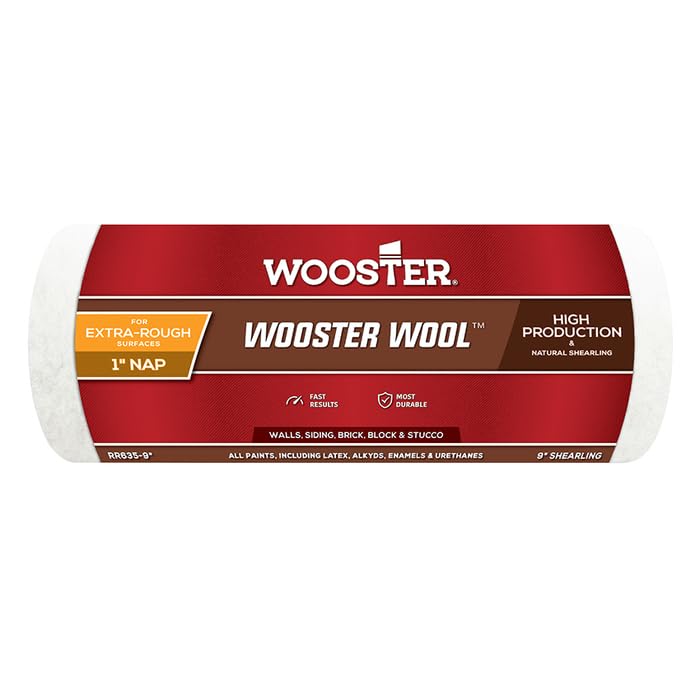
The trade-off is the 1-inch nap: it is thicker than a 1/4- or 3/8-inch cover, which can leave a slightly heavier texture on perfectly flat surfaces if you are not careful. Compared to the Purdy WhiteDove, which uses a woven construction, the Wooster Wool demands a bit more technique to avoid overloading the roller. But for paints that need a uniform finish, that extra nap and the natural fiber’s ability to release evenly are exactly what you want.
Tru Lamb Mohair Mini Roller Covers

What We Like
- Lint-free mohair-polyester blend
- Streak-free on high-gloss paints
- Holds more paint, reduces drips
- 10-pack for frequent fresh rollers
Trade-offs
- 3/16" nap limits texture on rough surfaces
- 4" width slower for large walls
- Mini size not ideal for broad ceilings
A 4-inch mini roller with a 3/16-inch nap made from a mohair-polyester blend is built for precision, not speed. That short nap and smooth fabric lay down paint in a streak-free, lint-free coat, which matters most when you’re painting cabinet doors, trim, or furniture where every imperfection shows. The high-density fabric holds more paint, reducing drips and providing excellent coverage with minimal effort. With ten rollers in the pack, you always have a fresh roller on hand for your projects.
The trade-off is that this roller’s short nap and narrow width are specialized tools, not general-purpose ones. If you’re painting a large wall or a rough-textured ceiling, you’ll want a wider roller with a thicker nap, like the Wooster Pro/Doo-Z’s 3/8-inch nap for smoother coverage on bigger areas. But for oil-based paint on cabinets, doors, and trim, the Tru Lamb’s mohair blend gives you the controlled, smooth finish that foam or microfiber rollers can’t match without lint or bubbles.
Product photos
Czarixa Foam Paint Roller Cover
What We Like
- Ultra-smooth, lint-free finish
- Solvent-resistant foam holds shape
- Strong paper core prevents slipping
- 4-pack value for multiple projects
Trade-offs
- 1/8-inch nap limits use to smooth surfaces
- Paper core less durable than plastic
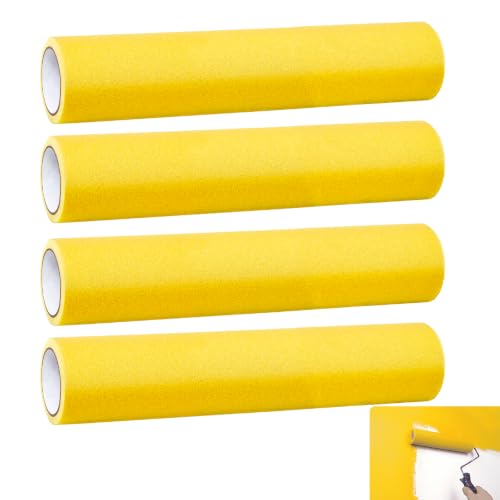
A micro-thin 1/8-inch nap is the key feature here, engineered to deliver an exceptionally smooth, lint-free finish on doors, cabinets, and trim. That makes the Czarixa Foam Paint Roller Cover a natural fit for oil-based paints and enamels, where brush marks and uneven texture ruin the look. The high-density, solvent-resistant foam holds its shape even with aggressive solvents, so you get even paint release and no frustrating lap marks. For anyone painting smooth surfaces and wanting a pro-grade result, this cover delivers exactly what the name promises.
The 1/8-inch nap on this roller is engineered for ultra-smooth, lint-free finishes, so it’s best on cabinets, doors, and smooth trim rather than textured walls. The heavy-duty paper core fits standard 9-inch frames securely without slipping or twisting, which keeps the rotation even as you work. For oil-based paints, enamels, or varnishes, reviewers say it minimizes brush marks and delivers a professional-looking result.
Product photos
How We Evaluated Rollers For Oil Based Paint
We researched each roller cover’s construction, fiber material, core type, and nap thickness by studying manufacturer documentation and expert round-ups. Owner feedback patterns helped us understand real-world performance with oil-based paints, alkyds, and enamels.
The most important criteria were lint resistance, solvent durability, nap suitability, and paint pickup. Oil-based paints are thinner and slower-drying than latex, so a lint-free cover that doesn’t shed is critical. The core must resist solvents like mineral spirits without swelling or cracking. Nap thickness determines surface compatibility, and a cover that holds and releases paint evenly saves time and reduces drips.
This evaluation is research-led, not hands-on tested. We prioritized verified specifications and consistent owner reports to give you a reliable starting point for your purchase.
What To Look For In Rollers For Oil Based Paint
Choosing the right roller for oil-based paint comes down to matching the cover material, nap thickness, and core construction to your surface and paint type. A poor choice can leave lint in your finish, shed fibers, or fail from solvent damage.
Choose a lint-free cover with a solvent-resistant core and a nap thickness matched to your surface. For smooth surfaces, a short nap (1/4 inch or less) is best; for semi-smooth walls, a 3/8-inch nap works well. Avoid covers with glued seams that can unravel in solvents.
Lint Resistance
Lint is the biggest frustration when rolling oil-based paint. The paint’s slow drying time gives stray fibers plenty of opportunity to settle into the finish. Woven fabrics like Dralon, mohair, and microfiber are naturally shed-resistant because their fibers are locked into the weave. Avoid knitted or fibrous covers that can release loose material into wet paint.
Solvent Resistance
Oil-based paints require mineral spirits or turpentine for cleanup. The roller core and adhesive must withstand these solvents without swelling, cracking, or coming apart. Polypropylene and phenolic cores are the most solvent-resistant choices. Paper cores can degrade over multiple uses, making them better for one-time or short-term projects.
Nap Thickness
The nap length controls how much paint the roller holds and the texture it leaves. A 1/8-inch to 1/4-inch nap is ideal for smooth surfaces like cabinets, doors, and trim. A 3/8-inch nap works on semi-smooth walls and lightly textured surfaces. A 1/2-inch or longer nap is for rough surfaces and is not recommended for oil-based paints on smooth work.
Paint Pickup and Release
A good roller cover should load evenly and release paint smoothly across the surface without dripping. Dense woven fabrics and microfiber hold more paint than standard covers, reducing trips to the tray. Covers that release paint inconsistently can cause lap marks and uneven sheen, especially with high-gloss oil-based enamels.
- Check that the cover’s core is solvent-resistant, not just water-resistant.
- Choose a lint-free fabric for oil-based paints; avoid fuzzy or knitted covers.
- Match nap thickness to your surface: short for smooth, medium for semi-smooth.
- Look for covers with reinforced seams or seamless construction to prevent unraveling.
A good rule: the smoother the surface, the shorter the nap. For oil-based paints, lint-free fabric and a solvent-proof core are non-negotiable.
Rollers For Oil Based Paint Compared
The table below compares each roller cover’s nap thickness, core material, fiber type, and best surface use to help you match the right tool to your project.
| Product | Nap Thickness | Fabric Type | Compatible Paints |
|---|---|---|---|
| Purdy WhiteDove Roller Covers | 1/2 in | Woven Dralon | Latex & oil-based |
| Wooster Pro/Doo-Z Roller Cover | 3/8 in | Shed-resistant woven | All paints, enamels, primers, urethanes, epoxies |
| Purdy Jumbo Mini Parrot Roller Cover | 1/4 inch | Woven mohair | Latex & oil-based |
| Shur-Line Microfiber Roller Cover | 1/4 in | Microfiber | Latex and oil |
| Wooster Wool Professional Roller Cover | 1 inch | 1% natural shearing | All paints, including latex, alkyds, enamels, urethanes |
| Tru Lamb Mohair Mini Roller Covers | 3/16" nap | Mohair-polyester blend | Latex, oil, enamel, urethane, epoxy |
| Czarixa Foam Paint Roller Cover | 1/8 inch | High-density, solvent-resistant foam | Oil-based, enamels, varnishes, latex |
Frequently Asked Questions
What nap roller is best for oil-based paint on walls?
For smooth to semi-smooth walls, a 3/8-inch nap roller cover like the Wooster Pro/Doo-Z works well. For flat or lightly textured walls, a 1/2-inch nap like the Purdy WhiteDove is a better choice. The nap should match the surface texture you’re painting.
Can I use a foam roller with oil-based paint?
Yes, foam rollers like the Czarixa Foam Paint Roller Cover work with oil-based paints and deliver an ultra-smooth, lint-free finish. However, foam is best for smooth surfaces like cabinets and trim. It’s not suitable for textured walls or rough surfaces.
How do I clean oil-based paint from a roller cover?
Clean oil-based paint from roller covers using mineral spirits or paint thinner. Roll the cover in solvent, squeeze out the paint, and repeat until clean. Avoid using water, which will not dissolve oil-based paint. Some solvent-resistant covers can be reused, while paper-core covers are better for one-time use.
What is the best roller for oil-based paint on cabinets?
The best rollers for cabinets are short-nap covers that leave a smooth finish. The Purdy Jumbo Mini Parrot Roller Cover (1/4-inch mohair) and the Tru Lamb Mohair Mini Roller Covers (3/16-inch mohair blend) are excellent choices for lint-free, streak-free results on cabinet doors and frames.
Why do some roller covers shed lint with oil paint?
Oil-based paint is thinner and slower-drying than latex, so any loose fibers on a roller cover have time to detach and settle into the finish. Covers made from knitted or glued fibers are more likely to shed. Woven fabrics like Dralon, mohair, and microfiber are designed to be lint-free and are safer for oil-based paints.
The Bottom Line
For most painters tackling walls, ceilings, or floors with oil-based paint, the Purdy WhiteDove Roller Covers offer the best balance of lint-free performance, solvent resistance, and durability. Its 1/2-inch nap handles semi-smooth surfaces well, and the woven Dralon fabric keeps fibers out of your finish.
If you’re working on cabinets, trim, or doors, choose the Purdy Jumbo Mini Parrot Roller Cover for smooth surfaces or the Tru Lamb Mohair Mini Roller Covers for a streak-free high-gloss finish. For textured or rough surfaces where a thicker nap is needed, the Wooster Wool Professional Roller Cover handles alkyds and enamels with ease.
The single most important factor is matching the roller cover’s nap and fabric to your surface and paint type. A lint-free, solvent-resistant cover with the right nap will save you time, frustration, and the need for extra sanding between coats.
