
6 Best Radiator Paint in 2026
This post contains affiliate links. As an Amazon Associate, we earn from qualifying purchases.
For a radiator refresh that lasts, the Meuvcol 2 in 1 Radiator Paint & Primer is the best overall pick. It combines a primer and heat-resistant paint in one step, saving time with a low-odor, family-safe formula. If you need a fast makeover, the Rustins Quick Drying Radiator Enamel Satin dries quickly for a same-day project. For a gloss finish that resists yellowing, Johnstone’s Speciality Gloss Paint for Radiators delivers a polished look.
The main challenge with painting a radiator is finding a paint that bonds to the metal, withstands the heat without yellowing or peeling, and goes on without a strong solvent smell. A standard wall paint won’t cut it, radiator-specific formulas are engineered to handle the expansion and contraction of hot metal.
This guide is based on a careful evaluation of manufacturer specs, expert recommendations, and patterns in owner feedback. We focused on heat resistance, ease of application, finish quality, and durability to help you choose the right paint for your project.
Top 6 Radiator Paints in the Market
Certain content that appears on this site comes from Amazon. This content is provided "as is" and is subject to change or removal at any time.
The Best Radiator Paints, Reviewed
Meuvcol 2 in 1 Radiator Paint & Primer

What We Like
- No separate primer needed
- Heat-resistant up to 105°C
- Low odor, family-safe formula
- Matte finish hides imperfections
Trade-offs
- Matte finish, not glossy like some traditional paints
- Requires clean metal surface before application
A 1000ml tin of integrated primer and paint means you skip an entire coat of work, just clean the metal and apply. That two-in-one efficiency is the core reason this suits anyone refreshing a radiator, pipe, or towel rail who wants professional results without the extra step. Its matte finish also softens the look of aged or scratched surfaces, so you don’t have to sand every nick before painting.
The trade-off is that this matte enamel won’t deliver the glossy, reflective sheen some traditional radiator paints offer. If you prefer a high-shine look, Johnstone’s Speciality Gloss Paint for Radiators gives that classic gloss finish, though it lacks the built-in primer convenience of the Meuvcol. For most homeowners wanting a straightforward, low-odor refresh that stays white over time, this pint-sized can delivers a clean, modern result with less hassle.
Product photos
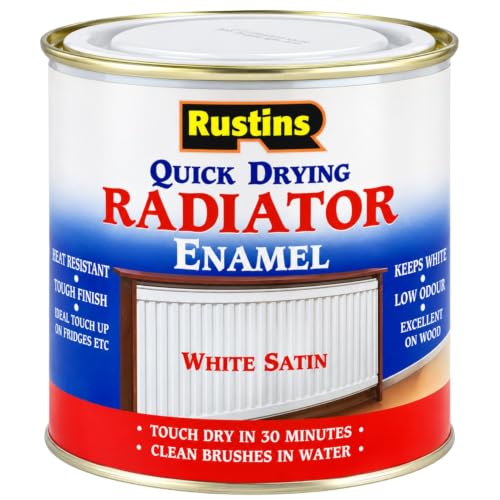
Rustins Quick Drying Radiator Enamel Satin
What We Like
- Quick-drying formula for fast makeovers
- Heat resistant and durable enamel
- Smooth, even coverage with satin finish
- Classic white shade suits any decor
Trade-offs
- 250ml can covers less area than larger options
- Only available in white, not other colors
A 250ml can of quick-drying enamel means you can refresh a single radiator in an afternoon without waiting days between coats. This Rustins formula is engineered for heat resistance and durability, so the satin white finish stays put even when the radiators are cranked up. It’s an ideal choice for a small DIY project where speed matters more than covering multiple large radiators at once.
At 250ml, this can covers one standard radiator or handles touch-ups, so it’s not meant for painting every heater in the house. If you need a gloss finish instead of satin, Johnstone’s Speciality Gloss Paint for Radiators comes in the same 250ml size with a different sheen. For a quick refresh in classic white satin, this Rustins formula dries fast and keeps things simple.
Product photos
Hammerite 5084917 Radiator Paint Satin White

What We Like
- Heat-resistant formula resists yellowing
- Tough, long-lasting finish
- Satin white sheen
- 500 ml container
Trade-offs
- Only available in satin white
- Single 500 ml size limits coverage
A heat-resistant formula that actively resists yellowing means this paint stays bright on radiators long after application, no dull, discolored finish halfway through the heating season. The satin white sheen gives a subtle, modern look that blends with most rooms, and the 500 ml can offers enough coverage for a standard radiator or two. For anyone who wants a clean, lasting white without the gradual amber shift that plagues many radiator paints, this is the one to reach for.
The trade-off is that you’re limited to satin white. If you need a glossier or colored finish, you’ll have to look elsewhere, like the Rustins Quick Drying Radiator Enamel Satin, which also comes in satin but in a smaller 250 ml can. And while 500 ml is generous for most jobs, it may not stretch across multiple large radiators in one go. Still, for a single radiator refresh where anti-yellowing is the priority, this Hammerite delivers exactly what it promises.
Johnstone's Speciality Gloss Paint for Radiators

What We Like
- Non-yellowing gloss formula
- Quick drying for fast recoating
- Suitable for hot water pipes
- Gloss finish for a polished look
Trade-offs
- 250 ml can covers limited area
- Gloss finish shows surface imperfections
The quick-drying formula and non-yellowing claim are the main reasons to consider this gloss. It dries quickly, so you can recoat sooner, and the non-yellowing property helps the white finish stay bright. For anyone who wants a glossy look on a radiator or hot water pipes, this paint is a practical choice.
At 250 ml, this can is small, so it suits touch-ups or a single small radiator rather than a full room. If you need more paint for a larger project, the Meuvcol 2 in 1 Radiator Paint & Primer comes in a 1000 ml can. But for a quick-drying gloss that resists yellowing, Johnstone’s delivers that in a compact package.
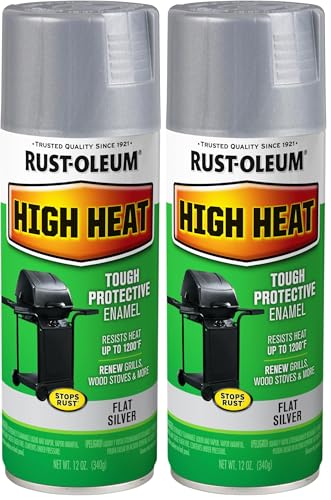
Rust-Oleum High Heat Enamel Spray Paint Silver
What We Like
- Withstands heat up to 1000°F
- Dries to touch in 30 minutes
- Prevents rust, corrosion, and chipping
Trade-offs
- Oil-based formula requires solvent for cleanup
- Only 7-8 sq. ft. coverage per can for larger radiators
With a heat resistance rating up to 1000°F, this spray paint is designed for metal surfaces like barbeque grills, wood-burning stoves, radiators, and engines. The oil-based enamel dries to the touch in 30 minutes, so you can refresh a radiator in an afternoon without long downtime. It also prevents rust, corrosion, and chipping, making it a practical choice for metal items that see repeated heating.
This spray covers up to 7-8 square feet per can, so a large double radiator may need two cans. The oil-based formula is designed to protect metal surfaces subject to heat up to 1000°F, and it dries to the touch in 30 minutes. For a tough, heat-proof finish that stays silver and resists rust, this delivers reliable protection.
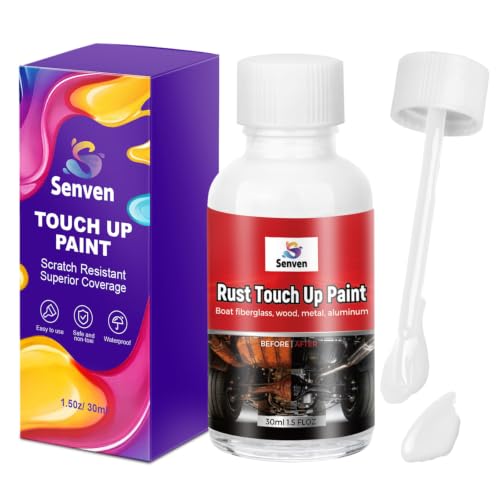
SENVEN White Touch Up Paint Pen
What We Like
- Heat and water resistant formula
- Mess-free brush tip for precision
- Works on rust metal, wood, walls, cabinets
- Non-toxic, low odor, safe indoors
Trade-offs
- Small 30ml volume limits large radiator jobs
- Pen design unsuitable for broad coverage
This 30ml acrylic enamel pen is formulated with heat and water resistance, so it can handle scratches on radiators, appliances, and furniture. The brush tip allows precise application, making it useful for small imperfections on metal or enamel surfaces around the home. It is designed for spot repairs rather than full repaints, which suits homeowners who want a targeted fix without the need for masking or cleanup.
The 30ml volume is limited, so it is best for small touch-ups rather than large areas. For a whole radiator refresh, a traditional can like the Meuvcol 2 in 1 Radiator Paint & Primer offers 1000ml. But if your goal is a spot fix on a white appliance or a single radiator nick, this pen provides a convenient option for precise application.
Product photos
How We Evaluated Radiator Paints
Our evaluation is research-based, drawing from manufacturer specifications, expert round-ups, and common patterns in owner feedback. We analyzed the technical claims and real-world experiences reported by other users to identify the best options for different needs.
The most important criteria for radiator paint are heat resistance and adhesion. Paints must withstand high temperatures without discoloring, cracking, or peeling. We looked for formulas specifically labeled for radiators or high-heat metal surfaces.
Ease of application was another key factor. We considered whether a paint requires a separate primer, how strong the odor is during application, and how quickly it dries. Low-odor, water-based formulas are easier to use indoors, while oil-based options may need solvent for cleanup.
Finally, we evaluated the finish and durability. Matte finishes hide surface imperfections well, while gloss and satin sheens are easier to clean and resist yellowing over time. We also noted coverage area per container to help you plan your project.
What To Look For In Radiator Paints
Choosing the right radiator paint comes down to heat tolerance, adhesion, and the type of finish you prefer. Here are the key factors to consider before you buy.
A good radiator paint must withstand high temperatures, bond directly to metal without peeling, and resist yellowing from repeated heating cycles. Your choice of finish, matte, satin, or gloss, affects both appearance and how well the paint hides dents and scratches.
Heat Resistance and Yellowing Resistance
The most critical spec is the paint’s maximum operating temperature. Most radiator-specific paints are rated for standard hot water systems. For steam radiators or wood stoves, look for high-heat enamel formulas rated for much higher temperatures.
Yellowing is a common complaint with white radiator paints. Heat and UV exposure can cause some formulas to turn yellow over time. Paints labeled “non-yellowing” or “anti-yellowing” use special resins that resist this discoloration, making them a better choice for white radiators in bright rooms.
Application and Drying Time
Consider whether you want a paint that includes a primer or requires a separate coat. A 2-in-1 paint-and-primer saves time and reduces the number of coats needed. Low-odor, water-based formulas are more pleasant for indoor use and clean up with soap and water, while oil-based enamels offer extreme durability but need mineral spirits for cleanup.
Drying time matters if you are painting a radiator in a living space. Quick-dry formulas can be recoated in as little as 30 minutes to an hour, allowing you to finish the job in a day. Slower-drying paints may require overnight drying between coats.
Finish Type and Coverage
- Matte finish hides dents, scratches, and uneven surfaces well but can be harder to clean.
- Satin finish offers a subtle sheen that is easy to clean and resists yellowing.
- Gloss finish gives a polished, shiny look but shows every surface imperfection.
- Check the coverage area per can: a 250ml can typically covers one small radiator, while 500ml covers a larger one or two smaller ones.
- For touch-ups, a paint pen with a precision tip is ideal for small scratches without needing to repaint the whole radiator.
For best results, always clean the radiator surface with a degreaser and light sanding before applying any paint, even if the label says “no primer needed.”
Radiator Paints Compared
The table below compares the six radiator paints we evaluated, highlighting their key features, best uses, and trade-offs.
| Product | Volume | Finish | Heat Resistance |
|---|---|---|---|
| Meuvcol 2 in 1 Radiator Paint & Primer | 1000 ml | Matte | Up to 105°C |
| Rustins Quick Drying Radiator Enamel Satin | 250ml | Satin | Yes |
| Hammerite 5084917 Radiator Paint Satin White | 500 ml | Satin | Yes |
| Johnstone's Speciality Gloss Paint for Radiators | 250 ml | Gloss | N/A |
| Rust-Oleum High Heat Enamel Spray Paint Silver | 12 oz | Rich satin | Up to 1000°F |
| SENVEN White Touch Up Paint Pen | 30ml | High gloss | Yes |
Frequently Asked Questions
Can I use regular wall paint on a radiator?
No, standard wall paint is not formulated to withstand the heat from a radiator. It will likely peel, crack, or yellow quickly. Always use a paint specifically labeled for radiators or high-heat metal surfaces.
Do I need to prime a radiator before painting?
It depends on the paint. Some radiator paints, like the Meuvcol 2 in 1 Radiator Paint & Primer, include a built-in primer so you can skip that step. Others require a separate metal primer to ensure proper adhesion and prevent rust.
How long does radiator paint take to dry?
Drying time varies by formula. Quick-dry enamels, such as the Rustins Quick Drying Radiator Enamel Satin, can dry to the touch quickly and be recoated in about an hour. Standard radiator paints may take longer between coats.
What is the best finish for hiding imperfections on a radiator?
A matte finish is best for hiding dents, scratches, and uneven metal surfaces. Gloss finishes reflect light and will highlight every imperfection, while satin offers a middle ground with some sheen and moderate hiding ability.
Can I paint a radiator that is still hot?
No, you should always paint a cool radiator. Applying paint to a hot surface can cause bubbling, poor adhesion, and uneven drying. Turn off the radiator and let it cool completely before painting.
The Bottom Line
For most homeowners, the Meuvcol 2 in 1 Radiator Paint & Primer is the best overall choice. Its built-in primer, low-odor formula, and matte finish make it the simplest option for a clean, modern radiator refresh without the hassle of a separate priming step.
If you need a fast, one-day project, the Rustins Quick Drying Radiator Enamel Satin is your best bet. For a high-gloss, non-yellowing finish on a small area, Johnstone’s Speciality Gloss Paint for Radiators delivers a polished look. And for extreme heat applications like stoves or grills, the Rust-Oleum High Heat Enamel Spray Paint handles temperatures up to 1000°F.
The single most important factor in a successful radiator paint job is choosing a formula that matches your heat source and finish preference. Take the time to clean and prepare the surface properly, and your new paint will stay looking fresh for years.
