
8 Best Primers For Wood Furniture in 2026
This post contains affiliate links. As an Amazon Associate, we earn from qualifying purchases.
The Zinsser Bulls Eye 1-2-3 Water-Base Primer & Sealer is the best overall primer for wood furniture because it bonds to glossy surfaces without sanding, blocks stains, and works both indoors and outdoors. For fast turnarounds, the Zinsser Smart Prime Water-Based Primer is the best quick-drying primer, and the Rust-Oleum Painter’s Touch 2X Ultra Cover Spray Primer is our pick for small, chip-resistant spray jobs.
Getting a smooth, long-lasting paint finish on wood furniture starts with the right primer. A poor primer means peeling paint, bleed-through from old stains, or a surface that takes too many coats. The wrong choice can ruin hours of prep work.
This guide is research-based, drawing on manufacturer specifications, expert round-ups, and patterns in owner feedback to help you choose the best primer for your specific wood furniture project. We cover the eight top options, each with a clear award and use case.
Top 8 Primers For Wood Furniture in the Market

Certain content that appears on this site comes from Amazon. This content is provided "as is" and is subject to change or removal at any time.
The Best Primers For Wood Furniture, Reviewed
Zinsser Bulls Eye 1-2-3 Water-Base Primer & Sealer

What We Like
- Bonds to glossy surfaces without sanding
- Stain-blocking resins seal old marks
- Rust inhibitive for metal parts
- Works indoors and outdoors
Trade-offs
- Minimum application temperature is 35°F
- Not ideal for extremely cold weather projects.
Bonding to glossy surfaces without scuff sanding saves you from the dusty, tedious step of sanding slick finishes, giving your topcoat a tight grip right away. Stain-blocking resins hide old water rings, marker stains, or bleed-through from knots, so furniture projects get a clean start. It works both indoors and out, meaning a painted porch chair or a bedside table both get the same reliable foundation.
A quick wipe-down with a damp cloth to remove dust is all the surface prep needed before applying this primer. The formula bonds directly to glossy surfaces without scuff sanding, which saves considerable time on trim, cabinets, or previously painted walls. Reviewers note that skipping the sanding step on slick surfaces cuts project time by roughly half an hour per room. For a quart-sized can that weighs just over two pounds, the labor savings far outweigh the minimal cleaning required.
Zinsser Smart Prime Water-Based Primer

What We Like
- Dries in minutes, recoat in 1 hour
- Bonds to glossy surfaces without sanding
- Mold and mildew resistant dried film
- Blocks stains with proprietary resins
Trade-offs
- Requires topcoat for exterior durability.
A one-hour recoat time means you can prime a dresser in the morning and start painting before lunch. That speed comes from the water-based formula, which also bonds directly to glossy surfaces without scuff sanding, so you skip the tedious prep step that usually eats up a whole afternoon. The stain-blocking resins seal in water marks, smoke residue, and old varnish bleed-through, making this a reliable choice for refinishing secondhand or previously painted wood pieces.
Smart Prime bonds to glossy surfaces without scuff sanding, so you can skip the tedious prep work on painted trim or cabinets. It dries in minutes and can be recoated in one hour, which keeps a project moving fast. The dried film is mold and mildew resistant, adding protection in humid spaces like bathrooms.
Rust-Oleum Painter's Touch 2X Ultra Cover Spray Primer

What We Like
- Dries to touch in 20 minutes
- Sprays from any angle with comfort tip
- Oil-based formula resists chips
- Works on wood, metal, and plastic
Trade-offs
- Oil-based formula requires solvent cleanup
- Only 12 sq ft coverage per can limits large projects
A 20-minute dry-to-touch time means you can handle the primed surface quickly, which is a real advantage when you are working on a weekend project with limited patience. This Rust-Oleum spray primer uses an oil-based formula that resists chips and goes on smoothly from any angle, thanks to the comfort spray tip. It is intended for use on wood, metal, plastic, and other surfaces, making it a versatile option for furniture makeovers. If you want a fast-drying primer that lays down a flat, paint-ready surface without fuss, this is the spray can to reach for.
Coverage is limited to 12 square feet per can, so a full dresser or table may take two or three cans. The oil-based formula requires mineral spirits or paint thinner for cleanup. That means you cannot just rinse the spray tip under the tap. Compared to the Zinsser Bulls Eye 1-2-3 water-based primer, which is a quart-sized primer-sealer for interior use, this Rust-Oleum is better suited for smaller projects or touch-ups where speed and convenience from a spray can matter most.
Polar Wood Primer White Undercoat

What We Like
- Quick-drying in 1-2 hours
- Penetrates wood for dependable preparation
- Flexible base resists cracking and water
Trade-offs
- Requires clean, dry surface before application
- Needs compatible topcoat for final finish
Coverage of 10-12 square meters per liter means one 2.5L can handles a good-sized furniture project without constant trips for more. The low surface tension lets the formula penetrate the wood, helping the topcoat adhere and achieve a more consistent finish. It dries in one to two hours and accepts a recoat after four, so you can move from prep to finish in a single afternoon.
The trade-off is that Polar Wood Primer demands a properly prepped surface clean, dry, and free of grease or loose material before you start. Skip that step and the penetration works against you, locking in dust or grime beneath the paint. Compared to Zinsser Bulls Eye 1-2-3, which is an all-surface stain-blocking primer for interior use, this Polar primer is designed for bare and unfinished timber. That makes it a focused choice for raw wood projects but less versatile if you need a primer that also handles drywall or metal.
Product photos
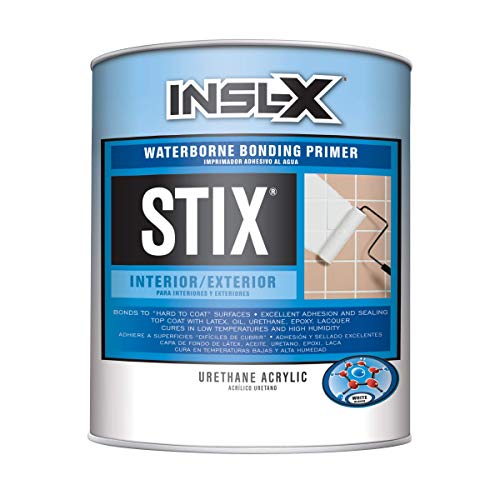
INSL-X Stix Acrylic Waterborne Bonding Primer
What We Like
- Bonds to glossy tile and glass
- Works on PVC, vinyl, and plastic
- Low VOC, easy soap cleanup
- Cures in temperatures as low as 35°F
Trade-offs
- Coverage at 75-100 sq ft is modest
- Requires reviewing label for proper surface preparation
This primer bonds to glossy tile, glass, PVC, vinyl, plastic, and galvanized metal, so it handles the surfaces that many standard primers cannot. If you are refinishing a piece with old glossy paint, a plastic laminate top, or fiberglass, the INSL-X Stix Acrylic Waterborne Bonding Primer is formulated to stick where others might fail. It cures down to 35°F, which means you can work in an unheated garage in early spring, and the low-VOC formula cleans up with soap and water. For any mixed-material project or a surface that has been hard to coat, this primer is a reliable option.
Coverage is the trade-off here. At 75 to 100 square feet per quart, Stix works best for a single dresser or a set of chairs rather than a whole room of built-ins. The label says to review preparation and application tips, so follow those for best results. You get a bond that can be top coated with almost any product.
Retique It Wood'n Primer Stainable Wood Primer

What We Like
- Patented formula mimics raw wood absorbency
- Works with virtually any stain brand
- No stripping required on old finishes
Trade-offs
- Requires light scuffing before application
- Not a stain-blocking primer for heavy bleed-through
- Must be stained and sealed for final wood look
A patented formula engineered to mimic raw wood absorbency means this primer accepts stain exactly like bare wood, giving furniture projects depth and contrast that ordinary primers can’t match. It bonds to virtually any surface, glass, metal, plastic, tile, painted wood, laminate, so you can refinish a laminate desk or a painted dresser without stripping or heavy sanding.
This primer is not a stain blocker. If you’re covering dark water stains or heavy tannin bleed, a dedicated stain-blocking primer like Zinsser Bulls Eye 1-2-3 would be a better first coat. And because the finish only becomes real wood after staining and sealing, it adds an extra step compared to a one-coat paint-and-primer. For anyone who wants the grain and feel of stained wood on surfaces that normally reject stain, this primer delivers that result without the mess of stripping.
Product photos
Rust-Oleum Stops Rust Custom Spray Universal Bonding Primer
What We Like
- Bonds to difficult surfaces like laminate and porcelain
- 360° any-angle spray for hard-to-reach spots
- Adjustable spray dial reduces finger fatigue
- Fast dry speeds up project time
Trade-offs
- Coverage limited to 12 sq. ft. per can
- Requires a separate topcoat for full protection.
A 360-degree any-angle spray dial means you can hit awkward furniture legs, undersides, and carved details without flipping the can or fighting a tired finger. This Rust-Oleum bonding primer grips surfaces that typically repel paint, laminate, glazed brick, porcelain, and galvanized steel, so it is ideal for mixed-material furniture projects where a standard primer would peel. The fast-dry formula keeps you moving through multiple coats in one afternoon, and the large finger pad on the spray head actually reduces fatigue during longer sessions.
Coverage is the main trade-off: at 12 square feet per can, a large dresser or table may need two cans, which adds cost compared to a quart of Zinsser Bulls Eye 1-2-3 that covers a larger area per quart. But that Zinsser is a brush-on liquid, not a spray, so you lose the convenience of even, thin coats on intricate shapes. If your wood furniture has tricky surfaces like sealed laminate or old glossy paint, this spray primer is worth the extra can for the bonding grip alone. Not ideal for large, flat, unfinished wood panels where a brush-on primer would be more economical.
Product photos
TotalBoat Wood Sealer Pre Varnish Primer

What We Like
- Fills and seals wood grain
- UV inhibitors prevent cracking
- No sanding between coats
- Works on oily hardwoods
Trade-offs
- Needs 2-3 coats for full seal
- Requires thinner for spray application
A two-hour recoat time means you can build a smooth, sealed surface in a single afternoon without sanding between coats. This one-part pre-varnish sealer is formulated to grip oily hardwoods like teak and mahogany, making it a natural fit for furniture that lives outdoors or near moisture. The UV inhibitors work down into the grain, which helps prevent the wood from cracking and keeps your topcoat from peeling. If you are finishing a wooden boat or a piece of patio furniture that will face sun and rain, this sealer gives the varnish a stable foundation that lasts.
The clear amber color is part of the sealer’s formulation, so it will warm the wood slightly. If you need a perfectly neutral base under a light or bleached finish, a water-based white primer like Zinsser Bulls Eye 1-2-3 would be a better starting point. But for rich woods and projects where durability matters more than color neutrality, the deep penetration and fast drying of this marine-grade sealer are hard to beat. It is a specialized tool for a specific job, and it does that job thoroughly.
Product photos
How We Evaluated Primers For Wood Furniture
We built this guide by analyzing manufacturer specifications, technical data sheets, and expert recommendations for wood furniture primers. We also looked at patterns in owner feedback to understand real-world performance and common frustrations.
Three criteria mattered most. First, adhesion, a primer that bonds without sanding saves significant prep time, especially on glossy or previously painted surfaces. Second, stain blocking, old finishes, water marks, and tannins can bleed through if the primer lacks effective sealing resins. Third, dry time and recoatability, furniture flippers and DIYers need primers that keep projects moving without extended waits.
Because this is a research-led evaluation, our recommendations are based on documented specs, industry reputation, and consistent owner reports. This approach lets us cover a wider range of products and use cases than any single test could.
What To Look For In Primers For Wood Furniture
Choosing the right primer for wood furniture means matching the product to your surface condition, desired finish, and project timeline. Here are the key factors to consider.
Match the primer to your surface: bare wood needs penetrating adhesion, glossy surfaces need bonding without sanding, and stained wood needs blocking power.
Adhesion and Surface Prep
The biggest time-saver in any furniture project is a primer that bonds to glossy or previously painted surfaces without sanding. Look for “bonding” primers that use specialized resins to grip slick surfaces. For bare wood, a penetrating primer that soaks into the grain provides the best foundation. Some primers require light scuffing regardless of claims, so always check the label.
Stain and Tannin Blocking
If your furniture has water rings, marker stains, or old varnish, you need a primer with stain-blocking resins. Shellac-based primers are the gold standard for blocking heavy bleed-through, while water-based options like Zinsser Bulls Eye 1-2-3 use proprietary resins for most common stains. For oily hardwoods like teak or cedar, a dedicated marine wood sealer prevents tannins from leaching through your topcoat.
Dry Time and Recoat Window
Fast-drying primers let you apply a topcoat the same day, which is critical for furniture flippers or anyone on a deadline. Some water-based primers dry to the touch in minutes and accept a topcoat in one hour. Oil-based primers take longer to dry but offer better chip resistance. Spray primers dry fastest but cover less area per can.
Application Method
Brush-on primers offer the best coverage per dollar for large, flat surfaces like tabletops and dresser sides. Spray primers excel on intricate details, turned legs, and hard-to-reach spots. Some primers can be applied with a roller for a smooth, even coat on large panels.
- Check the minimum application temperature if you’re working in a garage or outdoors.
- Verify that the primer is compatible with your intended topcoat (latex, oil, or urethane).
- Consider VOC levels and cleanup requirements, water-based primers clean up with soap and water.
- For outdoor furniture, choose a primer with UV inhibitors and moisture resistance.
- Measure your project area to ensure one can or quart provides enough coverage.
A primer that matches your surface and topcoat saves more time than any fast-dry claim.
Primers For Wood Furniture Compared
The table below compares the eight primers we evaluated, highlighting key specs and the best use case for each.
| Product | Base/Type | Surface | Drying Time |
|---|---|---|---|
| Zinsser Bulls Eye 1-2-3 Water-Base Primer & Sealer | Water-based | Interior & exterior | N/A |
| Zinsser Smart Prime Water-Based Primer | Water-based | Interior/exterior wood, drywall & metal | Dries in minutes |
| Rust-Oleum Painter's Touch 2X Ultra Cover Spray Primer | Oil-based spray primer | Indoor and Outdoor | Dries to touch: 20 minutes |
| Polar Wood Primer White Undercoat | N/A | Interior and exterior wood | 1-2 hours |
| INSL-X Stix Acrylic Waterborne Bonding Primer | Acrylic waterborne | Interior or exterior | N/A |
| Retique It Wood'n Primer Stainable Wood Primer | Water-based | Virtually any surface | N/A |
| Rust-Oleum Stops Rust Custom Spray Universal Bonding Primer | N/A | Exterior and interior | Fast dry |
| TotalBoat Wood Sealer Pre Varnish Primer | 1-part pre-varnish sealer | Interior or exterior bare wood | 2 hours at 72°F |
Frequently Asked Questions
Do I need to sand wood furniture before priming?
It depends on the primer and the surface condition. Bonding primers like the Zinsser Bulls Eye 1-2-3 and INSL-X Stix are designed to grip glossy surfaces without sanding. However, bare wood benefits from a light sanding to open the grain, and any peeling paint should be removed before priming.
Can I use a spray primer on a large dresser?
Spray primers like the Rust-Oleum Painter’s Touch 2X Ultra Cover are best for small projects or detailed areas because a single can covers only about 12 square feet. For a large dresser, a brush-on primer is more economical and provides better coverage per dollar.
What primer works best for staining over painted wood?
The Retique It Wood’n Primer Stainable Wood Primer is specifically formulated to mimic raw wood absorbency, allowing stain to penetrate previously painted or non-porous surfaces. It requires light scuffing before application and must be sealed with a topcoat afterward.
How long should I wait before painting over primer?
Dry times vary by product. The Zinsser Smart Prime allows recoating in one hour, while oil-based primers may need longer. Always follow the manufacturer’s recommended recoat window for best adhesion and finish.
Can I use a wood primer on laminate or plastic furniture?
Yes, but only if the primer is formulated for difficult surfaces. The INSL-X Stix Acrylic Waterborne Bonding Primer is designed to bond to glossy tile, PVC, vinyl, and plastic, making it suitable for mixed-material furniture projects.
The Bottom Line
For most wood furniture projects, the Zinsser Bulls Eye 1-2-3 Water-Base Primer & Sealer is the best choice. It bonds to glossy surfaces without sanding, blocks stains effectively, and works indoors and outdoors. This is the primer to reach for when you want reliable results with minimal prep.
If your project has a specific need, one of the other picks will serve you better. The Zinsser Smart Prime is ideal for fast turnarounds, the Polar Wood Primer is best for bare wood, and the Retique It Wood’n Primer is the only option for staining over old paint. For outdoor or high-moisture projects on oily hardwoods, the TotalBoat Wood Sealer provides the protection you need.
The single most important factor in choosing a primer for wood furniture is matching the product to your surface condition. A bonding primer for glossy surfaces, a penetrating primer for bare wood, or a stain-blocking primer for old finishes, get that match right, and your paint job will last.
