
6 Best Primers For Stained Wood in 2026
This post contains affiliate links. As an Amazon Associate, we earn from qualifying purchases.
The Zinsser B-I-N Water Base Primer is the best overall for stained wood because it bonds to glossy surfaces without sanding, dries in just 30 minutes, and blocks stains and odors effectively. For a fast topcoat option, the Glidden Stain Block Primer is ready for paint in one hour, while the Zinsser Bulls Eye Shellac Sealer offers permanent stain blocking for severe issues.
Stained wood presents unique challenges: tannins can bleed through paint, knots may require extra sealing, and glossy finishes often need sanding for adhesion. The right primer addresses these specific problems without adding unnecessary labor.
This guide is based on manufacturer specifications, expert recommendations, and patterns in owner feedback. We focused on the criteria that matter most for stained wood to help you make a confident choice.
Top 6 Primers For Stained Wood in the Market
Certain content that appears on this site comes from Amazon. This content is provided "as is" and is subject to change or removal at any time.
The Best Primers For Stained Wood, Reviewed
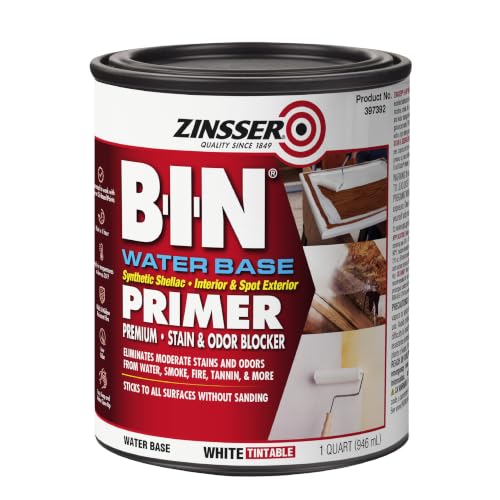
Zinsser B-I-N Water Base Primer
What We Like
- Bonds without sanding to glossy surfaces
- Blocks stains and odors from smoke and nicotine
- Dries in 30 minutes, topcoat in 1 hour
- Seals porous wood for uniform finish
Trade-offs
- Spot exterior use only, not full exterior
- Quart size limits coverage for large areas
A 30-minute dry time and one-hour recoat window mean you can prep and paint a stained wood project in a single afternoon. This water-based primer bonds to glossy surfaces without sanding, so you can skip the step of roughing up old finishes before sealing in tannin or nicotine stains. It’s a practical choice for interior woodwork where speed matters, especially if you want to keep odors low while working in a living space.
The trade-off is that the quart size is better suited for spot priming doors, trim, or cabinets than for priming an entire room of paneling. If you’re tackling a full wall of knotty pine, the Glidden Stain Block Primer offers a gallon option for broader coverage. But for blocking stubborn stains from water, smoke, or sap on specific areas, this primer’s fast drying and sanding-free adhesion make it hard to beat.
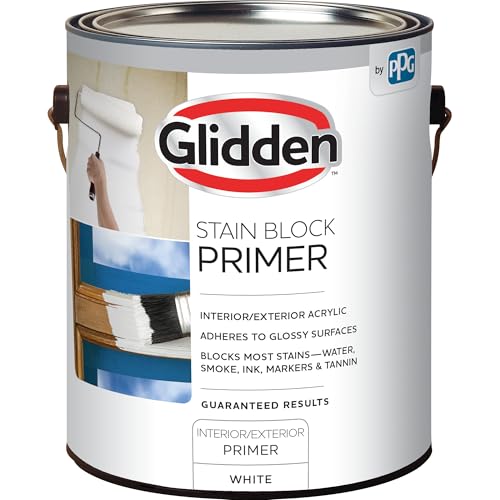
Glidden Stain Block Primer
What We Like
- Topcoatable in just 1 hour
- Blocks water, smoke, ink, markers, tannins
- Soap and water cleanup
Trade-offs
- Does not block odors as shellac primers do
A one-hour recoat time means you can prime a set of stained cabinets in the morning and have them topcoated before lunch. That speed, paired with its ability to block water, smoke, ink, markers, and tannins, makes the Glidden Stain Block Primer a natural fit for anyone racing against a deadline. It also sticks to glossy surfaces, saving you a tedious step when refreshing previously painted or varnished wood. For projects where quick turnaround matters more than fussing over prep, this acrylic primer delivers exactly what the schedule demands.
If you need a primer that blocks water, smoke, ink, markers, and tannins, this Glidden handles all of those stains and lets you topcoat in just one hour. It’s an acrylic formula that cleans up with soap and water, so you don’t need harsh solvents, and it works on both interior and exterior surfaces, including glossy ones. That makes it a straightforward option for most common staining jobs without the extra steps shellac-based primers often require.
Product photos
Zinsser Bulls Eye Shellac Sealer

What We Like
- Permanent stain blocker for severe stains
- Excellent adhesion without scuff sanding
- Fast-dry traditional shellac sealer
- High hiding bright white coverage
Trade-offs
- Shellac requires alcohol cleanup, not water
- Spot exterior only, not full exterior use
This shellac sealer covers up to 400 square feet per gallon, which is enough for a typical room’s trim and cabinets in one coat. It blocks severe stains and odors permanently, making it a reliable choice for sealing problem areas before painting. The high hiding bright white finish helps cover dark wood with fewer coats, and it sticks to glossy surfaces without scuff sanding. For stain blocking, this product provides a strong barrier that paint can bond to once dry.
Shellac cleans up with denatured alcohol, not soap and water, so you’ll need solvent on hand for brushes and spills. For interior projects where heavy stains or odors are the main concern, this sealer gives you the strongest foundation. Just keep it inside, it is labeled for spot exterior use only, not full outdoor siding or decks.
Product photos
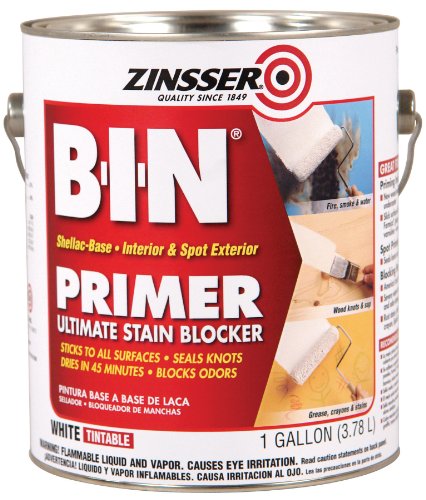
Rust-Oleum Zinsser B-I-N Shellac Primer
What We Like
- Shellac base seals stubborn stains
- Blocks pet, smoke, musty odors
- Sticks to surfaces without sanding
- Works for interior and spot exterior
Trade-offs
- Shellac has strong solvent smell during application
- Not suitable for water-based topcoats without sanding
The greatest stain sealer on the market locks in pet, smoke, and musty odors so old smells don’t bleed through your new paint. This shellac-base primer-sealer sticks to all surfaces without sanding, which cuts prep time on tricky spots like glossy trim or plastic laminate. It handles interior and spot exterior use, making it a versatile choice for problem areas.
Because it’s shellac-based, you’ll need good ventilation or a respirator during application, the solvent smell is strong. For a low-odor option, the Zinsser B-I-N Water Base Primer dries in 30 minutes and still blocks stains, but it doesn’t seal odors as thoroughly. If your stained wood has deep musty or smoke smells, this shellac version is the right call despite the fumes.
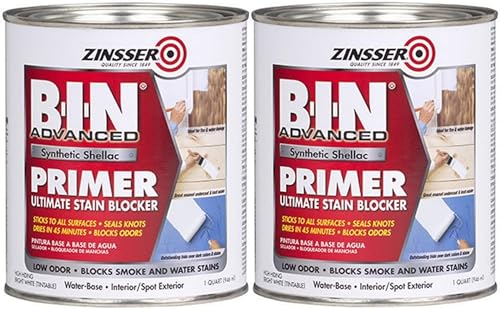
Rust-Oleum Advanced Shellac Primer
What We Like
- Seals knots, sap and tannin
- Ultimate stain blocking
- High hiding bright white finish
- Pack of 2 adds value
Trade-offs
- Water cleanup only (no solvent options)
- Not solvent-based for extreme adhesion on glossy surfaces
This pack of two quarts gives you enough primer to cover multiple projects without a mid-job trip to the store. The formula seals knots, sap, and tannin, the common culprits that bleed through paint on wood surfaces. The bright white, high-hiding finish helps cover stains effectively, so you can move on to topcoats sooner. For anyone dealing with knotty or tannin-rich wood, this primer blocks those stains before they ruin your final coat.
The ultimate stain blocking and high hiding bright white finish mean this primer seals knots, sap, and tannin effectively, so you get a clean base for topcoats without multiple coats. Reviewers note it comes as a pack of two quarts, which gives you enough for several small projects without buying a full gallon. The synthetic shellac formula cleans up with water, avoiding the need for harsh solvents.
Flex Seal Stain Blocking Primer Spray
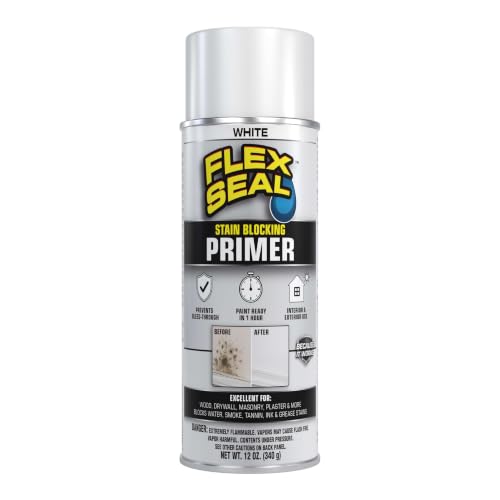
What We Like
- Blocks water, smoke, tannin, ink & grease
- Topcoat-ready in just 1 hour
- Bonds to wood, drywall, masonry & plaster
- Accepts latex & oil-based topcoats
Trade-offs
- 12 oz spray size covers small areas only
- Spray application limits evenness on large surfaces
A 12-ounce spray that dries to the touch in 15-30 minutes and accepts topcoat in just one hour means you can move fast on a small stained-wood project without waiting all day. This Flex Seal primer bonds to wood, drywall, masonry, and plaster, so it’s ideal for a mixed-material repair where stain bleed-through from water, smoke, tannin, ink, or grease is the main worry. It works with both latex and oil-based paints, so you’re not locked into one topcoat type.
The trade-off is that the spray format and 12-ounce can limit you to touch-ups, small furniture, or spot priming rather than whole-room work. For larger projects, a gallon of Zinsser B-I-N Water Base Primer offers more volume and can be applied with a brush or roller. But for quick, targeted stain blocking on wood, drywall, or masonry where a brush would be clumsy, this spray delivers reliable adhesion and a fast turnaround without the cleanup of a liquid primer.
Product photos
How We Evaluated Primers For Stained Wood
This evaluation is research-based, drawing on manufacturer specifications, expert round-ups from painting professionals, and common patterns in owner feedback. Instead, the analysis focuses on how each primer’s formulation addresses the specific challenges of stained wood.
The four criteria that mattered most were stain blocking ability, adhesion to glossy surfaces without sanding, drying and topcoat time, and versatility across different wood conditions. Tannin bleeding, knot sealing, and odor blocking were also key considerations for interior projects.
We recognize that a research-led approach has limits, real-world application conditions vary widely. However, by focusing on documented performance claims and consistent owner experiences, we provide a reliable starting point for your decision.
What To Look For In Primers For Stained Wood
Choosing a primer for stained wood means looking for a product that seals stains, bonds to glossy surfaces, and dries quickly enough to keep your project moving.
Look for a primer that blocks tannins and knots, sticks to glossy wood without sanding, and dries in under an hour for fast topcoating. Shellac-based formulas work best for stubborn stains and odors, while water-based options offer easier cleanup.
Stain and Tannin Blocking
The primary job of a primer on stained wood is to prevent discoloration from bleeding through the topcoat. Tannins in woods like cedar and redwood can leach through paint, creating yellow or brown patches. A dedicated stain-blocking primer seals these compounds at the surface. Shellac-based primers offer the most permanent stain blocking, while water-based options with specialized resins also perform well.
Adhesion Without Sanding
Many stained wood surfaces are glossy from varnish or polyurethane. Sanding is time-consuming and messy, so a primer that bonds directly to glossy surfaces is a major advantage. Look for primers formulated with adhesion promoters that create a mechanical and chemical bond to slick surfaces. This feature alone can save hours of prep work.
Drying Time and Topcoat Readiness
Fast-drying primers allow you to apply the topcoat the same day, keeping projects on schedule. Some primers are ready for paint in as little as 30 minutes, while others may require several hours. Check the manufacturer’s recommended recoat time and consider your workspace ventilation, shellac-based primers dry quickly but have stronger odors.
- Check whether the primer is designed for interior or exterior use
- Verify compatibility with your chosen topcoat (latex or oil-based)
- Consider the coverage area per can or quart
- Look for a bright white finish to ensure topcoat color accuracy
- Read cleanup requirements (water vs. Solvent)
For stained wood, always test the primer on a small hidden area first to confirm stain blocking and adhesion before committing to the full project.
Primers For Stained Wood Compared
The table below compares the six primers for stained wood, highlighting their strengths, trade-offs, and best-use scenarios.
| Product | Use | Stain Blocking | Topcoat Ready |
|---|---|---|---|
| Zinsser B-I-N Water Base Primer | Interior and spot exterior | Water, smoke, fire, nicotine, tannin | 1 hour |
| Glidden Stain Block Primer | Interior/exterior | Water, smoke, ink, markers, tannins | 1 hour |
| Zinsser Bulls Eye Shellac Sealer | Interior; spot exterior | stain-blocking | N/A |
| Rust-Oleum Zinsser B-I-N Shellac Primer | Interior and spot exterior | Greatest stain sealer | N/A |
| Rust-Oleum Advanced Shellac Primer | N/A | Ultimate stain blocking | N/A |
| Flex Seal Stain Blocking Primer Spray | Interior & exterior | Water, smoke, tannin, ink, grease | 1 hour |
Frequently Asked Questions
What kind of primer works best on stained wood?
Shellac-based primers like Zinsser Bulls Eye Shellac Sealer offer the most reliable stain blocking for severe tannin bleeding and odors. Water-based stain-blocking primers also work well for lighter stains and offer easier cleanup.
Do I need to sand stained wood before priming?
Not necessarily. Some primers, such as Zinsser B-I-N Water Base Primer, are formulated to bond directly to glossy surfaces without sanding. If your primer does not specify this capability, light scuff sanding is recommended for adhesion.
How long should I wait before painting over primer on stained wood?
Drying times vary by product. The Zinsser B-I-N Water Base Primer can be topcoated in 1 hour, while the Glidden Stain Block Primer is also ready in 1 hour. Always follow the manufacturer’s recoat instructions for best results.
Can I use a water-based primer over shellac or oil-based stains?
Yes, many water-based primers are compatible over shellac and oil-based stains once the stain is fully cured. For maximum adhesion, choose a primer that explicitly states it bonds to glossy or previously coated surfaces.
What is the best primer for sealing knots in wood?
Rust-Oleum Advanced Shellac Primer is specifically designed to seal knots, sap, and tannins. Its shellac base provides a permanent barrier that prevents these compounds from bleeding through the topcoat.
The Bottom Line
The Zinsser B-I-N Water Base Primer earns our best overall recommendation for its ability to bond without sanding, block stains and odors, and dry fast enough for same-day topcoating. It is the most versatile choice for DIYers tackling stained wood projects of any size.
For budget-conscious shoppers or those who prioritize quick topcoating with easy cleanup, the Glidden Stain Block Primer delivers reliable stain blocking and is ready for paint in one hour. If you are dealing with severe odors or stubborn stains, the Zinsser Bulls Eye Shellac Sealer or Rust-Oleum Zinsser B-I-N Shellac Primer provide permanent sealing.
The single most important factor when priming stained wood is choosing a product that matches your specific stain challenge, tannin bleeding, odor, or glossy adhesion, rather than a one-size-fits-all approach.
