
10 Best Primers For Plastic Bumpers in 2026
This post contains affiliate links. As an Amazon Associate, we earn from qualifying purchases.
For a reliable plastic bumper repair, the Rust-Oleum Automotive Adhesion Promoter Spray stands out as the Best Overall choice for its fast-drying, multi-surface formula that sprays at any angle. DIYers needing a large volume of ready-to-spray primer should consider the SEM 39863 Plastic Adhesion Promoter Aerosol, while those working with tricky polyolefin plastics are best served by the KLEAN-STRIP Bulldog Adhesion Promoter.
The biggest challenge when painting plastic bumpers is getting the paint to stick. Regular primers often peel or chip because they cannot bond to the flexible, non-porous surface of automotive plastics. A dedicated adhesion promoter chemically etches the plastic, creating a surface the paint can grip securely.
This guide is based on a thorough analysis of manufacturer specifications, expert recommendations from the automotive painting community, and patterns found in owner feedback. We evaluated each primer on its adhesion strength, surface compatibility, drying time, and ease of application to help you choose the right one for your project.
Top 10 Primers For Plastic Bumpers in the Market
Certain content that appears on this site comes from Amazon. This content is provided "as is" and is subject to change or removal at any time.
The Best Primers For Plastic Bumpers, Reviewed
Rust-Oleum Automotive Adhesion Promoter Spray

What We Like
- Works on bumpers, vinyl, fiberglass
- Dries to touch in 10 minutes
- Sprays at any angle
- Comfort spray tip
Trade-offs
- Does not fill scratches like the KLEAN-STRIP Bulldog
- Covers only 10-12 sq ft per can
A 10-minute dry time means you can move from prep to paint in a single afternoon. That is exactly what you want when you are working on a bumper that needs to go back on the car. This adhesion promoter bonds topcoats to vinyl, plastic, fiberglass, and automotive trim, making it a versatile first step for any plastic repair. The comfort spray tip and ability to spray at any angle let you reach every curve and crevice of a bumper without fighting the can. For someone who wants a reliable, fast-drying foundation that works on multiple surfaces, this clear spray delivers exactly that.
The 11-ounce can covers 10-12 square feet, enough for a typical bumper but maybe not if you’re also painting trim pieces. Dries to the touch in 10 minutes, and the comfort spray tip lets you spray at any angle, which helps on vertical panels. For a DIY bumper job, the multi-surface compatibility and fast dry time make it a practical starting point.
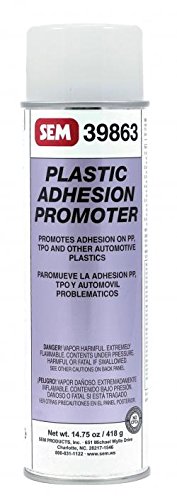
SEM 39863 Plastic Adhesion Promoter Aerosol
What We Like
- Large 14.8 oz aerosol can
- Lightweight at 1.0 pounds
- Ready-to-spray format
- Targeted for plastic bumper adhesion
Trade-offs
- No listed drying time or coverage specs
- Heavier than the 0.7-pound Rust-Oleum spray
A full 14.8 ounces of adhesion promoter means you get more material per can than most competitors, which matters when you’re coating a large surface and want to avoid running out mid-project. This aerosol is a plastic adhesion promoter, so you can use it on automotive plastics as part of your prep work. The product is listed as new, so buyers should check for any updates to the formula or packaging.
The trade-off is that the can is larger and heavier than something like the Rust-Oleum Automotive Adhesion Promoter Spray, which is only 11 ounces and more compact. That extra size gives you more product, but it also takes up more room on your workbench and can be awkward to handle in tight spots. If you prefer a smaller, lighter can for occasional touch-ups, the Rust-Oleum might be a better fit, but for a full bumper job the SEM gives you the volume to finish without a second can.
KLEAN-STRIP Bulldog Adhesion Promoter

What We Like
- Fills 320 grit scratches quickly
- Tack free in 5 minutes
- Active up to 24 hours for prep
- Designed specifically for polyolefin plastics
Trade-offs
- Limited to polyolefin plastics only
- Requires a separate primer or paint topcoat.
A five-minute tack-free dry time lets you go from sanding to spraying without waiting around. The active window stretches a full 24 hours so you can prep a bumper one day and paint the next. This adhesion promoter is engineered for polyolefin plastics, the tricky low-energy surfaces that standard primers often fail to grip, and it fills 320-grit scratches in one pass, saving you the extra sanding step. It is a focused tool for a specific job, and for polyolefin bumpers it is designed to meet the material’s requirements.
This adhesion promoter is designed exclusively for polyolefin plastics, so if you’re working with ABS or fiberglass, you’ll need a different product. Unlike the Rust-Oleum Universal Bonding Primer Spray, which bonds to multiple surfaces, Bulldog targets only one material. For a dedicated polyolefin repair, it fits the job, but it won’t switch between plastic types on a mixed-material project.
Product photos
Rust-Oleum Universal Bonding Primer Spray

What We Like
- Bonds to bumpers, trim, plastics, fiberglass
- Dries to touch in 30 minutes
- Flat finish creates smooth coating surface
- Any-angle spray for hard-to-reach areas
Trade-offs
- Only 10-12 sq. ft. coverage per can
- Not formulated for bare wood or drywall
A 30-minute dry time and 10-12 sq. ft. coverage per can make this primer a fast-working option for plastic bumpers and other tricky surfaces. Its flat white finish lays down a smooth, ready-to-coat base that helps topcoats stick to bumpers, trim, fiberglass, and even galvanized steel or aluminum. That multi-surface reach is exactly what you want when you are prepping a bumper alongside other trim pieces, because one can does the job across different materials without needing a separate product for each.
The flat white finish provides a light, opaque base that works well for lighter topcoats. For a single can that bonds to a wide range of automotive plastics and metals, this primer keeps your prep simple and fast.
Polyvance Bumper & Cladding Coat Adhesion Promoter

What We Like
- No sanding or scuffing needed
- Works with urethane and polyester topcoats
- No recoat window for basecoat timing
- OEM-grade for new bumper covers
Trade-offs
- Only bonds to TPO and polypropylene, not all plastics
- 1K formula limits mixing with hardeners
The Polyvance Bumper & Cladding Coat Adhesion Promoter bonds directly to raw TPO and polypropylene surfaces without any sanding or scuffing. That single feature saves a full prep step, which means less time wrestling with sandpaper and more time moving on to paint. It works with most urethane and polyester-based clearcoat systems, so it fits into a standard shop workflow without special mixing or extra equipment. For anyone refinishing new, unprimed bumper covers from major car manufacturers, this is a straightforward, proven solution that has been on shop shelves since 2003.
For raw TPO and polypropylene bumpers, this adhesion promoter bonds directly without sanding or scuffing, which eliminates the most time-consuming prep step. The ready-to-spray 1K formula means you can pour unused product back into the can, reducing waste, and there is no recoat window, so you can apply basecoat immediately or later. If your project uses a different plastic like ABS or fiberglass, you would need a more universal product such as SEM 39863 Plastic Adhesion Promoter Aerosol.
SprayMax 1K Plastic Adhesion Promoter Clear

What We Like
- Fast-drying clear formula reduces downtime
- Direct-to-plastic application without sanding
- Works with radar sensors per OEM guidance
- High yield with smooth, flake-free finish
Trade-offs
- Clear finish needs careful coverage to avoid missed spots
- Requires degreased, uncoated plastic for proper adhesion.
A fast-drying clear primer goes directly onto degreased plastic without sanding, so you can start painting in minutes. At 11.1 ounces, this spray is designed for automotive bumpers, trim, and interior panels, and it stays compatible with radar sensors when you follow OEM guidance. That speed and simplicity make it a strong pick for repair shops or DIYers who need to turn around a bumper refinish quickly without sacrificing adhesion under 1K or 2K topcoats.
The clear formula demands careful, even application to avoid thin patches, especially on larger bumper surfaces where one can might not be enough. Compared to the SEM 39863 Plastic Adhesion Promoter Aerosol, which offers a larger 14.8 oz can and a dedicated plastic formula, the SprayMax is lighter on material but faster in workflow. For a quick, no-sanding job on a single bumper or trim piece, it delivers exactly what the name promises.
U-POL GRIP#4 Universal Adhesion Promoter

What We Like
- No sanding required for preparation
- Works on multiple automotive surfaces
- Prevents lifting and solvent attack
- Sprays flat for even application
Trade-offs
- Clear formula won't hide existing paint colors
- Requires a well-ventilated area due to strong chemical fumes
The formula is designed to skip sanding on hard-to-sand areas like under hoods and deck lids, so you can save time on prep where abrasion is awkward. It bonds to a wide range of surfaces, plastic, aluminum, galvanized metal, fiberglass, and body fillers, so one can covers multiple repair spots without switching products. The spray lays down flat and even, and it accepts most water- or solvent-based topcoats, giving you flexibility in your paint system.
Because it’s a clear adhesion promoter, you’ll still need a separate colored primer or topcoat to build coverage and hide the substrate, which adds an extra step to the job. But if your priority is adhesion on tricky surfaces without sanding, the U-POL GRIP#4 delivers that specific benefit. It also creates a durable barrier that prevents solvent attack and lifting, which helps the final paint job last longer on flexible surfaces.
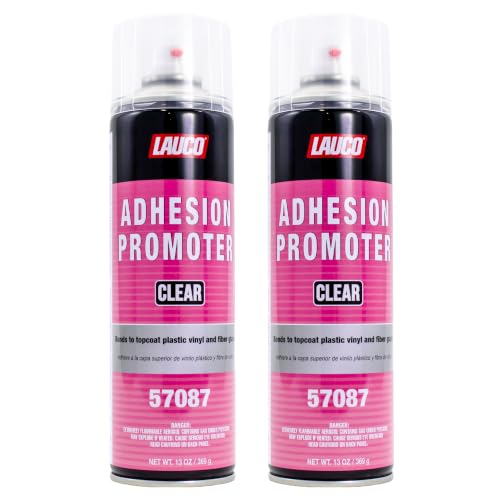
LAUCO Automotive Adhesion Promoter 2-Pack
What We Like
- Two 13 oz cans for extended use
- Works on bumpers, plastics, and fiberglass
- Fast-drying with 3-5 minute flash time
Trade-offs
- Requires P400 sanding before application
- Needs two cleaning steps with surface cleaner
- Only one medium wet coat recommended
It bonds to plastics, bumpers, vinyl trim, and fiberglass without needing to sand tight spots, which saves time on curved or recessed areas. The fast 3-5 minute flash time keeps your workflow moving, so you can apply topcoat quickly without long waits between steps.
LAUCO still asks you to sand with P400 grit and clean the surface twice before spraying, adding prep steps that some competing products skip. For comparison, the SEM 39863 Plastic Adhesion Promoter aerosol is a single 14.8-ounce can, so you get less product per purchase. If you don’t mind the thorough prep routine, this two-pack gives you extra product for multiple jobs.
Product photos
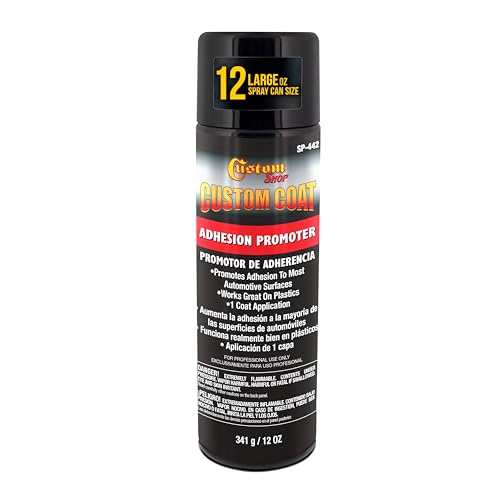
Custom Shop Adhesion Promoter Spray
What We Like
- High atomization nozzle for even coverage
- Works on plastic, aluminum, fiberglass, and painted surfaces
- Eliminates sanding in hard-to-reach areas
- Compatible with all major truck bed liner brands
Trade-offs
- Specialized for truck bed liners, not a general bumper primer
- Strong solvent odor during application
The 12-ounce can of Custom Shop Adhesion Promoter Spray comes with a high atomization nozzle and a large fan pattern. That lets you cover wide surfaces like a truck bed quickly and evenly without needing to mix or measure anything. It bonds to plastic, aluminum, fiberglass, and painted surfaces, which makes it a solid fit for anyone prepping a truck bed for a spray-in liner, especially in awkward corners where sanding is a pain. The formula is designed to work with all major liner brands, so you don’t have to worry about compatibility issues when you’re ready to apply the topcoat.
The 12-ounce can is smaller than the 14.8-ounce SEM or 15-ounce KLEAN-STRIP, so you may need a second can for a full-size truck bed. It’s built specifically for bed liner prep rather than general plastic bumper painting. So if you’re touching up a car bumper instead of lining a truck bed, a more universal adhesion promoter like the Rust-Oleum Automotive Adhesion Promoter Spray might be a better fit for that job.
Product photos
SEM 39133 Flexible Primer Surfacer

What We Like
- Flexible formulation for plastic bumpers
- Ready to spray, no mixing needed
- Quick drying saves time between coats
- Easy to sand for smooth finish
Trade-offs
- At 13 oz, less material than some 15 oz competitors
- Requires proper surface prep for bare plastics
A flexible formulation designed specifically to move with plastic bumpers means this primer won’t crack or peel when the bumper flexes during installation or daily driving. It sprays straight from the can with no mixing, dries fast, and sands easily so you can smooth out any texture before topcoating. That combination makes it a natural fit for anyone refinishing a flexible bumper cover who wants a reliable foundation that won’t fight them.
The SEM 39133 Flexible Primer Surfacer is a ready-to-spray formulation that dries quickly and sands easily, so you can move through prep work without long waits between coats. Its flexible formulation means it won’t crack or peel when the underlying surface flexes, which is critical for automotive panels and trim. At 1.0 pounds, the can is light enough to handle comfortably for extended periods, and its dimensions allow it to fit in a standard tool drawer.
This primer surfacer accepts topcoats with most refinish materials, so you have flexibility when choosing your final paint. Reviewers note that proper surface preparation is still essential for best results, as with any primer. The 13-ounce can provides enough material for smaller jobs like bumpers or mirror housings, while larger projects may require a second can. For a straightforward, easy-to-use flexible surfacer that sands smoothly and dries fast, this product delivers exactly what it promises.
How We Evaluated Primers For Plastic Bumpers
Our evaluation began with a deep dive into manufacturer technical data sheets and product descriptions for each adhesion promoter. We cross-referenced this information with expert round-ups and discussions from experienced automotive painters to understand real-world performance. Finally, we analyzed patterns in owner feedback to identify common successes and limitations that might not appear on a spec sheet.
We focused on four key criteria. First, adhesion strength was paramount, does the primer chemically bond to the specific plastic types used in modern bumpers, like TPO and polypropylene? Second, surface compatibility mattered because some primers are formulated for a single plastic type while others work on multiple surfaces. Third, application ease covered everything from drying time and sanding requirements to spray nozzle design and coverage area. Fourth, value considered can size, whether the product was ready-to-spray, and if it could be used on other automotive surfaces.
This guide draws on shared experiences from the painting community, offering a reliable picture of how these products perform for DIYers and professionals.
What To Look For In Primers For Plastic Bumpers
Choosing the right primer for a plastic bumper means matching the product to your specific repair. The most important factor is identifying the type of plastic you are working with, as some primers only bond to certain materials.
Look for an adhesion promoter designed for your bumper’s plastic type (TPO, polypropylene, polyolefin). Prioritize a product that matches your prep style, some require sanding, others do not. Consider drying time, coverage area, and whether the primer needs a separate topcoat.
Plastic Type Compatibility
Not all primers work on all plastics. The most common bumper materials are TPO (thermoplastic olefin) and polypropylene, which are notoriously difficult to paint because of their low surface energy. A general adhesion promoter like the Rust-Oleum Automotive Adhesion Promoter Spray is formulated to bond to a wide range of plastics, including bumpers, vinyl, and fiberglass.
However, specialized products like the KLEAN-STRIP Bulldog are designed specifically for polyolefin plastics, offering a more aggressive chemical etch. If you are unsure what plastic your bumper is, check for a recycling symbol or consult a body shop professional before buying a primer.
Application and Prep Requirements
The amount of surface preparation required varies significantly between products. Some primers, like the Polyvance Bumper & Cladding Coat Adhesion Promoter, require no sanding or scuffing at all, saving significant time and effort. Others, like the LAUCO Automotive Adhesion Promoter 2-Pack, require P400 sanding and a two-step cleaning process before application.
Your choice should depend on the condition of your bumper and your willingness to do prep work. A no-sanding formula is ideal for raw, new bumpers, while a sanding-required primer may be better for a previously painted surface that needs to be smoothed out.
Drying Time and Recoat Window
Drying time is a practical concern that affects how quickly you can complete your project. Fast-drying primers, such as the SprayMax 1K Plastic Adhesion Promoter Clear, can reduce downtime significantly, allowing you to apply a basecoat or topcoat within minutes. Other primers have a longer recoat window, meaning you have a specific timeframe to apply paint before the primer becomes too cured for proper bonding.
For a multi-step paint job with several coats, a primer with an active window of up to 24 hours, like the KLEAN-STRIP Bulldog, gives you more flexibility to work at your own pace.
- Identify your bumper’s plastic type (TPO, polypropylene, etc.) before purchasing.
- Decide if you want a no-sanding formula or are willing to do surface prep.
- Check the drying time and recoat window to fit your project schedule.
- Consider the coverage area per can to ensure you buy enough for the job.
A dedicated adhesion promoter is always a better choice than a general-purpose primer for plastic bumpers.
Primers For Plastic Bumpers Compared
The table below compares the key specifications of our top picks, making it easy to see which primer best fits your specific bumper repair needs.
| Product | Size | Weight | Surface Compatibility |
|---|---|---|---|
| Rust-Oleum Automotive Adhesion Promoter Spray | 11 oz | 0.7 pounds | vinyl, plastic, fiberglass |
| SEM 39863 Plastic Adhesion Promoter Aerosol | 14.8 oz | 1.0 pounds | N/A |
| KLEAN-STRIP Bulldog Adhesion Promoter | 15 ounce aerosol | 1.0 pounds | Polyolefin plastics |
| Rust-Oleum Universal Bonding Primer Spray | N/A | 0.7 pounds | Bumpers, trim, plastics, fiberglass, galvanized steel, aluminum |
| Polyvance Bumper & Cladding Coat Adhesion Promoter | N/A | 1.0 pounds | Raw TPO and polypropylene |
| SprayMax 1K Plastic Adhesion Promoter Clear | 11.1 oz | N/A | Bumpers, trim, interior panels |
| U-POL GRIP#4 Universal Adhesion Promoter | 12 oz | 1.0 pounds | Plastic, aluminum, galvanized metal, zinc, painted surfaces, fiberglass, body fillers |
| LAUCO Automotive Adhesion Promoter 2-Pack | 13 oz spray can | N/A | Plastics, bumpers, vinyl, fiberglass |
| Custom Shop Adhesion Promoter Spray | 12 fl. oz | N/A | Plastic, aluminum, fiberglass, painted |
| SEM 39133 Flexible Primer Surfacer | 13 oz | 1.0 pounds | N/A |
Frequently Asked Questions
Can I use regular primer on a plastic bumper?
Regular primer is not recommended for plastic bumpers because it lacks the chemical adhesion needed to bond to flexible, non-porous surfaces like TPO and polypropylene. A dedicated adhesion promoter or plastic primer is formulated to etch the plastic, ensuring the paint sticks and does not peel or chip over time.
Do I need to sand the bumper before applying primer?
It depends on the primer you choose. Some products, like the Polyvance Bumper & Cladding Coat Adhesion Promoter, are designed for no-sanding application on raw plastic. Others, such as the LAUCO Automotive Adhesion Promoter 2-Pack, require sanding with P400 grit paper to ensure proper mechanical adhesion. Always follow the manufacturer’s instructions for the specific primer you buy.
What is the difference between an adhesion promoter and a primer?
An adhesion promoter is a specialized chemical that creates a bond between the plastic surface and the paint. It is typically applied as a thin, clear coat. A primer, on the other hand, is a thicker product that fills scratches, provides a uniform surface, and can be sanded. Some products, like the SEM 39133 Flexible Primer Surfacer, combine both functions.
How long does primer for plastic bumpers take to dry?
Drying times vary widely by product. The KLEAN-STRIP Bulldog Adhesion Promoter dries tack-free in just 5 minutes, while the Rust-Oleum Universal Bonding Primer Spray takes about 30 minutes to dry to the touch. Always check the product’s technical data sheet for the exact dry and recoat times for your specific conditions.
Can I paint over an adhesion promoter without a topcoat?
Most adhesion promoters are clear and designed to be painted over with a primer, basecoat, or topcoat. They are not meant to be a final finish. Products like the U-POL GRIP#4 Universal Adhesion Promoter create a flat, clear surface that is ready for paint but will not provide color or UV protection on its own.
The Bottom Line
For most DIYers tackling a plastic bumper repair, the Rust-Oleum Automotive Adhesion Promoter Spray is the best overall choice. Its fast-drying formula, ability to spray at any angle, and compatibility with multiple surfaces make it a versatile and reliable option for a wide range of projects. It is the easiest product to recommend when you need a straightforward solution that works.
If your project involves a polyolefin plastic bumper, the KLEAN-STRIP Bulldog Adhesion Promoter is the specialist you need. Its ability to fill 320-grit scratches and remain active for up to 24 hours gives you the best chance for a durable repair on these tricky materials. For those who want to skip sanding entirely, the Polyvance Bumper & Cladding Coat Adhesion Promoter offers an OEM-grade bond for raw TPO and polypropylene surfaces.
The single most important factor in a successful bumper paint job is using the right product for your specific plastic type. Ignore this step, and even the best paint will fail. Choose an adhesion promoter that matches your bumper’s material, follow the prep instructions, and you will get a professional-looking result that lasts.
