
10 Best Primers For Peeling Paint in 2026
This post contains affiliate links. As an Amazon Associate, we earn from qualifying purchases.
For peeling paint, the Zinsser Peel Stop Triple Thick Binding Primer is our best overall pick because its triple-thick formula glues down peeling edges and fills gaps for a smooth, ready-to-paint surface. For a clear sealer that won’t alter your topcoat, the Rust-Oleum Binding Sealer and White Primer is our best binding sealer. The INSL-X High Build Peel Bonding Primer offers a flexible finish that resists seasonal cracking.
Peeling paint is frustrating because the old, failing layer acts like a barrier, preventing new paint from sticking. The right primer doesn’t just cover the problem; it chemically bonds to the old paint and the substrate, creating a unified surface that holds tight.
This guide is research-based, drawing on manufacturer specifications, expert round-ups, and patterns in owner feedback. We evaluated ten primers across key criteria to help you choose the right formula for your specific peeling paint problem.
Top 10 Primers For Peeling Paint in the Market

Certain content that appears on this site comes from Amazon. This content is provided "as is" and is subject to change or removal at any time.
The Best Primers For Peeling Paint, Reviewed
Zinsser Peel Stop Triple Thick Binding Primer

What We Like
- Triple-thick formula glues peeling edges
- Works indoors and outdoors
- Fills gaps for a smooth finish
- Dries to touch in 30 minutes
Trade-offs
- Coverage varies widely by surface porosity
- Coverage drops to 50 sq ft on porous surfaces
A triple-thick formula that physically glues down peeling edges and fills gaps means this primer tackles the worst flaking paint before you even open a top coat. It bonds to wood, metal, and concrete both indoors and out, drying to the touch in just 30 minutes so you can keep moving. That makes it the go-to choice for anyone facing cracked, chipping surfaces that other primers would simply sit on top of.
Coverage swings from 50 to 200 square feet per gallon depending on how porous or damaged the surface is, so you may need extra product for heavily weathered siding. The two-pack weighs 19.9 pounds total, which means carrying both gallons at once is a workout. For jobs where the paint is already lifting, the binding power is worth the extra heft.
Product photos
Rust-Oleum Binding Sealer and White Primer

What We Like
- Interior and exterior use
- Binds cracking and peeling paint
Trade-offs
- At 0.2 lb, gallon size is extremely light
- Not pigmented, so won't hide stains or dark colors
A 300 to 400 square-foot coverage per gallon means this sealer goes a long way on walls with flaking edges and crumbly old paint. That makes it ideal for anyone dealing with peeling ceilings, weathered siding, or chalking trim where adhesion is the real problem, not just the color.
The trade-off is that this is a clear sealer, so it won’t block stains or provide a white base for a color change. If you need both binding and stain hiding, the INSL-X High Build Peel Bonding Primer offers a white pigmented option. But for pure binding power on a surface that simply needs to stop peeling before repainting, this Rust-Oleum sealer delivers exactly what its name promises.
INSL-X High Build Peel Bonding Primer

What We Like
- Flexible, breathable finish resists seasonal cracking
- Blocks rust stains and mild tannin bleed
- Applies thick (up to 20 mils wet)
- Easy cleanup with soap and water
Trade-offs
- Requires temperatures above 35°F and below 90°F
- Heavier than some competitors at 10 pounds
You can apply this primer up to 20 mils wet, which is a heavy coat that helps bond peeling paint to the surface. It remains flexible and breathable over time, so it won’t peel or crack when temperatures change throughout the seasons. That means fewer worries about re-peeling after winter or summer swings.
You need to work within the 35°F–90°F temperature range, which limits use in very cold or hot weather. At 10 pounds per gallon, it’s heavier than some other primers, so carrying a full bucket up a ladder takes a bit more effort. But if your main concern is a finish that won’t re-peel, this primer’s flexible bond is designed to handle seasonal shifts.
Product photos
Masterchem Industries L211111 Primer
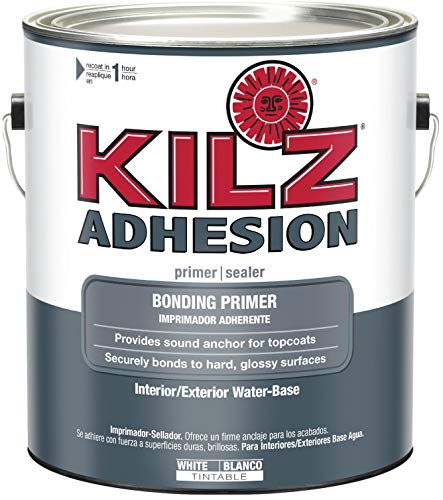
What We Like
- Bonds to tile, vinyl, glass, metal
- Reduces sanding on glossy surfaces
- Dries to touch in 30 minutes
- Water-based and non-flammable
Trade-offs
- Requires 24-hour dry time for epoxy topcoats
- 12.2 lb case is heavy to maneuver
A single gallon covers 300 to 400 square feet, which means you can tackle a whole room or a large exterior wall without constantly running back for more. The styrenated acrylic polymer grips hard-to-paint surfaces like tile, vinyl, glass, and metal, so it is a natural fit if you are priming over mixed materials or glossy areas that usually reject paint. It dries to the touch in 30 minutes and accepts a recoat in one hour, keeping a big project moving quickly.
This primer bonds aggressively to slick surfaces like tile, vinyl, glass, and metal, so you can paint over them without sanding until your arms ache. Its styrenated acrylic formula anchors topcoats and reduces prep on glossy surfaces. For anyone working on fiberglass, Formica, or glazed brick, it delivers strong adhesion across all of them in one coat.
Mad Dog Gear MDP100 Primer

What We Like
- Stops peeling rust and tannin
- Made in the United States
- Clear finish preserves underlying surface
- Exterior-grade formula for outdoor use
Trade-offs
- At 11.0 lb, heavier than some gallon primers
- Clear color won't hide stains on its own
Stopping peeling rust and tannin on exterior surfaces is what the Mad Dog Gear MDP100 is formulated for, according to its Amazon title. Made in the United States and designed for outdoor use, it addresses rust bleed and tannin staining. The clear finish means you can apply it over existing paint or bare surfaces without changing the look underneath. That makes it a smart choice for projects where you want to seal the problem without adding an opaque layer.
Weight is one factor: at 11.0 pounds per gallon, this can is heavier than some gallon primers on the market, so you’ll want a sturdy grip when pouring. It also stays clear, which means it won’t hide discoloration the way a white bonding primer like Zinsser Peel Stop Triple Thick Binding Primer can. If your peeling paint is accompanied by heavy staining or you need to block dark marks, a tinted option may be a better fit. But for rust and tannin control on outdoor surfaces, the MDP100 gives you an American-made solution.
Product photos
XIM Peel Bond Bonding Primer

What We Like
- Bonds to plywood, T1-11, PVC, aluminum
- Clear finish won't change topcoat color
- Made in the United States
Trade-offs
- Quart size covers less area than gallon options
- Clear only, no stain-blocking or tinting
A clear bonding primer that sticks to plywood, T1-11, PVC, and aluminum means this quart is built for the trickiest surfaces where paint refuses to hold. If you’re dealing with slick or weathered substrates that reject ordinary primers, the XIM Peel Bond gives you a fighting chance without changing your topcoat’s color. It is suited for targeted use on difficult substrates such as peeling aluminum, T1-11 siding, or PVC trim.
At 31 ounces, this quart is smaller than a gallon, so it’s best for targeted repairs rather than whole-room jobs. Because it’s clear, it won’t hide stains or discolorations, so you may need a separate stain-blocking product if that’s a concern. For a focused repair on a difficult surface, the adhesion to plywood, T1-11, PVC, and aluminum is a key advantage.
Polar Clear Binding Primer

What We Like
- Low VOC, water-based formula
- Breathable membrane allows moisture escape
- Seals porous, damaged, flaky surfaces
- Suitable for interior and exterior use
Trade-offs
- Requires surface to be clean and dry
- Not suitable for non-porous or glossy surfaces
A coverage of up to 11m² per liter means this clear primer goes a long way, making it a practical choice for larger projects where you need to seal and stabilize flaking or porous surfaces before painting. The water-based, low-VOC acrylic formula forms a flexible, breathable membrane that lets trapped moisture escape. That helps prevent future peeling. That eco-friendly profile suits anyone working in a home with sensitive occupants or limited ventilation, and the clear finish keeps your options open for any topcoat color.
This primer demands a clean, dry surface free of loose material, so you will need to prep thoroughly before applying. For most standard interior and exterior repairs where breathability and low odor matter, it delivers reliable adhesion without the chemical punch.
Product photos
Zinsser 60001 Peel Stop Clear Binding Sealer & Primer
What We Like
- Glues down peeling edges
- Seals chalky surfaces
- Dries in 30 minutes
- Uniform flat finish for top coating
Trade-offs
- Single gallon covers only 300-400 sq ft
- Clear formula can make coverage hard to see on light surfaces
A 30-minute dry time means you can prep a peeling wall and have it ready for paint in under an hour. This water-based formula does double duty: it glues down the loose edges of flaking paint while sealing the chalky, powdery surface underneath. The result is a uniform flat finish that grabs any alkyd or latex top coat you throw at it. For anyone dealing with peeling paint on a porch, window trim, or interior wall that needs a quick turnaround, this clear sealer keeps the project moving without waiting overnight between coats.
This water-based primer glues down peeling edges, binds cracks, and seals chalky surfaces. It dries to the touch in 30 minutes and covers between 300 and 400 square feet per gallon. Because the formula is clear, you’ll need to watch your coverage closely to avoid thin spots, especially on light surfaces.
Product photos
Rust-Oleum 60004 Clear Zinsser Peel Stop Binding Primer
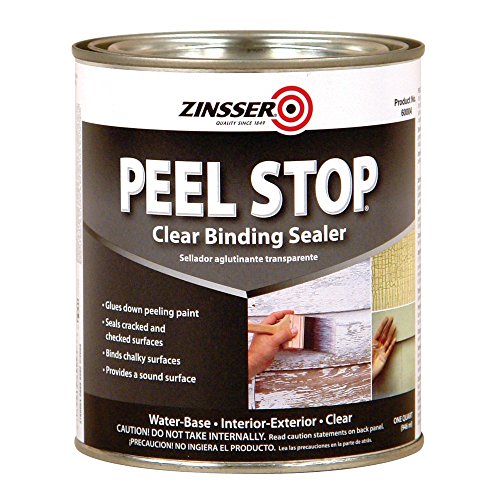
What We Like
- Interior and exterior water-base formula
- Binds cracking, chalking and peeling paint
- Glues down cracks and gaps under old paint
- Six-pack provides extended supply
Trade-offs
- Requires back brushing or rolling into cracks and edges
- Quart size means more cans to handle than a gallon
A pack of six quart cans lets you address multiple peeling-paint trouble spots without needing to buy more primer mid-project. This water-base primer binds cracking, chalking, and peeling paint while gluing down loose edges, and it works on both interior and exterior surfaces. The multi-pack format means you have enough primer on hand to move from one area to the next without interruption.
The product requires back brushing or rolling into cracks and edges of old paint, so you cannot simply apply it without working it in. Compared to the Zinsser Peel Stop Triple Thick Binding Primer, which comes in gallon jugs, this Rust-Oleum pack offers the same type of binding action but in smaller quart cans. If you prefer fewer containers for a single large job, a gallon option may be more convenient, but for tackling multiple smaller spots, the six-pack provides a practical supply.
SENVEN Primer Paint Stain Block Bonding Primer
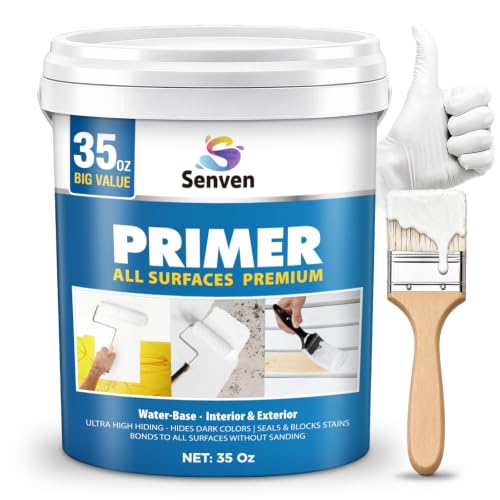
What We Like
- Blocks water, smoke, ink, markers and tannins
- Bonds to glossy surfaces without scuff sanding
- Suitable for interior and exterior surfaces
- Works on drywall, masonry, brick, stucco, concrete
Trade-offs
- Not suitable for wood, ceramic tile, PVC, or metal
- Coverage limited to 40-45 sq. ft per container
- Cannot be used on wood veneer or doors
A stain-blocking resin formula that tackles water, smoke, ink, markers, and tannins makes this primer a smart pick when peeling paint comes with ugly discoloration underneath. It bonds to glossy surfaces without the usual scuff sanding, saving you elbow grease on tricky walls or ceilings. The 35-ounce container covers 40 to 45 square feet, so it works best for smaller repair patches or one accent wall rather than a whole room.
Its limited surface compatibility is worth noting. While it handles drywall, masonry, brick, stucco, and concrete, the product is not suitable for wood veneer, doors, artificial stone, ceramic tiles, glossy surfaces, PVC plastic, wood, decorative moldings, blinds, galvanized metal, or aluminum. If your peeling paint sits on a wooden door or trim, check a primer specifically rated for those surfaces. For stubborn stains on masonry or drywall, this SENVEN primer delivers focused blocking without extra prep.
Product photos
How We Evaluated Primers For Peeling Paint
Our evaluation focused on how each primer handles the core challenge of failing paint. We analyzed manufacturer technical data sheets and application instructions, and we studied patterns in owner feedback to understand real-world performance on different surfaces and conditions.
The four criteria that mattered most were adhesion and binding strength, film thickness and gap-filling ability, flexibility to handle seasonal movement, and surface compatibility. Thicker formulas like the Zinsser Peel Stop Triple Thick physically glue down edges, while clear sealers like the Rust-Oleum Binding Sealer penetrate and bond without hiding the surface. For exterior use, flexibility is critical to prevent new cracking as temperatures change.
A research-led evaluation has limits: we cannot replicate every surface condition or climate in a lab. Our recommendations are based on what the products claim to do and what owners consistently report, but your specific peeling paint problem may require a test patch.
What To Look For In Primers For Peeling Paint
Choosing the right primer starts with understanding what kind of peeling you have. Is the paint cracking and curling away, or is it just chalking and powdery? The answer determines whether you need a thick, gap-filling binder or a penetrating clear sealer.
Look for a primer that bonds to the specific surface you’re painting. It should have enough film thickness to fill cracks and glue down edges, plus the flexibility to move with the substrate through temperature changes.
Adhesion and Binding Strength
The primary job of a peeling paint primer is to stick to the failing layer and the substrate beneath it. Look for primers that specifically mention “binding” or “bonding” on the label. These formulas contain resins that penetrate into the old paint and the surface, creating a mechanical bond. For glossy or non-porous surfaces like tile or metal, you need a high-adhesion primer like the Masterchem Industries L211111 Primer that reduces the need for sanding.
Film Thickness and Gap-Filling Ability
Thicker primers, often called “high-build” or “triple-thick,” are designed to fill cracks, gaps, and the edges of peeling paint. The Zinsser Peel Stop Triple Thick and the INSL-X High Build Peel Bonding Primer both apply thick enough to level out minor surface imperfections. If your peeling is severe with deep cracks, a high-build formula is essential. For light, superficial peeling, a thinner clear sealer like the Zinsser 60001 Peel Stop Clear Binding Sealer may be sufficient.
Flexibility and Breathability
Exterior surfaces expand and contract with temperature and humidity. A rigid primer will crack, causing new paint to peel. The INSL-X High Build Peel Bonding Primer is specifically designed to be flexible and breathable, resisting seasonal cracking. For interior use, flexibility is less critical, but a breathable formula like the Polar Clear Binding Primer allows trapped moisture to escape, preventing future blistering and peeling.
- Scrape away loose paint and sand rough edges before applying any primer.
- Check the temperature range for application, especially for exterior use.
- Use a test patch on an inconspicuous area to check adhesion and coverage.
- Apply primer with a brush or roller, working it into cracks and edges.
- Allow full dry time as specified on the can before topcoating.
The thicker the peeling, the thicker the primer you need to glue it down.
Primers For Peeling Paint Compared
The table below compares key features of each primer to help you match the right formula to your peeling paint problem.
| Product | Coverage | Surfaces | Type |
|---|---|---|---|
| Zinsser Peel Stop Triple Thick Binding Primer | 50-200 sq. ft./gal | Wood, metal, concrete | N/A |
| Rust-Oleum Binding Sealer and White Primer | 300-400 sq-ft/gal | Interior & exterior | Water-base |
| INSL-X High Build Peel Bonding Primer | N/A | N/A | N/A |
| Masterchem Industries L211111 Primer | 300-400 sq. ft/gal | Tile, vinyl, glass, metal | Water Base |
| Mad Dog Gear MDP100 Primer | N/A | N/A | N/A |
| XIM Peel Bond Bonding Primer | N/A | Plywood, T1-11, PVC, aluminum | N/A |
| Polar Clear Binding Primer | Up to 11m² per liter | Drywall, plaster, cement, stucco, wood | Water-based acrylic |
| Zinsser 60001 Peel Stop Clear Binding Sealer & Primer | 300-400 sq ft/gal | Interior and exterior | Water-based |
| Rust-Oleum 60004 Clear Zinsser Peel Stop Binding Primer | N/A | Interior & exterior | Water-base |
| SENVEN Primer Paint Stain Block Bonding Primer | 40-45 Sq.Ft | Drywall, wallpaper, wall, ceiling, concrete floor, bricks | Interior/exterior acrylic primer |
Frequently Asked Questions
Can I paint directly over peeling paint without primer?
No. Painting directly over peeling paint will not solve the problem, and the new paint will likely peel off with the old layer. A bonding primer is required to glue down the failing edges and create a stable surface for the new paint to adhere to.
What is the difference between a bonding primer and a regular primer?
A bonding primer contains specialized resins that create a strong mechanical and chemical bond to difficult surfaces like old paint, glossy finishes, tile, and metal. Regular primers are designed to seal porous surfaces and provide a uniform base for paint, but they lack the adhesion strength to hold onto failing paint.
How long does a binding primer take to dry before I can paint?
Drying times vary by product, but many binding primers dry to the touch in about 30 minutes. However, you should always check the manufacturer’s instructions for the recommended recoat time, which can range from one hour to overnight depending on humidity, temperature, and film thickness.
Can I use a binding primer on exterior surfaces?
Yes, many binding primers are formulated for both interior and exterior use. For exterior applications, look for a primer that is specifically labeled for outdoor use and offers flexibility to handle temperature changes and moisture. The INSL-X High Build Peel Bonding Primer and the Mad Dog Gear MDP100 Primer are good exterior options.
Do I need to sand before using a binding primer?
Light sanding is recommended to remove loose paint flakes and create a slightly rough surface for the primer to grip. However, some high-adhesion primers, like the Masterchem Industries L211111 Primer, are designed to bond to glossy surfaces with minimal sanding, reducing prep work.
The Bottom Line
If you’re dealing with actively peeling or cracked paint, the Zinsser Peel Stop Triple Thick Binding Primer is the best overall choice. Its thick formula glues down edges and fills gaps, making it ideal for homeowners and painters tackling mixed surfaces indoors and out.
For those who need a clear sealer that won’t alter their topcoat, the Rust-Oleum Binding Sealer and White Primer offers excellent binding without adding a white undercoat. If you’re working on an exterior surface that experiences seasonal temperature swings, the flexible finish of the INSL-X High Build Peel Bonding Primer is worth paying more for.
The single most important factor in choosing a primer for peeling paint is matching the formula’s thickness and adhesion strength to the severity of your peeling. A test patch is always the best way to confirm you’ve chosen the right product.
