
10 Best Primers For Outdoor Wood in 2026
This post contains affiliate links. As an Amazon Associate, we earn from qualifying purchases.
The Zinsser Smart Prime Water-Based Primer is the best overall primer for outdoor wood because it bonds to glossy surfaces without sanding, blocks stains with proprietary resins, and dries in minutes. For heavy tannin bleed, the Zinsser High Hide Cover-Stain Primer offers superior stain blocking, and the INSL-X Aqua Lock Plus Acrylic Primer Sealer is our top low-VOC choice.
The challenge with priming outdoor wood is that it faces moisture, UV rays, temperature swings, and tannin bleed, all of which can ruin a finish if the primer isn’t up to the task. You need a primer that adheres well, seals the wood, and holds up against the elements.
This guide is research-based, drawing on manufacturer specifications, expert round-ups, and patterns in owner feedback. We evaluated a range of primers to help you find the right match for your specific project, whether you need fast drying, strong adhesion, or a low-odor formula.
Top 10 Primers For Outdoor Wood in the Market
Certain content that appears on this site comes from Amazon. This content is provided "as is" and is subject to change or removal at any time.
The Best Primers For Outdoor Wood, Reviewed
Zinsser Smart Prime Water-Based Primer

What We Like
- Bonds to glossy surfaces without sanding
- Blocks stains with proprietary resins
- Dries in minutes, recoat in 1 hour
- Mold and mildew resistant dried film
Trade-offs
- Quart size covers less area than gallon options
- Not suitable for marine or fiberglass boat surfaces.
Bonds to glossy surfaces without scuff sanding, which means you can skip the tedious prep work that usually comes with repainting outdoor wood. The proprietary stain-blocking resins tackle tough marks like tannin bleed or water stains, and the dried film resists mold and mildew, essential for damp exterior conditions. This primer dries in minutes and can be recoated in just one hour, so a full project wraps up in an afternoon. For anyone refinishing a deck, fence, or outdoor furniture, that speed and adhesion make it a natural first choice.
The quart size is convenient for small jobs like a single piece of furniture or a touch-up, but if you’re tackling a large deck or shed, you may need multiple quarts or a larger container. For bigger projects, other water-based primers are available in gallon sizes, such as the INSL-X Aqua Lock Plus, which comes in a 1-gallon format. Still, for most outdoor wood jobs where speed and adhesion matter, this primer’s ability to bond to glossy and chalky surfaces without sanding saves real time and effort.
Zinsser High Hide Cover-Stain Primer

What We Like
- Blocks tannin bleed on exterior wood
- Hides dark colors with high-hiding formula
- Permanently seals fire, smoke, water stains
- Fast-drying, recoatable in 2 hours
Trade-offs
- Oil-based requires mineral spirits for cleanup
- Coverage limited to 100 sq ft per quart
A 35-minute dry time and 2-hour recoat window mean you can finish an outdoor project in a single afternoon without waiting around. This oil-based primer seals exterior wood to block tannin bleed and permanently blocks tough stains from fire, smoke, and water damage. It’s the right choice when you need a reliable stain blocker that hides dark colors and sticks to challenging surfaces like previously painted wood or metal.
The trade-off is that oil-based formula requires mineral spirits for cleanup, so you’ll want a dedicated brush and a well-ventilated workspace. If your priority is stopping stubborn stains on outdoor surfaces, this primer delivers the performance you need.
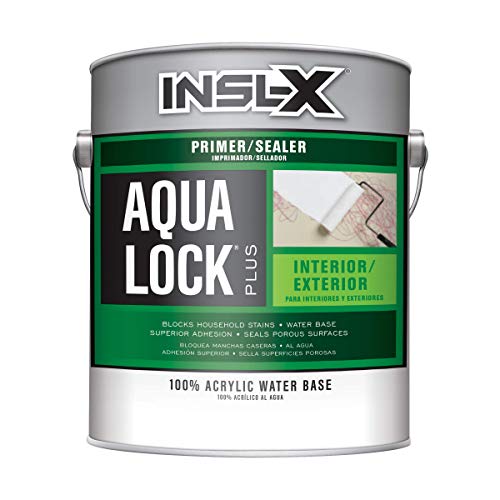
INSL-X Aqua Lock Plus Acrylic Primer Sealer
What We Like
- Low VOC formula for safer application
- Quick drying: tack free in 30 minutes
- 100% acrylic for durable adhesion
Trade-offs
- Cannot apply below 50 °F or above 90 °F
- Requires proper surface prep per label
With a low VOC formulation and a quick dry time, this primer is tack free in just 30 minutes and ready for topcoat in as little as one hour. That lets you move through an outdoor project without the heavy fumes or long waits typical of solvent-based options. Its 300 to 400 square foot coverage per gallon also means one can will handle a solid portion of most outdoor jobs.
This primer needs the right conditions: you require ambient and surface temperatures between 50 and 90 degrees Fahrenheit, which can limit your working window in cooler or hotter seasons. Compared to the Zinsser Smart Prime Water-Based Primer, which comes in a quart size, the INSL-X Aqua Lock Plus gives you more coverage per gallon. If you’re working within that temperature range and want a low-odor, fast-drying primer that blocks stains without the chemical punch, this is a strong fit.
Product photos
Rust-Oleum Painter's Touch 2X Spray Primer

What We Like
- Fast drying in 20 minutes
- Sprays from any angle
- Works on wood, metal, and plastic outdoors
Trade-offs
- Oil-based formula requires mineral spirits for cleanup
- Coverage up to 12 sq ft per can limits large projects
The oil-based formula resists chips and dries to the touch in 20 minutes, so you can recoat or topcoat quickly without waiting around. It sprays from any angle, even upside down, which helps you reach tricky corners on detailed trim or carved wood. For a fast, durable base coat on small surfaces, this primer gets the job done with minimal fuss.
The oil base provides long-lasting protection outdoors, but the formula is low odor, so it’s more pleasant to work with than many traditional oil primers. If you’re working in a well-ventilated area or don’t mind the odor for the sake of durability, this is a fine choice. The flat white finish also means you’ll need a topcoat for a glossy look, but it leaves a smooth surface ready for paint. Best for quick touch-ups and small wood items where convenience and chip resistance matter more than covering large areas.
TotalBoat Marine Topside Boat Paint Primer

What We Like
- Covers completely in one thin coat
- Dries fast, easy to sand
- Chromate-free and lead-free formula
- Works with brush, roller, or spray
Trade-offs
- Requires thinning for spray or brush application
- Needs 65°F for proper drying time
A one-coat coverage primer that dries in 60 to 90 minutes at 65°F means you can sand and topcoat the same day. This marine-grade primer is designed for fiberglass, wood, gelcoat, and previously painted surfaces above the waterline, sealing the surface with a high-solids undercoat that accepts both one-part and two-part polyurethane and enamel marine topside paints. It brushes, rolls, or sprays on easily, and the fast cure saves time on a project where weather windows matter. For anyone restoring a boat or painting exterior marine surfaces, this primer delivers a smooth, sandable base without chromates or lead.
Preparation is the trade-off: you’ll need to thin it with TotalBoat Special Brushing Thinner for brush or roller work, or xylene for spraying, which adds a step and requires proper ventilation. The Rust-Oleum Marine Wood & Fiberglass Primer is another option in this category, but this TotalBoat primer is formulated specifically for marine topside paint systems. If you’re working on a boat that sees regular use, the extra effort pays off in a properly prepared surface for the topcoat.
TotalBoat Wood Sealer Pre Varnish Primer

What We Like
- UV inhibitors protect wood grain
- Fills and seals grain for smooth finish
- Recoat in 2 hours, no sanding needed
- Works on oily hardwoods like teak
Trade-offs
- Requires 1-part varnish topcoat only
- Thinning needed for spray application
A quart covers 60 to 100 square feet and dries in two hours at 72°F, so you can seal a small table or a set of outdoor chairs in a single afternoon. The UV inhibitors soak down into the grain, which stops the wood from cracking and keeps your varnish from peeling off later. That makes this primer a strong fit for anyone finishing exterior wood that takes full sun, especially tricky species like teak or mahogany where adhesion is usually a problem. It fills the grain in one pass, so you get a smooth base without extra sanding between coats.
The clear amber tint is a characteristic of this sealer, so it will add a warm tone to any wood it’s applied to. On pale woods like pine or cedar, that color shift will be more visible, which may not suit every project. It also demands a 1-part marine varnish or polyurethane as a topcoat, so if you plan to use a paint or a 2-part finish, this primer won’t work. Compared to the Rust-Oleum Marine Wood & Fiberglass Primer in the same guide, the TotalBoat gives you dedicated UV protection down into the grain rather than just surface adhesion. But the Rust-Oleum is a better match if you need a white base for paint instead of a clear sealer for varnish.
Product photos
Polar Wood Primer White Undercoat

What We Like
- Quick-drying in 1-2 hours
- Flexible, weather-resistant protection
- Deep penetration into bare wood
- UV and weather resistant for outdoors
Trade-offs
- Requires 4 hours before recoating
- White undercoat only, not a stain blocker
With 10 to 12 square meters of coverage per liter, this primer is designed for interior and exterior wood projects. The flexible, weather-resistant formula resists cracking and repels water, which helps protect wood exposed to outdoor conditions. It dries in one to two hours and can be recoated after four hours, so you can move from prep to topcoat in a single afternoon without long delays. This makes it especially suited for DIYers who want reliable outdoor protection without waiting days between coats.
This is a white undercoat for bare wood, not a stain-blocking primer. If you’re covering dark stains, water marks, or tannin bleed from woods like cedar or redwood, a dedicated stain-blocking primer would be a better fit. But for clean, unfinished timber where flexibility and weather resistance are the priority, the formula penetrates deeply to help the topcoat adhere and resist cracking and water. It’s a straightforward primer built for outdoor use.
Product photos
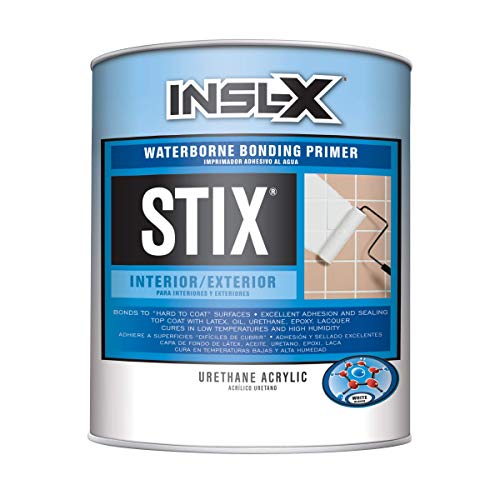
INSL-X Stix Acrylic Waterborne Bonding Primer
What We Like
- Adhesion to glossy tile, PVC, glass
- Cures in temperatures as low as 35°F
- Low VOC with soap-and-water cleanup
Trade-offs
- Only 75-100 sq ft per quart
- Requires careful surface prep per label
This primer bonds to slick tile, PVC, glass, and galvanized metal, surfaces that cause most primers to fail, so you can tackle tough exterior jobs without adhesion worries. It fully cures in temperatures as low as 35°F, meaning early spring or late fall painting stays on track. Low VOCs and soap-and-water cleanup keep the process simple, and the acrylic-urethane formula creates an enamel-smooth base for any topcoat. When you need reliable grip on hard-to-coat surfaces, this primer delivers.
Coverage is the trade-off: a quart covers 75 to 100 square feet, roughly a single medium deck board or a few window trims, so larger projects will need multiple quarts. Compared to the Zinsser Smart Prime Water-Based Primer, which is also a water-based primer-sealer for interior and exterior wood, drywall, and metal, the INSL-X Stix offers adhesion to a wider range of challenging surfaces like tile and glass. Just follow the label’s prep steps, skipping them risks the bond this primer is built for.
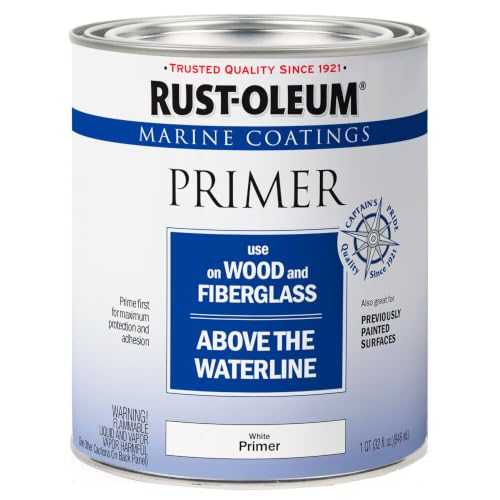
Rust-Oleum Marine Wood & Fiberglass Primer
What We Like
- Improves topcoat adhesion on wood
- Dries to touch in 1 hour
- Sands easily for smooth finish
- Works on bare, rusted, or painted surfaces
Trade-offs
- Only for above-waterline use
- Covers 100 sq ft per quart
- No stain-blocking claim for outdoor wood
This primer dries to the touch in 1 hour and covers 100 sq ft per quart, so it works for projects where you want a quick turnaround between coats. It’s made for wood and fiberglass surfaces above the waterline, which means it suits marine applications like boat hulls or deck components. The formula sands easily, and it works on bare, lightly rusted, and previously painted surfaces, giving you flexibility in prep work.
This quart covers 100 square feet and dries to the touch in one hour, so you can move through a project quickly. It’s designed for wood or fiberglass surfaces above the waterline, working as a base coat to improve topcoat adhesion. The primer sands easily and resists corrosion, which helps the finishing paint dry to an even gloss for a clean look.
Product photos
Dyco Tuff Grip Waterborne Bonding Primer

What We Like
- Bonds to slick, non-porous surfaces
- Fortifies and reinforces wood and concrete
- Low-VOC with soap-and-water cleanup
- Applies with roller, brush, or sprayer
Trade-offs
- 5-gallon size is heavy for small projects
- Requires thorough surface prep for best adhesion.
The Dyco Tuff Grip Waterborne Bonding Primer is a waterborne epoxy ester tie coat engineered to penetrate and fortify slick, non-porous surfaces. For anyone refinishing a weathered outdoor deck or repainting a glossy wood surface, this primer’s specialized adhesion saves you from sanding down to bare grain or using harsh chemical etchants.
This primer targets slick and non-porous surfaces, not bare, untreated wood, so if your project involves raw lumber you might need a different primer. And at five gallons, it’s a lot of primer for a single weekend project; you’ll want to have a large surface or multiple jobs lined up. But if your outdoor wood already has a coat of paint that’s failing to hold new paint, Tuff Grip is the right tool for that slick, stubborn surface.
Product photos
How We Evaluated Primers For Outdoor Wood
To build this guide, we looked at manufacturer data sheets, expert recommendations from paint professionals, and common themes in owner feedback across dozens of primers. We focused on the features that matter most when priming wood that lives outside.
The four criteria that mattered most were adhesion to difficult surfaces (including glossy or weathered wood), stain-blocking ability (especially for tannin bleed), dry and recoat time, and durability against weather, UV, and moisture. A primer that fails on any of these will likely lead to a poor topcoat finish.
This evaluation is based on documented specs, expert consensus, and consistent owner feedback. This approach helps you narrow your options, but it is always a good idea to test any primer on a small, inconspicuous area before committing to a full project.
What To Look For In Primers For Outdoor Wood
Choosing the right primer for outdoor wood comes down to matching the primer’s strengths to your specific surface conditions and project demands. Here are the key factors to consider.
The best outdoor wood primer for your project will bond tenaciously, block stains effectively, dry quickly enough for your schedule, and withstand the weather where you live.
Adhesion to the Surface
Outdoor wood can be bare, weathered, previously painted, or even coated with a glossy finish. A primer’s ability to stick without extensive sanding or stripping saves significant prep time. Look for primers that explicitly claim adhesion to glossy or slick surfaces if you are painting over an existing finish. For bare wood, deep penetration into the grain is more important.
Stain Blocking and Tannin Seal
Tannins naturally present in woods like cedar and redwood can bleed through paint, causing ugly yellow or brown stains. A dedicated stain-blocking primer seals these tannins in. If your project involves water, smoke, or fire stains, choose a primer with a high-hiding formula that permanently seals those discolorations.
Dry Time and Recoat Window
Working outdoors often means working against the clock, weather can change, and you want to get your topcoat on quickly. Primers that dry to the touch in 20-60 minutes and allow recoating within 1-2 hours are ideal for DIYers. Slower-drying oil-based primers offer great stain blocking but require more patience.
- Check the label for the minimum and maximum application temperature range.
- Confirm whether the primer requires sanding between coats.
- Verify if the primer is compatible with your chosen topcoat (latex, oil, or varnish).
- Determine whether cleanup requires soap and water (water-based) or mineral spirits (oil-based).
- Look for mold and mildew resistance if the wood is in a damp or shaded location.
A general rule: water-based primers offer faster cleanup and lower odor, while oil-based primers provide superior stain blocking on tough surfaces.
Primers For Outdoor Wood Compared
The table below compares all ten primers side by side, highlighting their key features, best uses, and important trade-offs to help you make a confident choice.
| Product | Type | Drying Time | Surface Compatibility |
|---|---|---|---|
| Zinsser Smart Prime Water-Based Primer | Water-based primer-sealer | Minutes | Interior/exterior wood, drywall & metal |
| Zinsser High Hide Cover-Stain Primer | Oil-based primer-sealer | 35 minutes to touch | Interior/exterior wood, drywall, metal |
| INSL-X Aqua Lock Plus Acrylic Primer Sealer | 100% Acrylic Water-Based | Tack free in 30 min, topcoat in 1 hr | Interior & exterior wood, plus others |
| Rust-Oleum Painter's Touch 2X Spray Primer | Oil-based | 20 minutes to touch | Wood, metal, plastic, masonry |
| TotalBoat Marine Topside Boat Paint Primer | One-part marine primer | 60-90 min at 65°F | Fiberglass, wood, gelcoat, painted |
| TotalBoat Wood Sealer Pre Varnish Primer | One-part pre-varnish wood sealer | 2 hours at 72°F | Wooden boats, yacht brightwork, furniture, woodworking |
| Polar Wood Primer White Undercoat | Quick-Drying Wood Primer | 1-2 hours | Interior and exterior wood |
| INSL-X Stix Acrylic Waterborne Bonding Primer | Acrylic-urethane bonding primer-sealer | N/A | Wood, PVC, tile, glass, metal |
| Rust-Oleum Marine Wood & Fiberglass Primer | N/A | 1 hour to touch | Wood & fiberglass |
| Dyco Tuff Grip Waterborne Bonding Primer | Waterborne epoxy ester tie coat | N/A | Slick, non-porous, bare concrete, cured asphalt, previously painted wood |
Frequently Asked Questions
Do I need to sand outdoor wood before priming?
It depends on the primer and the condition of the wood. Some primers, like the Zinsser Smart Prime, bond to glossy surfaces without sanding. For bare wood with rough grain or peeling paint, sanding is still recommended to create a smooth, uniform surface for best adhesion.
What is the best primer for blocking tannin bleed on cedar?
The Zinsser High Hide Cover-Stain Primer is specifically formulated to block tannin bleed on exterior wood. Its high-hiding oil-based formula seals tannins effectively, preventing them from bleeding through your topcoat.
Can I use a water-based primer on outdoor wood?
Yes, many water-based primers are excellent for outdoor wood. The Zinsser Smart Prime and INSL-X Aqua Lock Plus are both water-based options that offer fast drying, low odor, and good adhesion. Just ensure the label states it is suitable for exterior use.
How long should I wait before painting over primer on outdoor wood?
Recoat times vary by product. Many fast-drying primers allow recoating in 1-2 hours, while others may require up to 4 hours. Always follow the manufacturer’s instructions on the label for the specific primer you choose, and consider ambient temperature and humidity.
What is the difference between a bonding primer and a regular primer?
A bonding primer is designed to adhere to slick, non-porous surfaces like glossy paint, tile, or PVC where a regular primer might peel. For outdoor wood, a bonding primer is useful when painting over previously coated surfaces, while a regular primer is better for sealing and protecting bare wood.
The Bottom Line
The Zinsser Smart Prime Water-Based Primer is the best overall choice for most outdoor wood projects. It combines fast drying, strong adhesion to glossy surfaces without sanding, and effective stain blocking, all in a water-based formula that cleans up with soap and water. It is ideal for DIYers who want a low-prep, high-performance solution.
If you are dealing with heavy tannin bleed from cedar or redwood, or need to seal stubborn water and smoke stains, the Zinsser High Hide Cover-Stain Primer is a better fit. For projects where low odor and low VOCs are priorities, the INSL-X Aqua Lock Plus Acrylic Primer Sealer delivers excellent results in moderate temperatures.
The single most important factor in choosing an outdoor wood primer is matching the primer’s adhesion and stain-blocking properties to your specific surface condition. A primer that fits your wood’s needs will save you time, money, and frustration down the road.
