
7 Best Primers For Osb in 2026
This post contains affiliate links. As an Amazon Associate, we earn from qualifying purchases.
For priming OSB, the Zinsser Cover-Stain Stain-Blocking Primer is the best overall pick, offering strong stain blocking and reliable adhesion on interior and exterior surfaces. The Zinsser Bulls Eye 1-2-3 is our best multi-surface primer, and the KILZ Original Low Odor Primer is the best budget pick for odor-sensitive spaces.
The challenge with OSB is its porous, rough surface and the resins that can bleed through paint. A dedicated primer seals the board, prevents tannin stains, and creates a uniform base for your topcoat.
This guide is based on a thorough review of manufacturer specifications, expert advice, and patterns in owner feedback. We’ve focused on the key factors that matter most for priming OSB to help you choose confidently.
Top 7 Primers For OSB in the Market

Certain content that appears on this site comes from Amazon. This content is provided "as is" and is subject to change or removal at any time.
The Best Primers For OSB, Reviewed
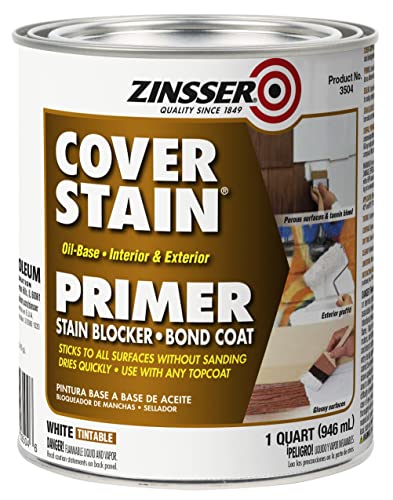
Zinsser Cover-Stain Stain-Blocking Primer
What We Like
- Blocks water, smoke and nicotine stains
- Sticks to interior and exterior surfaces
- Dries quickly on interior surfaces
- Sands easily for smooth finish
Trade-offs
- Oil-based formula means stronger odor during application
- Not low-odor like water-based primers
This oil-based primer sealer blocks water, smoke, and nicotine stains on interior and exterior wood, drywall, and metal, so you can paint over tough discolorations without bleed-through. Its high-hiding formula bonds to those surfaces, which means it sticks well even on raw wood or metal. It dries quickly on interior surfaces and sands easily, helping you keep the job moving when you are layering paint over a tricky substrate.
The trade-off is the oil base itself: it carries a stronger solvent odor than water-based alternatives, so you will want good ventilation or a respirator when working indoors. At 1.8 pounds per quart, the container is compact and easy to handle, but for large walls or ceilings you may need multiple quarts to get full coverage. Choose this when stain-blocking power matters more than low odor, and reach for a water-based option when you need a fast-drying, low-odor alternative instead.
Zinsser Bulls Eye 1-2-3 Water-Base Primer & Sealer

What We Like
- Bonds to glossy surfaces without sanding
- Works indoors and outdoors
- Stain-blocking resins seal tough marks
- Rust inhibitive for metal surfaces
Trade-offs
- Low temp tolerance limits cold-weather jobs
- Water-base can raise wood grain on raw lumber
A 35°F minimum application temperature means you can prime in cooler conditions, like early spring or unheated spaces, without waiting for perfect weather. This water-base primer bonds to glossy surfaces without scuff sanding, so you can skip the dusty prep on pre-finished or slick substrates. Its stain-blocking resins handle tough marks, while the rust-inhibitive formula lets you prime ferrous metal fasteners or flashing in the same pass. For a multi-surface primer that simplifies the job, this one covers a lot of ground.
This primer bonds to glossy surfaces without scuff sanding, so you can skip the tedious prep work on slick paint or laminate. It also handles application temperatures as low as 35°F, which means you can keep painting into chilly fall weather without waiting for a warm spell. Just keep in mind that for raw wood, some users report light sanding between coats if they want a glass-smooth finish.
Zinsser 3954 Odorless Oil-Base Stain Blocker Primer

What We Like
- Low-VOC oil formula reduces odor
- Dries to touch in 30 minutes
- High solids for excellent topcoat coverage
- Flat bright white won't yellow over time
Trade-offs
- Oil-based requires mineral spirits for cleanup
- Covers only up to 100 sq ft per quart
Drying to the touch in 30 minutes, this low-VOC oil primer lets you move through an interior priming job faster than many alternatives. The high-solids formula lays down a flat bright white coat that seals stains and won’t yellow over time, which matters when you’re covering dark or patchy surfaces. It provides the stain-blocking power of an oil-based primer with reduced odor compared to traditional oil-based products.
The trade-off comes at cleanup: because it’s oil-based, you’ll need mineral spirits rather than soap and water, which adds a step compared to a water-based option like the Zinsser Bulls Eye 1-2-3. And at roughly 100 square feet per quart, a larger OSB wall or ceiling project will require multiple quarts. But if low odor and reliable stain blocking are your priorities, this primer delivers without the headache of traditional oil-based fumes.
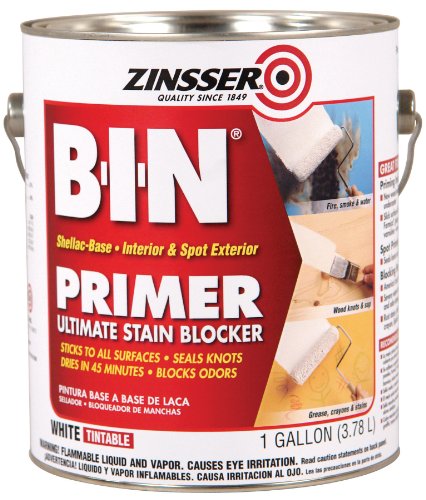
Rust-Oleum Zinsser B-I-N Shellac-Base Primer
What We Like
- Shellac base for tough stain blocking
- Seals pet, smoke, and musty odors
- Sticks to surfaces without sanding
- Suitable for interior and spot exterior
Trade-offs
- Shellac base requires alcohol cleanup
- Strong solvent smell during application
A shellac-base primer-sealer that blocks the toughest stains and seals odors like pet, smoke, and musty smells, that’s the core of this gallon-sized B-I-N from Zinsser. It sticks to surfaces without sanding, so you can go straight to priming over problem spots like water stains or lingering odors from previous use. This makes it a strong option for anyone dealing with stubborn discoloration or smell issues in an interior project.
The greatest stain sealer on the market is a shellac-base primer-sealer, so it handles pet, smoke, and musty odors that other primers might leave behind. Shellac requires cleanup with denatured alcohol rather than soap and water, and the solvent smell is strong while it dries, so you’ll want good ventilation. That extra effort pays off when you need to lock in heavy stains or odors on interior surfaces or spot exterior areas.
KILZ Original Low Odor Primer

What We Like
- Low-odor formula with fast odor dissipation
- Stain-blocking and sealing in one coat
- Works with oil, alkyd, and water-based paints
- Trusted brand for nearly 50 years
Trade-offs
- Ventilation required during and after application
- Covers only 75-100 sq ft per gallon
A bright white, non-yellowing finish that dries to the touch in 30 minutes means you can move through a project quickly without waiting around. KILZ Original Low Odor Primer is formulated to block stains and seal porous surfaces like drywall, wood, and masonry, all with a lower solvent odor than traditional oil-based primers. That makes it a smart choice for indoor spaces like offices, schools, or apartments where strong fumes are a concern. The adhesion works with oil, alkyd, or water-based topcoats, so you are not locked into one paint type after priming.
The most decisive fact about this primer is that it requires ventilation during use and while it cures, so you cannot seal off the room completely and walk away. Coverage is rated at 75-100 square feet per gallon, which means a quart will cover a small area like a single wall or trim. For interior surfaces like drywall, wood, or plaster where odor sensitivity matters and a bright, non-yellowing base is key, this primer gets the job done without lingering smell.
Product photos
INSL-X Prime All Multi-Surface Primer

What We Like
- Topcoat in just one hour
- Mildew resistant coating
- Strong sealing on multiple surfaces
- Works indoors and outdoors
Trade-offs
- Avoid application below 40°F
- Strong odor during application
A one-hour recoat time means you can apply a topcoat quickly after priming, which speeds up projects like sealing drywall or wood. The 100% acrylic formula provides strong sealing and stain-blocking properties, while the mildew-resistant coating adds protection in damp areas. With 400-450 square feet of coverage per gallon, a single gallon handles most small to medium surfaces without needing a second can.
The trade-off is that this primer cannot be used on floors, so you will need a different product for those surfaces. Also, the 40°F minimum application temperature means cold-weather projects may require a space heater. Compared to Zinsser Bulls Eye 1-2-3, the INSL-X dries faster but both are water-based stain-blocking primers. For walls or ceilings where quick turnaround matters, this is the faster option.
Product photos
Schluter Primer Peel & Stick Water-Based Primer
What We Like
- Creates strong bond on OSB
- Dries in 15-60 minutes
- Water cleanup while wet
- One-coat ready-to-use formula
Trade-offs
- Requires wet cleanup immediately after use
A 15- to 60-minute dry time means you can lay peel-and-stick membrane the same day you prime, which is a real time-saver on OSB subfloors or walls. Schluter’s water-based formula bonds directly to challenging surfaces like gypsum, existing tile, plywood, steel, concrete, and OSB itself, creating a strong durable grip that keeps the membrane from lifting on imperfect surfaces. For anyone installing peel-and-stick over OSB, this primer is purpose-built to solve the adhesion problem that often plagues those jobs.
For peel-and-stick membrane installations, this primer creates a strong, durable bond on challenging surfaces like gypsum, tile, plywood, OSB, steel, and concrete, both above and below grade. It dries in just 15 to 60 minutes, so you can move on to the next step quickly. Cleanup is easy with water while the primer is still wet, which keeps your rollers and brushes in good shape.
How We Evaluated Primers For OSB
We evaluated these primers by analyzing manufacturer data, expert round-ups from painting professionals, and common patterns in owner feedback. Our goal was to identify which products consistently solve the specific challenges of priming OSB, such as sealing porous edges and blocking tannin bleed.
The three most important criteria were stain-blocking capability, adhesion to difficult surfaces, and drying time. OSB’s resin-rich surface demands a primer that can lock in stains and provide a mechanical bond. We also considered ease of application and cleanup, as these factors affect the overall project experience.
It is important to note that this is a research-led evaluation.
What To Look For In Primers For OSB
Choosing the right primer for OSB comes down to matching the product’s strengths to your project’s demands. The following criteria will guide you to the best choice for your specific job.
An effective OSB primer must seal the porous board, block tannin stains, and provide a strong grip for the topcoat. Look for a stain-blocking formula that dries reasonably fast and is compatible with your chosen paint.
Stain-Blocking Performance
The primary job of a primer on OSB is to block the wood’s natural resins and any existing stains from bleeding through the topcoat. Oil-based and shellac-based primers are generally the most effective for this task due to their superior sealing properties. Water-based primers have improved significantly and can work well, especially when formulated with stain-blocking resins, but may require an extra coat on heavily stained or knotty OSB.
Adhesion and Surface Compatibility
OSB is a challenging surface because of its rough texture and the waxy resins used in its manufacture. A primer must be able to bond to this surface without peeling or flaking. Look for primers explicitly labeled for use on glossy or difficult surfaces, as these often contain special adhesion promoters. Some primers can bond without sanding, which saves significant time and effort on large OSB panels.
Drying Time and Project Timeline
Your project schedule will influence your primer choice. Fast-drying primers allow you to apply a topcoat within an hour, which is ideal for quick turnarounds. Slower-drying oil-based primers may need several hours or overnight before recoating, but they often provide a harder, more durable base. Consider the temperature and humidity of your workspace, as these factors can significantly affect drying times for all primer types.
- Check the primer’s recoat time to plan your workflow.
- Ensure the primer is compatible with your topcoat (latex or oil-based).
- Verify the primer can be applied at the temperature of your workspace.
- Look for a primer that resists mildew if the OSB is in a damp area.
A simple rule: for the best stain blocking on OSB, choose an oil or shellac-based primer. For faster drying and easier cleanup, a high-quality water-based primer is a smart choice.
Primers For OSB Compared
The table below compares the key features of each primer to help you see the differences at a glance.
| Product | Type | Size | Use |
|---|---|---|---|
| Zinsser Cover-Stain Stain-Blocking Primer | Oil-based stain killer primer/sealer | Quart | Interior/exterior wood, drywall & metal |
| Zinsser Bulls Eye 1-2-3 Water-Base Primer & Sealer | Water-base primer-sealer | Quart | Interior & exterior |
| Zinsser 3954 Odorless Oil-Base Stain Blocker Primer | Oil-base stain blocker primer | Quart | Interior only |
| Rust-Oleum Zinsser B-I-N Shellac-Base Primer | Shellac-base primer-sealer | 1-Gallon | Interior & spot exterior |
| KILZ Original Low Odor Primer | Primer, sealer, stainblocker | 1 Quart | Interior |
| INSL-X Prime All Multi-Surface Primer | 100% acrylic primer | N/A | Interior & exterior |
| Schluter Primer Peel & Stick Water-Based Primer | Water-based primer | 946 mL | OSB, gypsum, tile, plywood, steel, concrete |
Frequently Asked Questions
What is the best primer to use on OSB?
The best primer for OSB is typically an oil-based or shellac-based stain-blocking primer, such as the Zinsser Cover-Stain or B-I-N. These formulas excel at sealing the porous surface and preventing tannin bleed. For a low-odor option, a high-quality water-based primer like Zinsser Bulls Eye 1-2-3 is also a strong choice.
Can I use water-based primer on OSB?
Yes, you can use a water-based primer on OSB, and it is a popular choice for interior projects. Look for a water-based primer that is specifically formulated for stain blocking and adhesion to glossy surfaces, like the Zinsser Bulls Eye 1-2-3. Be aware that water-based primers may raise the wood grain, requiring light sanding between coats for a smooth finish.
Do I need to sand OSB before priming?
Sanding OSB before priming is not always necessary, but it can improve adhesion and smoothness. A light sanding with fine-grit sandpaper helps remove loose fibers and gives the primer a better surface to grip. If you are using a primer that bonds to glossy surfaces without sanding, you can skip this step.
How long should primer dry on OSB before painting?
Drying time depends on the primer type and environmental conditions. Water-based primers can be dry to the touch in 30 minutes and ready for a topcoat in one to two hours. Oil-based primers typically need longer before recoating. Always follow the manufacturer’s instructions on the label for the best results.
What is the difference between oil-based and water-based primer for OSB?
Oil-based primers provide superior stain blocking and adhesion on challenging surfaces like OSB, but they have a stronger odor and require mineral spirits for cleanup. Water-based primers are lower in odor, dry faster, and clean up with soap and water, but may not block heavy stains as effectively in a single coat.
The Bottom Line
For most projects, the Zinsser Cover-Stain Stain-Blocking Primer is the best overall choice for OSB. Its oil-based formula provides the strong stain blocking and reliable adhesion needed to seal this demanding surface, making it ideal for DIYers and pros alike.
If you need a low-odor option for indoor work, the Zinsser Bulls Eye 1-2-3 is an excellent multi-surface primer that bonds well without sanding. For budget-conscious projects, the KILZ Original Low Odor Primer offers dependable performance at a more accessible price point.
The single most important factor when priming OSB is choosing a formula that prioritizes stain blocking. A primer that fails to seal the board will lead to bleed-through and a disappointing finish, no matter how good your topcoat is.
