
10 Best Primers For Gray Cement Steps in 2026
This post contains affiliate links. As an Amazon Associate, we earn from qualifying purchases.
For gray cement steps that need a lasting paint job, the Zinsser Bulls Eye 1-2-3 All Surface Primer is the best overall because it bonds to slick concrete without sanding and seals stubborn stains indoors or out. The Rust-Oleum Concrete & Garage Recoat Primer is the best for quick projects. It dries in as little as six hours, so you can apply a topcoat the same day. The Slip Doctors Epoxy Paint Primer offers fast drying and corrosion protection specifically for stairs.
The challenge with gray cement steps is that they are often slick, porous, or stained, and a standard wall primer won’t stick. You need a product formulated to bond to masonry, block efflorescence and rust spots, and hold up under foot traffic and weather.
This guide is built from manufacturer specifications, expert round-ups, and patterns in owner feedback. We break down the ten best primers by their specific strengths, from filling cracks to bonding on glossy surfaces, so you can match the right primer to your steps’ condition.
Top 10 Primers For Gray Cement Steps in the Market
Certain content that appears on this site comes from Amazon. This content is provided "as is" and is subject to change or removal at any time.
The Best Primers For Gray Cement Steps, Reviewed
Zinsser Bulls Eye 1-2-3 All Surface Primer

What We Like
- Bonds without sanding on glossy surfaces
- Seals stains on concrete and masonry
- Works indoors and outdoors
- Accepts oil or latex topcoats
Trade-offs
- Covers only 400-450 sq ft per gallon
- Requires 1 hour before topcoating
A dry time of just 35 minutes to the touch and one hour to topcoat means you can prep gray cement steps in the morning and paint them by lunch. This water-based primer bonds to concrete, masonry, and even glossy surfaces without sanding, so you won’t be scrubbing or etching before you start. It also blocks stains from old cement, which is a common headache on exterior steps. For anyone tackling a straightforward step-priming project, that combination of speed and adhesion makes it a practical first choice.
The trade-off is coverage: at 400-450 square feet per gallon, a single coat will cover a typical set of front steps. Larger porches or long landings may need a second gallon. The Rust-Oleum Concrete & Garage Recoat Primer also covers 400 square feet and primes in a day. This Zinsser dries to the touch in 35 minutes versus a full day for the Rust-Oleum, so you can topcoat sooner.
Product photos
Rust-Oleum Concrete & Garage Recoat Primer

What We Like
- No sanding or grinding needed
- Dries in 6 hours for same-day topcoat
- Covers up to 400 sq ft per gallon
- Low odor water-based formula
Trade-offs
- Only one coat recommended, limiting stain blocking
- Designed for garages, not heavy exterior weather
- Compatible mainly with Rust-Oleum topcoats
One gallon covers up to 400 square feet per coat, with only one coat recommended. The real draw is the time saved: no sanding or grinding old coatings, and the primer dries in as little as six hours so you can apply a topcoat the same day. That low-odor water-based formula also means you can work in a ventilated space without overwhelming fumes. For anyone who wants to refresh a previously coated concrete floor quickly without heavy prep work, this primer makes the job straightforward and fast.
This Rust-Oleum primer recommends only one coat, which may not block heavy stains or uneven porosity as thoroughly as a thicker primer would. And while it works with most Rust-Oleum floor coatings, if you plan to use a different brand’s topcoat, you will want to check compatibility first. This primer is specialized for concrete that already has a coating. That focus keeps the project simple, but it is less flexible for mixed-material surfaces.
Product photos
Slip Doctors Epoxy Paint Primer
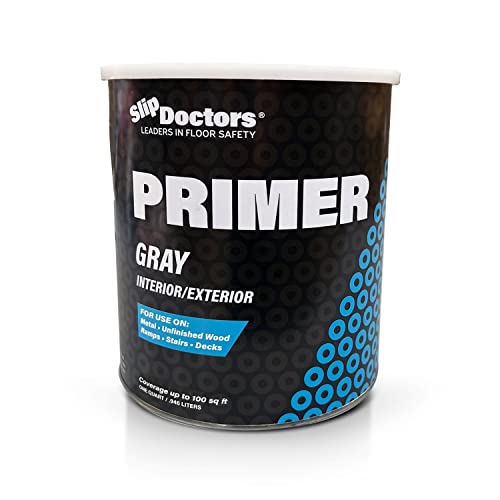
What We Like
- Fast-drying for quick project turnaround
- Corrosion resistant with rust-inhibiting pigments
- Works on wood, metal, concrete, and stone
- Seals surface to prevent air bubbles
Trade-offs
- Recommended with specific Slip Doctors top coats
- Requires a separate top coat for best results
A quart of this epoxy paint primer brings fast drying and corrosion resistance to stair projects, so you can seal and coat steps without long delays between layers. The rust-inhibiting pigments add protection against moisture and wear, making it a fitting choice for exterior or interior stairs where foot traffic and weather take a toll. It bonds strongly to concrete, wood, metal, and natural stone, which means you can use it on old cement steps that have been painted before or on bare new pours. The primer also prevents air bubbles from forming under the top coat, helping you get a smooth, even finish that lasts.
The quart size covers a small staircase or a few steps, making it a practical fit for modest projects. This primer works on wood, metal, concrete, and natural stone, and it pairs with any water-based or solvent-based top coat, so you are not locked into one brand. Slip Doctors recommends using it with their own Tuff Grip and Dura Grip non-slip paints for best results.
Zinsser Block Filler Masonry Primer

What We Like
- Fills and smooths masonry surfaces
- Blocks stains and seals surfaces
- Excellent alkali resistance
- High-hiding flat white finish
Trade-offs
- Heavy at 45.5 pounds, awkward to move
- Requires topcoat for final appearance
With coverage up to 500 square feet per 5-gallon container, this primer is built for serious masonry work, think long staircases or multiple cement steps. Its high-hiding flat white formula and alkali resistance mean it seals porous gray cement while preventing salt damage that can ruin a topcoat later. That makes it the go-to choice for anyone who needs to fill and smooth rough or pitted concrete before painting, especially on exterior steps exposed to weather and de-icing salts.
At 45.5 pounds and a full 5 gallons, this isn’t a grab-and-go can for a single step repair. If you are patching just a couple of risers, a smaller primer like the Rust-Oleum Concrete & Garage Recoat Primer (1 gallon, 11.8 pounds) is far easier to handle. But for a whole set of cement stairs where filling and leveling matter most, the Zinsser’s filling power and coverage make it the practical heavyweight.
Dyco Tuff Grip Waterborne Bonding Primer

What We Like
- Penetrates and fortifies slick bare concrete
- Excellent alkali resistance for cement steps
- Low-VOC emissions for safer application
- Soap-and-water cleanup simplifies the job
Trade-offs
- Single coat only: no second-coat forgiveness if missed
- 5-gallon size is heavy to handle for small jobs
A waterborne epoxy ester tie coat that penetrates and fortifies slick, non-porous bare concrete, the Dyco Tuff Grip is built for the exact surface that makes other primers peel. Its specialized bonding chemistry gives slick concrete a mechanical grip that ordinary primers can’t match. If your surface is smooth, sealed, or has that hard, polished feel, this primer turns it into a surface that topcoats can actually stick to. The low-VOC formula and soap-and-water cleanup also mean less hassle and fewer fumes when you’re working close to a doorway or basement stairwell.
Dyco recommends a single even coat, so careful rolling and attention to thin spots are important, especially on textured or worn areas. Compared to the Zinsser Bulls Eye 1-2-3, which works on a wider range of surfaces, the Dyco is more specialized for slick, non-porous concrete. For anyone facing that specific surface that rejects paint, this primer’s penetrating bond is designed to provide dependable adhesion.
Product photos
DAP Crack Stabilizing Primer For Concrete

What We Like
- Easy smooth liquid application
- Large 32 fl oz size
- Water resistant formula helps protect surfaces from moisture
Trade-offs
- 1 qt size covers less area than gallon options
- Heavy 9.1 lb for its small volume
A 32-ounce quart of DAP Crack Stabilizing Primer is built around one job: making concrete repairs stick. For anyone fixing cracks, chips, or spalls on concrete steps, this primer is the right foundation.
A quart covers less area than the gallon-sized Rust-Oleum Concrete & Garage Recoat Primer, so if you are priming a long run of steps or multiple landings, you will need more than one bottle. But for targeted repairs where adhesion matters most, this DAP primer does exactly what it promises.
Slip Doctors Prime Coat Concrete Primer & Resurfacer

What We Like
- UV and chemical resistant for high-traffic areas
- Eco-friendly with low odor
- Easy water-based application
- Designed for sports court surfaces
Trade-offs
- At 50 pounds, heavy to transport and lift
- Requires non-slip topcoat for full performance
Slip Doctors Prime Coat is a water-based latex resurfacer that weighs 50 pounds, so you will want a dolly or a helper to move the bucket. It is built for high-traffic areas like pickleball and tennis courts, with UV and chemical resistance that keeps the surface from fading or breaking down under sun and weather. This makes it a natural fit for driveways and parking lots where durability and a clean base for non-slip paint matter most.
The Slip Doctors Prime Coat is a water-based latex resurfacer designed specifically as a base for non-slip court paints like SlipDoctors Alpha Grip. If you need a single-coat solution, you will need to add that topcoat separately. The Rust-Oleum Concrete & Garage Recoat Primer allows priming and topcoating in one day. This product requires an extra step but delivers UV and chemical resistance for high-traffic areas like pickleball courts and driveways.
Coral Crystal Waterborne Penetrating Primer
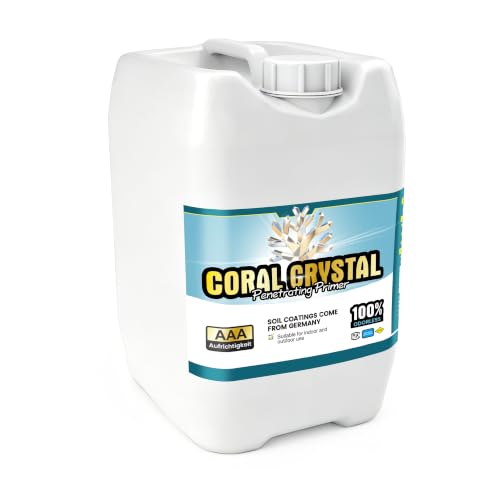
What We Like
- Deep penetration into porous concrete
- Low odor, safe near children and pets
- Resists stains, grease, and dust
- Leak-proof packaging prevents spills
Trade-offs
- Designed as underlayer, not a standalone finish
- Requires topcoat for full durability on steps
A 63-ounce waterborne formula that seeps deep into porous concrete makes this primer a smart first step for concrete, cement, and masonry surfaces. It binds loose fine particles and lowers substrate porosity, and it restricts water vapor transfer and salt crystal buildup to help prevent white discoloration and coating aging. The low-odor composition is designed for safe application in living areas, bedrooms, and cellars, creating a comfortable working environment for families with children and pets. The ready-to-use quick-dry formula recoats in 4 hours, so you can move on to your topcoat quickly. For anyone prepping worn or uneven concrete, cement, or masonry before an epoxy or polyurethane topcoat, this penetrating primer builds a firm, stain-resistant foundation that helps prevent flaking, bubbling, and layer separation down the road.
This is a penetrating primer and underlayer, not a standalone finish, so you will need a separate topcoat for the final walking surface. That puts it in a different category than a product like Rust-Oleum’s Concrete & Garage Recoat Primer, which is described as allowing priming and topcoating in one day. If you are already planning a multi-coat system and want a deep-penetrating base that reinforces the surface, this Coral Crystal primer delivers exactly what its name promises: deep penetration and a reinforced base for your topcoat.
Product photos
Rust-Oleum Universal Bonding Primer Spray

What We Like
- Bonds to difficult surfaces like masonry and glazed brick
- Low odor and low VOC formula
- Excellent wet adhesion in humid conditions
- Prevents rust and corrosion
Trade-offs
- Coverage only 10-12 sq. ft. per can
- Not ideal for large-area projects needing high coverage per coat
Coverage of up to 12 square feet per can makes this spray primer best suited for small projects or touch-ups rather than large surfaces. Its low-odor, low-VOC water-based formula handles humid and moist environments well, which is a real advantage for exterior use. The bonding primer is designed for difficult surfaces like masonry, glazed brick, and PVC, making it a strong fit when you need adhesion to non-porous or slick materials that other primers might not stick to.
Each spray can covers a small area, so a large project will need several cans. The Rust-Oleum Concrete & Garage Recoat Primer comes in a gallon size and covers up to 400 square feet, while this spray offers far less coverage per can. It is formulated for surfaces like galvanized steel, laminate, and porcelain that the gallon primer may not be designed for. If you need to cover a large area of bare concrete quickly, the gallon primer is more efficient. If you are working with difficult surfaces like glazed brick or PVC, this spray’s bonding strength justifies the extra cans.
BEEST Multi-Purpose Primer Gray

What We Like
- Super strong adhesive bonding agent
- Works on wood, concrete, metal, TPO
- Prevents blistering and peeling
- Environmentally friendly, ultra low odor
Trade-offs
- Coverage only 250 sq ft per gallon
- Requires topcoat within 24 hours
- Heavy at 10 pounds for a gallon
This primer is formulated as a super strong adhesive bonding agent that improves adhesion to wood, concrete, metal, and TPO roofs. That makes it a versatile choice for surfaces that need a reliable grip before applying a topcoat. It goes on like water, dries quickly, and is safe for pets and humans, so you can work without worrying about fumes. The manufacturer recommends applying a topcoat within 24 hours, so plan your project accordingly.
At up to 250 square feet per gallon, this primer covers less area than Rust-Oleum’s Concrete & Garage Recoat Primer, which covers up to 400 square feet per gallon. You also need to apply your topcoat within 24 hours, so you cannot let the primer sit for days. But if you need strong adhesion on wood, concrete, metal, TPO, or EPDM roofs, this water-based, low-odor formula gives you that grip.
Product photos
How We Evaluated Primers For Gray Cement Steps
This evaluation is based on manufacturer technical data sheets, expert recommendations from paint and masonry publications, and common themes in buyer experiences. We analyzed what each primer claims, how it performs on concrete, and what real-world users consistently report about adhesion, coverage, and durability.
Three criteria mattered most for gray cement steps. First, bonding to difficult surfaces: a primer must grip slick, cured concrete without requiring extensive mechanical abrasion. Second, stain blocking: exterior steps often have oil, rust, or efflorescence that will bleed through a weak primer. Third, durability underfoot and in weather: the primer must be compatible with a topcoat that can handle foot traffic, rain, and UV exposure.
A research-led evaluation has honest limits. We cannot verify every claim about drying time or coverage in your specific climate. Owner feedback can reflect user error as much as product performance. Use this guide to narrow your options, then always follow the manufacturer’s surface preparation instructions for the best results.
What To Look For In Primers For Gray Cement Steps
Choosing the right primer for gray cement steps comes down to matching the product to the condition of your concrete. A slick, sealed step needs a bonding primer; a porous, crumbling step needs a penetrating or filling primer.
Look for a primer that matches your concrete’s condition: bonding primers for slick surfaces, masonry fillers for rough or damaged concrete, and penetrating primers for porous old steps. Check that it is labeled for exterior use and compatible with your chosen topcoat.
Bonding Performance on Slick Concrete
Gray cement steps are often smooth or have a light broom finish. Standard latex primers will peel. You need a primer specifically formulated to grip dense masonry. Look for terms like “bonds without sanding” or “for slick surfaces” in the description. The Zinsser Bulls Eye 1-2-3 and Dyco Tuff Grip are examples that handle this challenge. If your steps are glossy from a previous sealer, a bonding primer is non-negotiable.
Stain Blocking and Alkali Resistance
Concrete steps are prone to rust stains from metal railings, oil drips, and efflorescence (white salt deposits). A primer with stain-blocking and alkali-resistant properties prevents these from bleeding through your topcoat. Products like the Zinsser Bulls Eye 1-2-3 and the Zinsser Block Filler are strong in this area. If your steps have visible staining, prioritize a primer that explicitly mentions stain sealing.
Coverage and Project Size
Primers vary widely in coverage, from 10-12 square feet per spray can to 400-450 square feet per gallon. Measure your steps and choose a size that matches. For a single small set of steps, a quart or a spray can may be enough. For a full porch or long staircase, a gallon or five-gallon bucket is more practical. Consider the weight and portability of larger containers, especially if you are working alone.
- Check the label for exterior rating and UV resistance.
- Confirm compatibility with your topcoat (oil, latex, or epoxy).
- Look for low-VOC or low-odor options if you are working near living spaces.
- For damaged steps, choose a primer that fills cracks or stabilizes the surface.
- For high-traffic areas, prioritize a primer designed for sports courts or garages.
A good rule of thumb: if your steps are slick and clean, use a bonding primer. If they are porous and stained, use a stain-blocking masonry primer. If they are cracked or chipped, use a crack-stabilizing or filling primer.
Primers For Gray Cement Steps Compared
The table below compares the ten primers across key specs to help you see at a glance which one fits your project.
| Product | Dry Time | Base Type | Surface Compatibility |
|---|---|---|---|
| Zinsser Bulls Eye 1-2-3 All Surface Primer | 35 min to touch, 1 hr to topcoat | Water-based | Concrete, masonry, metal, wood, glossy surfaces |
| Rust-Oleum Concrete & Garage Recoat Primer | 6 hours to recoat | Water-based, low odor | Most Rust-Oleum floor coatings |
| Slip Doctors Epoxy Paint Primer | Fast Drying | N/A | Wood, Metal, Concrete, Natural Stone |
| Zinsser Block Filler Masonry Primer | N/A | N/A | Concrete, cinderblock, brick, stucco |
| Dyco Tuff Grip Waterborne Bonding Primer | N/A | Waterborne epoxy ester tie coat | Slick, non-porous bare concrete |
| DAP Crack Stabilizing Primer For Concrete | N/A | Water resistant | Concrete/masonry |
| Slip Doctors Prime Coat Concrete Primer & Resurfacer | N/A | Water-based latex resurfacer | Courts, driveways, parking lots |
| Coral Crystal Waterborne Penetrating Primer | 4 hours | Waterborne penetrating primer | Concrete, cement, masonry |
| Rust-Oleum Universal Bonding Primer Spray | 30 minutes | Low odor, low VOC water-based | Masonry, glazed brick, PVC, galvanized steel |
| BEEST Multi-Purpose Primer Gray | Dries quickly; topcoat within 24 hours | Water-based, low odor | Wood, concrete, metal, TPO, EPDM |
Frequently Asked Questions
Can I paint directly on gray cement steps without a primer?
Painting directly on concrete without a primer is risky. Concrete is porous and alkaline, and paint alone often peels or bubbles. A primer seals the surface, blocks stains, and gives the topcoat something to grip, especially on slick or previously sealed steps.
What is the best primer for slick, non-porous concrete steps?
A bonding primer designed for glossy or dense surfaces is best. The Zinsser Bulls Eye 1-2-3 All Surface Primer and the Dyco Tuff Grip Waterborne Bonding Primer are both formulated to stick to slick concrete without sanding or etching.
How long should I wait before painting over primer on concrete steps?
Drying time varies by product. Many water-based primers, like the Zinsser Bulls Eye 1-2-3, can be topcoated after one hour. Others, like the Rust-Oleum Concrete & Garage Recoat Primer, recommend six hours. Always follow the label’s recoat time for the best adhesion.
Do I need a special primer for concrete steps that have cracks or chips?
Yes. For cracked or chipped steps, choose a primer that fills and stabilizes the surface, such as the DAP Crack Stabilizing Primer For Concrete or the Zinsser Block Filler Masonry Primer. These products help create a smoother, more uniform base for the topcoat.
Can I use a regular interior wall primer on outdoor concrete steps?
No. Interior primers are not formulated to withstand moisture, UV rays, or temperature changes. Outdoor concrete steps require an exterior-grade masonry primer that resists alkali, blocks stains, and bonds to dense mineral surfaces.
The Bottom Line
For most homeowners, the Zinsser Bulls Eye 1-2-3 All Surface Primer is the best overall choice for gray cement steps. It bonds to slick concrete without sanding, seals stains, and works both indoors and out, making it the most versatile option for a typical set of steps.
If your project is a quick refresh of previously painted steps, the Rust-Oleum Concrete & Garage Recoat Primer saves you time with a six-hour dry time and no grinding. For steps with cracks or damage, the DAP Crack Stabilizing Primer or the Zinsser Block Filler will give you a smoother foundation.
The single most important factor is matching the primer to your concrete’s condition. Take a close look at your steps, are they slick, porous, stained, or cracked?, and choose a primer that addresses that specific need. That one decision determines whether your paint job lasts for years or peels in months.
