
7 Best Primers For Drywall Before Tiling in 2026
This post contains affiliate links. As an Amazon Associate, we earn from qualifying purchases.
For drywall that will hold tile, the Mapei Eco Prim Grip Bond Promoting Primer is the best overall pick because its bond-promoting formula creates strong adhesion across large wall areas. DIYers with self-stick tile should look at the Henry 336 Bond Enhancer, while those covering mixed surfaces will appreciate the Custom Building Products Multi-Surface Bonding Primer.
Priming drywall before tiling isn’t always required, but skipping it can lead to failed adhesion, loose tiles, and moisture damage behind the surface. The right primer seals the drywall and gives mortar or adhesive a consistent grip.
This guide compares seven primers based on manufacturer specs, formulation data, and patterns in owner feedback. We focus on adhesion strength, coverage, dry time, and surface compatibility so you can pick the right product for your project.
Top 7 Primers For Drywall Before Tiling in the Market
Certain content that appears on this site comes from Amazon. This content is provided "as is" and is subject to change or removal at any time.
The Best Primers For Drywall Before Tiling, Reviewed
Mapei Eco Prim Grip Bond Promoting Primer

What We Like
- Bond-promoting formula for strong adhesion
- 3.5-gallon size covers large drywall areas
- Eco-friendly primer from trusted brand Mapei
Trade-offs
- Large 3.5-gallon container is heavy to handle
- Requires thorough surface prep for best results
The 3.5-gallon size of this Mapei primer means you can cover a large area in one go, which is useful for big projects like a full room. Mapei’s bond-promoting formula is designed to help primer stick to surfaces, giving subsequent coatings a reliable base. This makes it a practical choice for anyone who needs a primer that does the job without extra coats or guesswork. The eco-friendly formulation also keeps the workspace a little fresher, which matters when you’re spending hours on prep.
The 3.5-gallon size means you can cover a lot of surface area without running back to the store, but it’s heavy enough that you’ll want both hands on the bucket. Best for someone prepping a full room or multiple walls for tile or flooring. Not ideal for a single small patch or if you need to carry the container up a ladder.
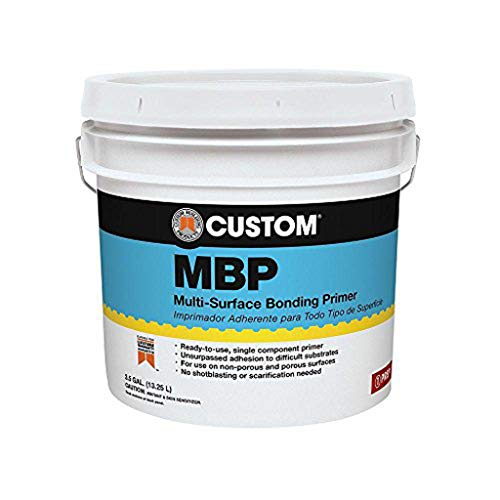
Custom Building Products Multi-Surface Bonding Primer
What We Like
- Large 3.5-gallon container for big jobs
- Bonds to multiple surfaces before tiling
- Designed specifically as a bonding primer
Trade-offs
- At 3.5 gallons, heavy to carry and store
- Not a drywall sealer, needs separate sealing step
A 3.5-gallon container means you can coat a whole bathroom or kitchen wall without running back to the store mid-project. That generous volume makes this primer ideal for larger jobs where you need consistent coverage across multiple sheets of drywall. It is a multi-surface bonding primer, so it grabs onto tricky substrates with equal tenacity. If you are prepping a room with mixed surfaces or patched drywall, this is the one that ties everything together before the thinset goes on.
The trade-off is its size and weight: at 3.5 gallons, it is not a grab-and-go quart for small repairs. You will need a sturdy bucket and a steady hand to pour it into a tray. Compared to the LATICRETE Prime-N-Bond Tile Primer, which comes in a more manageable 1-gallon jug, this Custom product demands a bigger commitment in storage and handling. But if your project spans a full wall or floor, the extra volume saves you from buying multiple smaller cans. Just remember that this is a bonding primer, not a drywall sealer, so if your drywall is fresh and dusty, you may still want to seal it first.
Henry 336 Bond Enhancer Self-Stick Tile Primer

What We Like
- Designed specifically for self-stick tile adhesion
- Bond enhancer improves grip on drywall
- 1 qt. size covers small tiling projects
Trade-offs
- 1 qt. size limits coverage for large areas
- Only for self-stick tile, not thin-set or mastic
A 1-quart container focuses this primer on small, precise tiling jobs where self-stick tiles are used. Henry 336 Bond Enhancer is a self-stick tile primer from brand Henry W,W, model 12237. Its bond-enhancing formula is designed to improve grip on surfaces, making it a targeted option for DIYers refreshing a compact area with peel-and-stick tile. The trade-off is size and scope: at 1 quart, you won’t cover a full bathroom floor, and it only works with self-stick tile, not thin-set or mastic applications. For a small peel-and-stick job where adhesion matters most, this Henry primer keeps things simple and effective.
At just 1 quart, this primer covers a small area, enough for a single peel-and-stick tile repair but not a full bathroom floor, and it’s designed only for self-stick tile, not thin-set or mastic. If your project needs a traditional tile adhesive primer, Mapei Eco Prim Grip Bond Promoting Primer comes in a larger size for broader use. For a small peel-and-stick job where adhesion matters most, this Henry primer keeps things simple and effective.
FloorPops Peel Stick Tile Primer

What We Like
- Dries in 30-90 minutes
- Covers 87.5-100 sq ft per quart
- Designed for kitchens and bathrooms
Trade-offs
- Only for peel-and-stick vinyl tiles, not other tile types
- Requires a clean, smooth, properly prepared floor
- Limited to indoor use on suitable floors
Covering 87.5 to 100 square feet per quart, this primer is purpose-built for peel-and-stick vinyl tile projects. It dries in as little as 30 minutes, so you can move quickly from priming to tiling without waiting around. That makes it a natural fit for weekend DIYers refreshing a kitchen backsplash or a bathroom floor where speed matters more than heavy-duty bonding. The primer is designed for use with peel-and-stick vinyl tiles on clean, smooth indoor floors.
This primer is strictly for peel-and-stick vinyl tiles on clean, smooth indoor floors. It won’t help with ceramic, porcelain, or stone tiles that need a grip-promoting primer like Mapei Eco Prim Grip. If your subfloor has texture or old adhesive residue, you’ll need to sand or scrape it smooth first for this primer to work. For the peel-and-stick crowd, though, it offers a fast, low-mess foundation that keeps your project simple.
Product photos
EVOLVE Drywall Primer & Sealer

What We Like
- Fast-drying formula saves time
- Low odor for indoor use
- Excellent adhesion for topcoat
- Hides joint compound and tape lines
Trade-offs
- Not specifically formulated for tile adhesion
A fast-drying primer that seals porous drywall and hides joint compound in one coat means you can move from prep to painting the same day. The low-VOC, low-odor formula makes it comfortable to use in occupied homes, and the high-solids blend creates a uniform base that prevents flashing and blotchy topcoats. This primer is designed for new drywall, plaster, and skim-coated walls, providing a sealed, even surface for your topcoat.
This is a general-purpose drywall primer, not a dedicated bonding primer for tile. If you are tiling over slick surfaces like existing paint or glossy plaster, a product like Mapei Eco Prim Grip offers better mechanical adhesion for thin-set mortar. But for fresh drywall or skim-coated walls where you just need a sealed, even surface before tiling, the fast dry time and low odor make this a practical, no-fuss choice.
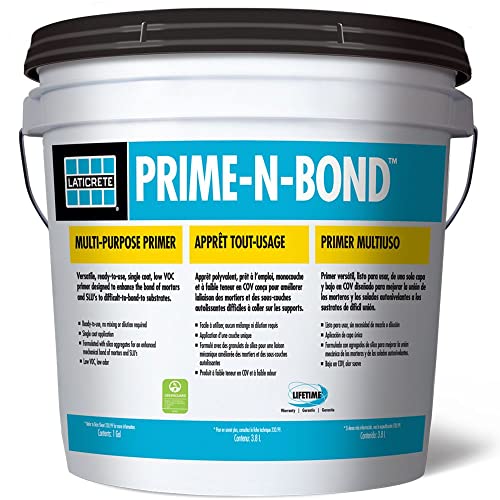
LATICRETE Prime-N-Bond Tile Primer
What We Like
- Designed specifically for tile bonding
- 1-gallon size covers large areas
- From trusted brand Laticrete
Trade-offs
- Only available in 1-gallon size
- No details on dry time or application method
LATICRETE Prime-N-Bond Tile Primer comes in a 1-gallon container, which means you have enough primer for a typical room without needing to buy multiple cans. The brand behind it, Laticrete, is known for tile installation products, so this primer is built with bonding to tile in mind from the ground up. For anyone laying ceramic, porcelain, or stone on fresh drywall, that focus translates into fewer adhesion worries and a more reliable base for your thinset or mastic.
You get one size, 1 gallon, with no smaller option for small patch jobs or larger pails for whole-room renovations. Compared to the Mapei Eco Prim Grip, which comes in a 3.5-gallon tub for bigger projects, this Laticrete primer suits medium-scale tiling work best. If you’re tiling a single backsplash or a bathroom wall, the gallon is a practical fit; for an entire floor, you might need two.
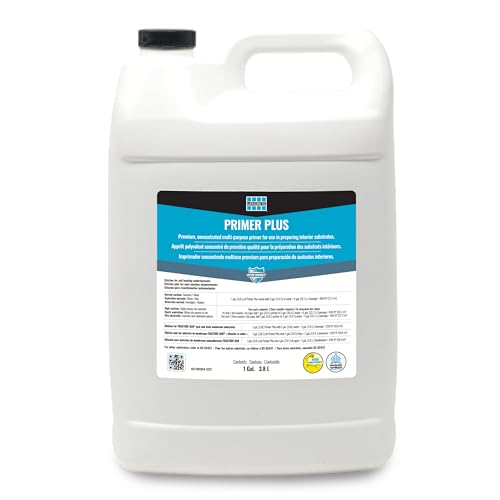
LATICRETE Primer Plus Concentrated Primer
What We Like
- Works on concrete, wood, gypsum
- Nanoparticles penetrate deep into substrates
- Easy to apply with broom, roller, sprayer
- Sustainable packaging with recycled content
Trade-offs
- Concentrate requires proper dilution before use
- Designed for multiple substrates, not drywall specific
The nanoparticle technology in this primer means it penetrates deep into concrete, wood, and gypsum, so it grabs hold of tricky surfaces that other primers might just sit on top of. That makes it a strong pick for anyone tiling over mixed substrates or old drywall where adhesion is a question mark. You can roll it, brush it, or spray it on, which keeps the job moving fast, and the concentrate format stretches further than ready-to-use options.
The primer is a concentrate, so you mix it yourself, that adds a step where getting the ratio wrong could affect performance. But the payoff is that its nanoparticles penetrate deep into substrates, which gives a strong, long-lasting bond across concrete, wood, and gypsum. For anyone working with self-leveling underlayments or peel-and-stick membranes, that extra attention upfront buys real holding power.
Product photos
How We Evaluated Primers For Drywall Before Tiling
Our evaluation draws from manufacturer technical data sheets, formulation specifications, and expert round-ups from professional tile installers and paint specialists. We also analyzed patterns in owner feedback to understand real-world performance across different tile types and application methods.
The three criteria that mattered most were adhesion performance, coverage area per container, and dry time. A primer that bonds well to drywall but takes all day to dry slows down the project. Likewise, a fast-drying formula that doesn’t grip tile mortar is useless. We also considered whether each product was formulated for specific tile types, self-stick, peel-and-stick, or thin-set mortar.
This is a research-led evaluation, not a hands-on test. We cannot report how each primer feels to roll or how it smells in a closed bathroom. What we can tell you is what the specs promise and what owners consistently report about ease of use, drying speed, and whether their tiles stayed put.
What To Look For In Primers For Drywall Before Tiling
Choosing the wrong primer means redoing the job. Focus on adhesion compatibility, coverage volume, and dry time to match your tile type and project size.
Choose a primer that matches your tile adhesive (thin-set, mastic, or self-stick), covers your wall area without running out, and dries within your work schedule.
Adhesion Compatibility
Not all primers work with every tile type. Thin-set mortar and mastic need a primer that creates a mechanical bond on the drywall face paper. Self-stick and peel-and-stick tiles need a primer formulated to grip the adhesive backing without dissolving it. Check the manufacturer’s listed substrates and compatible adhesives before buying.
Coverage and Container Size
Primer coverage is listed in square feet per gallon. A quart covers roughly 80-100 square feet, while a gallon covers 350-400 square feet. For a full bathroom wall, a gallon is usually right. For a backsplash, a quart may be enough. Larger containers like 3.5-gallon buckets save money on big jobs but are heavy to carry and store.
Dry Time and Work Schedule
Fast-dry primers let you tile the same day, while standard formulas need overnight drying. Look for the recoat or tile-ready time on the label. If you’re working in a humid bathroom or cool basement, expect longer dry times than stated.
- Measure your wall area and buy a container size that gives you a full coat plus a little extra for touch-ups.
- Match the primer to your adhesive type: thin-set, mastic, or peel-and-stick backing.
- Check the dry time against your project schedule and room conditions.
A primer that dries clear is harder to see coverage gaps, use a tinted primer or mark your roller passes.
Primers For Drywall Before Tiling Compared
The table below compares all seven primers side by side, showing their container sizes, best-use scenarios, and key trade-offs.
| Product | Size | Drying Time | Application |
|---|---|---|---|
| Mapei Eco Prim Grip Bond Promoting Primer | 3.5 Gal | N/A | N/A |
| Custom Building Products Multi-Surface Bonding Primer | 3.5 Gal | N/A | N/A |
| Henry 336 Bond Enhancer Self-Stick Tile Primer | 1 qt. | N/A | N/A |
| FloorPops Peel Stick Tile Primer | N/A | 30-90 minutes | Peel-and-stick |
| EVOLVE Drywall Primer & Sealer | 1 Gallon | Fast-Dry | Roll-on, minimal spatter |
| LATICRETE Prime-N-Bond Tile Primer | 1 Gallon | N/A | N/A |
| LATICRETE Primer Plus Concentrated Primer | 1 Gallon | N/A | Broom, roller, or sprayer |
Frequently Asked Questions
Do I need to prime drywall before tiling?
Yes, in most cases. Priming seals the drywall face paper and prevents the adhesive from being absorbed unevenly. It also creates a consistent surface for thin-set or mastic to grip, which reduces the risk of tiles loosening over time.
Can I use regular drywall primer for tiling?
Regular wall primer is not formulated for tile adhesion. You need a bonding or tile-specific primer designed to grip both the drywall and the tile adhesive. Using standard primer can lead to tile failure, especially in wet areas like showers.
What happens if I don’t prime drywall before tiling?
Unprimed drywall can absorb moisture from the thin-set unevenly, causing weak spots. The paper face can also delaminate over time, especially in humid conditions. The result is loose tiles, cracked grout, and potential water damage behind the wall.
How long does tile primer take to dry before tiling?
Dry time varies by product. Fast-dry primers can be ready in 30 to 90 minutes, while standard formulas need four to 24 hours. Always check the manufacturer’s recommended dry time for your specific temperature and humidity conditions.
Can I prime over painted drywall before tiling?
Yes, but you need a bonding primer designed for non-porous surfaces. Painted drywall is slick, so standard drywall primer won’t grip well. Sand the paint to rough it up, then apply a multi-surface bonding primer before tiling.
The Bottom Line
The Mapei Eco Prim Grip Bond Promoting Primer earns the best overall spot because it balances strong adhesion with eco-friendly formulation and generous 3.5-gallon coverage for full-room projects. It’s the right choice if you’re tiling an entire bathroom or kitchen and want a trusted brand behind the bond.
If your project involves self-stick or peel-and-stick tiles, the Henry 336 Bond Enhancer and FloorPops Peel Stick Tile Primer are purpose-built for those adhesive types. For mixed surfaces or large areas with multiple substrates, the Custom Building Products Multi-Surface Bonding Primer handles the variety without switching products.
The single most important factor is adhesion compatibility. Match your primer to your tile adhesive, and the rest, coverage, dry time, container size, falls into place around that choice.
