
4 Best Primers For Cedar Siding in 2026
This post contains affiliate links. As an Amazon Associate, we earn from qualifying purchases.
For cedar siding that bleeds, stains, or weathers unevenly, the Zinsser Cover-Stain Oil-Based Primer is the best overall pick for its reliable tannin-blocking power and versatile indoor-outdoor use. The Glidden Stain Block Primer offers a fast one-hour recoat for quick projects, while the WOCA Denmark Exterior Wood Primer provides an eco-friendly, low-odor alternative for environmentally conscious homeowners.
The real challenge with cedar siding is its natural tannins, which can bleed through paint and ruin a finish. You need a primer that seals those stains, sticks to the wood, and holds up against moisture and sun.
This guide is research-based, drawing on manufacturer specifications, expert recommendations, and patterns in owner feedback to help you choose the right primer for your cedar siding project.
Top 4 Primers For Cedar Siding in the Market
Certain content that appears on this site comes from Amazon. This content is provided "as is" and is subject to change or removal at any time.
The Best Primers For Cedar Siding, Reviewed
Zinsser Cover-Stain Oil-Based Primer
What We Like
- Blocks cedar and redwood bleed
- Seals water, smoke and nicotine stains
- Sticks to all surfaces without sanding
- Works indoors and outdoors
Trade-offs
- Not environmentally friendly like water-based WOCA primer
- Heavier than the 3-pound Zinsser High Hide 32oz can
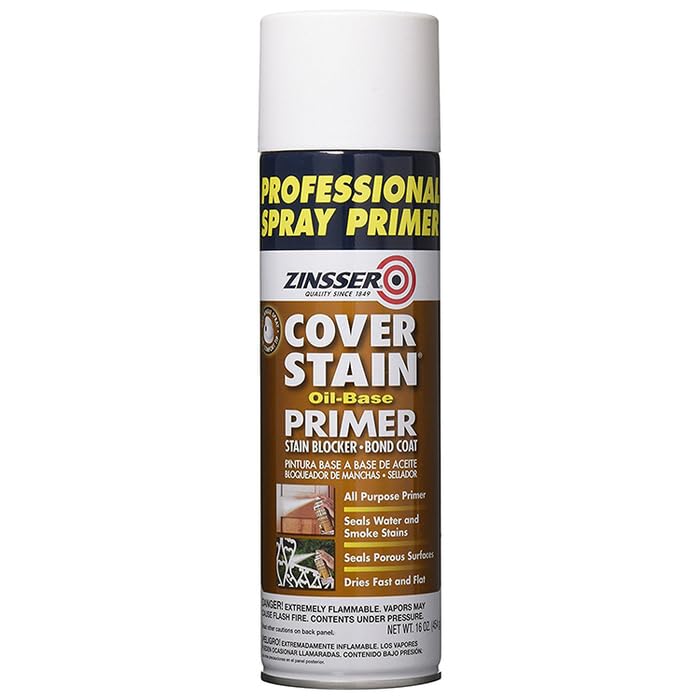
The Zinsser Cover-Stain primer blocks cedar and redwood bleed, seals water, smoke, and nicotine stains, and sticks to surfaces without sanding. It works for both interior and exterior projects, making it a practical choice for covering stubborn stains on wood or other surfaces. For anyone dealing with bleed-through from cedar or redwood, this primer provides the stain-blocking needed to keep the topcoat clean.
The Zinsser Cover-Stain Oil-Based Primer is the best exterior wood sealer, so it stops cedar and redwood bleed from ruining your paint job. It also seals water, smoke, and nicotine stains, and sticks to all surfaces without sanding, meaning you can skip prep work on tricky spots. The 2-pack of 16 oz cans weighs 2.7 pounds, light enough to carry in a tool tote.
Glidden Stain Block Primer
What We Like
- Blocks water, smoke, ink, tannins
- Adheres to glossy surfaces
- Recoatable in 1 hour
- Soap and water cleanup
Trade-offs
- Flat finish limits sheen options for topcoats
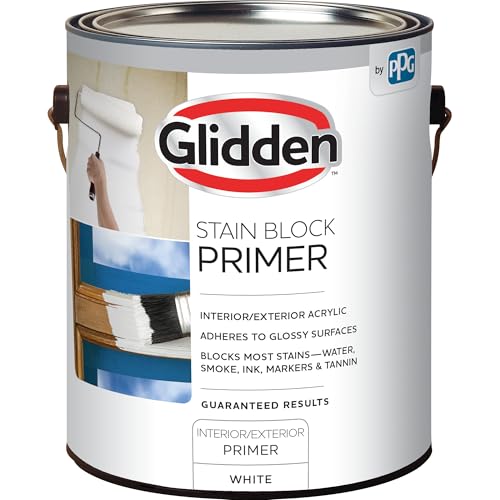
A one-hour recoat time means you can prime cedar siding in the morning and be applying your topcoat by lunch. That fast turnaround is a real advantage when you’re working against weather or a tight schedule. The acrylic formula sticks to glossy surfaces and blocks common stains like water, smoke, ink, markers, and tannins, so it handles the natural bleed cedar is known for. For a quick project where you need to move fast without sacrificing stain control, this primer keeps the workflow smooth.
This primer blocks water, smoke, ink, markers, and tannins, so it tackles the most common stains you’ll find on walls or siding. The acrylic formula cleans up with just soap and water, saving you from hauling mineral spirits around. You can topcoat it in one hour, which means you could prep and paint a room in a single afternoon. For heavy tannin bleed on cedar, reviewers note that an extra coat might be needed, but for everyday stain blocking this gets the job done without the fuss of oil-based products.
Product photos
Zinsser High Hide Cover-Stain Primer

What We Like
- High-hiding oil base blocks tannin bleed
- Seals stains from fire, smoke, water
- Dries to touch in 35 minutes
- Recoats in only 2 hours
Trade-offs
- Oil-based requires mineral spirits for cleanup
- Covers only 100 sq ft per quart
A 35-minute dry time lets you keep moving, and since it can be recoated in just 2 hours, you won’t waste a whole day waiting between coats on a siding job. The oil-based formula hides dark colors, penetrates and seals exterior wood, and blocks tannin bleed, a real help if you’re painting woods that tend to stain through. It also permanently blocks and seals tough stains from fire, smoke, and water damage. This primer works on wood, metal, drywall, concrete, and more, so it’s a versatile choice for interior and exterior projects, though you’ll need mineral spirits for cleanup.
The trade-off is that oil-based means you’ll need mineral spirits for brushes and spills, and at 100 square feet per quart, larger siding jobs will require multiple units. Compared to the Zinsser Cover-Stain Oil-Based Primer, which comes as a two-pack of 16-ounce cans, the High Hide Cover-Stain gives you a bigger single container. If you want a water-based option for easier cleanup, the WOCA Denmark Exterior Wood Primer is a clear alternative, but it’s designed for different needs.
WOCA Denmark Exterior Wood Primer
What We Like
- Environmentally friendly water-based formula
- Minimizes cracking and splitting of cedar
- Enhances adhesion for subsequent finishes
- No offensive odors during application
Trade-offs
- Clear formula offers no stain-blocking or color coverage
- Requires a separate stain-blocking primer for dark knots
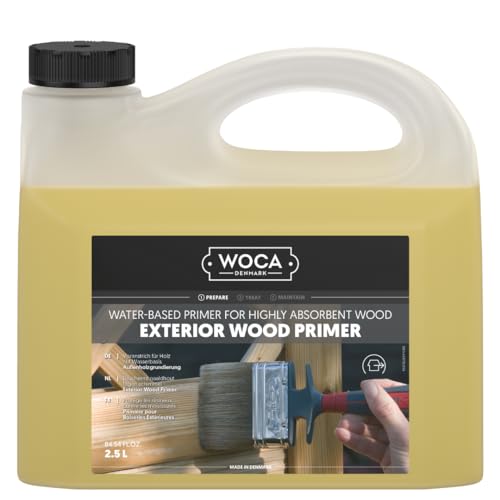
A 2.5-liter water-based primer that targets cracking and moisture damage on cedar, pine, spruce, and fir, this formula is built for those who want to protect their siding without strong chemical fumes. Its environmentally friendly composition and low-odor profile make it a natural fit for homeowners sensitive to solvents or working in enclosed spaces. By reducing splitting and improving adhesion for topcoats, it helps extend the life of the wood while keeping the application process pleasant.
The trade-off is that this is a clear primer, so it won’t block stains or provide a uniform base color the way a pigmented option like Zinsser Cover-Stain Oil-Based Primer would. If your cedar has knots or discoloration, you will need an additional stain-blocking step. For projects where preserving the natural wood look matters most and odor is a concern, this primer delivers on its core promises without the harshness of oil-based alternatives.
Product photos
How We Evaluated Primers For Cedar Siding
We analyzed each primer based on manufacturer documentation, expert round-ups from painting professionals, and common themes in owner feedback. Our goal was to identify which products reliably solve the specific problems cedar siding presents.
The three most important criteria were stain-blocking ability (especially against tannin bleed), adhesion to bare or previously painted wood, and durability in exterior conditions. We also considered application ease, drying time, and cleanup requirements.
A research-led evaluation cannot replace personal testing on your own siding, but it can highlight which primers consistently perform well across different conditions and user experiences.
What To Look For In Primers For Cedar Siding
Choosing the right primer for cedar siding means understanding the wood’s unique chemistry and your project’s demands.
Look for a primer that explicitly blocks tannins, sticks to cedar without sanding, and offers exterior-grade durability. Oil-based formulas generally provide the best stain blocking, while water-based options offer easier cleanup.
Tannin-Blocking Ability
Cedar contains natural tannins that can bleed through paint, causing yellow or brown stains. A good primer must seal these tannins. Oil-based primers like the Zinsser Cover-Stain are known for superior tannin blocking. Water-based primers may require a separate stain-blocking product for dark knots.
Adhesion and Surface Preparation
Primers that stick to glossy or previously painted surfaces save you time on sanding. Look for formulas that bond without extensive prep. The Glidden Stain Block Primer, for example, adheres to glossy surfaces, while the Zinsser Cover-Stain sticks to all surfaces without sanding.
Drying Time and Recoat
Projects move faster when primers dry quickly. Some options recoat in as little as one hour (Glidden Stain Block) or two hours (Zinsser High Hide). Oil-based primers typically take longer to dry than water-based ones.
- Check if the primer is suitable for exterior use.
- Confirm the recommended topcoat type (oil or latex).
- Consider cleanup: oil-based needs mineral spirits; water-based uses soap and water.
- Look for a primer that minimizes cracking and splitting on cedar.
For most cedar siding jobs, an oil-based primer offers the most reliable stain blocking.
Primers For Cedar Siding Compared
The table below compares the four primers for cedar siding by their key features, helping you see at a glance which one fits your project.
| Product | Type | Use | Stain Blocking |
|---|---|---|---|
| Zinsser Cover-Stain Oil-Based Primer | Oil-based primer | Interior and exterior | Blocks cedar & redwood bleed |
| Glidden Stain Block Primer | Acrylic primer | Interior/exterior | Water, smoke, ink, markers, tannins |
| Zinsser High Hide Cover-Stain Primer | Oil-based primer-sealer | Interior/exterior wood, drywall, metal | Blocks stains & seals surfaces |
| WOCA Denmark Exterior Wood Primer | Water-based primer | N/A | N/A |
Frequently Asked Questions
Do I need a special primer for cedar siding?
Yes, cedar siding needs a primer that blocks tannin bleed. Standard primers may not seal the natural oils and stains in cedar, leading to discoloration over time. An oil-based stain-blocking primer is the most reliable choice.
Can I use water-based primer on cedar siding?
You can, but it may not block tannins as effectively as an oil-based primer. Some water-based options, like the WOCA Denmark Exterior Wood Primer, are designed to minimize cracking and enhance adhesion, but they often require a separate stain-blocking primer for dark knots.
How long should primer dry before painting cedar siding?
Drying time varies by product. Some primers are recoatable in one hour (Glidden Stain Block), while others need two hours (Zinsser High Hide) or longer. Always follow the manufacturer’s instructions for the best results.
What happens if I don’t prime cedar siding?
Without primer, tannins in the cedar can bleed through the paint, causing yellow or brown stains. The paint may also peel or fail to adhere properly, leading to a shorter lifespan for your finish.
Can I use the same primer for interior and exterior cedar?
Some primers, like the Zinsser Cover-Stain, are formulated for both indoor and outdoor use. Others are specifically for exterior or interior applications. Check the label to ensure the primer is suitable for your project’s location.
The Bottom Line
For most homeowners and painters, the Zinsser Cover-Stain Oil-Based Primer is the best choice for cedar siding. It reliably blocks tannins, seals water stains, and sticks to surfaces without sanding, making it a versatile workhorse for tough exterior projects.
If you need a faster drying time for a quick turnaround, the Glidden Stain Block Primer recoatable in one hour is a strong option. For environmentally conscious DIYers, the WOCA Denmark Exterior Wood Primer offers a low-odor, water-based formula that reduces cracking.
The single most important factor when priming cedar siding is choosing a primer that blocks tannins. An oil-based stain-blocking primer remains the most dependable solution for a long-lasting, stain-free finish.
