
10 Best Primers For Aluminum in 2026
This post contains affiliate links. As an Amazon Associate, we earn from qualifying purchases.
For bare aluminum projects, a dedicated primer is non-negotiable for adhesion and corrosion resistance. Our best overall pick, the Rust-Oleum Automotive Self Etching Primer Spray, wins because it combines a self-etching formula with anti-corrosion protection and a fast 10-minute dry time. For a no-sand application, the Custom Shop Self Etching Primer Spray is a top contender, while the SprayMax 2K Epoxy Primer Gray delivers professional-grade bonding strength.
The challenge with aluminum is that its smooth, non-porous surface resists paint. A standard primer will peel, but an etching or epoxy primer creates a chemical bond that topcoats can grip. This guide focuses on the specific adhesion and corrosion needs of aluminum.
Our research-based evaluation analyzed specifications, manufacturer data, expert recommendations, and patterns in owner feedback to identify the best primers for aluminum. We break down what to look for and compare the top options for different project types.
Top 10 Primers For Aluminum in the Market
Certain content that appears on this site comes from Amazon. This content is provided "as is" and is subject to change or removal at any time.
The Best Primers For Aluminum, Reviewed
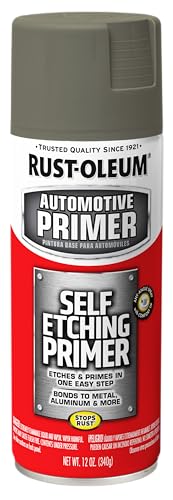
Rust-Oleum Automotive Self Etching Primer Spray
What We Like
- Self-etching for bare metal and aluminum
- Stops Rust formula prevents corrosion
- Any-angle spray works upside down
- Dries to touch in 10 minutes
Trade-offs
- Covers only 12 sq ft per can
- Oil-based formula requires solvent cleanup
A 10-minute dry time and 30-minute recoat window mean you can move from primer to topcoat in under an hour, which keeps a project rolling without long waits. The oil-based Stops Rust formula bonds directly to bare aluminum through chemical etching, creating a surface that resists corrosion and gives paint something real to grip. For anyone prepping a car panel, a trailer, or outdoor metal furniture, this two-in-one approach saves a step while delivering the adhesion bare aluminum demands.
The trade-off is coverage: at 12 square feet per can, a full truck bed or boat hull will need multiple cans, so plan ahead. Compared to the SprayMax 2K Epoxy Primer, which offers a thicker build for professional shop work, this Rust-Oleum is lighter and faster to use for smaller jobs or quick repairs. The flat finish helps topcoats level smoothly, which can reduce the need for extra sanding before a final paint layer.
Custom Shop Self Etching Primer Spray

What We Like
- No-sand finish saves prep time
- Acid etch bonds to aluminum and steel
- Fast drying for quick layering
- Works with all major paint brands
Trade-offs
- 12.9 oz can covers less area than larger options
- Acid formula requires careful ventilation
- Not a multi-surface primer for plastics or wood
A high-atomization nozzle that lays down a wide, consistent fan pattern means you can cover bare aluminum panels without the usual sanding step between primer and topcoat. The phosphoric acid in the formula etches directly into the metal surface, creating a chemical bond that resists corrosion on aluminum, steel, and stainless steel. For anyone who wants to move fast on a truck bed or boat repair, this spray cuts the process down to one clean coat and a short dry time before paint.
A 12.9 oz can runs out sooner than a quart you mix yourself, so larger projects may need multiple cans. Compared to the Rust-Oleum Self Etching Primer, the Custom Shop offers a no-sand finish that saves prep time, though the can size is smaller. This primer works well for quick, clean jobs where skipping prep matters more than covering a full vehicle in one go.
Product photos
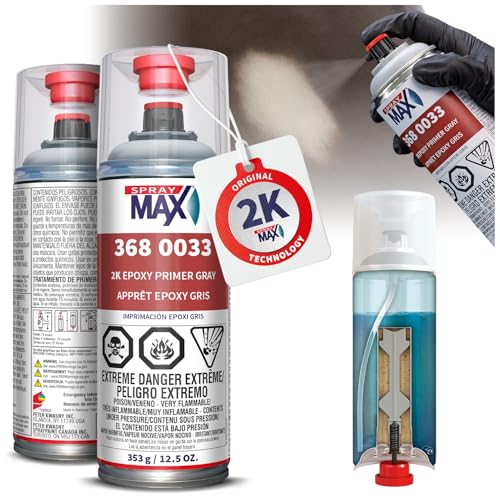
SprayMax 2K Epoxy Primer Gray
What We Like
- Professional 2K bonding strength
- Dust-dry in 15 minutes
- Variable nozzle for precise control
Trade-offs
- Requires activation before use
- Single 12.5 oz can covers limited area
The trade-off is that you have to activate the can by pressing a button on the bottom, then use it within the pot life, so it’s not grab-and-go like a single-stage etching primer. Compared to Rust-Oleum’s Self Etching Primer, which sprays straight from the can, the SprayMax demands a little more planning but offers a professional-grade epoxy foundation for topcoats. Best for metal projects where strong adhesion and corrosion resistance are key.
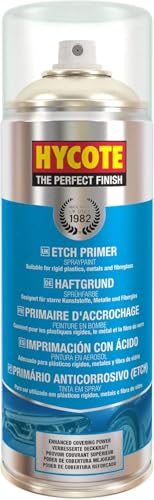
Hycote Etch Primer Spray Paint
What We Like
- Exceptional adhesion to non-ferrous metals
- Fast drying for quick project progress
- Weather, chip, and peel resistant
- Rigorous testing for no runs or drips
Trade-offs
- Not suitable for copper or brass surfaces
- Designed specifically for non-ferrous metals only
A specialty resin gives this primer a tenacious grip on tricky surfaces like aluminum, galvanized steel, and zinc-coated metal, materials that often shrug off standard primers. That means fewer adhesion failures and a reliable base for your topcoat, for automotive panels, DIY projects, or industrial repairs. It dries fast, resists weather and chipping, and has been tested to lay down smoothly without runs or drips, so even a first-time user can get a professional-looking result.
This formulation is laser-focused on non-ferrous metals and won’t work on copper or brass. If you need a primer that covers a wider mix of metals, Rust-Oleum’s self-etching option handles ferrous and non-ferrous surfaces alike. But for anyone whose primary material is aluminum or galvanized steel, Hycote’s targeted chemistry delivers the adhesion and durability that general-purpose primers often miss.
Product photos
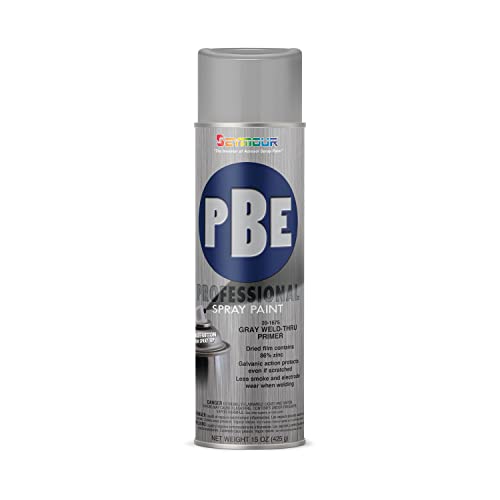
Seymour PBE Professional Primer
What We Like
- Self-etching for steel and aluminum
- Zinc-enhanced galvanic rust protection
- Withstands heat up to 250°F
- Less smoke and electrode wear when welding
Trade-offs
- No weld-through capability for heavy-duty industrial jobs
- Requires a separate topcoat for UV protection
The 86-percent pigment dry film in this primer is the key spec: it produces less smoke and electrode wear during welding than 100-percent zinc-rich coatings. It still provides electrochemical galvanic protection that guards against rust even if the coating gets nicked or chipped. That makes it a strong fit for auto body work where you need to weld through the primer without fouling your torch or spending extra time grinding. It etches and primes bare steel and aluminum in one step, so you skip the separate acid etch step entirely.
The Seymour PBE Professional Primer is a self-etching formula that chemically bites into bare steel and aluminum, so you don’t need a separate acid etch or sanding primer. Its 86-percent pigment dry film produces less smoke and electrode wear when welding, and cuts faster than 100-percent zinc rich coatings. The heat-resistant formula withstands temperatures up to 250°F, which covers most welding prep, but sustained higher heat calls for a dedicated high-temp weld-through primer.
Rust-Oleum Professional Aluminum Primer Spray Paint

What We Like
- Sprays at any angle for tight spots
- Dries to touch in 15 minutes
- Ready for immediate topcoat application
- Withstands demanding, heavy-use environments
Trade-offs
- Oil-based formula needs solvent for cleanup
- Covers only 14 sq. ft. per can
- Designed for bare aluminum only, not all metals
A tip that sprays at any angle means you can apply primer in tight spots without repositioning the can, which is useful for industrial work on aluminum surfaces. This oil-based primer is designed for bare aluminum, providing rust protection and a tough finish that withstands weathering. It dries to the touch in 15 minutes and is ready for immediate topcoat application, so you can keep working without long delays. For anyone coating aluminum in a demanding environment, this primer offers fast application and reliable adhesion.
This industrial primer uses an oil-based formula that requires solvent for cleanup, not just soap and water, which adds a step after spraying. And at 14 square feet per can, you may need multiple cans for larger panels or multiple parts. Compare that to the Custom Shop Self Etching Primer, which is a self-etching primer for metal, aluminum, and stainless steel, but it does not have the any-angle spray tip or the immediate topcoat readiness that this Rust-Oleum offers. If you prioritize speed and versatility in application, this industrial primer is a practical choice.
Dupli-Color Multi-Purpose Self-Etching Primer

What We Like
- Ideal for spot repairs on aluminum
- Perfect for spot repairs
Trade-offs
- 12 oz can covers smaller areas than larger alternatives
- Requires additional topcoat for full protection.
Scale is the real limitation. At 12 ounces in a flat green finish, this can is sized for targeted fixes rather than covering entire panels. For comparison, Rust-Oleum Automotive Self Etching Primer Spray comes in a 0.8-pound can with a dark green finish, but neither product lists coverage area, so you’re guessing how far each will go. When you need a primer that locks onto bare metal in a specific spot and won’t let go, Dupli-Color’s formula earns its place in your toolbox.
Product photos
U-POL Etching Primer Strong-Hold

What We Like
- Anti-corrosive formula prevents rust
- Works on aluminum, steel, fiberglass
- Fast-drying for quick workflow
- Anti-clog nozzle for steady spray
Trade-offs
- Not suitable for plastic surfaces
- Requires thorough cleaning and sanding before use
The anti-corrosive formula in U-POL Etching Primer Strong-Hold is its standout feature, offering dedicated rust protection for bare metals like aluminum and galvanized steel. This means you can spray on a layer that actively fights corrosion while bonding tightly to the surface, so your topcoat has a stable, long-lasting foundation. It’s a strong fit for anyone restoring automotive panels or prepping metal for paint where rust is a real worry, especially on parts exposed to moisture or road salt.
This primer demands careful prep work, cleaning, degreasing, and abrading the surface, before you spray, and it won’t work on plastic at all. Compared to the Rust-Oleum Automotive Self Etching Primer, which also etches and primes in one step, the U-POL’s anti-rust focus gives it an edge for outdoor or high-corrosion jobs. But the Rust-Oleum may be simpler if you’re working on mixed materials. Stick with U-POL when rust prevention is your top priority and you’re willing to spend time on surface prep.
Product photos
TotalBoat Aluminum Boat Barrier Coat Marine Epoxy Primer

What We Like
- Fast drying, no sanding between coats
- Works above and below waterline
Trade-offs
- Requires mixing two components before use
- Not suitable for small touch-up jobs requiring a spray can.
It dries fast and lets you apply subsequent coats without sanding, which saves time on a multi-step project. For anyone maintaining a boat that lives on the water, this barrier coat is built to handle immersion above and below the waterline alike.
This is a two-part system, so you have to mix resin and hardener before applying and use the recommended thinner for cleanup. That extra step is standard for marine epoxy work but adds complexity compared to a rattle-can etching primer such as the Rust-Oleum Automotive Self Etching Primer Spray. For a full hull or pontoon that needs lasting corrosion protection, the TotalBoat kit provides a true barrier coat that spray primers are not designed to deliver.
Custom Shop Premium Gray Self Etching Primer Quart

What We Like
- Sandable after 60 minutes
- Excellent adhesion to properly prepared substrates
- Anti-corrosive for bare aluminum and steel
Trade-offs
- Requires spray equipment; not a rattle can
- Only one color option: gray
A full quart of ready-to-spray self-etching primer means you can coat large aluminum panels, truck beds, or multiple automotive parts without stopping to reload a spray can. This makes it a natural fit for anyone tackling a whole project, fleet vehicles, OEM-style refinishing, or prepping a truck bed for liner coating, where consistency and coverage matter more than portability.
You need a spray gun or HVLP system to apply this; it is not a grab-and-go aerosol. For a small patch of aluminum, the Rust-Oleum Automotive Self Etching Primer Spray comes in a smaller can that’s easier to handle for quick touch-ups. But for larger jobs, the Custom Shop quart covers more area per coat and works on properly prepared wood and some plastics, making it a practical choice for committed DIYers and shop work.
Product photos
How We Evaluated Primers For Aluminum
We evaluated primers for aluminum by analyzing their chemical formulation, application method, and performance characteristics. Our research focused on manufacturer technical data sheets, expert advice from automotive and marine refinishing sources, and consistent patterns in user reports regarding adhesion, dry time, and ease of use.
The three most critical criteria for this category were: Adhesion mechanism (self-etching, epoxy, or barrier coat), Corrosion protection (zinc-enhanced or anti-corrosive additives), and Application practicality (spray can vs. Quart, dry time, and required surface preparation). We also considered the specific use case, such as spot repairs, large panels, or marine environments.
An evaluation based on research has a clear limitation: it cannot replicate the controlled conditions of a professional spray booth. Therefore, our recommendations are based on documented specifications and the collective experience of the user community.
What To Look For In Primers For Aluminum
Choosing the right primer for aluminum means matching the chemistry to your project’s scale and environment. Here are the essential factors to consider.
Look for a self-etching or epoxy primer with a proven corrosion inhibitor. For small repairs, a spray can is convenient; for large panels, a quart that requires spray equipment is more economical. Always check dry time and topcoat compatibility.
Etching vs. Epoxy vs. Barrier Coat
Self-etching primers contain an acid that etches into the aluminum surface for a mechanical bond. They are ideal for bare metal and small to medium projects. Epoxy primers like the SprayMax 2K offer superior chemical resistance and are the professional standard for full restorations. For marine environments, a barrier coat like the TotalBoat epoxy primer physically seals the aluminum from water.
Corrosion Protection
Aluminum can oxidize and corrode, especially in humid or saltwater environments. Look for primers with anti-corrosive additives or zinc-enhanced formulas. The Seymour PBE Professional Primer uses galvanic rust protection, while the U-POL Etching Primer Strong-Hold has a dedicated anti-corrosive formula. For outdoor or marine use, this feature is critical.
Application Method and Coverage
Spray cans offer convenience for small projects and spot repairs, but they cover limited area, typically 12 to 14 square feet per can. For large panels or multiple parts, a quart of primer like the Custom Shop Premium Gray Self Etching Primer Quart is more economical, though it requires a spray gun. Consider your equipment and project scale before buying.
- Check if the primer requires activation (mixing two components) or is a single-stage formula.
- Verify the dry time before topcoat: some etch primers are ready in 10 minutes, others in 60.
- Confirm compatibility with your topcoat paint brand (most etch primers accept all major brands).
- Ensure the primer is specifically designed for non-ferrous metals like aluminum, not just steel.
A self-etching spray can is the easiest entry point for most DIYers, but a 2K epoxy or quart-sized product is a better investment for serious restoration work.
Primers For Aluminum Compared
The table below compares the key specifications and best-use scenarios for each primer in our top 10 list.
| Product | Type | Dry Time | Compatible Surfaces |
|---|---|---|---|
| Rust-Oleum Automotive Self Etching Primer Spray | Self-etching primer | 10 minutes dry to touch | Bare metal, aluminum, fiberglass |
| Custom Shop Self Etching Primer Spray | Acid Etch Primer | Fast Drying | Metal, aluminum, stainless steel |
| SprayMax 2K Epoxy Primer Gray | 2K Epoxy Primer | 15 minutes dry to touch | Metal, aluminum, steel |
| Hycote Etch Primer Spray Paint | Self-etching primer | Fast drying | Non-ferrous metals |
| Seymour PBE Professional Primer | Self-etching / weld-through | N/A | Bare steel, aluminum |
| Rust-Oleum Professional Aluminum Primer Spray Paint | Oil-based, durable | 15 minutes dry to touch | Aluminum surfaces |
| Dupli-Color Multi-Purpose Self-Etching Primer | Self-etching primer | N/A | Bare metal, aluminum, fiberglass |
| U-POL Etching Primer Strong-Hold | Self-etching primer | Fast-drying | Galvanized steel, aluminum, fiberglass |
| TotalBoat Aluminum Boat Barrier Coat Marine Epoxy Primer | 2-component epoxy primer | Fast drying | Aluminum, steel |
| Custom Shop Premium Gray Self Etching Primer Quart | Self-etching acid etch primer | 60 minutes dry to sand | Bare metal, steel, aluminum, fiberglass |
Frequently Asked Questions
Do I need to sand aluminum before applying primer?
Yes, for most primers, sanding with fine-grit sandpaper is required to create a mechanical tooth for adhesion. Some self-etching primers, like the Custom Shop Self Etching Primer Spray, advertise a no-sand finish on properly cleaned aluminum, but light scuffing is still recommended for best results.
Can I use a regular primer on aluminum?
No, standard primers are not formulated to bond to aluminum’s smooth, non-porous surface. They will likely peel or chip. You need a dedicated self-etching, epoxy, or barrier-coat primer designed specifically for non-ferrous metals to ensure adhesion and prevent corrosion.
How long does self-etching primer take to dry?
Dry times vary by product. The Rust-Oleum Automotive Self Etching Primer Spray dries to the touch in 10 minutes, while the Custom Shop Premium Gray Self Etching Primer Quart is sandable after 60 minutes. Always check the manufacturer’s instructions for recoat and sanding times.
What is the difference between self-etching and epoxy primer?
Self-etching primer uses an acid to chemically bite into the metal, creating a bond and providing light corrosion resistance. Epoxy primer is a two-part system that forms a tough, chemical-resistant barrier and offers superior adhesion and corrosion protection, making it the professional choice for full restorations.
Can I use a primer for aluminum on steel or fiberglass?
Some primers, like the U-POL Etching Primer Strong-Hold, are formulated to work on aluminum, steel, and fiberglass. Others, like the Rust-Oleum Professional Aluminum Primer, are designed only for bare aluminum. Always check the product label to ensure compatibility with your substrate.
The Bottom Line
For most DIYers and hobbyists, the Rust-Oleum Automotive Self Etching Primer Spray is the best overall choice. It combines a self-etching formula with Stops Rust technology and a fast 10-minute dry time, making it ideal for one-step priming on bare aluminum. It is the most versatile and user-friendly option for small to medium projects.
If you need professional-grade bonding and corrosion resistance for a full restoration, the SprayMax 2K Epoxy Primer Gray is worth paying more for. For boat owners, the TotalBoat Aluminum Boat Barrier Coat Marine Epoxy Primer is the specific solution for aluminum hulls. And for large panels, the Custom Shop Premium Gray Self Etching Primer Quart offers the best value per square foot.
The single most important factor is choosing a primer with the right chemistry for aluminum. Whether you need a fast spray can or a professional epoxy, adhesion and corrosion protection are non-negotiable for a lasting finish.
