
10 Best Pencil Sharpeners For Artists in 2026
This post contains affiliate links. As an Amazon Associate, we earn from qualifying purchases.
For artists who demand a precise, adjustable point, the AFMAT PS10 Long Point Pencil Sharpener is the best overall pick, thanks to its unique knob that lets you dial in the nib sharpness. For those who prefer an electric option, the AFMAT PS29 Rechargeable Long Point Sharpener delivers super-long points on the go. And if you work with 2mm leads, the STAEDTLER Mars Rotary Lead Pointer is a specialized tool built for precision.
The struggle with most sharpeners is that they give you one point, usually too short for shading or too blunt for fine lines. Artists need a sharpener that respects a pencil’s potential, offering control over the tip shape and handling everything from soft graphite to colored cores without chewing them up.
This guide is built from a deep dive into specifications, manufacturer claims, and the patterns found in owner feedback across dozens of models. We’ve organized the best sharpeners for artists by their specific strengths, so you can match the tool to your drawing style.
Top 10 Pencil Sharpeners For Artists in the Market
Certain content that appears on this site comes from Amazon. This content is provided "as is" and is subject to change or removal at any time.
The Best Pencil Sharpeners For Artists, Reviewed
AFMAT PS10 Long Point Pencil Sharpener

What We Like
- Adjustable nib sharpness via knob
- Self-feed mechanism for easy cranking
- Built-in sandpaper for needle-sharp points
- Large capacity shavings box
Trade-offs
- Standard No. 2 pencils won't get long points
- Requires anticlockwise crank to eject pencil
Designed for φ6-8.2mm art pencils, it delivers a long point ranging from 8mm to 20mm, exactly what you need for fine detail work or broad shading with charcoal, sketching, and colored pencils. The self-feed mechanism makes operation simple: insert the pencil, crank clockwise, and the pencil moves forward on its own; when resistance drops, a reverse crank ejects it. You can also rotate a knob on the handle to adjust nib sharpness, and a black sandpaper pad in the shavings box lets you refine the tip to a needle point. This is a thoughtful tool for any artist who wants consistent, controllable points without the noise or power dependency of an electric sharpener.
The trade-off is that this sharpener is picky about pencil types. Standard No. 2 pencils also won’t produce the long points this model is built for, so it’s really aimed at artists using thicker‑core drawing pencils. For the artist who values precision and longevity in a hand‑crank design, this is a smart investment.
AFMAT PS29 Rechargeable Long Point Sharpener

What We Like
- Super long point up to 17mm
- Rechargeable battery, 300 uses per charge
- Two sharpness settings: sharp and blunt
- Auto-stop prevents oversharpening
Trade-offs
- Requires gentle downward pressure while sharpening
- No. 2 pencils won't achieve the longest points
A 17mm long point means you can cover more area with each stroke and shade large sections without constantly resharpening, which is exactly what artists sketching or working with charcoal and colored pencils need. The rechargeable battery delivers 300 uses on a two-hour charge, so you can leave the cord behind and work at a studio desk, classroom table, or even outdoors. The two sharpness settings let you switch from a fine detail point to a blunter tip for rough sketching, all with an auto-stop that prevents chewing up expensive pencils.
2 pencils won’t produce the full 17mm point, thicker artist pencils are where it really shines. Compared to the manual AFMAT PS10, which gives an even longer point (up to 20mm) but requires hand cranking, the PS29 offers cordless electric convenience at the cost of that extra millimeter of tip length.
Product photos
STAEDTLER Mars Rotary Lead Pointer
What We Like
- Adjustable cone for fine or blunt points
- Automatic stop prevents over-sharpening
- Integrated dust wiper cleans lead
- Durable metal mechanism
Trade-offs
- Only works with 2 mm leads
- Rotary action slower than electric sharpeners
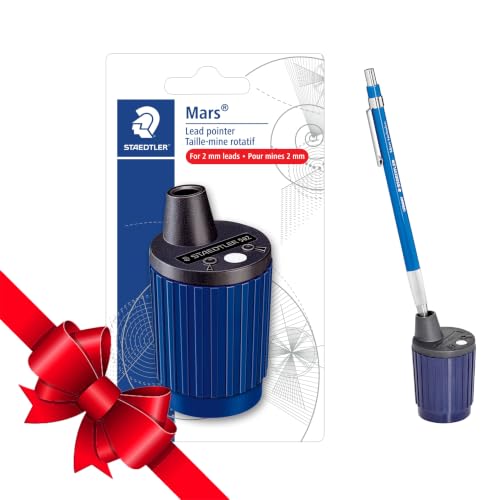
The adjustable cone lets you choose between a fine point for detailed drawing or a blunter point for writing, and the automatic stop signals when sharpening is complete, so you don’t waste graphite. For anyone who works with 2 mm leads, this compact metal tool brings precision that a standard sharpener just can’t match.
This pointer is built solely for 2 mm leads, so it won’t help with standard wooden pencils or colored pencils. If you need a long point for charcoal or art pencils, the AFMAT PS10 offers a broader range, but the STAEDTLER’s adjustable cone and dust wiper make it the more refined choice for technical drafting and fine detail work. Keep it in your studio for those moments when only a perfect 2 mm point will do.
KUM AS3 Long Point Automatic Sharpener

What We Like
- Two-stage sharpening for long fine tips
- Auto-stop prevents over-sharpening
- Comes with two free replacement blades
- Compact size with chip-catching container
Trade-offs
- At 0.0 lbs, too light for desk stability
- No adjustable point length option
The KUM AS3 uses a two-stage sharpening process that first shapes the wooden barrel and then refines the lead, giving you a long, precise tip ideal for detailed drawing and shading work. Its automatic stop mechanism prevents over-sharpening, so you won’t snap delicate leads or waste pencil material. The sharpener comes with two replacement blades, and the compact body with a built-in chip catcher makes it easy to tuck into a pencil case or travel pouch. This is a sharpener built for artists who need consistent, fine points without the bulk of a desktop model.
Its size is a key factor: at just 1.9 inches long and weighing virtually nothing, the AS3 is highly portable but may not suit those who prefer a heavier, more stationary sharpener. Compared to the AFMAT PS10, which offers a self-feed mechanism and adjustable sharpness, the KUM is more compact and simpler in design. It excels as a pocket-sized companion for on-the-go artists who prioritize precision and simplicity over capacity.
Product photos
Faber-Castell Twin Metal Sharpener

What We Like
- Two point settings: sharp and blunt
- Sturdy metal construction for durability
- Works with color and graphite pencils
- Compact size fits any kit
Trade-offs
- Blade dulls over time, needs replacement
- No long-point option for detailed work
The Faber-Castell Twin Metal Sharpener is a tiny metal block that measures just an inch on each side, so it fits into the smallest pencil case without adding bulk. Its sturdy metal construction holds up to daily use in a drawer or bag. A setting lets you choose between a sharp point for graphite pencils and a blunter point for colored pencils, so you get the right tip for each medium without extra effort.
The blade will eventually go blunt, and when it does you will see more tip breakages. For artists who want a long, fine point for detailed drawing, the AFMAT PS10 produces 8-20mm nibs, while this Faber-Castell keeps points shorter, ideal for softer colored leads. If you mostly sketch with graphite and need a quick, clean edge, this twin sharpener delivers. If you need extra-long points for shading or precision, the AFMAT PS10 may suit you better.
Derwent Super Point Helical Sharpener

What We Like
- Extra-long, super point
- High performance steel helical blade
- Durable metal casing
- Auto stop safety feature
Trade-offs
- Heavier than many manual sharpeners at 1.1 pounds
- Clamp mounting requires a desk edge
- Only fits pencils up to 8mm diameter
A steel helical blade that sharpens pencils up to 8mm in diameter into an extra-long, super point is the core reason this sharpener stands out for artists who need precision. The durable metal casing and auto stop safety feature mean it handles repeated use without wearing down or over-sharpening. This makes it a natural fit for users who need a consistent, fine tip for standard-sized pencils.
At 1.1 pounds, this sharpener is heavier than most manual models, so you’ll want a desk edge to use the included clamp for secure mounting. That makes it a better fit for a dedicated workspace than a portable option like the KUM AS3, which weighs next to nothing and slips into a pocket.
Blackwing One-Step Long Point Sharpener
What We Like
- All-metal build with zero plastic parts
- Replaceable blade for long-term use
Trade-offs
- Small shavings canister needs frequent emptying
- One-step design offers no point-length adjustment
- No compatibility with oversized or 2mm leads
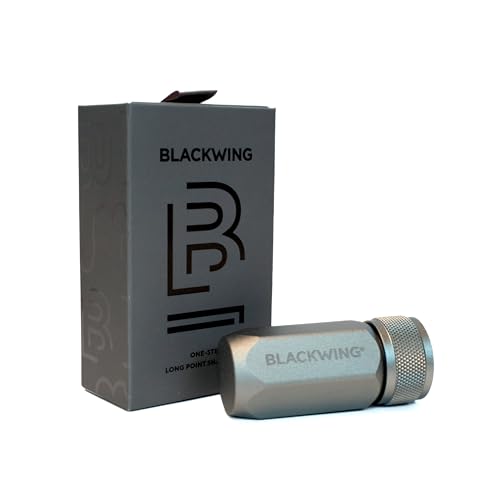
A machined aluminum body and German steel blade mean this sharpener has no plastic parts to crack or wear out, it’s built to last through years of studio use.
Simplicity is the main point: you get one point profile and no adjustability. If you need different points for different pencil types, the AFMAT PS10 offers self-feeding and adjustable sharpness, but at the cost of a larger, heavier body. For artists who value a durable, precision tool that does one thing exceptionally well, and want to keep it for years by swapping the blade, the Blackwing delivers exactly that.
M + R Mobius + Ruppert Pencil Sharpeners

What We Like
- Solid brass construction
- Made in Germany
- Double sharpener handles thick pencils and crayons
- Replacement blades available
Trade-offs
- No shavings reservoir included
- Manual sharpening only
Solid brass construction and German manufacturing give this sharpener a precision feel that artists who work with softer graphite or colored pencils will appreciate. The double sharpener accommodates both standard pencils and thicker crayons, so you can keep one tool on your desk for everything from sketching to mixed-media work. Its compact size slips easily into a pencil case or drawer, and replacement blades mean you can refresh the cutting edge instead of tossing the whole unit.
This is a small manual sharpener, so you’ll need to empty debris over a trash bin. Compared to the AFMAT PS10 Long Point Sharpener, which is larger at 5.0 inches long and weighs 0.6 pounds, the M+R is a compact brass tool focused on durability. It suits artists who want a simple, reliable sharpener for standard and thicker pencils.
ZMOL Heavy Duty Manual Hand Crank Pencil Sharpener

What We Like
- Works with colored and triangular pencils
- Non-slip base keeps it steady
- No permanent mounting needed
- Alloy blade for frequent use
Trade-offs
- Hand crank slower than electric options
- Heavier than pocket sharpeners at desktop size
A non-slip base and alloy blade mean this hand-crank sharpener stays put and keeps cutting through heavy classroom or studio sessions. It handles colored pencils, graphite, and even triangular shapes without skipping, so you can switch between sketching and vibrant layering without changing tools. For artists who prefer a tactile, mechanical process over batteries or cords, this is a reliable desktop companion that won’t slide around mid-stroke.
Speed is the trade-off here: a manual hand crank takes more effort than an electric sharpener, but the ZMOL’s alloy blade and non-slip base keep it stable through repeated use. It handles colored pencils, graphite, and triangular shapes without needing a mount, so it works well for classroom or studio settings. Just note that the sharpness point is preset by the design, there is no dial to change it.
Product photos
JEFURE Manual Pencil Sharpener Hand Crank
What We Like
- Auto-in design for easy operation
- Two adjustable sharpness levels
- Sturdy alloy steel blade
- Anti-slip base for stable use
Trade-offs
- Only fits pencils up to 8 mm diameter
- Manual crank requires counterclockwise release step
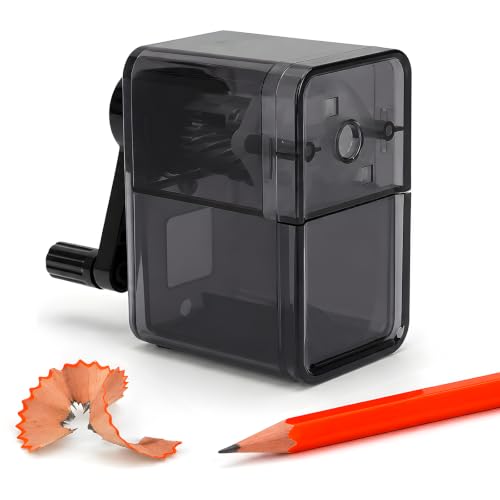
Two adjustable sharpness levels let you switch between a fine writing tip and a thicker sketching point without switching sharpeners. That makes it a practical companion for artists who work with both standard pencils and softer colored or charcoal pencils, since you can dial in the point shape that suits each medium. The auto-in feed mechanism works by inserting the pencil, turning the crank clockwise to sharpen, then counterclockwise to release. Shavings collect in the easy-clean drawer, and the anti-slip base helps it stay put on a desk or table.
The JEFURE manual pencil sharpener works only with pencils 6.5 to 8 mm in diameter, so it won’t handle thicker art pencils or oversized graphite sticks. That range covers standard, colored, and charcoal pencils in triangular, hexagonal, or round shapes, which suits most classroom and home use. For artists who stick to those sizes, the two-level adjustable point lets you switch between fine writing tips and thicker sketching points.
Product photos
How We Evaluated Pencil Sharpeners For Artists
Our evaluation began with a close look at each sharpener’s core specifications: blade material, point length capability, pencil diameter range, and shavings capacity. We cross-referenced manufacturer documentation with expert round-ups from art supply reviewers to understand how each model performs in real studio conditions.
The three criteria that mattered most were point adjustability, lead compatibility, and build quality. Artists work with a range of pencil types, graphite, colored, charcoal, and 2mm clutch leads, so a sharpener that handles only one core type gets a narrow recommendation. We also prioritized models with replaceable blades, as a dull blade is the fastest way to ruin a pencil.
Owners consistently report that sharpeners with helical blades and auto-stop features produce the most consistent points and cause the least breakage. We’ve used those patterns to separate the tools that work from those that frustrate.
What To Look For In Pencil Sharpeners For Artists
Choosing the right sharpener starts with knowing what kind of points your art requires. A long, tapered point is essential for detailed shading and fine line work, while a blunter tip suits broad strokes and coloring.
Look for a sharpener that matches your pencil diameter (typically 6-8.2mm), offers adjustable point length if you need variety, and uses a replaceable blade or helical cutter for consistent performance over time.
Point Length and Adjustability
The most important feature for an artist is how long and sharp the point can get. Standard sharpeners produce short, stubby tips that limit your ability to shade or draw fine lines. Long-point sharpeners use a two-stage or helical mechanism to expose more graphite, giving you a tapered cone that lasts longer between sharpenings.
Some models, like the AFMAT PS10, offer a dial to adjust the point shape from blunt to needle-sharp. Others, like the Derwent Super Point, produce a single, extra-long profile. If you switch between detailed line work and broad shading, an adjustable model saves you from owning multiple sharpeners.
Pencil Compatibility
Not all sharpeners accept every pencil. Check the stated diameter range, most standard sharpeners fit 6-8.2mm pencils, but thicker colored pencils, charcoal sticks, or jumbo graphite cores require a wider opening. The M+R Mobius + Ruppert double sharpener, for example, handles thicker crayons and pencils in its second hole.
For artists using 2mm clutch pencils, only a dedicated lead pointer like the STAEDTLER Mars Rotary will do the job. A standard sharpener will either jam or break the thin lead.
Blade Quality and Replaceability
A sharpener is only as good as its blade. Helical steel blades, found in models like the Derwent Super Point, produce cleaner cuts and stay sharp longer than standard flat blades. All-metal construction, as seen in the Blackwing One-Step, adds durability and prevents the plastic fatigue that plagues cheaper sharpeners.
Look for sharpeners with replacement blades available. The KUM AS3 comes with two free blades, and the Blackwing and M+R models both sell replacements. A sharpener with a permanent blade will eventually become unusable, forcing you to buy a whole new unit.
- Does the sharpener offer adjustable point length, or only a fixed profile?
- What pencil diameters and core types (graphite, colored, charcoal, 2mm lead) does it accept?
- Are replacement blades available for purchase?
- Does the shavings container have enough capacity for your typical drawing session?
- Is the build material metal, brass, or plastic? Metal and brass last significantly longer.
If you sharpen more than a few pencils a week, invest in a model with a replaceable helical blade, it will pay for itself in saved pencils and frustration.
Pencil Sharpeners For Artists Compared
The table below compares all sharpeners side by side, showing their key specs and best-use scenarios at a glance.
| Product | Point Type | Blade Material | Dimensions |
|---|---|---|---|
| AFMAT PS10 Long Point Pencil Sharpener | Long point (8mm–20mm) | Helical blade | 5.0 × 2.4 × 5.0 inches |
| AFMAT PS29 Rechargeable Long Point Sharpener | Long point (up to 17mm) | Heavy-duty helical stainless steel | 3.5 × 3.5 × 6.8 inches |
| STAEDTLER Mars Rotary Lead Pointer | Adjustable cone | Metal sharpening mechanism | 4.0 × 2.0 × 1.0 inches |
| KUM AS3 Long Point Automatic Sharpener | Two-stage long point | Two replacement blades | 1.9 × 1.3 × 0.9 inches |
| Faber-Castell Twin Metal Sharpener | Sharp and blunt | Twin metal blades | 1.0 × 1.0 × 0.6 inches |
| Derwent Super Point Helical Sharpener | Extra-long super point | Steel helical | 5.3 × 3.0 × 4.9 inches |
| Blackwing One-Step Long Point Sharpener | Long point | German steel | 4.0 × 2.4 × 1.4 in |
| M + R Mobius + Ruppert Pencil Sharpeners | N/A | Solid brass | 1.0 × 1.0 × 1.0 inches |
| ZMOL Heavy Duty Manual Hand Crank Pencil Sharpener | 5 adjustable modes | Durable alloy | N/A |
| JEFURE Manual Pencil Sharpener Hand Crank | 2 levels | Alloy steel | 3.9 × 3.8 × 2.2 inches |
Frequently Asked Questions
What is the best pencil sharpener for artists who need long points?
The AFMAT PS10 Long Point Pencil Sharpener is the best overall choice for artists who want adjustable, long points. Its knob lets you dial in the exact tip shape, and the built-in sandpaper helps refine a needle-sharp edge for detailed work.
Can I use a standard pencil sharpener for colored pencils?
Yes, but a standard sharpener often breaks soft colored cores or produces a point too short for good color laydown. A model designed for colored pencils, like the Faber-Castell Twin Metal Sharpener with its blunt setting, reduces breakage and gives a more usable tip.
How do I sharpen a 2mm lead pencil?
You need a dedicated lead pointer, not a standard pencil sharpener. The STAEDTLER Mars Rotary Lead Pointer is built specifically for 2mm leads, with an adjustable cone that lets you choose between a fine point for drafting or a blunt tip for sketching.
What is the difference between a helical blade and a flat blade sharpener?
A helical blade is a cylindrical cutter that rotates against the pencil, shaving it evenly in a spiral motion. This produces a smoother, longer point and reduces lead breakage. Flat blade sharpeners are simpler and cheaper but tend to chew up soft leads and produce shorter, less consistent points.
Are metal sharpeners better than plastic ones?
Yes, for long-term use. Metal sharpeners, especially those made from brass or steel like the M+R Mobius + Ruppert or the Blackwing One-Step, resist cracking and maintain their blade alignment far longer than plastic models. They are heavier and more expensive, but they last for years.
The Bottom Line
For most artists, the AFMAT PS10 Long Point Pencil Sharpener is the one to buy. Its adjustable point length, self-feed mechanism, and built-in sandpaper give you the control needed for everything from fine line work to broad shading, and it handles the pencil diameters artists actually use.
If you prefer an electric sharpener, the AFMAT PS29 Rechargeable Long Point Sharpener delivers the same long-point philosophy without the hand cranking. And if you work exclusively with 2mm leads, the STAEDTLER Mars Rotary Lead Pointer is the specialized tool that standard sharpeners can’t match.
The single most important factor is point adjustability. A sharpener that gives you only one tip shape limits your drawing range. Choose a model that lets you dial in the point you need, and your pencils will perform at their best.
