
8 Best Paper For Soft Pastels in 2026
This post contains affiliate links. As an Amazon Associate, we earn from qualifying purchases.
For soft pastel work, the paper is as important as the pigment. The Canson Mi-Teintes Velvet Pastel Paper Pad earns our Best Overall spot with its 430 gsm weight that handles wet techniques and archival, acid-free construction. For artists who want a dark surface, the Strathmore 400 Series Artagain Pad is a strong choice, while the Uart Sanded Pastel Art Paper offers a consistent grit for serious layering.
The right paper determines how many layers of pastel you can build, whether the pigment grips or slides, and how your finished piece holds up over time. With so many textures, weights, and colors available, choosing one can feel overwhelming.
This guide is research-based, drawing on manufacturer specifications, expert round-ups, and patterns in owner feedback. We break down the key criteria and highlight eight top-rated options to help you find the right match for your technique and style.
Top 8 Papers For Soft Pastels in the Market
Certain content that appears on this site comes from Amazon. This content is provided "as is" and is subject to change or removal at any time.
The Best Papers For Soft Pastels, Reviewed
Canson Mi-Teintes Velvet Pastel Paper Pad

What We Like
- 430 gsm weight handles wet techniques
- Archival, acid-free paper
- Eliminates need for fixative
Trade-offs
- Limited to grey tones, no white or black
- Only 12 sheets included in the pad.
And the grey tones, while elegant, limit your options if you prefer working on white, black, or warm earth grounds. Compared to the Strathmore 400 Series Pastel Pad, which offers 24 sheets in assorted colors at a lighter 80 lb weight, the Canson is clearly aimed at deliberate, layered work rather than loose experimentation.
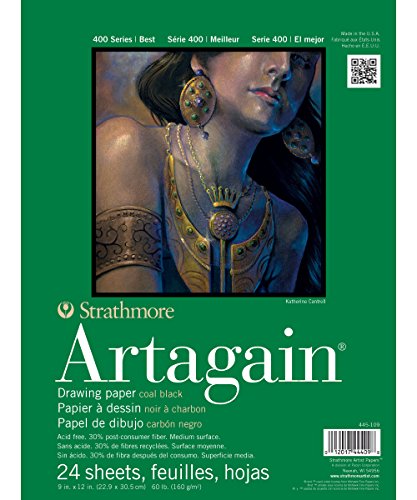
Strathmore 400 Series Artagain Pad
What We Like
- Fiber-enhanced coal black surface
- Acid free with 30% post-consumer fiber
- Works with soft pastels and charcoal
- 24 sheets in a glue-bound pad
Trade-offs
- Glue binding limits full-flat opening
- Single color limits versatility for light subjects
The coal black paper here is a fiber-enhanced, acid-free surface with 30% post-consumer fiber, designed for soft pastels, charcoal, and colored pencils. At 60 lb / 160 gsm, it’s a standard weight for dry media, offering a dark ground that works well with light-colored materials. The 24-sheet glue-bound pad gives you a solid number of sheets for practice or finished pieces.
The Strathmore 400 Series Artagain Pad uses fiber-enhanced, acid-free coal black paper with 30% post-consumer fiber, so it resists yellowing over time and gives a dark surface for pastels and charcoal. The glue binding may not open fully flat, and the single black color limits your options if you prefer working on mid-tones or white paper. Compared to the Canson Mi-Teintes Velvet pad, which offers grey tones and a heavier 430 gsm weight, the Strathmore is lighter and comes in only one color.
Product photos
Uart Sanded Pastel Art Paper

What We Like
- Consistent end-to-end grit coverage
- Acid-free and archival quality
- Accepts wet media without worry
- No fixatives required for results
Trade-offs
- Only 10 sheets per pack
- Single color (off-white) limits variety
A #400 grit surface gives consistent end-to-end coverage, so you get predictable results across the whole sheet. The paper is pH neutral and acid free, making it archival quality for pastels, colored pencils, and charcoal. It accepts all wet media, so you can combine techniques without worry, and no fixatives are required for the final artwork. The off-white tone keeps the surface neutral for clean-looking work.
The trade-off is that ten sheets per pack runs out fast if you work large or often, and the single off-white color won’t offer the tonal variety you get from a pad like the Canson Mi-Teintes Velvet. The #400 grit provides a firm tooth that holds pastel well, but artists who prefer a softer surface may find it too aggressive. For artists who prioritize grip and layering power over sheet count and color choice, this is the surface that delivers.
Product photos
Sennelier La Carte Pastel Pad

What We Like
- Acid-free and lightfast paper
- Cork-and-vegetable-flake texture
- Ideal for dry drawing techniques
Trade-offs
- Not designed for wet media like watercolor or ink
- Only 10 sheets per pad
A finely ground mixture of cork and vegetable flakes bonded to a 200 lb. card gives this pad a surface that grips soft pastel particles like no other. That texture lets you layer color without it sliding off, so deep darks stay dark and highlights pop. For artists who want maximum tooth and a surface that holds multiple passes of pigment, this is the premium choice. The acid-free, lightfast construction means your finished pieces won’t yellow or fade over time, making it a strong pick for work you intend to keep or sell.
The 200 lb. card is lighter than the 264 lb. Canson Mi-Teintes Velvet pad listed in the guide, so artists who prefer a heavier sheet for wet techniques may want to consider that option. For dry pastel and charcoal work, the cork-and-vegetable-flake surface provides strong tooth that holds pigment well. The acid-free, lightfast construction helps prevent yellowing and fading over time, which matters for archival work.
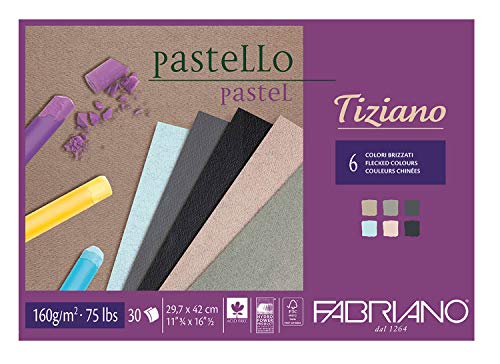
Fabriano Tiziano Pastel Paper Pad
What We Like
- Six vivid colors for varied backgrounds
- 40% cotton content for durability
- Acid-free and pH neutral for longevity
- Suitable for pastel, pencil, gouache, chalk, acrylic
Trade-offs
- No single color pad for monochrome work
- Lighter weight than sanded papers for heavy layering
Thirty sheets in six vivid colors mean you can switch backgrounds without buying multiple pads, which is a real advantage when you want to test how a pastel reads against different tones. The 40% cotton content gives the paper a sturdy, archival feel that resists aging, so your finished pieces stay true over time. If you enjoy exploring color harmonies or teaching beginners who need variety, this pad offers a lot of creative room for the money.
The trade-off is that no single color is available on its own, so if you prefer working exclusively on a deep charcoal or warm ochre, you will end up with sheets you might not use. Compared to the Canson Mi-Teintes Velvet pad, which comes in dedicated grey tones, the Fabriano Tiziano gives you more color options in one pad. For artists who value variety and a paper that handles pastel, pencil, gouache, chalk, and acrylic, this is a thoughtful, versatile choice.
Strathmore 400 Series Pastel Pad

What We Like
- Subtle texture for pastel grip
- Assorted colors add variety
- Affordable 24-sheet pad
- Works with soft and hard pastels
Trade-offs
- Only one size option available
- Tape binding can tear pages out unevenly
With 24 sheets of assorted colors in a 9×12-inch pad, the Strathmore 400 Series Pastel Pad gives you plenty of surface to experiment without stretching your budget. The textured paper is designed to catch pastel pigment, whether you use soft sticks or harder pastels, so you get good color payoff and blendability right out of the gate. For beginners or artists who want a reliable daily driver for sketches, studies, or practice pieces, this pad keeps the focus on making art, not worrying about paper cost.
A pad like this one is ideal for quick studies, color experiments, or building confidence with the medium. The 80-pound paper provides a subtle texture that grips oil pastel without tearing, and it also works well for soft or hard pastel drawings. With 24 sheets in assorted colors, you can jump between different grounds without switching pads. The tape binding keeps each sheet flat while you work, and the 9×12-inch size fits easily into a standard tote bag for sketching on location.
Product photos
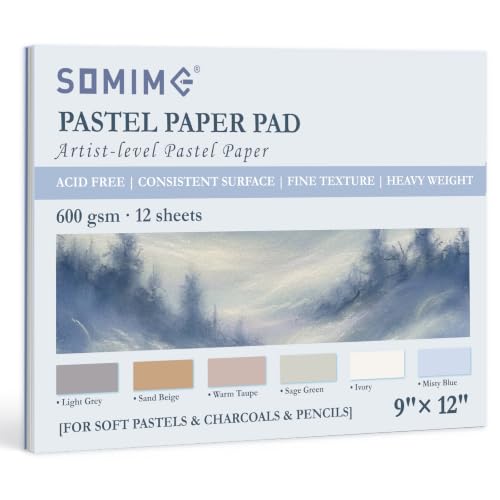
Somime Sanded Pastel Paper Pad
What We Like
- 600gsm heavyweight resists buckling
- Abrasive surface grips pastel layers
- Includes 6 light colors for variety
- Works for wet and dry underpainting
Trade-offs
- Only 12 sheets per pad
- Light colors limit dark-paper effects
- Heavier than many pads at 1.6 lbs
A 600gsm weight provides a durable, textured surface that enhances color vibrancy. The abrasive surface grips each layer, preventing them from mixing into mud too easily and enabling complex color transitions. This pad provides a sturdy foundation for artists who want a durable surface for soft pastel work.
At 1.6 pounds for 12 sheets, this pad is noticeably heavier per page than most pastel papers, which means each sheet is built to handle dense, layered work without buckling. If you go through paper quickly, the Strathmore 400 Series Artagain pad gives you 24 sheets for lighter applications. But for soft pastel pieces where stability and texture matter most, this heavyweight sanded pad delivers exactly what its weight suggests.
Product photos
Winsor & Newton Professional Pastel Paper Pad

What We Like
- Archival, acid-free paper resists aging
- Grained surface grabs pastel pigment well
- Two-sided: grained or smooth finish
- 24 sheets in earth tones
Trade-offs
- 160 gsm is lighter than many pastel papers
- Only 6 earth colors limit variety
Twenty-four sheets of 160 gsm paper give you a versatile archival base. Each sheet has a grained surface on one side and a smooth finish on the other, which holds pastel pigment without fading or yellowing over time. The paper is acid-free and of archival quality, so it resists ageing. This pad suits artists who want a reliable surface for dry media like pastel, pencil, or charcoal.
The most decisive fact about this paper is its 160 gsm weight, which makes it lighter than the 430 gsm Canson Mi-Teintes Velvet pad. That difference matters if you prefer a heavier sheet for certain techniques. The six earth-tone colors work well for landscape sketches, though the selection may feel limited if you want more grays or whites. Artists who work with dry media and need archival quality will appreciate the stable, toothy surface.
Product photos
How We Evaluated Papers For Soft Pastels
We evaluated these pastel papers by examining manufacturer data, expert recommendations from art instruction sources, and common themes in user feedback across multiple retail platforms. Our focus stayed on the features that directly affect the pastel experience: surface texture, paper weight, archival quality, and color range.
The most critical factor was surface texture. Pastel relies entirely on tooth, the paper’s ability to grip pigment particles. We looked for papers with consistent, well-described textures, from the subtle grain of the Strathmore 400 Series to the aggressive grip of sanded papers like the Uart and Somime pads.
Weight and archival quality were next. Heavier papers (over 200 gsm) resist buckling from layering and wet techniques, while acid-free, pH-neutral construction ensures your art won’t yellow or crumble with age. We also considered color variety, as the background tone dramatically affects a pastel painting’s final look.
A research-led evaluation has limits: we cannot replicate the feel of each paper in a studio setting. Our conclusions are drawn from published specifications and the reported experiences of other artists, not from controlled testing.
What To Look For In Papers For Soft Pastels
Choosing the right pastel paper comes down to matching the surface to your working style. Here are the key factors to consider.
Choose a paper with enough tooth to hold multiple layers of pastel, a weight that won’t buckle under your technique, and an archival rating if you want your work to last.
Surface Texture and Tooth
The surface texture, or tooth, is the single most important feature. Soft pastel is a dry medium that relies on the paper’s grip to hold pigment in place. Papers range from the subtle, woven texture of the Strathmore 400 Series to the pronounced, abrasive surface of sanded papers like the Uart and Somime pads. Sennelier La Carte uses a unique cork-and-vegetable-flake texture for exceptional grip with dry techniques. If you plan to build many layers or use wet underpainting, a sanded or heavily textured surface is usually the better choice.
Paper Weight (GSM)
Weight, measured in grams per square meter (gsm), determines how well the paper handles layering and moisture. Lightweight papers (around 100-160 gsm) are fine for quick studies and light pastel work, but they may buckle with heavy layering or wet media. The Canson Mi-Teintes Velvet weighs 430 gsm, making it very stable for wet techniques. The Somime Sanded Pastel Paper Pad is a heavyweight at 600 gsm and resists buckling even with intense layering. For most pastel work, a weight of 200 gsm or higher is a good starting point.
Archival Quality and Acid-Free Construction
For any finished artwork, archival quality matters. Acid-free, pH-neutral paper is made from materials that resist aging, yellowing, and becoming brittle. All the papers in our top picks except the budget-friendly Strathmore 400 Series Pastel Pad are explicitly described as archival or acid-free. If you are creating work for sale or display, an archival paper like the Winsor & Newton Professional Pastel Paper Pad is worth the investment.
Color and Format Options
The color of your paper acts as a mid-tone background and can set the mood of your piece. Some artists prefer a single, neutral tone for consistency, while others want a variety of colors in one pad. The Fabriano Tiziano offers six vivid colors in one pad, and the Strathmore 400 Series Pastel Pad includes assorted colors.
For those who want a dark background, the Strathmore Artagain pad is coal black. Consider also the format: glue-bound pads, tape-bound pads, and loose sheets each have their own advantages for storage and working.
- Check the gsm rating: lighter papers need gentle handling, heavier papers handle more abuse.
- Look for “acid-free” or “archival” on the label for lasting artwork.
- Match the tooth to your technique: fine for detail, rough for heavy layering.
- Consider a single color pad if you prefer consistency, or an assorted pad for experimentation.
The paper you choose will shape your pastel work as much as your pastels themselves.
Papers For Soft Pastels Compared
The table below compares these eight pastel papers across the key features that matter most: weight, surface texture, sheet count, and archival status.
| Product | Sheets | Size | Color |
|---|---|---|---|
| Canson Mi-Teintes Velvet Pastel Paper Pad | 12 Sheets | 9.4 x 12.6 in | Grey Tones |
| Strathmore 400 Series Artagain Pad | 24 Sheets | 9×12 inches | Coal Black |
| Uart Sanded Pastel Art Paper | 10 Sheet Pack | 9" x 12" | Off-White |
| Sennelier La Carte Pastel Pad | N/A | N/A | Multi |
| Fabriano Tiziano Pastel Paper Pad | 30 Sheets | A3 (16.5 x 11.7 in) | 6 vivid colours |
| Strathmore 400 Series Pastel Pad | 24 sheets | 9 x 12 inches | Assorted colors |
| Somime Sanded Pastel Paper Pad | 12 sheets | 9×12 inches | 6 light colors |
| Winsor & Newton Professional Pastel Paper Pad | 24 sheets | 9" x 12" | 6 assorted earth colors |
Frequently Asked Questions
What is the best paper for soft pastels?
The best paper for soft pastels depends on your technique. For a heavy, archival paper that handles wet techniques and layered work, the Canson Mi-Teintes Velvet Pastel Paper Pad is a top choice. For a dark background, consider the Strathmore 400 Series Artagain Pad, and for a consistent sanded surface, the Uart Sanded Pastel Art Paper is excellent.
What is the difference between sanded and non-sanded pastel paper?
Sanded pastel paper has a gritty, abrasive surface that grips pastel pigment aggressively, allowing for many layers and wet underpainting without requiring fixative. Non-sanded paper has a woven or textured surface that provides a gentler tooth. It is better for lighter applications and detailed work, but may not hold as many layers.
Is 160 gsm paper good for soft pastels?
160 gsm paper can work for soft pastels, especially for quick studies or light applications. However, it is lighter than many dedicated pastel papers and may buckle if you apply heavy layers or use wet media. For serious layering, a paper over 200 gsm is generally more reliable.
What paper do professional pastel artists use?
Professional pastel artists often choose papers with a strong tooth and archival quality. The Uart Sanded Pastel Art Paper is favored for its consistent grit, while the Sennelier La Carte Pastel Pad offers a unique cork-and-vegetable-flake texture. The Canson Mi-Teintes Velvet is also popular for its heavy weight and archival properties.
How many sheets of pastel paper come in a typical pad?
The number of sheets varies widely by brand and format. Pads in our guide range from 10 sheets (Uart Sanded Pastel Art Paper, Sennelier La Carte Pastel Pad) to 24 sheets (Strathmore 400 Series Artagain Pad, Strathmore 400 Series Pastel Pad, Winsor & Newton Professional Pastel Paper Pad).
The Bottom Line
For most artists, the Canson Mi-Teintes Velvet Pastel Paper Pad is the best overall choice. Its 430 gsm weight and archival construction make it a reliable foundation for layered pastel work and wet techniques, while eliminating the need for fixative in many cases. It is ideal for artists who want a premium, heavy paper.
If your budget is tighter, the Strathmore 400 Series Pastel Pad offers a versatile, textured surface at an affordable price. For those who need a dark background or a sanded surface, the Strathmore Artagain and Uart papers respectively are excellent specialized options.
The single most important factor in choosing a pastel paper is matching the surface texture to your technique. A paper that grips your pigment well will make your work easier and your results more satisfying.
