
9 Best Paper For Charcoal in 2026
This post contains affiliate links. As an Amazon Associate, we earn from qualifying purchases.
For serious charcoal work, the Strathmore 500 Series Charcoal Pad is our best overall pick. Its archival, acid-free paper has a slight tint that adds tonal variety, and the top-wire binding makes large-format drawings convenient. Artists who want dual textures should consider the Canson Mi-Teintes Pastel Paper, while those on a budget will appreciate the U.S. Art Supply Premium Charcoal Sketchbook Pad‘s two-pack value.
The challenge with charcoal paper is finding a surface with enough tooth to hold the medium without tearing. You also need the right tone and weight for your technique, whether blending soft gradients or building up dark, layered marks. This guide cuts through the options to help you match paper to your process.
We evaluated nine top papers based on manufacturer specifications, expert recommendations, and patterns in artist feedback, focusing on the criteria that matter most for charcoal: tooth, weight, format, and archival quality. Here’s what we found.
Top 9 Papers For Charcoal in the Market
Certain content that appears on this site comes from Amazon. This content is provided "as is" and is subject to change or removal at any time.
The Best Papers For Charcoal, Reviewed
Strathmore 500 Series Charcoal Pad

What We Like
- Top wire-bound pad for easy page removal
- Acid-free archival paper for lasting artwork
- Slightly tinted sheets add tonal variety
- Large 18×24 inch format for big drawings
Trade-offs
- Large pad is less portable for on-the-go sketching
- 24 sheets run out faster than a 32-sheet pad.
A 24-sheet pad of 18×24-inch paper gives you a large drawing surface for charcoal, pastel, graphite, colored pencil, or sketching stick work. The top wire binding lets you remove sheets cleanly, and the acid-free archival paper helps preserve your finished pieces. Sheets are slightly tinted in assorted colors, which can add tonal variety to your shading. This pad is suited for artists who want a large, archival surface and don’t mind a tinted background.
At 24 sheets, this pad has fewer pages than a 32-sheet pad like the Strathmore 300 Series, so if you burn through paper quickly you will need to restock sooner. The sheets are acid-free and archival, meaning your finished drawings won’t yellow or degrade over time. That matters if you plan to sell or store your work long-term.
Canson Mi-Teintes Pastel Paper
What We Like
- Dual surface offers heavy and light texture
- 50% cotton for durability and tooth
- Acid-free, light-fast pulp-dyed paper
Trade-offs
- Only 24 sheets per pad
- 9×12 inch size limits large-scale work
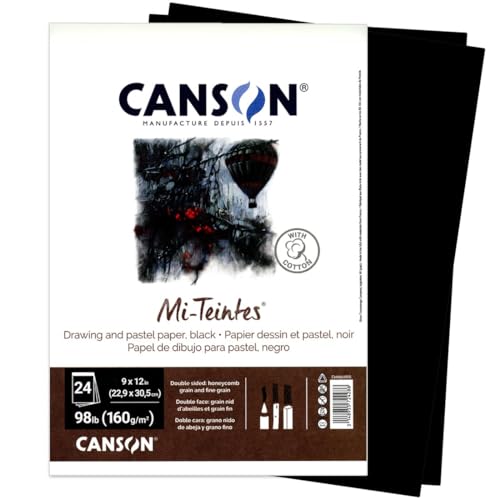
A 50 percent cotton content and dual-texture surface give you two distinct working sides: one with a heavy texture for bold strokes, the other with a lighter texture for finer work. The gelatin sizing helps the paper handle repeated erasing and blending without falling apart. Because the color is added at the pulp level, the black stays consistent even if you scratch or lift the surface. That built-in versatility makes this pad a natural fit for artists who switch between bold, expressive strokes and delicate shading on the same sheet.
The trade-off is the 24-sheet count and the 9×12 inch format, which feels restrictive if you prefer sweeping arm motions on a larger scale. Compare that to the Strathmore 500 Series Charcoal Pad, which gives you 24 sheets at 18×24 inches for a more expansive working area.
Strathmore 300 Series Charcoal Paper Pad

What We Like
- Traditional laid finish for shading control
- Acid-free paper resists yellowing
- Works with charcoal, pastels, crayons
- Natural white surface suits multiple media
Trade-offs
- Glue binding limits full-flat layout
- 95 gsm is lighter than some pastel papers
A 64 lb / 95 gsm weight with a traditional laid finish gives this pad a distinctly textured surface that grips charcoal particles without letting them slide across the page. That texture is the whole point here: it offers controlled shading and crisp edge work. It is a natural fit for artists who rely on precise gradations and want the paper to do some of the work. Students and hobbyists working at a 9×12 size will appreciate how the tooth holds multiple layers without overworking the page.
Glue binding keeps the pad from lying completely flat, which can be a nuisance when you’re working near the spine. And at 95 gsm, this paper is noticeably lighter than the Canson Mi-Teintes (160 gsm), so it won’t stand up to heavy wet media or aggressive erasing. For dry charcoal and pastel sketching, though, that lighter weight keeps the pad portable and affordable. If you need a tougher surface for layering or wet techniques, the Canson is the better bet.
Product photos
U.S. Art Supply Premium Charcoal Sketchbook Pad

What We Like
- Two pads, 64 sheets total
- Heavy 90 lb paper resists warping
- Textured surface enhances charcoal blending
- Acid-free prevents yellowing over time
Trade-offs
- 9×12 inch size limits large gesture drawings
- Spiral binding can snag on clothing or bags
At 90 lb (160 gsm), this paper is heavy enough to take repeated charcoal layering and erasing without buckling, which is exactly what you need when you’re building up value and blending softly. The 9×12 inch size hits a sweet spot for portability while still offering room for expressive sketches. With two pads in the pack giving you 64 sheets total, it’s a practical choice for daily practice or classroom use without running out quickly.
The 9×12 inch size is large enough for expressive sketching but small enough to slide into a backpack or tote, making it a practical choice for artists who work on location. Each pad holds 32 sheets of 90 lb paper, which stands up to heavy charcoal work without buckling, and the two-pack gives you 64 sheets total. The textured surface grips charcoal particles well, so you can build rich darks and smooth blends without the paper feeling abrasive.
Product photos
Fabriano 1264 Drawing Pad
What We Like
- Acid-free for archival quality
- Medium texture holds charcoal well
- FSC Certified, made with hydro-power
- Easily erasable surface
Trade-offs
- Only 20 sheets per pad
- Too large for carrying in a standard backpack
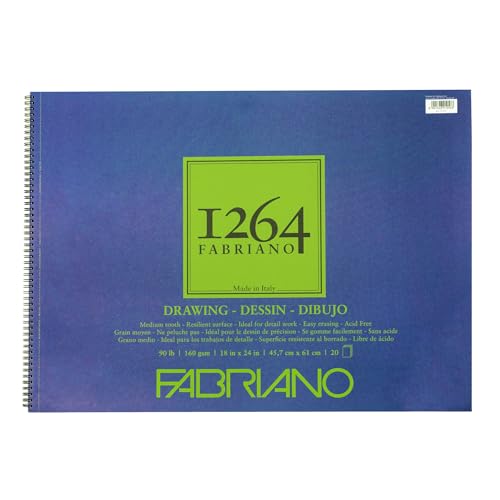
An 18 by 24 inch drawing pad gives you a spacious surface for large-scale work without feeling cramped. The medium texture provides a quality surface that holds media well, and the acid-free paper helps preserve your artwork over time. The pad is FSC Certified and made using hydro-power, so it’s an environmentally conscious choice. The easily erasable surface allows for corrections without damaging the paper.
Sheet count is the main limitation: you get only 20 sheets, which can disappear quickly if you’re a heavy sketcher or teaching a class. Compare that to the Strathmore 500 Series Charcoal Pad, which offers 24 sheets in the same size, that pad offers more pages for those who need extra sheets. But for a single, high-quality large pad that’s built to last, this Fabriano pad delivers exactly what its size promises.
MAQUITA Black Sketch Drawing Paper
What We Like
- 150 sheets for extended projects
- 180 GSM heavyweight resists tearing
- Acid-free for long-term stability
- Works with dry and wet media
Trade-offs
- No spiral binding or pad format for portability
- Loose sheets require a clipboard or drawing board for stability
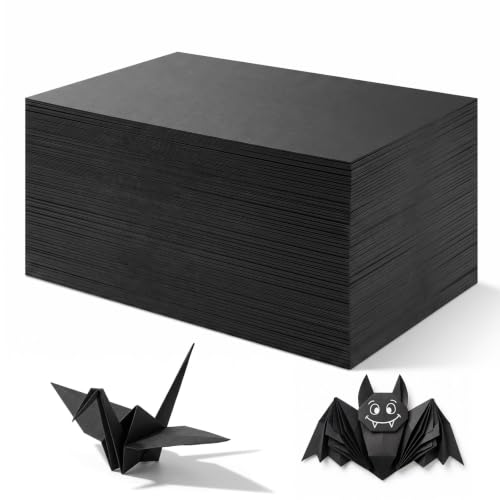
This pack gives you 150 sheets of black drawing paper, so you can work through a series of charcoal studies or mixed-media experiments without stopping to reorder. The 180 GSM cardstock resists tearing and bleeding, which means it holds up to layering with light-colored mediums like pastels and gel pens. The acid-free construction resists fading over time, keeping your finished pieces stable.
Size and format are the main trade-offs here. At 8.5 x 11.8 inches, each sheet is smaller than the 9×12 pads from Strathmore 300 Series Charcoal Paper, so you won’t get the sweeping arm room for large gesture drawings or full-figure studies. And because these are loose sheets rather than a bound pad, you’ll need a clipboard or drawing board to keep them steady. If you prefer a portable sketchbook that flips open on your lap, the Strathmore 300 pad is a better fit.
Product photos
Wingpaper Small Sketch Books
What We Like
- Three sketchbooks per pack
- Micro-perforated pages tear out cleanly
- Spiral binding opens flat for either hand
- Heavy 160gsm paper handles charcoal layers
Trade-offs
- 9×12 inch size limits large gesture drawings
- Wet markers or watercolor require a blotter sheet and testing first
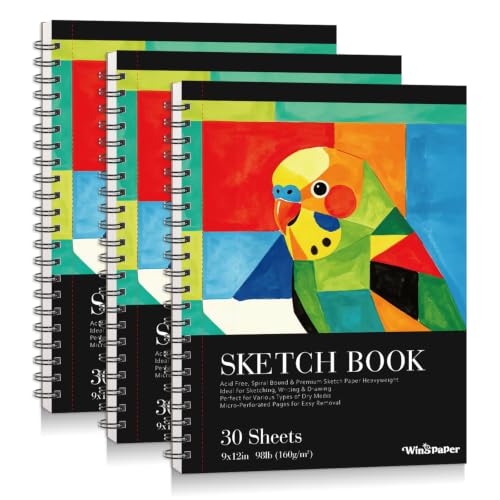
A pack of three spiral-bound 9×12 inch sketchbooks gives you heavyweight 160gsm paper that handles pencil, charcoal, colored pencil, pastel and ink on a stable surface. The micro-perforated pages tear out cleanly for framing or scanning, and the side-bound design supports comfortable desk sketching for both left- and right-handed users. This set suits students, hobbyists, and travelers who want a portable, ready-to-go pad for daily sketching and shading practice. The smooth surface with gentle tooth helps graphite glide while still holding charcoal layers for blending and erasing.
The paper isn’t built for wet media without a blotter sheet behind the page, so watercolor or marker users should test first. Compared to the Canson Mi-Teintes Pastel Paper, which is a black 9×12 inch pad with 160gsm weight, Wingpaper’s white sheets offer a neutral ground for dry media work. For anyone building a starter kit or needing a versatile spiral sketchbook for dry media, this three-pack delivers solid value without committing to a single large pad.
Product photos
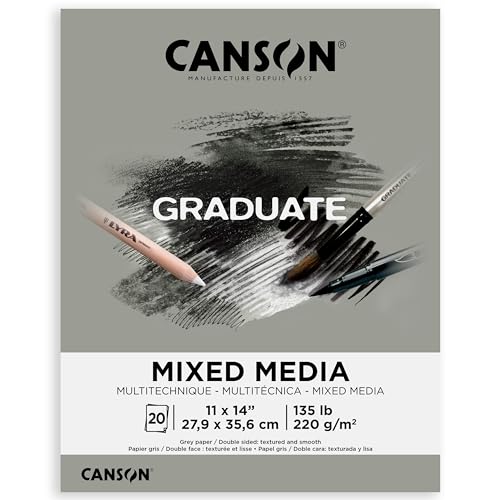
Canson Graduate Mixed Media Paper Pad
What We Like
- Neutral gray background for dramatic shading
- Lay-flat design for studio or travel
- Durable cover with chipboard backing
Trade-offs
- Only 20 sheets per pad
- Toned paper limits pure white highlights
A durable cover and chipboard backing keep the pad steady on a desk or easel, so you can focus on your work without the paper shifting. The warm gray surface acts as a built-in midtone, letting lighter pigments create instant highlights and giving your pieces a dramatic, cohesive look from the start. Reviewers find this neutral background especially helpful for shading with colored pencils, charcoal, or pastels, as it reduces the need to build up layers just to establish a middle value. The result is artwork that feels more finished with less effort.
Sheet count is the limitation here: at 20 sheets, you’ll burn through it faster than some pads with more pages. If you’re a heavy sketcher or do a lot of practice work, that lower page count might feel limiting. But for finished pieces or studies where you want that toned ground to do the work for you, the Canson Graduate delivers a forgiving surface that keeps your focus on the drawing, not the paper.
Product photos
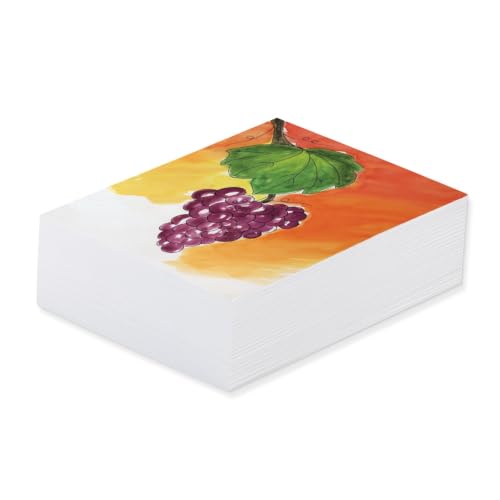
UCreate Mixed Media Art Paper
What We Like
- 500 sheets for large groups
- Acid-free and recyclable
- Works with wet and dry media
- Made in the USA
Trade-offs
- 9" x 12" size limits large-scale drawings
Five hundred sheets in one pack means this paper is built for volume, classrooms, workshops, or any setting where a lot of hands need a lot of pages. The heavyweight sulphite stock with a medium tooth accepts charcoal pencils and sticks without tearing, and the acid-free construction keeps your work from yellowing over time. It’s a practical, no-fuss choice for teachers or artists who burn through paper quickly and want a reliable surface that handles both dry charcoal and the occasional wash of wet media.
This is a workhorse paper, not a specialty sheet. The 9″ x 12″ size is fine for sketchbook-style studies but feels cramped for dramatic, sweeping charcoal gestures. If you need a high-count, affordable option for group use or daily practice, this delivers. For finished gallery pieces, you’ll want a heavier, more textured surface.
How We Evaluated Papers For Charcoal
This guide is built on research: we analyzed manufacturer specifications, studied expert round-ups from art instructors, and looked at consistent patterns in owner feedback across the category. We cross-referenced the technical details that artists routinely discuss, like paper weight, surface texture, and binding type, to identify the standouts.
The four criteria that mattered most were surface tooth, which is how well the paper grips charcoal particles. Paper weight, measured in gsm or lb, affects durability under erasing and layering. Format, pad, spiral, or loose sheets, affects portability and ease of use. Archival quality, meaning acid-free and lignin-free construction, ensures long-term artwork preservation.
A research-led evaluation has limits: we cannot report on how a paper feels in hand or how it performs with a specific eraser technique. What we can do is surface the specs and user consensus that help you make an informed choice.
What To Look For In Papers For Charcoal
Choosing the right paper for charcoal starts with understanding how surface texture, weight, and format affect your drawing process. Here’s what to keep in mind.
Look for paper with visible tooth (texture) to grip charcoal particles. A weight of at least 90 lb (180 gsm) resists warping under heavy layering. Choose a format, pad, spiral, or loose sheets, that matches your workspace and portability needs. Acid-free paper ensures your artwork lasts.
Surface Texture (Tooth)
Charcoal requires a paper with enough tooth to hold the medium in the valleys of the surface. Papers with a laid finish, like the Strathmore 300 Series, have parallel ridges that give you control over shading and line work. A vellum or medium-tooth surface, such as the Fabriano 1264, offers a more forgiving texture for blending and erasing. Dual-texture papers like the Canson Mi-Teintes give you two distinct surfaces in one pad.
Paper Weight
Heavier paper resists buckling when you apply multiple layers of charcoal or use an eraser aggressively. Look for at least 90 lb (about 180 gsm) for serious work. Lighter papers, like the 95 gsm Strathmore 300 Series, work well for quick studies but may not hold up to heavy reworking. The U.S. Art Supply pad uses 90 lb paper, while the MAQUITA black sheets are 180 gsm for durability.
Format and Binding
Your workspace and habits determine the best format. Top-bound pads, like the Strathmore 500 Series, let you flip pages without fighting a spiral coil and work well on a drafting table. Spiral-bound pads open flat and are portable, but the coil can snag. Glue-bound pads are affordable but won’t lie flat. Loose sheets, like the MAQUITA black paper, give you freedom of layout but require a drawing board.
- Check whether the pad opens flat for edge-to-edge drawing.
- Consider micro-perforated pages if you want clean tear-out.
- For travel, choose a pad that fits your bag (9×12 inch is a common portable size).
- For classroom use, bulk loose sheets or multi-packs reduce per-sheet cost.
A good rule of thumb: match the paper’s weight and tooth to your heaviest technique, if you scrub and erase a lot, go heavier.
Papers For Charcoal Compared
The table below compares the key specs of each paper to help you see at a glance which one fits your needs.
| Product | Size | Sheet Count | Weight | Surface/Texture |
|---|---|---|---|---|
| Strathmore 500 Series Charcoal Pad | 18" x 24" | 24 Sheets | N/A | slightly tinted |
| Canson Mi-Teintes Pastel Paper | 9 x 12 in | 24 Sheets | 98 lb / 160 gsm | Dual-texture (heavy + light) |
| Strathmore 300 Series Charcoal Paper Pad | 9×12 inches | 32 Sheets | 64 lb / 95 gsm | Traditional laid |
| U.S. Art Supply Premium Charcoal Sketchbook Pad | 9 x 12 inches | 64 total (2 pads of 32) | 90 lb (160 gsm) | Textured for charcoal |
| Fabriano 1264 Drawing Pad | 18" x 24" | 20 sheets | 90 lb | Medium texture |
| MAQUITA Black Sketch Drawing Paper | 8.5 x 11.8 Inches | 150 Sheets | 180 GSM | N/A |
| Wingpaper Small Sketch Books | 9 x 12 in | 3 pads | 160gsm / 98lb | Smooth with gentle tooth |
| Canson Graduate Mixed Media Paper Pad | 11×14 in | 20 Sheets | 120lb / 200gsm | Toned Gray |
| UCreate Mixed Media Art Paper | 9" x 12" | 500 Sheets | Heavyweight sulphite | Medium tooth |
Frequently Asked Questions
What is the best paper for charcoal drawing?
The Strathmore 500 Series Charcoal Pad is our top pick for its archival acid-free paper, slight tint for tonal variety, and large 18×24 inch format with convenient top-wire binding. It’s designed specifically for serious charcoal and pastel work.
What weight paper is best for charcoal?
A weight of at least 90 lb (180 gsm) is ideal for charcoal because it resists warping under heavy layering and erasing. Lighter papers can work for quick studies but may buckle with multiple applications.
Can I use regular drawing paper for charcoal?
Regular drawing paper often lacks enough tooth to hold charcoal particles, leading to smudging and poor layering. Papers designed for charcoal have a textured surface that grips the medium, so they are a better choice for serious work.
What is the difference between laid and vellum finish paper?
Laid finish paper has parallel ridges that create a textured surface, giving you more control over shading and line work. Vellum finish has a smoother, more uniform texture that is better for blending and soft gradients.
How many sheets do I need in a charcoal paper pad?
It depends on your use. For daily practice or classroom settings, a pad with 30 or more sheets, or a multi-pack, is practical. For finished artwork, a pad with 20-24 archival sheets may be sufficient.
The Bottom Line
The Strathmore 500 Series Charcoal Pad is our best overall choice for artists who want a large, archival, top-bound pad with tinted paper that adds depth to charcoal work. It’s ideal for serious studio drawings where quality and permanence matter.
If you’re working on a budget or need plenty of sheets for practice, the U.S. Art Supply Premium Charcoal Sketchbook Pad gives you two pads with heavy 90 lb paper at an affordable value. For those who want a traditional textured surface with excellent shading control, the Strathmore 300 Series Charcoal Paper Pad is a reasonable choice.
The single most important factor in choosing charcoal paper is matching the surface tooth to your drawing style: heavy texture for controlled marks, medium tooth for blending, and a smooth vellum for soft gradients. Get that right, and the rest falls into place.
