
9 Best Paint Scrapers in 2026
This post contains affiliate links. As an Amazon Associate, we earn from qualifying purchases.
The Bahco 2-1/2″ Carbide Scraper is the best overall paint scraper because its carbide edge stays sharp across wood, metal, and concrete while the two-hand grip reduces fatigue on long jobs. For detailed molding and trim restoration, the Hyde Contour Scraper with 6 Blades is the best for detailed surfaces, and the Amazon Basics Soft Grip Bent Scraper offers solid value for light-duty work.
Stripping old paint is rarely the fun part of a project, but the right tool makes the difference between a quick, clean result and a day of frustration. A scraper that fits your hand, matches the surface, and holds an edge will save time and protect the material underneath.
We evaluated these nine scrapers by digging into manufacturer specifications and blade materials, studying expert round-ups, and reading patterns in owner feedback. This guide matches each tool to the job it handles best, from wide flat walls to intricate furniture profiles.
Top 9 Paint Scrapers in the Market
Certain content that appears on this site comes from Amazon. This content is provided "as is" and is subject to change or removal at any time.
The Best Paint Scrapers, Reviewed
Bahco 2-1/2" Carbide Scraper
What We Like
- Two-hand grip reduces fatigue during long jobs
- Slim head reaches tight corners and edges
- Works on wood, metal, and concrete
Trade-offs
- At 0.5 lb, heavier than some competitors
- No included blade storage or belt holder
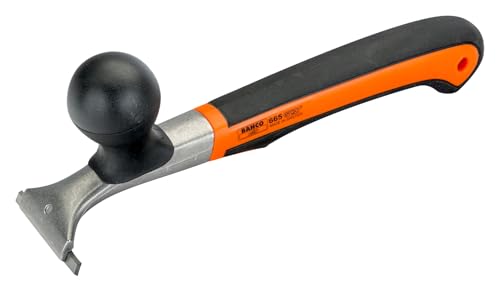
At half a pound, the Bahco has a solid feel that suits heavy scraping, but its weight may be noticeable during overhead work or on delicate trim. For fine detail on curved moldings, the Hyde Contour Scraper with its six interchangeable blades is designed for contoured surfaces. For flat surfaces and aggressive removal across wood, metal, and concrete, the Bahco’s long-lasting carbide edge and two-hand grip provide the leverage needed for demanding jobs.
Product photos
Holdly Premium Ergonomic Carbide Scraper

What We Like
- Two-handed grip reduces fatigue
- Carbide blade stays sharp longer
- Anti-slip handle maintains consistent pressure
- Works on multiple surfaces including glass
Trade-offs
- 2.5-inch blade is narrow for large flat areas
- No replacement blades included with purchase
The two-handed grip and non-slip texture let you bear down with both hands without your palms sliding off. That keeps pressure steady across long scraping sessions without cramping up. The ergonomic design is the core reason this scraper fits someone who spends hours removing paint or glue from cabinets, trim, or boat hulls, and wants to avoid the hand fatigue that comes with a one-handed tool. The carbide blade is corrosion-resistant and sharp enough to bite into coatings without needing frequent swaps, and the company claims it lasts dozens of times longer than traditional steel blades, which means fewer interruptions to change out a dull edge.
The trade-off is that the 2.5-inch blade is narrower than the 3-inch Amazon Basics Soft Grip Bent Scraper. So if you are stripping a full floor or a large wall, you will cover less area per pass and may wish for a wider head. The Holdly also lacks the contour-following blades of the Hyde Contour Scraper, so it is not the tool for detailed molding or curved furniture profiles. But for flat surfaces where control and comfort matter more than sheer speed, this scraper delivers a steady, two-handed feel that makes heavy removal work noticeably less punishing on your hands.
Product photos
Hyde Contour Scraper with 6 Blades
What We Like
- Six specialized blades for varied profiles
- Contoured handle keeps hand away
- Removes paint, varnish, putty, caulk, rust
- Lightweight at 0.1 pounds
Trade-offs
- Blade changes required for different tasks
- Too light for heavy-duty scraping on large flat surfaces
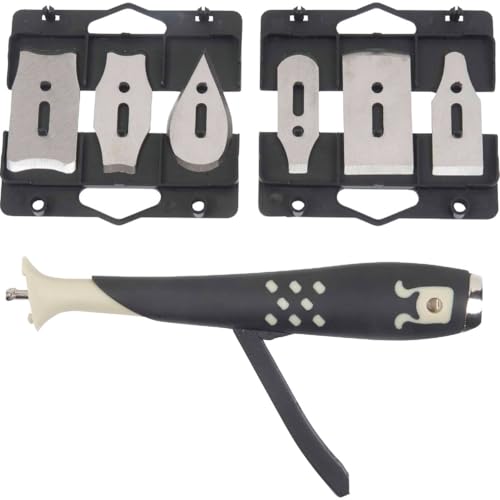
Six specialized blades come in the box, each shaped to fit a different contour on molding, trim, or furniture details. That means you can follow the curve of a chair leg or the groove of a picture frame without gouging the wood underneath. The contoured handle also keeps your hand lifted away from the surface, so you can press firmly without scraping your knuckles. This scraper is built for restorers and refinishers who need precision on ornate surfaces, not for someone stripping a flat door in a single pass.
At just six inches long and weighing 0.1 pounds, this tool is purpose-built for detail work, not broad coverage. It lacks the heft and wide blade of a standard carbide scraper like the extra-wide Bahco model, which covers more area per stroke and offers two-handed control for heavy-duty jobs. If your project involves miles of flat siding or thick layers of old paint, you will want a wider scraper. But for restoring a carved headboard or a set of baseboards, the Hyde Contour Scraper gives you the blade shapes to match every curve.
Purdy Premium Carbide Scraper

What We Like
- Rubberized ergonomic grip reduces fatigue
- Nail-set hammerhead end for extra utility
- Lightweight at 0.4 pounds
Trade-offs
- At 11 inches, shorter than some competitors
- No contour scraping feature mentioned
A rubberized ergonomic grip and a lightweight 0.4-pound frame make this scraper feel natural in your hand even after extended prep work. The 2.5-inch tungsten carbide blade stays sharp through tough paint and adhesive removal, while the integrated nail-set hammerhead lets you tap stubborn spots without grabbing another tool. This scraper suits anyone who values comfort and control during long sessions, from professional painters to DIYers tackling a whole room.
JETMORE Carbide Scraper
What We Like
- Carbide blade stays sharp longer
- Lightweight aluminum alloy body
- Ergonomic non-slip handle reduces fatigue
- Triangular front grip for two-handed control
Trade-offs
- No interchangeable blades included
- Fixed 24° angle limits versatility on curves
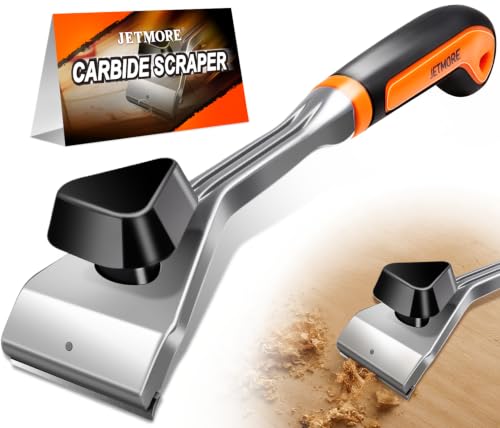
A solid aluminum alloy body makes this scraper both tough and light, so you can lean into stubborn paint or glue without your arm tiring out. The 24° carbide blade cuts with minimal effort, which matters when you’re stripping layers of old varnish off a tabletop or scraping dried adhesive from a floor. This is a tool built for heavy-duty prep work, and the ergonomic PP+TPR handle with a triangular front grip lets you use two hands for extra control when the job gets demanding.
The 24° blade angle on this scraper makes it ideal for straight, flat surfaces like furniture, walls, and floors, where you need efficient material removal with minimal effort. The aluminum alloy body keeps the tool light enough for extended use while still providing the stiffness to handle heavy paint or adhesive layers. For curved or detailed work, a contour scraper such as the Hyde Contour Scraper with 6 Blades would be a better fit, but for flat-surface prep, this design gets the job done.
Product photos
Bahco 625 Scraper with Belt Holder
What We Like
- Two-component handle for better grip
- Includes belt holder for portability
- Includes plastic holder for storage
Trade-offs
- 1-inch blade is narrow for large flat surfaces
- Not suited for heavy-duty or wide-area scraping
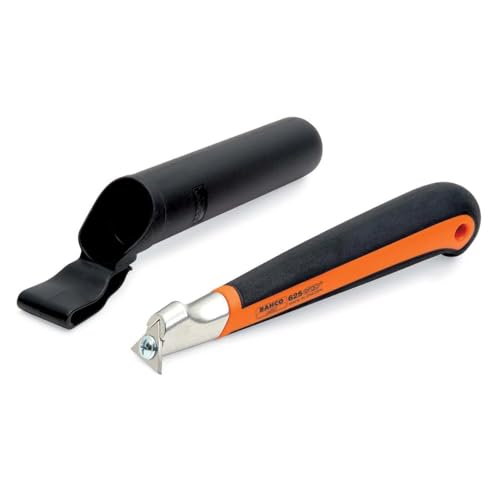
The 1-inch blade on this scraper is the key detail: it makes the Bahco 625 purpose-built for tight, detailed work rather than clearing wide expanses of paint. The two-component handle keeps your grip secure when you’re working on a tricky corner or a curved molding. This is the scraper you grab for precision, trim, window sashes, furniture details, where a big blade would be clumsy or risk damaging the surrounding surface. The included plastic holder means it’s always within reach on a ladder or in a tool pouch, ready for those small but critical spots.
The 1-inch blade on this scraper makes it a detail tool, not a broad-surface remover. For stripping a door or large furniture, a wider model like the extra-wide Bahco carbide scraper covers more area per stroke. This compact scraper is built for precision work where control matters more than speed, such as restoration, trim, or detailed paint removal.
Hyde 10610 Carbide Blade Scraper

What We Like
- Carbide blade outlasts carbon steel 10-to-1
- 2-edge blade can be resharpened or replaced
- Soft-grip handle reduces fatigue
- Angled head boosts scraping efficiency
Trade-offs
- 2-inch blade is narrower than many competitors
- At 13 inches, less maneuverable in tight corners
A carbide blade that lasts ten times longer than carbon steel means you can tear through layers of old paint without stopping to swap blades. The ergo-engineered soft-grip handle fits your fist naturally, giving you leverage to lean into tough jobs while the angled head keeps the blade flat against the surface for maximum bite. This is the scraper you grab when you need raw pulling power on flat, stubborn coatings like heavy paint or old varnish.
A narrower 2-inch blade compared to the 2.5-inch Bahco or Purdy scrapers means covering large areas takes a few extra passes. The Hyde is built for aggressive removal on flat surfaces; if you need a wider blade for faster coverage, the Bahco scraper with the wider blade offers a broader scraping path.
Amazon Basics Soft Grip Bent Scraper

What We Like
- 3-inch chisel-edge cutlery steel blade
- Bent profile protects walls and knuckles
- Soft molded rubber grip for secure hold
- Screw-out hammer end and pole socket
Trade-offs
- Steel blade dulls faster than carbide alternatives
- No included blades for replacement or contour work
A 3-inch chisel-edge blade of heat-treated cutlery steel bites into heavy jobs like removing paint, silicone, or tiles. The bent profile keeps your knuckles off the wall and the blade away from floors, so you can push hard without scratching surfaces you want to save. A soft molded rubber grip and a pole socket for attaching an extension pole let you work comfortably at any reach.
Product photos
Cosycove Tungsten Carbide Scraper
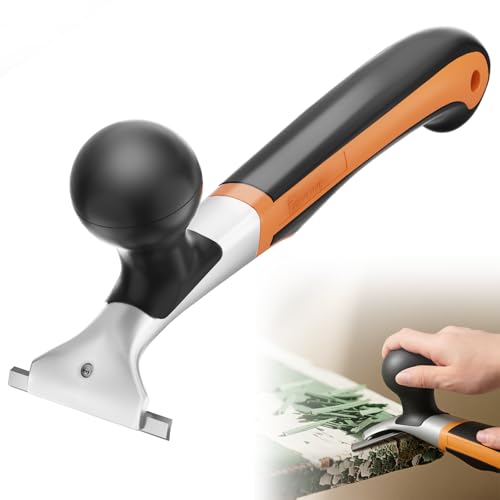
What We Like
- 2.5-inch edge removes coatings 40% faster
- Handle withstands hammer strikes
- Anti-fatigue textured grip reduces strain
Trade-offs
- At 0.5 lb, heavier than some scrapers
- Fixed blade: no replacement options offered
The extra-long edge also claims to strip stubborn paint, epoxy, and adhesive 40% faster than standard blades, which is a real time-saver on big floor or wall jobs. The fiberglass-reinforced nylon handle is built to take hammer strikes for extra leverage, and the textured grip helps keep your hand comfortable during long sessions. This scraper is ideal for contractors or serious DIYers who need a heavy-duty tool that can handle concrete, metal, and wood without dulling quickly.
At half a pound, this scraper is noticeably heavier than something like the Hyde Contour Scraper, which weighs just 0.1 pounds. That extra heft gives you more driving force for tough coatings, but it can fatigue your arm faster on overhead or vertical scraping. Also, the blade is permanently fused into the handle, so when both sides wear out you replace the whole tool rather than swapping blades. If you prefer a lighter, replaceable-blade scraper for detail work, the Hyde might suit you better, but for brute-force removal of carpet glue or industrial coatings, the Cosycove’s durability is hard to beat.
Product photos
How We Evaluated Paint Scrapers
We started by examining the blade material and geometry for each scraper. Carbide blades hold an edge significantly longer than standard steel, which matters for jobs involving tough adhesives or multiple coats. We compared blade widths, edge angles, and whether the blade could be replaced or resharpened.
Handle design was our second major focus, especially for tools meant for extended use. We looked for ergonomic features like two-handed grip points, rubberized coatings, and contoured shapes that reduce strain on the wrist and palm. Weight also factored in: a scraper that is too light lacks momentum for heavy work, while one that is too heavy tires the arm quickly.
Finally, versatility was considered. Some scrapers are designed for flat surfaces, while others include specialized blades for curves, corners, and decorative profiles. Each tool was matched to its ideal use case based on blade options, handle length, and overall build quality.
What To Look For In Paint Scrapers
Choosing the right paint scraper starts with matching the blade to the surface and the handle to the job duration. Here is what to focus on.
Choose a carbide blade for tough, multi-surface work and steel for occasional light scraping. Look for a handle that reduces hand fatigue and a blade width that matches the area you need to cover.
Blade Material and Edge Life
Carbide blades are the clear choice for frequent or heavy-duty use. They can outlast carbon steel by a significant margin and handle concrete, metal, and stubborn adhesives without dulling quickly. Standard cutlery steel blades are more affordable and work fine for occasional paint removal on wood, but they will need sharpening or replacement sooner.
Handle Ergonomics and Grip
For any job that takes longer than a few minutes, handle comfort directly affects the quality of your work. Two-handed scrapers distribute pressure across both arms and reduce fatigue. Look for rubberized or soft-grip handles that stay secure even when your hands get sweaty. A contoured shape that keeps your knuckles away from the work surface also prevents scraped hands.
Blade Width and Shape
Wider blades, around 2.5 to 3 inches, remove paint faster on large flat surfaces like walls and floors. Narrower blades, around 1 to 2 inches, give you more control on trim, window sashes, and furniture. Some scrapers offer interchangeable blades for different profiles, which is essential for restoring detailed molding without gouging the wood.
- Match blade width to surface area: wide for flats, narrow for details.
- Check if replacement blades are available before you buy.
- Look for a bent or angled head to protect your knuckles from the work surface.
- Consider weight: a scraper around 0.4 to 0.5 pounds balances momentum and comfort.
- Verify the blade can be resharpened if you plan to use the tool for years.
A scraper with a carbide blade and a comfortable grip will pay for itself in time saved on the first big project.
Paint Scrapers Compared
The table below compares each scraper’s blade material, width, handle features, and best use case so you can see at a glance which tool fits your next project.
| Product | Blade Width | Blade Material | Handle Type |
|---|---|---|---|
| Bahco 2-1/2" Carbide Scraper | N/A | Carbide | Two-component, two-hand grip |
| Holdly Premium Ergonomic Carbide Scraper | 2.5 inches | Tungsten carbide | Two-handed, non-slip texture |
| Hyde Contour Scraper with 6 Blades | N/A | N/A | Contoured handle |
| Purdy Premium Carbide Scraper | 2.5 inches | Tungsten Carbide | Rubberized Ergonomic |
| JETMORE Carbide Scraper | 2-1/2" | Carbide | PP + TPR |
| Bahco 625 Scraper with Belt Holder | 1 inch | Interchangeable carbide | Two-component |
| Hyde 10610 Carbide Blade Scraper | 2 inches | Carbide, 2-edge | Ergo-engineered soft-grip |
| Amazon Basics Soft Grip Bent Scraper | 3 inches | Cutlery steel, heat-treated | Soft, molded rubber grip |
| Cosycove Tungsten Carbide Scraper | 2.5 inches | Tungsten Carbide | Fiberglass-Reinforced Nylon |
Frequently Asked Questions
Which type of paint scraper blade lasts the longest?
Carbide blades last significantly longer than standard steel blades. Many carbide scrapers can outlast carbon steel blades by a factor of ten before needing replacement or resharpening, making them ideal for heavy-duty jobs on concrete, metal, and multiple paint layers.
What is the best paint scraper for removing paint from wood trim?
For detailed wood trim and molding, a contour scraper with interchangeable blades is the best choice. The Hyde Contour Scraper with 6 Blades comes with specialized profiles that match common trim shapes, allowing you to remove paint without gouging or damaging the wood underneath.
Can you use a paint scraper on concrete floors?
Yes, a heavy-duty carbide scraper works well on concrete for removing paint, adhesive, and mastic. Look for a scraper with a durable carbide blade and a handle that can withstand hammer strikes, such as the Cosycove Tungsten Carbide Scraper, which is designed for tough coatings on hard surfaces.
How do you keep a paint scraper from damaging the surface underneath?
Keep the blade at a low angle to the surface and use light, even pressure. A sharp blade actually causes less damage than a dull one because it cuts through the paint rather than forcing it off. For delicate surfaces like wood trim, use a contour scraper with a profile that matches the shape of the piece.
What features make a paint scraper more comfortable to use for long periods?
A two-handed grip design, a rubberized or soft-grip handle, and a lightweight body all reduce fatigue during extended scraping sessions. The Holdly Premium Ergonomic Carbide Scraper and the Purdy Premium Carbide Scraper both feature ergonomic handles that help maintain consistent pressure without straining your hand.
The Bottom Line
The Bahco 2-1/2″ Carbide Scraper earns the best overall spot because it combines a long-lasting carbide blade with a two-hand grip that makes large-area paint removal less tiring. It works on wood, metal, and concrete, making it the one scraper to grab for most renovation jobs.
If your project involves restoring detailed molding or furniture with curved profiles, the Hyde Contour Scraper with 6 Blades is the right choice. For buyers who need a capable scraper on a budget, the Amazon Basics Soft Grip Bent Scraper delivers a wide steel blade and a comfortable grip at an accessible price point.
No matter which scraper you choose, prioritize a carbide blade for frequent use and an ergonomic handle for comfort. The right tool turns a tedious chore into a satisfying step forward in your project.
