
10 Best Paint Rollers To Hide Imperfections in 2026
This post contains affiliate links. As an Amazon Associate, we earn from qualifying purchases.
The Hanroy Sea Sponge Roller is the best overall paint roller for hiding imperfections because its natural sponge pattern creates a layered, organic texture that masks flaws without requiring a perfectly smooth surface. For rough surfaces, the Wooster Super/Fab Roller Cover resists matting, while the PinStone Microfiber Paint Roller Covers offer an affordable option for large areas.
Every wall has its story, dings, patches, or old texture that shows through a flat coat. The right roller cover doesn’t just apply paint; it uses nap length, fabric type, and texture to visually cancel out surface flaws.
We evaluated these picks by comparing manufacturer specifications, expert recommendations from painting professionals, and patterns in owner feedback. This guide helps you choose the right nap and material for your specific wall condition.
Top 10 Paint Rollers To Hide Imperfections in the Market
Certain content that appears on this site comes from Amazon. This content is provided "as is" and is subject to change or removal at any time.
The Best Paint Rollers To Hide Imperfections, Reviewed
Hanroy Sea Sponge Roller
What We Like
- Creates natural organic sponge patterns
- Hides wall imperfections with layered texture
- Fits standard 6-inch frames
- Works on drywall, wood, canvas, glass
Trade-offs
- 6-inch size is slow for large rooms
- Requires light pressure and less paint
- Not for smooth, uniform finishes
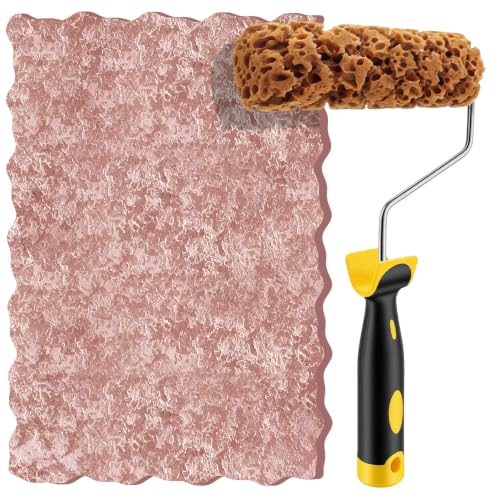
An authentic sea sponge roller creates natural, organic sponge patterns with every pass. The dense, resilient sponge can be washed with warm water and reused for multiple projects. That makes it a practical choice for accent walls, furniture makeovers, or any space where you want designer-level texture without a learning curve. Just dip, roll, and the irregular sponge pores produce a layered, dimensional look that hides wall imperfections.
At six inches wide, this roller covers less area per stroke than a standard nine-inch model, so it’s a tool for accent walls, furniture makeovers, and small rooms rather than whole-house painting. The authentic sea sponge texture creates natural, organic patterns straight from the tool, hiding wall imperfections with a layered, dimensional look. If you want a smooth, uniform finish, this isn’t the one, but for texture that conceals flaws, it delivers a look other rollers can’t match.
Product photos
Wooster Super/Fab Roller Cover
What We Like
- Resists matting for even coverage
- High capacity with flat and satin paints
- Core resists water, solvents, and cracking
- Designed specifically for rough surfaces
Trade-offs
- 3/4-inch nap limits use on very deep textures
- 9-inch width slower on large flat walls
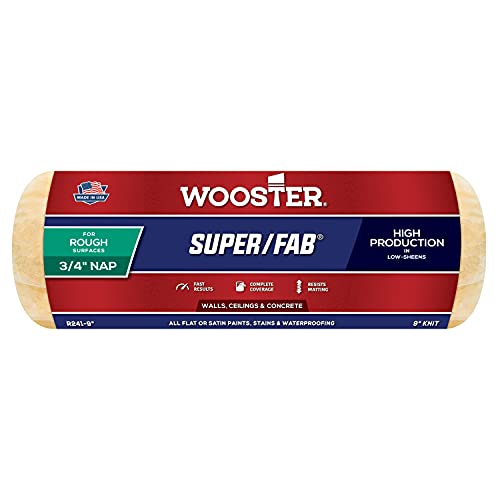
The 3/4-inch nap strikes a deliberate balance, deep enough to push paint into bumps and craters on rough surfaces, yet short enough to avoid leaving a heavy stipple pattern that draws attention to flaws. Wooster’s proprietary golden-yellow knit fabric resists matting. So the fibers stay open and loaded even when you’re working with thick satin or flat paints, which means fewer dips and a more uniform coat over uneven drywall, old plaster, or lightly textured walls. The green double-thick polypropylene core resists water, solvents, and cracking, which helps the cover hold up during cleaning and use with water-based paints.
A 3/4-inch nap is a middle-ground choice: it works on rough or semi-rough surfaces, but if your wall has deep texture you’d want a 1 1/4-inch nap cover instead. For a wall with moderate bumps and patches, this cover delivers a finish that balances coverage and texture. It’s a focused tool for a specific job: if your surface is truly rough, step up to a longer nap; if your walls are smooth, drop to a shorter one. For the rough-but-not-rugged wall, this is a good match.
Product photos
VOOMEY 18 Inch Paint Roller Covers
What We Like
- Ultra-wide 18-inch roller speeds large jobs
- 3/4-inch nap reaches deep into textured surfaces
- Nylon fiber resists shedding and wear
- High paint load reduces reloading frequency
Trade-offs
- Requires a compatible 18-inch roller frame
- Nap length is less effective on smooth walls
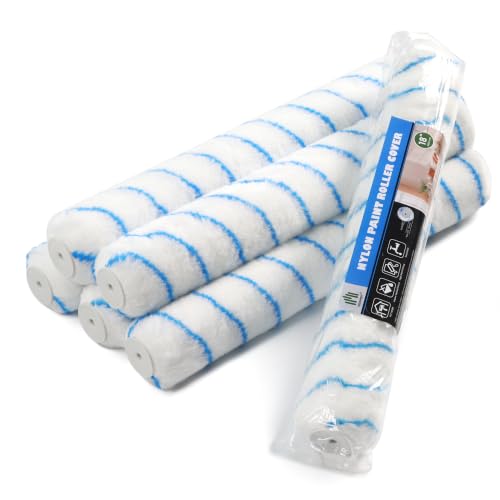
An 18-inch roller cover that holds a lot of paint per dip means fewer trips to the tray and faster coverage on big walls or ceilings. The 3/4-inch nap is long enough to push paint into the grooves of stucco, brick, or textured drywall, so those imperfections get filled rather than highlighted. The nylon fiber construction offers strong wear resistance and consistent application without shedding, making it a durable choice for large rough surfaces.
The Voomey 18-inch roller cover is designed for large-scale painting projects, so it covers a wider area per pass than a 9-inch roller like the Wooster Super/Fab with the same 3/4-inch nap. This makes it ideal for big textured surfaces such as stucco or brick, but on smooth or lightly textured walls a shorter nap would leave a cleaner finish. For a single small room, the 9-inch Wooster is easier to maneuver in tight spaces.
Product photos
PinStone Microfiber Paint Roller Covers
What We Like
- Non-shedding microfiber construction
- Works with all paints and stains
- Ideal for rough surfaces like stucco
- High paint absorption for even release
Trade-offs
- 18-pack bulk exceeds small project needs
- 3/4-inch nap leaves smooth surfaces streaky
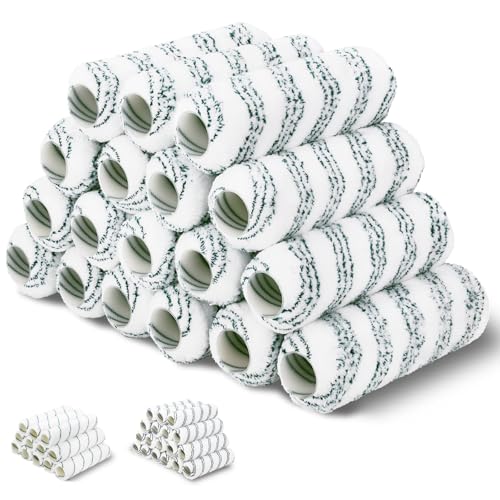
With 18 covers in one pack, this set gives you enough roller refills to tackle an entire house without running back to the store. The 3/4-inch microfiber nap is dense enough to hold plenty of paint while releasing it evenly, which helps hide minor wall flaws like light texture or patchy drywall. PinStone markets these covers specifically for rough surfaces such as stucco, brick, and concrete block, so they are built to grab onto uneven terrain without shedding fibers into your finish. For a budget-friendly option, the value here is hard to beat, especially if you are painting multiple rooms or an exterior with plenty of character.
A 3/4-inch nap sits in the middle of pile heights, so it’s designed for rough surfaces like textured walls, plaster, stucco, and concrete blocks. That means it handles moderate texture well, but if your walls have heavy knockdown or deep stippling, you might consider a thicker nap. For most standard textured walls and ceilings, these covers deliver a smooth, streak-free finish without the premium price tag of specialty rollers. Just be ready to store the extras if your project is smaller than a whole house.
Product photos
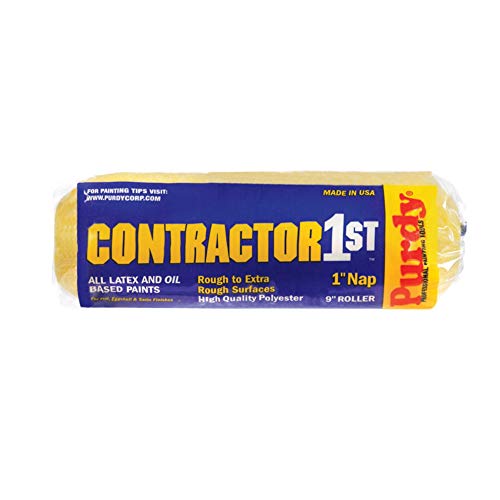
Purdy 1-Inch Nap Roller Cover
What We Like
- 1-inch nap for deep texture coverage
- Polyester material holds heavy paint loads
- Made in the United States
Trade-offs
- Polyester can shed fibers on fresh paint
- Heavy nap requires more paint to load
A 1-inch nap thickness means this Purdy roller cover is built to reach into deep stucco, popcorn ceilings, and rough brick where shorter naps barely touch the bottom of the texture. The polyester fibers hold a heavy paint load, so you can cover more area before reloading, which speeds up work on heavily textured surfaces. For anyone tackling a ceiling with orange peel or a wall with heavy knockdown, this cover gets paint into every crevice without leaving bare spots.
The trade-off is that a 1-inch nap is designed for rough surfaces, not smooth ones. If your project involves flat walls or a smooth finish, a shorter nap cover would be a better fit. This Purdy cover is a specialist tool for deep textures, not an all-around roller for every job.
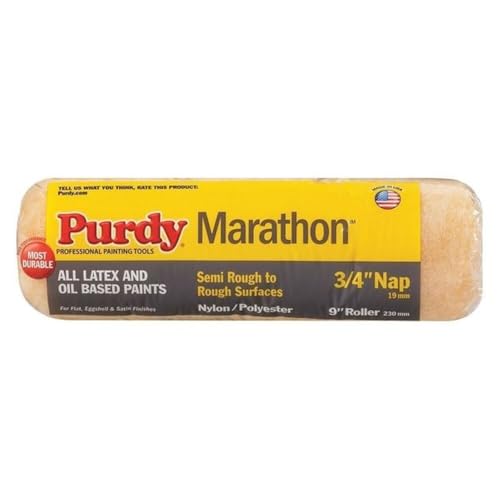
Purdy Marathon Knit Fabric Roller Cover
What We Like
- Knit fabric holds paint evenly
- Nylon/polyester blend resists shedding
- 3/4-inch nap hides minor wall flaws
- Made in the United States
Trade-offs
- At 0.2 lb, cover is very lightweight
- 9-inch width limits large-area speed
A medium 3/4-inch nap is the sweet spot for covering small dents, drywall seams, and patch marks without leaving heavy stipple. The knit nylon/polyester blend lays paint on smoothly and evenly, so you don’t end up chasing shadows across the wall. This cover is purpose-built for the painter who wants a clean, uniform finish on moderately imperfect surfaces. It’s exactly the kind of work where a too-short nap would skip over bumps and a too-long nap would create texture you don’t want.
The 9-inch width and 0.2-pound weight make this cover compact and easy to handle, but for large wall expanses a wider roller would cover more area per stroke. The 18-inch VOOMEY cover is longer, so it would require fewer trips to the paint tray, though the Marathon’s lighter weight may be easier to maneuver on smaller jobs.
Wooster Golden Flo Roller Cover

What We Like
- High-capacity fabric for fast coverage
- Resists matting for smooth results
- Polypropylene core resists water and solvents
- Works on extra-rough surfaces
Trade-offs
- Designed for extra-rough surfaces, not fine finishes
- 1 1/4-inch nap leaves too much texture for smooth walls
A 1 1/4-inch nap holds a lot of paint, which helps you cover extra-rough surfaces without skipping. The high-capacity yellow fabric resists matting, so you get smooth results even on uneven textures. The polypropylene core handles water-based and solvent-based paints without swelling or cracking, making it a durable choice for tough jobs like painting stucco or textured walls.
That same deep nap has a downside: on a smooth wall, it will leave a pronounced stipple texture that you might not want. If your project is a fresh skim-coat or a previously smooth surface, a cover with a shorter nap would give a finer finish. But for extra-rough surfaces where you need fast, even coverage, the Golden Flo’s capacity and core durability make it a strong option.
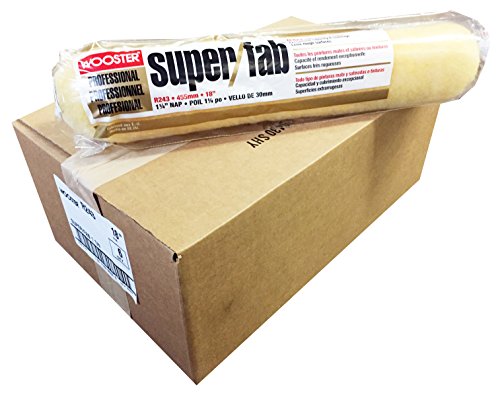
Wooster Super/Fab 1-1/4 Nap Roller Cover
What We Like
- Bulk pack of 6 covers
- 1-1/4 inch nap hides rough surfaces
- Resists matting for smoother results
- Polypropylene core resists water and solvents
Trade-offs
- 18-inch width needs a large frame
- Heavy at 3.8 pounds for the pack
A 1-1/4 inch nap provides high paint capacity with flat or satin paints, stains, and waterproofing. The golden yellow proprietary fabric resists matting for smoother results. This bulk pack of six covers is suited for large painting jobs where you need consistent coverage without frequent changes.
Size and weight are the main considerations here. At 18 inches wide, this cover requires a matching frame and can feel heavy over a full day of work. For smaller projects or tight spaces, a 9-inch cover like the Wooster Super/Fab 3/4-inch nap is easier to handle. But if you are covering large areas with flat or satin paint, the extra width and deep nap help you finish faster.
Product photos
Shur-Line Master Painter Knit Roller Cover

What We Like
- Knit fabric for extra rough surfaces
- Works with all paints and stains
- 1-1/4 inch nap reaches deep texture
- Pack of six for large jobs
Trade-offs
- 1-1/4 inch nap leaves heavy stipple on smooth walls
- Heavier than comparable 9-inch roller covers
A 1-1/4-inch nap lets the Shur-Line Master Painter Knit Roller Cover push paint into deep crevices on brick, concrete block, and stucco. The knit material is designed for extra rough surfaces, and it works with all paints and stains. For large jobs, the six-pack gives you plenty of covers to keep going without stopping to clean.
That same deep nap comes with a trade-off. On smooth walls or light texture, a shorter nap cover would give a finer finish. For those jobs, the Wooster Super/Fab 3/4-inch nap is a better match. But when the surface is genuinely rough, like unpainted cinder block or old brick, the Shur-Line’s 1-1/4-inch nap is built to handle it.
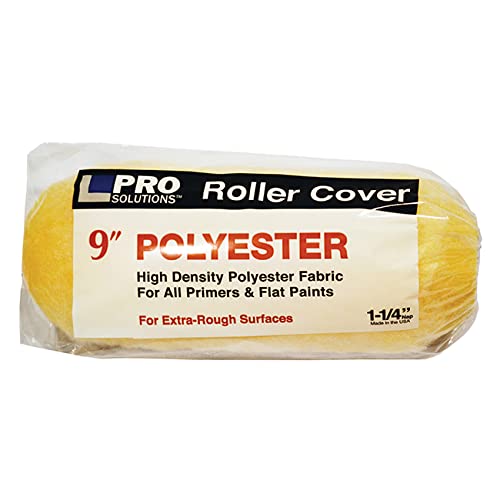
Pro Solutions 1-1/4 Nap Polyester Roller Cover
What We Like
- High-density polyester and wool blend
- 1-1/4 inch nap for deep texture
- Designed for extra-rough surfaces
Trade-offs
- Polyester blend sheds more than microfiber covers
- Not suitable for smooth or lightly textured surfaces
A 9-inch cover with a 1-1/4-inch nap, this one is built for extra-rough surfaces like stucco, popcorn ceilings, or brick. The polyester cover material is blended with wool, so it can handle the deep texture without skipping. Reviewers note it holds enough paint to keep you rolling longer between dips, which cuts down on trips back to the tray.
A long nap like this is intended for rough surfaces only. Using it on smooth walls would likely leave a texture that most painters want to avoid. For those jobs, a 3/4-inch nap cover, such as the Wooster Super/Fab Roller Cover, is a better choice for a smoother finish. But when the surface is extra-rough, the Pro Solutions 1-1/4 nap cover is designed to do the job its specs describe.
How We Evaluated Paint Rollers To Hide Imperfections
Our evaluation relied on manufacturer specifications, professional painter recommendations, and consistent owner feedback patterns across multiple product categories. We focused on how each roller cover performs on surfaces with existing imperfections rather than on perfectly smooth walls.
The four criteria that mattered most were nap length, fabric construction, paint capacity, and surface compatibility. Nap length determines how deeply the roller reaches into texture and how well it masks flaws. Fabric construction affects shedding, paint release, and durability. Paint capacity influences how often you reload and whether coverage remains even. Surface compatibility ensures the roller works with your specific wall type without creating new problems.
An evaluation based on technical specifications and material choices can identify what consistently produces good results for hiding wall imperfections. We prioritized products with clear documentation and strong professional endorsements.
What To Look For In Paint Rollers To Hide Imperfections
Choosing a roller to hide imperfections means matching nap length and fabric to your wall’s texture and the finish you want. The right combination masks flaws without creating a new set of problems.
Choose a roller with a nap length that matches your wall texture. A 3/4-inch nap works for light to moderate texture, while 1-inch or 1-1/4-inch nap handles deep texture. Pick a fabric that resists shedding and holds enough paint for even coverage.
Nap Length
Nap length is the single most important factor for hiding imperfections. A 3/4-inch nap works well for lightly textured walls and minor surface flaws like small dents or patch lines. For deeper textures like stucco, popcorn ceilings, or rough brick, a 1-inch or 1-1/4-inch nap reaches into crevices and covers them evenly. Shorter naps (1/4-inch to 1/2-inch) are designed for smooth walls and will leave imperfections visible.
Fabric Type
Microfiber rollers resist shedding and work with all paint types, making them a safe choice for most DIY projects. Polyester and nylon blends hold more paint and are durable on rough surfaces but may shed fibers on fresh paint. Knit fabric rollers offer even paint release and a forgiving finish on walls with minor flaws. Wool blends provide excellent paint capacity for deep textures.
Paint Capacity and Coverage
A roller cover with high paint capacity reduces reloading frequency and helps maintain a wet edge, which prevents lap marks. High-capacity fabrics like those on the Wooster Golden Flo and Purdy 1-Inch Nap hold more paint per dip, allowing you to cover larger areas faster. This is especially important on textured surfaces where paint consumption is higher.
- Measure your wall’s texture depth before buying: run your hand across the surface to feel how deep the pattern is.
- Check the roller frame compatibility: 18-inch rollers require a specialized frame, while 9-inch and 6-inch fit standard frames.
- Consider buying a bulk pack if you are painting multiple rooms or large exterior surfaces.
- Look for cores that resist water and solvents for use with water-based or oil-based paints.
A general rule: the rougher the surface, the longer the nap you need to hide imperfections.
Paint Rollers To Hide Imperfections Compared
The table below compares nap length, fabric type, and best use for each of the ten paint rollers we evaluated for hiding wall imperfections.
| Product | Nap Length | Width | Material |
|---|---|---|---|
| Hanroy Sea Sponge Roller | N/A | 6-inch | Authentic sea sponge |
| Wooster Super/Fab Roller Cover | 3/4 inch | 9 inch | Proprietary knit fabric |
| VOOMEY 18 Inch Paint Roller Covers | 3/4 inch | 18 inches | Nylon fiber |
| PinStone Microfiber Paint Roller Covers | 3/4 inch | 9 inches | Microfiber |
| Purdy 1-Inch Nap Roller Cover | 1 inch | 9 inches | Polyester |
| Purdy Marathon Knit Fabric Roller Cover | 3/4 in | 9 in | Nylon/Polyester |
| Wooster Golden Flo Roller Cover | 1 1/4-inch | 9-Inch | High-capacity yellow fabric |
| Wooster Super/Fab 1-1/4 Nap Roller Cover | 1-1/4 inch | 18 inch | Golden yellow proprietary |
| Shur-Line Master Painter Knit Roller Cover | 1-1/4 inch | 9 x 1-1/4 inch | Knit |
| Pro Solutions 1-1/4 Nap Polyester Roller Cover | 1-1/4 inch | 9 inches | Polyester |
Frequently Asked Questions
What nap length hides wall imperfections best?
A 3/4-inch nap is ideal for light to moderate wall texture and minor surface flaws. For deep textures like stucco, popcorn ceilings, or rough brick, choose a 1-inch or 1-1/4-inch nap. Shorter naps will leave imperfections visible.
Can I use a textured roller on smooth walls?
Textured rollers like the Hanroy Sea Sponge Roller are designed to create decorative patterns and hide flaws, but they will leave a visible texture. For smooth walls where you want a flat finish, use a shorter nap cover instead.
How do I prevent roller shedding on my walls?
Choose microfiber or knit fabric rollers, which are less likely to shed than polyester or wool blends. Before use, run your hand over the roller cover to remove loose fibers, and always use a high-quality paint that matches the roller material.
What roller works best for popcorn ceilings?
A 1-inch or 1-1/4-inch nap roller cover is best for popcorn ceilings because the longer nap reaches into the deep texture. The Purdy 1-Inch Nap Roller Cover and the Shur-Line Master Painter Knit Roller Cover are both suitable options.
Is a wider roller better for hiding imperfections?
A wider roller like the VOOMEY 18 Inch Paint Roller Covers covers more area per pass, which helps maintain a wet edge and reduces lap marks. However, the nap length and fabric type matter more for actually hiding imperfections than the roller width.
The Bottom Line
The Hanroy Sea Sponge Roller is the best overall pick for DIYers and artists who want to turn wall flaws into intentional texture on accent walls, furniture, or small rooms. Its natural sponge pattern hides imperfections while creating a decorative finish that looks deliberate.
If your project involves large rough surfaces like stucco or brick, the VOOMEY 18 Inch Paint Roller Covers will save time with its ultra-wide format and deep-reaching 3/4-inch nap. For budget-conscious painters covering lightly textured walls, the PinStone Microfiber Paint Roller Covers deliver good performance without a high investment.
The single most important buying factor remains nap length: match it to your wall’s texture depth, and you will hide imperfections far more effectively than with any paint or technique alone.
