
10 Best Paint Primers For Walls in 2026
This post contains affiliate links. As an Amazon Associate, we earn from qualifying purchases.
For most wall painting projects, the best all-around choice is Zinsser Bulls Eye 1-2-3 Water-Base Primer & Sealer, which bonds to glossy surfaces without sanding and blocks stains effectively. If you are fighting peeling paint, the Zinsser Peel Stop Triple Thick Binding Primer is your specialist. For heavy stains like water damage, the Rust-Oleum Zinsser B-I-N Advanced Synthetic Shellac Primer delivers unmatched blocking power.
Choosing the wrong primer can mean wasted paint, visible stains bleeding through, or a finish that peels within months. The real challenge is matching the primer’s specific job, stain blocking, adhesion, or sealing new drywall, to the actual condition of your walls.
This guide is built from manufacturer specifications, expert round-ups, and patterns in owner feedback. We break down the ten best primers by their specific strengths so you can pick the right one for your wall condition and project timeline.
Top 10 Paint Primers For Walls in the Market
Certain content that appears on this site comes from Amazon. This content is provided "as is" and is subject to change or removal at any time.
The Best Paint Primers For Walls, Reviewed
Zinsser Bulls Eye 1-2-3 Water-Base Primer & Sealer

What We Like
- Bonds to glossy surfaces without sanding
- Blocks stains with stain-blocking resins
- Works indoors and outdoors
- Rust inhibitive for metal priming
Trade-offs
- Not a high-build filler for peeling paint
- Requires dry surface before application
A primer that sticks to glossy surfaces without any scuff sanding saves hours of prep work, and that is exactly what the stain-blocking resins in this formula deliver. It handles both interior and exterior jobs, so you can use the same can for a living room wall and a front door. The low 35°F application temperature also means you can keep working in a chilly garage or on a fall afternoon without waiting for warmer weather. For a versatile all-around primer that simply gets the job done without fuss, this is the one to grab.
The trade-off is that this primer is not a high-build formula designed to seal peeling or cracked surfaces, unlike the Zinsser Peel Stop Triple Thick Binding Primer. But for most wall projects, covering stains, priming new drywall, or painting over existing paint, the convenience of skipping sanding on glossy surfaces makes this the smarter everyday choice.
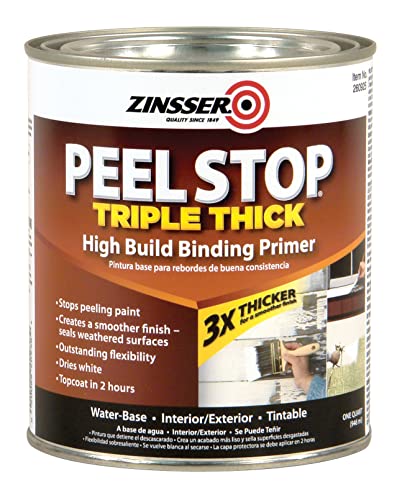
Zinsser Peel Stop Triple Thick Binding Primer
What We Like
- Stops peeling paint effectively
- Seals weathered surfaces
- Creates a smooth finish
- Outstanding flexibility
Trade-offs
- Small quart size limits large wall coverage
- Heavier than some quart primers at 2.5 lb
The high-build formula seals and binds peeling, cracked, and weathered surfaces, so you can fix the most stubborn wall problems before applying a topcoat. Its outstanding flexibility lets the paint move with the wall, which reduces the chance of future peeling. The primer dries white, making it easy to see where you’ve applied it, and it creates a smooth finish that hides imperfections. It stops peeling and seals weathered surfaces, making it a practical choice for flaking paint on old walls or ceilings.
A quart of this primer covers only a small area, so a large room will require multiple containers, and at 2.5 pounds it’s noticeably heavier than a quart of Zinsser Bulls Eye 1-2-3, which weighs 2.1 pounds. If your walls are in good condition and you just need a general stain blocker, the Bulls Eye 1-2-3 is lighter and cheaper per quart. But when the paint is already letting go, this primer’s binding power is worth the extra heft and smaller coverage per can.
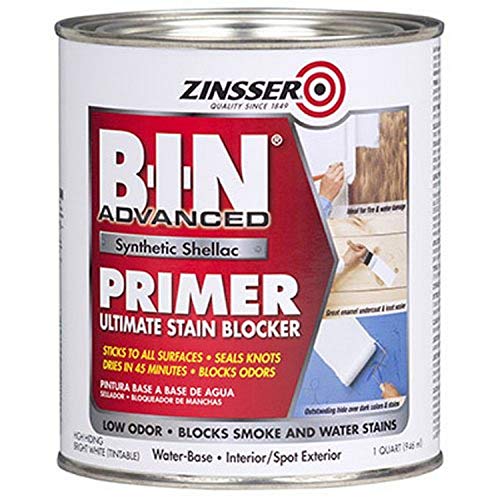
Rust-Oleum Zinsser B-I-N Advanced Synthetic Shellac Primer
What We Like
- Ultimate stain blocking
- Superior odor sealing
- Seals knots, sap and tannin
- Excellent adhesion
Trade-offs
- Requires mineral spirits for cleanup
Ultimate stain blocking means this primer seals in water stains, smoke residue, and heavy tannin bleed from wood. Its bright white finish provides high hiding coverage, so you often need fewer coats to get a clean base. For walls with serious discoloration or knotty wood, this primer locks those problems away.
KILZ Original Low Odor Primer

What We Like
- Low odor with fast dissipation
- Blocks stains and seals effectively
- Works with oil, alkyd, and water-based paints
- Trusted brand with 50-year reputation
Trade-offs
- Ventilation required during use
- Covers only 75-100 sq ft per quart
KILZ Original Low Odor Primer uses a special solution acrylic formula that provides stain blocking and adhesion similar to the original KILZ but with a lower solvent smell that dissipates quickly. It dries to the touch in 30 minutes and can be recoated after one hour, so you can move through a room without lingering fumes. This makes it a good fit for offices, schools, dining areas, apartments, and other spaces sensitive to solvent odors. The bright white non-yellowing finish helps keep topcoat colors accurate.
Coverage is limited: a quart covers about 75 to 100 square feet, so larger rooms will need multiple cans. The odor is lower than traditional oil primers, but the label still requires ventilation during use. For everyday stain blocking on drywall, wood, or previously painted walls without the strong smell, this primer delivers reliable performance at a budget-friendly value.
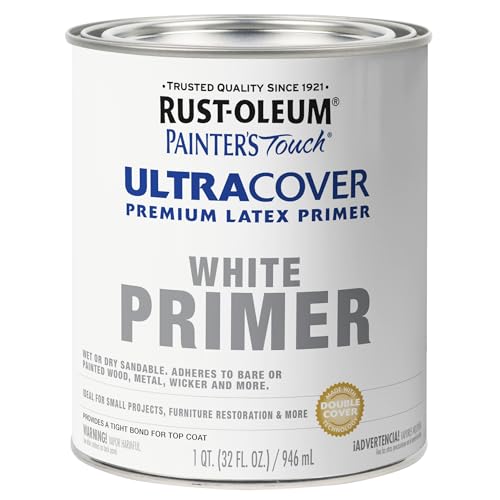
Rust-Oleum Painter's Touch Latex Primer
What We Like
- Works on wood, metal, plaster, masonry, ceramic
- Dries to touch in 30 minutes
- Low odor water-based acrylic formula
- Flat finish minimizes surface imperfections
Trade-offs
- Requires sanding with 180/200 grit before application
- Needs degreasing and drying before painting
This water-based acrylic primer covers up to 120 square feet per quart, so a single can can handle a small room or a few pieces of furniture. It works on wood, metal, plaster, masonry, and unglazed ceramic, meaning you can move from an interior wall to a garden chair without switching products. The flat finish helps hide minor surface flaws, and the low-odor formula keeps the space comfortable while you work.
Sanding with 180/200 grit sandpaper followed by a degreaser wash is the recommended surface prep for this water-based acrylic primer. That step is critical when painting over glossy metal or previously painted wood, as it creates the texture needed for proper adhesion. The flat white formula covers up to 120 square feet per quart and dries in 30 minutes, allowing for same-day topcoating on interior or exterior projects. Its low-odor formulation makes it practical for indoor use without strong fumes, while the chip-resistant finish provides long-lasting protection on multiple surfaces including wood, metal, plaster, masonry, and unglazed ceramic.
Product photos
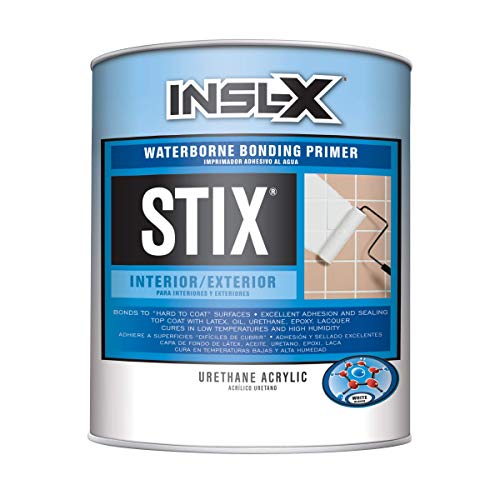
INSL-X Stix Acrylic Waterborne Bonding Primer
What We Like
- Bonds to glossy tile, PVC, glass, metal
- Cures in temperatures as low as 35°F
- Low VOC with easy soap cleanup
Trade-offs
- Coverage of 75-100 sq ft/qt is lower than many primers
- Requires careful surface prep per label instructions
The acrylic-urethane chemistry in this primer bonds to glossy tile, PVC, vinyl, glass, and galvanized metal, surfaces where many primers struggle to hold. That means you can paint over a slick bathroom tile backsplash or a plastic laminate countertop, provided you follow the label’s preparation instructions. It also cures down to 35°F, so a chilly garage or exterior job in early spring won’t stop you. For anyone facing a tricky surface that refuses to hold paint, this primer offers strong adhesion.
Coverage is the trade-off: at 75-100 square feet per quart, you’ll go through it faster than some general-purpose primers on standard drywall. But when the surface is the problem, glossy, non-porous, or slick, that extra product is the price of adhesion that holds. If your walls are plain drywall or old painted wood, a standard primer will do. If you’re staring at Formica, tile, or PVC, this is the one to grab.
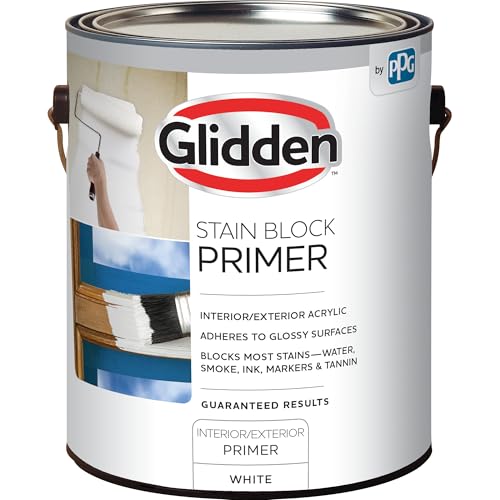
Glidden Interior/Exterior Stain Block Primer
What We Like
- Topcoat ready in 1 hour
- Blocks water, smoke, ink, markers, tannins
- Adheres to glossy surfaces
- Soap and water cleanup
Trade-offs
- Flat finish limits sheen options for topcoat
- Requires soap and water cleanup, not solvent.
A one-hour recoat window means you can apply a second coat or topcoat in just sixty minutes, which keeps projects moving fast. The acrylic formula blocks water, smoke, ink, markers, and tannins, and it adheres to glossy surfaces without sanding. It works on both interior and exterior jobs, and cleanup requires only soap and water, so you can finish up without harsh solvents.
The flat finish of this primer means the topcoat will determine the final sheen, so you’ll need to pick a paint with the gloss level you want. Compared to the Zinsser Bulls Eye 1-2-3, which also blocks stains, this Glidden primer offers a faster recoat time. For heavy peeling or cracked surfaces, a high-build product like Zinsser Peel Stop would be a better match, but for standard stain blocking and quick topcoating, this primer fits the bill.
Product photos
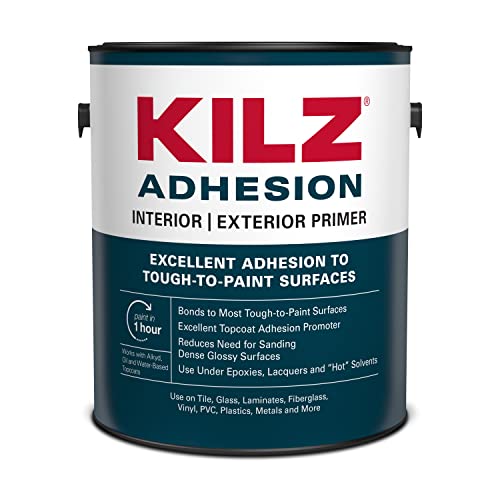
KILZ Adhesion Interior/Exterior Primer
What We Like
- Bonds to glossy and dense surfaces without sanding
- Works on interior and exterior surfaces
- Accepts both water- and oil-based topcoats
- Dries in 30 minutes, recoat in 1 hour
Trade-offs
- Needs 24-hour dry time before hot-solvent topcoats
- Coverage limited to 75-100 sq ft per quart
A styrenated acrylic formula that bonds to Kynar, PVC, Formica, glass, tile, glazed brick, and glossy finishes means you can prime nearly any tricky surface without reaching for sandpaper. This primer reduces or even eliminates the need to scuff up slick, dense materials, so a tile backsplash or a Formica countertop becomes paintable in a single coat. It accepts both water- and oil-based topcoats, and dries in 30 minutes, ready for a recoat in an hour. For anyone facing a surface that other primers just slide off, this is the solution.
Patience is the trade-off when working with hot solvents. If you plan to topcoat with epoxies, lacquers, or products containing xylene, the manufacturer requires a full 24-hour dry time and a compatibility test in an inconspicuous spot. That’s slower than some fast-drying primers, but for the specific job of sticking paint to a truly difficult surface, KILZ Adhesion’s bond strength makes the extra wait worthwhile.
Product photos
INSL-X Prime All Multi-Surface Primer

What We Like
- 100% acrylic for strong sealing
- Mildew resistant coating
- Quick drying, recoat in 1 hour
- Stain blocking and powerful adhesion
Trade-offs
- Requires temperature above 40 °F to apply
A 100% acrylic formula that dries fast enough to topcoat in just one hour means you can seal a room and start painting the same day without waiting overnight. This primer is built for spaces where moisture is a concern, bathrooms, laundry rooms, or damp basements, because it forms a mildew resistant barrier that helps keep mold from getting a foothold behind your paint. The stain blocking and strong adhesion also make it a practical choice for covering old marks or switching between drastically different colors on a variety of interior and exterior surfaces.
Product photos
Glidden Interior Drywall Primer

What We Like
- Seals drywall patches
- Prepares new drywall for painting
- Easy soap and water cleanup
Trade-offs
- Not designed for stain-blocking applications
- Requires separate stain-blocking primer for stains
A full gallon of interior latex primer means you can coat an entire room of new drywall without running back to the store mid-project. This Glidden primer is built for exactly that job: it seals fresh drywall and patches, creating a uniform surface that topcoats can grab onto. For anyone finishing a new wall or repairing a damaged section, it delivers the essential prep work without fuss or extra steps.
This Glidden primer is designed for new drywall and patching, not for covering stains or old dark colors. If you need a stain-blocking primer, the Zinsser Bulls Eye 1-2-3 Water-Base Primer & Sealer is another option in the guide, but this Glidden gallon focuses on straightforward drywall prep with easy soap-and-water cleanup.
How We Evaluated Paint Primers For Walls
Our evaluation focused on three core factors: adhesion performance, stain-blocking capability, and practical application requirements. We analyzed manufacturer data on bond strength, dry times, and surface compatibility, then cross-referenced these claims with patterns in owner feedback across hundreds of reviews.
The most important criteria were how a primer handles difficult surfaces like glossy, peeling, or porous materials. Also key is how effectively it seals stubborn stains such as water marks and smoke, plus the cleanup and prep demands it places on the user. A primer that requires mineral spirits for cleanup, for example, is a deal-breaker for some DIYers but a non-issue for others who need maximum stain blocking.
Because this evaluation is based on specifications and user-reported outcomes, we give extra weight to primers with decades of proven formulations and clear, verifiable performance data from the manufacturer.
What To Look For In Paint Primers For Walls
Choosing the right wall primer starts with understanding your wall’s condition and your topcoat requirements. The best primer for new drywall is different from the best primer for covering water stains or glossy tile.
Look for a primer that matches your wall’s biggest problem: stains need shellac or stain-blocking resins, peeling paint needs a high-build binding primer, and glossy surfaces need a bonding primer that adheres without sanding.
Surface Compatibility
The primer must match the material you are coating. Standard drywall accepts most water-based primers, but glossy tile, PVC, glass, and metal require a dedicated bonding primer like the INSL-X Stix Acrylic Waterborne Bonding Primer. For surfaces that are already painted and in good condition, a general-purpose primer like the Zinsser Bulls Eye 1-2-3 works well because it bonds without sanding.
Stain Blocking Power
Water stains, smoke damage, ink, and marker bleed require a primer with specialized stain-blocking resins. Shellac-based primers like the Rust-Oleum Zinsser B-I-N offer the strongest barrier but require mineral spirits for cleanup. Water-based stain blockers like the Glidden Interior/Exterior Stain Block Primer offer good performance with soap-and-water cleanup, but may need two coats on heavy stains.
Dry Time and Recoat
Fast-drying primers let you paint the same day. The Glidden Interior/Exterior Stain Block Primer is ready for topcoat in one hour, while the KILZ Adhesion primer dries in 30 minutes and can be recoated in one hour. Slower-drying shellac and oil-based primers may require overnight drying before topcoating, which matters for projects on a tight schedule.
- Check whether the primer requires sanding before application (some bonding primers do not).
- Confirm the primer works with your topcoat type (water-based, oil-based, or both).
- Look at the coverage per quart, many bonding primers cover only 75-100 square feet per quart.
- Verify the minimum application temperature, especially for outdoor or unheated indoor projects.
- Read the cleanup instructions: mineral spirits, soap and water, or solvent.
A rule of thumb: if the wall is damaged or stained, spend more on a specialized primer; if it is new drywall or clean painted walls, a budget-friendly general-purpose primer will serve you well.
Paint Primers For Walls Compared
The table below compares the ten primers side by side, highlighting their primary use, key strengths, and trade-offs to help you make a quick decision.
| Product | Surface | Stain Blocking | Weight |
|---|---|---|---|
| Zinsser Bulls Eye 1-2-3 Water-Base Primer & Sealer | Interior & exterior | Stain-blocking resins | 2.1 pounds |
| Zinsser Peel Stop Triple Thick Binding Primer | N/A | N/A | 2.5 pounds |
| Rust-Oleum Zinsser B-I-N Advanced Synthetic Shellac Primer | N/A | Ultimate stain blocking | 0.2 pounds |
| KILZ Original Low Odor Primer | Interior | Stainblocker | 3.5 pounds |
| Rust-Oleum Painter's Touch Latex Primer | Interior/Exterior | N/A | 2.2 pounds |
| INSL-X Stix Acrylic Waterborne Bonding Primer | Interior or exterior | N/A | 2.8 pounds |
| Glidden Interior/Exterior Stain Block Primer | Interior/exterior | Water, smoke, ink, markers, tannins | N/A |
| KILZ Adhesion Interior/Exterior Primer | Interior/Exterior | N/A | 12.2 pounds |
| INSL-X Prime All Multi-Surface Primer | Interior & exterior | Stain blocking | N/A |
| Glidden Interior Drywall Primer | Interior | N/A | N/A |
Frequently Asked Questions
What is the best primer for covering dark paint on walls?
A high-hiding, stain-blocking primer like the Rust-Oleum Zinsser B-I-N Advanced Synthetic Shellac Primer is very effective for covering dark colors. Its shellac formulation seals the old color and prevents bleed-through, often requiring fewer topcoats of your new paint.
Do I need to sand before using a bonding primer?
It depends on the product. The Zinsser Bulls Eye 1-2-3 and the KILZ Adhesion Interior/Exterior Primer are formulated to bond to glossy surfaces without sanding. However, the Rust-Oleum Painter’s Touch Latex Primer recommends sanding before application for best results.
Can I use a wall primer on wood or metal?
Some primers are multi-surface rated. The Rust-Oleum Painter’s Touch Latex Primer works on wood, metal, plaster, masonry, and ceramic. The INSL-X Stix Acrylic Waterborne Bonding Primer bonds to glossy tile, PVC, glass, and metal. Always check the label for surface compatibility.
How long should I wait before painting over primer?
Dry and recoat times vary by product. The Glidden Interior/Exterior Stain Block Primer can be topcoated in one hour. The KILZ Adhesion primer dries in 30 minutes and accepts a topcoat in one hour. Shellac-based primers like B-I-N typically require one to two hours before recoating. Always follow the manufacturer’s recommended dry time.
What primer works best for new drywall that has never been painted?
A dedicated drywall primer like the Glidden Interior Drywall Primer is designed to seal the porous surface of new drywall and joint compound, creating a uniform base for paint. It prevents the paint from soaking in unevenly and reduces the number of topcoats needed.
The Bottom Line
For most wall projects, the Zinsser Bulls Eye 1-2-3 Water-Base Primer & Sealer is the best overall choice because it handles stain blocking, bonds to glossy surfaces without sanding, and works indoors and out. It is the one primer you can reach for when you are unsure what the wall will throw at you.
If your budget is tight and odors are a concern, the KILZ Original Low Odor Primer offers reliable stain blocking and fast odor dissipation for interior spaces. For peeling or weathered walls, the Zinsser Peel Stop Triple Thick Binding Primer is the specialist you need to seal and smooth the surface before painting.
The single most important factor in choosing a wall primer is honestly assessing the wall’s condition. Pick the primer that solves the specific problem, stains, adhesion, peeling, or new drywall, and your paint job will last.
