
10 Best Paint For Wood Burning Stove in 2026
This post contains affiliate links. As an Amazon Associate, we earn from qualifying purchases.
For a durable refinish, the Rust-Oleum High Heat Flat Black Spray Paint is the best overall paint for wood burning stoves, offering reliable protection against intermittent heat up to 1200°F with fast drying. For those who prefer precise brush control, the POR-15 High Temperature Brush-On Paint is a strong choice, and the VHT Flameproof Coating Spray delivers extreme heat resistance for specialized needs.
A wood stove paint needs to handle extreme temperatures without peeling, fading, or releasing fumes. The wrong paint can crack, discolor, or fail to protect the metal surface. This makes heat rating and application method the two most important decisions.
This guide is based on manufacturer specifications, material safety data sheets, and patterns we found in owner feedback across ten leading products. We focused on heat resistance, durability, application method, and surface preparation requirements to help you choose with confidence.
Top 10 Paints For Wood Burning Stoves in the Market
Certain content that appears on this site comes from Amazon. This content is provided "as is" and is subject to change or removal at any time.
The Best Paints For Wood Burning Stoves, Reviewed
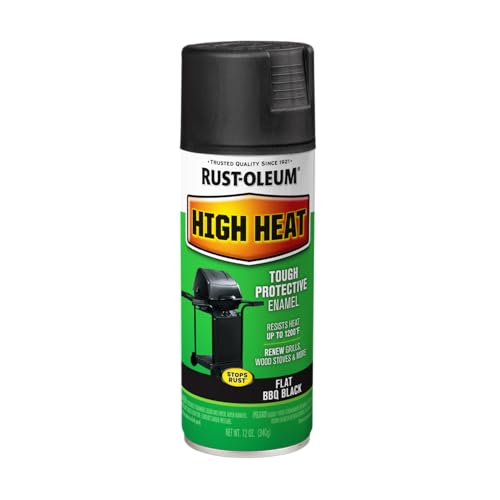
Rust-Oleum High Heat Flat Black Spray Paint
What We Like
- Withstands intermittent heat up to 1200°F
- Fast-drying, touch dry in 30 minutes
- Rust and corrosion resistant finish
- Long-lasting color after repeated heating
Trade-offs
- Coverage limited to 7-8 sq ft per can
- Not for brush-on application
Up to 1200°F of heat protection means this paint won’t discolor or peel on a wood-burning stove that runs hot for hours. The fast-drying formula sets in about 30 minutes, so you can finish a stove refresh in a single afternoon without waiting around. Rust and corrosion resistance add durability against both the heat and the humidity that can build up around a stove, keeping the metal protected season after season. For anyone looking to restore a stove’s appearance without fuss, this is the most straightforward option.
The Rust-Oleum High Heat Flat Black Spray Paint protects metal surfaces from intermittent heat up to 1200°F, so it holds up on barbecue grills, wood stoves, and fire pits without losing color or finish. The flat black enamel dries to the touch in about 30 minutes and covers 7 to 8 square feet per can, making it practical for quick touch-ups on outdoor gear. Compared to the Krylon High Heat Satin Black, this Rust-Oleum focuses on rust and corrosion resistance for high-heat metal, not on hiding smudges from ash or soot.
Chimney Plus 401990 Paint

What We Like
- Withstands up to 1200°F heat
- Satin black finish retains color
- Quick drying for faster projects
- Designed for wood, pellet, gas stoves
Trade-offs
- Spray application limits precision on small details
- Not rated for surfaces exceeding 1200°F
With a heat resistance rating up to 1200°F, this paint is formulated for high-temperature surfaces like wood stoves and fireplaces, giving you a satin black finish that holds its color under heat. The quick-drying spray makes application straightforward, especially on larger panels or grills where even coverage matters most.
The trade-off is that spray application isn’t ideal for touching up tight corners or intricate stove details where a brush gives more control. If you need a paint that handles extreme heat and dries fast, this spray is a practical option for broad stove surfaces.
Product photos
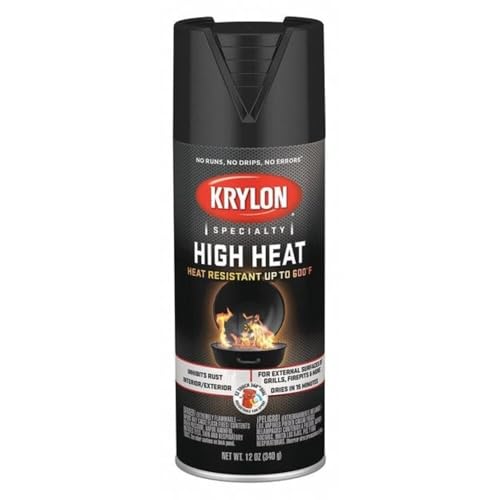
Krylon High Heat Satin Black Spray Paint
What We Like
- Dries tack-free in 15 minutes
- Resists runs and drips
- Withstands 1200°F intermittent heat
- Thermo-Guard protection for durability
Trade-offs
- Contains toluene, ethylbenzene, and xylene solvents
- Continuous use limited to 600°F, not 1200°F
A 15-minute tack-free time means you can apply multiple coats in a single afternoon without waiting hours between passes. That is a real advantage when you’re trying to finish a stove refinishing project before the weekend ends. The satin black finish with Thermo-Guard protection holds up to 1200°F intermittently, so it handles the flash heat of a roaring fire without blistering. This spray paint suits anyone who values speed and convenience over a brush-on application, especially if you are working on a stove that sees occasional high-heat spikes rather than constant extreme temperatures.
Continuous exposure above 600°F will outlast this coating’s rated protection, so a wood stove that runs all day at high burn may eventually need a touch-up. The solvent content (toluene, ethylbenzene, xylene) means you need good ventilation, but that is standard for any high-heat aerosol paint.
Product photos
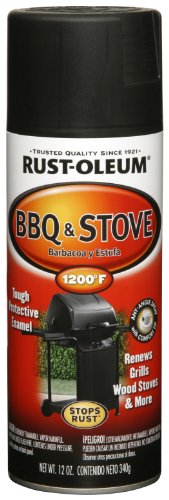
Rust-Oleum Automotive BBQ & Stove Spray Paint
What We Like
- Withstands heat up to 1200°F
- Prevents rust, corrosion and chipping
- Dries to the touch in 30 minutes
- Rich satin finish for automotive surfaces
Trade-offs
- Designed for automotive metal, not stove-specific testing
- Oil-based formula requires solvent for cleanup
With a maximum heat tolerance of 1200°F, this spray paint handles the extreme temperatures near engines and radiators. Its oil-based formula creates a durable satin finish that resists rust, corrosion, and chipping, making it a strong candidate for metal surfaces that see both heat and mechanical wear. The 30-minute dry-to-touch time also means you can finish a project in an afternoon without long delays between coats.
The satin sheen gives a rich look that suits metal parts like radiators and engine blocks, where a slight gloss fits the environment. If you need a flat, matte appearance for a different project, the Rust-Oleum flat black spray in this guide is an alternative to consider. For a stove in a garage workshop or a modern space where a slight gloss is fine, this paint delivers proven heat protection and a tough, chip-resistant coat that holds up to repeated heating cycles.
POR-15 High Temperature Brush-On Paint

What We Like
- Withstands up to 1200°F
- Resists cracking, chipping, peeling
- Corrosion-resistant against weather and moisture
- Brush-on application for precise control
Trade-offs
- Requires 24-hour cure before full heat exposure
- Surface must be meticulously cleaned before application
With a heat tolerance up to 1200°F, this paint resists cracking, chipping, and peeling on metal surfaces exposed to extreme heat. The brush-on formula allows you to apply it exactly where needed, which helps when working on corners or detailed parts where overspray could be a concern. It also provides a corrosion-resistant finish that protects against weather, salt, and moisture, so metal stays protected even in environments where dampness is an issue. This makes it a practical option for anyone who needs a durable, controlled finish on metal surfaces that see high temperatures.
You need to wait a full 24 hours before raising the temperature above 300°F, which slows down a quick refinishing job. Compared to the Rust-Oleum spray option listed in the guide, the POR-15 brush-on is better for precision work but less convenient if you want to cover a large surface fast.
CleanBurn High Heat Stove Spray Paint

What We Like
- Rated for 1200°F heat resistance
- Proudly made in the USA
- Durable flat finish for stove pipes
Trade-offs
- Only available in flat black finish
- Spray application requires ventilation and masking
This paint is rated for 1200°F heat resistance, which means it can be used on wood stove fireboxes, stove pipes, and pellet vents without failing under high temperatures. The flat finish gives a clean, non-reflective look that many homeowners prefer for stove surfaces. It is also made in the USA, which may appeal to buyers who value domestic manufacturing.
The flat black finish is the only option available, so if you want a satin or gloss sheen, you would need to look at other products. For example, the Chimney Plus 401990 Stove Bright Satin Black offers a similar 1200°F heat rating with a satin finish. If a flat, matte look is what you are after, this CleanBurn spray fits the bill.
Product photos
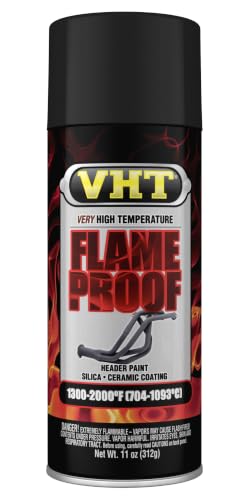
VHT Flameproof Coating Spray
What We Like
- Ceramic resins resist up to 2000°F
- Unique silicone ceramic coating
- EZ Touch Spray Nozzle for control
- Dry to touch in 30 minutes
Trade-offs
- Must be properly cured for maximum performance
- Requires a proper curing cycle for full heat resistance
This coating uses ceramic resins that resist heat up to 2000°F, which is well above the temperatures found in many automotive exhaust systems. The silicone ceramic formulation is designed for headers, manifolds, and exhaust systems, so it’s built for sustained high-heat environments. That makes it a strong fit for anyone working on high-temperature automotive parts who wants a durable finish.
Renewing and extending the life of high-temperature surfaces is the core purpose of this coating, which relies on ceramic resins to resist heat up to 2000°F. That level of protection makes it ideal for headers, manifolds, and exhaust systems, where temperatures can soar far beyond what standard paints handle. The unique silicone ceramic formulation dries to the touch in 30 minutes and can be handled after an hour, so you can move the part without waiting all day. This paint demands a proper curing cycle to unlock its full heat resistance; you can’t just spray it on and expect peak performance. An EZ Touch spray nozzle helps with application, but the curing step is non-negotiable for maximum durability.
Product photos
Rutland 81V Premium Brush-On Paint

What We Like
- No primer needed before application
- Withstands heat up to 1400°F
- Flat black finish resists UV for 1 year
- Suitable for indoor and outdoor use
Trade-offs
- Brush-on application slower than spray paints
- Heat curing recommended for best results
With a 1400°F heat rating, this brush-on paint handles high-temperature surfaces, and since no primer is needed, you save a prep step. The flat black finish resists UV for one year after application and is suitable for indoor or outdoor use. For anyone who prefers a brush-on application, whether to avoid overspray or to reach tight spots, this paint offers a straightforward way to refinish surfaces that need a durable, non-reflective look without masking or spraying.
Brush-on paint gives you precise control over where the coating goes, but you trade that for speed, applying it evenly takes more time than spraying. The Rutland 81V doesn’t require a heat cure, but the manufacturer says best results come from heat curing after you finish. Unlike a spray can such as Rust-Oleum High Heat Flat Black, this paint needs a brush and more patience, though you can skip the primer step entirely.
Product photos
NADAMOO High Heat Spray Paint

What We Like
- Heat resistant to 1200°F
- Stops rust and prevents corrosion
- Easy aerosol spray application
- Works on steel, cast iron, aluminum
Trade-offs
- Requires proper surface prep for best adhesion
- Requires thorough cleaning and sanding before application.
This paint is rated for continuous heat up to 1200°F, which covers the surface temperatures of most stove exteriors and stovepipes. The silicone polymer resin with aluminum pigments creates a durable film that also stops rust, making it a practical choice for metal surfaces that need both heat and corrosion resistance. For anyone restoring an older stove or painting a new one, the rust protection is a standout feature, especially if the stove is in a basement or workshop where corrosion is a real concern.
You cannot use it on surfaces that see direct flame, like the inside of a firebox or grill grates, where temperatures can hit 3000°F. If your project is purely the exterior of a stove or stovepipe, this is a fine fit. The Rust-Oleum flat black spray also reaches 1200°F and offers rust resistance, so the NADAMOO provides similar heat and corrosion protection. Just be sure to clean and scuff the metal before spraying to get the adhesion it promises.
Product photos
AW Perkins 1400 Deg F Brush-On Paint

What We Like
- Withstands up to 1400°F heat
- Brush-on application for precise control
- 1-pint size covers larger areas
- Designed specifically for stoves
Trade-offs
- Brush-on only, no spray option
- Requires careful brushwork to avoid streaks
- Dries slower than spray paints
With a heat resistance rated up to 1400°F, this brush-on paint works on high-temperature surfaces like stoves. The 1-pint container provides a decent amount of paint for a single project, and the brush-on application gives you control over where the paint goes, which can be helpful for detailed areas. It’s a practical option if you prefer working with a brush rather than dealing with the overspray of a spray can.
Brush-on application requires a steadier hand than a spray, you’ll want to work in even strokes to avoid lap marks, and it takes a bit longer to dry between coats. The Rust-Oleum spray is a spray-on product, while the AW Perkins is a brush-on paint that may suit those who want more control.
How We Evaluated Paints For Wood Burning Stoves
Our evaluation is grounded in research: we examined manufacturer specifications for heat resistance ratings, cure times, and chemical composition. We also analyzed patterns in owner feedback to understand real-world performance and common application challenges.
The four criteria that mattered most were heat resistance rating (the maximum temperature the paint can withstand), application method (spray vs. Brush-on), durability (resistance to chipping, peeling, and rust), and surface preparation requirements. For a wood stove, a paint rated below 1200°F risks failure during a hot fire.
An evaluation like this has limits. It relies on published technical data and the collective experience of many owners to identify reliable products and common pitfalls.
What To Look For In Paints For Wood Burning Stoves
Choosing the right paint means matching the product’s heat rating and application style to your stove’s operating temperature and your own comfort with spray or brush application.
Look for a heat rating of at least 1200°F for typical wood stove surfaces. Choose spray paint for speed and even coverage, or brush-on paint for precision and smaller areas. Always check the cure time before lighting your first fire.
Heat Resistance Rating
The most critical specification is the maximum temperature the paint can withstand. Most quality stove paints are rated for 1200°F, which covers the exterior surfaces of a wood stove during normal operation. Some products, like the VHT Flameproof Coating, are rated up to 2000°F, which is useful for parts closer to the firebox. Paints rated at 1400°F, like the AW Perkins 1400 Deg F Brush-On Paint, offer a middle ground for extra safety margin.
Application Method: Spray vs. Brush-On
Spray paints, like the Rust-Oleum High Heat and Krylon High Heat, offer fast, even coverage and dry quickly. They are ideal for large stove surfaces but require masking and good ventilation. Brush-on paints, such as the POR-15 High Temperature and Rutland 81V Premium, give you precise control for touch-ups and detailed areas. They take longer to apply and cure but avoid the overspray and solvent concerns of aerosol cans.
Surface Preparation and Cure Time
Proper preparation is the difference between a finish that lasts and one that flakes. Most paints require a clean, dry, and lightly sanded surface free of rust and old paint. Some brush-on paints, like the Rutland 81V, need no primer. Cure time varies widely: spray paints may be dry to the touch in 15-30 minutes but require a full 24 hours or a specific heat-curing cycle before reaching maximum durability. Skipping the cure step is the most common cause of failure.
- Check the heat rating: 1200°F is the minimum for wood stove exteriors; higher is better for firebox-adjacent parts.
- Decide on spray or brush based on the size of the area and your need for precision.
- Prepare the surface thoroughly: clean, sand, and remove all rust and old paint.
- Follow the cure time exactly before lighting a fire.
A properly cured paint applied to a clean surface will outlast any shortcut every time.
Paints For Wood Burning Stoves Compared
The table below compares each paint’s heat rating, application method, and key strengths to help you find the right match for your stove project.
| Product | Heat Resistance | Finish | Application |
|---|---|---|---|
| Rust-Oleum High Heat Flat Black Spray Paint | Up to 1200°F | Flat black enamel | Spray paint |
| Chimney Plus 401990 Paint | Up to 1200°F | Satin Black | Spray Paint |
| Krylon High Heat Satin Black Spray Paint | 1200°F intermittent; 600°F continuous | Satin Black | Spray paint |
| Rust-Oleum Automotive BBQ & Stove Spray Paint | 1200°F | Rich satin | Spray paint |
| POR-15 High Temperature Brush-On Paint | 1200°F / 648.8°C | Flat Black | Brush-On |
| CleanBurn High Heat Stove Spray Paint | 1200°F | Flat | Spray paint |
| VHT Flameproof Coating Spray | Up to 2000°F | Flat Black | Spray paint |
| Rutland 81V Premium Brush-On Paint | 1400°F | Flat Black | Brush-On |
| NADAMOO High Heat Spray Paint | Up to 1200°F | Matte black | Spray paint |
| AW Perkins 1400 Deg F Brush-On Paint | 1400°F | Black | Brush-On |
Frequently Asked Questions
What temperature should stove paint withstand?
Most wood stove paints are rated for 1200°F to handle the high heat of a normal fire. For parts very close to the firebox, look for paints rated at 1400°F or higher, such as the AW Perkins 1400 Deg F Brush-On Paint.
Can I use regular spray paint on a wood stove?
No. Regular spray paint is not designed to withstand the high temperatures of a wood stove and will peel, discolor, or release harmful fumes when heated. Always use a paint specifically rated for high heat, like those listed in this guide.
How do I prepare my stove for repainting?
First, clean the surface thoroughly to remove soot and grease. Then, sand lightly to create a rough surface for the paint to grip, and remove all rust with a wire brush or sandpaper. Finally, wipe down the surface with a solvent like mineral spirits to ensure it is completely clean and dry.
Is spray paint or brush-on paint better for a stove?
Spray paint is faster and provides a more even coat on large, flat surfaces, but requires masking and good ventilation. Brush-on paint gives you more control for detailed areas and touch-ups, and avoids overspray. The best choice depends on your project size and your comfort with each method.
How long does stove paint take to cure?
Drying time is fast, often 15 to 30 minutes to the touch, but full cure time is longer. Many paints require at least 24 hours before being exposed to high heat, and some need a specific heat-curing cycle to achieve maximum hardness and durability. Always check the label.
The Bottom Line
For most stove owners, the Rust-Oleum High Heat Flat Black Spray Paint is the best overall choice. It combines a reliable 1200°F heat rating with fast drying and a rust-resistant finish, making it ideal for a quick and durable refinish of a wood stove’s exterior.
If you prefer the control of a brush or need to paint detailed areas, the POR-15 High Temperature Brush-On Paint offers excellent precision and durability, though it requires a longer cure time. For the highest heat resistance, the VHT Flameproof Coating Spray handles up to 2000°F, but it requires a proper curing cycle.
The single most important factor is matching the paint’s heat rating to your stove’s operating temperature. Choose a paint rated for at least 1200°F, prepare the surface carefully, and follow the cure instructions. That combination will give you a finish that lasts.
