
9 Best Paint For Textured Walls in 2026
This post contains affiliate links. As an Amazon Associate, we earn from qualifying purchases.
The Rust-Oleum Whitewash Masonry Paint is our best overall pick for textured walls because its self-priming and self-sealing formula adheres to uneven surfaces without extra prep. For heavy-duty projects, the INSL-X TuffCrete Acrylic Concrete Stain Paint offers one-coat toughness, while the Romabio Masonry Textured Mineral Paint is the best eco-friendly choice for breathable finishes.
Painting textured walls presents a unique challenge: the nooks and crannies of stucco, brick, or knockdown finishes can hide thin paint and require more material for full coverage. Many standard paints simply won’t bridge these gaps or resist peeling on rough substrates.
This guide is built from manufacturer specifications, expert round-ups, and patterns in owner feedback. We evaluated nine paints across key criteria like adhesion, coverage, durability, and ease of application to help you choose the right formula for your project.
Top 9 Paints For Textured Walls in the Market

Certain content that appears on this site comes from Amazon. This content is provided "as is" and is subject to change or removal at any time.
The Best Paints For Textured Walls, Reviewed
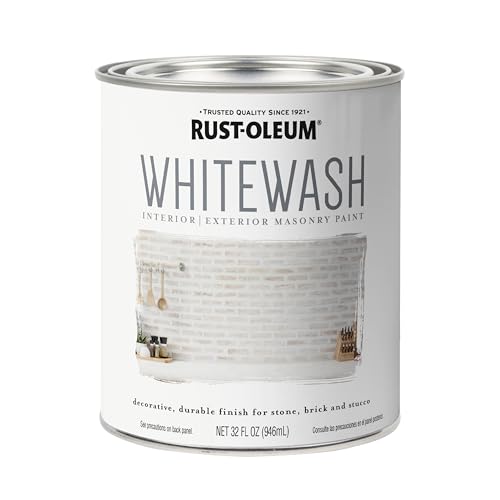
Rust-Oleum Whitewash Masonry Paint
What We Like
- Self-priming and self-sealing formula
- Customizable coverage via water dilution
- Low odor and low VOC
- Works on interior and exterior surfaces
Trade-offs
- Only available in quart size
- Requires dilution for tailored opacity
A self-priming, self-sealing formula means you can skip the separate primer coat and go straight to painting. That single feature saves time and reduces the number of products you need to buy, which matters when you are covering large textured walls. The ability to dilute the paint with water to adjust coverage gives you control over how much of the underlying texture shows through. This makes it a flexible option for anyone working with porous surfaces like stucco, brick, or stone where you want the natural grain to remain visible.
The quart size covers a smaller area per can, so for a large basement or an entire exterior wall you’ll need multiple quarts. The cost adds up compared to a gallon-sized alternative like the INSL-X TuffCrete, which comes in a full gallon and is designed for concrete floors and walls. For smaller projects or accent walls where you want a breathable, low-odor finish that lets texture shine, this Rust-Oleum paint is the smarter choice.
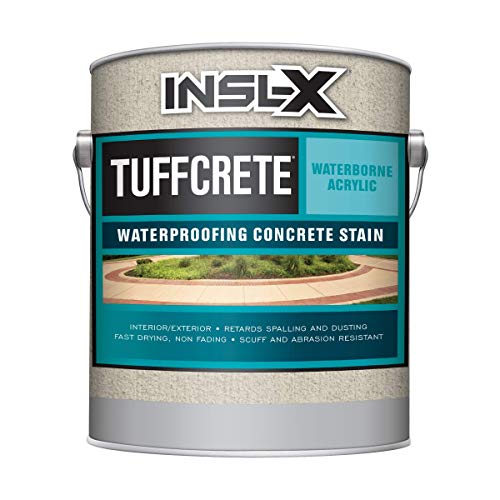
INSL-X TuffCrete Acrylic Concrete Stain Paint
What We Like
- One-coat stain or two-coat opaque finish
- Resists detergents, oils, grease, scrubbing
- Works on interior or exterior masonry
- Fast-drying, non-fading finish
Trade-offs
- Surface temperature must stay below 90°F
- Not self-priming on unsealed masonry
This paint covers 300 to 400 square feet per gallon and uses an acrylic formula that resists detergents, oils, grease, and scrubbing. You can apply one coat for a stain effect or two coats for an opaque finish, giving you control over how much of the underlying surface shows through. The product is designed for interior or exterior vertical and horizontal masonry surfaces like concrete, stucco, and brick, so it works in a range of settings where a durable coating is needed.
The main limitation is that you must apply it when the surface temperature stays below 90°F, which can restrict your working window in hot weather or summer projects. Compared to the Romabio Masonry Textured Mineral Paint listed in our guide, which comes as a 1-liter container weighing 3.8 pounds, the INSL-X TuffCrete is a 1-gallon waterborne acrylic stain paint. If you need a coating that holds up to cleaning and everyday wear on concrete or brick, this product fits that need.
Product photos
Romabio Masonry Textured Mineral Paint

What We Like
- Naturally toxin-free and environmentally friendly
- Breathable coating releases moisture from masonry
- Will not chip, peel, or flake off
- Easy touch-ups at any time
Trade-offs
- Requires two coats for unpainted absorbent masonry
- Only for masonry surfaces like brick, stone, stucco, cement
A permanently flat, subtly textured finish that calcifies directly to masonry means this paint becomes part of the wall rather than just sitting on top. That chemical bond is why Romabio Masonry Textured resists chipping, peeling, and flaking even on rough surfaces like brick or stucco. It breathes too, letting trapped moisture escape instead of blistering the coating. For someone who wants a durable, low-maintenance finish on an exterior fireplace or a basement wall, that long-term reliability is the real draw. The 20-year warranty when applied as directed backs up the promise, and cleanup with soap and water keeps the job simple.
This paint is purpose-built for masonry only, so it won’t work on drywall or wood paneling. Compared to Rust-Oleum Whitewash Masonry Paint, which also targets brick and stone, Romabio focuses on a mineral-based, breathable finish that calcifies to the surface, allowing moisture to release. That makes it a better fit for masonry where moisture management matters, while a quick refresh on a smooth interior wall calls for a different product. Romabio rewards patience and the right surface with a finish backed by a 20-year warranty.
Product photos
Homax Aerosol Knockdown Wall Texture

What We Like
- Adjustable spray for medium to heavy texture
- Water-based for easy cleanup
- Low odor during application
Trade-offs
- Aerosol can limits coverage for large walls
- Requires shaking between bursts for even spray
A 6-pack of 20-ounce aerosol cans provides multiple cans for texturing projects. The water-based formula allows easy cleanup and has low odor during application. This product is designed for medium to heavy knockdown textures, making it suitable for DIY wall texturing without specialized equipment.
The aerosol format limits coverage compared to larger-volume texture products, so multiple packs may be needed for extensive areas. For smaller jobs or spot repairs, the adjustable spray pattern offers control over the texture application.
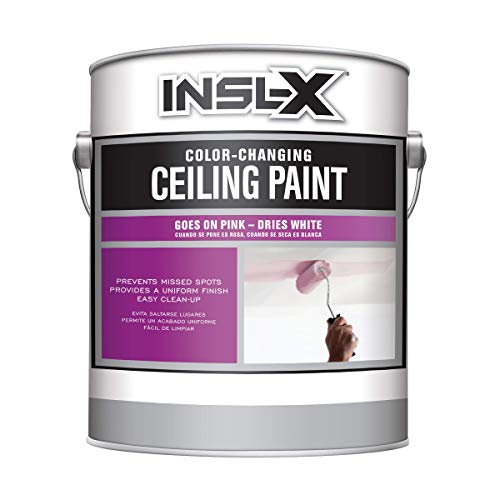
INSL-X Color-Changing Ceiling Paint
What We Like
- Disappearing pink prevents missed spots
- Self-priming for quick application
- Flat white hides surface imperfections
- Works on smooth or textured ceilings
Trade-offs
- Only for ceilings, not vertical textured walls
- Requires temperature above 50°F to apply
A disappearing pink tint that fades as the paint dries is the single most useful feature here, it shows exactly where you’ve rolled, so you never leave a bare patch on a textured ceiling. This acrylic paint is self-priming, dries flat to hide texture shadows, and lets you recoat in just two hours. For anyone tackling a textured ceiling, the color-change guide takes the guesswork out of even coverage. It suits DIYers who want a clean, uniform result without crawling back up to touch up missed sections.
This paint is formulated strictly for ceilings, not for vertical textured walls where gravity makes application trickier. If you’re painting a knockdown or skip-trowel wall, a product like Romabio Masonry Textured Mineral Paint is an alternative. But for ceilings, the self-priming formula and quick recoat time save you a full coat of primer and a day of waiting. Just make sure the room is above 50°F, as the label requires that temperature for proper application.
Product photos
KILZ Basement and Masonry Waterproofing Paint
What We Like
- Nanotechnology blocks up to 12 PSI water pressure
- Low-odor formula for indoor application
- Resists alkali buildup in high-moisture areas
- Dries to touch in 1 hour
Trade-offs
- Requires hydraulic cement to fill cracks before application
- Full cure takes 7-14 days before washable
This paint blocks up to 12 PSI of water pressure, which means it can handle moisture on basement walls, retaining walls, and stucco where standard paint might fail. The waterproofing comes from nanotechnology built into the formula. It works inside or out, on concrete, brick, and cinder block, and the low-odor formula makes it livable in enclosed spaces like a basement.
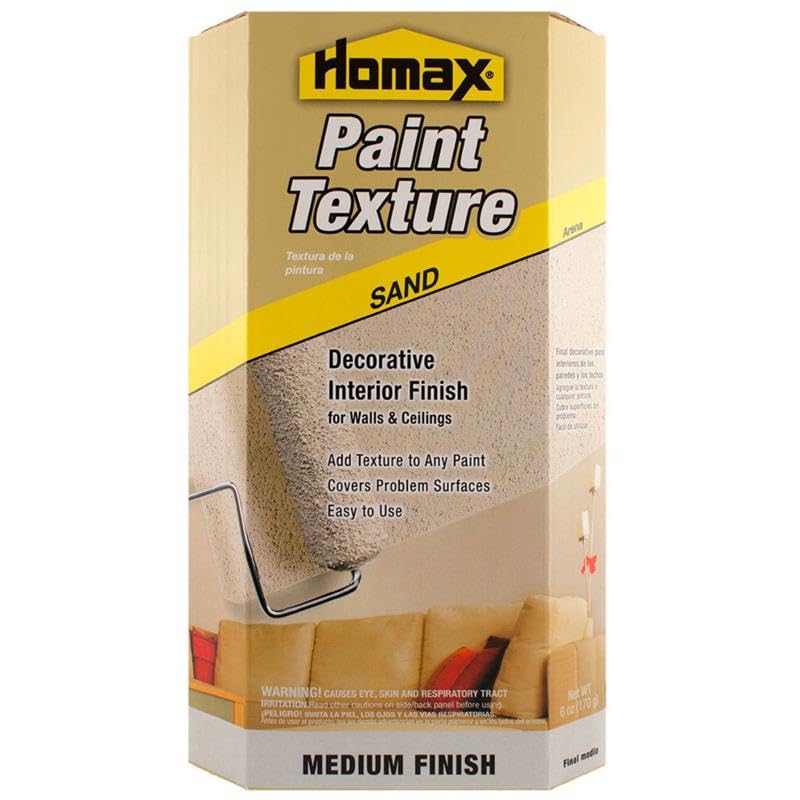
Homax Roll-On Paint Texture Additive
What We Like
- Lightweight at 2.2 pounds
- Roll-on application for easy use
Trade-offs
- 6 oz covers limited wall area
At just 2.2 pounds, this additive keeps your paint lightweight while creating texture, which means less strain during application and easier handling on a roller tray. It suits DIYers who want to add subtle texture to smooth walls without the weight or mess of heavy joint compounds. The roll-on application is listed as a feature, and the compact 6 oz bottle lets you experiment without committing to a large batch.
VASARI Marmorino Lime Plaster Paint
What We Like
- Natural lime and powdered marble ingredients
- Matte to low sheen finish
- Can be tinted with universal colorants
Trade-offs
- Untinted white requires separate colorant purchase
- 2+ coats needed for best results
- Coverage limited to 80-100 sq ft per coat
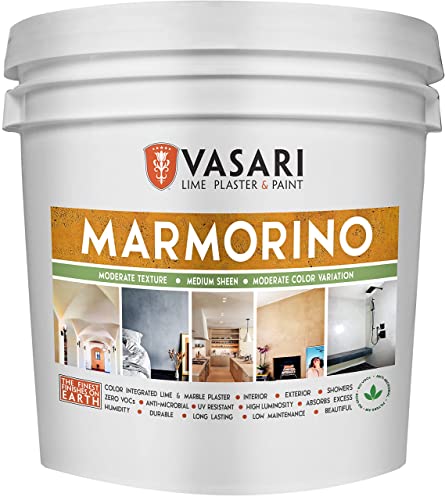
A 2-gallon wet mix of natural lime, powdered marble, and fine sand means this isn’t paint in the usual sense, it’s a traditional plaster finish that hardens into a durable, breathable surface. For textured walls, that matters because the material itself creates depth and character, not just a colored layer. The matte to low-sheen look suits anyone who wants an authentic, old-world texture that feels solid and ages gracefully. Because it’s untinted Natural White, you have full control over the final color by adding universal colorants, making it a flexible base for custom projects.
Patience is key here: you’ll need two or more coats, and each coat covers only 80-100 square feet, so a large wall takes planning and material. Compared to other masonry paints like Romabio Masonry Textured Mineral Paint, which is also a mineral-based finish, Vasari’s lime plaster requires more coats for best results. This is a premium, hands-on finish for those who enjoy the process and want a wall that evolves with age, not a quick weekend refresh.
Product photos
Diamond Brite Oil-Based Enamel Paint
What We Like
- Resists scuffs, rust, fading, cracking, and peeling
- Moisture- and chemical-resistant for heavy use
- Works on wood, concrete, masonry, metal, and more
- Can be brushed, rolled, or sprayed without thinning
Trade-offs
- Oil-based formula requires mineral spirits for cleanup
- Two-coat application needed for full coverage
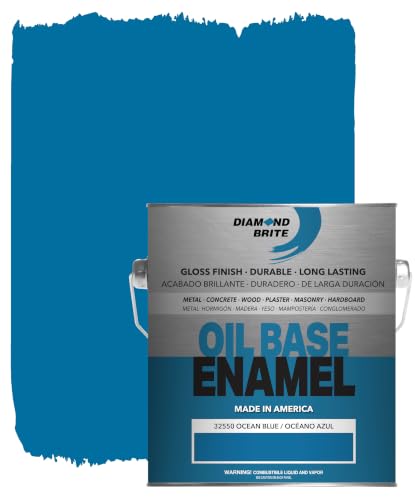
Covering 300 square feet per gallon with two light coats, this oil-based enamel is built for surfaces that take a beating, garage floors, basement cement, patios, and industrial walls. Its high-gloss finish resists scuffs, rust, fading, cracking, peeling, moisture, and household chemicals, so a textured wall in a busy hallway or workshop stays looking fresh even under constant contact. That toughness makes it a natural fit for anyone who needs paint that can handle foot traffic, equipment bumps, and occasional scrubbing without flinching.
The gloss level is a key consideration: a high-gloss finish reflects more light than a flat paint, which some people find too shiny for living spaces. Cleanup also requires mineral spirits rather than soap and water, so factor that in if you prefer waterborne convenience.
Product photos
How We Evaluated Paints For Textured Walls
This evaluation is based on manufacturer data, expert round-ups, and common themes in owner feedback. Specifications such as viscosity, recommended surface prep, and drying times were analyzed to determine which paints perform best on uneven substrates.
The four criteria that mattered most were adhesion to rough surfaces, coverage per coat, durability against scrubbing and moisture, and ease of application. Textured walls demand paints that can flow into crevices without pooling, resist peeling over time, and hide imperfections in a reasonable number of coats.
A research-led evaluation has limits: we cannot speak to how each paint behaves in every climate or application method. We prioritize products with consistent positive feedback across multiple sources and clear manufacturer guidance for textured surfaces.
What To Look For In Paints For Textured Walls
Choosing the right paint for textured walls starts with matching the formula to your surface type. The wrong paint can leave thin spots, peel prematurely, or require excessive coats.
Look for self-priming formulas that bond to rough masonry, breathable mineral paints for historic homes, and high-build additives for creating your own texture. Check coverage rates and drying times to plan your project.
Adhesion and Surface Compatibility
Textured walls, whether stucco, brick, knockdown, or popcorn, need paint that grips uneven surfaces. Self-priming formulas like the Rust-Oleum Whitewash Masonry Paint eliminate the need for a separate primer on masonry. For smooth textures, latex acrylics work well, but rough surfaces benefit from thicker, high-build paints that fill small voids.
Coverage and Opacity
A paint’s ability to hide the underlying surface in one or two coats is critical on textured walls. Thinner paints may require three or more coats to cover deep grooves. The INSL-X TuffCrete offers a one-coat stain finish or two-coat opaque finish, while the Romabio mineral paint needs two coats on unpainted masonry. Always check the manufacturer’s recommended coverage per gallon.
Durability and Cleanability
High-traffic textured walls in garages or basements need paint that resists scuffs, moisture, and chemicals. Oil-based options like Diamond Brite offer maximum durability but require mineral spirits for cleanup. For living areas, low-odor latex formulas with scrubbable finishes are a better fit. Waterproofing paints like KILZ Basement and Masonry are designed for below-grade walls where moisture is a concern.
Application Method and Drying Time
Consider how you’ll apply the paint. Roll-on textures are easiest for large areas, while aerosol knockdown sprays work for small patches. Fast-drying paints let you apply multiple coats in a day, but slower-drying mineral paints may need longer between coats for best results.
- Check the recommended application temperature range for your climate.
- Confirm whether the paint requires a separate primer or thinner.
- Look for low-odor or low-VOC labels if painting indoors.
- Estimate the total square footage to buy enough paint for two coats.
- Read the full cure time before washing or exposing the surface.
A self-priming, low-odor paint with good coverage per coat is almost always the safest bet for most textured wall projects.
Paints For Textured Walls Compared
The comparison table below summarizes the key specs and best-use scenarios for each of the nine paints we evaluated.
| Product | Surface Type | Finish | Coverage |
|---|---|---|---|
| Rust-Oleum Whitewash Masonry Paint | Porous masonry & wood | Smooth, matte | Customizable with water dilution |
| INSL-X TuffCrete Acrylic Concrete Stain Paint | Concrete, stucco, brick | Durable, non-fading, fast-drying | 300-400 sq ft/gal |
| Romabio Masonry Textured Mineral Paint | Brick, stone, stucco & cement | Permanently flat, subtly textured | 2 coats, no primer needed |
| Homax Aerosol Knockdown Wall Texture | N/A | Medium to heavy knockdown | N/A |
| INSL-X Color-Changing Ceiling Paint | Smooth or textured ceilings | Flat white | N/A |
| KILZ Basement and Masonry Waterproofing Paint | Concrete, brick, cinder block | Resistant & Alkali Resistant Finish | N/A |
| Homax Roll-On Paint Texture Additive | N/A | N/A | N/A |
| VASARI Marmorino Lime Plaster Paint | N/A | Matte to low sheen | 80-100 sq ft |
| Diamond Brite Oil-Based Enamel Paint | Wood, concrete, plaster, masonry, metal, brick, stucco | High gloss | 300 sq ft/gallon (two coats) |
Frequently Asked Questions
What type of paint is best for textured walls?
A self-priming acrylic or masonry paint works best because it adheres to uneven surfaces without extra prep. For heavy texture like knockdown, a high-build paint or texture additive helps fill gaps.
Can I use regular paint on textured walls?
Yes, but you may need more coats for full coverage. Standard paints are thinner and can leave thin spots in deep grooves. A paint specifically designed for masonry or textured surfaces gives better results.
How do I paint textured walls without losing the texture?
Use a roller with a thick nap to push paint into crevices without flattening the texture. Avoid over-brushing or over-rolling, which can smooth out the texture. Thin coats are better than one thick coat.
What is the difference between paint and texture additive?
Paint is a colored coating that covers a surface. Texture additive is a powder or liquid you mix into paint to create a textured finish. The Homax Roll-On Paint Texture Additive lets you customize the texture of any paint.
Do I need to prime textured walls before painting?
It depends on the paint. Self-priming paints like the Rust-Oleum Whitewash Masonry Paint do not require a separate primer. For other paints, a primer helps adhesion and coverage, especially on porous or previously unpainted surfaces.
The Bottom Line
For most homeowners and DIYers, the Rust-Oleum Whitewash Masonry Paint is the best overall choice for textured walls. Its self-priming formula, low odor, and customizable coverage make it ideal for small to medium projects on brick, stucco, or other masonry surfaces.
If you need heavy-duty durability for a garage or basement, the INSL-X TuffCrete offers one-coat toughness and resistance to chemicals and scrubbing. For an eco-friendly, breathable finish on historic masonry, the Romabio mineral paint is the right pick.
The single most important factor when buying paint for textured walls is matching the paint’s adhesion and coverage to your specific surface. Choose a formula that grips rough surfaces and hides imperfections in as few coats as possible for your project size.
