
8 Best Paint For Rv Exterior in 2026
This post contains affiliate links. As an Amazon Associate, we earn from qualifying purchases.
For a durable, professional-looking finish on your RV exterior, we recommend TotalBoat Wet Edge Topside Marine Paint as the best overall. Its self-leveling formula resists fading and peeling, so it holds up on fiberglass, wood, or metal panels. Best for fiberglass restoration, the FGCI Marine Gel Coat offers a UV-resistant option, while the Dicor RP-FRC-1 Fiberglass RV Roof Coating is our pick for heat reflection on fiberglass roofs.
The challenge with painting an RV is that the exterior faces constant sun, rain, road debris, and temperature swings. A standard house paint won’t hold up. You need a coating specifically formulated for marine or RV use that can flex with the vehicle, resist UV damage, and adhere to a variety of materials like fiberglass, aluminum, and aged gel coat.
This guide is based on a careful review of manufacturer specifications, expert recommendations for marine and RV coatings, and patterns found in owner feedback across forums. We organized the top eight products by their specific strengths, from full restorations to quick touch-ups, so you can match the right paint to your RV’s material and your project’s scope.
Top 8 Paints For RV Exteriors in the Market
Certain content that appears on this site comes from Amazon. This content is provided "as is" and is subject to change or removal at any time.
The Best Paints For RV Exteriors, Reviewed
TotalBoat Wet Edge Topside Marine Paint

What We Like
- Scratch-resistant and chemical-resistant finish
- Self-leveling for a smooth, professional look
- Resists fading, cracks, and peeling
- Easy to clean and maintain
Trade-offs
- Requires primer on bare surfaces for best adhesion
- Above-waterline use only, limits full RV coverage
A 1-part polyurethane that self-levels into a high-gloss, scratch-resistant finish means you can refresh an RV exterior without needing a spray booth or years of experience. This paint covers 350-400 square feet per gallon, so a gallon handles a whole camper. It bonds to fiberglass, wood, and metal, making it a versatile choice for older RVs with mixed surfaces. The finish resists fading, cracks, and peeling, which is exactly what you want from a topside marine paint repurposed for an RV.
This paint is designed for above-waterline use only, so it won’t hold up on areas that stay wet for days, like roof seams or lower sidewalls that trap moisture. For roof coatings, the Dicor RP-FRC-1 Fiberglass RV Roof Coating is a flexible acrylic formula that reflects the sun’s heat. But for main body panels, trim, and doors, TotalBoat Wet Edge provides a durable, high-gloss finish that resists fading, cracks, and peels.
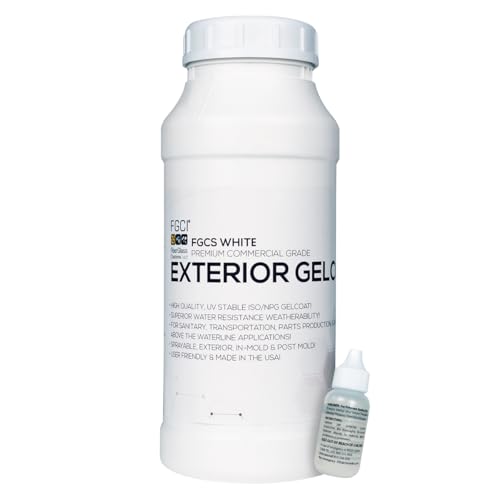
FGCI Marine Gel Coat
What We Like
- UV and salt-spray resistant finish
- Pigmented white for uniform coverage
- Compatible with MEKP catalyst
- Made in the USA
Trade-offs
- Requires separate MEKP catalyst purchase
- Not a ready-to-use paint; mixing step needed
A quart of polyester gelcoat formulated for boat building and RV restoration means you get a UV- and salt-spray-resistant finish that stands up to sun and marine environments. The pigmented white is designed to blend smoothly with surrounding factory gelcoat, making patches and full rebuilds look uniform. If you are tackling fiberglass repair on a boat or RV and want a professional-grade finish, this gelcoat uses the same chemistry found in production work.
You need MEKP catalyst to cure this gelcoat, so it’s not a grab-and-go paint, mixing adds time and precision. Compared to a ready-to-use acrylic coating like Dicor RP-FRC-1, which is formulated for RV roofs, FGCI Marine Gel Coat delivers a polyester finish suited for vertical fiberglass panels. Best for owners who want a durable repair and are comfortable with two-part application.
This gelcoat is best suited for boat builders and RV restorers who need a durable, UV-resistant finish for fiberglass surfaces. It is not ideal for quick touch-ups or for those who prefer a ready-to-use, one-part paint, because the catalyst mixing step adds time and requires careful measurement.
Dicor RP-FRC-1 Fiberglass RV Roof Coating

What We Like
- Reflects sun's heat for cooler interior
- Super flexible acrylic formula
- Upgrades old worn fiberglass roofs
- Works with Dicor Clean & Prep
Trade-offs
- Requires separate primer and prep step
- Only for fiberglass roofs, not other materials
A 100% pure acrylic formula that is super flexible means this coating is designed to move with your fiberglass roof as temperatures change, which helps prevent cracks and peeling. The white surface reflects the sun’s heat to help keep the interior cooler, according to the manufacturer. It’s a good choice if you own a fiberglass-roofed motorhome or trailer and want to protect the roof and reduce heat absorption.
The Dicor RP-FRC-1 Fiberglass RV Roof Coating is a system, not a single-coat solution. You need to use Dicor’s Clean & Prep and a primer beforehand to get proper adhesion, which adds time and cost to the job. Compared to a product like LUVBOATE’s RV Roof Sealant, which is designed for multiple roof materials including fiberglass, the Dicor is formulated specifically for fiberglass roofs. If your roof is already fiberglass and you’re willing to follow the full prep routine, this reflective coating offers heat-reflecting protection.
Product photos
LUVBOATE RV Roof Sealant

What We Like
- Solar reflective coating reduces heat
- Flexible membrane resists cracking
- Bonds to metal, plastic, fiberglass
- Easy brush, roller, or spray application
Trade-offs
- Requires 2-3 thick coats for full seal
- Heavier than some roof coatings at 11 lb
One gallon covers 50 square feet per coat, which is enough for many RV roofs, though the manufacturer recommends two to three thick coats for a durable seal. That means you get a flexible, solar-reflective membrane that expands and contracts with temperature changes without cracking, not just a thin cosmetic layer.
Product photos
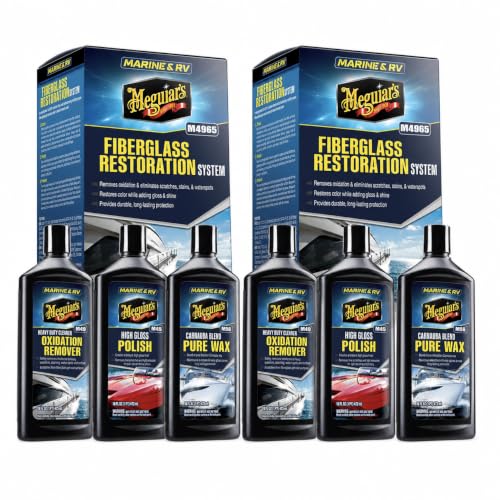
Meguiar's Marine/RV Fiberglass Restoration System
What We Like
- Three-step system for moderate defects
- Works by hand or machine
- Includes oxidation remover, polish, wax
- Seals gloss with final wax protection
Trade-offs
- Only for moderate defects, not heavy damage
- Requires three separate application steps
Two complete three-bottle kits mean you get a full restoration cycle for oxidation, stains, and scratches on fiberglass or gel coat. The Heavy Duty Oxidation Remover targets moderate defects first, so the High Gloss Polish doesn’t have to fight through heavy haze, and the Pure Wax locks in that shine. This system suits RV owners who want a methodical refresh rather than a quick wipe-on product, especially on large side panels where a dual action polisher can speed things up without changing the workflow.
This Meguiar’s Marine/RV Fiberglass Restoration System is a three-step process, not a one-step maintenance wax. For faded, stained gel coat that needs deeper correction, this approach delivers a finish that keeps its gloss longer after one outing, as the wax seals in the polish. It’s more work upfront, but the system is designed for owners who want to restore the original gloss on moderately oxidized surfaces.
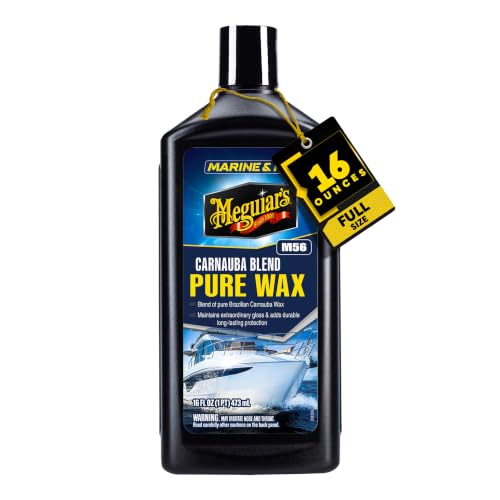
Meguiar's M56 Marine/RV Pure Wax
What We Like
- Blend of carnauba wax, polymers, resins
- UV barrier against fading and discoloration
- Safe for gel coat, fiberglass, painted surfaces
- Enhances depth on dark and metallic finishes
Trade-offs
- 16 oz bottle covers less area than gallon paints
- Wax protects but does not restore faded surfaces
Meguiar’s M56 Pure Wax blends Brazilian carnauba wax, advanced polymers, and resins to create a durable protective layer that blocks UV rays. That UV barrier helps fight fading and discoloration caused by sun exposure on marine or RV surfaces, making it a strong choice for owners who want to preserve gloss and color. It works on gel coat, fiberglass, and painted finishes, and you can apply it by hand or with a dual action polisher, which gives flexibility depending on your setup. The formula is designed to enhance depth, richness, and clarity, especially on dark colors and clear-coated metal flake finishes where a stunning finish is desired.
This wax is designed for surfaces that are already in good shape, it adds UV protection and gloss but won’t fix heavy fading or peeling clear coat. For an RV that just needs a shield against sun damage and a deep shine, it provides that defense without the permanence of a paint job.
Product photos
Rust-Oleum Automotive Acrylic Lacquer Spray Paint

What We Like
- Dries to touch in 20 minutes
- Any-angle spray for hard-to-reach spots
- Gloss lacquer finish can be buffed
Trade-offs
- Covers only 8-10 sq. ft. per can
- Designed for metal, not all RV surfaces
A 20-minute dry-to-touch time means you can recoat or finish a small metal panel in a single afternoon without waiting hours between layers. This Rust-Oleum lacquer is designed for superior adhesion to metal surfaces, with an any-angle spray nozzle that lets you shoot upside down for undercarriages or wheel wells. The gloss black finish can also be machine or hand buffed once dry for extra shine. That makes it a practical choice for quick touch-ups or full resprays on metal sections where speed matters more than broad coverage.
Coverage is the trade-off here: each can handles 8-10 square feet, so a large project will need multiple cans. Unlike the TotalBoat Wet Edge Topside Marine Paint, which is formulated for fiberglass and wood, this lacquer is designed for metal surfaces. It works best for metal parts rather than a full-body respray on a fiberglass RV.
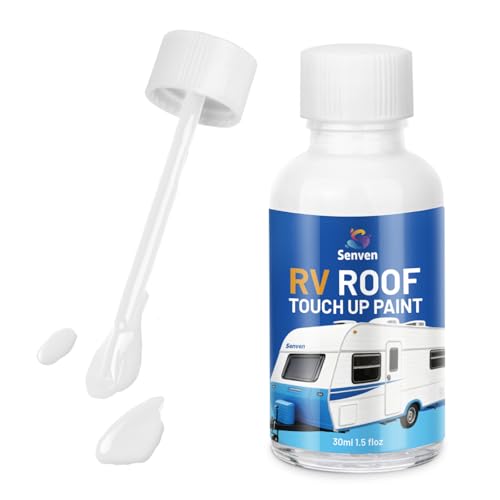
SENVEN RV Roof Touch Up Paint
What We Like
- Solar reflective coating reduces heat absorption
- Zero VOC water-based formula
Trade-offs
- 30 ml covers only small touch-ups, not full roofs
- Needs above-freezing storage for future use
A 30-milliliter bottle is tiny, and that is exactly the point. This is not a gallon-sized coating for resurfacing your entire roof; it is a precision tool for fixing a leak around a vent, sealing a crack near a skylight, or patching a worn seam on a camper. The solar-reflective acrylic formula reduces heat absorption and resists temperature extremes. That way a small repair holds up through varied weather. For RV owners who want a quick, targeted fix without mixing a bucket of sealant, this delivers the kind of spot treatment that stops a drip fast.
Scale is the trade-off here. If your roof has widespread cracking or fading, the 30-milliliter tube will run out after a few patches, and you will need a full gallon product like Dicor RP-FRC-1 to cover the whole surface. That said, for a compact repair kit that lives in your glove box or storage bin, ready for emergency leaks or small touch-ups, this is a smart, low-waste option.
Product photos
How We Evaluated Paints For RV Exteriors
Our evaluation began with a deep look at manufacturer data for each product, focusing on chemical composition, application method, and surface compatibility. We then compared these specs against the real-world demands of an RV exterior, which must endure UV radiation, moisture, and physical flexing during travel.
We prioritized four criteria that matter most for this category: durability (resistance to chipping, peeling, and fading), surface adhesion (ability to bond to fiberglass, metal, and aged gel coat without lifting), UV and weather resistance, and ease of application (including drying time, number of coats, and required prep). A product that fails on adhesion is useless, no matter how glossy the finish.
Because we do not have a testing lab, our rankings rely on documented specifications, expert round-ups from marine and RV restoration sources, and consistent feedback from owners who have applied these products. This research-led approach helps you avoid common pitfalls like choosing a paint that requires a catalyst you do not have or one that only works on a single surface type.
What To Look For In Paints For RV Exteriors
Choosing the right paint starts with identifying your RV’s exterior material and the condition of its current surface. A product perfect for a faded fiberglass roof will not work on a scratched aluminum panel.
Match the paint to your RV’s surface material and your project’s scope. Prioritize UV resistance, flexibility, and proper surface prep for a lasting finish.
Surface Material Compatibility
The single most important factor is whether the paint is formulated for your RV’s exterior material. Fiberglass and gel coat require different chemistry than aluminum or painted metal. TotalBoat Wet Edge, for example, works on fiberglass, wood, and metal but is rated for above-waterline use only. The FGCI Marine Gel Coat is specifically for polyester-based fiberglass repair and requires a MEKP catalyst. For roofs, the Dicor coating is limited to fiberglass, while the LUVBOATE RV Roof Sealant bonds to metal, plastic, and fiberglass.
UV and Weather Resistance
An RV sits in direct sun for long periods, so a paint without strong UV inhibitors will chalk, fade, and crack within a season. Look for products that explicitly mention UV resistance or solar reflectivity. The Dicor RP-FRC-1 and the LUVBOATE coating both offer solar reflective properties to keep the interior cooler. The Meguiar’s M56 wax provides a UV barrier for protection, though it does not restore already faded surfaces.
Application Method and Prep Requirements
Some products are ready to use, while others require mixing, priming, or multiple steps. The Rust-Oleum Automotive Acrylic Lacquer Spray Paint dries in 20 minutes and is ideal for small metal touch-ups. In contrast, the Meguiar’s Fiberglass Restoration System is a three-step process that includes oxidation remover, polish, and wax. Budget time for surface prep: most paints require cleaning, sanding, and priming for proper adhesion.
- Check if the product requires a separate primer or catalyst.
- Confirm the number of recommended coats and drying time between them.
- Ensure you have the right tools (roller, brush, sprayer) for the application method.
- Verify the paint’s coverage area per unit to estimate how much you need.
- Read storage requirements, especially for water-based or catalyst paints.
Always test the paint on a small, inconspicuous area first to check adhesion and color match.
Paints For RV Exteriors Compared
The table below compares each product’s surface compatibility, key protective features, and best use case so you can quickly narrow down your options.
| Product | Type | Color | Application |
|---|---|---|---|
| TotalBoat Wet Edge Topside Marine Paint | 1-part polyurethane | 22 high-gloss + flat options | Roll & tip or spray |
| FGCI Marine Gel Coat | Polyester gelcoat | Pigmented white | Spray gun or brush |
| Dicor RP-FRC-1 Fiberglass RV Roof Coating | 100% acrylic | White | N/A |
| LUVBOATE RV Roof Sealant | N/A | White | Brush, roller, or sprayer |
| Meguiar's Marine/RV Fiberglass Restoration System | N/A | N/A | Hand or dual action polisher |
| Meguiar's M56 Marine/RV Pure Wax | N/A | N/A | Hand or dual action polisher |
| Rust-Oleum Automotive Acrylic Lacquer Spray Paint | Acrylic Lacquer | Gloss Black | Any-angle spray |
| SENVEN RV Roof Touch Up Paint | Acrylic | White | N/A |
Frequently Asked Questions
Can I paint over the existing gel coat on my RV?
Yes, but the surface must be clean, sanded, and free of oxidation and wax. A product like the Meguiar’s Marine/RV Fiberglass Restoration System is designed to prep and restore faded gel coat before a new topcoat is applied.
What is the best paint for a fiberglass RV roof?
For fiberglass roofs, the Dicor RP-FRC-1 Fiberglass RV Roof Coating is a strong choice because it reflects heat and is formulated to flex with the roof. The LUVBOATE RV Roof Sealant is another flexible option that bonds to multiple materials.
How much paint do I need for a full RV exterior?
Coverage varies by product. A single can of Rust-Oleum spray paint covers about 8-10 square feet, while a gallon of TotalBoat Wet Edge covers significantly more. Measure your RV’s total surface area and check the manufacturer’s coverage estimate to buy enough.
Do I need to use a primer before painting my RV?
Many paints, including TotalBoat Wet Edge, recommend a primer on bare surfaces for best adhesion. Some products, like the FGCI Marine Gel Coat, require a separate catalyst. Always follow the manufacturer’s prep instructions for a durable finish.
Can I apply RV paint with a brush or roller?
Yes, many RV paints are designed for brush or roller application. The TotalBoat Wet Edge is known for its self-leveling properties when applied with a roll-and-tip method. The LUVBOATE coating can be brushed, rolled, or sprayed.
The Bottom Line
For most RV owners tackling a full exterior repaint, TotalBoat Wet Edge Topside Marine Paint offers the best balance of durability, self-leveling application, and resistance to the elements. It is our top choice for fiberglass, wood, and metal panels when you are willing to do proper surface prep and use a roll-and-tip technique.
If you are restoring a faded fiberglass roof, the Dicor RP-FRC-1 Fiberglass RV Roof Coating provides dedicated heat reflection and flexibility. For smaller touch-ups on metal surfaces, the Rust-Oleum Automotive Acrylic Lacquer Spray Paint is a fast-drying, convenient option.
The single most important factor for a lasting paint job is surface preparation. No paint will hold up if the underlying surface is dirty, oxidized, or incompatible. Take the time to clean, sand, and prime according to the manufacturer’s instructions, and your RV will look great for years.
