
10 Best Paint For Leather Shoes in 2026
This post contains affiliate links. As an Amazon Associate, we earn from qualifying purchases.
For anyone restoring or customizing leather shoes, Fiebing’s Pro Dye Black is the best overall pick. Its alcohol-based formula penetrates deep for a permanent, fade-resistant finish that professionals have trusted for over a century. For flexible, crack-resistant color on smooth leather sneakers, the Angelus Acrylic Leather Paint Black is a top choice, while the KIWI Leather Dye Restorer Black offers an affordable, no-fuss option for quick touch-ups.
The challenge with painting leather shoes isn’t finding color, it’s getting that color to stay. Cheap paints peel, crack, or fade after a few wears, leaving you with a mess instead of a restoration. What really matters is how the paint bonds with the leather, whether it flexes with the shoe, and if it can handle sun exposure and scuffs.
This guide is research-based, pulling from manufacturer specifications, expert round-ups, and patterns in owner feedback. We break down the 10 best paints for leather shoes by their specific strengths, so you can match the right product to your project.
Top 10 Paints For Leather Shoes in the Market
Certain content that appears on this site comes from Amazon. This content is provided "as is" and is subject to change or removal at any time.
The Best Paints For Leather Shoes, Reviewed
Fiebing's Pro Dye Black

What We Like
- Penetrating alcohol-based formula for deep color
- Permanent finish won't peel or crack
- Resistant to fading in sunlight
- Trusted by professionals for over a century
Trade-offs
- Requires deglazer and topcoat for best results
- Alcohol-based formula has a strong odor during application
A 4-ounce bottle of alcohol-based dye that penetrates deep into the leather, creating a permanent, flexible finish that won’t peel, crack, or rub off when fully dry. That makes it ideal for anyone restoring shoes, boots, belts, or bags who wants a color that stays put through wear and weather. The dye is made for natural strap, vegetable tanned, and bag & case leathers, and is resistant to fading in sunlight. For a finish that lasts, this is a reliable choice.
You’ll need to prep the leather with Fiebing’s Deglazer and seal it with Resolbing’s Resolene topcoat to get that full durability and shine. That adds a couple of steps compared to a simple paint like Angelus Acrylic Leather Paint. But if you want a dye that soaks in rather than sitting on the surface, and you’re willing to follow the full process, the results are worth the extra effort. It’s the choice for serious leather work where longevity matters more than speed.
Product photos
Angelus Leather Dye Dark Brown

What We Like
- Heavily pigmented for deep color
- Alcohol-based for permanent adhesion
- Professional grade formula
- Includes wool dauber applicator
Trade-offs
- Alcohol base can dry quickly during application
- Not suitable for flexible or crack-resistant projects
A heavily pigmented alcohol-based dye sinks deep into leather fibers for a permanent, rich color that won’t flake or peel like paint. The 3 ounce jar with a wool dauber makes spot repairs and full recolorings straightforward. It suits anyone restoring or customizing leather items who wants a professional-grade result.
This heavily pigmented dye is professional grade, so it’s excellent for restoring saddles, shoes, belts, and furniture. Because it’s alcohol-based, the color is permanent and won’t peel like some acrylic paints. If you want a flexible paint that resists cracking, the Angelus Acrylic Leather Paint is a better choice.
Angelus Acrylic Leather Paint Black

What We Like
- Flexible finish resists cracking and peeling
- Water-based formula cleans up with soap and water
- Works on smooth leather, canvas, and more
- Quick drying for fast project turnaround
Trade-offs
- Requires smooth leather surface for best adhesion
- Not designed for porous or suede leathers
A water-based formula that dries quickly and stays flexible means this paint moves with the leather instead of flaking off when you bend or walk. Angelus states it is crack, scratch, and peel resistant, so a pair of sneakers or a leather jacket can take real wear without the finish breaking apart. That makes it a strong fit for anyone who wants a lasting color change on smooth leather items they actually use day to day.
The trade-off comes down to surface type and coverage. This is an acrylic paint, not a penetrating dye, so it sits on top of the leather rather than soaking in. On smooth leather it works well, but on rough or unfinished surfaces it may not hold as well. If you are working with raw or suede leather, a penetrating dye like Fiebing’s Pro Dye Black would be a better match. For smooth leather goods that need a flexible, durable finish, this small bottle is a good option.
Leather Honey Black Recoloring Balm
What We Like
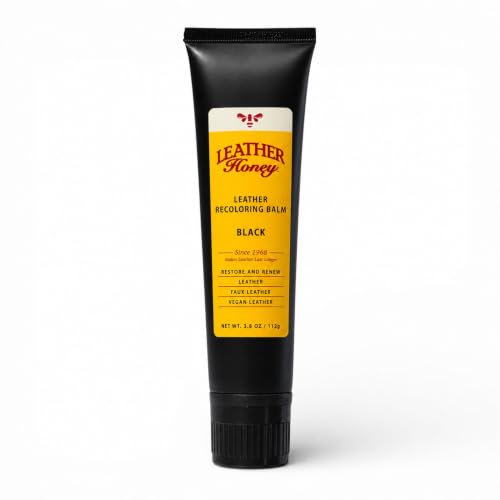
- Built-in sponge applicator for even coverage
- Hides scratches, scuffs, and pet marks
- Hydrates leather while recoloring
- Non-toxic and made in USA since 1968
Trade-offs
- Large areas require removing sponge and using cloth
- Requires multiple thin coats for best results.
The built-in sponge tip gives you precise control over small scuffs and scratches, so you can touch up a shoe toe or boot heel without making a mess. This recoloring balm is designed to bring faded black leather back to a rich, even shade while also hydrating the material, meaning it doesn’t just cover up wear, it conditions the leather as you work. For anyone with smooth black leather shoes, boots, or accessories showing sun fading or everyday scuffs, this is a straightforward, low-mess option that targets restoration rather than a full color change.
Griffin Black Leather Dye
What We Like
- Includes applicator for mess-free use
- Works on leather, suede, and more
- Fade-resistant deep black finish
- Made in the USA
Trade-offs
- Only available in black
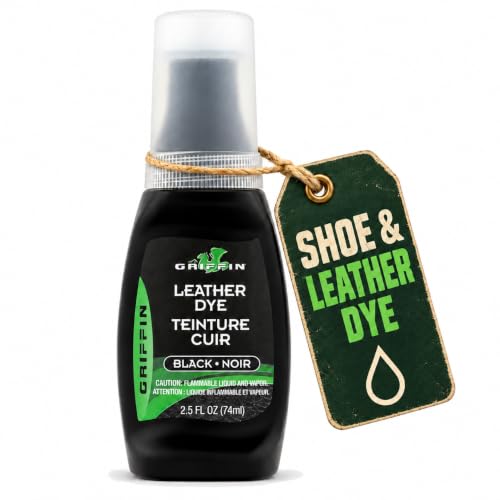
The included applicator turns this into a complete all-in-one kit, so you don’t need to buy extra tools or sponges to start recoloring scuffed boots or faded leather shoes. Its concentrated formula penetrates evenly to lock in a deep black that resists rubbing off on socks, making it a practical choice for everyday touch-ups or full recolors on leather, suede, and even auto interiors. For anyone wanting a straightforward, no-fuss dye that handles multiple surfaces without extra purchases, this delivers dependable heritage-grade results from a US-made formula.
The Griffin Black Leather Dye is made in the USA with premium ingredients, so it delivers a deep, fade-resistant black finish that won’t rub off on socks or clothing. It works on multiple surfaces, shoes, boots, purses, suede, auto interiors, and furniture, making it a versatile option for a range of projects. Reviewers note the included applicator keeps the process mess-free, ideal for both full recolors and quick touch-ups.
KIWI Leather Dye Restorer Black
What We Like
- Includes sponge applicator for easy application
- Restores color and finish before polishing
- Works on shoes, boots, furniture, jackets, briefcases
Trade-offs
- Only for black leather, not other colors
- Not for use on suede fabrics
A controlled-flow sponge applicator built right into the bottle means you can dab dye directly onto scuffed toes or faded heel counters without grabbing a separate brush. That makes the KIWI Leather Dye Restorer Black an ideal pick for quick touch-ups on black dress shoes or a worn leather jacket. This is a straightforward, fuss-free option for anyone who wants to refresh black leather without mixing or measuring.
This dye is strictly for black leather and won’t work on suede. So if you need to match a brown boot or revive a nubuck sneaker, you will need a different product like Angelus Leather Dye Dark Brown. At just 0.1 pounds, the bottle is compact and easy to toss in a drawer. For single-pair shoe restoration or spot repairs, the included applicator makes this a practical choice.
Tarrago Leather Dye Kit High Gold
What We Like
- Includes deglazer for deep penetration
- Water-based formula is non-toxic
- Works on leather, canvas, and synthetics
- Rich pigment with shiny finish
Trade-offs
- Not for suede materials
- Small 25 mL bottle limits large projects
- Deglazer step adds prep time
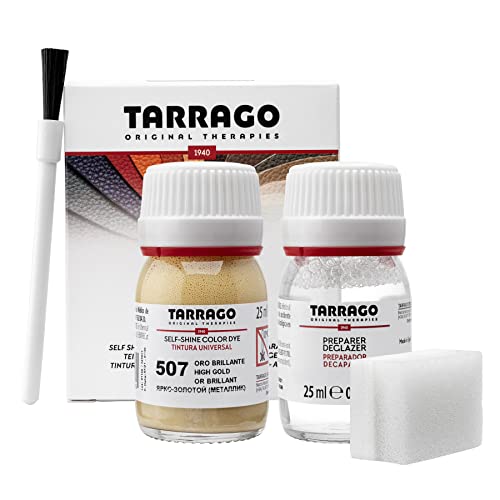
A complete kit with a 25 mL dye, deglazer, brush, and sponge means you get everything needed to recolor leather shoes in one box. The deglazer strips away factory finishes so the dye can penetrate the leather and get a deep dye, as stated in the instructions. This makes it ideal for someone who wants a thorough restoration on scuffed or faded dress shoes, boots, or bags without hunting for separate supplies. The water-based formula is also not harmful to you or your pets, which is a practical advantage if you work in a small space or around pets.
The included 25 mL bottle covers multiple pairs of shoes, but if you are recoloring a large furniture piece or several jackets you may need a second kit. Compared to the Fiebing’s Pro Dye Black, which is a larger 4 oz oil-based bottle, the Tarrago kit offers less dye for the volume but includes a deglazer and applicator. For someone focused on one or two pairs of leather shoes, this kit delivers a glossy result as described in the product features.
Product photos
Saphir Teinture Française Leather Dye Black

What We Like
- Alcohol-based formula penetrates deep into leather
- Preserves flexibility and natural texture
- Allows precise color customization and blending
- Part of a professional three-step finishing system
Trade-offs
- Requires preparer and fixative for best adhesion
- Small 50 ml bottle limits coverage on large projects
An alcohol-based formula that penetrates deep into smooth leather, this dye delivers rich, vibrant color while keeping the material flexible and natural-feeling. It’s ideal for full recoloring or dramatic color changes on shoes, bags, and belts, giving you precise control over tone and depth. The fluid texture blends easily with a sponge or brush, so you can achieve even coverage without stiffening the leather. For anyone serious about restoring or transforming leather goods, this is the kind of tool that rewards patience and care.
This dye works best as part of a three-step system with Saphir’s preparer and fixative, which adds time and cost to the project. Compared to Fiebing’s Pro Dye Black, which is an oil-based dye, this alcohol dye requires a more deliberate process. If you want a finish that resists fading and wear when used with the full system, the extra steps are worth it.
Product photos
Tarrago Sneaker Leather Paint Dark Brown

What We Like
- High pigment concentration for fewer coats
- Matte finish dries without shine
- Flexible and crack-resistant when dry
- Comes with brush and mixing cup
Trade-offs
- 0.8 oz bottle is small for large projects
- Only one shade per bottle, no mixing guide included
A 0.8-ounce bottle with high pigment concentration means you can cover scuffs or recolor a pair of sneakers in fewer coats than most acrylic leather paints. The water-based formula dries to a true matte finish, so you avoid the cheap glossy look that can ruin restored shoes. This makes it a natural fit for anyone who wants a subtle, factory-original appearance on smooth leather, synthetic leather, or canvas, especially on sneakers and casual boots where a flat tone looks right. The included brush and mixing cup also save you a trip to the art store.
The small bottle size is a limitation: at 0.8 ounces, you will need a second bottle for a full pair of tall boots or a leather sofa. For quick touch-ups or a single pair of sneakers, though, the Tarrago paint delivers a clean matte finish with less hassle than alcohol-based dyes.
Product photos
Fiebing's Leather Dye Light Brown

What We Like
- Penetrating, permanent alcohol-based formula
- Dries uniformly and stays flexible
- Won't peel, crack or rub-off
- Made in the USA
Trade-offs
- Only for vegetable tanned or unfinished leather
- Requires a sponge or wool dauber to apply
An alcohol-based penetrating dye that soaks into the leather instead of sitting on top means this color becomes part of the material itself. For unfinished or vegetable-tanned leather shoes, that permanence is exactly what you need. The dye won’t peel, crack or rub off once it’s dry, and it stays flexible so your shoes move naturally with each step. This makes it a strong match for anyone working with raw or untreated leather who wants a lasting, uniform color that won’t flake away over time.
This dye is purpose-built for a specific kind of leather. If your shoes are finished, coated or chrome-tanned, the dye won’t absorb properly and the result will be patchy or uneven. Compared to the Angelus Leather Dye Dark Brown, which comes in a smaller 3 oz bottle, the Fiebing’s gives you more volume for larger projects. Stick with unfinished leather and you get a reliable, permanent color change that stays put.
Product photos
How We Evaluated Paints For Leather Shoes
This guide is based on manufacturer specifications, expert round-ups from restoration and customization communities, and patterns in owner feedback across hundreds of user reports. The conclusions draw from documented performance data and the collective experience of the community.
The three criteria that mattered most were adhesion and flexibility (a paint that cracks is useless), color permanence (fade and scuff resistance), and ease of application (prep steps, drying time, and cleanup). For leather specifically, we also prioritized formulas that penetrate rather than just sit on the surface, as surface-only coatings are far more likely to peel.
An honest limit of this research-led approach is that individual results vary based on leather type, preparation, and application technique. We note where a product requires specific prep steps or works best on certain leathers, so you can judge if it fits your skill level and project.
What To Look For In Paints For Leather Shoes
Choosing the right paint for leather shoes means understanding how the formula interacts with the material. The key factors are chemical base, flexibility, color permanence, and application requirements.
The best paint for leather shoes bonds permanently and flexes with the material. Prioritize alcohol-based dyes for deep penetration or water-based acrylics for flexible surface color. Always check if the leather type is compatible and if prep steps like deglazing are needed.
Chemical Base: Alcohol vs. Water
Alcohol-based dyes, like those in Fiebing’s Pro Dye and Saphir Teinture Française, penetrate deep into the leather fibers for a permanent color that won’t peel or crack. They are the professional standard for restoration but have a strong odor and require a deglazer and topcoat for best results. Water-based acrylics, such as Angelus Acrylic Leather Paint, sit on the surface but offer superior flexibility, making them ideal for sneakers and items that bend frequently. They clean up with soap and water and have less odor.
Flexibility and Crack Resistance
Shoes flex constantly, so the paint must flex with them. Water-based acrylic paints are generally more flexible than alcohol-based dyes once cured, which is why they are preferred for sneaker customization. However, a properly applied alcohol-based dye that penetrates the leather will not crack because it colors the fibers themselves rather than forming a surface film. For best results on high-flex areas like the toe box, a flexible acrylic paint is often the safer choice.
Color Permanence and Finish
Fade resistance matters if your shoes see sun. Alcohol-based dyes are naturally more UV-resistant than many water-based paints. The finish is also a choice: matte finishes hide imperfections and look natural, while glossy finishes are easier to clean but show scuffs more readily. For recoloring, a product like Leather Honey Black Recoloring Balm not only adds pigment but conditions the leather, extending the life of the shoe.
- Check if the paint requires a deglazer or preparer for adhesion.
- Confirm the leather type: smooth, finished leather needs different paint than suede or unfinished leather.
- Look at the bottle size and coverage for your project scale.
- Consider the drying time and whether you have ventilation for strong-smelling formulas.
- Read if a topcoat or finisher is recommended for durability.
A good rule of thumb: if you want permanent color restoration, choose an alcohol-based dye. If you want flexible surface color for customization, choose a water-based acrylic.
Paints For Leather Shoes Compared
The table below compares the key specifications of our top picks, including chemical base, leather compatibility, and special features, to help you narrow down your choice.
| Product | Volume | Base | Leather Types |
|---|---|---|---|
| Fiebing's Pro Dye Black | 4 oz | Alcohol-based | Natural strap, vegetable tanned, bag & case |
| Angelus Leather Dye Dark Brown | 3 fl oz | Alcohol-based | N/A |
| Angelus Acrylic Leather Paint Black | 1 fl oz | Water-based | N/A |
| Leather Honey Black Recoloring Balm | N/A | N/A | Top-grain, full-grain, aniline, distressed |
| Griffin Black Leather Dye | N/A | N/A | Leather, suede, boots, purses |
| KIWI Leather Dye Restorer Black | N/A | N/A | N/A |
| Tarrago Leather Dye Kit High Gold | 25 mL | Water-based | Leather, canvas, synthetic leather |
| Saphir Teinture Française Leather Dye Black | 50 ml | Alcohol-based | N/A |
| Tarrago Sneaker Leather Paint Dark Brown | 0.8 Fl. Oz. | Water-based | Smooth leather, synthetic leather, canvas |
| Fiebing's Leather Dye Light Brown | 4 fl. oz. | Alcohol-based | Vegetable tanned or unfinished leather |
Frequently Asked Questions
What is the best paint for leather shoes that won’t crack?
For crack resistance, water-based acrylic paints like Angelus Acrylic Leather Paint are the best choice. Their flexible finish moves with the shoe, preventing cracks in high-flex areas like the toe and heel. Alcohol-based dyes that penetrate the leather fibers also resist cracking because they color the material itself rather than forming a surface layer.
Can I use regular acrylic paint on leather shoes?
Regular craft acrylic paint is not recommended for leather shoes. It lacks the flexibility and adhesion needed for leather, so it will crack and peel quickly. Use a paint specifically formulated for leather, such as Angelus Acrylic Leather Paint or an alcohol-based leather dye, to ensure the finish lasts.
Do I need to prepare leather before painting?
Yes, preparation is crucial. Most leather paints recommend cleaning the surface with a deglazer or preparer to remove factory finishes and oils. This step allows the paint to bond properly. Skipping preparation is the most common reason for paint failure on leather shoes.
How do I make leather paint last longer?
To maximize durability, apply a topcoat or finisher after the paint has cured. This adds a protective layer against scuffs and moisture. Also, use a paint that is compatible with your leather type, smooth finished leather requires different treatment than unfinished or suede leather.
What is the difference between leather dye and leather paint?
Leather dye is an alcohol-based formula that penetrates the leather fibers, permanently changing their color. It does not add a surface layer, so it won’t peel. Leather paint sits on the surface and forms a flexible film. Dye is better for restoration and color changes, while paint is better for customization and adding designs.
The Bottom Line
For permanent, professional-grade color restoration on leather shoes, Fiebing’s Pro Dye Black is the clear best overall. Its deep-penetrating, fade-resistant formula is the standard for a reason, though it does require proper prep and a topcoat. If you are customizing sneakers and need a flexible finish that won’t crack, the Angelus Acrylic Leather Paint Black is your best bet.
Budget-conscious buyers or those doing quick touch-ups will find excellent value in the KIWI Leather Dye Restorer Black, which includes a sponge applicator for easy use. For a complete, ready-to-go kit that includes deglazer, the Tarrago Leather Dye Kit High Gold takes the guesswork out of the process.
The single most important factor in painting leather shoes is preparation. No paint, no matter how good, will perform well on an unprepared surface. Choose the formula that matches your leather type and your project, and take the time to deglaze properly.
