
10 Best Paint For Fiberglass Boat in 2026
This post contains affiliate links. As an Amazon Associate, we earn from qualifying purchases.
For a durable, easy-to-apply topside finish on a fiberglass boat, the Rust-Oleum Marine Topside Semi-Gloss White Boat Paint is our best overall pick. Its flexible oil-based formula levels easily and resists abrasion and UV damage. For below-waterline protection, we also recommend the Rust-Oleum Marine Boat Bottom Antifouling Paint and the TotalBoat Wet Edge for a smooth roll-and-tip application.
Choosing the right paint for a fiberglass boat means balancing where you paint (above or below the waterline) with how you want to apply it. Topside paints need UV resistance and gloss retention, while bottom paints must prevent fouling. The wrong choice can lead to peeling, poor adhesion, or a boat that needs repainting mid-season.
Our guide is research-based, drawing on manufacturer specifications, expert round-ups, and patterns in owner feedback. We evaluated dozens of paints on adhesion, durability, ease of application, and specific use cases to help you pick the right one for your project.
Top 10 Paints For Fiberglass Boats in the Market

Certain content that appears on this site comes from Amazon. This content is provided "as is" and is subject to change or removal at any time.
The Best Paints For Fiberglass Boats, Reviewed
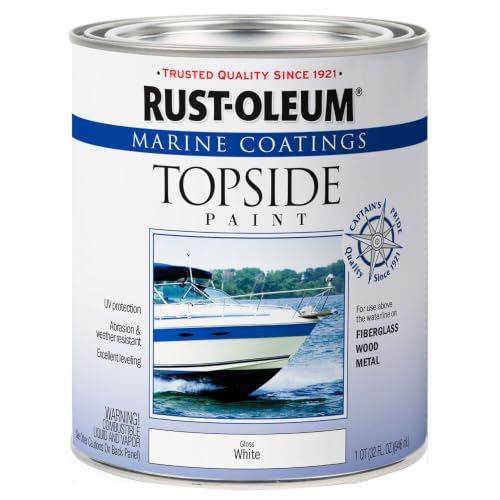
Rust-Oleum Marine Topside Semi-Gloss White Boat Paint
What We Like
- Flexible oil-based formula levels easily
- Dries to touch in 1-2 hours
- Resists abrasion and extreme weather
- Superior gloss retention with UV protection
Trade-offs
- Only for above-waterline use
- Oil-based requires solvent cleanup
- Quart size covers only 100 sq ft
Covering up to 100 square feet per quart, this Rust-Oleum topside paint offers enough for a small boat or touch-up work on a larger hull. Its oil-based formula is flexible and applies easily with excellent leveling, and the semi-gloss white finish resists UV and extreme weather. For boat owners who want a straightforward, durable coating that applies smoothly and resists chipping, this is a practical option.
This paint is designed strictly for above-waterline use, so you’ll need a separate antifouling product like Rust-Oleum’s Marine Boat Bottom Flat Black for below the waterline. The oil-based formula applies easily with a brush and levels well, covering up to 100 square feet per quart. It dries to the touch in as little as 1 to 2 hours, which helps speed up a multi-coat project.
TotalBoat Wet Edge Topside Marine Paint

What We Like
- Self-leveling for smooth finish
- Scratch and chemical resistant
- 22 color choices plus flat options
- Works on fiberglass, wood, and metal
Trade-offs
- Above waterline use only
- Requires separate primer for metals
With 22 high-gloss colors and a self-leveling polyurethane formula, this one-part paint is built to give fiberglass boat topsides a durable, scratch-resistant finish that stays glossy season after season. The roll-and-tip method is forgiving for DIYers, and the paint levels out brush marks as it dries, so you get professional-looking results without needing a spray booth. It resists fading, cracking, and peeling, making it a strong pick for anyone repainting a powerboat hull, sailboat topsides, or even an RV exterior where appearance matters.
Compared to Rust-Oleum Marine Topside, which also targets above-waterline surfaces, TotalBoat offers more color options and a self-leveling polyurethane finish that makes application smoother for first-timers. If you need a paint that stays beautiful through multiple seasons and you’re comfortable rolling and tipping, this is a versatile topside choice.
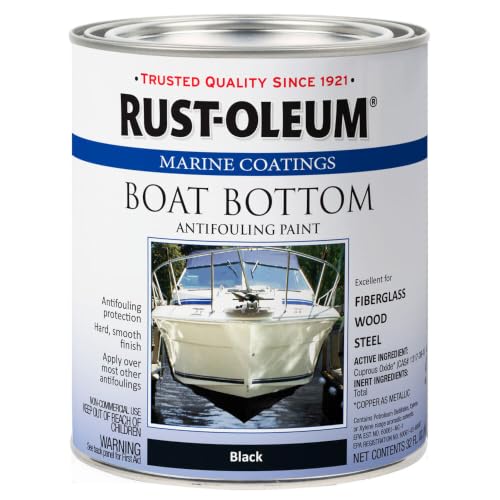
Rust-Oleum Marine Boat Bottom Flat Black Antifouling Paint
What We Like
- Resists barnacles and algae buildup
- Works in freshwater and saltwater
- Slow-release copper prevents fouling
- Hard, smooth flat finish
Trade-offs
- Below waterline use only, not for topsides
- Flat sheen limits aesthetic choices
Covering up to 110 square feet per quart, this bottom paint lets you protect a decent-sized hull without buying extra cans. The slow-release copper formulation is designed to keep barnacles and algae from latching on below the waterline in both freshwater and saltwater. That makes it a straightforward choice for anyone who wants reliable antifouling defense on a fiberglass, wood, or steel boat without overcomplicating the process. A 16-hour wait before launching and a 4-hour recoat window mean you can finish the job in a weekend.
The trade-off is that this paint is strictly for below the waterline, so you’ll need a separate topside paint if you want to coat the entire hull. Its flat black sheen also won’t win any beauty contests above deck, but that’s not the point here. Compared to the TotalBoat JD Select Water-Based Antifouling Bottom Paint, which is a single-season ablative option, the Rust-Oleum’s hard finish holds up longer against scrubbing and repeated launches. Best for boat owners who prioritize no-fuss antifouling protection over appearance and don’t mind buying a second paint for topside work.
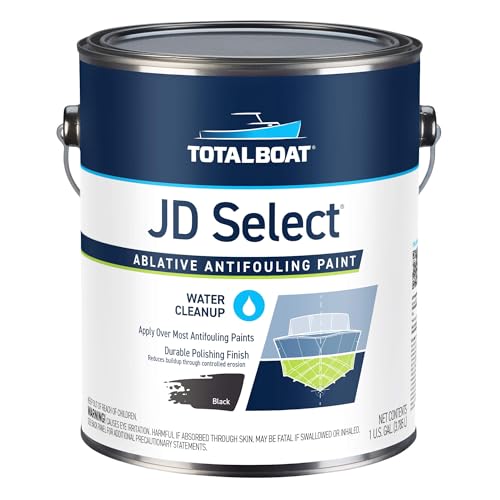
TotalBoat JD Select Water-Based Antifouling Bottom Paint
What We Like
- Low-VOC water-based formula
- Ablative coating reduces paint buildup
- Cleans up with soap and water
- No maximum dry time before launch
Trade-offs
- Single-season protection only
- Requires 1-2 thin coats for best results
With 25.5% copper biocide, this paint is formulated to repel barnacles, slime, algae, and weeds from boat hulls below the waterline. The water-based formula keeps VOCs low and odor minimal, so you can work in marinas with strict air-quality rules and clean your tools with just soap and water. For DIY boat owners who want effective antifouling without the headache of solvent cleanup or strict launch timing, this is a smart pick.
This coating is a single-season ablative type, so you’ll need to reapply each year rather than getting multi-season mileage. If you prefer a longer-lasting barrier, Interlux Fiberglass Bottomkote NT is another antifouling option listed in the guide. For those who value easy application, low odor, and simple maintenance, this TotalBoat paint is designed to meet those needs.
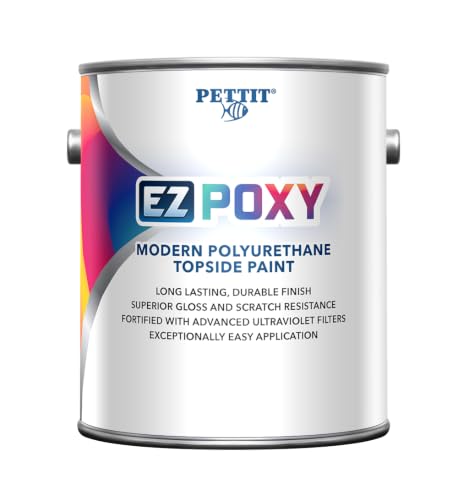
Pettit EZ Poxy Polyurethane Topside Paint
What We Like
- UV filters preserve gloss and color
- Silicone-enhanced for smooth leveling
- Scratch-resistant polyurethane coating
- Easy one-part application
Trade-offs
- Above-waterline use only
- White color only in this listing
Advanced UV filters that preserve color depth and high-gloss appearance even in harsh marine sun make this one-part polyurethane a standout for anyone who wants a finish that stays shiny season after season. The silicone-enhanced formula minimizes brush marks and roller stipple, so you can roll on a smooth, professional-looking coat without the hassle of mixing two-part systems. It creates a tough, scratch-resistant surface that holds up to dockside wear and routine use, making it ideal for topsides, cabins, and cockpit areas where appearance matters and durability is non-negotiable.
Pettit EZ Poxy is formulated strictly for above-waterline surfaces, so it won’t work for hull bottoms or antifouling needs. For those applications, you’d need a dedicated bottom paint like Interlux Fiberglass Bottomkote NT. The Pettit EZ Poxy comes in a gallon size, which might be more than a small dinghy requires. If you’re restoring a larger fiberglass boat and want a high-gloss finish that lasts, the gallon size is a practical choice.
Product photos
Interlux Fiberglass Bottomkote NT Antifouling Marine Paint
What We Like
- Designed specifically for fiberglass hulls
- Antifouling protection for below waterline
- Best in class performance
Trade-offs
- Heavy at 8.0 pounds, less portable than quarts
- Below waterline use only, not for topsides
A gallon of Interlux Fiberglass Bottomkote NT means you can coat a full fiberglass hull in one go without running back to the store. This antifouling paint is formulated to protect below the waterline, so barnacles and algae have a much harder time latching on. It suits anyone looking for a dedicated, purpose-built solution for fiberglass rather than a general-purpose paint that might not stick or perform as well.
At 8.0 pounds, this gallon can is heavier than quart-sized options, which matters if you’re hauling paint down a dock or up a ladder. But for anyone serious about keeping a fiberglass hull clean and protected season after season, the dedicated formulation and full-gallon coverage make that weight a worthwhile burden.
Product photos
SENVEN Gloss Blue Marine Topside Enamel Paint

What We Like
- High-gloss UV-resistant finish
- Abrasion-resistant polyurethane formula
- Applies easily by brush or spray
- Works on fiberglass, wood, and aluminum
Trade-offs
- Oil-based formula requires solvent cleanup
A coverage of up to 120 square feet per can means one quart can handle a small dinghy or touch up a larger hull without needing a second can. The oil-based enamel lays down a flexible, abrasion-resistant coat that dries to the touch in one to two hours, so you can recoat or move the boat the same day. This is a smart fit for weekend anglers or recreational boaters who want a deep, glossy blue that holds its color through sun and spray, especially on topsides, decks, and above-waterline surfaces.
If you need a true below-waterline antifouling coating, the Interlux Fiberglass Bottomkote NT is built for that job. But for a bright, durable topside finish on a fiberglass bass boat or aluminum jon boat, SENVEN delivers the gloss and weather resistance you expect from a marine-grade enamel.
Product photos
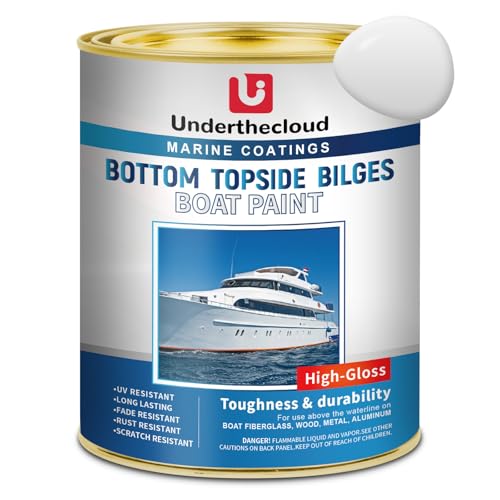
underthecloud Gloss White Marine Enamel Paint
What We Like
- Excellent adhesion for repair work
- Abrasion-resistant polyurethane finish
- Dries to touch in 1-2 hours
- Works on fiberglass, wood, metal, aluminum
Trade-offs
- Requires paint thinner adjustment for application
This 35-ounce oil-based enamel covers up to 120 square feet, making it a practical choice for spot repairs on a fiberglass hull without buying a full gallon. The abrasion-resistant finish and excellent adhesion let it blend into chipped or scratched areas, so you can fix a gouge or crack and have it dry to the touch in as little as an hour. It suits boat owners who need a targeted solution for restoring topsides, decks, or small watercraft rather than repainting an entire vessel.
This paint is not meant for boat bottoms that stay in the water longer than 72 hours, so it works best above the waterline or on trailered boats. Compared to Rust-Oleum Marine Topside Semi-Gloss, which also targets above-waterline use, underthecloud’s formula is specifically marketed for repairing chips and holes. That gives it an edge if you are patching damage rather than applying a full coat. Just be ready to adjust the thinner ratio based on your spraying or brushing conditions.
Product photos
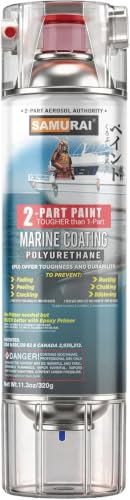
SAMURAI 2-Part Polyurethane Marine Spray Paint
What We Like
- Two chemical components in one aerosol can
- Available in multiple colors for custom looks
- Sprays smoothly with great coverage
Trade-offs
- Coverage limited to 10-12 ft² per can
- Must be used within 48 hours after activation
A single aerosol can that mixes hardener and paint on demand means you get the toughness of a two-part polyurethane without the mess of measuring and mixing. It sprays smoothly and evenly, reaching tight corners that a brush or roller would miss, so DIY owners can achieve a professional-looking finish without owning a spray gun.
Each can covers only about 10 to 12 square feet with two coats, so a full topside repaint may require several cans. And once you activate the can, you have 48 hours to use it all, no saving half a can for later. Compared to a quart of Rust-Oleum Marine Topside that you can brush on in stages, this spray finish demands more planning. But it delivers a durable polyurethane finish that is easy to clean and won’t fade, crack, or peel.
DURALUX Camouflage Marine Paint

What We Like
- Resists saltwater, oil, and gasoline
- Works on fiberglass, wood, and metal
- Ultra-low luster camouflage finish
- Brush, roller, or sprayer application
Trade-offs
- Each coat requires overnight drying
- Cannot paint in direct sunlight
- Oil-alkyd base has stronger odor
A gallon of oil-alkyd paint that sticks to fiberglass, wood, steel, and aluminum means you can match the hull, deck, and metal fittings with one can. The ultra-low luster finish stands up to saltwater, oil, gasoline, and the discoloration effects of harbor gasses, so a hunting boat or duck blind keeps a durable, non-reflective coat. The trade-off is patience: each of the two thin coats needs a full overnight dry, and you cannot paint in direct sunlight, which stretches a full job across several days. This paint is best for owners who want a flat, matte finish that resists chemicals and harbor conditions, without worrying about gloss or reflection.
Patience is key here: each of the two thin coats needs a full overnight dry, and you cannot paint in direct sunlight, which stretches a full job across several days. Compared to TotalBoat Wet Edge Topside Marine Paint, which is a marine-grade polyurethane finish, DURALUX uses an oil-alkyd base that dries slower and gives a matte camouflage look. Best suited for boaters who need a durable, ultra-low luster finish and are willing to wait for overnight drying between coats.
Product photos
How We Evaluated Paints For Fiberglass Boats
Our evaluation began with a close look at manufacturer specifications and technical data sheets for each paint. We examined the resin type (oil-based, polyurethane, epoxy), recommended application methods, and surface preparation requirements. We also studied expert round-ups from marine restoration specialists and boat-building forums to understand which formulations perform best on fiberglass substrates.
We focused on four criteria that matter most for fiberglass boat painting. Adhesion to gelcoat and cured fiberglass was the first priority, a paint that peels is useless. Durability against UV rays, saltwater, and physical abrasion came second. Ease of application, including leveling and dry time, was third. Finally, we considered the paint’s intended use: topside, bottom, or repair work.
A research-based evaluation has limits. Real-world results depend heavily on surface preparation, temperature, humidity, and the painter’s skill. We prioritized products with consistent positive feedback patterns from owners and reliable manufacturer data.
What To Look For In Paints For Fiberglass Boats
Choosing the right paint starts with knowing where and how your boat is used. The waterline is the dividing line, topside paints and bottom paints are not interchangeable.
Choose a paint based on its intended location (above or below the waterline), the type of finish (gloss or flat), and the application method that matches your skill and tools.
Above vs. Below the Waterline
Topside paints like the Rust-Oleum Marine Topside are formulated for UV resistance, gloss retention, and abrasion from docks and lines. They will not stop barnacles or algae below the waterline. Bottom paints such as the Rust-Oleum Marine Boat Bottom Antifouling contain biocides (often copper) that prevent marine growth. Using a topside paint below the waterline means frequent haul-outs and cleaning.
Paint Chemistry: Oil-Based vs. Water-Based vs. Two-Part Polyurethane
Oil-based enamels (like the Rust-Oleum Marine Topside) are forgiving for brush application and self-level well, but require mineral spirits for cleanup. Water-based paints (like the TotalBoat JD Select) offer low VOCs and soap-and-water cleanup, but may need more coats. Two-part polyurethanes (like the SAMURAI spray paint) offer the hardest, most durable finish but require careful mixing and have a limited pot life.
Gloss, Color, and UV Protection
High-gloss paints reflect UV rays better than flat finishes, which helps prevent fading. The Pettit EZ Poxy uses UV filters to preserve color, and the SENVEN Gloss Blue is formulated for UV resistance. If you want a camouflage or low-luster look, the DURALUX Marine Paint provides an ultra-low sheen but requires overnight drying between coats.
- Check the manufacturer’s recommended surface preparation (sanding, cleaning, priming).
- Confirm the paint is compatible with your boat’s material (fiberglass, wood, metal, aluminum).
- Measure your boat’s surface area to buy enough paint, coverage rates vary from 10 to 100 square feet per quart.
- Consider your application method: brush, roller, or spray. Some paints are easier to brush, others are designed for spraying.
A good rule: if you are painting above the waterline and want a glossy, durable finish, choose a one-part polyurethane or oil-based enamel. For below the waterline, always use a dedicated antifouling paint.
Paints For Fiberglass Boats Compared
The table below compares our top picks across key specs, so you can see at a glance which paint fits your project.
| Product | Type | Coverage | Surface Compatibility |
|---|---|---|---|
| Rust-Oleum Marine Topside Semi-Gloss White Boat Paint | Oil-based | Up to 100 sq ft | Fiberglass, wood, metal |
| TotalBoat Wet Edge Topside Marine Paint | 1-part polyurethane | 350-400 sq. ft./gal | Fiberglass & Wood |
| Rust-Oleum Marine Boat Bottom Flat Black Antifouling Paint | N/A | Up to 110 sq ft | Fiberglass, wood, steel |
| TotalBoat JD Select Water-Based Antifouling Bottom Paint | Water-Based | Up to 500 sq. ft./gal | Fiberglass, wood, steel |
| Pettit EZ Poxy Polyurethane Topside Paint | One-part polyurethane | N/A | Fiberglass, wood, metal |
| Interlux Fiberglass Bottomkote NT Antifouling Marine Paint | Antifouling Marine Paint | N/A | N/A |
| SENVEN Gloss Blue Marine Topside Enamel Paint | Oil-based enamel | 100-120 sq ft | Fiberglass, wood, metal, aluminum |
| underthecloud Gloss White Marine Enamel Paint | Oil-based enamel | 100-120 sq ft | Wood Fiberglass Aluminum Metals |
| SAMURAI 2-Part Polyurethane Marine Spray Paint | 2-Part Polyurethane | 10-12 ft² per can (2 coats) | N/A |
| DURALUX Camouflage Marine Paint | Oil alkyd | N/A | Steel, metal, wood, fiberglass, aluminum |
Frequently Asked Questions
What is the best paint for a fiberglass boat above the waterline?
For topside painting, the Rust-Oleum Marine Topside Semi-Gloss White is our best overall pick. It offers a flexible oil-based formula that levels well, resists abrasion, and holds its gloss with UV protection. It works on fiberglass, wood, and metal surfaces.
Can I use regular household paint on a fiberglass boat?
No. Household paints lack the UV resistance, flexibility, and adhesion needed for marine environments. They will peel, fade, and blister quickly. Marine paints are formulated to withstand saltwater, sun exposure, and the constant flexing of a boat hull.
How do I prepare a fiberglass boat for painting?
Surface preparation is critical. Sand the existing gelcoat or old paint with coarse to medium grit sandpaper, clean thoroughly to remove dust and grease, and apply a marine-grade primer if recommended by the paint manufacturer. For bare fiberglass, a dewaxing step may be needed.
What is the difference between topside paint and bottom paint?
Topside paint is designed for UV resistance, gloss, and abrasion above the waterline. Bottom paint contains biocides to prevent marine growth (barnacles, algae) and is usually flat or semi-gloss. They are not interchangeable, using bottom paint on topsides results in poor gloss and UV resistance.
How long does marine paint last on a fiberglass boat?
Durability varies by paint type and usage. Topside paints can last several years with proper preparation and maintenance. Antifouling bottom paints typically last one season (ablative types) to two seasons (harder formulas). Factors like sun exposure, water conditions, and how often the boat is used affect lifespan.
The Bottom Line
For most boat owners, the Rust-Oleum Marine Topside Semi-Gloss White is the best overall choice. It balances easy application with durable, UV-resistant performance on fiberglass topsides. If you need below-waterline protection, the Rust-Oleum Marine Boat Bottom Antifouling Paint is our pick for antifouling. The TotalBoat Wet Edge earns the award for Best Easy Roll & Tip Application, offering a smooth, self-leveling topside finish.
Budget-conscious owners or those with small repair jobs should look at the underthecloud Gloss White Marine Enamel for touch-ups. For a spray-on finish without buying a spray gun, the SAMURAI 2-Part Polyurethane aerosol delivers a durable coat in a can.
The single most important factor is matching the paint to the waterline. Choose a topside paint for above the waterline and an antifouling paint for below. Everything else, gloss, color, application method, comes second to that one rule.
