
10 Best Paint For Exterior Concrete Walls in 2026
This post contains affiliate links. As an Amazon Associate, we earn from qualifying purchases.
For exterior concrete walls, the KILZ Basement and Masonry Waterproofing Paint is our best overall pick for its ability to block up to 12 PSI of water pressure. That makes it ideal for below-grade and wet-climate applications. For weather resistance on horizontal surfaces, the Rust-Oleum Concrete & Garage Floor Paint is a strong choice, while the KILZ Self-Priming Masonry Stucco and Brick Paint is best for rough textures.
The real challenge with exterior concrete is moisture. Water can push through porous masonry, causing efflorescence, cracking, and peeling paint. You need a coating that bonds to the alkaline surface, resists hydrostatic pressure, and holds up to sun and rain.
This guide is based on manufacturer specifications, expert round-ups, and patterns in owner feedback. We evaluated each product for waterproofing ability, adhesion, durability, and ease of application to help you choose with confidence.
Top 10 Paints For Exterior Concrete Walls in the Market
Certain content that appears on this site comes from Amazon. This content is provided "as is" and is subject to change or removal at any time.
The Best Paints For Exterior Concrete Walls, Reviewed
KILZ Basement and Masonry Waterproofing Paint

What We Like
- Blocks up to 12 PSI water pressure
- Low-odor formula for indoor use
- Resists alkali buildup in high-moisture areas
- Dries to touch in 1 hour
Trade-offs
- Requires hydraulic cement to fill cracks before application
- Full cure takes 7-14 days before washable
A 12 PSI water-pressure rating means this paint actively stops moisture from pushing through basement walls and exterior masonry, not just coats the surface. The nanotechnology barrier provides waterproofing protection for concrete and masonry surfaces. That is exactly what you need for below-grade concrete or retaining walls exposed to rain. Its low-odor formula and quick 1-hour dry time also make it comfortable to apply in enclosed spaces like basements, and the alkali-resistant finish keeps it from degrading in the damp, alkaline environment that concrete naturally creates.
This paint blocks up to 12 PSI of water pressure using nanotechnology, so it can stop water from pushing through basement walls even under heavy rain. For below-grade use, you must fill all holes and cracks with hydraulic cement before painting, that adds prep time, but it ensures the barrier works as designed. The full cure takes 7-14 days, which means you need to keep the surface dry and undisturbed for about two weeks, but the result is a washable, durable finish that stands up to high-moisture conditions.
Rust-Oleum Concrete & Garage Floor Paint

What We Like
- Self-priming saves a coat of paint
- Resists hot tires, oil, and gasoline
- UV and weather resistant for outdoors
- Easy cleanup with soap and water
Trade-offs
- Designed for horizontal surfaces, not vertical walls
- Not suitable for vertical concrete walls
A self-priming formula that resists hot tires, motor oil, gasoline, and UV rays makes this paint especially tough on garage floors and driveways. The single-coat application cuts prep time, and the satin finish holds up against peeling and fading in both interior and exterior spots. For anyone coating a concrete floor that sees car traffic, chemical spills, or direct sun, this is a durable, low-fuss option.
This paint resists damage from hot tires, motor oil, and gasoline, so it holds up on garage floors and driveways where vehicles and chemicals are a daily reality. Its UV- and weather-resistant satin finish also fights fading and peeling on patios, walkways, and pool decks. For a basement wall or cinder block facade, a dedicated masonry paint would be a better fit because this formula is designed for concrete slabs and similar horizontal surfaces.
Product photos
KILZ Self-Priming Masonry Stucco and Brick Paint

What We Like
- Self-priming on masonry and stucco
- Alkali-resistant up to pH 12.0
- Acrylic latex for adhesion and water repellency
- Works on smooth, rough, and textured surfaces
Trade-offs
- Flat finish shows imperfections more than satin
- Coverage varies widely with surface texture
An alkali resistance up to pH 12.0 means this paint won’t break down on fresh concrete or masonry that still has active alkalinity, a common cause of peeling and blistering on exterior walls. That self-priming acrylic latex formula also gives strong adhesion and water repellency on stucco, brick, and textured surfaces, saving you the extra step of a separate primer coat. It’s a smart fit for anyone repainting a rough stucco house or a brick garden wall who wants a single can that does the prep work and the finish coat in one go.
The flat finish hides surface irregularities well on heavily textured concrete or stucco. However, it will show dirt and scuffs more readily than a satin or semi-gloss sheen, especially on lower walls that get splashed or brushed against. The KILZ is designed to accentuate textured surfaces while achieving a natural look, as stated in the product features. If your wall is smooth and you prefer a glossier finish, a different product may suit you better.
INSL-X WaterBlock Acrylic Masonry Waterproofer Paint
What We Like
- Withstands 12 psi hydrostatic pressure
- High alkali resistance up to pH-13
- Works on interior and exterior masonry
- Fast-drying waterproof coating
Trade-offs
- Only for vertical walls, not horizontal surfaces
- Requires 50-90 °F temperatures for application
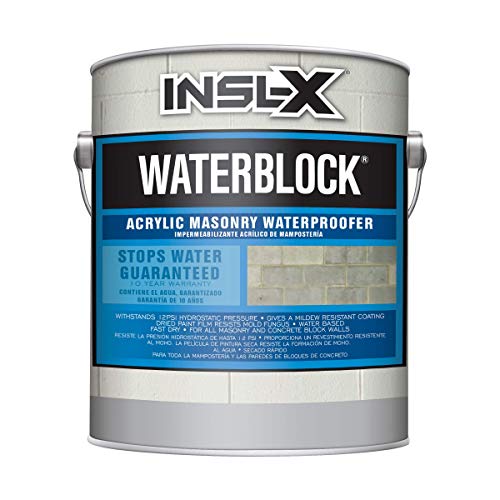
A 12 psi hydrostatic pressure rating means this paint can hold back significant water intrusion on basement walls and foundations, making it a serious option for damp or below-grade concrete. The water-based acrylic formula resists alkali up to pH-13, so fresh concrete or high-alkaline masonry won’t break down the coating over time. That combination of waterproofing strength and chemical tolerance is exactly why this paint suits homeowners who need a reliable barrier against moisture on vertical exterior walls, retaining walls, or interior basement surfaces.
This paint is formulated strictly for vertical applications, so it won’t work for concrete floors, patios, or driveways where you need a walkable or tire-resistant coating. If your project is a foundation wall or a cinder block basement, this delivers the hydrostatic pressure resistance you need. If you’re coating a slab, look at a floor-specific product instead.
Product photos
INSL-X TuffCrete Waterborne Acrylic Concrete Stain Paint
What We Like
- Non-fading, durable finish
- Resists detergents, oils, grease, scrubbing
- Works on concrete, stucco, and brick
- One-coat stain or two-coat opaque
Trade-offs
- Requires surface temperature below 90°F to apply
- Heavier than Rust-Oleum Concrete & Garage Floor Paint
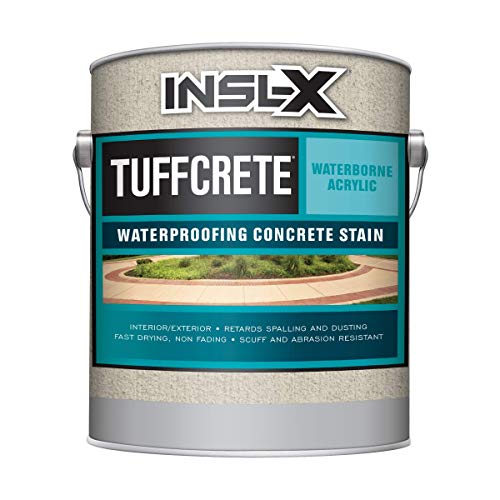
A 300-400 square foot coverage per gallon means a single gallon can handle a modest exterior wall without constant trips back to the store. This waterborne acrylic is formulated for both vertical and horizontal masonry, so it clings well on stucco, brick, and concrete without running or sagging. The non-fading, detergent-resistant finish makes it a smart choice for exterior walls that face sun, rain, and occasional scrubbing. It works as a one-coat stain for a translucent look or two coats for full opacity, giving you control over the final color depth.
The main trade-off is weight: at 9.3 pounds per gallon, it is lighter than the KILZ Self-Priming Masonry Stucco and Brick Paint, which weighs 11.4 pounds. That lower weight can make overhead or ladder work a bit easier. Also, you must apply it when surface temperatures stay below 90°F, which limits summer painting windows in hot climates. If your project is a vertical wall that needs color and durability without a waterproofing focus, this is a versatile pick.
Product photos
YKF Masonry Pro Foundation & Basement Waterproofing Sealer
What We Like
- 15 PSI hydrostatic pressure resistance
- Water-based polyurethane high-solids formula
- Works on dry or slightly damp surfaces
- Smooth white decorative finish
Trade-offs
- Only 100 sq ft per gallon coverage
- Requires surface prep and leak repair first
- Needs second coat for full coverage
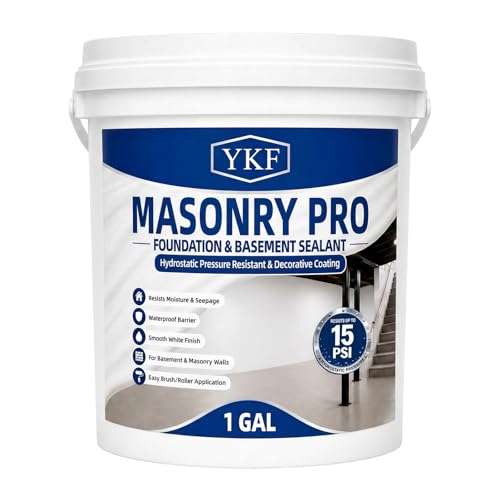
With 15 PSI of hydrostatic pressure resistance, this coating is designed for demanding below-grade conditions where groundwater pushes against basement walls. That rating means it resists moisture intrusion that a standard masonry paint might not handle, making it a practical choice when you need a protective barrier rather than just a cosmetic refresh. It works on foundation walls, crawl spaces, and retaining walls where stopping seepage matters more than covering a large area quickly.
Coverage is limited to about 100 square feet per gallon, so a typical basement wall will need more than one pail, and you’ll have to prep the surface and apply two coats for full protection. That means this isn’t a slap-and-go job; you’ll spend time cleaning, patching cracks, and waiting at least 2 hours between coats. For a below-grade wall that sees constant moisture, the effort pays off because the coating resists hydrostatic pressure up to 15 PSI when applied correctly to properly prepared masonry.
Product photos
Rust-Oleum Whitewash Masonry Paint
What We Like
- Self-priming and self-sealing formula
- Works well on highly porous surfaces
- Low VOC, low odor for comfort
- Coverage can be diluted with water
Trade-offs
- Quart size covers less area than gallon options
- Matte finish shows dirt more easily than glossier paints
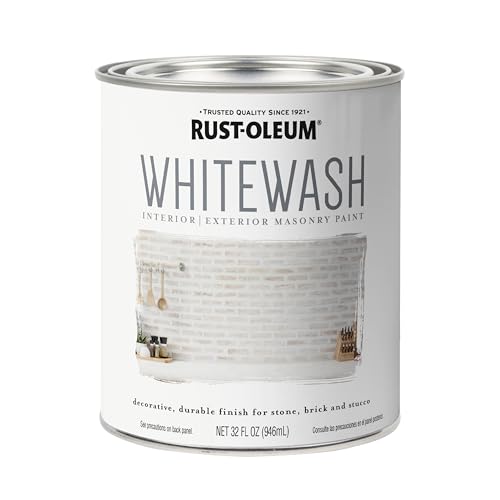
A self-priming and self-sealing formula means you can apply this paint directly to thirsty surfaces like old brick or rough stucco without a separate primer coat, saving time and effort. The ability to dilute it with water lets you dial in exactly how much coverage or transparency you want. That is especially handy if you’re trying to brighten up a textured wall without hiding its natural character. The water-based formula is low odor and low VOC, so the painting experience is more comfortable than with solvent-based alternatives.
The matte finish, while smooth and subtle, can be less forgiving of dirt or splashes than a glossier paint, so high-traffic areas may need more frequent cleaning. Compared to the KILZ Basement and Masonry Waterproofing Paint, which is also designed for interior/exterior concrete, brick, and cinder block walls, this Rust-Oleum option is self-priming and self-sealing and lets the surface texture show through. It comes in a quart size, which covers less area than a gallon.
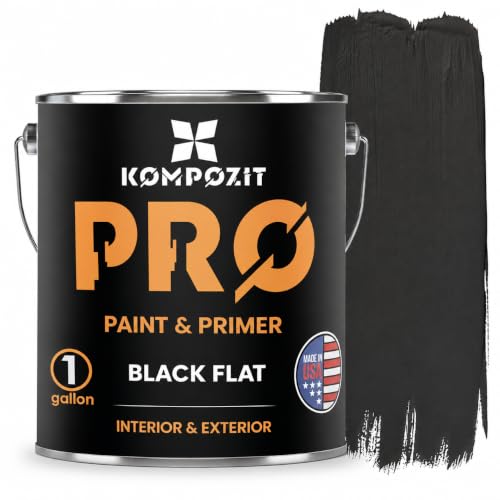
KOMPOZIT Acrylic Paint & Primer In One
What We Like
- Low VOC, low odor formula
- Paint and primer in one
- Fast drying, recoat in 2-4 hours
- Washable, scrubbable flat finish
Trade-offs
- Only available in black
- Not a waterproofing or masonry sealer
With 300-400 sq. ft. of coverage per gallon, this paint-and-primer combo can cover a typical wall section in one coat if the surface is properly prepared, thanks to the high-performance binder that helps adhesion. The low-odor, low-VOC formula makes it a practical choice for indoor spaces where you want to avoid strong fumes, such as a basement or enclosed porch. It dries to the touch in about an hour and can be recoated in two to four hours at 77°F, so you can keep working without long delays. The scrubbable flat finish resists everyday wear and household cleaners, keeping its matte appearance over time.
This is a flat matte paint, not a waterproofing or sealing product. The KOMPOZIT offers a paint-and-primer combo with a low-sheen black finish, suited for properly prepared surfaces like walls, ceilings, and trim. It comes only in black, so it fits a specific color preference rather than every exterior project. For someone wanting a low-odor, low-VOC option that covers 300-400 sq. ft. per gallon and dries to the touch in about an hour, this gets the job done.
Product photos
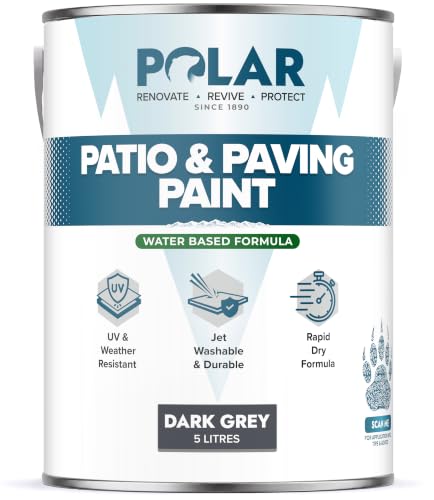
Polar Patio Paint Outdoor Floor Paint
What We Like
- UV and weather-resistant formula
- Dries in 3-4 hours
- Covers up to 55 m² per 5L
- Solvent-free polyurethane binder
Trade-offs
- Requires 2-3 coats for full coverage
- Must be applied above 10°C
- Only for dry weather application
A 5L tin covering up to 55 m² means you can refresh a medium patio or a set of pathways in one go without buying extra cans. This paint uses a polyurethane binder and a solvent-free formula that creates a pressure-washable, opaque finish, so it hides stains and discoloration while protecting the concrete from UV rays and weather. It is ideal for anyone who wants a colored, durable coating on patios, stone floors, driveways, or paving slabs, and who prefers a straightforward application with a brush, roller, or sprayer.
You need to apply two to three thin coats, and the paint only dries fully in 3-4 hours, so you have to plan around dry weather and temperatures above 10°C. Compared to Rust-Oleum Concrete & Garage Floor Paint, which offers a single-coat application and resists hot tires and chemicals, this Polar paint demands more patience and favorable conditions. But if you are working on a patio or garden pathway rather than a garage floor, the weather resistance and easy maintenance of this paint make it a natural fit for outdoor living spaces.
EVOLVE Porch & Floor Paint

What We Like
- Engineered for heavy foot traffic
- Scuff and scratch resistant finish
- Fast-drying in 1 hour
- Low VOC, easy soap-and-water cleanup
Trade-offs
- Requires proper surface prep for best adhesion
- Not formulated to stop moisture intrusion through basement walls
A fast-drying formula that dries to the touch in just one hour means you can finish a porch or walkway and start using it the same day. This paint is built for high-traffic areas, with a hard, resilient finish that resists scuffs, scratches, and marks from shoes or furniture. The low-VOC, water-based composition also makes it comfortable to apply in enclosed spaces like basements or mudrooms, and cleanup is as simple as soap and water. If you need a coating that stands up to daily use and repeated cleaning on exterior concrete, this is a strong match.
For dry, well-prepped concrete surfaces that see constant foot traffic, the durability and fast turnaround are clear advantages. But if your main concern is stopping water intrusion, you’ll want a product focused on that job instead.
Product photos
How We Evaluated Paints For Exterior Concrete Walls
Our evaluation is research-based, drawing from manufacturer technical data sheets, expert round-ups from building and painting professionals, and consistent patterns in owner feedback across thousands of reviews. We focused on what the specs and real-world experiences tell us about performance.
The four criteria that mattered most were hydrostatic pressure resistance, alkali resistance, adhesion to vertical surfaces, and weather durability. For exterior concrete, moisture is the primary enemy, so we prioritized paints that actively block water intrusion rather than just decorating the surface.
A research-led evaluation has limits: application conditions, surface preparation, and climate vary widely. What works for a dry Arizona wall may fail on a damp Pacific Northwest foundation. We recommend checking the manufacturer’s surface prep instructions carefully before buying.
What To Look For In Paints For Exterior Concrete Walls
Choosing the right paint for exterior concrete means matching the product to the wall’s moisture exposure, surface texture, and traffic level. Here are the key factors to consider.
Look for a paint that resists hydrostatic pressure if your wall is below grade, has high alkali resistance for fresh concrete, and offers UV protection for sunny exposures. Self-priming formulas save time on rough surfaces.
Hydrostatic Pressure Resistance
For basement walls or retaining walls, hydrostatic pressure is the force of water in the soil pushing against the concrete. A paint rated for 10-15 PSI can resist this pressure and prevent moisture from wicking through. The KILZ Basement and Masonry Waterproofing Paint blocks 12 PSI, while the YKF Masonry Pro handles 15 PSI for the toughest below-grade conditions. If your wall has no moisture issues, a standard masonry paint without a pressure rating may suffice.
Alkali Resistance
Fresh concrete and mortar are highly alkaline, with pH levels often above 12. Standard paints can react with the alkali, causing saponification and peeling. Look for paints specifically formulated to resist alkali, like the KILZ Self-Priming Masonry Stucco and Brick Paint (resists up to pH 12.0) or the INSL-X WaterBlock (resists up to pH 13). If your concrete is cured for a sufficient period, alkali resistance is less critical, but it is still a safety net.
Surface Texture and Finish
Rough stucco, smooth poured concrete, and porous cinder block each need different paint formulations. Self-priming paints like the KILZ Self-Priming Masonry Stucco and Brick Paint work well on textured surfaces, while flat finishes hide imperfections better than satin or gloss. For smooth walls, a paint with a higher sheen is more scrubbable and stain-resistant.
- Check if the paint is designed for vertical or horizontal surfaces; some are one or the other.
- Confirm the recommended application temperature range, usually 50-90°F.
- Look for a low-VOC label if you are sensitive to fumes or painting in a confined area.
- Verify coverage rate per gallon; porous surfaces may need more paint.
- Ensure the paint is compatible with your surface (concrete, stucco, brick, or block).
A rule of thumb: if you can scratch the old paint off with a fingernail, it needs to be removed before applying a new coating.
Paints For Exterior Concrete Walls Compared
The table below compares all 10 paints on key specs, including pressure rating, finish type, and best use case.
| Product | Use | Surface | Dry Time |
|---|---|---|---|
| KILZ Basement and Masonry Waterproofing Paint | Interior & Exterior | Concrete, brick, cinder block, stucco, masonry | 1 hour to touch, 4 hours to recoat |
| Rust-Oleum Concrete & Garage Floor Paint | Interior & Exterior | Concrete, garage, driveway, patio | N/A |
| KILZ Self-Priming Masonry Stucco and Brick Paint | Interior/Exterior | Concrete, brick, and tile | N/A |
| INSL-X WaterBlock Acrylic Masonry Waterproofer Paint | Interior and exterior | Concrete walls, cinder blocks, stucco, brick, masonry | Fast Drying |
| INSL-X TuffCrete Waterborne Acrylic Concrete Stain Paint | Interior/exterior | Interior/exterior vertical or horizontal masonry | Fast drying |
| YKF Masonry Pro Foundation & Basement Waterproofing Sealer | Indoor And Outdoor | Masonry walls | 2 hours before handling |
| Rust-Oleum Whitewash Masonry Paint | Interior & Exterior | Stucco, stone, brick, wood | N/A |
| KOMPOZIT Acrylic Paint & Primer In One | Interior & exterior | Walls, ceilings, trim, drywall, concrete | Touch dry in 1 hr |
| Polar Patio Paint Outdoor Floor Paint | Outdoor | Concrete, stone, patios, driveways | 3-4 hours |
| EVOLVE Porch & Floor Paint | Interior & Exterior | Wood, concrete, masonry, previously painted | 1 hour to touch |
Frequently Asked Questions
What is the best paint for exterior concrete walls that are below grade?
The KILZ Basement and Masonry Waterproofing Paint is the top choice for below-grade walls, as it blocks up to 12 PSI of hydrostatic pressure. For even higher pressure resistance, the YKF Masonry Pro Foundation & Basement Waterproofing Sealer handles 15 PSI but covers less area per gallon.
Can I use garage floor paint on vertical concrete walls?
No. The Rust-Oleum Concrete & Garage Floor Paint is designed for horizontal surfaces and will not adhere properly to vertical walls. For vertical exterior concrete, choose a masonry paint formulated for walls, such as the INSL-X TuffCrete Waterborne Acrylic Concrete Stain Paint.
Do I need to prime concrete before painting?
It depends on the paint. Self-priming paints like the KILZ Self-Priming Masonry Stucco and Brick Paint and the KOMPOZIT Acrylic Paint & Primer In One eliminate the need for a separate primer. For other paints, a dedicated masonry primer improves adhesion and prevents alkali burn-through.
How long does exterior concrete paint last?
With proper surface preparation and application, a quality masonry paint can last 5-10 years on vertical walls. High-traffic horizontal surfaces like porches and patios may need recoating every 2-4 years. Factors like sun exposure, freeze-thaw cycles, and moisture levels affect longevity.
What is the difference between concrete paint and concrete stain?
Concrete paint forms a protective film on the surface, offering waterproofing and a uniform color. Concrete stain penetrates the pores, creating a translucent, mottled finish that does not peel but offers less moisture protection. The INSL-X TuffCrete can be used as either a one-coat stain or a two-coat opaque paint.
The Bottom Line
For most homeowners painting exterior concrete walls, the KILZ Basement and Masonry Waterproofing Paint is the best overall choice. It balances strong hydrostatic pressure resistance, low odor, and fast drying time, making it suitable for both below-grade basements and above-ground walls in wet climates. If your wall is above grade and dry, the KILZ Self-Priming Masonry Stucco and Brick Paint saves a step with its self-priming formula.
If you are painting a horizontal surface like a patio or garage floor, the Rust-Oleum Concrete & Garage Floor Paint or the EVOLVE Porch & Floor Paint are better suited for foot traffic and weather. For budget-conscious shoppers, the Rust-Oleum Whitewash Masonry Paint offers a self-priming, low-VOC option for porous walls.
The single most important factor is surface preparation. No paint can fix a dirty, cracked, or damp wall. Clean thoroughly, repair cracks with hydraulic cement, and let the concrete cure fully before painting. That step determines whether your paint job lasts five years or fifteen.
