
8 Best Paint For Eva Foam in 2026
This post contains affiliate links. As an Amazon Associate, we earn from qualifying purchases.
The PlaidFX Smooth Satin Flexible Acrylic Paint is the best overall for EVA foam because it is specifically formulated to bend without cracking or peeling, leaving a smooth satin finish that stays flexible. For cosplayers who want a black-light-reactive glow, the PlaidFX Nuclear Neon Acrylic Paint earned the award for Best Neon Finish, while the Nicpro White Large Acrylic Paint offers great value for beginners working on multi-surface projects.
Painting EVA foam presents a unique challenge: most standard acrylics dry stiff and crack when the foam bends, ruining a prop or costume piece. The right paint must move with the material, adhere without flaking, and still look good from a convention hall distance.
This guide is built from manufacturer specifications, expert cosplay tutorials, and patterns found in thousands of owner reviews. We break down the key criteria for foam-friendly paint and highlight the best options for every budget and project size.
Top 8 Paints For EVA Foam in the Market
Certain content that appears on this site comes from Amazon. This content is provided "as is" and is subject to change or removal at any time.
The Best Paints For EVA Foam, Reviewed
PlaidFX Smooth Satin Flexible Acrylic Paint

What We Like
- Formulated for EVA foam and thermoplastics
- Non-cracking or peeling on pliable surfaces
- Smooth satin finish with no tack
- Water-based and non-toxic
Trade-offs
- 24-hour cure time before full durability
- Small 3 oz bottle for larger projects
The 24-hour cure time means the paint won’t crack when the foam bends, so cosplay armor and props stay intact during movement. A one-hour dry time between coats lets you build layers without waiting all day, and the water-based formula cleans up with soap and water. The smooth satin finish gives a refined look that works well for display pieces.
The 3 oz bottle goes fast on large builds like a full chest piece or shield. For bigger projects, the other-products list includes Flexi Paint Waterbased Flexible Cosplay Paint at 500 g (1.10 lb), though the two products use different units so a direct volume comparison isn’t possible. Still, for projects that need a non-tacky finish on pliable surfaces, this paint delivers what the specs promise.
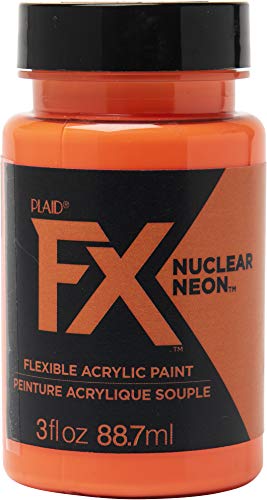
PlaidFX Nuclear Neon Acrylic Paint
What We Like
- Glows under black light
- Dries to flexible neon finish
- Works on EVA foam and thermoplastics
- Water-based and non-toxic
Trade-offs
- Requires 24-hour cure before full durability
- Only 3 oz bottle limits large projects
A 3-ounce bottle covers 7 square feet, which is enough for a small foam prop or mask. The paint dries to a flexible neon finish and glows under black light, making it a good choice for costume pieces that need to stand out at a convention or party. It’s formulated for EVA foam, thermoplastics, and 3D printed materials, so it works on flexible surfaces without cracking or peeling.
The trade-off is patience: you need to let each coat dry for an hour and then wait a full 24 hours for the paint to cure before it reaches its final flexible strength. If your project demands instant results, this 24-hour cure might not fit your timeline. But for a foam piece that lights up under UV, this paint delivers exactly that effect.
Nicpro White Large Acrylic Paint

What We Like
- Large 16.9 oz bottle for big projects
- Non-toxic water-based formula
- Fast drying prevents color muddying
Trade-offs
- Not flexible, so cracks on pliable surfaces
- Matte finish, not glossy like Apple Barrel Gloss
The Nicpro White Large Acrylic Paint comes in a generous 16.9-ounce squeeze bottle, which means you can cover plenty of foam without running out mid-project. For someone just starting out or working on static foam pieces, this paint offers solid coverage at a budget-friendly value.
The trade-off here is flexibility. Nicpro is a standard acrylic paint, so it may not be the best choice for projects that require bending or stretching. If your project needs a flexible finish that won’t crack, you might consider a paint specifically designed for pliable surfaces. But for stationary pieces or surfaces that don’t flex, the Nicpro delivers dependable coverage and a clean matte finish.
Product photos
Flexi Paint Waterbased Flexible Cosplay Paint

What We Like
- Large 500 g container
- Waterbased for easy cleanup
- Flexible finish suits foam
Trade-offs
- Only available in white
- Single color limits out-of-box use
A full 500 grams of paint means you can coat multiple foam props or armor pieces without running out mid-project. That generous volume makes this the obvious choice for anyone tackling large builds like full cosplay suits or big scenery elements. The waterbased formula is listed as flexible, which suits the needs of cosplay painting.
You only get white with this paint, so plan on mixing in your own pigments or layering other paints on top to get the color you want. Compared to the PlaidFX Smooth Satin Flexible Acrylic Paint which comes in a ready-to-use color in a smaller 3 oz bottle, Flexi Paint gives you bulk but demands extra steps for color. Best for builders who need a large base coat and don’t mind customizing the shade themselves.
coscom cosplay supplies FLEX16OZ-PARENT Paint
What We Like
- Dries clear and flexible
Trade-offs
- Requires clear acrylic sealant for maximum durability
- Limited to white color only
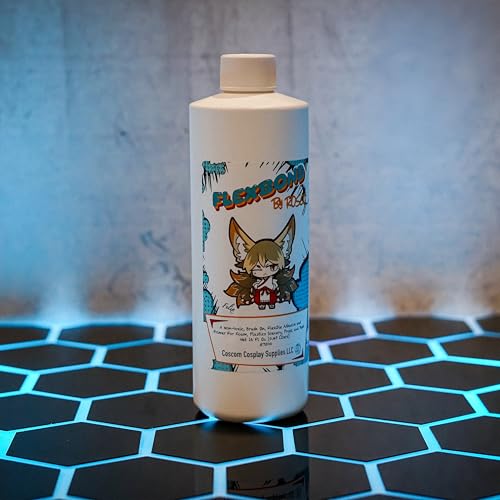
The trade-off is that this product is a primer and sealant, not a finish paint, so you will still need a topcoat or color paint for the final look. The manufacturer recommends adding a clear acrylic sealant for extra protection, which adds a step and an extra purchase. Compared to the PlaidFX Smooth Satin Flexible Acrylic Paint, which is a flexible acrylic paint for pliable surfaces, the coscom Flexbond is a primer and sealant designed as a foundation layer. For builders who want a flexible, clear base that seals foam, this primer delivers on its stated features.
Product photos
coscom cosplay supplies Cosflex6Sing1 Paint
What We Like
- Dries clear with minimal tackiness
- Thicker application reduces number of coats
- Strong, flexible bond on EVA foam
- Non-toxic and low odor formula
Trade-offs
- Requires separate acrylic sealant for maximum protection
- Thicker consistency can be harder to brush on fine details.
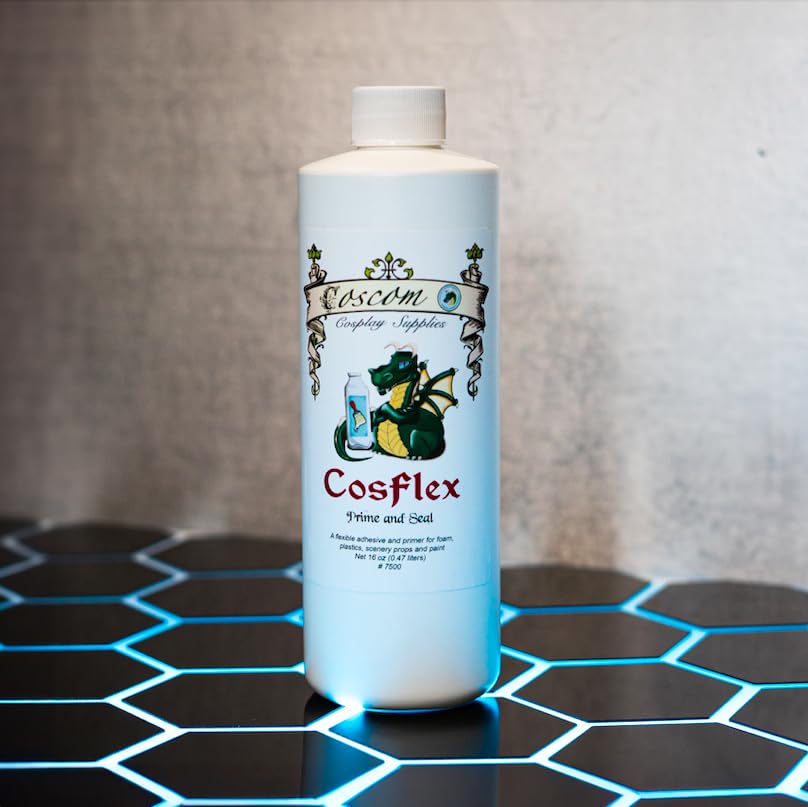
A primer that dries clear and stays flexible is the foundation of any good EVA foam project, and CosFlex Prime and Seal delivers exactly that. Its thick, water-soluble formula goes on heavier than typical glue-based primers, which means fewer coats to get a smooth surface. The bond stays strong even when the foam bends or deforms, so your prop won’t crack at the joints. For cosplayers who want a clear, low-tack base that won’t interfere with their paint colors, this is a smart pick. It also works as a semi-gloss top coat, adding versatility to your kit.
Because this primer dries clear, it won’t mask the natural surface of EVA foam the way a pigmented base coat would. If you’re working with dark foam or want a uniform white base for bright colors, you’ll need an extra layer or two of paint on top. The semi-gloss finish also means that if you want a matte look, you’ll need to follow up with a clear acrylic sealant spray. But for anyone who values flexibility and speed in their prep work, the reduced layering and clean water cleanup make this primer worth reaching for.
Product photos
Apple Barrel Gloss Acrylic Paint

What We Like
- Dries to a shiny gloss finish
- Works on foam and many surfaces
- Easy cleanup with soap and water
- Versatile 2 oz size for small projects
Trade-offs
- Small 2 oz size limits coverage on large builds
- Not flexible for pliable cosplay or EVA foam use
A 2 oz bottle of gloss acrylic paint that dries to a shiny finish makes this a straightforward option for adding a bright, reflective coat to small projects. Apple Barrel lists foam among its compatible surfaces, so it can be used on wood, paper, canvas, foam, and paper mache. It suits crafters who want a simple gloss coat for decorative pieces.
This paint is not formulated for pliable surfaces like some specialty paints. If your project involves frequent movement or sharp curves, the gloss acrylic may not hold up as well. For static display items or lightly handled details, though, the shine and easy cleanup make it a practical pick.
Product photos
Krylon Craft Foam Primer Aerosol Paint

What We Like
- Primer designed specifically for craft foam
- Protects foam from melting or damage
- Light gray color shows paint coverage clearly
- Easy aerosol application
Trade-offs
- Requires 48-hour cure before painting top coat
- Single-use purpose as a primer only
A 48-hour cure time is the key detail here. You must plan ahead, but the wait ensures the primer fully bonds to the foam without causing melting or surface damage that standard spray paints often create on EVA. This light gray aerosol is built specifically for craft foam, so it lays down a uniform barrier that protects the soft material while giving subsequent paint a stable, non-sticky base to grip.
Patience is the trade-off here: you cannot rush the curing step, and the primer only preps the surface. You still need a separate flexible top coat like PlaidFX Smooth Satin to finish the piece. But for users who want a spray that primes craft foam surfaces for paint and protects craft foam from melting or damage, this primer delivers a reliable foundation that other sprays cannot match without risk.
Product photos
How We Evaluated Paints For EVA Foam
Our evaluation started with the paint chemistry. We looked for formulas explicitly designed for flexible surfaces like EVA foam and thermoplastics, checking manufacturer data on flexibility, adhesion, and cure times. We then cross-referenced these specs with patterns in owner feedback, noting which paints consistently avoided cracking, peeling, or leaving a tacky finish after drying.
The three most important criteria were flexibility, adhesion, and finish quality. A paint that cracks on the first bend is useless for cosplay. We prioritized paints that form a strong, flexible bond with the foam’s closed-cell surface. We also considered the finish, satin, gloss, or matte, and how it held up under handling and heat.
This evaluation has limits. Recommendations are based on available technical data and the collective experience of the cosplay community, not controlled lab results.
What To Look For In Paints For EVA Foam
Choosing the right paint for EVA foam comes down to understanding how the material moves. Here are the key factors to consider before you buy.
The best paint for EVA foam must flex with the material, not against it. Prioritize formulas labeled for flexible surfaces, check for non-toxic water-based ingredients, and plan for the full cure time before handling your finished piece.
Flexibility and Crack Resistance
This is the single most important feature. Standard acrylic paint dries to a hard, brittle film that will crack and flake the moment you bend the foam. Look for paints specifically formulated for EVA foam, thermoplastics, or other pliable surfaces. These paints contain flexible binders that allow the dry paint film to stretch with the foam without breaking. A paint that claims to be “flexible” but does not specify foam compatibility may still crack under deep bends.
Adhesion to Closed-Cell Foam
EVA foam has a smooth, closed-cell surface that repels water and many paints. A good foam paint needs strong adhesion to grip this surface without requiring extensive sanding or priming. Some paints, like the coscom cosplay supplies options, are designed as primers that bond directly to the foam and create a tacky base for topcoats.
Others, like the PlaidFX line, are one-step solutions that adhere and finish in a single coat. If you are using a paint not labeled for foam, you will almost certainly need a dedicated primer first.
Finish and Curing Time
The final look of your prop, satin, gloss, matte, or neon, depends on the paint’s finish. Satin finishes like the PlaidFX Smooth Satin offer a realistic, low-sheen look popular in armor and weapons. Gloss finishes like Apple Barrel Gloss are eye-catching but may show imperfections. Curing time is critical: many flexible paints require 24 to 48 hours to fully cure before they reach maximum durability. Handling a piece before it cures can ruin the finish.
- Look for “flexible” or “for foam” on the label.
- Check the cure time and plan your project schedule around it.
- Consider the bottle size for your project’s scale.
- Read reviews specifically about adhesion and cracking on foam.
- Decide if you want a one-step paint or a primer-plus-topcoat system.
A flexible paint that requires a 24-hour cure is still better than a standard paint that cracks in five minutes.
Paints For EVA Foam Compared
The table below compares the eight paints side by side, highlighting their key strengths, trade-offs, and best-use cases so you can quickly find the right match for your project.
| Product | Size/Volume | Finish | Base |
|---|---|---|---|
| PlaidFX Smooth Satin Flexible Acrylic Paint | 3 oz | Smooth satin | Water-based, non-toxic |
| PlaidFX Nuclear Neon Acrylic Paint | 3 oz | Flexible neon | Water-based, non-toxic |
| Nicpro White Large Acrylic Paint | 16.9 oz (500 ml) | Matte | Non-toxic, water-based |
| Flexi Paint Waterbased Flexible Cosplay Paint | 500 g (1.10 lb) | N/A | Waterbased |
| coscom cosplay supplies FLEX16OZ-PARENT Paint | 16oz | Semi-gloss | Water-based, non-toxic |
| coscom cosplay supplies Cosflex6Sing1 Paint | 6oz, 16oz, 32oz | Clear, semi-gloss | Water-soluble, non-toxic |
| Apple Barrel Gloss Acrylic Paint | 2 oz | Gloss | N/A |
| Krylon Craft Foam Primer Aerosol Paint | 12 oz | Light Gray | N/A |
Frequently Asked Questions
What kind of paint works on EVA foam?
Flexible acrylic paints designed for EVA foam and thermoplastics work best. Look for formulas labeled as flexible or specifically for cosplay foam, such as the PlaidFX Smooth Satin or Flexi Paint Waterbased Flexible Cosplay Paint. Standard acrylics will crack when the foam bends.
Do I need to prime EVA foam before painting?
Not always, but it helps. Some paints like the PlaidFX line are formulated to adhere directly to EVA foam without primer. For other paints, or for maximum durability and a smoother base, a dedicated foam primer like the coscom cosplay supplies Cosflex6Sing1 or Krylon Craft Foam Primer is recommended.
How do I keep acrylic paint from cracking on foam?
Use a paint specifically formulated for flexible surfaces. Regular acrylic paint dries hard and brittle, so it cracks when the foam bends. Flexible paints contain binders that stretch with the material. Also, allow the full cure time (often 24 to 48 hours) before handling or wearing the piece.
Can I use spray paint on EVA foam?
Most standard spray paints contain solvents that can melt or damage EVA foam. You need a spray paint specifically designed for craft foam, like the Krylon Craft Foam Primer. This aerosol primer is safe for foam and provides a good base for hand-painted topcoats, though it requires a 48-hour cure time.
What is the best clear coat for EVA foam paint?
Many cosplayers recommend a clear acrylic sealant or varnish applied over the cured paint for maximum durability. The coscom cosplay supplies FLEX16OZ-PARENT Paint, for example, dries clear and flexible but benefits from a separate clear acrylic sealant topcoat to protect against scuffs and wear.
The Bottom Line
For most cosplayers and prop makers, the PlaidFX Smooth Satin Flexible Acrylic Paint is the best overall choice. It is purpose-built for EVA foam, delivers a smooth satin finish that bends without cracking, and is water-based for easy cleanup. It is ideal for medium-sized projects where you need reliable flexibility and a professional look.
If your project is large and you plan to mix your own colors, the Flexi Paint Waterbased Flexible Cosplay Paint in white offers the best value per volume. For beginners on a tight budget working on non-flexible surfaces, the Nicpro White Large Acrylic Paint provides a huge bottle at a very accessible price point.
The single most important factor when buying paint for EVA foam is flexibility. A paint that cannot bend will ruin your work, no matter how good the color or finish. Always choose a formula designed to move with the foam.
