
7 Best Paint For Concrete Blocks in 2026
This post contains affiliate links. As an Amazon Associate, we earn from qualifying purchases.
The best paint for concrete blocks is KILZ Basement and Masonry Waterproofing Paint, which blocks up to 12 PSI of water pressure and works on both interior and exterior masonry. For rough surfaces, we like the KILZ Self-Priming Masonry Paint, and the SENVEN Acrylic Concrete Floor Paint is a solid budget-friendly choice for horizontal surfaces.
Painting concrete block isn’t like painting drywall. The porous, textured surface needs a paint that bonds well, resists alkali, and handles moisture, especially in basements or garages. Choosing the wrong paint can lead to peeling, bubbling, or failed waterproofing.
This guide is research-based, combining manufacturer specifications, expert round-ups, and patterns in owner feedback to help you pick the right paint for your project. We focused on adhesion, moisture resistance, durability, and ease of application.
Top 7 Paints For Concrete Blocks in the Market
Certain content that appears on this site comes from Amazon. This content is provided "as is" and is subject to change or removal at any time.
The Best Paints For Concrete Blocks, Reviewed
KILZ Basement and Masonry Waterproofing Paint

What We Like
- Blocks up to 12 PSI water pressure
- Low-odor formula for indoor use
- Interior and exterior versatility
- Alkali-resistant finish for masonry
Trade-offs
- Requires hydraulic cement on cracks first
- Full cure takes 7-14 days
Up to 12 PSI of water pressure is blocked by this paint, which keeps moisture from pushing through basement concrete or masonry walls. The nanotechnology-based formula is meant for damp areas below grade or outside. The low-odor paint dries in an hour and accepts a recoat in four, so you can finish a wall in one day without heavy fumes.
The catch is that it won’t stop active leaks, and you have to fill holes and cracks with hydraulic cement first. The surface isn’t washable until the full cure finishes in 7 to 14 days. Compared to the INSL-X WaterBlock Acrylic Masonry Waterproofer, which also works on below-grade walls, KILZ has a stated 12 PSI rating and a four-hour recoat time, which matters for projects where moisture resistance and a quick turnaround are priorities.
KILZ Self-Priming Masonry Paint

What We Like
- Self-priming for textured surfaces
- Water-repellent and alkali-resistant up to pH 12.0
- Works on smooth, rough, and textured masonry
- Easy cleanup with soap and water
Trade-offs
- Flat finish shows dirt more than gloss
- Coverage varies widely with texture (250-400 sq ft)
This paint resists alkali up to pH 12.0, which means it won’t break down on concrete or stucco surfaces where alkaline salts are common. The self-priming acrylic latex formula saves you a separate primer step, and it’s designed to accentuate rough or uneven masonry rather than flatten it out. For anyone painting a cinder block wall, a stucco facade, or a brick fireplace, this paint grabs onto the nooks and crannies while repelling water, so the finish looks natural and holds up outside.
The trade-off is the flat finish, which tends to show scuffs and dust more than a satin or semi-gloss would. So it’s not the best for high-traffic floors or garage slabs where you’ll be wiping often. Compared to the Rust-Oleum Concrete & Garage Floor Paint, which is built for hot-tire resistance and chemical spills, this KILZ is better suited for vertical textured walls where adhesion and alkali protection matter more than abrasion resistance. Stick with it for textured masonry walls and leave the floors to a dedicated floor paint.
Product photos
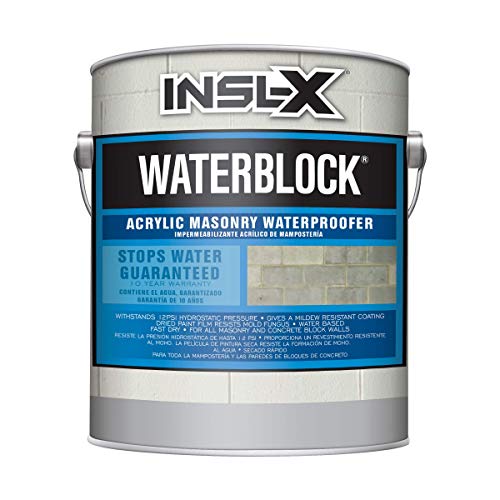
INSL-X WaterBlock Acrylic Masonry Waterproofer
What We Like
- Withstands up to 12 psi hydrostatic pressure
- High alkali resistance up to pH-13
- Fast-drying waterproof paint
- Suitable for interior and exterior masonry
Trade-offs
- Only for vertical surfaces, not floors
- Requires surface and air temperature between 50-90°F
- Must review label for proper prep and application
This coating withstands up to 12 psi hydrostatic pressure and resists alkali up to pH-13. That makes it a practical choice for below-grade concrete and cinder block where moisture and efflorescence are common. It’s a fast-drying water-based formula that works indoors and out, so you can use it on basement walls, foundations, and retaining walls without waiting days between coats or dealing with strong fumes in a tight space.
The product is designed for vertical interior and exterior concrete walls, so it won’t suit basement floors or sloped driveways. If you need a floor coating, consider a product like Rust-Oleum Concrete & Garage Floor Paint, which is listed as a paint and primer in one for concrete floors. Application requires surface and air temperatures between 50 and 90°F, which may limit when you can paint in unheated basements or during hot summer days. For vertical waterproofing where pressure and alkalinity are concerns, the INSL-X WaterBlock offers the features needed, but careful attention to prep and conditions is necessary.
Product photos
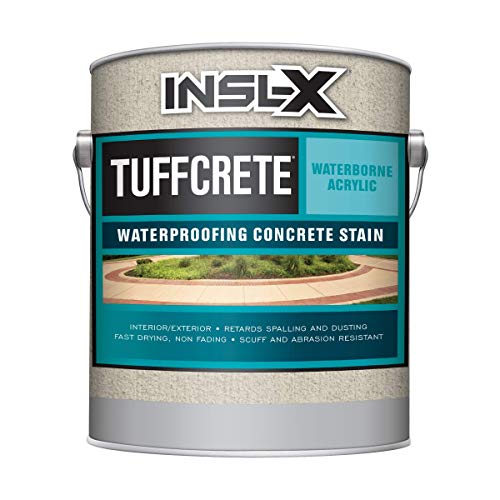
INSL-X TuffCrete Acrylic Concrete Stain Paint
What We Like
- Works on vertical and horizontal masonry
- One-coat stain or two-coat opaque finish
- Resists oils, grease, and cleaning detergents
- Fast-drying and non-fading formula
Trade-offs
- Cannot apply when surface is above 90 °F
- One coat gives a stain, not full opacity
- Requires careful surface prep per label
A 300-400 square foot per gallon coverage means a single gallon can handle a good-sized wall or patio section without constant trips back to the store. This paint is formulated for both vertical and horizontal masonry, so it pulls double duty on concrete block walls and floors alike. Its ability to go on as a one-coat stain or build to an opaque finish with two coats gives you control over the final look, whether you want a translucent wash or full coverage. Fast drying and resistant to oils, grease, and scrubbing, it holds up well in high-traffic or messy areas.
Temperature sensitivity is a real limitation: you cannot apply it when the surface climbs above 90 °F, which limits summer work to cooler parts of the day. If you need a single coat that hides completely, this product’s one-coat application is a stain, not a solid finish, so you will need a second coat for opacity. Compared to the KILZ Basement and Masonry Waterproofing Paint, which focuses on waterproofing, the INSL-X TuffCrete is built for versatility across surfaces, but it demands more attention to surface temperature and preparation.
Product photos
Rust-Oleum Concrete & Garage Floor Paint

What We Like
- Paint and primer in one saves time
- Resists hot tires, motor oil, grease, gasoline
- UV and weather resistant for interior/exterior use
- Easy cleanup with soap and water
Trade-offs
- Acrylic formula less durable than oil-based on heavy wear
- Not for masonry walls needing waterproofing
A single-coat acrylic formula that also acts as a primer means you can prep and paint concrete blocks in one pass, cutting project time significantly. This paint resists damage from hot tires, motor oil, grease, and gasoline on garage and driveway surfaces, and the UV- and weather-resistant satin finish holds up on driveways or patios without fading or peeling. If your concrete blocks live where vehicles roll and chemicals spill, this is the coating that handles it without extra steps.
A single coat may struggle to hide dark or heavily textured block surfaces, and the acrylic base is less durable than some oil-based alternatives for constant scraping or heavy machinery. For most garage floors, carports, and walkways, the convenience of a self-priming, weather-resistant finish outweighs that limitation. Just ensure the surface is clean and lightly etched before applying, and you’ll get a durable, easy-to-clean floor that resists the daily grind.
Product photos
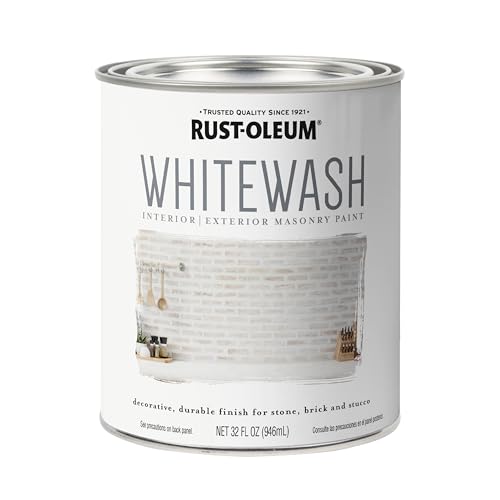
Rust-Oleum Whitewash Masonry Paint
What We Like
- Self-priming and self-sealing formula
- Customizable coverage by diluting with water
- Low odor for comfortable painting
- Works on porous surfaces like brick and stucco
Trade-offs
- Not designed for waterproofing or damp basements
- Not suitable for waterproofing damp basements
Skipping the separate primer and sealer steps saves time on projects where porous surfaces already demand patience, because the formula is self-priming and self-sealing. It brightens the appearance of stucco, stone, brick, and wood while letting the natural texture of those surfaces show through. The low odor and low VOCs make for a more comfortable painting experience indoors or out, and you get a smooth matte finish.
The ability to dilute this paint with water gives you control over how much of the surface texture shows through. Thinning it too much may require additional coats to reach the desired opacity, but that trade-off allows for a decorative finish that lets brick, stone, or wood grain remain visible. This approach works well on highly porous surfaces where you want to brighten the appearance without hiding the natural character. The self-priming and self-sealing formula simplifies preparation, and the low-odor, low-VOC composition makes indoor application more comfortable. Reviewers note that the smooth matte finish holds up on both interior and exterior walls.
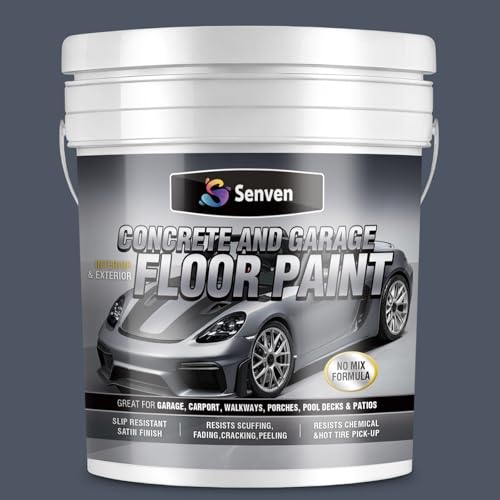
SENVEN Acrylic Concrete Floor Paint
What We Like
- Resists hot tire pickup and scuffing
- Works on interior and exterior surfaces
- Low-VOC, cleans up with soap and water
Trade-offs
- Residential use only, no forklift traffic
- Requires properly prepared porous concrete
Coverage is rated up to 120 square feet per gallon, so a single gallon can handle a small garage or porch floor under ideal conditions. The satin finish gives a clean, subtle sheen, and the acrylic formula resists hot tire pickup and scuffing. This water-based paint is low-VOC, applies easily with a roller or brush, and cleans up with soap and water, making it a practical choice for DIYers painting basement floors, driveways, or pool decks.
This coating is formulated for residential applications only, so it should not be used in commercial or industrial settings. It cannot withstand the weight or repeated pressure of forklift traffic, which means it is best suited for home garages, basements, and porches rather than workshops or business spaces. The acrylic formula resists hot tire pickup, scuffing, cracking, peeling, and fading, delivering a satin finish that holds up well under normal household conditions. For projects where heavy equipment or constant abrasion is expected, a more heavy-duty product would be necessary.
How We Evaluated Paints For Concrete Blocks
This evaluation drew on manufacturer data, technical specifications, and patterns found in owner feedback across many projects. We analyzed what makes a paint succeed or fail on concrete block surfaces.
The most important criteria were waterproofing ability (measured in PSI of hydrostatic pressure resistance), alkali resistance (essential for concrete’s high pH), and surface compatibility (vertical, horizontal, or both). We also considered coverage, drying time, and whether a separate primer is needed.
A research-led approach has limits: owner experiences vary with surface prep, climate, and application technique. We prioritized paints with clear, consistent specifications and strong owner-reported results for their intended use.
What To Look For In Paints For Concrete Blocks
Choosing paint for concrete blocks means balancing moisture protection, surface type, and durability. Here are the key criteria to consider.
Look for paint that resists alkali (pH 12 or higher), handles hydrostatic pressure if waterproofing is needed, and matches your surface, vertical walls need different paint than garage floors.
Waterproofing and Moisture Resistance
For basement walls or exterior foundations, hydrostatic pressure resistance is critical. Measured in PSI, a rating of 10-12 PSI means the paint can withstand significant water pressure from the outside. Paints without this rating are not designed for damp or wet conditions and may blister or peel.
Alkali Resistance
Fresh concrete and mortar have a high pH that can chemically degrade ordinary paint. A paint labeled alkali-resistant, often rated up to pH 12 or 13, will bond properly and not discolor or break down over time. This is non-negotiable for any concrete block project.
Surface Compatibility
Some paints are formulated only for vertical surfaces, while others work on floors and walls. Check the label carefully: a vertical-only paint on a garage floor will fail under foot and tire traffic. For horizontal surfaces, look for hot tire resistance and chemical spill protection.
- Verify the paint is for your surface type: vertical, horizontal, or both.
- Check the temperature range for application (usually 50-90°F).
- Confirm if the paint is self-priming or requires a separate primer.
- Look for low-VOC or low-odor formulas if painting indoors.
- Read the full cure time, some waterproofing paints need 7-14 days.
The single most important rule: prep the surface properly, clean, dry, and repair cracks before you paint.
Paints For Concrete Blocks Compared
The table below compares the seven paints across key specs so you can see at a glance which one fits your concrete block project.
| Product | Type | Coverage | Resistance |
|---|---|---|---|
| KILZ Basement and Masonry Waterproofing Paint | Waterproofing Paint | N/A | Alkali Resistant |
| KILZ Self-Priming Masonry Paint | Acrylic latex water-base | 250-400 sq ft/gal | Alkali Resistance Up to pH 12.0 |
| INSL-X WaterBlock Acrylic Masonry Waterproofer | Water-based acrylic | N/A | Alkali resistance – up to pH-13 |
| INSL-X TuffCrete Acrylic Concrete Stain Paint | Waterborne Acrylic | 300-400 sq ft per gallon | Detergents, oils, grease, scrubbing |
| Rust-Oleum Concrete & Garage Floor Paint | Acrylic, paint and primer in one | Single coat application | Hot tire, chemical, UV, weather resistant |
| Rust-Oleum Whitewash Masonry Paint | Self-priming, self-sealing | Customizable (dilutable with water) | N/A |
| SENVEN Acrylic Concrete Floor Paint | Acrylic | 120 sq ft per gallon | hot tire pickup, scuffing, cracking, peeling, and fading |
Frequently Asked Questions
Can you paint concrete blocks that are already painted?
Yes, but only if the existing paint is sound, no peeling, chipping, or moisture damage. Clean the surface thoroughly, sand glossy areas, and apply a bonding primer if needed. If the old paint is failing, it must be removed first.
What is the best paint for basement concrete block walls?
For basement walls, a waterproofing paint like KILZ Basement and Masonry Waterproofing Paint or INSL-X WaterBlock is best. These are designed to resist hydrostatic pressure and handle the high alkali content of concrete, preventing moisture damage and peeling.
Do I need to prime concrete blocks before painting?
It depends on the paint. Some paints, like the KILZ Self-Priming Masonry Paint, are self-priming and can go directly on clean concrete. Others require a separate primer, especially if you are covering a dark color or painting over patched areas.
How long does concrete block paint last?
With proper surface prep and the right paint, a concrete block paint job can last many years outdoors and longer indoors. The key is using a paint matched to your conditions, waterproofing paint for damp basements, and floor paint for garage slabs.
Can I paint concrete blocks in a garage?
Yes, but use a paint designed for garage floors, like Rust-Oleum Concrete & Garage Floor Paint. These formulas resist hot tire pickup, oil, and grease. Standard masonry paint will not hold up to vehicle traffic or chemical spills on a horizontal surface.
The Bottom Line
For most concrete block projects, the KILZ Basement and Masonry Waterproofing Paint is the best overall choice because it combines strong waterproofing, alkali resistance, and versatility for both interior and exterior walls. If you are painting rough or textured surfaces, the KILZ Self-Priming Masonry Paint saves a step on textured surfaces.
Budget-conscious shoppers painting a garage floor or porch should look at the SENVEN Acrylic Concrete Floor Paint, which resists hot tire resistance and scuffing at a more affordable price point. For basement walls needing heavy waterproofing, the INSL-X WaterBlock is the dedicated pick.
The most important factor is choosing a paint that matches your surface and moisture conditions, don’t use a floor paint expecting waterproofing on a wall.
