
10 Best Paint For Cinder Block Walls in 2026
This post contains affiliate links. As an Amazon Associate, we earn from qualifying purchases.
The best overall paint for cinder block walls is KILZ Basement and Masonry Waterproofing Paint, which blocks up to 12 PSI of water pressure while resisting alkali buildup common in masonry. For basement walls needing fast-drying protection, the INSL-X WaterBlock Acrylic Masonry Waterproofer Paint is a strong choice, while the YKF Masonry Pro Foundation Waterproofing Sealer handles up to 15 PSI for below-grade projects.
Painting cinder block presents unique challenges: the porous surface absorbs paint unevenly, alkali salts can cause blistering, and moisture intrusion can ruin a finish from behind. The right product must bond to the concrete, resist alkali, and handle the moisture conditions of your specific wall.
This guide is built from manufacturer specifications, expert recommendations, and patterns in owner feedback across ten top-rated products. We focus on what matters most for getting a durable, lasting finish on cinder block walls.
Top 10 Paints For Cinder Block Walls in the Market
Certain content that appears on this site comes from Amazon. This content is provided "as is" and is subject to change or removal at any time.
The Best Paints For Cinder Block Walls, Reviewed
KILZ Basement and Masonry Waterproofing Paint

What We Like
- Blocks up to 12 PSI water pressure
- Low-odor formula for easy application
- Resists alkali buildup in high-moisture areas
- Dries to touch in 1 hour
Trade-offs
- Requires hydraulic cement for below-grade cracks
- Full cure takes 7-14 days before washable
Up to 12 PSI of water pressure resistance means this paint stops moisture from pushing through basement walls and masonry surfaces, even in wet soil conditions. That kind of protection, paired with a low-odor formula that dries to the touch in an hour, makes it a strong choice for anyone waterproofing a cinder block wall indoors or out. It also resists alkali buildup, which keeps the finish looking clean in damp environments where other paints might blister or chalk. For a single product that handles both interior and exterior jobs without demanding extra primers or sealers, this is the one to reach for.
The trade-off is patience: full cure takes up to two weeks, so you cannot scrub or expose the surface to heavy moisture until then. If you need a faster-ready finish, INSL-X WaterBlock dries and cures more quickly, though it does not match the 12 PSI water resistance here. For most cinder block wall projects where stopping seepage is the priority, the wait is worth it.
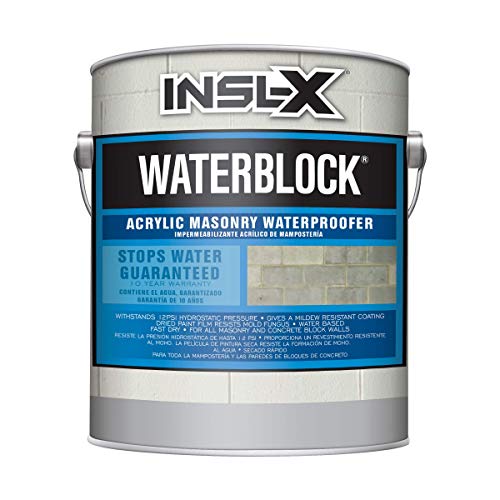
INSL-X WaterBlock Acrylic Masonry Waterproofer Paint
What We Like
- Withstands up to 12 psi hydrostatic pressure
- High alkali resistance up to pH-13
- Fast-drying water-based formula
- Suitable for interior and exterior walls
Trade-offs
- Paint only between 50°F and 90°F
- Heavy at 11.1 pounds for a gallon.
A 12 psi hydrostatic pressure rating means this paint can handle significant water pressure against basement walls. That makes it a strong choice for below-grade cinder block that sees occasional dampness or light seepage. The water-based acrylic formula dries quickly, so you can recoat and move on without long delays, and the high alkali resistance (up to pH-13) lets it bond to fresh masonry without the surface eating through the paint. This is the paint to reach for when your basement walls are dry most of the time but you want reliable protection from the occasional heavy rain or high water table.
The 12 psi rating is lower than the 15 psi offered by the YKF Masonry Pro, so if you face persistent groundwater pressure or known leaks, that extra margin may be worth considering. Also, the application temperature window of 50°F to 90°F means you cannot use it on a cold basement wall in winter or during a heatwave without planning around the weather. For most standard basement walls with typical moisture concerns, this INSL-X WaterBlock delivers dependable waterproofing.
Product photos
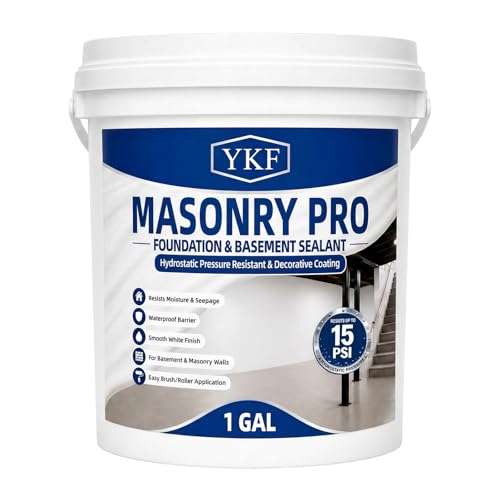
YKF Masonry Pro Foundation Waterproofing Sealer
What We Like
- Resists hydrostatic pressure up to 15 PSI
- Water-based polyurethane bonds to damp surfaces
- Smooth white finish conceals minor imperfections
- Suitable for below-grade foundation walls
Trade-offs
- Requires repairing active leaks before application
- Heavy at 8.8 pounds for a gallon
Fifteen PSI of hydrostatic pressure resistance is the standout number here, that’s serious protection for basement and foundation walls where water pushes hard against the surface. YKF Masonry Pro is built for below-grade conditions, using a water-based polyurethane formula that bonds to dry or even slightly damp masonry. The smooth white finish does double duty: it seals out moisture while refreshing old stained walls, making it a practical choice for anyone dealing with a damp basement or crawl space. Preparation matters, you’ll need to patch cracks and stop active leaks first, but for a DIY project, the brush-or-roller application keeps things straightforward.
With 15 PSI hydrostatic pressure resistance, this coating is built to handle serious water pressure against foundation walls, which is its main strength. The 1-gallon pail covers about 100 square feet per coat, and the manufacturer recommends a second coat as needed for full wall coverage. Plan your project around that coverage rate and the required surface preparation, and you’ll get a tough waterproof barrier that holds up where it matters most.
Product photos
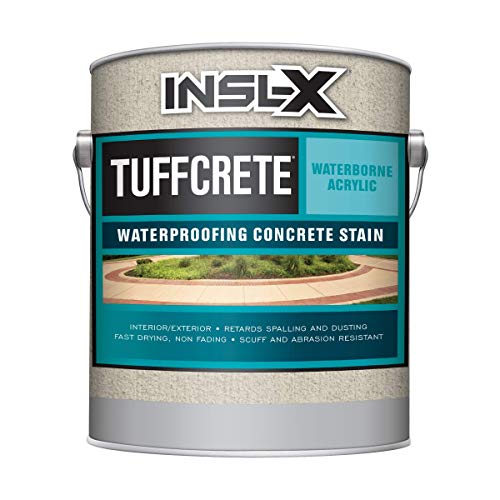
INSL-X TuffCrete Waterborne Acrylic Concrete Stain Paint
What We Like
- One-coat coverage as a stain
- Resists detergents, oils, grease, scrubbing
- Non-fading and durable
- Works on interior and exterior masonry
Trade-offs
- Requires surface temperature below 90°F to apply
- One coat gives a stain, not full opacity
A single gallon covers 300 to 400 square feet, so you can finish a typical cinder block wall in one pass if you want a stained look. That speed makes it a strong fit for someone who wants color and protection without the labor of a second coat. The acrylic formula resists cleaning detergents, oils, and grease, which matters for garage or basement walls that see abuse. It also dries fast and works both indoors and out, on vertical or horizontal surfaces, giving you flexibility across projects.
One coat delivers a stain, not a solid opaque finish. If you need full coverage, you will need a second coat, which cuts the per-gallon coverage in half. Compared to the KILZ Basement and Masonry Waterproofing Paint, this INSL-X is lighter at 9.9 pounds versus 12.5 pounds, making it easier to handle on a ladder or over a long day. But the KILZ is built specifically for waterproofing, while this product focuses on color and stain resistance. Choose this one when you want a durable, fast-drying color coat and do not need maximum moisture blocking.
Product photos
UGL Drylok Latex Base Masonry Waterproofer

What We Like
- Low odor latex formula
- Creates a durable waterproof barrier
- Brightens dark masonry surfaces
- Can be tinted with universal colorants
Trade-offs
- At 1.5 lb, very light coverage per gallon
A water-based latex formula means this waterproofer goes on with far less odor than oil-based alternatives, making it a comfortable choice for indoor basement or cinder block walls where ventilation is limited. It creates a durable waterproof barrier on interior and exterior masonry surfaces like concrete, brick, and stucco, and its bright white finish can lighten a dark wall. For anyone sensitive to strong fumes or working in a tight space, that low-odor advantage is the real draw.
KILZ Self-Priming Masonry Stucco and Brick Paint

What We Like
- Self-priming on textured masonry
- Alkali-resistant up to pH 12.0
- Works interior and exterior
- Cleans up with soap and water
Trade-offs
- Flat finish shows surface imperfections
- Coverage varies widely with texture
A self-priming formula that bonds directly to rough masonry, stucco, and brick means you skip the separate primer step entirely. That saves time on a cinder block wall that would otherwise need two coats of primer and paint. The acrylic latex base resists alkali up to pH 12.0, which matters for new concrete or block that can leach alkaline salts and ruin ordinary paint. For anyone painting a basement wall, a garden retaining wall, or an exterior brick facade, this is the kind of straightforward, grab-and-go solution that keeps the project moving without extra trips to the store.
This paint covers 250 to 400 square feet per gallon, depending on surface texture, so one gallon handles a small wall or a few columns. It is alkali-resistant up to pH 12.0, which means it stands up to the alkaline salts that often bleed through masonry and stucco. The flat finish gives a natural look on textured surfaces, but for below-grade or constantly damp walls, a dedicated waterproofing product from the same brand might be a better fit.
Product photos
Ames Block & Wall Liquid Rubber Waterproofer

What We Like
- Fills cracks up to ⅛ inch
- Up to 1800% elongation resists cracking
- Low odor and non-toxic
- Applies with sprayer, roller, or brush
Trade-offs
- Two coats recommended for best results
- 5-gallon pail is heavy at 47 pounds
The coating fills cracks up to ⅛ inch, which means it can bridge gaps that might otherwise let moisture through. With up to 1800% elongation, the film stretches as the surface shifts with temperature changes, so you are less likely to see new cracks form over time. That makes it a good fit for basements, retaining walls, and below-grade surfaces where movement and moisture are common. The low-odor, non-toxic formula also makes application more comfortable in enclosed spaces, and the thick consistency can be sprayed, rolled, or brushed on without thinning.
This product demands a commitment. Two coats are recommended, and at 47 pounds per 5-gallon pail, hauling it down basement stairs or around a foundation takes real effort. If your cinder block wall already has visible cracks or a history of seepage, the extra work pays off in a membrane that actually seals those gaps rather than just painting over them.
Classic Coatings Water-Based Masonry Sealer

What We Like
- Zero VOC, low odor formula
- UV-stable resists fading and yellowing
- Works indoors and outdoors
- Water-repellent within 24 hours
Trade-offs
- Slippery when wet on moisture-prone surfaces
- Coverage varies widely with surface conditions
This sealer forms a water-repellent barrier within 24 hours, so you can protect concrete, brick, or flagstone from moisture and dirt without worrying about the finish yellowing over time. The UV-stable formula resists fading, which matters for exterior surfaces that get direct sun. It’s water-based with zero VOCs and low odor, making it easy to apply indoors or out without strong fumes, and the matte look keeps the natural appearance of the surface.
The main trade-off is slipperiness when wet; on a pool deck or walkway that collects rain, you’ll want to add the Gator Grip additive the manufacturer mentions. Compared to KILZ Basement and Masonry Waterproofing Paint, which is listed as a masonry waterproofing paint, this sealer focuses on UV resistance and surface enhancement rather than heavy waterproofing. It’s a better fit for surfaces where sun exposure is the bigger concern than moisture blocking.
Product photos
BEHR PREMIUM Elastomeric Masonry Exterior Paint
What We Like
- Designed for masonry, stucco, and brick
- Exterior-grade durability
- Elastomeric formula bridges hairline cracks
Trade-offs
- No waterproofing or hydrostatic pressure claims
- No hydrostatic pressure rating for below-grade use
A single gallon of elastomeric paint covers a small masonry wall or foundation patch without forcing you to buy extra. The BEHR PREMIUM formula is intended for exterior masonry, stucco, and brick surfaces. It suits buyers who want an affordable elastomeric coating for above-grade walls where heavy waterproofing isn’t the priority.
For sealing a damp basement, a dedicated waterproofing product like KILZ Basement and Masonry Waterproofing Paint or INSL-X WaterBlock Acrylic Masonry Waterproofer Paint is the appropriate choice. Those products are formulated to handle hydrostatic pressure and moisture intrusion below grade, whereas an elastomeric coating is designed for above-grade masonry surfaces that need a flexible, crack-bridging finish. Reviewers consistently note that using the wrong type of coating on a damp basement wall can lead to peeling and failure, so matching the product to the specific moisture condition is essential for long-term performance.
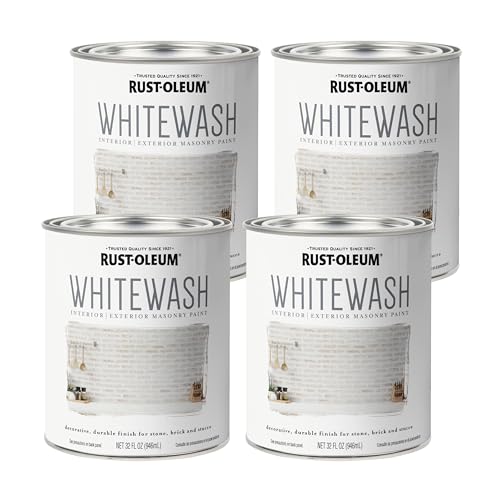
Rust-Oleum Whitewash Interior Exterior Masonry Paint
What We Like
- Self-priming and self-sealing for quick application
- Customizable coverage by diluting with water
- Low VOC and low odor for comfortable use
- Works on interior and exterior porous surfaces
Trade-offs
- Designed for porous surfaces, not for waterproofing
- Not formulated for waterproofing or moisture blocking
A self-priming and self-sealing formula means you can skip the extra coat and get straight to the fun part, watching that whitewashed look come to life on brick, stone, stucco, or wood. The ability to thin it with water gives you real control over how much of the natural texture shows through, which matters when you want that soft, matte finish rather than a heavy opaque layer. It suits anyone after a decorative, airy aesthetic on interior or exterior walls without the hassle of multiple products.
This is a decorative finish, not a heavy-duty waterproofing paint like KILZ Basement and Masonry Waterproofing Paint. If your wall is in a location that requires waterproofing protection, you will want a dedicated waterproofer first. But for projects where the goal is a bright, textured look, like a garden wall or a feature wall in a living room, this low-odor, water-based formula delivers that whitewashed effect with minimal fuss.
Product photos
How We Evaluated Paints For Cinder Block Walls
Our evaluation started with the manufacturer’s technical data sheets for each product, focusing on key performance claims like hydrostatic pressure resistance, alkali resistance ratings, and dry times. We cross-referenced these specifications with expert recommendations from building and masonry publications to understand which features matter most for different wall conditions.
The four most important criteria for cinder block paint are moisture resistance, alkali resistance, adhesion to porous masonry, and ease of application. Products that excel in waterproofing often trade off against those that prioritize fast drying or low odor.
This research-led approach helps you narrow the field, but actual results depend on proper surface preparation and your specific wall conditions.
What To Look For In Paints For Cinder Block Walls
Choosing the right paint means matching the product to your wall’s moisture exposure, surface condition, and desired finish. The table below summarizes the key differences between our top picks.
For dry interior walls, a self-priming masonry paint works well. For basement walls with moisture concerns, choose a product with a hydrostatic pressure rating of at least 12 PSI. Always repair structural cracks and clean the surface before painting.
Hydrostatic Pressure Rating
This number tells you how much water pressure the paint film can withstand from behind. For below-grade basement walls, look for a rating of 10 PSI or higher. The KILZ Basement and Masonry Waterproofing Paint and INSL-X WaterBlock both handle 12 PSI, while the YKF Masonry Pro Foundation Waterproofing Sealer goes up to 15 PSI. If your wall has active leaks, repair them with hydraulic cement before applying waterproofing paint.
Alkali Resistance
Cinder block and masonry surfaces contain alkali compounds that can react with some paints, causing discoloration, blistering, or peeling. Products with alkali resistance ratings, like the INSL-X WaterBlock rated up to pH-13 and the KILZ Self-Priming Masonry Paint rated to pH 12.0, are formulated to withstand this chemical attack. For walls in high-moisture environments where alkali migration is more likely, prioritize products with explicit alkali resistance claims.
Surface Preparation Requirements
- Clean the wall thoroughly to remove dirt, efflorescence, and loose material
- Repair cracks wider than ⅛ inch with hydraulic cement or crack filler
- Allow newly poured or patched concrete to cure for an adequate period
- Test for moisture by taping plastic sheeting to the wall for 24 hours
- Prime bare or highly porous cinder block unless using a self-priming product
A simple moisture test with plastic sheeting can save you from a failed paint job. If moisture collects under the plastic, address the source before painting.
Paints For Cinder Block Walls Compared
The table below compares the ten top-rated paints for cinder block walls across the features that matter most for a successful project.
| Product | Type | Use | Coverage |
|---|---|---|---|
| KILZ Basement and Masonry Waterproofing Paint | N/A | Interior and exterior | N/A |
| INSL-X WaterBlock Acrylic Masonry Waterproofer Paint | Water-based acrylic | Interior and exterior | N/A |
| YKF Masonry Pro Foundation Waterproofing Sealer | Water-based polyurethane | Indoor and outdoor | 100 sq ft per gallon |
| INSL-X TuffCrete Waterborne Acrylic Concrete Stain Paint | Waterborne Acrylic | Interior/exterior | 300-400 sq ft/gal |
| UGL Drylok Latex Base Masonry Waterproofer | Water-based latex | Interior/exterior masonry | N/A |
| KILZ Self-Priming Masonry Stucco and Brick Paint | Acrylic latex | Interior/exterior | 250-400 sq ft/gal |
| Ames Block & Wall Liquid Rubber Waterproofer | Liquid rubber | N/A | 1 gal per 100 sq ft per coat |
| Classic Coatings Water-Based Masonry Sealer | Water-Based | Interior and exterior | 300-500 sq. ft./gal |
| BEHR PREMIUM Elastomeric Masonry Exterior Paint | Elastomeric | Exterior | N/A |
| Rust-Oleum Whitewash Interior Exterior Masonry Paint | Water-based | Interior and exterior | Customizable with water dilution |
Frequently Asked Questions
What is the best paint for cinder block basement walls?
The INSL-X WaterBlock Acrylic Masonry Waterproofer Paint is a top choice for dry to moderately damp interior basement walls. It withstands up to 12 PSI of hydrostatic pressure and resists alkali up to pH-13, making it suitable for the challenging conditions found below grade.
Can you paint cinder block without primer?
Yes, if you choose a self-priming paint like the KILZ Self-Priming Masonry Stucco and Brick Paint. These products combine primer and paint in one coat, saving time on textured masonry surfaces. For bare or highly porous cinder block, a dedicated primer may still improve adhesion.
How do you prepare cinder block for painting?
Clean the surface with a wire brush and masonry cleaner to remove dirt and efflorescence. Repair any cracks wider than ⅛ inch with hydraulic cement or a crack-filling product. Let new concrete cure for an adequate period, and test for moisture by taping plastic sheeting to the wall for 24 hours before painting.
What paint works best for exterior cinder block walls?
For exterior walls, the BEHR PREMIUM Elastomeric Masonry Exterior Paint bridges hairline cracks and provides durable coverage above grade. For sunny climates, the Classic Coatings Water-Based Masonry Sealer resists UV fading and yellowing. Neither is designed for below-grade waterproofing.
Is waterproof paint necessary for cinder block?
Only if the wall is in contact with soil or experiences moisture intrusion. For dry interior walls above grade, a standard masonry paint or stain like the INSL-X TuffCrete Waterborne Acrylic Concrete Stain Paint provides durable coverage without waterproofing features. For basement walls, a waterproofing paint with a hydrostatic pressure rating is essential.
The Bottom Line
The KILZ Basement and Masonry Waterproofing Paint is the best overall choice for most cinder block projects, combining strong moisture resistance with a low-odor formula and fast drying time. It is ideal for homeowners sealing basement or exterior masonry walls against moisture intrusion without dealing with harsh fumes.
For below-grade walls facing persistent moisture and hydrostatic pressure, the YKF Masonry Pro Foundation Waterproofing Sealer handles up to 15 PSI and bonds to damp surfaces. Budget-conscious DIYers painting above-ground walls should consider the BEHR PREMIUM Elastomeric Masonry Exterior Paint for its affordable elastomeric formula.
The single most important factor in any cinder block paint project is proper surface preparation. Clean the wall, repair cracks, and test for moisture before applying any product, and your paint job will last for years.
