
10 Best Paint For Cement Block Walls in 2026
This post contains affiliate links. As an Amazon Associate, we earn from qualifying purchases.
For cement block walls, the best overall is KILZ Basement and Masonry Waterproofing Paint, which blocks up to 12 PSI of water pressure and resists alkali in high-moisture areas. For projects that don’t need a separate primer, the KILZ Self-Priming Masonry Paint is a strong choice. Those serious about waterproofing should consider the INSL-X WaterBlock Acrylic Masonry Waterproofer.
The challenge with cement block is its porous, often rough surface that can wick moisture and resist adhesion. A paint that seals, bonds, and handles alkali is essential, not just a decorative coat.
This guide is based on manufacturer specifications, expert round-ups, and patterns in owner feedback. We focus on the key factors that make a paint work on block: adhesion, moisture resistance, and coverage.
Top 10 Paints For Cement Block Walls in the Market
Certain content that appears on this site comes from Amazon. This content is provided "as is" and is subject to change or removal at any time.
The Best Paints For Cement Block Walls, Reviewed
KILZ Basement and Masonry Waterproofing Paint

What We Like
- Blocks up to 12 PSI water pressure
- Low-odor formula for enclosed spaces
- Dries to touch in 1 hour
- Alkali-resistant for high-moisture areas
Trade-offs
- Full cure takes 7-14 days
- Requires hydraulic cement for below-grade cracks
A 12 PSI water pressure rating means this paint can stop water infiltration on basement walls and retaining walls even under heavy rain or hydrostatic pressure. It suits homeowners who need a single coat that handles both interior and exterior masonry, from cinder block foundations to brick and stucco, without the strong solvent fumes typical of waterproofing paints. The low-odor formula dries to the touch in an hour, so you can finish a wall in a day without overwhelming the space with chemical smells.
The trade-off is patience: while it dries fast, the paint needs 7 to 14 days to fully cure before it becomes washable and reaches its peak durability. That means you cannot scrub or expose it to heavy moisture right away, which matters if you are sealing a damp basement wall in a hurry. Compared to the INSL-X WaterBlock Acrylic Masonry Waterproofer, which also targets waterproofing, KILZ’s higher PSI rating gives it an edge for below-grade walls, but the longer cure time demands planning ahead.
KILZ Self-Priming Masonry Paint

What We Like
- Self-priming, no separate primer needed
- Alkali-resistant up to pH 12.0
- Works on smooth, rough, and textured surfaces
- Easy cleanup with soap and water
Trade-offs
- Coverage varies widely with texture (250-400 sq ft)
- Not a waterproofing product like dedicated sealers
A 250-400 square foot per gallon coverage range means you can estimate your paint needs based on how rough your cement blocks are, with smoother walls needing less and heavily textured ones eating up more. This self-priming acrylic latex formula bonds directly to masonry, stucco, and brick without a separate primer layer. It resists alkali up to pH 12.0, which matters for fresh concrete or block walls that can leach alkaline salts and cause ordinary paint to peel.
This paint covers 250 to 400 square feet per gallon, depending on surface texture, so a single gallon can handle a small wall or a couple of medium-sized sections. The flat finish is designed to accentuate textured surfaces while achieving a natural look, and the formula offers water repellency. For damp basements or heavy rain exposure, the KILZ Basement and Masonry Waterproofing Paint is another option, but this one is self-priming and works on properly prepared interior and exterior masonry, stucco, or brick.
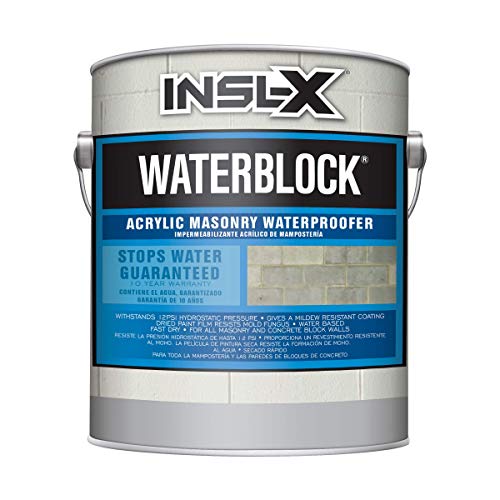
INSL-X WaterBlock Acrylic Masonry Waterproofer
What We Like
- Withstands up to 12 psi hydrostatic pressure
- High alkali resistance up to pH-13
- Water-based for easy cleanup
- Suitable for interior and exterior walls
Trade-offs
- Only for vertical surfaces, not horizontal floors
- Requires surface and air temperature between 50-90°F
A 12 psi hydrostatic pressure rating means this coating can handle serious water intrusion on basement walls and retaining walls. That is useful for anyone dealing with damp foundations or below-grade block walls where moisture is a persistent problem. The water-based formula cleans up with soap and water, and the high alkali resistance (up to pH-13) lets it bond to fresh concrete or block without worrying about chemical burn-through.
This is a dedicated waterproofer, not a decorative finish, it comes only in white and is designed for vertical surfaces, so it won’t work for floors or patios. If your main goal is stopping water from seeping through a cinder block wall, this is the product that delivers the performance you need.
Product photos
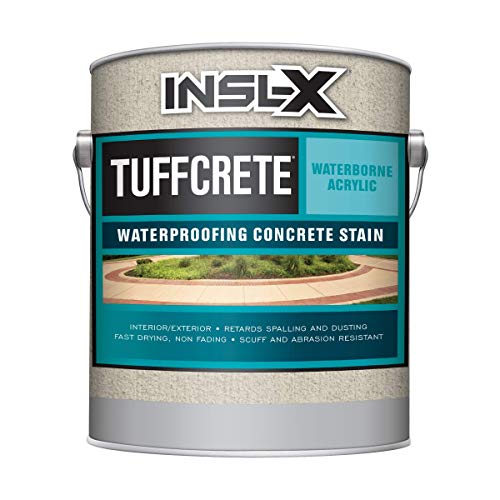
INSL-X TuffCrete Acrylic Concrete Stain Paint
What We Like
- One-coat stain or two-coat opaque finish
- Resists detergents, oils, grease, and scrubbing
- Non-fading, fast-drying acrylic formula
- Works on interior and exterior masonry
Trade-offs
- Cannot apply when surface temperature is above 90°F
- Only 300-400 sq ft per gallon for coverage
A single gallon covers 300 to 400 square feet, which means you can stain a typical basement wall or small exterior block wall without buying a second can. The acrylic formula resists detergents, oils, grease, and scrubbing, so it holds up well in garages, workshops, or any area that sees traffic and spills. Because it works as both a one-coat stain for a translucent look and a two-coat opaque finish, you get flexibility to match the final appearance to your project. This makes it a smart fit for anyone who wants a durable, low-maintenance surface that still lets some of the block texture show through.
The temperature limit is a factor: you cannot apply it when the surface is above 90°F, which can be a problem on hot summer days or on south-facing exterior walls. Compared to the INSL-X WaterBlock Acrylic Masonry Waterproofer, which focuses on waterproofing, TuffCrete is built for color and durability rather than moisture blocking. If your main concern is keeping damp basement walls dry, the WaterBlock line is a better match. But for a stain or opaque finish that cleans up easily and lasts, this paint delivers exactly what the name promises.
Product photos
Rust-Oleum Painter's Touch Latex Paint

What We Like
- Works on wood, metal, plaster, masonry, ceramic
- Low-odor water-based acrylic formula
- Fast drying in 30 minutes
Trade-offs
- Requires sanding and degreasing before application
- Quart size covers only up to 120 sq ft
Up to 120 square feet of coverage comes in each two-pack of quarts, so you can tackle a small accent wall or a few sections of wood and metal trim without buying extra cans. The water-based acrylic formula resists chips and keeps odor low, making it practical for indoor projects where you want a clean, durable finish that handles occasional bumps. Semi-gloss goes on smoothly and minimizes surface imperfections, which helps on plaster patches or masonry walls.
The semi-gloss sheen can emphasize rough spots on some surfaces, and the prep work is specific: you must sand with 180/200 grit paper and wash with a degreaser before painting. If you are covering a large basement wall or a whole garage, the quart size means you will need multiple cans. For smaller multi-surface jobs where versatility matters more than maximum block coverage, this Rust-Oleum paint delivers reliable results.
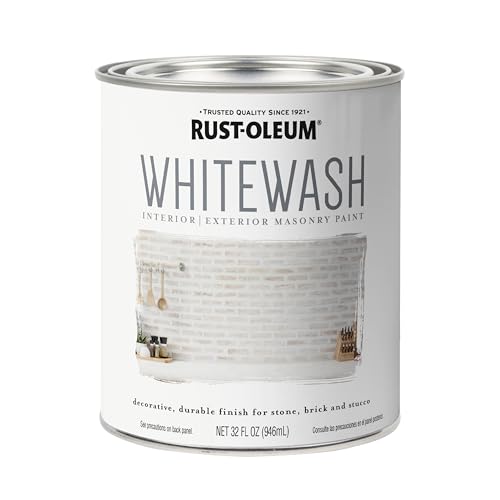
Rust-Oleum Whitewash Masonry Paint
What We Like
- Self-priming and self-sealing formula
- Customizable coverage with water dilution
- Low odor and low VOC for comfort
- Works on highly porous surfaces
Trade-offs
- Quart size covers less area than gallon options
- Not designed for waterproofing like some competitors
The Rust-Oleum Whitewash Masonry Paint is built for highly porous surfaces like cement block, stucco, and brick, letting their natural texture show through while brightening the look. Its self-priming and self-sealing formula saves a full step, and you can dilute it with water to control how much coverage you get, from a thin whitewash to a denser coat. The low-VOC, low-odor water-based makeup makes it comfortable to use indoors, and the smooth matte finish works well on both interior and exterior walls. This paint suits anyone who wants an easy, breathable finish that enhances rather than hides the surface beneath.
The quart container is smaller than the gallon jugs of the KILZ Self-Priming Masonry Paint, so for large block walls you will need multiple units. This Rust-Oleum paint is designed for a decorative whitewashed look on porous masonry, and it brightens the appearance of stucco, stone, brick and wood while letting the natural surface texture show through.
Valspar Exterior Barn & Fence Latex Paint

What We Like
- Flows on smoothly for easy application
- Fade and weather resistant for outdoor use
- Works on masonry, wood, and metal surfaces
Trade-offs
- At 12.3 lb, heavier than some gallon paints
- Not labeled as a waterproofing or primer product
A gallon of Valspar Exterior Barn & Fence Latex Paint weighs 12.3 pounds and is formulated to flow on smoothly, drying to a tough, durable finish that resists fading and weather. It is ideal for exterior surfaces including wood, masonry, primed metal, weathered steel, and aluminum siding, so you can use the same can on a fence, shed, or metal siding without switching products. For someone who needs reliable outdoor coverage on these surfaces, this paint delivers a straightforward color coat without extra features that drive up cost.
This paint is not labeled as a waterproofing or primer product, so you may need to prep porous surfaces with a separate primer for best adhesion. Compare that to the KILZ Self-Priming Masonry Paint, which combines primer and paint in one coat for a faster start on bare concrete. If you are painting already-sealed or previously coated surfaces, the Valspar barn and fence paint works fine. But if you are starting from raw masonry, the KILZ self-priming option saves a step.
Ames Block & Wall Liquid Rubber Waterproofer

What We Like
- Fills cracks up to ⅛ inch
- Up to 1800% elongation resists cracking
- Low odor and non-toxic
- Sprayer, roller, or brush apply
Trade-offs
- Two coats recommended for full coverage
- 5-gallon pail is heavy at 47 pounds
With up to 1800% elongation and the ability to fill cracks up to ⅛ inch, this liquid rubber forms a tough elastic membrane that moves with the wall rather than cracking open. It’s designed specifically for below-grade waterproofing on concrete and cinder block, making it a focused solution for basements and foundations. The low odor, non-toxic formula means you can work in tighter spaces without overwhelming fumes, and the thick blend can be applied by brush, roller, or sprayer for flexibility on uneven block surfaces.
The 5-gallon pail weighs 47 pounds, so moving it around a job site takes some muscle, and the manufacturer recommends two coats to get the full waterproofing benefit. Compared to a standard masonry paint like KILZ Basement and Masonry Waterproofing Paint, this Ames product prioritizes crack-bridging and elasticity over a simple decorative finish. It’s best for walls that already show small cracks or need serious moisture protection, not for a quick cosmetic refresh.
Product photos
Rustins Quick Dry Masonry Paint

What We Like
- Quick-drying formula saves time
- Small 500 ml size for touch-ups
- Matte finish hides surface imperfections
Trade-offs
- Single pack covers only a small area
- No primer or sealer included
- Requires clean, dry surface before painting
A 500 ml container holds enough paint for small repairs or touch-ups, not a full wall. The matte finish is listed as Matt Cream, and application requires a large brush. The surface must be clean, dry, and free from dust and contaminants for proper adhesion.
The Rustins Quick Dry Masonry Paint comes in a 500ml can that weighs 0.9 pounds, so it’s easy to carry and store. You apply it with a large brush, and the surface must be clean, dry, and free of dust or contaminants. That means it’s meant for straightforward touch-ups on masonry that’s already in good shape, not for heavy-duty sealing or waterproofing.
Product photos
BEHR Graycloth Flat Masonry Paint
What We Like
- Affordable price for a BEHR paint
- Flat finish hides surface imperfections
- Works on masonry, stucco, and brick
- Suitable for interior and exterior use
Trade-offs
- No waterproofing or self-priming claim
- No built-in mildew resistance for damp areas
BEHR Graycloth Flat Masonry Paint is a 1-gallon flat paint in Graycloth, designed for masonry, stucco, and brick surfaces both indoors and outdoors. The flat finish helps reduce the appearance of surface texture, which is useful on rough walls. Because it comes in a single gallon, you can cover a small area without buying more than you need.
This paint does not include waterproofing or self-priming features, so it is best for projects where those are not required. For comparison, the KILZ Self-Priming Masonry Paint is listed as a self-priming option, which may save a step if you prefer an all-in-one product. For straightforward color on a dry wall or decorative outdoor surface, the BEHR Graycloth provides a simple solution.
How We Evaluated Paints For Cement Block Walls
This evaluation combines a close reading of manufacturer data sheets, expert recommendations from painting and home improvement sources, and common praise and complaints in user reviews. Instead of conducting original testing, it looks for consistent patterns in what owners report.
The four criteria that mattered most were waterproofing ability, adhesion to slick masonry, alkali resistance for damp walls, and ease of application on rough surfaces. These factors determine whether a paint will last or peel within a season.
A research-led evaluation has limits: it cannot account for every unique wall condition or application method. But it does reveal which products are engineered for the specific demands of cement block.
What To Look For In Paints For Cement Block Walls
Choosing paint for cement block starts with understanding what kind of moisture your wall sees. Below-grade walls need a waterproofing product; above-grade walls may only need a durable coating.
Key criteria: waterproofing rating (PSI of hydrostatic pressure), alkali resistance (pH rating), self-priming ability, and coverage rate per gallon. A product that scores high on all four will save you time and rework.
Waterproofing and Moisture Resistance
For below-grade or damp walls, look for a paint that withstands hydrostatic pressure. Ratings of 10-12 PSI indicate serious protection against water seeping through the block. Products without a waterproofing claim are fine for dry interior walls but will fail in a wet basement.
Alkali Resistance
Fresh concrete and mortar are highly alkaline, which can break down ordinary paint. A paint labeled alkali-resistant (often up to pH 12 or 13) is formulated to bond chemically with masonry and resist degradation over time.
Self-Priming vs. Separate Primer
Self-priming paints save a coat and cut project time, but they work best on sound, clean surfaces. If your block has heavy efflorescence, chalking, or old paint, a dedicated masonry primer is still the safer bet.
- Check the label for “self-priming” or “primer included.”
- For porous or powdery block, use a separate masonry primer first.
- If waterproofing is needed, choose a product that seals as it primes.
Rule of thumb: If water beads on your block wall, you can use a self-priming paint. If it soaks in instantly, you need a separate primer or a waterproofing sealer.
Paints For Cement Block Walls Compared
The table below compares the key specs of our top picks side by side, covering waterproofing, alkali resistance, and best use.
| Product | Use Location | Finish | Weight |
|---|---|---|---|
| KILZ Basement and Masonry Waterproofing Paint | Interior & exterior | N/A | 12.5 pounds |
| KILZ Self-Priming Masonry Paint | Interior/exterior | Flat | 11.4 pounds |
| INSL-X WaterBlock Acrylic Masonry Waterproofer | Interior/exterior | N/A | 11.1 pounds |
| INSL-X TuffCrete Acrylic Concrete Stain Paint | Interior/exterior | N/A | 9.3 pounds |
| Rust-Oleum Painter's Touch Latex Paint | Interior/exterior | Semi-gloss | N/A |
| Rust-Oleum Whitewash Masonry Paint | Interior & Exterior | Matte | N/A |
| Valspar Exterior Barn & Fence Latex Paint | N/A | N/A | 12.3 pounds |
| Ames Block & Wall Liquid Rubber Waterproofer | N/A | N/A | 47.0 pounds |
| Rustins Quick Dry Masonry Paint | N/A | Matte | 0.9 pounds |
| BEHR Graycloth Flat Masonry Paint | Interior/Exterior | Flat | N/A |
Frequently Asked Questions
Can I paint directly on cement block walls?
Yes, but only if the wall is clean, dry, and free of efflorescence. For below-grade or damp walls, you need a waterproofing paint or a separate sealer first. Self-priming paints can skip the primer step on sound surfaces.
What is the best paint for basement block walls?
The KILZ Basement and Masonry Waterproofing Paint is the top choice for basement walls. It blocks up to 12 PSI of hydrostatic pressure and has an alkali-resistant formula that handles the high-moisture environment of a basement.
Do I need a primer before painting cement block?
Not always. Some paints, like the KILZ Self-Priming Masonry Paint, are self-priming and can be applied directly to clean block. If your wall is very porous, has old paint, or shows efflorescence, a dedicated masonry primer is recommended.
How do I prepare cement block walls for painting?
Clean the surface thoroughly to remove dirt, grease, and efflorescence. Repair any cracks or holes with hydraulic cement. Let the wall dry completely. For glossy or painted block, sand or etch the surface to help the new paint bond.
What is the difference between masonry paint and regular exterior paint?
Masonry paint is formulated to bond with alkaline surfaces like concrete and block, resist moisture, and breathe to let trapped vapor escape. Regular exterior paint may peel or blister on masonry because it cannot handle the alkali or moisture movement.
The Bottom Line
For most homeowners painting cement block walls, the KILZ Basement and Masonry Waterproofing Paint is the best overall choice. It offers strong hydrostatic pressure protection, low odor, and alkali resistance, making it ideal for below-grade basements and exterior walls that see moisture.
If your walls are dry and sound, the KILZ Self-Priming Masonry Paint saves you a step with its built-in primer. And for serious waterproofing on cracked block, the Ames Block & Wall Liquid Rubber Waterproofer fills gaps while sealing.
The single most important factor is matching the paint to your wall’s moisture level. A waterproofing product on a dry wall is overkill, but a decorative paint on a damp wall will fail fast. Choose based on your wall’s condition first.
