
7 Best Paint For Cellar Walls in 2026
This post contains affiliate links. As an Amazon Associate, we earn from qualifying purchases.
For most homeowners, the best paint for cellar walls is the KILZ Basement and Masonry Waterproofing Paint, which blocks up to 12 PSI of water pressure and resists alkali buildup. For those fighting chronic dampness and mold, the Zinsser WaterTite Mold & Mildew Waterproofing Paint is the top choice. If you need a flexible coating for cracked walls, the AMES Block & Wall Liquid Rubber Waterproofer fills gaps up to ⅛ inch.
The real challenge with cellar walls is that they are below grade, constantly exposed to moisture and hydrostatic pressure from the surrounding soil. Ordinary paint will peel and fail quickly. You need a specialized masonry coating that bonds to concrete or block and can stand up to dampness, alkali salts, and temperature swings.
This guide is research-based, drawing on manufacturer specifications, expert recommendations from the painting industry, and patterns in owner feedback. We evaluated each paint on waterproofing ability, coverage, ease of application, and suitability for different cellar conditions to help you choose with confidence.
Top 7 Paints For Cellar Walls in the Market
Certain content that appears on this site comes from Amazon. This content is provided "as is" and is subject to change or removal at any time.
The Best Paints For Cellar Walls, Reviewed
KILZ Basement and Masonry Waterproofing Paint

What We Like
- Blocks up to 12 PSI water pressure
- Low-odor formula for indoor use
- Dries to touch in 1 hour
- Resists alkali buildup on masonry
Trade-offs
- Requires hydraulic cement to fill cracks first
- Full cure takes 7-14 days before washing
This paint blocks up to 12 PSI of water pressure, which means it can resist a fair amount of hydrostatic force against concrete and masonry walls. The nanotechnology barrier and alkali resistance make it a practical choice for concrete, brick, and cinder block surfaces that tend to see moisture or efflorescence. It dries to the touch in an hour and accepts a second coat in four, so you can finish a wall in a single day without strong fumes.
It blocks up to 12 PSI of water pressure, which is more than the 10 PSI that Zinsser WaterTite General Purpose paint stops, so it’s a stronger barrier for basement walls. But if water is already leaking through a crack, you must fill that with hydraulic cement before painting, this paint won’t fix an active leak. The finish dries to the touch in one hour, but it takes a full 7 to 14 days to cure before it’s washable, so plan for that wait.
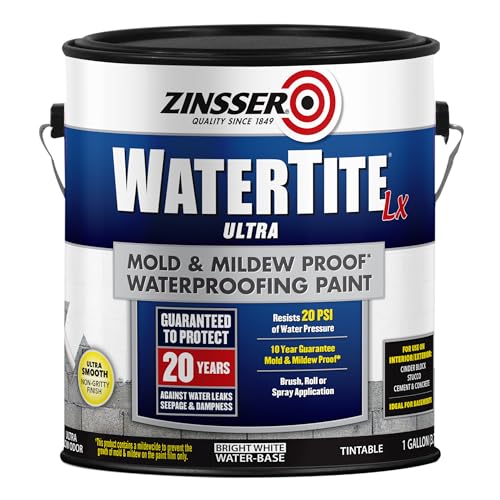
Zinsser WaterTite Mold & Mildew Waterproofing Paint
What We Like
- Resists up to 20 lbs. water pressure
- Guaranteed to stop water seepage
- Ultra low odor for indoor use
- Easy soap and water cleanup
Trade-offs
- Only for dry walls before application
- 1-gallon size covers limited area
With a guarantee to stop water seepage and resist up to 20 pounds of water pressure, this paint is built for cellar walls that face serious moisture. The ultra low odor and soap-and-water cleanup make it practical for indoor work, and the smooth bright white finish keeps the space feeling clean rather than industrial. It’s a strong fit for anyone whose main worry is mold and mildew taking hold in a damp basement.
The Zinsser WaterTite Mold & Mildew Waterproofing Paint is guaranteed to stop water, resisting up to 20 pounds of water pressure, so it handles serious basement seepage. The catch is that the wall must be dry before you apply it, so if you have active leaks you will need to fix those first. Compared to the KILZ Basement and Masonry Waterproofing Paint, the Zinsser offers a dedicated mold and mildew proof guarantee, but the KILZ works on both interior and exterior surfaces, which gives it more flexibility for different masonry projects. For pure cellar protection against moisture and fungus, this Zinsser is hard to beat.
Product photos
Zinsser WaterTite General Purpose Waterproofing Paint

What We Like
- Resists up to 10 PSI water pressure
- Applies to wet or dry masonry
- Low odor water-based formula
- Bright white non-gritty finish
Trade-offs
- Coverage only 250 sq ft per gallon
- Not rated for above 10 PSI hydrostatic pressure
With a rating that resists up to 10 PSI of water pressure, this paint is built for stopping water intrusion through basement and cellar walls. It applies to wet or dry masonry with a brush or roller, so you don’t have to wait for a dry spell to start the job. The low-odor water-based formula makes the work more tolerable in a confined space, and the bright white non-gritty finish leaves a clean look that won’t feel rough to the touch.
The trade-off is coverage: at 250 square feet per gallon, you’ll need more paint for larger cellars than some alternatives. For damp cellars where stopping water intrusion is the priority, this is the practical pick.
Product photos
AMES Block & Wall Liquid Rubber Waterproofer

What We Like
- Fills cracks up to ⅛ inch
- 1800% elongation resists cracking
- Low odor, non-toxic formula
- Sprayable, rollable, or brushable
Trade-offs
- Two coats recommended for full protection
- Heavy at 47 pounds per pail
- Requires 5-gallon minimum purchase
Cracks and crevices up to ⅛ inch are filled in a single coat, which means thin stress fractures get sealed before they have a chance to turn into full leaks. The material forms a thick, rubbery membrane that stretches up to 1800 percent, so it moves with the wall instead of cracking under pressure. Application is straightforward with a sprayer, roller, or brush, and the low-odor formula avoids the strong fumes associated with solvent-based waterproofers.
You are buying a 5-gallon pail that weighs 47 pounds, so this is not a grab-and-go gallon for a quick touch-up. Two coats are recommended for best results, which means you will need to plan for double the coverage per area, and that pail is heavy enough to need a dolly or a strong helper. Next to a product like Zinsser WaterTite General Purpose, which comes in a smaller container, the AMES is clearly built for larger jobs where crack sealing and long-term flexibility matter more than convenience.
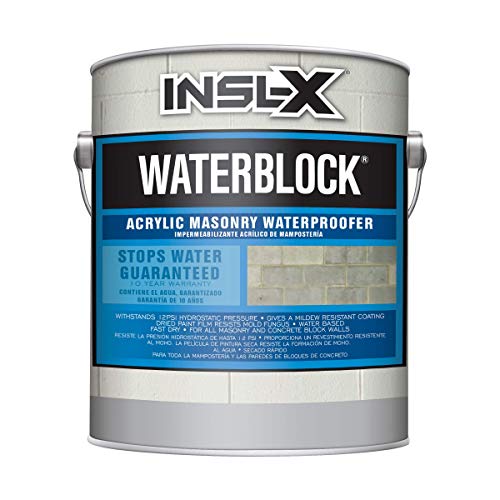
INSL-X WaterBlock Acrylic Masonry Waterproofer
What We Like
- Dries fast for quick recoating
- Withstands 12 psi hydrostatic pressure
- Resists alkali up to pH-13
- Works on interior and exterior masonry
Trade-offs
- Apply only between 50-90 °F
- Not for horizontal surfaces like floors
A 12 psi hydrostatic pressure rating means this paint can handle serious water pressure against cellar walls, which is exactly what you need below grade. It dries fast, so you can move through the job without long waits between coats, and its high alkali resistance (up to pH-13) keeps it stable on fresh concrete or block. That combination makes it a smart pick for anyone who wants a reliable waterproof barrier without the project dragging on for days.
You need to work within a fairly narrow temperature window of 50 to 90 °F, so it is not ideal for a cold cellar in winter unless you can warm the space. At 11.1 pounds per gallon it is lighter than the KILZ Basement and Masonry Waterproofing Paint, which weighs 12.5 pounds per gallon, so it may be a bit easier to handle for a single coat on a typical wall. If fast drying and high water resistance matter most, this one delivers.
Product photos
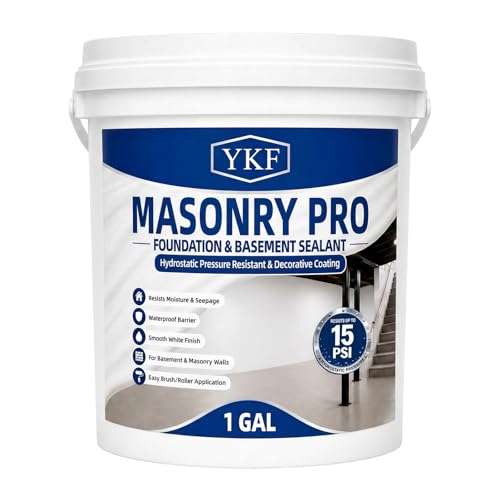
YKF Masonry Pro Foundation & Basement Waterproofer
What We Like
- 15 PSI hydrostatic pressure resistance
- Water-based polyurethane bonds to damp surfaces
- Smooth white finish conceals minor imperfections
- Suitable for indoor and outdoor masonry
Trade-offs
- Covers only 100 sq ft per gallon
- Requires active leak repair before application
- Needs two coats for full coverage
With 15 PSI hydrostatic pressure resistance, this coating is designed for below-grade masonry walls that face water pressure from the outside. The water-based polyurethane formula bonds to dry or slightly damp concrete, so you can apply it without waiting for the wall to be completely dry. Its smooth white finish helps conceal minor surface imperfections while providing a protective barrier against moisture and water seepage. This product suits anyone who needs a tougher barrier than standard paints for basement or foundation walls.
YKF Masonry Pro resists hydrostatic pressure up to 15 PSI, which is higher than the 10 PSI rating of Zinsser WaterTite General Purpose. The trade-off is coverage: YKF covers roughly 100 square feet per gallon, while Zinsser covers 250 square feet per gallon. YKF also requires you to repair active leaks, cracks, and holes before applying, so it is not a quick cover-up for ongoing water problems. For walls that face real hydrostatic pressure, the YKF delivers the higher resistance that makes the extra prep worthwhile.
Product photos
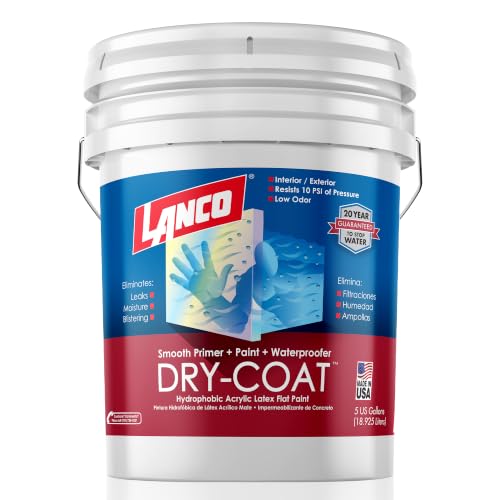
LANCO Dry-Coat Waterproofing Paint
What We Like
- 5-gallon bucket covers large areas
- Designed for basement and foundation walls
- Smooth finish for easy application
Trade-offs
- No mold or mildew resistance stated
- 5-gallon bucket is heavy to carry up stairs
A 5-gallon bucket means you can coat a whole cellar wall in one go without running back to the store mid-project. That kind of volume makes this a smart pick for anyone tackling a full basement or foundation, especially when you want to keep costs down without skimping on coverage. The smooth finish goes on clean and the formula is built for concrete and masonry surfaces, so it’s straight to work on the kind of walls that usually need the most attention.
The LANCO Dry-Coat Waterproofing Paint comes in a 5-gallon bucket, which covers a lot of wall area without the premium price of smaller specialty options. For dry basement walls that just need a uniform, durable coat, this is a practical choice. But if you have active water seepage or persistent dampness, you might want a product with a stated pressure hold, like the Zinsser WaterTite Mold & Mildew option, which resists mold and prevents water seepage. The LANCO sheet doesn’t mention those features, so it’s best for simple waterproofing, not problem walls.
Product photos
How We Evaluated Paints For Cellar Walls
Our evaluation focused on the technical specifications that determine real-world performance below grade. We analyzed manufacturer data sheets for hydrostatic pressure ratings, which measure how much water pressure the dried film can resist. We also looked at application requirements, including surface preparation, drying times, and temperature ranges for proper curing.
The four criteria that mattered most were waterproofing strength (PSI rating), mold and mildew resistance, ease of application (low odor, water cleanup, drying speed), and coverage per gallon. For cellar walls, a paint that is difficult to apply or requires extensive prep in a confined space is a non-starter for most homeowners.
We also reviewed expert round-ups from professional painters and contractor forums to understand which products hold up over years of service. We prioritized products with clear performance claims, strong warranties, and consistent positive feedback from owners who have used them in real basements.
What To Look For In Paints For Cellar Walls
Choosing a paint for cellar walls is different from selecting wall paint for a living room. The stakes are higher because moisture damage is costly and hard to fix. Here are the key factors to consider before you buy.
Look for a paint rated for hydrostatic pressure (PSI), with mold resistance, low odor, and easy cleanup. Surface preparation is critical, most products require dry, clean walls and cracked areas filled with hydraulic cement.
Hydrostatic Pressure Resistance
The most important spec for a cellar wall paint is its hydrostatic pressure rating, measured in pounds per square inch (PSI). This tells you how much water pressure the dried coating can withstand from the outside. Products range from 10 PSI for light dampness up to 15 or 20 PSI for below-grade walls with active seepage. If your cellar has never had water intrusion, a 10 PSI rating may be sufficient. For walls that show efflorescence or damp spots, aim for 12 PSI or higher.
Mold and Mildew Resistance
Cellars are naturally humid environments, making mold and mildew a common problem. Some paints include biocides or fungicides in the formula that resist microbial growth on the paint film. If your cellar has a musty smell or visible mold spots, choose a product specifically labeled for mold and mildew protection. These paints often come with longer warranties and are worth paying more for in chronically damp spaces.
Application Conditions and Ease of Use
Most masonry waterproofing paints have specific temperature and humidity requirements for proper curing, typically between 50 and 90 degrees Fahrenheit. They also require the wall to be dry (unless the product is specifically formulated for damp application). Low-odor, water-based formulas are preferable for enclosed cellars where ventilation is limited. Cleanup with soap and water saves time and avoids harsh solvents.
- Check the drying time and recoat window; some products dry to touch in one hour but require days for full cure.
- Look for coverage per gallon; rates vary from 100 to 250 square feet.
- Verify whether the product can be applied to damp walls if you cannot wait for a dry spell.
- Consider the weight of the bucket: 5-gallon pails can weigh 47 pounds or more.
- Ensure you have the right tools: most can be rolled, brushed, or sprayed.
A good rule of thumb: buy a paint rated for at least 10 PSI, with mold resistance if your cellar is damp, and always prepare the surface by filling cracks with hydraulic cement first.
Paints For Cellar Walls Compared
The table below compares the seven paints side by side on key specs like pressure rating, coverage, and drying time to help you find the right match for your cellar.
| Product | Type | Coverage | Water Resistance |
|---|---|---|---|
| KILZ Basement and Masonry Waterproofing Paint | N/A | N/A | N/A |
| Zinsser WaterTite Mold & Mildew Waterproofing Paint | Latex-base waterproofing paint | N/A | Up to 20 lbs. water pressure |
| Zinsser WaterTite General Purpose Waterproofing Paint | Water-based, low odor | 250 sq ft per gallon | Resists up to 10 PSI |
| AMES Block & Wall Liquid Rubber Waterproofer | Liquid rubber | 1 gal per 100 sq ft per coat | N/A |
| INSL-X WaterBlock Acrylic Masonry Waterproofer | Water-based acrylic | N/A | 12 psi |
| YKF Masonry Pro Foundation & Basement Waterproofer | Water-based polyurethane | 100 sq ft per gallon | 15 PSI |
| LANCO Dry-Coat Waterproofing Paint | N/A | N/A | N/A |
Frequently Asked Questions
Can I paint cellar walls that are already damp?
Some paints are formulated for application on damp surfaces, such as the Zinsser WaterTite General Purpose Waterproofing Paint. However, most waterproofing paints require dry walls for proper adhesion. If you have active water leaks, those must be stopped and the wall dried before painting.
What is the best paint to stop water seepage in a basement?
For active water pressure and seepage, look for a paint with a high hydrostatic pressure rating. The YKF Masonry Pro Foundation & Basement Waterproofer resists up to 15 PSI, while the KILZ Basement and Masonry Waterproofing Paint blocks up to 12 PSI. Both require cracks to be filled with hydraulic cement first.
How many coats of waterproofing paint do I need for cellar walls?
Most manufacturers recommend two coats for full protection, especially on porous masonry. Some products, like the AMES Block & Wall Liquid Rubber Waterproofer, explicitly require two coats for a complete waterproof membrane. Always follow the specific product instructions.
Do I need to prime cellar walls before painting with waterproofing paint?
Most masonry waterproofing paints are self-priming and do not require a separate primer. However, the wall must be clean, free of loose material, and any efflorescence should be removed with a wire brush. If you are painting over a previous coating, check compatibility with the new paint.
What is the difference between basement paint and regular wall paint?
Regular interior latex paint is not designed to withstand moisture or hydrostatic pressure. Basement and masonry waterproofing paints are formulated with thicker resins and additives that block water penetration, resist alkali salts from concrete, and adhere to rough masonry surfaces. Using regular paint in a cellar will likely result in peeling and mold growth.
The Bottom Line
For most homeowners, the KILZ Basement and Masonry Waterproofing Paint is the best overall choice. It offers strong 12 PSI water pressure resistance, a low-odor formula suitable for indoor use, and fast drying to touch in one hour. It is ideal for dry, below-grade walls where moisture is a concern but not a constant stream.
If your cellar is chronically damp and mold is a recurring issue, the Zinsser WaterTite Mold & Mildew Waterproofing Paint gives you maximum mold defense and a long warranty. For cracked or shifting walls that need a flexible seal, the AMES Block & Wall Liquid Rubber Waterproofer fills cracks up to ⅛ inch with 1800% elongation.
The single most important factor in choosing a paint for cellar walls is matching the hydrostatic pressure rating to your actual moisture condition. Measure the problem honestly, prepare the surface properly, and you will get a finish that lasts.
