
10 Best Paint For Cast Iron in 2026
This post contains affiliate links. As an Amazon Associate, we earn from qualifying purchases.
The Rutland Products 1200-Degree Stove Paint earns our Best Overall award for its high heat resistance, primer-free application, and large 16-ounce brush-on container. That size handles big stove and grill projects. For extreme heat up to 1500°F, the KBS Coatings XTC High Temp Paint is our Best Extreme Heat Resistance pick. The Furniture Clinic Stove Restorer Paint wins Best Easy Application for its quick-drying, low-odor formula.
Choosing the right paint for cast iron means balancing heat exposure, application method, and the finish you want. A paint that works perfectly on a decorative shelf bracket may fail on a wood stove that reaches 1000°F. The wrong application type, spray versus brush-on, can turn a weekend project into a frustrating mess.
We evaluated these paints based on manufacturer specifications, heat ratings, application methods, and patterns in owner feedback. This guide covers ten options across different heat tolerances, finishes, and project types, so you can match the right paint to your specific cast iron surface.
Top 10 Paints For Cast Iron in the Market
Certain content that appears on this site comes from Amazon. This content is provided "as is" and is subject to change or removal at any time.
The Best Paints For Cast Iron, Reviewed
Rutland Products 1200-Degree Stove Paint

What We Like
- 1200°F heat resistance for stoves and grills
- No primer needed for application
- Adheres to cast iron, steel, and brick
- Large 16-ounce brush-on container
Trade-offs
- Brush-on only, no spray option for quick coverage
- 16-ounce can is heavy for small touch-up jobs
A 1200-degree Fahrenheit heat rating means this paint can handle the hottest spots on a wood stove, grill, or chimney cap without bubbling or peeling. It bonds directly to cast iron, steel, aluminum, and even brick, and you do not need a primer, just clean the surface and brush it on. That makes it a straightforward choice for restoring an old stove or giving a new metal project a durable, flat black finish. For someone who wants one can to do the job without extra steps, this is the most versatile option in the guide.
The trade-off is that this is a brush-on paint, not a spray. That gives you more control on detailed cast iron surfaces, but it takes longer to apply evenly over large flat areas compared to a spray like the Krylon High Heat Satin Black. Still, the 16-ounce can holds twice the paint of most competitors, so you will not run out mid-project.
Product photos
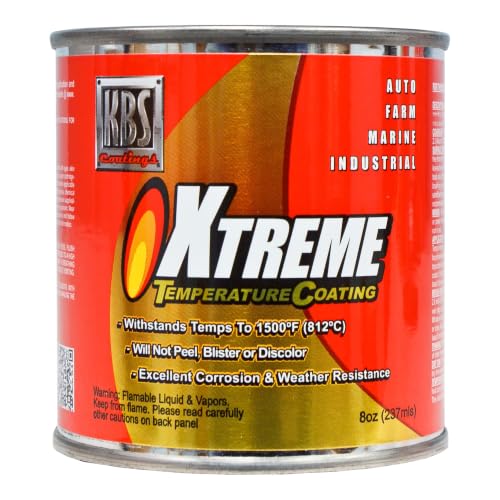
KBS Coatings XTC High Temp Paint
What We Like
- Withstands up to 1500°F
- Resists thermal shock and scratching
- Won't peel, flake, or chalk
- Brush, roll, or spray application
Trade-offs
- Requires heat curing to reach full hardness
- Needs bare metal prep with sandblasting or sanding
- Thick coats will blister
A 1500°F temperature rating means this paint handles the hottest exhaust headers, wood stoves, and fireplace surfaces without burning off. Once heat-cured, the silicone formula resists thermal shock, scratching, and weathering, so it stays intact through repeated heating and cooling cycles. The matte Cast Iron Grey finish works for engine compartments or stove restorations.
The extra work is the main trade-off: you must sand or sandblast to bare metal, apply two thin coats, and then bake the part at 350°F for 20 to 30 minutes to achieve full hardness. That curing step is non-negotiable. If you can manage the prep and heat cure, the paint delivers extreme heat protection.
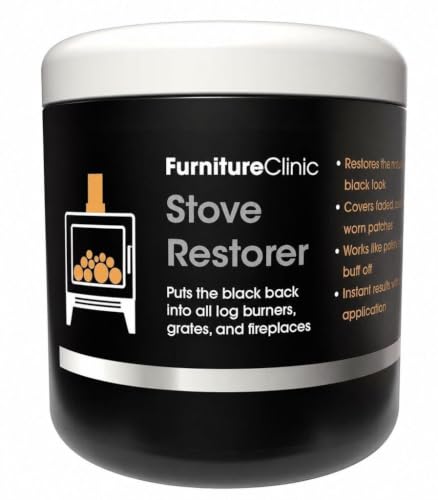
Furniture Clinic Stove Restorer Paint
What We Like
- Non-toxic and low odor
- Dries in 10 minutes
- Won't flake or peel after curing
- Works on all black metal
Trade-offs
- Only available in matte black
- Requires lighting stove to cure
- Small 8.5 oz tub covers less area
A 10-minute dry time and a simple sponge-on application mean you can refresh a faded cast-iron stove in under an hour without masking tape or spray fumes. This is the paint to reach for if you want a quick, low-mess refresh, just rub it on, polish, and light the stove to cure. The non-toxic, low-odor formula makes it safe to use indoors, and once cured it won’t flake or peel even under extreme heat. That combination of speed, ease, and safety is why it stands out for anyone who dreads the prep work of traditional spray paints.
This restorer only comes in matte black, so if you want a metallic or colored finish like Pellethead Paint’s golden fire brown, you’ll need a different product. The 8.5 oz tub is smaller than a 16 oz can of Rutland’s brush-on paint. But for a single log burner or grate that just needs its black color back, the no-mess application and fast cure make this a convenient option.
Pellethead Paint

What We Like
- Withstands heat up to 1200°F
- Wide color selection available
- Easy aerosol application
- Versatile for stoves, grills, fireplaces
Trade-offs
- Spray only, not brush-on
- Requires spray equipment, no brush-on option
Withstands temperatures up to 1200°F, so it handles the heat of a stove, fireplace, or BBQ grill without peeling or fading. The aerosol format makes application straightforward, and the paint is available in a range of colors including Golden Fire Brown. That wider color selection lets you match a specific look or add personality to your heat-sensitive surfaces.
One drawback is that this is a spray-only product, so if you prefer brushing paint on for thicker coats or tighter control, you might find the aerosol less satisfying. Rutland Products offers a brush-on option if that suits your technique better. For someone prioritizing color choice and heat resistance in a spray can, this paint delivers.
Chimney Plus 401990 Paint

What We Like
- Withstands up to 1200°F
- Satin black finish retains color
- Quick drying for fast recoats
Trade-offs
- Spray only, no brush-on option
- Not suitable for detailed cast iron scrollwork
A 1200°F heat tolerance means this paint holds up directly on firebox surfaces and stove tops where other coatings would peel or discolor. The satin black finish retains its color under extreme heat, so your fireplace keeps a clean, uniform look. It dries quickly, which helps when applying multiple coats.
The Chimney Plus spray withstands up to 1200°F, so it holds up on wood stoves and grills without fading. For a full fireplace refinish where even coverage and heat resistance matter most, this spray delivers a satin finish that retains its color in extreme heat. But it’s spray-only, so if you need to touch up tight corners or detailed cast iron scrollwork, a brush-on option like Rutland Products 1200-Degree Stove Paint gives you more control.
Product photos
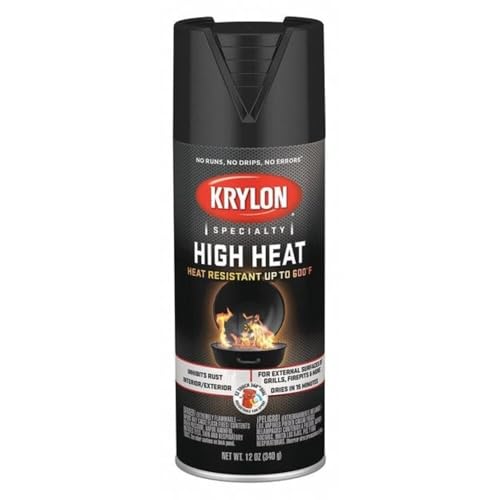
Krylon High Heat Satin Black Spray Paint
What We Like
- Dries tack-free in 15 minutes or less
- Resists runs and drips during application
- Withstands 1200°F intermittently
- Durable Thermo-Guard protection
Trade-offs
- Contains toluene, ethylbenzene, xylene, and 1-butanol
- Continuous heat limit of 600°F is lower than some alternatives
Drying tack-free in 15 minutes or less means you can move a project along quickly without waiting around. That is a real advantage when you are painting a cast-iron stove or grill and want to apply multiple coats in a single afternoon. The satin finish gives a subtle sheen that looks clean and modern, and the Thermo-Guard protection helps the paint hold up under the heat. This spray suits anyone who needs a fast turnaround and does not want to deal with runs or drips slowing them down.
The chemical content, toluene, ethylbenzene, xylene, and 1-butanol, means you need plenty of ventilation or a respirator during use. The 1200°F intermittent rating covers most grills and stoves, but the 600°F continuous limit makes it less suited for a wood stove that runs hot for hours. For quick projects and lighter heat exposure, this spray works well; the Rutland 1200-Degree brush-on paint is a different format and application method, not directly comparable in heat endurance.
Product photos
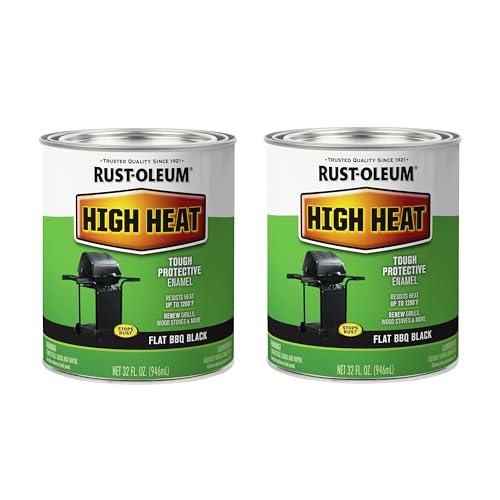
Rust-Oleum High Heat Bar-B-Que Enamel
What We Like
- Covers 65-130 sq. ft. per quart
- Rust and corrosion resistant finish
- Dries to touch in 2-4 hours
Trade-offs
- Spray application limits control on small details
- Oil-based formula requires solvent cleanup
Covering up to 130 square feet per quart, this spray enamel lets you refresh a large grill or stove in a single afternoon without running back to the store. The oil-based satin finish resists rust and chipping, and it holds its color through repeated heating cycles, so your project stays looking fresh after multiple cookouts. That generous coverage makes it the obvious pick when you have a big surface to coat and want consistent results across the whole piece.
Spray application can be tricky on intricate cast iron details like grates or decorative scrollwork, where a brush-on paint like Rutland Products 1200-Degree Stove Paint gives you more precision. And while 1000°F protection handles grills and stoves fine, it falls short of the 1200°F or 1500°F ratings on some competitors if your project runs hotter, such as an engine manifold. For most barbecue and stove jobs, though, the coverage and durability make this a practical, no-fuss option.
VHT Flameproof Coating Cast Iron Paint

What We Like
- Flameproof coating for high-heat cast iron
- 11 oz can covers multiple parts
- Designed specifically for cast iron surfaces
Trade-offs
- Only available in 11 oz can size
- Not rated for temperatures above 1200°F
VHT’s SP998 Flameproof Coating delivers a dedicated formulation for cast iron parts, with an 11 oz can that gives you enough coverage for manifolds, stove components, or engine blocks without frequent refills. This paint targets the specific needs of cast iron surfaces that see extreme heat, making it a focused choice for anyone restoring or protecting functional metal parts that need to withstand flame contact. If you are working on a wood stove, exhaust manifold, or barbecue component where standard paint would blister, this coating is built for that job.
One catch is that this product is only available in an 11 oz spray can, so if you prefer a brush-on application or a different container size, you might consider the Rutland 1200-Degree Stove Paint, which comes in a 16 oz brush-on container. But for a spray-on flameproof coating engineered for cast iron, the VHT SP998 keeps things simple and effective. It is a no-fuss solution when you know the part will face high heat and you want a paint that matches the job.
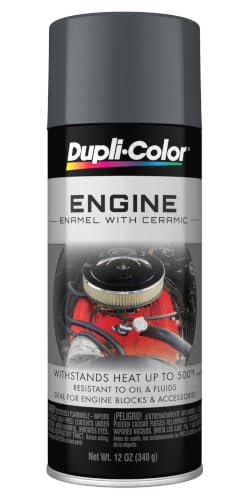
Dupli-Color Engine Paint Cast Iron
What We Like
- Ceramic resins resist heat up to 500°F
- Resistant to oil and automotive fluids
- Won't blister, flake, crack, or peel
- EZ Touch Conical Nozzle for precise spray
Trade-offs
- 500°F limit is low for exhaust or stove parts
- Spray application requires masking and ventilation
With a 500°F heat ceiling and ceramic resins that shrug off oil and automotive fluids, this Dupli-Color paint is built for the engine bay rather than the fireplace. The gloss finish resists blistering and peeling, so it holds up under the hood where vibrations and fluid splashes are constant. That makes it a natural fit for engine blocks, valve covers, and other metal parts that see moderate heat but need tough chemical resistance.
A limitation is that 500°F won’t cut it for exhaust manifolds or wood stoves where temperatures climb well past that threshold. For those jobs, a paint rated for higher heat, such as the Rutland 1200-Degree Stove Paint, handles the job. But if you’re refreshing an engine or restoring cast-iron brackets that stay below that threshold, the Dupli-Color’s gloss retention and easy spray application give you a durable, clean finish without the worry of cracking or flaking.
Product photos
Seymour Cast Blast Spray Paint

What We Like
- Real metal paste for authentic cast iron look
- Dries to touch in 7 minutes
- Stops flash rust with protective barrier
- Heat resistant to 250°F
Trade-offs
- Only one color: original cast iron gray
- Not rated for outdoor high-heat applications like grills.
The real metal paste in this spray paint creates an authentic cast iron gray finish that matches factory components, so your restored piece looks original rather than painted over. It dries to touch in just seven minutes, which keeps restoration projects moving without long waits between coats. The formula also stops flash rust, giving you a protective barrier that guards the surface as you work. This makes it a great fit for decorative cast iron items like table legs, railings, or garden furniture where the look matters most and heat exposure stays low.
Heat resistance is the limiting factor here. At 250°F, this paint won’t hold up on a wood stove or grill surface, where a product like Rutland 1200-Degree Stove Paint handles far higher temperatures. For projects that don’t face intense heat, though, the fast drying and authentic finish are hard to beat. Stick with this one for indoor cast iron restoration and decorative pieces, and save the high-heat paints for your stove or firebox.
How We Evaluated Paints For Cast Iron
This guide is based on manufacturer technical data, product specifications, expert round-ups, and common themes found in owner feedback across various project types. We compare documented performance claims and real-world usage patterns to identify the strongest options for each use case.
The four criteria that mattered most were heat resistance rating, application method, surface preparation requirements, and finish durability. Heat rating determines whether a paint survives on a stove, grill, or engine block. Application method, brush, spray, or aerosol, affects control, coverage speed, and cleanup. Surface prep needs tell you how much sanding, sandblasting, or priming is required. Finish durability includes resistance to flaking, peeling, chalking, and thermal shock.
A research-led evaluation has limits: we cannot verify every manufacturer claim or predict how a paint will behave on every unique cast iron surface. Owner experiences vary widely based on prep work, curing method, and usage conditions. Use this guide as a starting point, and always follow the manufacturer’s instructions for your specific project.
What To Look For In Paints For Cast Iron
Choosing the right paint starts with knowing your project’s heat exposure and the finish you need. The key is matching the paint’s maximum temperature rating to the surface’s operating range, then picking an application method you can work with comfortably.
Look for a heat rating that exceeds your surface’s maximum operating temperature by a comfortable margin. Choose brush-on for detailed parts and control; choose spray for large, flat areas and speed. Check whether the paint needs a primer, a heat cure, or bare metal prep before you buy.
Heat Resistance Rating
The most critical specification is the maximum temperature the paint can withstand. Stove and fireplace paints typically rate between 500°F and 1500°F. A wood stove surface can reach high temperatures during operation, while engine blocks run cooler. Grill grates and fireboxes see the most extreme heat. Always pick a paint rated above your surface’s expected peak temperature.
Application Method: Brush vs. Spray
Brush-on paints like the Rutland Products 1200-Degree Stove Paint give you control for detailed cast iron scrollwork and tight corners. They also produce less overspray and require less masking. Spray paints, including aerosol cans and spray equipment options, cover large flat surfaces faster and leave a more uniform finish. Some paints offer both options; others are restricted to one method.
Surface Preparation and Curing
Most high-heat paints require clean, bare metal for proper adhesion. Sanding, sandblasting, or wire brushing removes old paint, rust, and grease. Some paints need a separate primer; others are primer-free. Heat curing, lighting the stove or running the engine to a specific temperature, is often required to reach full hardness and durability. Skipping this step can lead to peeling or chalking.
- Confirm the paint’s heat rating exceeds your surface’s maximum temperature
- Decide between brush-on control and spray speed based on your project’s shape
- Check whether the paint needs a primer, bare metal prep, or heat curing
- Verify the finish type (matte, satin, gloss) matches your desired look
- Measure the area to ensure the can size covers your project
A paint that requires heat curing will not reach full durability until you fire up the stove or run the engine, so plan your project timeline accordingly.
Paints For Cast Iron Compared
The table below compares all ten paints across heat rating, application method, and best use case, so you can see at a glance which option fits your cast iron project.
| Product | Heat Resistance | Finish | Volume/Size |
|---|---|---|---|
| Rutland Products 1200-Degree Stove Paint | 1200°F | Flat black | 16 fluid ounces |
| KBS Coatings XTC High Temp Paint | 1500°F | Matte | 8 fl oz |
| Furniture Clinic Stove Restorer Paint | N/A | Matte Black | 8.5 oz tub |
| Pellethead Paint | 1200°F | Metallic | 12 oz |
| Chimney Plus 401990 Paint | 1200°F | Satin Black | N/A |
| Krylon High Heat Satin Black Spray Paint | 1200°F intermittent, 600°F continuous | Satin | 12 Ounce |
| Rust-Oleum High Heat Bar-B-Que Enamel | Up to 1000°F | Rich satin | Quart |
| VHT Flameproof Coating Cast Iron Paint | N/A | N/A | 11 oz |
| Dupli-Color Engine Paint Cast Iron | 500°F | Gloss | 12 oz |
| Seymour Cast Blast Spray Paint | 250°F | Original cast iron gray | 12 Ounce |
Frequently Asked Questions
What kind of paint do you use on cast iron?
The best paint depends on the surface’s heat exposure. For stoves, grills, and fireplaces, use a high-heat paint rated for at least 1200°F, such as Rutland Products 1200-Degree Stove Paint or Chimney Plus 401990. For decorative cast iron furniture that stays below 250°F, a paint like Seymour Cast Blast Spray Paint with a real metal paste finish works well.
Do I need to prime cast iron before painting?
Not always. Some high-heat paints, like Rutland Products 1200-Degree Stove Paint, are primer-free and adhere directly to clean cast iron. Others require a primer or bare metal prep. Always check the manufacturer’s instructions for your specific paint. In general, removing rust and old paint through sanding or sandblasting improves adhesion regardless of whether a primer is needed.
Can I spray paint cast iron?
Yes, many high-heat paints come in aerosol or spray form. Paints like Krylon High Heat Satin Black Spray Paint, Pellethead Paint, and VHT Flameproof Coating Cast Iron Paint are designed for spray application. Spray paints cover large areas quickly but require masking and ventilation. Brush-on paints offer more control for detailed cast iron parts.
How do you cure paint on a cast iron stove?
Most high-heat stove paints require heat curing to reach full hardness. After painting and letting the paint dry according to the instructions, you light the stove and gradually bring it up to the recommended temperature. This process bonds the paint to the metal and prevents flaking or peeling. Some paints, like KBS Coatings XTC High Temp Paint, require a specific heat cure cycle.
What is the highest temperature paint for cast iron?
The KBS Coatings XTC High Temp Paint is rated for up to 1500°F, making it the highest heat resistance option in this guide. It resists thermal shock and scratching, making it suitable for headers, wood stoves, and kilns. Most other high-heat cast iron paints are rated for 1200°F, which covers standard stove and grill applications.
The Bottom Line
For most DIYers restoring a stove, grill, or fireplace, the Rutland Products 1200-Degree Stove Paint is the best overall choice. Its 1200°F heat rating, primer-free brush-on application, and large 16-ounce container handle the most common cast iron projects without extra steps or equipment.
If your project sees extreme heat above 1200°F, the KBS Coatings XTC High Temp Paint with its 1500°F rating and thermal shock resistance is worth the extra preparation. For a quick, low-odor refresh on a black stove, the Furniture Clinic Stove Restorer Paint dries in 10 minutes and requires minimal fuss.
The single most important factor is matching the paint’s heat rating to your surface’s operating temperature. Get that right, and the rest, application method, finish, prep work, becomes a matter of personal preference and project convenience.
