
10 Best Paint For Basement Walls in 2026
This post contains affiliate links. As an Amazon Associate, we earn from qualifying purchases.
For most basements, the KILZ Basement and Masonry Waterproofing Paint is the best overall choice because it blocks up to 12 PSI of water pressure with a low-odor formula that dries in an hour. Homeowners with mold concerns should look to the Zinsser WaterTite Mold & Mildew White Waterproofing Paint, while the Zinsser Perma-White Mold & Mildew-Proof Interior Paint offers the largest coverage for big projects.
The challenge with basement walls is that they face constant moisture, hydrostatic pressure, and alkali attack from concrete and masonry. A standard wall paint won’t hold up, you need a coating engineered to bond with masonry, resist mold, and block water intrusion.
This guide evaluates 10 products based on manufacturer specifications, expert recommendations from professional painters and waterproofing contractors, and patterns found in owner feedback. We focus on the factors that matter most for a dry, durable, and healthy basement environment.
Top 10 Paints For Basement Walls in the Market
Certain content that appears on this site comes from Amazon. This content is provided "as is" and is subject to change or removal at any time.
The Best Paints For Basement Walls, Reviewed
KILZ Basement and Masonry Waterproofing Paint

What We Like
- Nanotechnology blocks up to 12 PSI water pressure
- Low-odor formula for indoor basement use
- Dries to touch in 1 hour, recoat in 4
- Alkali-resistant finish for high-moisture areas
Trade-offs
- Requires hydraulic cement to fill cracks before painting
- Full cure takes 7-14 days before washable
With nanotechnology that blocks up to 12 PSI of water pressure, this paint creates a serious barrier against moisture seeping through concrete and masonry basement walls. That kind of protection matters when you’re finishing a below-grade space where dampness is a constant threat. It’s low-odor, so you won’t choke on fumes while applying, and it dries to the touch in just an hour, letting you move on with the project quickly. The alkali-resistant finish also helps it hold up in the humid, alkaline environment of a basement, which means fewer touch-ups down the road. For anyone looking to waterproof and beautify basement walls in one coat, this is the most complete package available.
It also requires filling all holes and cracks with hydraulic cement before application, which adds a step. But if you’re dealing with a wall that already has mildew or mold, Zinsser’s built-in mildew resistance might be more directly suited. For most basement waterproofing jobs, though, the KILZ balances protection, ease of use, and durability better than anything else here.
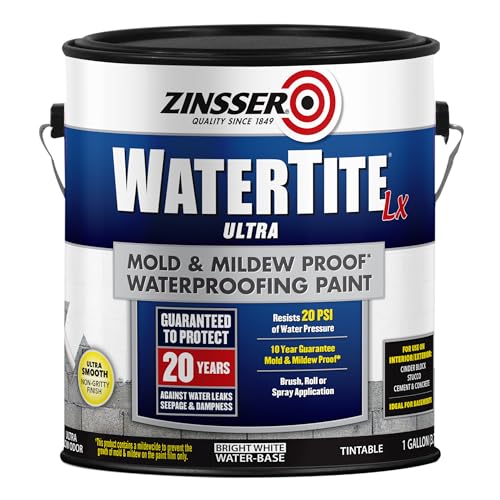
Zinsser WaterTite Mold & Mildew White Waterproofing Paint
What We Like
- Resists up to 20 lbs water pressure
- 15-year waterproof guarantee
- 10-year mold & mildew-proof film
- Ultra low odor, easy cleanup
Trade-offs
- Only for dry walls, not damp application
- Heavier than some 1-gallon masonry paints at 12.2 pounds
This paint resists up to 20 lbs of water pressure, backed by a 15-year waterproof guarantee and a 10-year mold & mildew-proof paint film guarantee. It is a latex-based paint that applies easily to dry walls with a brush or roller, giving a very smooth, bright white, non-gritty finish. The ultra-low odor makes it tolerable in enclosed spaces, and cleanup is easy with soap and water. For anyone whose basement walls are dry and need protection against water seepage and mold, this paint offers strong manufacturer-backed guarantees.
The Zinsser WaterTite is guaranteed to stop water seepage by resisting up to 20 pounds of water pressure, which means it can handle serious basement leaks if you prep the wall properly. The catch is that you must apply it to dry walls only, it won’t bond or seal correctly on a damp surface. That makes it less flexible than the Liquid Rubber Foundation Sealant, which is designed for wetter conditions. But if you can dry the wall first, you get a very smooth, bright white finish and a 15-year waterproof guarantee, plus a 10-year mold and mildew-proof paint film. It’s a strong choice for basements that need long-term protection against water and mildew.
Product photos
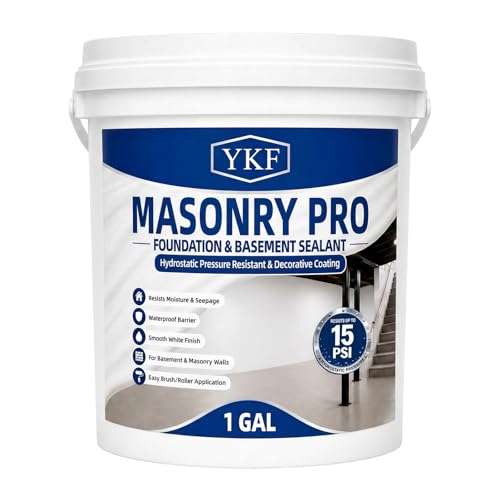
YKF Masonry Pro Foundation & Basement Waterproofing Sealer
What We Like
- 15 PSI hydrostatic pressure resistance
- Water-based polyurethane high-solids formula
- Bonds to dry or slightly damp surfaces
- Smooth white decorative finish
Trade-offs
- Covers only 100 sq ft per gallon
- Requires repair of active leaks before application
- Needs two coats for full coverage
A 15 PSI hydrostatic pressure rating means this coating is designed for below-grade walls that face real groundwater push, not just dampness. That engineered resistance targets the worst-case scenario: a basement wall where moisture seeps through porous concrete or masonry under constant pressure. The water-based polyurethane formula bonds to surfaces that are dry or only slightly damp, which matters when you’re working in a space that never fully dries out. For a DIYer tackling a foundation wall with known seepage, this coating resists that pressure when applied to properly prepared surfaces.
The trade-off is coverage: at 100 square feet per gallon, you’ll go through more material than some other masonry paints, depending on the product. You also need to patch active leaks and cracks before applying, so it’s not a one-step fix for actively weeping walls. Best for someone who wants targeted hydrostatic protection on a specific wall, not a quick coat over the entire basement.
Product photos
Zinsser Perma-White Mold & Mildew-Proof Interior Paint

What We Like
- Covers up to 2000 sq. ft.
- Self-priming bonds without sanding
- Mold & mildew-proof finish
- Lifetime durability guarantee
Trade-offs
- At 58 lb, very heavy for one person
- Satin finish shows masonry texture and cracks
Covering up to 2000 square feet per five-gallon bucket, this paint handles entire basement walls without needing a second coat for coverage alone. That means fewer trips to the store and less time taping off trim between batches. The self-priming formula bonds to glossy and hard-to-paint surfaces without sanding, a real time-saver when prepping a damp basement. It comes with a lifetime durability guarantee.
At 58 pounds for the five-gallon bucket, hauling it down basement stairs or up a ladder is a two-person job. If your basement has heavily textured or pitted masonry, the satin sheen will highlight every bump and crack more than a flat finish would. Compared to the Zinsser WaterTite one-gallon option, which is easier to carry, this product is built for scale, not for quick touch-ups or tight crawlspaces.
KILZ Self-Priming Masonry, Stucco and Brick Paint

What We Like
- Self-priming on textured surfaces
- Excellent water repellency and adhesion
- Alkali-resistant up to pH 12.0
- Works indoors and outdoors
Trade-offs
- Flat finish shows imperfections more easily
- Total weight 11.4 pounds per can
This paint’s alkali resistance up to pH 12.0 makes it a smart choice for basement walls where moisture and alkaline salts from concrete can wreck ordinary paint. The self-priming acrylic latex formula bonds tightly to rough, smooth, or textured masonry, stucco, and brick, and it repels water while letting the surface breathe. If your basement has that rough block or stucco texture you want to keep visible, this paint is designed to accentuate it rather than fill it in, giving a natural look that still protects.
The flat finish can be less forgiving of dust and scuffs than a satin or semi-gloss. At 11.4 pounds total weight, the can is heavier than some other 1-gallon paints, but that weight reflects the product’s high solids content for covering porous surfaces. This paint suits walls that are dry but uneven, and it prioritizes adhesion and texture accent over heavy waterproofing.
Product photos
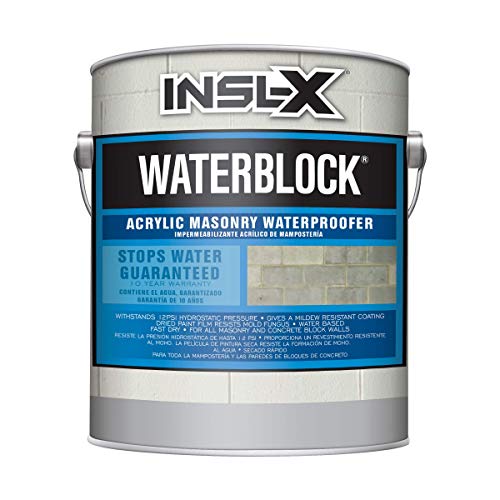
INSL-X WaterBlock Acrylic Masonry Waterproofer Paint
What We Like
- Withstands 12 psi hydrostatic pressure
- High alkali resistance up to pH-13
- Water-based for easy cleanup
- Works on interior and exterior masonry
Trade-offs
- Only for vertical walls, not floors
- Requires 50-90°F surface temperature to apply
With a 12 psi hydrostatic pressure rating, this paint can handle serious water pressure against basement walls without flinching. That kind of protection matters when you are sealing a below-grade foundation or a retaining wall that sees regular moisture. It also resists alkali up to pH-13, so fresh concrete or block won’t eat through the coating over time. The water-based formula dries fast, letting you move on to a second coat or finish the job in a single day. For anyone tackling a damp basement wall who wants a quick turnaround, this is a practical, no-fuss option.
This masonry waterproofer is formulated for vertical interior and exterior concrete walls, so it won’t work on basement floors or other horizontal surfaces. You need to apply it when air and surface temperatures are between 50°F and 90°F, which narrows your working window in cooler weather. It withstands up to 12 psi of hydrostatic pressure, and its fast-drying nature helps when you’re trying to beat a damp forecast.
Product photos
Sentinel 24-7 Zero Interior Mold & Mildew Resistant Coating

What We Like
- Zero VOC for safer indoor use
- Waterproof moisture barrier for masonry
- Self-priming on properly prepared surfaces
- Suitable for below-grade walls
Trade-offs
- No hydrostatic pressure rating listed
- Requires proper surface prep for self-priming claim
Zero volatile organic compounds means this paint won’t off-gas harsh fumes, making it a smart pick for occupied basements where air quality matters. It forms a waterproof moisture barrier on masonry, concrete, block, and drywall, and you can apply it with a brush, roller, or sprayer. For anyone finishing a living space or workshop below grade, that combination of low odor and moisture resistance addresses two of the biggest basement painting headaches at once.
This product is not designed for active water seepage through foundation walls. For a basement that’s dry but humid, this zero-VOC formula gives you peace of mind without the chemical smell.
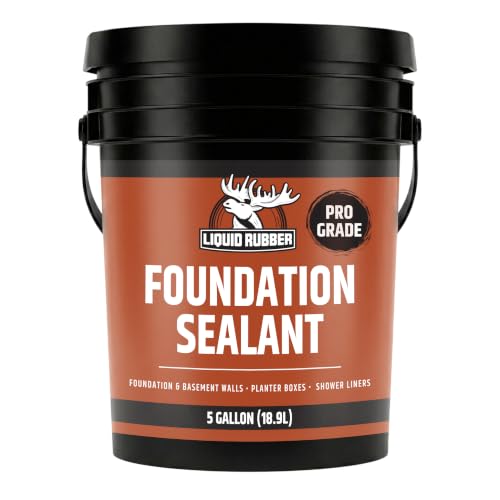
Liquid Rubber Foundation Sealant Basement Waterproof Sealer
What We Like
- 900% elongation resists cracking
- Zero VOCs for indoor safety
- Adheres to concrete, masonry, wood, metal
- No mixing required
Trade-offs
- Requires 2-4 coats for full protection
- Dries black, limiting color options
Liquid Rubber Foundation Sealant stretches 900% before breaking, which means it can bridge foundation cracks and shifting joints without splitting. That kind of flexibility is rare among basement coatings, and it makes this sealer a serious option for walls with active leaks or ongoing movement. The water-based formula has zero VOCs, so you can apply it inside without worrying about fumes, and it bonds to concrete, masonry, wood, and metal. For a DIYer tackling a damp basement, this delivers a rubber-like membrane that moves with the house rather than cracking under pressure.
This is not a paint you walk on. It stays slightly tacky after curing, so floors and high-traffic areas are out. Coverage also takes work: interior walls need two to three coats at 50 square feet per gallon, and exterior surfaces need three to four coats at just 20 square feet per gallon. But if your priority is a seal that flexes instead of flakes, that extra effort pays off.
Ames Block & Wall Liquid Rubber Waterproofer

What We Like
- Up to 1800% elongation resists cracking
- Fills cracks and crevices up to ⅛ inch
- Low odor and non-toxic formula
- Sprayer, roller, or brush application
Trade-offs
- Two coats recommended for best results
- 5-gallon pail is heavy at 47 pounds
An elastomeric elongation of up to 1800% means this coating can stretch dramatically without tearing, making it ideal for basement walls where minor settling or temperature shifts create hairline cracks. Ames Block & Wall Liquid Rubber is thick enough to bridge gaps up to ⅛ inch, yet it remains low odor and non-toxic, so you can work in a confined basement without overwhelming fumes.
Two coats are recommended for reliable waterproofing, which doubles both the material needed and the labor time. If your basement walls are prone to shifting or you want a coating that flexes with the structure, this liquid rubber is the better fit despite the extra work.
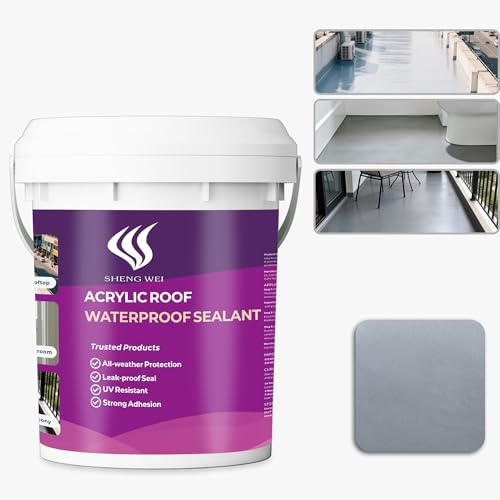
SHENGWEI Polyurethane Waterproof Sealant
What We Like
- High-yield 360 sq ft coverage
- Flexible elastic membrane resists leaks
- Low-VOC and virtually odorless
- Works indoors and outdoors
Trade-offs
- Only available in grey finish
- Requires soap-and-water cleanup only
Three gallons and 360 square feet of coverage mean you can seal a whole basement wall in one go without buying extra cans. This polyurethane coating cures into a flexible elastic layer that adjusts with the structure, so it won’t crack when the foundation settles or when seasonal humidity shifts the concrete. The low-VOC, virtually odorless formula makes it safe to apply in tight indoor spaces like basements and bathrooms, and you can put it on with a brush, roller, or sprayer then clean up with just soap and water. For anyone tackling a large waterproofing project where stopping leaks is the top priority, this delivers industrial-grade protection without the chemical headache.
The full 3-gallon bucket weighs 32 pounds, so this is a heavy container to haul up basement stairs or carry around a worksite. And unlike the Zinsser WaterTite Mold & Mildew White Waterproofing Paint, which comes in white, the SHENGWEI only offers a modern grey finish. If you need a bright white basement wall, the Zinsser might fit better. But for raw stopping power against water intrusion on a large scale, this polyurethane sealant is the heavy-duty option that gets the job done.
Product photos
How We Evaluated Paints For Basement Walls
This evaluation draws on technical data from manufacturer documentation, insights from professional painting and waterproofing experts, and common themes from thousands of owner reviews. Specifications were cross-referenced with expert advice and real-world usage patterns to identify the strongest performers.
The four criteria that mattered most were water-pressure resistance (measured in PSI), mold and mildew protection, alkali resistance for fresh or aged concrete, and indoor air quality (VOC levels and odor). A paint that scores well on all four is far more likely to deliver lasting results in a basement environment.
We acknowledge that no research-led evaluation can replace the judgment of a contractor who sees your specific walls. Our goal is to narrow the field so you can choose confidently and discuss options with your pro.
What To Look For In Paints For Basement Walls
Choosing the right basement paint starts with understanding your walls’ specific conditions, dry, damp, or actively leaking, and matching the paint’s capabilities to that reality.
Look for a paint that resists at least 10 PSI of hydrostatic pressure, offers mold and mildew protection, bonds to masonry without extensive priming, and has low or zero VOCs for indoor safety.
Hydrostatic Pressure Resistance
Hydrostatic pressure is the force of water pushing against your foundation from the outside. A paint’s PSI rating tells you how much back-pressure it can withstand. For dry basements with occasional dampness, 10-12 PSI is sufficient. For walls with visible seepage or below-grade exposure, look for 15 PSI or higher. The YKF Masonry Pro Foundation & Basement Waterproofing Sealer, for example, handles 15 PSI and can bond to slightly damp surfaces.
Mold & Mildew Resistance
Basements are inherently humid, making them prime environments for mold growth. Paints with built-in mildewcides or a “mold-proof” film provide an extra layer of defense. The Zinsser WaterTite Mold & Mildew White Waterproofing Paint offers a 10-year mold and mildew-proof film, while the Zinsser Perma-White Mold & Mildew-Proof Interior Paint carries a lifetime durability guarantee against mold.
Alkali Resistance & Surface Compatibility
New concrete and masonry have high alkalinity (pH 12+), which can break down standard paints. An alkali-resistant formula bonds chemically with the surface, preventing peeling and blistering. The KILZ Self-Priming Masonry, Stucco and Brick Paint resists alkali up to pH 12.0, and the INSL-X WaterBlock Acrylic Masonry Waterproofer handles up to pH 13.
- Check the paint’s PSI rating against your wall’s moisture level (dry, damp, or leaking).
- Confirm the product is compatible with your surface (concrete, block, stucco, brick).
- Look for a low-odor or zero-VOC label if the space is occupied during painting.
- Choose a self-priming formula to save time and reduce material costs.
- Verify the recommended number of coats, some heavy-duty options require two or more.
A good rule of thumb: if your walls are dry, any quality masonry paint will work; if they are damp or leaking, prioritize hydrostatic pressure resistance and crack-bridging flexibility.
Paints For Basement Walls Compared
The table below compares all 10 paints side by side, so you can quickly see which one fits your basement’s specific needs.
| Product | Water Pressure Resistance | Coverage | Surface Types |
|---|---|---|---|
| KILZ Basement and Masonry Waterproofing Paint | Up to 12 PSI | N/A | Concrete, brick, cinder block |
| Zinsser WaterTite Mold & Mildew White Waterproofing Paint | Up to 20 lbs | N/A | Interior Masonry Surfaces |
| YKF Masonry Pro Foundation & Basement Waterproofing Sealer | 15 PSI | 100 sq ft per gallon | Dry or slightly damp masonry |
| Zinsser Perma-White Mold & Mildew-Proof Interior Paint | N/A | 2000 sq. ft. | N/A |
| KILZ Self-Priming Masonry, Stucco and Brick Paint | N/A | 250-400 sq ft/gal | Masonry, stucco, brick, drywall |
| INSL-X WaterBlock Acrylic Masonry Waterproofer Paint | 12 psi | N/A | Concrete walls, cinder blocks, stucco, brick, masonry |
| Sentinel 24-7 Zero Interior Mold & Mildew Resistant Coating | N/A | N/A | Masonry, concrete, block, drywall |
| Liquid Rubber Foundation Sealant Basement Waterproof Sealer | N/A | 50 sq ft/gal (2-3 coats) | N/A |
| Ames Block & Wall Liquid Rubber Waterproofer | N/A | 1 gal per 100 sq ft per coat | Concrete walls, cinder block |
| SHENGWEI Polyurethane Waterproof Sealant | N/A | 360 sq ft | Concrete Roofs, Basement Walls, Bathrooms, Patios |
Frequently Asked Questions
What is the best paint for basement walls that are damp?
For damp walls that are not actively leaking, a paint with hydrostatic pressure resistance of 12 PSI or higher is ideal. The KILZ Basement and Masonry Waterproofing Paint (12 PSI) and the YKF Masonry Pro Foundation & Basement Waterproofing Sealer (15 PSI) are both strong options. Make sure the wall is as dry as possible before applying.
Can I paint basement walls without priming first?
Yes, if you choose a self-priming paint. Several products in this guide are designed to bond directly to properly prepared masonry without a separate primer. Examples include the Zinsser Perma-White Mold & Mildew-Proof Interior Paint and the Sentinel 24-7 Zero Interior Mold & Mildew Resistant Coating.
How do I prepare basement walls before painting?
Preparation starts with cleaning the wall to remove dirt, efflorescence, and loose paint. Fill any cracks with hydraulic cement. For walls with active leaks, stop the water source first. Ensure the surface is dry, most paints require dry application, though a few bond to slightly damp surfaces.
What is the difference between waterproofing paint and regular paint?
Waterproofing paint contains specialized resins and additives that form a moisture barrier against hydrostatic pressure. Regular interior paint lacks this capability and will peel or blister when exposed to basement moisture. Waterproofing paints also typically resist alkali and mold, making them far more durable below grade.
Is zero-VOC paint safe for a finished basement?
Yes, zero-VOC paint is a safe choice for occupied basements because it releases minimal volatile organic compounds into the air. The Sentinel 24-7 Zero Interior Mold & Mildew Resistant Coating is one option that combines zero VOCs with a waterproof moisture barrier, making it suitable for dry, finished spaces.
The Bottom Line
For most homeowners, the KILZ Basement and Masonry Waterproofing Paint delivers the best balance of performance and ease of use. Its nanotechnology blocks up to 12 PSI of water pressure, it dries to the touch in one hour, and the low-odor formula makes indoor application comfortable. It is our top recommendation for dry to moderately damp basement walls.
If mold resistance is your primary concern, the Zinsser WaterTite Mold & Mildew White Waterproofing Paint offers a 10-year mold-proof film and a 15-year waterproof guarantee. For large basements, the Zinsser Perma-White Mold & Mildew-Proof Interior Paint covers up to 2000 square feet per gallon and is self-priming. For walls with active cracking or movement, the Ames Block & Wall Liquid Rubber Waterproofer provides up to 1800% elongation to resist future cracks.
The single most important buying factor is matching the paint’s hydrostatic pressure rating to your wall’s moisture level. Get that right, and the rest, mold resistance, alkali tolerance, ease of application, becomes a matter of preference and budget.
