
10 Best Mediums To Thin Acrylic Paint in 2026
This post contains affiliate links. As an Amazon Associate, we earn from qualifying purchases.
For thinning acrylic paint without losing color strength or film integrity, the Vallejo Airbrush Thinner for Acrylic Paints is our best overall pick. It works for both airbrush and brush applications, improves fluidity and transparency, and has an odorless formula. We also recommend the Winsor & Newton Professional Acrylic Flow Improver for fine detail work and the Mont Marte Premium Acrylic Flow Medium as a budget-friendly option for fluid art.
The challenge with thinning acrylics is finding a product that reduces viscosity without breaking down the paint’s binder or shifting the color. Water works in a pinch, but it can weaken adhesion and cause uneven drying. A dedicated medium or thinner keeps the paint stable.
This guide is based on a review of manufacturer specifications, expert recommendations, and patterns in user feedback across the category. We focused on how each product handles viscosity, color strength, drying time, and surface tension to help you choose with confidence.
Top 10 Mediums To Thin Acrylic Paint in the Market
Certain content that appears on this site comes from Amazon. This content is provided "as is" and is subject to change or removal at any time.
The Best Mediums To Thin Acrylic Paint, Reviewed
Vallejo Airbrush Thinner for Acrylic Paints

What We Like
- Works for both airbrush and brush
- Improves fluidity and transparency
- Odorless formula
- Recyclable r-PET bottle
Trade-offs
- Small 60 ml bottle for frequent users
- Dilution ratios limit heavy thinning
- No built-in dropper for precise mixing
A 2.02 oz bottle that works for both airbrush and brush use means you get one thinner for two jobs, and the odorless formula keeps your workspace comfortable. This is the pick for miniature and model painters who need a reliable, predictable thinner that won’t fight their paint’s adhesion or hardness. The bottle is made from r-PET recyclable plastic, and the dilution guidelines are up to 25% for airbrush and up to 50% for brush.
At 60 ml (2.02 fl oz), this bottle is noticeably smaller than many competing thinners, so if you paint frequently you’ll likely need to restock sooner than with a larger container. That compact size makes it easy to tuck into a hobby box or travel kit, and the r-PET recycled plastic bottle keeps the weight down to just 0.2 pounds.
Product photos
Winsor & Newton Professional Acrylic Flow Improver

What We Like
- Reduces surface tension for fine detail
- Minimizes brush marks effectively
- No color shift from wet to dry
- Maintains color strength without thinning
Trade-offs
- Color shift guarantee only with Winsor & Newton Professional acrylics
- Slower drying delays quick layering
A 250ml bottle of Flow Improver that reduces surface tension, meaning your paint glides smoothly into tight corners and crisp edges without losing any color strength. This makes it the go-to for fine detail work where every brushstroke matters and you need flat, even color without visible ridges. Artists who prize precision and hate fighting drag or skipping paint will appreciate how it keeps the pigment stable from wet to dry, so what you lay down is what you get once it cures.
The biggest reason to buy this medium is that it increases the flow of acrylic colors without changing color strength, so you can lay down flat, even color for hard edge painting techniques. It does slow drying slightly, which means you’ll need to wait longer between layers if you work fast. The no-color-shift promise only holds when you use Winsor & Newton Professional acrylics, so mixing brands could give you different results.
Product photos
GOLDEN High Flow Medium

What We Like
- Thinnest acrylic medium from GOLDEN
- Increases flow and leveling of colors
- Works with High Flow Acrylics and mediums
- Controls transparency and surface sheen
Trade-offs
- 4 oz bottle is small for large projects
- Designed primarily for professional artists
High Flow Medium is GOLDEN’s thinnest acrylic medium, designed to lower viscosity and increase flow and leveling of acrylic colors and mediums. For artists who work with acrylics and need to adjust how their paint behaves, this medium provides control over transparency, viscosity, and surface sheen without altering the color’s basic properties. It is made for professional artists who expect consistency and versatility from their materials.
GOLDEN’s High Flow Medium is their thinnest acrylic medium, designed to extend High Flow Acrylics or lower viscosity while increasing flow and leveling of acrylic colors and mediums. The 4-ounce bottle is compact, so if you are covering large areas or doing heavy pour work, you may go through it quickly compared to larger options like the Winsor & Newton Galeria Acrylic Flow Improver. But for focused studio work where thinning control matters more than volume, this medium delivers exactly what it promises.
Winsor & Newton Galeria Acrylic Flow Improver

What We Like
- Loosens water surface tension for even flow
- Preserves color strength while thinning
- Ideal for staining and masking techniques
- Supports gestured watercolor effects
Trade-offs
- Requires careful dosing to avoid over-thinning
- Not formulated for airbrush use specifically
An 8.4-ounce jar gives you enough flow improver to cover broad surfaces without constantly refilling, which is exactly what large-scale acrylic work demands. By loosening the surface tension of water inside the paint film, it lets you lay down flat, even color across wide areas while keeping the pigment strength intact. That makes it a natural fit for staining techniques and sweeping washes where consistency matters more than heavy body texture.
The trade-off is that you need to add it sparingly, the instructions say to use only the amount needed for the desired effect, so over-pouring can thin the paint past what you intended. Compared to the Vallejo Airbrush Thinner, which is built for fine spray work, this Galeria improver focuses on brush and flow applications for larger formats. If your priority is covering big canvases or creating fluid stains without shifting hue, this medium delivers exactly that.
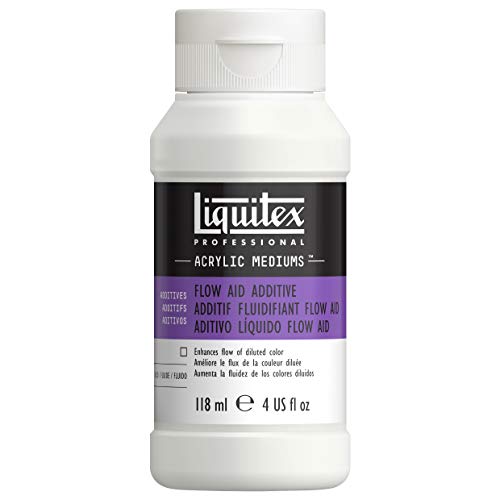
Liquitex Professional Flow Aid
What We Like
- Breaks water tension for smooth flow
- Increases transparency for staining effects
- Reduces brush strokes for a smooth finish
- Works with any acrylic medium or color
Trade-offs
- Binder-free: not a standalone medium for structure
- Small 118ml bottle for frequent users
A binder-free aqueous solution with surfactants means this isn’t a traditional thinner, it’s a flow aid that breaks water tension and lowers viscosity without adding body. That makes it perfect for staining effects on raw canvas, where paint sinks into fibers for translucent washes. Reviewers note it helps acrylic flow smoothly over absorbent surfaces.
Because it’s binder-free, you can’t rely on it to thicken or build film strength on its own, it’s strictly a flow modifier, not a medium. The Winsor & Newton Professional Flow Improver also reduces surface tension but comes in a 250ml bottle, while this Liquitex option is a 118ml bottle. If you need staining effects on raw canvas, this product is designed for that use; for general-purpose flow improvement, the larger bottle may last longer between refills.
Product photos
Mont Marte Premium Acrylic Flow Medium

What We Like
- Increases translucency without reducing color intensity
- Enhances flow for fluid art
- Versatile for thinning paints and mediums
Trade-offs
- No details on drying time or gloss level
- Lacks surface-tension reduction for fine detail work
Increasing translucency without reducing color intensity is what this flow medium delivers, making it a straightforward tool for fluid artists. The 250 ml bottle thins acrylic paints and mediums or dilutes binders while keeping vibrancy intact. Reviewers note it enhances flow for pouring or smoother brushwork, giving softer transparency.
This Mont Marte medium focuses on thinning and transparency, as stated in its feature bullets. The trade-off is that you’re getting a straightforward bottle without extra features like drying retarders or gloss control, which some artists might want for precise work. Compared to the Winsor & Newton Professional Flow Improver, which reduces surface tension to improve paint flow and support fine detail, this option is a simple, effective helper for fluid art.
Product photos
Vallejo Airbrush Flow Improver

What We Like
- Delays drying for smoother spraying
- Reduces tip dry and nozzle clogging
- Works with brush and airbrush
- Large 200 ml recycled bottle
Trade-offs
- Dosage is drop-based, not measured by volume
- Designed for acrylics only, not other paint types
Adding 1-3 drops of this flow improver per 10 drops of paint delays drying and reduces tip dry and nozzle clogging, so you can spray fine details without interruptions. The 200 ml r-PET bottle holds enough for many sessions, and the drop-based dosage lets you mix directly in the airbrush cup. This product is designed for acrylic paints and works with both airbrush and brush, making it a practical choice for miniature and model painters who want to keep their airbrush running smoothly.
For clog prevention, this flow improver directly addresses tip dry and nozzle clogging, as stated in the product features. The trade-off is precision: the drop-based dosage works well for small batches, but if you need exact ratios for larger mixes, a measured thinner like Vallejo’s Airbrush Thinner gives you more control.
Shuttle Art Pouring Medium
What We Like
- Clear bottle shows remaining medium
- 1:1 mixing ratio simplifies preparation
- Preserves color vibrancy and saturation
- Prevents colors from muddying together
Trade-offs
- Not formulated for airbrush use
- Requires separate acrylic paint to work
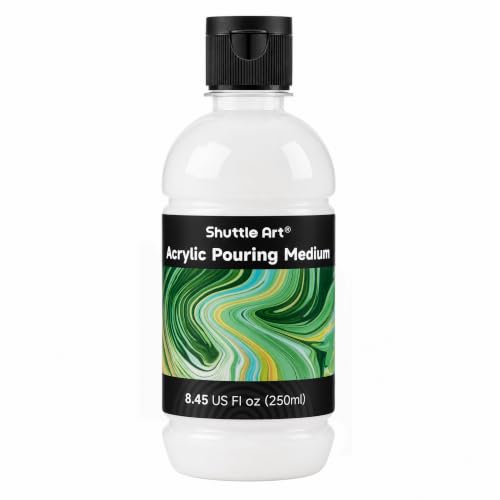
The 1:1 mixing ratio with acrylic paint is the key reason this medium makes fluid art approachable for anyone. You don’t need to fiddle with complex formulas or extra tools, just mix equal parts and pour. The clear bottle also lets you see exactly how much is left, so you can plan your next project without guessing. That combination of simplicity and visibility is why this Shuttle Art medium suits artists who want to focus on the pour itself rather than the prep work.
The 250 ml bottle is a standard size for this type of medium, suitable for many fluid art projects. If you work on smaller pieces or occasional projects, the size is fine. For those who need more volume, other brands offer larger containers, but the Shuttle Art’s straightforward mixing and glossy finish make it a practical pick for fluid art newcomers and experienced pourers alike.
Product photos
The Army Painter Airbrush Medium

What We Like
- Works as both thinner and flow improver
- Compatible with Warhammer & D&D miniatures
- 100 ml in a mess-free dropper bottle
Trade-offs
- Only 100 ml volume for dedicated airbrush use
- Requires testing on paper before spraying as instructed
This Airbrush Medium combines a thinner and flow improver in a single bottle, so you can adjust thicker acrylic paints to a sprayable consistency while improving their flow through your airbrush. The drop-by-drop method is straightforward: start with one drop of medium, add one or two drops of paint, mix thoroughly, and test on paper before spraying. That process helps you get the right consistency for smooth, controlled coverage on miniatures and models without needing a separate range of airbrush paints.
The 100 ml bottle is a moderate size for hobby use, and the precision dropper bottle keeps dispensing clean and controlled. For miniature painters working on Warhammer armies or D&D figures, it offers a simple way to turn your existing acrylic paints into airbrush-ready colors with less mess.
Product photos
Angelus 2-Thin Acrylic Paint Thinner
What We Like
- Maintains paint flexibility after drying
- Designed for airbrush applications
- Simple 1:4 mixing ratio
- Works on leather, fabric, canvas
Trade-offs
- 4 oz bottle is small for large projects
- Only tested for use with acrylic paints, not oils or enamels
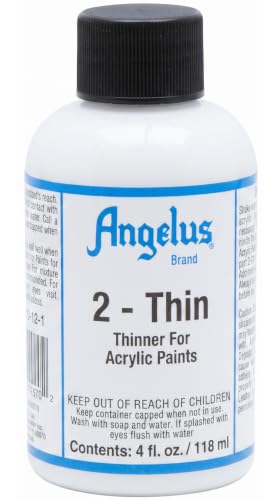
The 1:4 mixing ratio makes preparation straightforward, but what sets this thinner apart is that it preserves the flexibility of dried acrylic paint. That matters most when you are painting on leather shoes, a fabric jacket, or a canvas bag, surfaces that bend and move. Angelus designed this thinner specifically to keep the paint film from cracking or stiffening, so your work stays durable through wear. It also reduces viscosity for airbrushes, preventing clogs on mesh or cloth, which means finer control on tricky substrates. This is the pick for any project where the painted surface will be handled, folded, or stretched.
The small 4 oz bottle means if you are thinning paint for a large mural or multiple pairs of sneakers, you will need to buy several bottles. Compared to Vallejo Airbrush Thinner, which is also designed for airbrushing but does not emphasize post-drying flexibility, the Angelus wins for wearable or soft-surface art. If your work stays on rigid canvas or models, the Vallejo is a fine alternative. For flexible surfaces, this thinner earns its place.
How We Evaluated Mediums To Thin Acrylic Paint
Our evaluation is research-based. We analyzed manufacturer documentation for each product’s chemical composition, recommended use cases, and compatibility with different acrylic brands. We also reviewed expert round-ups from art technique publications and studied patterns in owner feedback regarding ease of use, consistency, and results across various painting styles.
The three criteria that mattered most were viscosity control, color stability, and application versatility. Viscosity control determines how well a medium thins paint for brushwork or airbrushing without making it watery. Color stability ensures the dried paint matches the wet color, which is critical for layering. Application versatility tells you whether a product works for both brush and airbrush, or if it is specialized for one technique.
This helps you narrow the field based on your specific needs.
What To Look For In Mediums To Thin Acrylic Paint
Choosing the right thinning medium depends on your painting technique and the surface you are working on. Here are the key factors to consider before you buy.
Look for a medium that matches your application: flow improvers for brush detail, airbrush thinners for spraying, and pouring mediums for fluid art. Check whether the product contains binder to maintain paint film strength, and confirm it works with your preferred brand of acrylic paint.
Viscosity And Flow Control
The primary job of a thinning medium is to reduce the paint’s thickness so it moves smoothly across a surface or through an airbrush. Some products, like flow improvers, work by breaking water’s surface tension, allowing paint to spread into fine details without brush marks. Others, like airbrush thinners, lower the paint’s viscosity for a fine mist. Pay attention to whether the medium is binder-free (best for staining and washes) or binder-rich (better for maintaining paint structure).
Color Strength And Shifting
A good thinning medium should not wash out the pigment or change the color from wet to dry. Some manufacturers guarantee no color shift only when you use their own acrylics. If you work with multiple brands, look for a medium that is formulated to preserve color vibrancy across different paint lines. Flow mediums and thinners that maintain saturation are especially important for layering and glazing techniques.
Drying Time And Compatibility
Drying time affects your workflow. Flow improvers often slow drying to prevent tip dry in airbrushes and to keep paint workable longer. Other mediums dry faster for quick layering. Consider whether the medium is formulated for airbrush use, brush application, or both. Using the wrong type can lead to clogging, uneven coverage, or poor adhesion on flexible surfaces like leather or fabric.
- Check if the medium is compatible with your acrylic paint brand.
- Decide whether you need a binder-free flow aid or a binder-rich medium.
- Consider the bottle size: small bottles (60–200 ml) suit hobbyists, larger bottles (200 ml and up) suit high-volume use.
- Look for a dropper bottle or precise mixing instructions for consistent results.
A simple rule: use a flow improver for brush detail and washes, an airbrush thinner for spraying, and a pouring medium for fluid art.
Mediums To Thin Acrylic Paint Compared
The table below compares the top 10 mediums to thin acrylic paint, highlighting their best use cases and key trade-offs.
| Product | Size | Use | Effect |
|---|---|---|---|
| Vallejo Airbrush Thinner for Acrylic Paints | 2.02 fl oz (60 ml) | Airbrush and brush | Improves flow and transparency |
| Winsor & Newton Professional Acrylic Flow Improver | 250 ml | N/A | Reduces surface tension |
| GOLDEN High Flow Medium | 4 fl. oz. | N/A | Lowers viscosity and increases flow |
| Winsor & Newton Galeria Acrylic Flow Improver | 8.4 oz (250 ml) | N/A | Increases flow without changing color strength |
| Liquitex Professional Flow Aid | 118ml (4-oz) | N/A | Breaks water tension, lowers viscosity, increases transparency |
| Mont Marte Premium Acrylic Flow Medium | 250 ml | N/A | Enhances the flow of acrylic paints |
| Vallejo Airbrush Flow Improver | 6.76 fl oz (200 ml) | Airbrush and brush | Improves fluidity and delays drying |
| Shuttle Art Pouring Medium | 250 ml (8.45 fl oz) | N/A | Improves flow & transparency |
| The Army Painter Airbrush Medium | 100 ml | N/A | Thinner and flow improver |
| Angelus 2-Thin Acrylic Paint Thinner | 4 fl oz | N/A | Reduces viscosity |
Frequently Asked Questions
Can I use water instead of a medium to thin acrylic paint?
Water works for minor thinning, but it weakens the binder, which can cause poor adhesion, flaking, and a matte, chalky finish. A dedicated medium preserves the paint’s film strength and color integrity, especially for layering, airbrushing, or painting on flexible surfaces.
What is the difference between a flow improver and an airbrush thinner?
A flow improver reduces surface tension so paint spreads more easily on a surface, making it ideal for brush detail and washes. An airbrush thinner lowers the paint’s viscosity for a fine, even spray. Some products combine both functions, but dedicated thinners are usually best for airbrush use.
Will thinning acrylic paint change the color?
Some mediums can cause color shift, especially when over-thinned. Look for a medium that is formulated to maintain color strength from wet to dry. Brands like Winsor & Newton guarantee no color shift when used with their own acrylics, but results may vary with other brands.
How do I thin acrylic paint for airbrushing without clogging?
Use a dedicated airbrush thinner or flow improver that slows drying to prevent tip dry. Mix the paint with the thinner in a separate container, starting with a 1:1 ratio and adjusting as needed. Always test the mixture on paper before spraying to check for clogging or spattering.
What is the best medium for acrylic pouring?
A pouring medium is specifically designed for fluid art. It thins the paint while maintaining color vibrancy and preventing colors from muddying together. Products like the Shuttle Art Pouring Medium use a simple 1:1 mixing ratio, making them beginner-friendly for canvas, wood, or rock pours.
The Bottom Line
For most painters, the Vallejo Airbrush Thinner for Acrylic Paints is the best overall choice. It is odorless, works for both brush and airbrush, and improves fluidity without compromising color. It is especially suited for hobbyists and miniature painters who need precision and a clean working environment.
If you work on large-scale canvas projects or need a budget-friendly option for fluid art, the Mont Marte Premium Acrylic Flow Medium offers good translucency and color retention at a lower cost. For fine detail work with minimal brush marks, the Winsor & Newton Professional Acrylic Flow Improver is worth paying more for.
The single most important factor is matching the medium to your technique. Choose a flow improver for brushwork, an airbrush thinner for spraying, and a pouring medium for fluid art. The right product keeps your paint stable, your colors true, and your process enjoyable.
