
8 Best Marine Paint in 2026
This post contains affiliate links. As an Amazon Associate, we earn from qualifying purchases.
For a durable, weather-resistant finish above the waterline, the Rust-Oleum Marine Topside Semi-Gloss White Boat Paint earns our Best Overall spot thanks to its flexible oil-based formula that levels smoothly and resists abrasion. For those needing protection below the waterline, the Rust-Oleum Marine Boat Bottom Flat Black Antifouling Paint is our top choice, while the TotalBoat Wet Edge Topside Marine Paint offers the best high-gloss finish.
Choosing the right marine paint means balancing surface prep, water conditions, and the location above or below the waterline. A topside paint that works great on a deck will fail quickly on a hull bottom exposed to barnacles.
Our guide is built from manufacturer specifications, expert recommendations, and patterns in owner feedback. We break down the key differences between topside, antifouling, and ablative paints so you can match the right coating to your boat and your boating habits.
Top 8 Marine Paints in the Market
Certain content that appears on this site comes from Amazon. This content is provided "as is" and is subject to change or removal at any time.
The Best Marine Paints, Reviewed
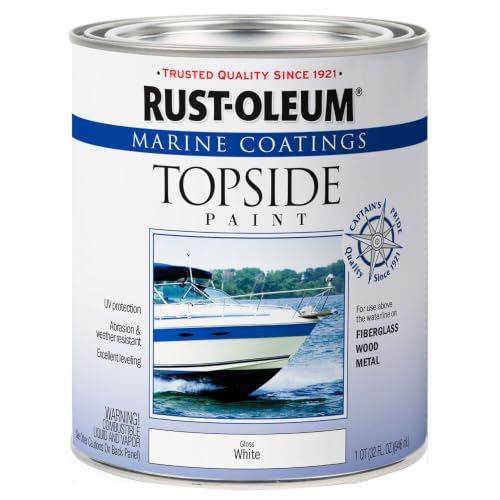
Rust-Oleum Marine Topside Semi-Gloss White Boat Paint
What We Like
- Flexible oil-based formula levels smoothly
- Dries to touch in 1-2 hours
- Resists abrasion and extreme weather
- Long-lasting UV protection
Trade-offs
- Only for above-waterline surfaces
- Oil-based requires solvent cleanup
A quart covers up to 100 square feet, which is enough to refresh a small runabout’s topsides or a dinghy’s deck in one coat. The semi-gloss white finish provides long-lasting UV protection and superior gloss retention, so your boat looks sharp even after a season in the sun. This paint is ideal for use on fiberglass, wood, or metal surfaces above the waterline. The oil-based formula applies easily with excellent leveling, and it dries to the touch in as little as 1 to 2 hours.
The main trade-off is that this paint is strictly for above-waterline use, so you cannot use it on the hull bottom where antifouling protection is needed. Compared to the TotalBoat Wet Edge topside paint, which comes in a heavier gallon can, this Rust-Oleum quart is lighter and easier to handle for small projects. If you want a clean, glossy topside finish, this delivers reliable results.
TotalBoat Wet Edge Topside Marine Paint

What We Like
- Scratch-resistant high-gloss finish
- Self-leveling for smooth results
- 22 high-gloss color choices
Trade-offs
- Above-waterline use only
- Requires primer for bare metal
With 22 high-gloss colors and coverage of 350 to 400 square feet per gallon, it suits boaters who want a showroom shine on topsides, hulls, or even RV exteriors. The self-leveling formula makes roll-and-tip application forgiving for DIYers, and it sprays well too. This is the paint to pick if a deep, lasting gloss is your priority and you work above the waterline.
That limits it to hulls above the waterline, decks, and cabin tops. If you need a paint that can handle constant immersion, the Rust-Oleum Marine Boat Bottom Antifouling Paint is the right choice for below-waterline protection. But for a brilliant, durable gloss on visible surfaces, TotalBoat Wet Edge is hard to beat.
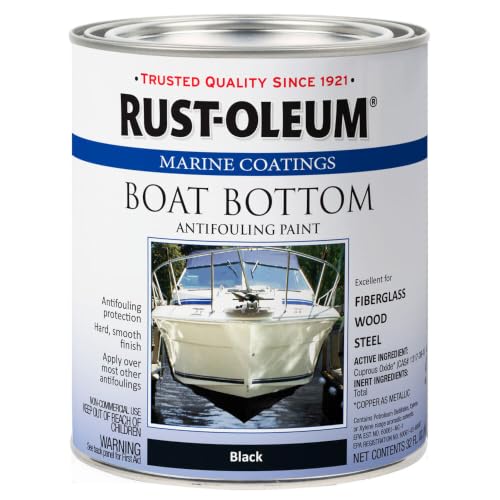
Rust-Oleum Marine Boat Bottom Flat Black Antifouling Paint
What We Like
- Copper release prevents barnacles and algae
- Works in both freshwater and saltwater
- Fast recoat and launch times
- Hard smooth finish over aged coatings
Trade-offs
- Limited to below waterline use only
- Requires 16-hour dry time before launching
A single quart covers up to 110 square feet, so you can coat a small runabout or dinghy without needing a second can right away. The copper-based formula slowly releases to prevent barnacles and algae from building up on fiberglass, wood, or steel hulls, and it works in both freshwater and saltwater. The hard, smooth finish provides a flat sheen over most aged antifouling coatings, which means you can apply it over old paint without a full strip.
This paint is meant only for below the waterline, so you will need a separate topside paint for above-water surfaces. The flat black sheen is practical for a hull bottom but lacks the gloss many owners want on deck or topsides. For someone focused purely on antifouling protection with minimal downtime, recoat in four hours and launch in sixteen, this quart delivers reliable defense without fuss.
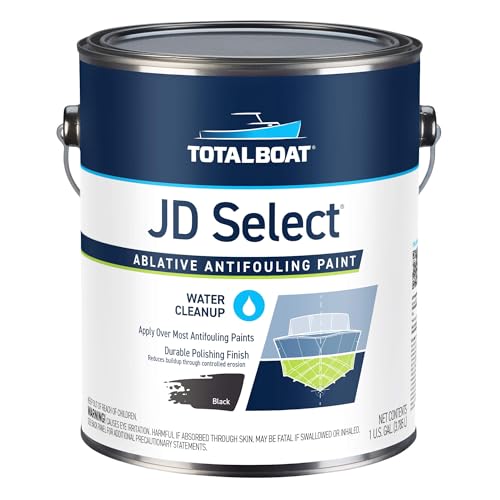
TotalBoat JD Select Water-Based Boat Antifouling Bottom Paint
What We Like
- Low-VOC water-based formula
- Ablative wear exposes fresh biocide
- Cleans up with soap and water
- No maximum dry time to launch
Trade-offs
- Single-season protection only
- Requires 1-2 thin coats
A 25.5% copper biocide load in a water-based ablative paint means this coating fights barnacles and slime while gradually wearing away as your boat moves, exposing fresh protection all season long. That low-VOC, solvent-free formula makes it a natural fit for marinas or yards with strict air-quality rules, and cleanup with just soap and water saves you from the harsh thinners other antifouling paints demand. DIY painters will appreciate the forgiving application, brush, roll, or spray, with no rush to launch since there’s no maximum dry time.
One thing to keep in mind: this is a single-season paint, so you’ll need to recoat every year to maintain protection. It also won’t work on aluminum hulls, which limits its audience. For anyone who wants straightforward, low-odor antifouling performance without the hassle of solvents, and who doesn’t mind an annual refresh, this delivers exactly what the spec sheet promises.
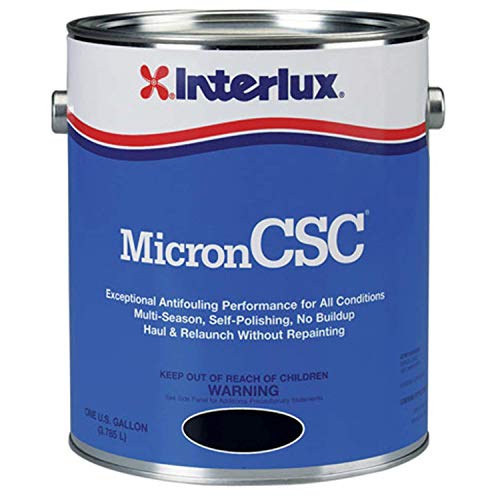
Interlux Micron CSC Antifouling Bottom Paint
What We Like
- Lasts 20% longer than other copper ablative paints
- 37.2% copper for strong antifouling
- Improved resistance to weed and algae
- Works in all waters on all hull types
Trade-offs
- Heavy at 18 pounds per gallon
- Ablative formula wears away over time
This bottom paint contains 37.2% copper and lasts 20% longer than other copper-based ablative paints. That means fewer haul-outs and more time on the water for boaters. The improved resistance to weed and algae fouling tackles the toughest growth in both salt and freshwater, so it suits anyone keeping a boat in year-round use or in warm, fouling-prone regions. It works for all power and sail in all waters, giving consistent protection across different hull types.
At 18 pounds per gallon, a full coat of this paint adds noticeable heft to the boat. As an ablative paint it gradually erodes to expose fresh biocide, which means it will need recoating more often than a non-ablative coating. For the sailor or powerboater who hauls out every couple of years and wants reliable, long-lasting antifouling without switching paints between waters, this is a premium choice that performs as described.
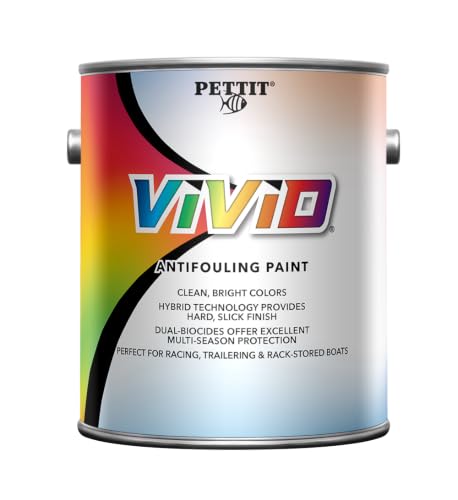
Pettit Vivid Hybrid Dual Biocide Antifouling Bottom Paint
What We Like
- Hybrid hard/ablative reduces paint buildup
- Dual-biocide protection against barnacles and slime
- Aluminum-safe with proper primer system
- Burnishable to a slick racing surface
Trade-offs
- Requires a specific primer system for aluminum hulls
- Heavier than many other gallon paints at 16 pounds.
A hybrid formula that combines the durability of a hard paint with the self-renewing action of an ablative coating means you get long-lasting protection without the thick, flaking buildup that plagues traditional hard paints. This makes Pettit Vivid an excellent fit for boat owners who want multi-season antifouling performance and a smooth, burnishable surface that can be polished to a racing-ready finish. The dual-biocide system. Cuprous Thiocyanate and Zinc Pyrithione, targets barnacles, algae, and slime across a wide range of water conditions, giving you reliable defense whether you moor in saltwater or freshwater.
At 16 pounds per gallon, this bottom paint is heavy, but that weight reflects the gallon volume and the hybrid chemistry inside. The dual-biocide formula, powered by Cuprous Thiocyanate and Zinc Pyrithione, provides dependable protection against barnacles, algae, slime, and other marine growth across multiple seasons. For aluminum hulls or outdrives, you must use the recommended primer system for safe application, which adds an extra step to the job.
Product photos
DURALUX Camouflage Marine Paint

What We Like
- Ultra-low luster camouflage finish
- Resists saltwater, oil, gasoline, harbor gasses
- Adheres to steel, metal, wood, fiberglass, aluminum
- Easy to apply with brush, roller, or sprayer
Trade-offs
- Requires two coats with overnight drying between
- Cannot be painted in direct sunlight
An ultra-low luster finish that stands up to saltwater, oil, gasoline, and harbor gasses makes this paint a natural fit for hunters and boaters who need their camo to last season after season. It bonds to steel, metal, wood, aluminum, and fiberglass, so you can use it on a duckboat, an ATV, or a hunting blind without switching products. The oil alkyd base delivers that flat, non-reflective look that keeps you hidden, and the one-gallon can covers plenty of gear.
The finish shrugs off saltwater, oil, gasoline, and harbor gas discoloration, so it holds up in tough marine conditions. You apply two thin coats with a brush, roller, or airless sprayer, letting each dry overnight, and you must avoid painting in direct sunlight. That slower schedule is the price for a long-lasting, ultra-low luster camouflage look on boats, hunting blinds, ATVs, or trailers.
This paint is ideal for hunters and boaters who need a durable, low-gloss camouflage finish on multiple surfaces. It bonds to steel, metal, wood, aluminum, and fiberglass, so you can use it on a duckboat, an ATV, or a hunting blind without switching products. The oil alkyd base delivers that flat, non-reflective look that keeps you hidden, and the one-gallon can covers plenty of gear. Just plan for two overnight drying cycles and avoid painting in direct sunlight.
Product photos
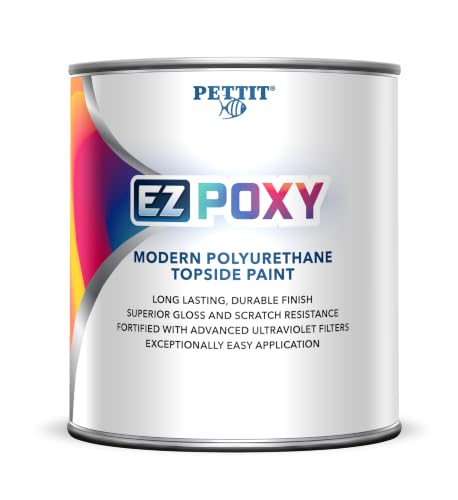
Pettit EZ-Poxy Polyurethane Topside Paint
What We Like
- Yacht-quality finish without two-part complexity
- Advanced UV filters for color retention
- Silicone-enhanced flow reduces brush marks
- Scratch-resistant for dockside wear
Trade-offs
- Limited to above-waterline surfaces only
- Requires careful surface prep for best adhesion
This one-part polyurethane topside paint delivers a high-gloss, yacht-quality finish without the mixing and pot-life stress of two-part systems. The silicone-enhanced formula minimizes brush marks and roller stipple, which helps DIY boat owners achieve a smooth, professional-looking finish on topsides, cabins, or cockpit areas. Advanced UV filters help preserve color depth and gloss in harsh sun, so the paint holds up well for boaters who want long-lasting appearance from an easy-to-apply single-can product.
This paint is formulated for above-waterline use only, so if you need to coat a hull below the waterline, you will want to look at an antifouling paint instead. For topside work, though, the EZ-Poxy creates a tough, scratch-resistant surface that stands up to dockside bumps and routine wear. It offers premium results from a simple, single-can process, as long as you work within its above-waterline limits.
Product photos
How We Evaluated Marine Paints
This evaluation is research-based, drawing on manufacturer data sheets, technical specifications, and expert round-ups from marine industry sources. We also analyzed patterns in owner feedback to understand real-world performance and common application issues.
We focused on four criteria that matter most for marine paint: surface compatibility (fiberglass, wood, metal, aluminum), durability (abrasion resistance, UV protection, and weather resistance), application ease (dry time, self-leveling, and cleanup requirements), and protection type (antifouling vs. Topside vs. Ablative). A paint that excels on a wooden skiff may fail on a fiberglass hull.
The honest limit of a research-led evaluation is that we cannot replicate long-term submersion or seasonal wear in a lab. Our recommendations are based on documented performance claims and the collective experience of boat owners, not controlled testing.
What To Look For In Marine Paints
Choosing the right marine paint starts with knowing where you’re painting and what conditions the boat faces. The wrong paint can peel, blister, or fail to protect against marine growth.
Match the paint type to the surface: topside paints above the waterline, antifouling paints below. Check compatibility with your hull material, and always factor in dry time, recoat windows, and whether the formula requires primer or solvent cleanup.
Surface Compatibility
Not all marine paints adhere to every hull material. Fiberglass and wood are the most forgiving, while aluminum and steel often require dedicated primers or etching. Pettit Vivid Hybrid, for example, needs a specific primer system for aluminum hulls. Always check the manufacturer’s surface preparation guide before buying.
Paint Type: Topside vs. Antifouling vs. Ablative
Topside paints like the Rust-Oleum Marine Topside are designed for surfaces above the waterline and prioritize UV protection and abrasion resistance. Antifouling paints, such as the Rust-Oleum Marine Boat Bottom Flat Black Antifouling Paint, use biocides like copper to prevent barnacles and algae. Ablative paints, like the Interlux Micron CSC, wear away slowly over time, exposing fresh biocide and lasting longer between haul-outs.
Application and Dry Time
Dry time affects how quickly you can launch the boat or apply a second coat. The Rust-Oleum Marine Topside dries to the touch in 1-2 hours, while the Rust-Oleum Marine Boat Bottom Antifouling requires a full 16-hour dry time before launching. Water-based options like the TotalBoat JD Select clean up with soap and water and have no maximum dry time.
- Check if the paint needs a separate primer for your hull material.
- Confirm the recoat window, some paints must be recoated within hours, others within days.
- Consider your ventilation: oil-based paints need solvent cleanup and strong airflow.
- For antifouling paints, verify whether the formula is rated for fresh water, salt water, or both.
A good rule: if the paint can is heavy, it is likely a heavy-duty antifouling or ablative paint. Lighter cans are often topside paints or water-based formulas.
Marine Paints Compared
The table below compares all eight marine paints by their key strengths and best-use scenarios, from topside durability to antifouling protection.
| Product | Surface Use | Materials | Finish Type |
|---|---|---|---|
| Rust-Oleum Marine Topside Semi-Gloss White Boat Paint | Above waterline | Fiberglass, wood, metal | Semi-gloss |
| TotalBoat Wet Edge Topside Marine Paint | Above waterline | Fiberglass, wood, metals | High-gloss |
| Rust-Oleum Marine Boat Bottom Flat Black Antifouling Paint | Below waterline | Fiberglass, wood, steel | Flat sheen |
| TotalBoat JD Select Water-Based Boat Antifouling Bottom Paint | Below waterline | Fiberglass, wood, steel | N/A |
| Interlux Micron CSC Antifouling Bottom Paint | Below waterline | All power and sail | N/A |
| Pettit Vivid Hybrid Dual Biocide Antifouling Bottom Paint | Below waterline | Aluminum (with proper primer) | N/A |
| DURALUX Camouflage Marine Paint | Above waterline | Steel, metal, wood, aluminum, fiberglass | Ultra-low luster |
| Pettit EZ-Poxy Polyurethane Topside Paint | Above waterline | Fiberglass, wood, metal | High-gloss |
Frequently Asked Questions
What is the difference between topside and antifouling marine paint?
Topside paint is formulated for surfaces above the waterline and focuses on UV resistance, abrasion resistance, and a smooth finish. Antifouling paint is designed for hulls below the waterline and contains biocides that prevent barnacles, algae, and other marine growth from attaching.
Can I use antifouling paint on the deck of my boat?
No. Antifouling paints are chemically formulated for submerged surfaces and are not durable enough for foot traffic, sun exposure, or abrasion from docks and lines. Use a topside or deck paint for surfaces above the waterline.
How long does marine paint last before needing to be reapplied?
It depends on the type. Topside paints can last several seasons with proper maintenance. Antifouling paints typically need reapplication every one to two seasons, while ablative paints like Interlux Micron CSC are designed to last longer by slowly wearing away and exposing fresh biocide.
What is the best marine paint for aluminum boats?
For aluminum hulls, you need a paint that is aluminum-safe and often requires a dedicated primer system. The Pettit Vivid Hybrid is a good option when used with its specific primer system. Always check manufacturer compatibility before applying any paint to aluminum.
Do I need to prime the surface before applying marine paint?
For most topside paints on bare metal or wood, a primer is recommended for best adhesion. Many antifouling paints can be applied over properly prepared aged coatings without primer. Always follow the manufacturer’s surface preparation instructions for your specific paint.
The Bottom Line
For most boat owners, the Rust-Oleum Marine Topside Semi-Gloss White Boat Paint is the best balance of durability, ease of application, and weather resistance for above-waterline surfaces. If you need high-gloss aesthetics, the TotalBoat Wet Edge delivers a scratch-resistant shine in 22 colors.
For below-waterline protection, choose the Rust-Oleum Marine Boat Bottom Antifouling for proven copper-based protection in fresh or salt water, or the Interlux Micron CSC if you want extended time between haul-outs. The single most important factor is matching the paint type to the surface: topside for above, antifouling for below, and always check compatibility with your hull material.
