
10 Best Kilz Primers in 2026
This post contains affiliate links. As an Amazon Associate, we earn from qualifying purchases.
For most priming jobs, Zinsser Bulls Eye 1-2-3 Water-Base Primer is the best overall pick because it bonds to glossy surfaces without scuff sanding, blocks stains, and works indoors and outdoors. If strong odor sealing is your main concern, the Zinsser Odor Killing Primer eliminates pet and smoke smells, while the Rust-Oleum Zinsser B-I-N Shellac Primer is the choice for severe stains and stubborn odors.
Choosing the right Kilz primer means matching the formula to your surface and the problem you’re solving. A water-based primer works for most walls and trim, but oil-based formulas block tough stains like smoke or grease more effectively. Shellac-based primers offer the strongest odor sealing but require solvent cleanup.
This guide covers 10 primers based on manufacturer specifications, expert recommendations, and patterns in owner feedback. It focuses on the key factors that matter most: stain blocking, adhesion, dry time, and cleanup. For a smoke-damaged room or a glossy cabinet, you will find the right primer here.
Top 10 Kilz Primers in the Market
Certain content that appears on this site comes from Amazon. This content is provided "as is" and is subject to change or removal at any time.
The Best Kilz Primers, Reviewed
Zinsser Bulls Eye 1-2-3 Water-Base Primer

What We Like
- Bonds to glossy surfaces without scuff sanding
- Works indoors and outdoors
- Stain-blocking resins block stains
- Rust inhibitive for ferrous metal
Trade-offs
- Not formulated to seal pet or smoke odors
- Requires temperatures above 35°F to apply
A primer that bonds to glossy surfaces without scuff sanding saves you a full step of prep work, which is the kind of time you want back when you’re tackling a room or a piece of furniture. That alone makes this Zinsser a standout for anyone who hates sanding or needs to paint over already-smooth trim, cabinets, or metal. It also handles interior and exterior jobs, blocks stains with its special resins, and protects ferrous metal from rust. So one quart covers a lot of ground without needing a separate product for each surface.
Water-based primers can raise the grain on raw wood, so if you’re after a glass-smooth finish you might need a light sanding after the first coat. For odor-heavy projects like smoke- or pet-stained rooms, the Zinsser Odor Killing Primer is formulated to seal in those smells. But for all-around versatility, especially on slick surfaces and metal, this Bulls Eye 1-2-3 earns its place as the go-to choice.
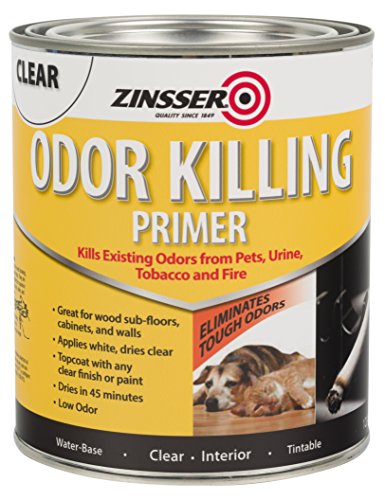
Zinsser Odor Killing Primer
What We Like
- Eliminates pet, smoke, musty odors
- Blocks stains on walls
- Adheres to glossy surfaces without sanding
- Low odor, works with any topcoat
Trade-offs
- Quart size covers only 100 sq ft
- Not designed for exterior use
With a 100-square-foot coverage per quart, this primer handles a single room’s worth of walls or a couple of cabinets in one pass. It’s built to lock in stubborn smells from pets, smoke, and musty conditions, so you can paint over problem areas without the odor bleeding through. The low-odor formula is a relief in tight spaces, and it dries to the touch in 25 minutes, letting you recoat in under an hour. For anyone dealing with a smelly room or old smoke damage, this is the go-to choice to neutralize the source before you add color.
A quart covers up to 100 square feet, so it’s best for a single room or a few walls, not a whole house. The formula is designed to eliminate difficult existing odors from pets, smoke, and fire damage, making it a practical choice when prepping a space that needs a fresh start. It adheres to glossy surfaces like glass and ceramic tile without sanding or deglossing, which saves prep time.
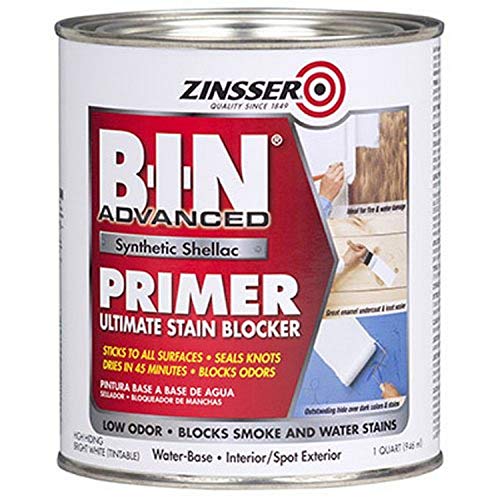
Rust-Oleum Zinsser B-I-N Shellac Primer
What We Like
- Superior odor sealing
- Ultimate stain blocking
- Seals knots, sap and tannin
- Excellent adhesion
Trade-offs
- 0.2 lb weight suggests very small can
- Requires denatured alcohol for cleanup, not soap and water
A shellac-based primer that blocks stains and seals odors more aggressively than water-based alternatives, this quart is built for the toughest jobs: covering smoke damage, pet smells, and heavy tannin bleed from knotty wood. Its high-hiding bright white finish also means fewer coats to achieve a clean base, which saves time on difficult surfaces. If you’re refinishing a piece with deep nicotine stains or priming raw wood that’s prone to sap bleed, this is the primer that stops those problems cold.
Compared to the Zinsser Bulls Eye 1-2-3 Water-Base Primer, which offers easy water cleanup and a slightly larger quart at 2.1 pounds, this B-I-N can is lighter and smaller. That makes it a better choice for targeted spot-priming rather than whole-room coverage. It’s a specialist tool for the worst stain and odor challenges, not a one-size-fits-all primer.
KILZ Original Oil-Based Aerosol Primer

What We Like
- Oil-based formula blocks tough stains
- Fast-drying for quick recoating
- Aerosol spray for easy application
- Seals porous surfaces effectively
Trade-offs
- Interior use only limits outdoor projects
- Oil-based requires mineral spirits for cleanup
- Strong solvent odor during application
Thirteen ounces of oil-based primer in an aerosol can means you get serious stain-blocking power without needing a brush or roller. This is the primer you reach for when water-based just won’t cut it, think nicotine stains, heavy tannin bleed, or old grease marks that keep showing through. The fast-drying formula helps you move on to the next step sooner, so small projects like a single cabinet door or a patch of wall don’t turn into an all-day affair. It is ideal for anyone who needs maximum stain sealing in a convenient spray format, especially for spot-priming or hard-to-reach areas.
The trade-off is the cleanup and fumes. Oil-based primer requires mineral spirits or paint thinner to clean your nozzle and any overspray, which adds a step that water-based primers skip entirely. The strong solvent smell also means you need good ventilation, this is not a product for a closed bedroom or a quick touch-up before guests arrive. If your project involves persistent stains and you can handle the extra prep, this is the spray primer that gets the job done.
KILZ Original Low Odor Primer

What We Like
- Bright white, non-yellowing finish
- Works under oil, alkyd, and water-based paints
- Fast odor dissipation with ventilation
Trade-offs
- Ventilation still required during application
- Oil-based cleanup needs mineral spirits or solvent
- Heavier than water-based alternatives at 3.5 pounds
A 30-minute dry time and one-hour recoat window mean you can finish a room in a single afternoon without waiting around. This primer delivers the stain-blocking adhesion KILZ is known for, but with a noticeably lower solvent odor, ideal for offices, schools, or apartments where strong fumes would be a problem. The bright white, non-yellowing formula also helps your topcoat stay true on surfaces like drywall, wood, or masonry.
Cleanup requires mineral spirits rather than soap and water, and ventilation is necessary despite the reduced smell. For projects where only strong stain-blocking power will do, this is a low-odor option in that category.
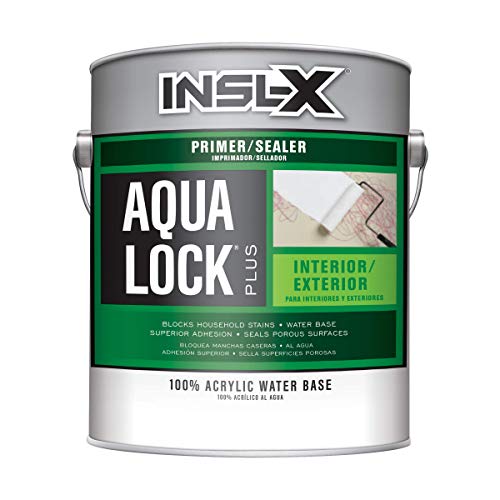
INSL-X Aqua Lock Plus Acrylic Primer
What We Like
- Tack-free in 30 minutes
- Topcoat ready in 1 hour
- Low VOC formula
- Blocks stains on interior & exterior
Trade-offs
- Requires surface temp above 50 °F
- Not suitable for temps below 50 °F or above 90 °F
A tack-free time of 30 minutes and a topcoat window of 1 hour let you move through a room fast, mask, prime, and start your topcoat the same day. That quick-dry acrylic formula also keeps VOCs low, so you don’t have to air out the house for days. It’s a solid match for anyone painting a rental or a kid’s bedroom where speed and low odor matter more than brute stain-blocking power.
Temperature sensitivity is a factor: you need the surface and air between 50 and 90 °F, which rules out cold garages or hot summer decks. For unconditioned outdoor jobs or heavy stains, an oil-based primer may be more forgiving, but this product’s speed and low odor are clear advantages when conditions are right.
Product photos
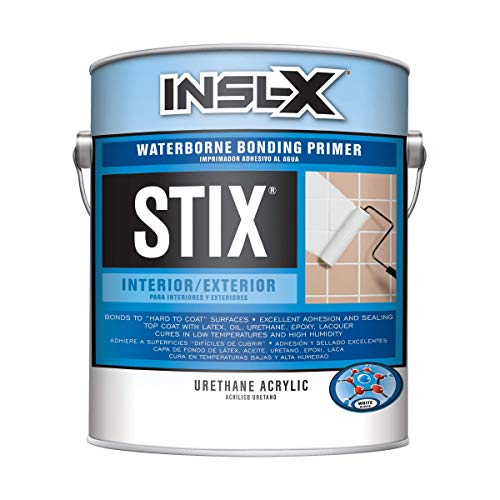
INSL-X Stix Acrylic Bonding Primer
What We Like
- Bonds to glossy tile, PVC, glass
- Works on galvanized metal and fiberglass
- Low VOC, easy soap cleanup
- Cures in temperatures as low as 35°F
Trade-offs
- Requires careful surface prep per label
- Not a stain-blocking primer for water or smoke stains
A bonding primer that sticks to glossy tile, PVC, vinyl, glass, and galvanized metal is rare, and the INSL-X Stix delivers that with an acrylic-urethane formula designed for the most stubborn surfaces. Its 300-400 square feet per gallon coverage is standard for a gallon can, but the real story is adhesion. It bonds to slick tile or plastic trim without the need for extensive surface prep, and it accepts almost any topcoat. For anyone tackling a kitchen backsplash, PVC shutters, or a fiberglass door, this primer turns a headache into a straightforward job. The low-VOC formula and soap-and-water cleanup make it practical for indoor use, and the ability to cure at 35°F extends your working season into cooler months.
Weight and preparation are worth considering. At 11 pounds, this gallon can is heavier than a quart of Zinsser Bulls Eye 1-2-3, so it’s less convenient for small touch-ups or carrying up a ladder. You also need to follow the label’s prep steps carefully, skipping cleaning or deglossing can undermine its bonding power. For the buyer who needs a primer that actually grips the hard-to-coat surfaces other primers slide off, this is the one to reach for. It’s not the lightest or most forgiving option, but when the surface is the problem, Stix is the solution.
Product photos
Glidden Interior/Exterior Stain Block Primer
What We Like
- Adheres to glossy surfaces
- Blocks water, smoke, ink, markers, tannins
- Recoatable in 1 hour
- Soap and water cleanup
Trade-offs
- Flat finish only, no sheen options
- Not formulated for sealing odors
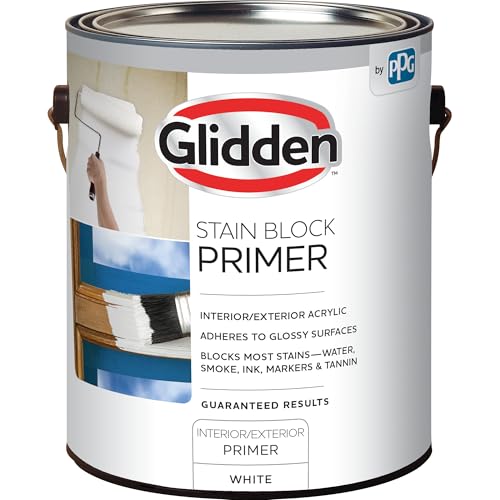
This acrylic primer is designed to adhere to glossy surfaces, which means it can grip slick walls, trim, or cabinets without the need for extensive sanding. It also blocks common stains such as water, smoke, ink, markers, and tannins, and you can apply a topcoat after just one hour. That fast turnaround makes it a practical choice for projects where you want to move quickly, especially on interior or exterior surfaces.
The Glidden Interior/Exterior Stain Block Primer is an acrylic primer that adheres to glossy surfaces, so you can skip sanding before painting. It blocks stains from water, smoke, ink, markers, and tannins, and you can apply a topcoat in just one hour. Cleanup is easy with soap and water, which saves time on a project.
Product photos
Flex Seal Stain Blocking Primer Spray
What We Like
- Blocks water, smoke, tannin, ink, grease stains
- Dries to touch in 15-30 minutes
- Topcoat-ready in 1 hour
- Accepts latex & oil-based topcoats
Trade-offs
- 12 oz can covers less area than a quart
- Spray application needs good ventilation
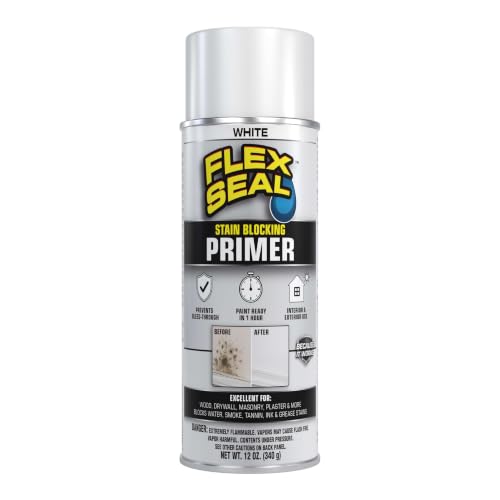
A 15-to-30-minute dry-to-touch time means you can move on to your next coat or topcoat within an hour, which is a real advantage when you’re working on a quick turnaround project. This spray primer blocks water, smoke, tannin, ink, and grease stains, and it bonds to wood, drywall, masonry, and plaster, making it a versatile choice for both interior and exterior surfaces. For anyone who needs a stain-blocking primer that dries fast and accepts both latex and oil-based paints, this is the one to grab when speed matters most.
The 12-ounce aerosol can is small, so for large walls or multiple rooms you’ll need several cans, whereas a quart of Zinsser Bulls Eye 1-2-3 goes further and costs less per ounce. Spray application also requires good ventilation. But if your project is small or you need quick spot-priming before a deadline, the speed and stain-blocking ability make this spray a practical choice.
Product photos
Rust-Oleum Concrete & Garage Recoat Primer

What We Like
- No sanding or grinding required
- Dries in 6 hours for same-day topcoat
- Covers 400 sq ft per gallon
- Low odor water-based formula
Trade-offs
- Designed for concrete, not other surfaces
- Formulated for concrete, not for drywall or wood
Up to 400 square feet per gallon means one coat can cover a typical garage floor, and because no sanding or grinding is needed, you skip the messiest part of the job. This primer is designed for concrete floors that are already coated or sealed, so it fits garages, carports, basements, and laundry rooms. The water-based, low-odor formula dries in as little as six hours, which lets you apply a topcoat the same day. For anyone with a concrete floor project, that speed cuts the work down to a single day.
No sanding or grinding is needed, so you can coat a previously painted or sealed concrete floor without the dusty prep work that usually comes with repainting. One gallon covers up to 400 square feet per coat, and the manufacturer recommends just one coat, which keeps the job simple and fast. The low-odor, water-based formula is designed for garages, carports, basements, and laundry rooms, so it’s purpose-built for those spaces.
Product photos
How We Evaluated Kilz Primers
Our research began with a close look at each primer’s technical specifications from the manufacturer, things like recommended surfaces, dry times, temperature ranges, and cleanup requirements. We then compared those specs against the real-world priorities that DIYers and painters face: blocking stains, bonding to tricky surfaces, and working within a reasonable schedule.
The four criteria that mattered most were stain-blocking capability, adhesion to glossy or non-porous surfaces, dry and recoat times, and ease of cleanup. A primer that excels at stain blocking but requires mineral spirits for cleanup may be the right choice for a smoke-damaged room, while a water-based option with soap-and-water cleanup suits a quick weekend trim job.
This is a research-led evaluation, not a hands-on test. We gathered information from product documentation, expert round-ups, and patterns in owner feedback to identify each primer’s strengths and trade-offs. The result is a practical guide that helps you match a primer to your specific project needs.
What To Look For In Kilz Primers
The right primer depends on what you’re covering and what you’re painting. Start by identifying the problem, stains, odors, glossy surfaces, or bare wood, then choose a formula that solves it.
Match the primer type (water-based, oil-based, or shellac) to your surface and stain. Water-based for general walls, oil-based for tough stains, shellac for odors and severe stains.
Primer Type: Water-Based, Oil-Based, or Shellac
Water-based primers like Zinsser Bulls Eye 1-2-3 are the most convenient: they clean up with soap and water, have low odor, and dry quickly. Oil-based primers like KILZ Original block heavy stains from smoke, grease, and water marks but require mineral spirits for cleanup and have stronger odors. Shellac primers like Zinsser B-I-N offer the strongest stain and odor sealing but need denatured alcohol for cleanup and are best for small to medium surfaces.
Stain and Odor Blocking
Not all primers block stains equally. Water-based formulas handle light to moderate stains like marker or water spots. Oil-based primers block tougher stains like smoke and grease. Shellac primers are the gold standard for sealing in odors from pet urine, smoke, and musty smells. If odor sealing is your priority, choose a primer specifically formulated for that purpose, like the Zinsser Odor Killing Primer.
Adhesion to Glossy and Difficult Surfaces
Some primers are designed to bond to glossy surfaces without sanding, saving you time and effort. Look for primers that specify adhesion to tile, glass, PVC, or glossy paint. The INSL-X Stix Acrylic Bonding Primer, for example, bonds to these tricky surfaces. If you’re painting over a glossy finish, a bonding primer is essential for preventing peeling.
Dry Time and Recoat
Fast-drying primers let you finish a project in a day. Water-based primers can be tack-free in 30 minutes and ready for topcoat in about an hour. Oil-based primers take longer to dry, often requiring several hours before recoating. Shellac primers dry very quickly, sometimes in under an hour. Consider your schedule and ventilation when choosing.
- Check the label for minimum and maximum application temperatures.
- Confirm the primer is compatible with your topcoat (latex or oil-based).
- For odor sealing, look for a primer that says “odor killing” or “odor sealing.”
- For exterior use, verify the primer is rated for outdoor surfaces.
- For concrete floors, choose a primer designed specifically for that surface.
When in doubt, choose a primer that matches the most demanding condition you’re covering, stains, odors, or difficult surfaces, rather than a general-purpose option.
Kilz Primers Compared
The table below compares the 10 primers across key specs like formula type, dry time, and best use, so you can quickly narrow your options.
| Product | Surface Use | Stain Blocking | Base/Type |
|---|---|---|---|
| Zinsser Bulls Eye 1-2-3 Water-Base Primer | Interior & exterior | Stain-blocking resins | Water-base |
| Zinsser Odor Killing Primer | Interior | Blocks stains | Water-base |
| Rust-Oleum Zinsser B-I-N Shellac Primer | N/A | Ultimate stain blocking | Shellac |
| KILZ Original Oil-Based Aerosol Primer | Interior only | Stain-blocking | Oil-based aerosol |
| KILZ Original Low Odor Primer | Interior | Stainblocker | Oil-based |
| INSL-X Aqua Lock Plus Acrylic Primer | Interior & exterior | Stain blocking | 100% Acrylic Water-Based |
| INSL-X Stix Acrylic Bonding Primer | N/A | N/A | Acrylic-urethane |
| Glidden Interior/Exterior Stain Block Primer | Interior/exterior | Blocks most stains | Acrylic |
| Flex Seal Stain Blocking Primer Spray | Interior Exterior | Blocks water, smoke, tannin, ink, grease stains | N/A |
| Rust-Oleum Concrete & Garage Recoat Primer | N/A | N/A | Water-based |
Frequently Asked Questions
What is the best Kilz primer for covering smoke damage?
The Rust-Oleum Zinsser B-I-N Shellac Primer is the strongest option for sealing in smoke odors and stains. Its shellac formula blocks even severe smoke damage, though it requires denatured alcohol for cleanup and works best on small to medium surfaces.
Can I use a water-based primer over oil-based paint?
Yes, but you need a bonding primer like the Zinsser Bulls Eye 1-2-3 or INSL-X Stix that is designed to adhere to glossy or previously painted surfaces. Scuff sanding the oil-based paint first improves adhesion even further.
How long does Kilz primer take to dry before painting?
Dry time varies by formula. Water-based primers like INSL-X Aqua Lock Plus are tack-free in 30 minutes and ready for topcoat in 1 hour. Oil-based primers take several hours, while shellac primers dry in under an hour. Always check the label for specific recoat times.
What is the difference between Kilz Original and Kilz 2?
Kilz Original is an oil-based primer that blocks tough stains like smoke and grease and requires mineral spirits for cleanup. Kilz 2 is a water-based primer that blocks moderate stains and cleans up with soap and water, making it more convenient for general use.
Does Kilz primer block pet urine odors?
Yes, but only specific primers are formulated for odor sealing. The Zinsser Odor Killing Primer is designed to eliminate pet odors on interior walls, and the Zinsser B-I-N Shellac Primer offers even stronger odor blocking for severe cases.
The Bottom Line
For most projects, the Zinsser Bulls Eye 1-2-3 Water-Base Primer is the best overall choice. It bonds to glossy surfaces without sanding, blocks stains, and works indoors and outdoors, making it a versatile pick for DIYers and painters alike. If your main concern is sealing in pet or smoke odors, the Zinsser Odor Killing Primer is the better option.
Budget-conscious shoppers should consider the Glidden Interior/Exterior Stain Block Primer, which offers good adhesion to glossy surfaces and soap-and-water cleanup at an affordable price point. For those tackling severe stains or odors on a small surface, the Rust-Oleum Zinsser B-I-N Shellac Primer is worth paying more for its superior sealing power.
The single most important factor in choosing a primer is matching the formula to your specific surface and stain. Get that right, and the rest, dry time, cleanup, application, falls into place.
