
9 Best Indoor Paint Primers in 2026
This post contains affiliate links. As an Amazon Associate, we earn from qualifying purchases.
The Zinsser Bulls Eye 1-2-3 Primer & Sealer wins as the best overall indoor paint primer because it bonds to glossy surfaces without sanding and seals tough stains, making it a true all-in-one solution. For those tackling moisture issues, the Zinsser Mold Killing Primer is our best for mold prevention, while the KILZ Original Low Odor Primer is the top choice for reducing solvent fumes in occupied spaces.
Every primer promises a smooth base, but the real challenge is matching the formula to your specific wall condition, stains, glossy trim, or damp spots. Choose the wrong one, and you risk peeling, bleed-through, or wasted effort. This guide is built from manufacturer specifications, expert recommendations, and patterns in owner feedback to help you pick the right primer for your project.
Top 9 Indoor Paint Primers in the Market
Certain content that appears on this site comes from Amazon. This content is provided "as is" and is subject to change or removal at any time.
The Best Indoor Paint Primers, Reviewed
Zinsser Bulls Eye 1-2-3 Primer & Sealer

What We Like
- Bonds to glossy surfaces without sanding
- Stain-blocking resins seal tough marks
- Works indoors and outdoors
- Rust-inhibitive for metal priming
Trade-offs
- Not formulated to kill mold or mildew
- Requires stirring before each use
A primer that sticks to glossy surfaces without scuff sanding saves hours of prep work, and that alone makes this the most versatile option for indoor projects. Zinsser Bulls Eye 1-2-3 bonds to slick trim, cabinets, and even ferrous metal, while its stain-blocking resins seal water marks, smoke stains, and crayon scribbles underneath the paint. It works both indoors and out, and you can apply it in temperatures as low as 35°F, so a chilly garage or basement workshop won’t shut you down. For anyone juggling multiple surfaces in one room, wood, metal, old paint, shiny laminate, this is the one can that handles them all without needing separate primers.
This primer does not contain antimicrobial agents to actively kill or block mold and mildew. In a damp bathroom or basement prone to moisture, you’ll want to grab a specialty primer like Zinsser’s Mold Killing Primer instead. But for general-purpose priming across most of your home, the no-sanding adhesion and stain-blocking power make Bulls Eye 1-2-3 the primer you reach for first.
Zinsser Mold Killing Primer

What We Like
- Low odor, cleans with soap and water
- Dries to touch in 5 minutes
- Works under any topcoat
Trade-offs
- Small 13 oz can covers only 8-10 sq. ft.
- Requires a topcoat for finished appearance
The water-based formula keeps the smell low and cleans up with just soap and water, while the five-minute dry time means you can move through a small repair quickly.
Coverage is limited: at only 8-10 square feet per 13-ounce aerosol can, you’ll need multiple cans for a full wall. That’s fine for a patch or a small closet, but for a whole room you’d be better off with a quart of Zinsser Bulls Eye 1-2-3 Primer & Sealer, which covers far more area per dollar and still handles stain blocking. The aerosol format also means you can’t roll or brush it on, so if you prefer a traditional application, this isn’t the one. Stick with this can for targeted mold treatment, not for priming an entire living space.
KILZ Original Low Odor Primer

What We Like
- Lower solvent odor with fast dissipation
- Stain-blocking and adhesion of original KILZ
- Works on many interior surfaces
- Non-yellowing bright white finish
Trade-offs
- Ventilation still required during application
- Quart size covers only 75-100 sq ft per gallon
- Not suitable for exterior use
A lower-odor formulation that still delivers the stain-blocking and adhesion KILZ Original is known for makes this primer a smart pick for rooms where lingering solvent smell is a concern. It dries to the touch in 30 minutes and accepts a topcoat after just one hour, so you can move through a project quickly. The bright white, non-yellowing finish also means it won’t alter the color of your paint, which is especially helpful when you’re working with lighter shades or pastels.
The key advantage of this primer is its stain-blocking power with a lower solvent odor than typical oil-based primers, but you still need to ventilate the space during application. It dries to the touch in 30 minutes and can be recoated after an hour, so it fits into a quick painting schedule. If you need the adhesion and stain blocking of an oil-based formula but want less lingering smell, this primer balances performance with a more tolerable work environment.
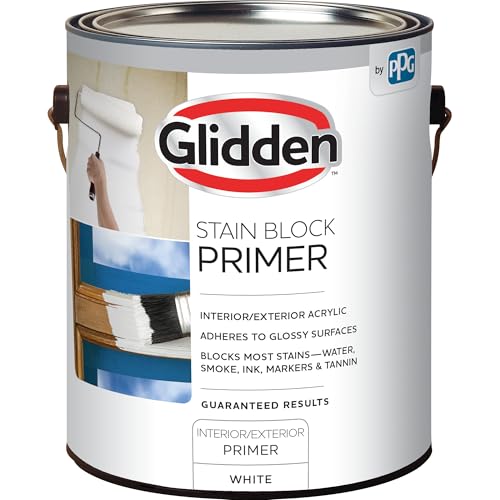
Glidden Stain Block Primer
What We Like
- Blocks water, smoke, ink, markers, tannins
- Adheres to glossy surfaces without sanding
- Topcoat ready in just 1 hour
- Easy soap-and-water cleanup
Trade-offs
- Acrylic formula less effective on heavy oil-based stains
- Requires a separate topcoat for color
A one-hour recoat time means you can move from primer to topcoat in a single afternoon, which is rare for a stain blocker that handles water, smoke, ink, markers and tannins. This acrylic primer also sticks to glossy surfaces without sanding, saving you prep work on previously painted trim or cabinets. For indoor projects where old stains or dark marks need to disappear before a fresh coat of paint, this is the primer that gets the job done fast and cleanly.
Compared to Zinsser Bulls Eye 1-2-3, which also blocks stains but comes in a quart, this gallon size offers more paint for larger jobs. If you need a primer that kills mold or mildew, the Zinsser Mold Killing Primer is a better fit for those specific concerns.
Product photos
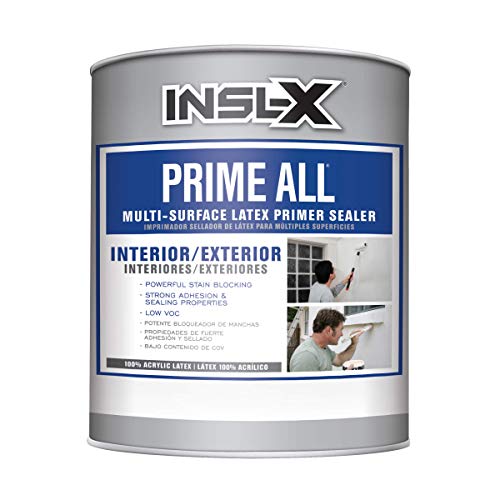
INSL-X Prime All Multi-Surface Primer
What We Like
- Works on interior & exterior surfaces
- Quick drying; recoat in one hour
- Mildew resistant coating
- Strong adhesion & stain blocking
Trade-offs
- Quart size only; larger projects need multiple cans
- No oil-based formula for heavy tannin blocking
A 100% acrylic formula that seals both interior and exterior surfaces means you can grab one can for everything from a basement wall to a garden shed. This primer sticks to a wide variety of materials, blocks stains, and resists mildew, so it’s a natural fit for anyone who wants a single product that handles multiple jobs without switching cans. The quick drying time, topcoat in as little as one hour, keeps your project moving fast, whether you are prepping a single door or a whole room.
The 100% acrylic formula seals a variety of interior and exterior surfaces, so you can use it on everything from drywall to siding without switching primers. It dries quickly, you can apply a topcoat in as little as one hour, which keeps a project moving. The coating also resists mildew, adding protection in damp areas like bathrooms or basements.
Product photos
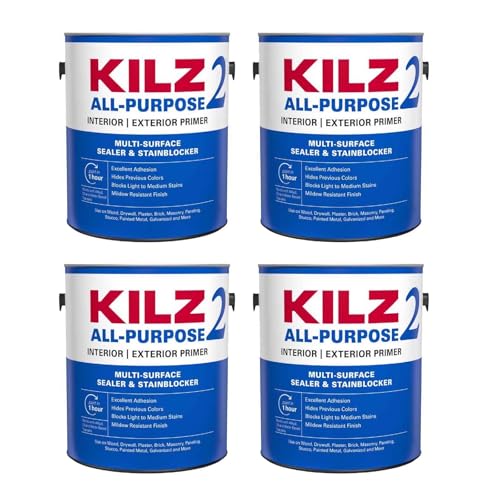
Factory Hardware Store 17937 – 4 Indoor Paint Primer
What We Like
- Dries in 30 minutes
- Recoatable in 1 hour
- Works on many indoor surfaces
- Bulk 4-pack for large jobs
Trade-offs
- At 45 lb, heavy to carry
A 30-minute dry time and 1-hour recoat window mean you can finish a room in a single afternoon without waiting around. This water-based acrylic latex primer sticks to drywall, wood, plaster, masonry, stucco, brick, paneling, and painted metal, so it handles almost any indoor surface you throw at it. The four-gallon pack is designed for large projects, so you won’t need to buy more mid-job. It helps create a uniform finish that supports improved topcoat appearance, making color transitions easier.
Weight is the main downside: at 45 pounds, the four-pack is a beast to lug up stairs or carry across a job site. If you only need a quart for a single wall, something like Zinsser Bulls Eye 1-2-3 comes in a lighter quart container. But for speed and versatility across many surfaces, this Factory Hardware Store primer is a practical choice for big projects that need fast turnaround.
Product photos
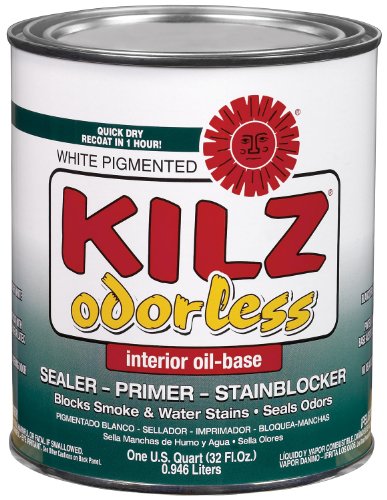
Masterchem 10042 Indoor Paint Primer
What We Like
- Low-odor oil-based formula
- Blocks stains and odors
- Mold-blocking properties
- Covers 75-87.5 sq ft per coat
Trade-offs
- Not waterproof; indoor dry environments only
- Oil-based means longer dry time and solvent cleanup
- Limited to interior use
A 32-ounce can covers 75 to 87.5 square feet per coat, so a single can handles a medium-sized room without needing a second. This oil-based primer blocks stains and odors, and its mold-blocking formula helps in areas prone to mildew. The low-odor formulation means less smell than typical oil-based primers, so you can work indoors without strong fumes.
This primer is not waterproof and is meant only for dry interior environments, so it won’t hold up in damp basements or exterior projects. Compared to the Zinsser Bulls Eye 1-2-3 primer, which is another interior stain-blocking option, the Masterchem uses an oil-based formula that requires mineral spirits for cleanup and a longer wait between coats. If you need a stain blocker and can handle the solvent cleanup, this is a focused tool for the job. For a water-based alternative with easier cleanup, the Zinsser Bulls Eye 1-2-3 is a different choice.
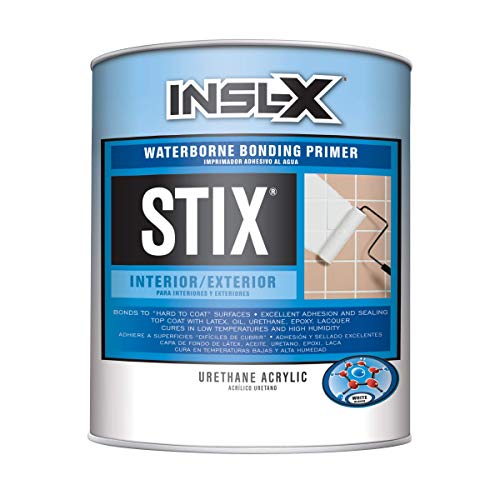
INSL-X Stix Acrylic Waterborne Bonding Primer
What We Like
- Bonds to glossy tile and glass
- Works on PVC, vinyl, and plastic
- Low VOC for safer application
- Cures in temperatures as low as 35°F
Trade-offs
- Coverage limited to 75-100 sq ft per quart
- Requires careful surface prep per label instructions
The INSL-X Stix Acrylic Waterborne Bonding Primer is built for the surfaces other primers simply refuse to stick to, glossy tile, glass, PVC, vinyl, and even galvanized metal. Its acrylic-urethane formula bonds to these hard-to-coat materials, and it cures in temperatures as low as 35°F, so you can work in chilly garages or basements. With low VOCs and soap-and-water cleanup, it keeps the job pleasant and simple, making it a good choice when you need adhesion to glossy tile, PVC, vinyl, plastic, glass, or fiberglass.
A quart covers only 75 to 100 square feet, so a large project like a full wall of glazed block will require multiple quarts or stepping up to a gallon. Compared to the Zinsser Bulls Eye 1-2-3, which is a water-base primer-sealer for interior use, the Stix is formulated for more challenging surfaces like glossy tile and metal. For anyone facing a truly stubborn surface, this primer offers adhesion where standard primers may not.
KILZ Original Aerosol Primer/Sealer

What We Like
- Oil-based formula blocks tough stains
- Fast-drying aerosol for quick jobs
- Sealer and primer in one coat
Trade-offs
- Strong solvent odor during application
- Aerosol can limits coverage on large areas
This oil-based aerosol primer blocks stains, so it handles the kind of marks that water-based primers might not seal. The 13-ounce can is sized for spot-priming, not for coating entire walls. It dries fast, letting you apply topcoat sooner than with slower-drying primers. That makes it a practical tool for a single piece of furniture or a small repair where stain-blocking is the priority.
The aerosol format is convenient for quick trigger-and-spray work, but the can won’t cover a full wall or cabinet set. For small, stain-heavy fixes, this primer does the job. Plan for the fumes and keep a fan running.
Product photos
How We Evaluated Indoor Paint Primers
Our evaluation is research-based, relying on manufacturer data sheets, expert round-ups from painting professionals, and consistent patterns in owner feedback. We analyzed how each primer performs across the scenarios that matter most to homeowners and DIYers.
The criteria that mattered most were adhesion to difficult surfaces (glossy trim, tile, metal), stain-blocking capability (water, smoke, ink, tannins), dry and recoat times, and application odor. A primer that excels at bonding but has a strong solvent smell is a different tool than a low-odor option for a bedroom refresh.
A research-led approach has limits: real-world results vary with surface prep, temperature, and humidity. We prioritize primers with clear label instructions and consistent performance reports, but no guide can replace testing a small patch in your own space.
What To Look For In Indoor Paint Primers
Choosing a primer means matching the formula to your surface and the problem you are solving, stain blocking, adhesion, or moisture control.
Look for a primer that solves your specific wall problem: stains need a stain-blocking formula, glossy surfaces need a bonding primer, and damp areas need a mold-resistant or mold-killing option.
Adhesion and Surface Compatibility
The most common mistake is skipping a bonding primer on glossy or slick surfaces. Water-based bonding primers like the INSL-X Stix can grip tile, glass, and PVC without sanding, saving hours of prep. Oil-based primers offer excellent adhesion to wood and metal but require solvent cleanup. For mixed surfaces (glossy trim, drywall, metal), a universal primer like the Zinsser Bulls Eye 1-2-3 handles them all in one coat.
Stain Blocking and Odor Sealing
Not all stains are equal. Water-based stain blockers work well on ink, marker, and light smoke stains, while oil-based formulas are better at sealing heavy tannins from wood and persistent odors. If you are painting over a smoker’s walls or water-damaged ceiling, an oil-based sealer like the Masterchem 10042 is the right choice. For general stain blocking with faster dry times, an acrylic option like the Glidden Stain Block Primer works in one hour.
Dry Time and Recoat Schedule
Fast-drying primers let you finish a room in a day. Some primers, like the Factory Hardware Store 17937, dry in 30 minutes and are recoatable in one hour. Others, especially oil-based formulas, require longer drying times between coats. Check the label for recoat windows and factor in ventilation, faster drying often means more solvent fumes in the air.
- Match the primer to the surface: bonding for glossy, stain-blocking for marks, mold-killing for moisture.
- Check dry time against your schedule: fast-drying primers are ideal for one-day projects.
- Confirm the primer works under your topcoat: most accept latex or oil-based paint, but always verify.
- Read the coverage estimate: a quart covers roughly 75-100 sq. Ft., while a gallon covers more.
If you are priming over a stain you can still see, it will bleed through the topcoat, always use a dedicated stain-blocking primer.
Indoor Paint Primers Compared
The table below compares the key specs of each primer, including surface compatibility, dry time, and best use case, so you can see at a glance which one fits your project.
| Product | Surface | Stain Blocking | Dry Time |
|---|---|---|---|
| Zinsser Bulls Eye 1-2-3 Primer & Sealer | Interior & exterior | Stain-blocking resins | N/A |
| Zinsser Mold Killing Primer | Interior | N/A | 5 minutes to touch |
| KILZ Original Low Odor Primer | Interior | Stainblocker | 30 min to touch |
| Glidden Stain Block Primer | Interior/exterior | Water, smoke, ink, markers, tannins | N/A |
| INSL-X Prime All Multi-Surface Primer | Interior & exterior | Stain blocking | Topcoat in 1 hour |
| Factory Hardware Store 17937 – 4 Indoor Paint Primer | Interior/exterior | Stain blocker | 30 minutes |
| Masterchem 10042 Indoor Paint Primer | Interior | N/A | N/A |
| INSL-X Stix Acrylic Waterborne Bonding Primer | Interior or exterior | N/A | N/A |
| KILZ Original Aerosol Primer/Sealer | Interior only | Stain-Blocking | Fast-Drying |
Frequently Asked Questions
What is the best primer for covering dark paint?
A high-hide white primer like the Zinsser Bulls Eye 1-2-3 or KILZ Original is formulated to block dark colors. For the best coverage, use a tinted primer that matches your topcoat color.
Can I use indoor primer on outdoor surfaces?
Only if the primer is labeled for both interior and exterior use. The Zinsser Bulls Eye 1-2-3 and INSL-X Prime All Multi-Surface Primer work indoors and out. Most indoor-only primers will fail when exposed to moisture and UV light.
Do I need to sand glossy surfaces before priming?
Not if you use a bonding primer like the INSL-X Stix or Zinsser Bulls Eye 1-2-3. These primers are designed to grip glossy surfaces without sanding. For non-bonding primers, light sanding is still recommended.
How long should primer dry before painting?
Dry times vary by formula. Water-based primers dry in 30 minutes to 1 hour, while oil-based primers may need longer. Always check the label for recoat time, not just dry-to-touch time.
What primer kills mold and mildew?
The Zinsser Mold Killing Primer is specifically formulated to kill existing mold and mildew on surfaces. For prevention in damp areas, look for a mildew-resistant coating like the one on the INSL-X Prime All Multi-Surface Primer.
The Bottom Line
For most homeowners and DIYers, the Zinsser Bulls Eye 1-2-3 Primer & Sealer is the best overall choice because it bonds without sanding, blocks stains, and works on nearly any surface. It is the one primer that handles the mixed conditions of a typical room, glossy trim, patched drywall, and stained walls.
If you are painting a bathroom or basement with mold concerns, the Zinsser Mold Killing Primer is the right pick for spot treatment. For a large project where odor is a concern, the KILZ Original Low Odor Primer offers strong stain-blocking with less solvent smell.
The single most important buying factor is matching the primer to your surface and problem, not buying the most expensive or fastest-drying option. A few minutes reading the label will save you a coat of paint and a lot of frustration.
