
9 Best Header Paint in 2026
This post contains affiliate links. As an Amazon Associate, we earn from qualifying purchases.
For exhaust headers and manifolds that see extreme heat, Rust-Oleum Automotive High Heat Spray Paint is our best overall pick. It withstands intermittent heat up to 2000°F while its Stops Rust formula prevents corrosion from grease, oil, gas, and salt. For adjustable spray control, consider the Best Versatile Application pick, and for a primer base before a final color coat, look to the Best For Headers & Manifolds option.
The real challenge with header paint isn’t just finding something that can take the heat, it’s about adhesion, corrosion resistance, and whether you need a spray, brush, or primer. A paint that flakes off after a few heat cycles or fails to protect against road salt is worse than no paint at all.
This guide is built from manufacturer specifications, expert round-ups, and patterns in owner feedback. We’ve ranked nine options based on heat tolerance, application method, durability, and real-world protection to help you choose with confidence.
Top 9 Header Paints in the Market
Certain content that appears on this site comes from Amazon. This content is provided "as is" and is subject to change or removal at any time.
The Best Header Paints, Reviewed
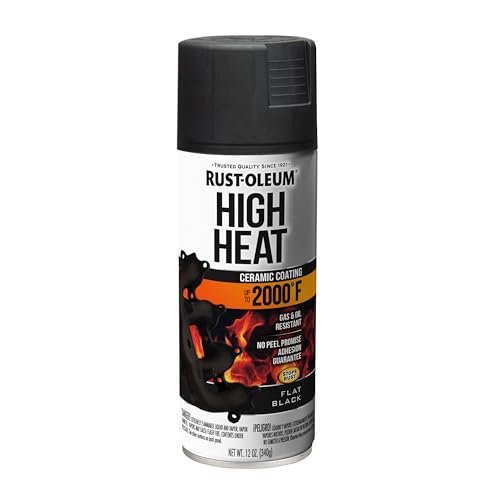
Rust-Oleum Automotive High Heat Spray Paint
What We Like
- Withstands intermittent heat up to 2000°F
- Stops Rust formula prevents corrosion
- Resists grease, oil, gas, and salt
- Dries to touch in 30 minutes
Trade-offs
- Only covers 10 sq. ft. per can
- Flat finish won't match glossy engine bays
With a heat resistance rating up to 2000°F, this paint is formulated for automotive parts that see intermittent high heat, such as exhaust components. The Stops Rust formula provides corrosion protection, and the coating resists grease, oil, gas, and salt, making it a practical choice for engine bay or exhaust work. The flat black finish gives a clean, uniform look that blends well under the hood.
The Rust-Oleum High Heat formula resists intermittent temperatures up to 2000°F, which is enough for exhaust manifolds and header pipes on most cars. With a coverage of 10 sq. ft. per can, you can expect to finish a typical set of short headers with one can, though longer tubes might call for a second. The standard aerosol nozzle keeps application straightforward, and the flat black finish hides grime well on underhood parts.
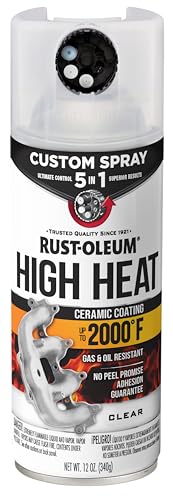
Rust-Oleum High Heat 5-in-1 Spray Paint
What We Like
- Five spray patterns for precise control
- Gas and oil resistant ceramic coating
- Heat resistant up to 2000°F
- Sprays from any angle
Trade-offs
- Gloss clear finish shows imperfections on bare metal
- 30-minute dry time requires patience between coats
- Intermittent heat rating, not for sustained 2000°F
The five spray patterns on the dial let you switch between high output, standard, low output, vertical fan, and horizontal fan without changing cans. That versatility, paired with a 2000°F intermittent heat ceiling and a ceramic formula that resists gas and oil, makes this a practical choice when you’re painting multiple parts with different shapes in one session. It works for anyone who wants one product that adapts to the job rather than buying separate paints for each surface.
The gloss clear finish lays down a protective shell, but on bare or uneven header metal it will highlight every weld bead and scratch rather than hiding them. For a raw, matte look that blends surface imperfections, the Rust-Oleum Automotive High Heat in flat black offers the same heat rating with a more forgiving sheen. If you want a single can that covers everything from exhaust manifolds to engine blocks with pattern control, this is it.
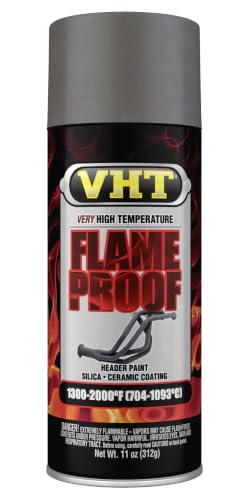
VHT Flameproof Coating Flat Primer Gray
What We Like
- Ceramic resins resist 2000°F heat
- EZ Touch spray nozzle for control
- Dries to touch in 30 minutes
Trade-offs
- Must be cured for maximum performance
- Primer only, not a final color coat
With ceramic resins rated up to 2000°F, this primer is built for the extreme heat headers and manifolds throw at it. That temperature ceiling means it won’t blister or peel when your engine really works, making it a smart foundation for any high-heat paint job. It dries to the touch in 30 minutes, so you can move through your project without long waits between coats.
The trade-off is that this is a primer, not a finish color, so you’ll need a separate topcoat for the final look. And like any serious high-temp coating, it demands a proper cure cycle to reach its full heat resistance; skipping that step means the paint won’t hold up. Best for anyone who wants a heat-tolerant base before applying their final color.
Product photos
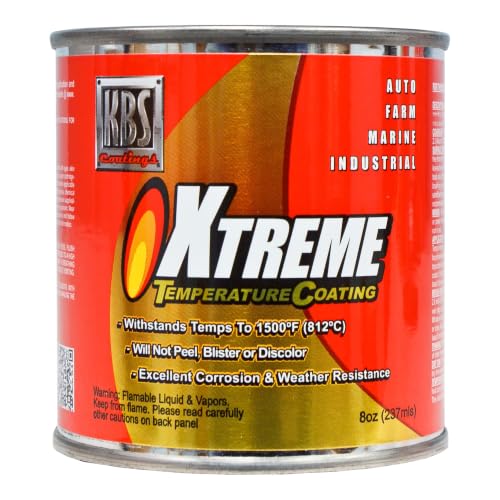
KBS Coatings XTC High Temp Paint
What We Like
- Guaranteed not to burn off
- Withstands thermal shock after curing
- Resists scratching, marring, and chalking
Trade-offs
- Requires heat cure for full hardness
- Thick coats blister if applied too heavy
- Needs bare metal prep with sandblasting or wire wheel
A 1500°F rating and a guarantee it won’t burn off make this brush-on paint a standout for anyone who wants a finish that truly stays put on headers or exhaust manifolds.
KBS Coatings XTC High Temp Paint requires a cure process that takes more time than a spray-and-go option like Rust-Oleum Automotive High Heat Spray Paint, which air-cures with heat from normal use. After the final coat dries for eight hours, you need to bake it at 350°F for 20 to 30 minutes, either in an oven or by running the engine in short cycles until the smoke clears. But if you want a finish that is guaranteed not to burn off and resists thermal shock after curing, the extra effort pays off in durability that a full heat cure delivers.
RAPTOR Flameproof Automotive Body Paint

What We Like
- Withstands temperatures up to 2000°F
- Anti-clog spray nozzle design
- Resists oil and automotive fluids
- Fast-drying smooth finish
Trade-offs
- Requires full cure before maximum protection
- Not available in black or clear finishes
A 2000°F temperature ceiling means this paint can handle the brutal heat of exhaust manifolds and headers without blistering or peeling. The advanced ceramic formula also shrugs off oil and other automotive fluids, so your engine bay stays looking clean even after a leak. That combination of extreme heat and chemical resistance makes it a strong fit for anyone building a high-performance or daily-driven car where underhood conditions are harsh.
If you need a black or clear finish, the Rust-Oleum High Heat 5-in-1 Spray Paint offers a gloss clear option with the same 2000°F rating. But if red works for your project and you want a tough, fast-drying coating that resists fluids, the RAPTOR delivers extra protection where it counts.
Product photos
Seymour Hot Spot High Heat Spray Paint

What We Like
- Withstands 1200°F continuous heat
- Porcelain-like bond resists peeling
- VOC compliant formula
- Works on grills, stoves, engines
Trade-offs
- Only one color (aluminum) listed in product title
- Requires heat curing for maximum durability
A 1200°F continuous heat rating means this paint stays put on headers, exhaust pipes, and stove surfaces that run hot for hours, not just during a quick warm-up. The porcelain-like bond forms at high temperatures to resist peeling and blistering, which is exactly what you need when flames or engine heat cycle on and off day after day. It suits anyone painting a wood stove, fire pit, or automotive exhaust where steady high heat is the norm and you want a finish that won’t flake off mid-season.
Seymour Hot Spot High Heat Spray Paint is rated for continuous use up to 1200°F, which is lower than the 2000°F peak rating on the Rust-Oleum Automotive High Heat Spray Paint listed in the guide. So if your headers see sustained temps above 1200°F, that product may be a better fit. But for most grills, mufflers, and stove pipes that stay below 1200°F, Seymour’s formula delivers a durable bond and is free of lead, cadmium, mercury, chromates, and chlorinated solvents. It is a focused, no-surprises choice for continuous-heat metal surfaces.
Eastwood High Temperature Silver Coating

What We Like
- Resists heat up to 1400°F
- Easy spray-on application
- Covers 6 sq ft per can
Trade-offs
- Lower heat tolerance than 2000°F options
- Not suitable for exhaust systems exceeding 1400°F
Each can covers roughly six square feet or two standard cast iron manifolds, so the math works out neatly for most header systems. This is a practical choice for someone who wants a clean silver look and doesn’t want to hunt for a second can halfway through.
The 1400°F rating is lower than the 2000°F ceiling of paints like Rust-Oleum Automotive High Heat, so for applications that exceed that threshold, a higher-rated coating would be needed. The silver color is specified in the product name, which suits a bright look but may not appeal to those wanting a different finish. For projects within its temperature range, this two-pack provides the coverage and heat protection.
POR-15 High Temperature Paint Manifold Gray

What We Like
- Withstands 1200°F without cracking or peeling
- Weather, salt, and moisture resistant
- Meets military specification MIL-C-13370
- Corrosion-resistant finish for metal surfaces
Trade-offs
- Requires 24-hour cure before high heat exposure
- Surface must be meticulously cleaned and roughened
- Glossy surfaces need sanding before recoating
POR-15 High Temperature Paint shrugs off heat up to 1200°F, so it won’t crack, chip, or peel on headers that see brutal thermal cycles. Its corrosion-resistant formula also stands up to road salt and moisture, making it a natural fit for daily drivers or project cars that live outside. The manifold gray finish stays rich and uniform without discoloring, and the paint meets military spec MIL-C-13370 for durability, a level of reliability that suits both DIY restorers and professional builders.
Prep and patience are the main demands here: surfaces must be clean, dry, and free of every speck of grease or old paint, and glossy areas need sanding with 320 grit before the second coat. After painting, you have to let it cure a full 24 hours before the engine sees 300°F or more. That is a longer cure than some other high-heat paints, but the extra steps deliver a durable corrosion barrier that resists chipping in demanding conditions.
Product photos
ZyCoat ZyBar High Temperature Coating

What We Like
- Lowers radiant heat over 40%
- Hardness 7.9 pencil scale
- Bonds to itself for touch-ups
- 600+ hours salt spray resistance
Trade-offs
- 4-ounce can covers less area than spray cans
- Bronze satin finish only
- Requires tack coat for missed spots
Reducing underhood temperatures by over 40% means the coating keeps working even after the engine is off, so you can get back to work on the engine within minutes of a run. That kind of thermal management matters for racers or anyone who frequently opens the hood after a hard drive. The 7.9 pencil-scale hardness also beats typical ceramic paints (which rate 6.2 pre-glass transition), so the finish resists chipping from tools and engine bay grime.
Coverage is the main trade-off with this product: a 4-ounce can goes a lot less distance than a full aerosol like Rust-Oleum’s 11-ounce High Heat spray. So if you are painting a full set of long-tube headers, you will need multiple cans or a different application plan. The bronze satin color also limits your finish options compared to the flat black or silver alternatives in this guide. For targeted heat management and durability where it counts, the ZyBar delivers, but budget for extra cans if your project is large.
Product photos
How We Evaluated Header Paints
This evaluation draws on manufacturer data, expert recommendations from automotive restoration and DIY sources, and patterns reported by owners in long-term use. Published specifications are cross-referenced with verified user experiences to identify consistent strengths and trade-offs.
The four criteria that mattered most were heat resistance (continuous vs. Intermittent), surface protection (rust, oil, gas, and salt resistance), application ease (spray patterns, brush-on, cure time), and finish durability (scratch, mar, and thermal shock resistance). A 2000°F intermittent rating is not the same as a 1200°F continuous rating. We treated those distinctions carefully.
The honest limit of a research-led evaluation is that real-world conditions, header surface prep, ambient humidity, and specific engine temperatures, vary widely. We flag each pick’s known trade-offs so you can match the paint to your project’s demands.
What To Look For In Header Paints
Choosing header paint means balancing heat tolerance with the protection and finish you need. Focus on temperature ratings, application method, and corrosion resistance first.
Key factors: Choose paint rated for your header’s peak temperature (intermittent vs. Continuous). Spray paints offer convenience; brush-on paints deliver thicker, tougher films. Always prioritize corrosion and chemical resistance for long-lasting results.
Heat Rating: Intermittent vs. Continuous
The single most important spec is whether a paint is rated for intermittent or continuous heat. Intermittent ratings (like 2000°F) mean the paint can survive short bursts at that temperature but not sustained exposure. Continuous ratings (like 1200°F) mean the paint holds up under steady, prolonged heat. For street-driven headers that cool between drives, intermittent-rated paints often suffice. For race cars or equipment that runs hot for hours, seek a continuous-rated formula.
Application Method: Spray vs. Brush-On
Spray paints offer even coverage and faster application, especially on complex header shapes. Look for adjustable spray patterns and 360-degree spray capability for hard-to-reach areas. Brush-on paints, like those from KBS Coatings, build a thicker film that resists scratching and chalking, but they require meticulous surface prep (often sandblasting or wire wheeling) and a heat-cure step for full hardness. Primer coats add an extra step but improve topcoat adhesion.
Corrosion and Chemical Resistance
Headers are exposed to road salt, moisture, oil, and fuel. A paint that resists these elements prevents rust from starting under the coating. Look for formulations specifically labeled as corrosion-resistant or meeting military specs (like MIL-C-13370). Some paints also resist thermal shock, meaning they won’t crack or peel when rapidly heated and cooled.
- Check if the paint requires a heat cure cycle (oven or engine run) for maximum durability
- Verify the recommended surface preparation (bare metal, sandblasted, or wire-wheeled)
- Confirm the finish color matches your project (flat, gloss, silver, gray, or bronze)
- Consider coverage area per can to avoid running out mid-project
- Look for anti-clog spray nozzles if you plan to store the can between uses
A rule of thumb: the thicker the coating, the more critical proper surface prep becomes.
Header Paints Compared
The table below compares all nine header paints side by side, highlighting their heat ratings, key strengths, and best-use scenarios so you can quickly find your match.
| Product | Heat Resistance | Finish | Dry Time |
|---|---|---|---|
| Rust-Oleum Automotive High Heat Spray Paint | 2000°F | Flat Black | 30 minutes |
| Rust-Oleum High Heat 5-in-1 Spray Paint | 2000°F intermittent | Gloss Clear | 30 minutes to touch |
| VHT Flameproof Coating Flat Primer Gray | 2000°F | Flat, Primer Gray | 30 min to touch |
| KBS Coatings XTC High Temp Paint | 1500°F | Matte (Cast Iron Grey) | N/A |
| RAPTOR Flameproof Automotive Body Paint | 2000°F | Flat Red | N/A |
| Seymour Hot Spot High Heat Spray Paint | 1200°F continuous | Porcelain-like bond | N/A |
| Eastwood High Temperature Silver Coating | 1400°F | N/A | N/A |
| POR-15 High Temperature Paint Manifold Gray | 1200°F | Manifold Gray | 24 hours before 300°F |
| ZyCoat ZyBar High Temperature Coating | 2100°F (1150°C) ambient | Bronze Satin | N/A |
Frequently Asked Questions
What temperature does header paint need to withstand?
Header surface temperatures can reach 1200°F to 2000°F during operation, depending on engine tuning and driving conditions. For most street-driven cars, a paint rated for 1200°F continuous or 2000°F intermittent is sufficient. Race cars or high-performance builds should prioritize the higher intermittent rating.
Can I spray header paint over existing rust or old paint?
No. For maximum adhesion and corrosion protection, header paint must be applied to clean, bare metal. Rust, old paint, and grease prevent the coating from bonding properly, leading to flaking and peeling after heat cycling. Sandblasting or using a wire wheel is the recommended prep method.
How long does header paint take to cure?
Cure times vary by product. Some paints dry to the touch in 30 minutes but require a full heat cure (either in an oven or by running the engine) to reach full hardness and heat resistance. Some brush-on paints require a 24-hour cure before exposure to high heat. Always follow the manufacturer’s specific cure schedule.
What is the difference between intermittent and continuous heat rating?
Intermittent heat rating means the paint can survive short-term exposure to the stated temperature, such as during hard acceleration. Continuous heat rating means the paint can withstand that temperature indefinitely without degrading. A paint rated 2000°F intermittent may fail under sustained 2000°F heat, while a 1200°F continuous paint will hold steady at that temperature.
Can I use grill paint on car headers?
Some high-heat grill paints share similar temperature ratings (up to 1200°F continuous) and can work on exhaust parts. However, automotive header paints are formulated to resist oil, gas, and salt, substances grills don’t encounter. For headers, a dedicated automotive high-heat paint is the safer choice for long-term durability.
The Bottom Line
For most automotive DIYers, Rust-Oleum Automotive High Heat Spray Paint is the best balance of extreme heat tolerance (2000°F intermittent), corrosion protection, and ease of use. It’s the go-to for headers, manifolds, and exhaust parts where rust and chemical resistance matter as much as heat survival.
If your project demands a thicker, tougher film that won’t burn off, the Best Brush-On Durability pick from KBS Coatings is worth the extra prep and cure time. For those on a budget painting a full header system, the Best Value 2-Pack offers two cans of silver coating at a practical price.
The single most important factor is matching the paint’s heat rating to your actual use, intermittent for street driving, continuous for sustained high heat. Get that right, and proper surface prep will do the rest.
