
10 Best Graffiti Art in 2026
This post contains affiliate links. As an Amazon Associate, we earn from qualifying purchases.
For a deep dive into graffiti culture, the best overall pick is Thames & Hudson Subway Art, a lightweight, large-format photo book packed with 153 color illustrations that capture the movement’s early energy. For a global survey, the Yale University Press World Atlas of Street Art and Graffiti is our top choice, while fans of lettering will appreciate the focused Thames & Hudson Graffiti Alphabets.
The challenge with graffiti books is balancing visual impact with portability and depth. A massive tome might offer stunning full-page images but be too heavy to carry, while a slim volume might not provide the historical context you want. Format, weight, scope, and focus are all factors to consider when choosing the right book.
This guide is research-based, drawing on specifications, publisher descriptions, and patterns in reader feedback to highlight what each book does best. Our goal is to help you choose a book you’ll actually enjoy using, whether for study, inspiration, or display.
Top 10 Graffiti Art Books in the Market


Certain content that appears on this site comes from Amazon. This content is provided "as is" and is subject to change or removal at any time.
The Best Graffiti Art Books, Reviewed
Thames & Hudson Subway Art

What We Like
- 153 color illustrations for visual reference
- Large 13.2-inch width for full-page photos
- Lightweight 1.9 lb for easy handling
Trade-offs
- At 0.4 inches thin, limited text depth
- Too lightweight for readers wanting in-depth history
The 13.2-inch width and 153 color illustrations mean this is a book built around visuals, letting you see graffiti pieces at a size that shows detail without needing a magnifying glass. At 1.9 pounds, it’s light enough to carry in a bag, so you can flip through it on a commute or at a coffee shop. The focus is squarely on the photographs, making it a straightforward reference for anyone who wants to study the look of subway graffiti without wading through dense text.
At just 0.4 inches thick, this book is a focused photo collection rather than a deep historical survey. It’s noticeably slimmer than the Yale University Press World Atlas of Street Art and Graffiti, which is 1.4 inches thick and weighs 3.8 pounds. That makes it easier to handle and store but offers less written content. So it’s ideal for someone who wants a visual overview instead of a comprehensive reference.
Product photos
Yale University Press World Atlas of Street Art and Graffiti

What We Like
- Comprehensive global scope from Yale University Press
- Generous 9.6-inch height for large reproductions
- Substantial 3.8-pound volume for depth of content
Trade-offs
- At 3.8 pounds, it's heavy for casual carrying
- 1.4-inch thickness limits portability in a bag
At 3.8 pounds, this hardcover from Yale University Press is a substantial volume that covers street art and graffiti worldwide, so it’s best kept on a desk or shelf rather than carried in a bag. The 9.6-inch height gives each page enough room for large reproductions, which matters for anyone wanting a scholarly survey without flipping through multiple books. Reviewers note it works well as a reference for global movements, not as a portable field guide.
The trade-off is heft: at 3.8 pounds and 1.4 inches thick, this isn’t a book you toss in a backpack for a coffee-shop browse. Compared to the slimmer Thames & Hudson Subway Art (0.4 inches thick, 1.9 pounds), the Yale atlas demands a desk or a sturdy lap. That weight reflects its encyclopedic ambition, so choose it when you want depth over portability.
Monacelli Press The Wide World of Graffiti

What We Like
- Lightweight at 0.7 pounds
- Compact dimensions for easy handling
- Published by Monacelli Press
Trade-offs
- Thin coverage at 1.4 inches thickness
- Lighter weight at 0.7 pounds feels less substantial.
At just 0.7 pounds and 8.3 inches wide, this book is the lightest and most portable survey in the guide. You can toss it in a bag without thinking twice, making it ideal for flipping through on a commute or keeping on a bedside table. That portability is the key reason it suits anyone who wants a broad, accessible overview rather than a heavy coffee-table tome.
The Monacelli Press book weighs just 0.7 pounds, so you can easily toss it in a bag without adding noticeable heft. At 1.4 inches thick, it sits between slim paperbacks and hefty coffee-table tomes like the Yale University Press volume (3.8 pounds, also 1.4 inches thick). For a portable reference that won’t strain a backpack strap, this is the lighter option.
Product photos
Abrams Books Graffiti World Updated Edition

What We Like
- Updated edition covers fresh content
- Spans five continents for global scope
- Substantial 3.9-pound reference volume
Trade-offs
- At 1.5 inches thick, not for tight shelves
- 3.9 pounds makes it heavy for casual carrying
The 3.9-pound heft and 1.5-inch spine tell you this isn’t a quick flip-through. This updated edition from Abrams Books covers street art from five continents, based on the title, making it a substantial volume for anyone interested in a broad survey. It’s a desk or coffee-table companion, not something you toss in a bag.
At 3.9 pounds, this book is a desk or coffee-table companion, not something you toss in a bag. Compared to Thames & Hudson Subway Art, which is lighter at 1.9 pounds, this one clearly has a larger format. If your priority is a single, updated edition with global scope and you have the shelf space, this book fits that need.
Product photos
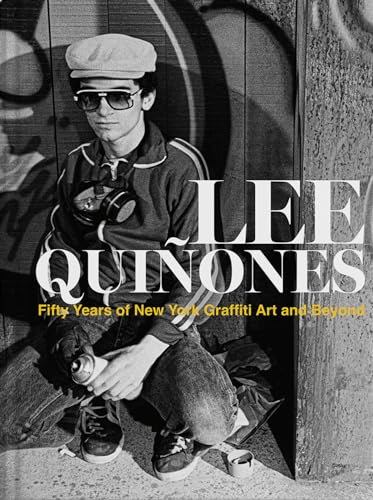
Damiani Editore Lee Quiñones Fifty Years of New York Graffiti
What We Like
- Dedicated monograph on a single artist
- Covers five decades of New York graffiti
- Large format for full-page reproductions
Trade-offs
- Focused on one artist, not a survey
- Narrow focus on one artist, not a survey
A 9.5 x 11-inch monograph dedicated entirely to Lee Quiñones means you get deep, uninterrupted focus on one artist’s evolution across fifty years of New York graffiti. That size gives each piece room to breathe, making it a natural fit for someone who wants to study a single career rather than flip through a broad anthology. It suits collectors and serious fans who value sustained visual storytelling over a quick survey.
This book takes a narrow lens. If you’re after a global overview or want to compare dozens of names in one volume, a broader reference covers far more ground. But for anyone drawn to the arc of a legend who helped shape the movement from subway cars to canvas, this monograph rewards patience with depth that a wider guide simply cannot match.
Product photos
Prestel Women Street Artists

What We Like
- Spotlights 24 contemporary women artists
- Large 12.1-inch tall format
- 9.4 × 12.1-inch hardcover format
Trade-offs
- Only covers 24 artists
- Too heavy and tall for easy portability
At 3.9 pounds and 12.1 inches tall, this hardcover is built for a table or coffee table, not for tossing in a bag. It collects work by 24 contemporary women graffiti and mural artists from around the world, so each artist gets generous page space. Reviewers note the large format makes the art the focus, ideal for a curated look at female street artists.
Twenty-four profiles mean you get a focused selection, not the breadth of a volume covering many more artists across its 9.0 × 9.6-inch pages. If your priority is a concentrated look at a handful of women makers, this book delivers; if you want a comprehensive global survey, you’ll need a wider reference. The weight also limits portability, so plan for a sturdy shelf or desk rather than a carry-along read.
Product photos
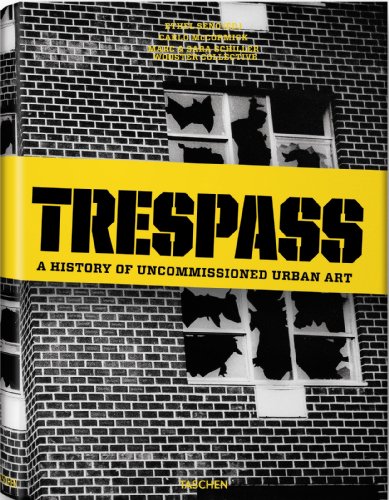
Taschen Trespass A History of Uncommissioned Urban Art
What We Like
- Massive 12.9-inch height for large images
- Weighs 5.1 pounds for substantial feel
- Comprehensive history of uncommissioned urban art
Trade-offs
- At 5.1 pounds, heavy for casual reading
- Too large for comfortable shelf storage.
At 5.1 pounds and 12.9 inches tall, this hardcover is a table-top commitment, not something you’ll curl up with on the couch. The oversized format means each spread demands a clear surface, but it also gives the reproductions room to show detail. Reviewers note the weight keeps the book steady when open, so you can study the images without holding pages down.
That same size and weight is the catch: at 5.1 pounds, it’s not something you’ll take to a park or read in bed. Compared to the slimmer, lighter Thames & Hudson Subway Art, which focuses narrowly on New York trains, Trespass offers a broader scope but asks for a dedicated reading spot. If you want a portable field guide, look elsewhere; if you want a large-format hardcover that stays on a desk, this is it.
Product photos
Carpet Bombing Culture Graffbook The Graffiti Sketchbook
What We Like
- Large 11.8-inch pages for bold sketches
- Lightweight at 2.1 pounds for portability
- Dedicated graffiti sketchbook format
Trade-offs
- At 11.8 inches tall, requires a bag for carrying
- At 2.1 pounds, it's heavier than the 1.9-pound Subway Art book.
The 11.8-inch pages give you a generous canvas for sprawling tags, wildstyle lettering, or full-page burners without feeling cramped. This sketchbook is built for graffiti writers who want a dedicated space to draft, refine, and collect their work, not a multipurpose journal. The 0.8-inch depth suggests it can hold a reasonable number of pages, making it a practical companion for building a personal library of sketches over time. It suits anyone who values a large, open page for bold marker or ink work and prefers a focused tool over a general art book.
Size is the trade-off: at nearly a foot tall, it’s less pocket-friendly than a smaller notebook, so you’ll want a bag to carry it. Compared to the Thames & Hudson Subway Art book, which is 0.4 inches deep, this sketchbook offers a hands-on creative tool rather than a historical survey. If you’re after a lightweight, dedicated sketchbook for graffiti lettering and ink practice, this fills that role cleanly, just know it’s built for the studio or backpack, not a jacket pocket.
Thames & Hudson Graffiti Alphabets

What We Like
- Global collection of street fonts
- Focus on lettering and typography
- Illustrated format
Trade-offs
- Narrow focus on alphabets only
- No content details in specifications
At 3.0 pounds and 11 inches tall, this is a substantial volume that gives letterforms room to breathe. Every page is built around the art of the alphabet, pulling together street fonts from cities around the world. That focused lens makes it ideal for anyone whose interest in graffiti starts with the letter, the wildstyle, the tags, the way a throw-up bends a line. If you care more about how letters are shaped than about murals or train bombing, this book speaks your language.
The focus stays tightly on typography, so if you want a broad survey of graffiti culture or large-scale murals, something like the World Atlas of Street Art and Graffiti covers more ground. At 3.0 pounds, it’s not a book you toss in a bag for a coffee shop flip-through; it’s a reference you set on a desk or table and page through slowly. For the typography-obsessed sketcher or designer, the single-minded focus is exactly the point.
Schiffer Publishing From the Platform Subway Graffiti 1983-1989
What We Like
- Dedicated to NYC subway graffiti 1983-1989
- Large 11-inch-tall format for detail
- Focused historical period documentation
Trade-offs
- Heavier than Thames & Hudson Subway Art at 2.3 lb
- Narrower time frame limits broader graffiti history
From the Platform locks its lens on New York subway graffiti from 1983 to 1989, a focused six-year window. At 11 inches tall and 2.3 pounds, this is a substantial hardcover built for lingering over full-page train shots and layered tags. If you want a deep dive into that specific period, this book delivers that focus without straying into street art or global scenes.
At 2.3 pounds, this book has a solid heft that feels substantial on a lap or table, though it’s a bit heavier than Thames & Hudson’s Subway Art at 1.9 pounds. Its focus on 1983-1989 means you get a concentrated look at that specific period, but if you want a broader timeline, you’d need another title.
How We Evaluated Graffiti Art Books
To build this list, we looked at the physical specs and editorial focus of each book. We examined dimensions, page counts, and weight to understand how each volume fits into a reader’s life, from a coffee table display to a bag for the train. We also reviewed publisher descriptions and expert round-ups to assess each book’s scope and authority.
The criteria that mattered most were visual quality (image size, color reproduction, and number of illustrations), scope (geographic and historical range), and physical portability (weight and dimensions). A book with tiny reproductions of large murals loses its purpose, just as a five-pound hardcover is impractical for daily reading.
A research-based evaluation can match a book’s specifications and stated strengths to a reader’s needs. The focus is on the trade-offs that matter, such as a deep monograph versus a broad survey, to provide clear, practical guidance.
What To Look For In Graffiti Art Books
Choosing a graffiti art book means deciding how you will use it. The right book balances visual impact, depth of content, and physical practicality.
Look for large-format books with high-quality color reproductions to appreciate the scale and detail of graffiti. Consider the weight and dimensions if you plan to carry it, and check the scope, whether it’s a global survey, a period piece, or a single-artist monograph.
Format and Image Quality
Graffiti is a visual, large-scale art form. A book with small, muddy images fails to convey the energy of the work. Look for books with a width of at least 9 inches and a height of 11 inches or more for full-page reproductions. The number of color illustrations is also key; books like Thames & Hudson Subway Art feature over 150 images, while others may have fewer but larger plates.
Scope and Focus
Decide whether you want a broad survey or a deep dive. A global atlas like the Yale University Press World Atlas of Street Art and Graffiti covers five continents and decades of history. In contrast, a monograph like Lee Quiñones Fifty Years of New York Graffiti focuses on one artist’s career. A focused book on typography, like Graffiti Alphabets, is perfect for lettering enthusiasts, while a period-specific title like From the Platform is ideal for fans of 1980s NYC subway art.
Portability and Build
A heavy, oversized book can be a rewarding coffee-table piece, but it is not for carrying around. Books weighing over 3 pounds, like the Abrams Graffiti World Updated Edition or Taschen Trespass, are best for home reading. Lighter options, such as the 1.9-pound Subway Art or the 0.7-pound The Wide World of Graffiti, are easier to take to a studio or park.
- Check the book’s weight and dimensions against your intended use (home display vs. Portable reading).
- Look for hardcover bindings if you expect heavy use or shelf display.
- Consider the page count: a thin book might not provide enough depth, while a thick one may be unwieldy.
- Read the publisher’s description to confirm the geographic and historical scope.
A good rule of thumb: if you plan to read on the go, keep the weight under 2 pounds.
Graffiti Art Books Compared
The table below compares the top ten graffiti art books by their key physical specs and focus, making it easy to see which volume fits your needs.
| Product | Format | Dimensions | Weight |
|---|---|---|---|
| Thames & Hudson Subway Art | Softcover book | 13.2 × 9.3 × 0.4 in | 1.9 lb |
| Yale University Press World Atlas of Street Art and Graffiti | N/A | 9.0 x 1.4 x 9.6 inches | 3.8 pounds |
| Monacelli Press The Wide World of Graffiti | N/A | 8.3 x 1.4 x 10.2 in | 0.7 pounds |
| Abrams Books Graffiti World Updated Edition | Updated Edition | 8.6 x 1.5 x 9.2 in | 3.9 pounds |
| Damiani Editore Lee Quiñones Fifty Years of New York Graffiti | Individual Artist Monograph | 9.5 x 0.9 x 11.0 in | 2.5 pounds |
| Prestel Women Street Artists | Hardcover | 9.4 × 12.1 in | 3.9 pounds |
| Taschen Trespass A History of Uncommissioned Urban Art | Hardcover | 12.9 x 9.6 x 1.6 in | 5.1 pounds |
| Carpet Bombing Culture Graffbook The Graffiti Sketchbook | Sketchbook | 11.8 x 8.3 x 0.8 inches | 2.1 pounds |
| Thames & Hudson Graffiti Alphabets | Illustrated | 8.5 x 1.2 x 11.0 in | 3.0 lb |
| Schiffer Publishing From the Platform Subway Graffiti 1983-1989 | N/A | 11.0 x 8.8 inches | 2.3 pounds |
Frequently Asked Questions
What is the best graffiti art book for beginners?
For someone new to the culture, Thames & Hudson Subway Art is a strong starting point. Its large-format photos and manageable weight make it easy to browse, and its focus on the origins of subway art provides a clear visual introduction without overwhelming detail.
Which graffiti book has the most global coverage?
The Yale University Press World Atlas of Street Art and Graffiti offers the widest geographic scope, covering artists and movements from five continents. It is a substantial reference volume best suited for home or a desk.
Are there graffiti books that focus on typography and lettering?
Yes, Thames & Hudson Graffiti Alphabets is dedicated to the lettering styles and street fonts used by graffiti writers around the world. It is a focused choice for anyone interested in the art of the tag.
What is a good graffiti book for learning about women street artists?
Prestel Women Street Artists spotlights 24 contemporary women artists in a large-format hardcover. It is an excellent choice for readers seeking representation and a focused look at diverse voices in the field.
Which book covers the history of uncommissioned urban art?
Taschen Trespass A History of Uncommissioned Urban Art is a massive, comprehensive volume that traces the history of graffiti and street art from its origins to the present day. Its large format and weight make it a definitive coffee-table book.
The Bottom Line
For most readers, Thames & Hudson Subway Art is the best overall pick. Its lightweight build, large 13.2-inch width, and 153 color illustrations make it an ideal visual introduction to graffiti’s foundational era. It is easy to handle and rewards repeated browsing.
If you need a global reference, the Yale University Press World Atlas of Street Art and Graffiti is your best bet. For budget-minded shoppers, the lightweight and compact The Wide World of Graffiti offers a solid survey without the heft. Fans of a specific niche, like typography or women artists, should look to Graffiti Alphabets or Women Street Artists respectively.
The single most important factor is format: choose a book that fits your reading habit, not just your shelf. A book you carry and open is worth more than one you admire from a distance.
