
10 Best Corrosion Inhibiting Primers For Infrastructure 2026
This post contains affiliate links. As an Amazon Associate, we earn from qualifying purchases.
For infrastructure projects, the WEICON Zinc 550 Primer is our best overall pick, offering permanent cathodic corrosion protection and heat resistance up to 500°C. The LiME LiNE 2K Epoxy Primer is the best direct-to-metal epoxy option, while the OWATROL Marine C.I.P. Primer excels on rusted surfaces.
The real challenge with infrastructure corrosion is that steel, aluminum, and welded joints face constant exposure to moisture, salt, and temperature swings. A primer that works on a clean shop bench may fail on a bridge girder or marine fitting.
This guide is research-based, drawing on manufacturer specifications, expert round-ups, and patterns in owner feedback. We focused on adhesion, corrosion resistance, application method, and surface prep requirements to help you match a primer to your specific job.
Top 10 Corrosion Inhibiting Primers For Infrastructure in the Market

Certain content that appears on this site comes from Amazon. This content is provided "as is" and is subject to change or removal at any time.
The Best Corrosion Inhibiting Primers For Infrastructure, Reviewed
WEICON Zinc 550 Primer

What We Like
- Permanent cathodic corrosion protection
- Heat resistant up to 500°C
- Fast drying: dust dry in 15 minutes
- Exceeds 1050 hours of corrosion testing
Trade-offs
- Requires separate surface cleaner for best adhesion
- Aerosol only: limited coverage per can for large infrastructure
The real story, though, is the cathodic protection: fine zinc particles form a sacrificial layer that keeps the underlying metal safe even after 1050 hours of aggressive corrosion testing. It dries to the touch in just 15 minutes and cures fully in 24 hours, so you can recoat or handle parts the same day.
The trade-off is that this comes as an aerosol, not a brush-on or two-part system. For a long fence or a big beam you will need multiple cans, and the manufacturer says to clean the surface with a dedicated degreaser first for best adhesion. Compared to other zinc sprays like the METALIZE Zinc Cold Galvanizing Primer, both use aerosol delivery, but the WEICON offers a much wider heat range and a proven corrosion test result. If your project involves high-heat areas or needs fast-drying protection that lasts, this can works well. For huge continuous surfaces, a bulk primer might stretch further per dollar.
LiME LiNE 2K Epoxy Primer

What We Like
- Isocyanate-free formula for safer application
- Lead and chromate-free environmentally friendly
- Versatile as primer or sealer
Trade-offs
- Two-component mix requires careful measuring
- Not a rust converter for existing corrosion
- Surface prep still demands washing and sanding
This two-component epoxy primer bonds to bare metal, fiberglass, and aluminum and is labeled as a non-sanding formula, though surface preparation still calls for washing, cleaning, and sanding as needed. Its isocyanate-free makeup and 2.1 VOC rating make it a compliant option for automotive and industrial use. If you work in a shop environment where mixing a two-part epoxy fits your routine, this primer provides a corrosion-blocking foundation on raw steel or aluminum.
This primer is not a rust converter, so any existing corrosion must be mechanically removed before application. You also have to mix the two components precisely, which adds a step compared to single-component aerosol options like the SprayMax 2K Epoxy Primer Gray. If you value a direct-to-metal bond and don’t mind mixing, this epoxy delivers a strong, sealed base for coatings.
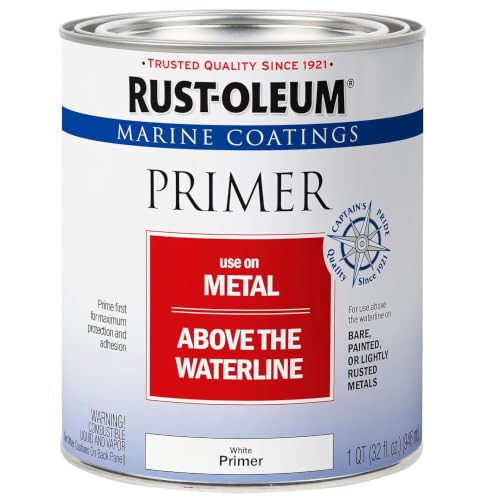
Rust-Oleum Marine Metal Primer
What We Like
- Dries to touch in 1-2 hours
- Covers 100 sq ft per quart
- Sands easily for smooth topcoat
- Works on bare, painted, or lightly rusted metal
Trade-offs
- Designed only for above-waterline use
- Requires separate topcoat for full finish
A dry time as short as 1 to 2 hours means you can move through a priming job quickly on above-waterline metal surfaces. This quart covers 100 square feet and sands easily, giving you a smooth base that helps topcoats adhere. It works on bare, painted, or lightly rusted metal and provides a corrosion-resistant base coat without long waits between coats.
This primer is purpose-built for above-waterline use only, so it won’t replace a full marine system for submerged or splash-zone areas. Compared to the OWATROL Marine C.I.P. Primer, which works both above and below the waterline, this Rust-Oleum is a more focused choice for topside projects where sandability and a 1-to-2-hour dry time matter most. If your project stays dry, this quart delivers a good foundation for the finish coat.
METALIZE Zinc Cold Galvanizing Primer

What We Like
- Meets Federal MIL-SPEC TT-E-527D
- Dries to touch in 15 minutes
- High purity zinc dust content
Trade-offs
- Aerosol can limits coverage on large infrastructure
- Requires properly prepared metal surface for adhesion
- Single-use can, not refillable for continuous jobs
The trade-off is coverage: a 1-pound aerosol can limits the area you can coat in one go compared to larger bulk options. For continuous large surfaces, a brush-on or bulk primer would cover more ground per application. But for quick, MIL-spec protection on exposed metal, this primer fits the need.
Product photos
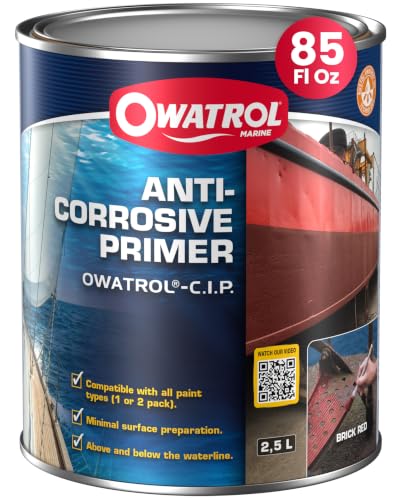
OWATROL Marine C.I.P. Primer
What We Like
- Paints directly over rust with less prep
- Stable under urethane, epoxy, chlorinated rubber
- Works above and below waterline
Trade-offs
- 6.2 pounds is heavy for small touch-up jobs
- Requires removing loose and flaking rust first
- Designed for marine use, not light indoor corrosion
The trade-off is preparation: you still have to knock off loose and flaking rust before applying, so it’s not a spray-and-walk-away solution. At 6.2 pounds per can, it’s heavier than a typical aerosol like the SprayMax 2K Epoxy Primer, which makes it less convenient for quick spot repairs on vertical surfaces. For a full-scale restoration on a rusty keel or industrial railing where you want the primer to penetrate rust rather than just mask it, this marine-grade option earns its place on the bench.
Product photos
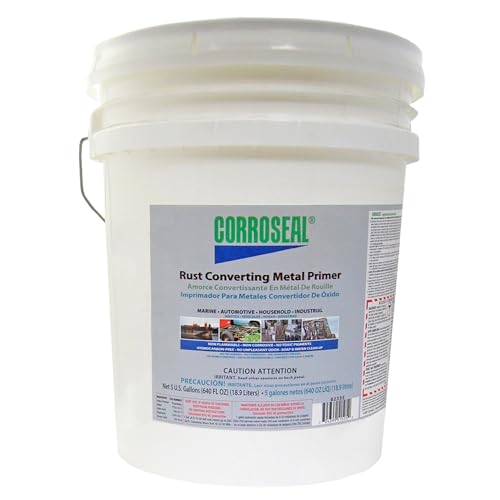
Corroseal Rust Converter & Metal Primer
What We Like
- Converts and primes in one coat
- Water-based, non-flammable, non-corrosive
- Covers 200-250 sq ft per gallon
- Easy cleanup with soap and water
Trade-offs
- At 51 lb, heavy for transport or overhead work
- Requires 8-10 mils wet film thickness
Applying a rust converter and a primer separately means extra labor, drying time, and cleanup. This product skips all that by combining both functions into a single water-based coat. It chemically converts existing rust into a stable black layer while simultaneously depositing a latex metal primer that seals the surface. That one-step process saves hours on a project, especially when working on a trailer or a piece of industrial equipment. The water-based formula is non-flammable and non-corrosive, so you can work indoors without worrying about fumes, and cleanup requires nothing more than soap and water.
The weight and volume are the main drawbacks. At 51 pounds, moving this bucket up a ladder or across a job site takes planning, and the 5-gallon size is overkill if you are only treating a car fender. For a smaller project, the quart version (Corroseal-82320) would be a better fit.
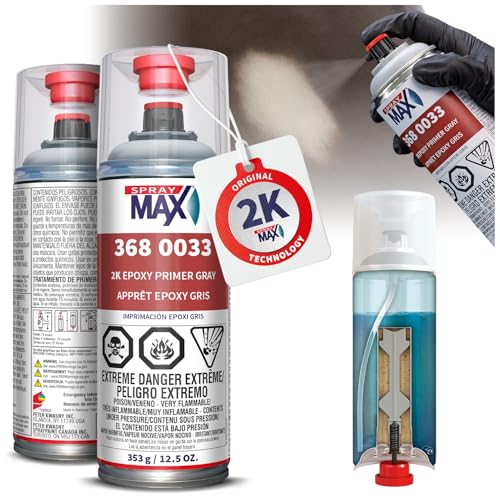
SprayMax 2K Epoxy Primer Gray
What We Like
- Dust-dry in 15 minutes
- Professional-grade 2K epoxy adhesion
- Variable nozzle for precise spray control
- Sandable within hours
Trade-offs
- 12.5 oz can covers less area than quart or gallon options
- Aerosol format limits use on large infrastructure surfaces
A 15-minute dust-dry time means you can move from priming to sanding the same day. That’s a real advantage when you’re working on a tight schedule or layering multiple coats on a car panel or restoration project. The 2K epoxy formula bonds aggressively to steel, aluminum, and galvanized metal, giving you the kind of corrosion resistance that holds up under a topcoat. For small to medium metal repairs where speed matters, this aerosol delivers professional adhesion without needing a compressor or spray gun.
The 12.5-ounce can is compact and lightweight at 0.9 pounds, so it fits easily in a tool bag or on a workbench shelf. For smaller automotive repairs or spot priming on metal, that size is convenient and doesn’t waste material. But if you’re planning to coat large panels or multiple parts, you’ll want to have a few cans on hand since the aerosol format is designed for targeted application rather than broad, continuous coverage.
LAUCO Zinc Coat Weld-Thru Primer
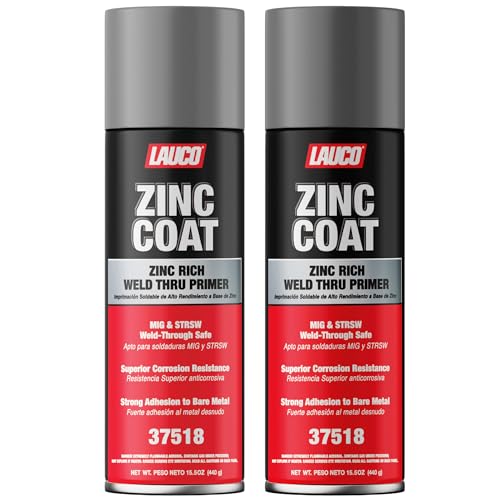
What We Like
- High zinc content for superior corrosion protection
- Safe for MIG and spot welding applications
- Maintains conductivity and reduces weld spatter
- Excellent adhesion to bare steel surfaces
Trade-offs
- Aerosol format limits coverage on large infrastructure projects
- Designed specifically for weld joints, not general surface priming
A zinc-rich formulation with high zinc content means this primer delivers serious corrosion protection exactly where it matters most: inside welded joints and hidden metal seams. Because it’s designed for weld-through use with MIG and spot welding, it maintains electrical conductivity and minimizes spatter. So you can weld directly over the coating without compromising the bond or cleaning up excessive mess afterward. For anyone working on bare steel or untreated metal surfaces where welded connections are the weak point for rust, this is the primer that seals those vulnerable spots from the start.
This is a specialized tool, not a general-purpose primer. The aerosol spray pattern, while controlled for even coverage, makes it less efficient for coating large flat panels or expansive surfaces compared to a brush- or roller-applied product like Corroseal Rust Converter & Metal Primer. If your project involves broad areas that need protection, you will want a bulk primer for the wide surfaces and keep this LAUCO can for the joints. But for welded connections, this primer directly addresses that specific need.
Product photos
Rust-Oleum Professional Aluminum Primer

What We Like
- Designed for bare aluminum surfaces
- Oil-based formula resists corrosion and weathering
- Sprays at any angle with high-output tip
- Ready for topcoat immediately after drying
Trade-offs
- Covers only 14 sq. ft. per can
- Oil-based formula requires solvent cleanup
A 15-minute dry time and immediate topcoat readiness mean you can move through a job fast without waiting around. This primer is designed for bare aluminum, using an oil-based formula that provides rust protection and a tough finish that withstands weathering. For anyone working on aluminum infrastructure, railings, flashing, equipment, it delivers the adhesion and rust protection that paint alone can’t match, all from a spray can that works at any angle, even upside down.
Coverage is limited to 14 square feet per can, so larger projects will need multiple cans, and the oil-based formula requires mineral spirits for cleanup. Compared to WEICON Zinc 550, which is a general metal corrosion primer, this Rust-Oleum is specifically formulated for bare aluminum surfaces to promote adhesion.
Product photos
Corroseal Water-Based Rust Converter Metal Primer
What We Like
- Paints, primes, and converts rust in one step
- Water-based formula cleans up with soap and water
- Non-flammable and non-corrosive for safer use
- Works on marine, automotive, and industrial surfaces
Trade-offs
- Requires 8-10 mils wet thickness for proper coverage
- Not for use where solvent-based adhesion is needed
A three-in-one formula that paints, primes, and converts rust in a single step means you can go from rusted metal to a protected surface without separate products. That design saves time on jobs where every hour counts, and the water-based formula cleans up with soap and water instead of harsh solvents. It suits anyone who wants a straightforward corrosion solution without juggling separate converters and primers, especially on large areas where speed matters.
The wet film thickness requirement demands attention: you need to lay it on at 8-10 mils to hit the rated 200-250 sq ft per gallon, which takes some care with a brush or roller. For everyday use where convenience and safety matter as much as protection, it earns its place.
Product photos
How We Evaluated Corrosion Inhibiting Primers For Infrastructure
We evaluated these primers by analyzing manufacturer technical data sheets, expert round-ups from industrial painting and marine maintenance sources, and patterns in owner feedback from large-scale and DIY infrastructure projects. Our goal was to identify primers that deliver real-world protection, not just lab numbers.
The four criteria that mattered most were corrosion resistance, application practicality, substrate compatibility, and environmental safety. Corrosion resistance includes hours of salt spray testing or MIL-spec compliance. Application practicality covers aerosol versus bulk, drying time, and surface prep demands. Substrate compatibility means steel, aluminum, galvanized, and rusted surfaces. Environmental safety involves VOC compliance and isocyanate-free formulations. A primer that excels in one area but requires impossible prep or limited coverage is less useful on site.
We prioritize primers with clear, verifiable specs and consistent owner reports so you can make an informed choice for your infrastructure project.
What To Look For In Corrosion Inhibiting Primers For Infrastructure
Choosing the right primer means balancing protection, application method, and surface condition. Here are the key factors to consider.
Look for primers that match your substrate (steel, aluminum, rusted metal) and provide the right type of protection, cathodic, barrier, or rust conversion. Consider drying time, coverage area, and whether you need an aerosol or bulk format.
Corrosion Protection Type
Cathodic protection primers, like zinc-rich cold galvanizing compounds, provide sacrificial protection that stops rust even where the coating is scratched. Barrier primers create a physical seal against moisture and oxygen. Rust converters chemically transform existing rust into a stable, paintable surface. For infrastructure exposed to salt water or road salt, a zinc-rich primer offers the most durable defense.
Surface Preparation Requirements
Some primers require a clean, sanded, or blasted surface for adhesion, while others, like rust converters, can go directly over tightly-adhered rust. The WEICON Zinc 550 Primer needs a separate surface cleaner, while the OWATROL Marine C.I.P. Primer paints over rust with less prep. Always check the manufacturer’s surface prep instructions, skipping this step is the most common cause of primer failure.
Application Format and Coverage
Aerosol primers offer convenience and precise application for small areas, welded joints, and touch-ups but limit coverage on large infrastructure. Bulk primers (quarts, gallons, 5-gallon pails) are more efficient for structural steel, bridges, and tanks. Consider the wet film thickness required. Corroseal products need 8-10 mils, and whether you have the equipment to apply it.
- Check the primer’s heat resistance if your infrastructure sees high temperatures.
- Verify compatibility with your topcoat (urethane, epoxy, chlorinated rubber).
- Confirm the primer is rated for your substrate (aluminum, galvanized, bare steel).
- Look for low-VOC or water-based options if environmental regulations apply.
A primer that requires perfect surface prep will fail faster than a less-protective primer applied to a properly prepared surface.
Corrosion Inhibiting Primers For Infrastructure Compared
The table below compares key specs for each primer, including corrosion resistance, drying time, and substrate compatibility, to help you narrow your choice.
| Product | Type | Dry Time | Surface Compatibility |
|---|---|---|---|
| WEICON Zinc 550 Primer | Zinc spray primer | Dust dry: 15 min | All metal surfaces |
| LiME LiNE 2K Epoxy Primer | 2K Epoxy Primer/Sealer | N/A | Direct-to-Metal, fiberglass, aluminum |
| Rust-Oleum Marine Metal Primer | Corrosion Resistant Base Coat | 1 to 2 hours | Bare, painted, lightly rusted metal |
| METALIZE Zinc Cold Galvanizing Primer | Zinc Cold Galvanizing Primer | 15 minutes to touch | Structural steel, ornamental iron, metal containers, machinery |
| OWATROL Marine C.I.P. Primer | Anti-Corrosive Primer | N/A | Steel, aluminum, galvanized metal, zinc |
| Corroseal Rust Converter & Metal Primer | Rust Converter & Metal Primer | N/A | Metal surfaces |
| SprayMax 2K Epoxy Primer Gray | 2K Epoxy Primer | Dust-dry in 15 min | Steel, aluminum, galvanized metal |
| LAUCO Zinc Coat Weld-Thru Primer | Zinc Rich Spray for Welding | N/A | Bare metal |
| Rust-Oleum Professional Aluminum Primer | Oil-based primer | 15 min to touch | Aluminum surfaces |
| Corroseal Water-Based Rust Converter Metal Primer | Water-based rust converter + latex metal primer | N/A | Metal surfaces |
Frequently Asked Questions
What is the best primer for rusted metal on an outdoor structure?
The OWATROL Marine C.I.P. Primer is designed to paint directly over rust with less surface preparation, making it ideal for heavily rusted steel, aluminum, or galvanized metal. It works above and below the waterline and is stable under high-solvent topcoats.
Can I use a cold galvanizing primer on welded joints?
Yes, but for targeted protection at welded joints, the LAUCO Zinc Coat Weld-Thru Primer is specifically designed for this application. It maintains conductivity, reduces weld spatter, and is safe for MIG and spot welding.
How do I apply a two-component epoxy primer correctly?
Two-component primers like the LiME LiNE 2K Epoxy Primer require careful measuring and mixing of the resin and hardener. Follow the manufacturer’s ratio exactly, mix thoroughly, and apply within the pot life window. Surface prep still requires washing and sanding.
What is the difference between a rust converter and a rust primer?
A rust converter chemically transforms iron oxide (rust) into a stable, paintable surface, often serving as both converter and primer. A rust primer creates a protective barrier over clean or prepared metal. The Corroseal Rust Converter & Metal Primer combines both functions in one coat.
Is water-based or oil-based primer better for infrastructure?
Water-based primers like the Corroseal Water-Based Rust Converter offer easier cleanup with soap and water, are non-flammable, and have lower VOCs. Oil-based primers, such as the Rust-Oleum Professional Aluminum Primer, provide strong adhesion and weathering resistance but require solvent cleanup. The choice depends on your substrate, environment, and cleanup preferences.
The Bottom Line
For most infrastructure projects, the WEICON Zinc 550 Primer delivers the best balance of cathodic protection, heat resistance, and fast drying. It is ideal for pros and DIYers working on metal surfaces exposed to harsh weather or temperature extremes, though its aerosol format limits large-area coverage.
If you need a direct-to-metal epoxy with safer handling, choose the LiME LiNE 2K Epoxy Primer. For heavily rusted surfaces, the OWATROL Marine C.I.P. Primer minimizes prep work. Budget-conscious buyers or those with large steel structures should consider the Corroseal Rust Converter & Metal Primer for its one-coat efficiency.
The single most important factor is matching the primer to your surface condition and application method. A perfect primer applied over poor prep will fail; a modest primer applied correctly will protect for years.
