
10 Best Concrete Primers in 2026
This post contains affiliate links. As an Amazon Associate, we earn from qualifying purchases.
For most concrete priming jobs, the Zinsser Bulls Eye 1-2-3 All Surface Primer is the best overall choice because it bonds directly to concrete without sanding and dries in just 30 minutes. For garage floors needing a recoat, the Rust-Oleum Concrete & Garage Recoat Primer is a fast, low-odor option. If you are filling rough masonry blocks, the Zinsser Block Filler Masonry Primer is the dedicated workhorse.
Concrete is porous, dusty, and often contaminated with dirt or oil, making it a notoriously difficult surface for paint to stick to. A dedicated concrete primer seals the surface, prevents efflorescence (white salt deposits), and creates a uniform base for your topcoat. Choosing the wrong primer can lead to peeling, bubbling, and a wasted weekend.
This guide is built from manufacturer specifications, expert recommendations, and patterns in owner feedback. We evaluated each primer on bond strength, surface compatibility, dry time, and coverage to help you pick the right one for your specific project.
Top 10 Concrete Primers in the Market

Certain content that appears on this site comes from Amazon. This content is provided "as is" and is subject to change or removal at any time.
The Best Concrete Primers, Reviewed
Zinsser Bulls Eye 1-2-3 All Surface Primer

What We Like
- Bonds to concrete without sanding
- Blocks stains on masonry and metal
- Dries in 30 minutes, recoat in 1 hour
- Works over oil or latex topcoats
Trade-offs
- Covers only 100 sq. ft. per quart
- Requires multiple coats for heavy stains.
A 30-minute dry time and 1-hour recoat window mean you can prime a concrete basement wall or garage floor and be ready for topcoat the same morning. Zinsser Bulls Eye 1-2-3 bonds to concrete, masonry, metal, and glossy surfaces without sanding, which saves serious elbow grease on difficult surfaces. Its stain-blocking formula seals stains effectively, making it a strong choice for interior and exterior concrete projects where adhesion and speed matter most.
Coverage tops out at 100 square feet per quart, so you will need multiple quarts for a large garage floor compared to a gallon-size primer like Rust-Oleum Concrete & Garage Recoat Primer. For smaller jobs, a basement wall, a patio step, or a concrete countertop, its all-surface versatility and fast drying make it a practical pick. Just be aware the gray tint works best under deep or vivid colors, as noted on the label.
Rust-Oleum Concrete & Garage Recoat Primer

What We Like
- No sanding or grinding needed
- Prime and topcoat in one day
- Covers up to 400 square feet
- Low odor water-based formula
Trade-offs
- Only one coat recommended, limits stain blocking
- Designed for previously coated floors only
No sanding or grinding required means you can coat directly over previously coated or sealed concrete floors without scuffing or sanding. That alone makes this primer a natural fit for garage floors, where the old coating is often intact but needs a fresh bond. Drying in as little as six hours lets you apply the topcoat the same day, so a weekend project stays a weekend project. With up to 400 square feet of coverage per gallon, a single can covers a typical two-car garage without needing a second coat.
The trade-off is that this primer is built for recoating, not for raw concrete or heavy stain blocking. If your floor is bare, unsealed, or has stubborn oil stains, a dedicated masonry primer like Zinsser Block Filler would be a better starting point. But for garage owners who already have a painted or sealed floor and want to refresh it without the messy prep work, this Rust-Oleum primer offers a low-odor, fast-drying shortcut that keeps the job simple.
Product photos
Zinsser Block Filler Masonry Primer

What We Like
- Fills and smooths porous masonry surfaces
- High-hiding flat white formula
- Excellent alkali resistance protects topcoats
- Works on concrete, brick, stucco, and more
Trade-offs
- Heavy 45.5-pound bucket is cumbersome to carry
- Coverage varies with surface porosity
Covering up to 500 square feet per five-gallon bucket, this primer is meant for large masonry projects where you need to fill and smooth rough concrete blocks before painting. The high-hiding flat white formula does double duty as a sealer, blocking stains and providing excellent alkali resistance that prevents salt damage from ruining your topcoat. It is the right choice for anyone tackling interior or exterior walls made of cinderblock, brick, stucco, plaster, or mortar, especially when you want a uniform surface that helps your final paint look clean and last longer.
At 45.5 pounds for a five-gallon bucket, this primer is a workout to carry up stairs or across a job site. If you only need to prime a small garage floor or a single accent wall, a lighter primer may be easier to handle. It likely lacks the block-filling capability that makes this Zinsser product essential for rough masonry. Stick with this one when you are covering large areas of bare concrete or cinderblock and need a primer that levels the surface as it seals.
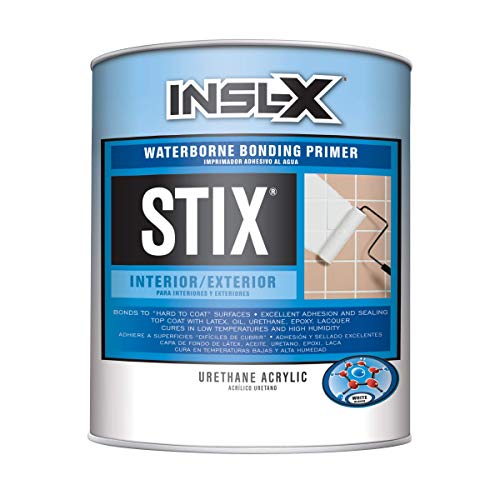
INSL-X Stix Acrylic Waterborne Bonding Primer
What We Like
- Bonds to glossy tile, PVC, vinyl, glass
- Works on galvanized metal and fiberglass
- Fully cures down to 35 °F
- Easy soap and water cleanup
Trade-offs
- Coverage only 75-100 sq ft per quart
- Requires proper surface prep per label
This primer covers 75 to 100 square feet per quart, so it’s best for smaller projects. It bonds to glossy tile, PVC, vinyl, glass, glazed block, fiberglass, and galvanized metal, surfaces that many primers struggle with. It also cures in temperatures as low as 35 °F, which means you can use it in unheated garages or cool basements without waiting for warmer weather.
For a large concrete slab or a whole basement wall, you will need multiple quarts or a different product. Rust-Oleum Concrete & Garage Recoat Primer covers 400 square feet per gallon, making it more efficient for big areas. It does not list the same range of difficult surfaces as this bonding primer. For small, stubborn surfaces like a glossy tile backsplash, a PVC trim board, or a galvanized metal handrail, this primer is a good choice.
BEEST Multi-Purpose Primer

What We Like
- Super strong adhesive bonding agent
- Environmentally friendly, ultra low odor
- Made in USA by family-owned company
- Prevents blistering and peeling
Trade-offs
- Coverage limited to 250 sq ft per gallon
- Requires top coat within 24 hours
- Designed primarily for liquid rubber coatings
A single gallon covers up to 250 square feet, so you can plan your project without guessing how much primer you need. This water-based formula uses a super strong adhesive bonding agent, making it a natural fit for surfaces like concrete, wood, metal, and TPO before you lay down a sealant. The ultra low odor and easy cleanup mean you can work indoors or near pets without the harsh fumes that come with many primers. It dries quickly and is ready for a top coat within 24 hours, which keeps your project moving at a steady pace.
Compared to Rust-Oleum Concrete & Garage Recoat Primer, which covers 400 square feet per gallon, BEEST covers less area per gallon, so larger jobs may require more product. Still, for anyone planning a deck or roof coating project, the strong adhesion and environmentally friendly formula make this a focused and effective choice.
Product photos
Rust-Oleum Stops Rust Universal Bonding Primer Spray
What We Like
- Prevents rust and corrosion
- Bonds to galvanized steel and wrought iron
- Works in moist or humid environments
- Dries in 30 minutes
Trade-offs
- Covers only 10-12 sq. ft. per can
- Spray application limits large-area use
A 30-minute dry time and a formula that bonds to galvanized steel, wrought iron, and even PVC make this spray primer a smart choice when you need to stop rust before it starts. Its water-based, low-odor build lets you work indoors or out without heavy fumes, and the flat white finish preps the surface so any topcoat grabs tight. This is the primer you reach for when a metal railing, furniture piece, or lamppost needs a corrosion barrier that lasts.
Coverage is the trade-off: at just 10-12 square feet per can, you will need multiple cans for a larger project like a full fence or garage door. For broad concrete or masonry walls, a gallon-sized primer such as Zinsser Block Filler Masonry Primer covers more area in one application. But for spot rust repair on metal, this spray delivers targeted protection with the adhesion and corrosion resistance that smaller jobs demand.
Liquid Rubber Multipurpose Primer

What We Like
- Bonds to concrete, wood, metal, fiberglass, PVC
- Fast drying, apply top coat within 24 hours
- Water-based, non-toxic, low VOC formula
- Sprayable with appropriate equipment
Trade-offs
- Requires dry surface free of dirt, oil, laitance
- Cannot apply before rain or dew forecast
A water-based formula that bonds to concrete, wood, metal, fiberglass, and PVC means you can grab one gallon for a mixed-material project without juggling multiple primers. It dries fast, letting you apply a top coat within 24 hours, and the low-VOC, non-toxic makeup makes it a friendlier choice for indoor work or spaces shared with pets.
Preparation is key with this primer: the surface must be dry and free of dirt, oil, laitance, or efflorescence, and you can’t apply it if rain or dew is forecast. That makes it less forgiving than a recoat primer like Rust-Oleum Concrete & Garage Recoat Primer, which skips the sanding step. But if you’re willing to prep thoroughly, the broad adhesion range here is hard to beat for mixed-material jobs.
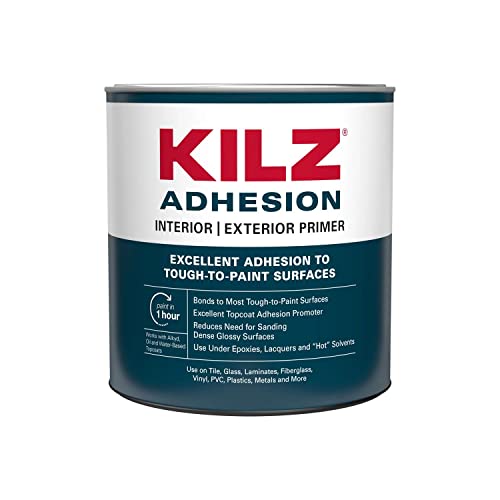
KILZ Adhesion High-Bonding Primer
What We Like
- Bonds to Kynar, PVC, Formica, glass, tile, metal
- Reduces need to sand glossy surfaces
- Works interior and exterior
- Topcoat with water or oil-based paint
Trade-offs
- Small quart covers only 75-100 sq ft
- Needs 24-hour dry before hot-solvent topcoats
- Heavier than some quarts at 3.1 pounds
A high-bonding primer that grips Kynar, PVC, Formica, vinyl, glass, tile, glazed brick, chalky paint, glossy finishes, fiberglass, and metals means you can paint nearly any slick or stubborn surface without sanding first. The advanced styrenated acrylic formula provides a sound anchor for topcoats while reducing the need to sand dense, glossy surfaces. This quart covers 75-100 square feet, which suits smaller projects like a bathroom accent wall or a single door. It dries to touch in 30 minutes and is ready for a recoat in an hour, keeping the job moving fast.
A quart covers roughly 75 to 100 square feet, so it fits small projects like a single door or a piece of furniture, but a garage floor or long fence will need multiple cans. Each quart weighs 3.1 pounds, which adds up if you buy several. For epoxies or lacquers with hot solvents, you must let the primer dry for 24 hours before topcoating and test for compatibility in an inconspicuous area first.
Product photos
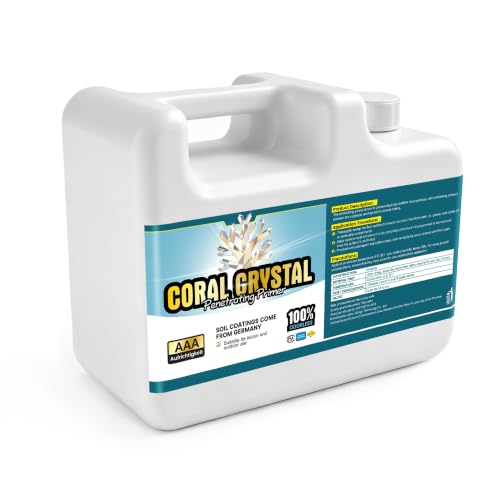
Coral Crystal Waterborne Penetrating Primer
What We Like
- Deep penetration for porous surfaces
- Low odor, safe for living areas
- Blocks water vapor and salt crystals
- Ready-to-use with quick 4-hour recoat
Trade-offs
- Only for porous substrates, not non-porous surfaces
- Requires 4-hour wait before recoating
A 105-fluid-ounce bucket of waterborne primer that seeps deep into porous concrete, cement, and masonry means you can seal a garage floor or basement slab without worrying about surface flaking or bubbling later. This is the primer to grab when your concrete is old, dusty, or uneven and you need a firm base for epoxy, polyurethane, or acrylic topcoats. Its low-odor formula makes it comfortable to use in enclosed spaces like cellars or living rooms, and the upgraded leak-proof bucket keeps mess to a minimum during storage and handling.
This primer is purpose-built for porous masonry only, so it won’t bond to slick surfaces like tile or glossy paint the way a universal bonding primer such as INSL-X Stix Acrylic Waterborne Bonding Primer would. You also have to wait four hours before recoating, which is standard for a penetrating sealer but slower than some all-in-one products. For anyone prepping a dusty, porous concrete floor for a durable coating, that deep-penetrating seal and vapor barrier make the wait worthwhile.
Product photos
Schluter Primer-U Universal Primer

What We Like
- Dries in 15-60 minutes
- Bonds to gypsum, tile, steel, concrete
- Water cleanup while wet
Trade-offs
- 8 lb weight is heavy for small jobs
- Only for thin-set mortar bonding use
A 15-60 minute dry time means you can apply thin-set mortar the same day without waiting overnight. This primer handles tough bonding jobs on surfaces like gypsum underlayment, existing tile, terrazzo, steel, and concrete. It is designed for use with Schluter thin-set mortars on demanding floors or walls, making it a practical choice for projects where reliable adhesion is needed. The water-based formula allows simple cleanup by rinsing tools with water while the primer is still wet.
Weight is a consideration: at 8 pounds per gallon, this is a heavier container than a quart of Zinsser Bulls Eye 1-2-3, so it may be less convenient for small touch-ups or carrying up ladders. And because the bond is optimized for thin-set mortar, it is not a general-purpose primer for paint or stain blocking. If your project is strictly about locking down mortar to difficult surfaces, this is the precise tool for that job.
How We Evaluated Concrete Primers
Our evaluation is research-based, drawing on manufacturer technical data sheets, professional painter round-ups, and thousands of owner reviews to identify what works and what doesn’t on concrete surfaces. We focused on the real-world conditions that cause primer failure.
The four criteria that mattered most were bond strength to difficult surfaces, surface preparation requirements, dry and recoat time, and coverage per container. A primer that requires extensive sanding or grinding loses its convenience advantage, while one that dries slowly can derail a one-day project. We also weighed whether a formula is water-based for easy cleanup or solvent-based for maximum stain blocking.
A research-led evaluation cannot replicate every job-site condition. Concrete porosity, moisture levels, and contamination vary widely, so we prioritized primers with the most consistent owner feedback across different scenarios. Always follow the manufacturer’s surface prep instructions for the best results.
What To Look For In Concrete Primers
Choosing a concrete primer starts with understanding your surface: is it bare, previously painted, or contaminated? The right primer saves you time and prevents topcoat failure.
Key criteria include bond strength to concrete without sanding, dry time (faster is better for multi-coat projects), and whether the primer blocks stains, efflorescence, and moisture.
Surface Type and Condition
Bare concrete needs a primer that penetrates and bonds to the porous surface, like the Zinsser Bulls Eye 1-2-3. Previously coated or sealed floors require a recoat primer like the Rust-Oleum Concrete & Garage Recoat Primer, which is designed to adhere to existing coatings without sanding. For rough cinderblock or brick, a block filler (like Zinsser Block Filler) is essential to fill voids and create a smooth painting surface.
Dry Time and Recoat Window
Fast-drying primers let you apply a topcoat the same day. The Zinsser Bulls Eye 1-2-3 dries in 30 minutes and can be recoated in one hour. The Schluter Primer-U dries in as little as 15 minutes, ideal for tile work. In contrast, the KILZ Adhesion primer requires a 24-hour dry time before applying hot-solvent topcoats, so plan your project timeline accordingly.
Coverage and Container Size
Coverage varies significantly: the Rust-Oleum Concrete & Garage Recoat Primer covers up to 400 square feet per gallon, making it economical for garage floors. Smaller projects on difficult surfaces (tile, PVC) often come in quarts covering only 75-100 square feet. For large masonry walls, the Zinsser Block Filler comes in a 45.5-pound bucket, which is heavy but necessary for the job.
- Check the label for the exact square footage per container for your specific surface.
- For large areas, choose a primer available in gallons or five-gallon pails to minimize cost per square foot.
- For small repairs or difficult surfaces, a quart is often sufficient and avoids waste.
A primer that requires no sanding and dries in under an hour is almost always worth the premium for the time it saves.
Concrete Primers Compared
The table below compares our top picks across key specs, so you can see at a glance which primer fits your concrete project.
| Product | Coverage | Drying Time | Surface |
|---|---|---|---|
| Zinsser Bulls Eye 1-2-3 All Surface Primer | 100 sq. ft. | 30 min to touch | Concrete, wood, metal, masonry |
| Rust-Oleum Concrete & Garage Recoat Primer | 400 sq ft per gallon | 6 hours before topcoat | Concrete floors |
| Zinsser Block Filler Masonry Primer | Up to 500 sq. ft. | N/A | Concrete, cinderblock, brick, stucco, plaster, mortar |
| INSL-X Stix Acrylic Waterborne Bonding Primer | 75-100 sq ft/qt | N/A | Glossy tile, PVC, vinyl, plastic, masonry, wood |
| BEEST Multi-Purpose Primer | 250 sq ft per gallon | Apply top coat within 24 hours | Concrete, metal, wood, TPO |
| Rust-Oleum Stops Rust Universal Bonding Primer Spray | 10-12 sq. ft. | 30 minutes | Galvanized steel, wrought iron, laminate, PVC, porcelain, masonry |
| Liquid Rubber Multipurpose Primer | N/A | Fast drying | Concrete, wood, metal, fiberglass, PVC |
| KILZ Adhesion High-Bonding Primer | 75-100 sq ft per quart | 30 min to touch, 1 hr recoat | Kynar, PVC, Formica, vinyl, glass, tile, glazed brick, metal |
| Coral Crystal Waterborne Penetrating Primer | N/A | 4 hours | Porous concrete, cement, masonry |
| Schluter Primer-U Universal Primer | N/A | 15-60 minutes | Concrete, gypsum, tile, steel |
Frequently Asked Questions
Do I need to prime concrete before painting?
Yes, priming bare concrete is essential. Concrete is porous and alkaline, which can cause paint to peel or discolor over time. A quality concrete primer seals the surface, blocks moisture and salts, and provides a uniform base for better paint adhesion and durability.
Can I use a regular primer on concrete?
Standard drywall or wood primers are not formulated for concrete’s porous, alkaline surface. They lack the bonding agents needed to adhere to masonry and will not block efflorescence or moisture. Always use a primer labeled for concrete or masonry.
How long should concrete primer dry before painting?
Dry time varies by product. Fast-drying options like Zinsser Bulls Eye 1-2-3 are ready for a topcoat in one hour, while others like KILZ Adhesion require up to 24 hours for solvent-based topcoats. Always follow the manufacturer’s recoat time for your specific primer and topcoat.
What is the best primer for a garage floor?
For previously coated garage floors, the Rust-Oleum Concrete & Garage Recoat Primer is a top choice because it bonds without sanding and dries quickly. For bare concrete garage floors, a general-purpose bonding primer like Zinsser Bulls Eye 1-2-3 works well, though you may need a larger gallon size for full coverage.
Can I use concrete primer on wood or metal?
Some concrete primers are multi-surface formulas. The Zinsser Bulls Eye 1-2-3 bonds to metal and wood in addition to concrete. The INSL-X Stix primer is designed for difficult surfaces like tile, PVC, and galvanized metal. Always check the label for the specific surfaces the primer is designed to bond.
The Bottom Line
For most concrete priming projects, the Zinsser Bulls Eye 1-2-3 All Surface Primer is the most versatile and convenient choice. It bonds to bare concrete without sanding, dries fast, and works on metal and wood too, making it ideal for DIYers and pros tackling small-to-medium jobs around the house.
If your project is a garage floor recoat, the Rust-Oleum Concrete & Garage Recoat Primer will save you time with its no-sanding formula. For rough cinderblock walls or large masonry surfaces, the Zinsser Block Filler Masonry Primer is the heavy-duty solution that fills and smooths in one step.
The single most important factor in a successful concrete paint job is surface preparation. Clean the concrete thoroughly, patch any cracks, and choose a primer specifically formulated for your surface condition. The right primer makes the difference between a finish that lasts for years and one that peels in months.
