
10 Best Chairs For Artists in 2026
This post contains affiliate links. As an Amazon Associate, we earn from qualifying purchases.
For artists who spend hours at a drafting table or standing desk, the right chair makes the difference between a productive session and a sore back. We recommend the Synorla Ergonomic Tall Drafting Chair as the best overall for its adjustable lumbar support, breathable mesh back, and flip-up armrests that get out of the way when you need to lean in. Other strong options include the SONGMICS Drafting Chair for those who prioritize airflow, and the BOLISS High Back Drafting Chair for heavy-duty support.
The challenge with finding a chair for artistic work is that standard office chairs are often too low for drafting tables and lack the adjustability needed for varied postures. You need a chair that can rise to the right height, support your lower back during long stretches, and keep you cool when you’re in the zone.
This guide is based on a review of manufacturer specifications, expert round-ups, and patterns in owner feedback. We focused on the features that matter most for artists: height range, lumbar support, seat comfort, and durability. Our goal is to help you find a chair that supports your creative practice without adding to your aches.
Top 10 Chairs For Artists in the Market
Certain content that appears on this site comes from Amazon. This content is provided "as is" and is subject to change or removal at any time.
The Best Chairs For Artists, Reviewed
Synorla Ergonomic Tall Drafting Chair

What We Like
- Adjustable lumbar support for lower back
- Breathable mesh back with foam cushion
- Flip-up armrests for drafting flexibility
- Quiet PU casters protect floors
Trade-offs
- No headrest listed in specifications
- No headrest for neck support
A 9-inch seat height range means this chair adapts from a standard desk to a tall drafting table without compromising posture. The adjustable lumbar support and breathable mesh back target the lower back fatigue that hits after hours of hunched sketching or detailed line work. For artists who switch between sitting and standing throughout the day, the flip-up armrests let you slide close to the easel or drafting board without obstruction. The 3-inch high-density foam cushion adds enough give for long sessions, while the mesh keeps you from overheating during focused work.
At 27.0 pounds, this chair is light enough to roll easily between a drafting table and a standard desk. But buyers who want a heavier base for extra steadiness might prefer the BOLISS High Back Drafting Chair at 46.2 pounds. The Synorla also lacks a headrest, so if you need neck support while looking up at reference materials, you will not find it here. Still, the adjustable lumbar support and flip-up armrests give you practical ergonomic options for long work sessions without the bulk.
SONGMICS Drafting Chair
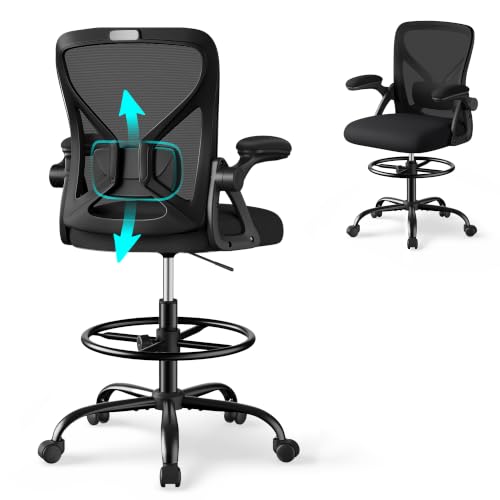
What We Like
- Breathable mesh back promotes airflow
- Height-adjustable sponge lumbar support
- 90-degree flip-up armrests save space
- Sturdy metal base supports 330 lbs
Trade-offs
- No headrest for tall artists leaning back
- Seat height maxes at 49.2 inches
- Fixed armrests only flip up, not adjustable
A 3.5-inch thick resilient sponge cushion paired with a waterfall seat edge means you can sit through long drawing sessions without that numb-leg feeling creeping in. The curved mesh back lets air circulate freely, so you stay cool even when you’re deep in a detailed sketch. That adjustable circular foot ring gives you room to shift your feet as you work, which matters when you’re switching between a standing desk and a drafting table. This chair suits artists who value airflow and all-day comfort over extra bells like a headrest.
If you like to recline and study your work from a distance, the lack of a headrest will be noticeable. The BOLISS High Back Drafting Chair includes an adjustable headrest and a taller back, while this SONGMICS model focuses on a simpler, more breathable design. It’s a practical seat for someone who prioritizes airflow and a sturdy base over a full lounging experience.
Product photos
BOLISS High Back Drafting Chair

What We Like
- 400 lb heavy-duty load capacity
- 5-inch thick molded foam seat
- 3D adjustable headrest with 4 levels
- 90-degree flip-up armrests save space
Trade-offs
- At 46.2 lb, it is heavy to move
- Not suitable for users under 5 feet due to minimum seat height
A 400-pound load capacity means this chair is built to handle larger body types and long, demanding sessions without wobble or wear. The 5-inch thick molded foam seat is designed to retain its streamlined shape over years of heavy use, and the oversized chrome foot ring reduces thigh pressure during extended drawing or drafting work. For artists who need a stable, supportive perch at a standing desk or drafting table, this is a no-nonsense choice that prioritizes durability and comfort over flash.
The trade-off is weight and footprint. At 46.2 pounds and 27.3 inches wide, it is noticeably heavier and wider than the Synorla drafting chair, which weighs only 27 pounds and takes up less floor space. If you frequently reposition your chair or work in a cramped studio, the BOLISS may feel bulky. But if your priority is a rock-solid seat that supports heavy use and larger frames, the extra heft is a worthwhile investment.
Product photos
BOSMILLER Wide Seat Drafting Chair
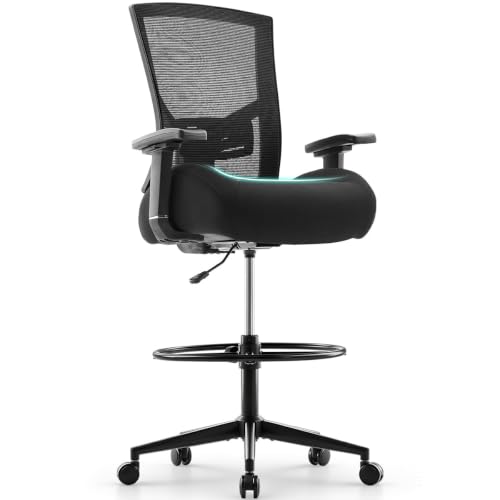
What We Like
- Extra-wide 22.4-inch seat distributes weight evenly
- 5.1-inch thick cushion reduces hip pressure
- 2D adjustable lumbar supports varied heights
- Stable pentagon base with smooth PU casters
Trade-offs
- At 36.4 lb, heavier to move than mesh alternatives
- No mesh back for breathability during long sessions
A 22.4-inch wide seat with 5.1 inches of foam means you can shift positions freely without feeling the edge of the chair digging into your legs. For artists who spend hours at a drafting table or standing desk, that extra surface area spreads your weight evenly and cuts down on hip fatigue. This chair is built for bigger frames, rated for 500 pounds, and the thick padding makes it a strong pick if comfort is your top priority.
At 36.4 pounds, this chair is stable but not something you want to move around the studio often. The padded seat and back offer firm support, though some users might prefer a more breathable material on warm days. If you need a sturdy perch that cradles your hips and lower back through long drawing sessions, the BOSMILLER delivers exactly that.
Hayelf Drafting Chair for Standing Desk
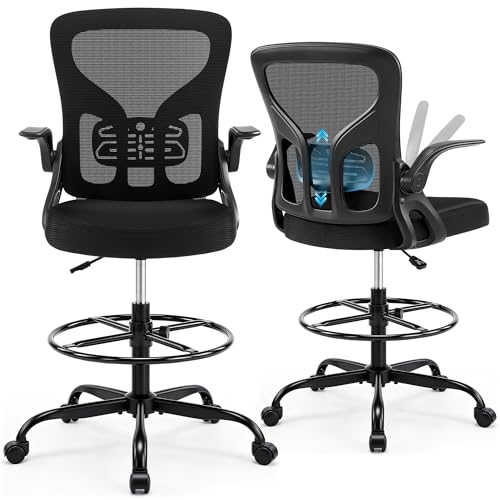
What We Like
- 22"–30" seat height for tall desks
- 7" adjustable foot ring reduces leg fatigue
- Flip-up arms for artists and musicians
- 300 lb capacity with stable fixed frame
Trade-offs
- No tilt function limits posture variety
- Fixed upright frame can feel rigid for long sits
With a 22-30 inch seat height range, this chair works with standing desks and drafting tables that require an elevated seat. The 7-inch adjustable foot ring provides a stable place to rest your feet, which helps reduce leg fatigue during long hours at a high workstation. The flip-up arms fold completely out of the way when you need to lean into a canvas or reach for a tool. That makes it practical for artists and crafters who want an unobstructed range of motion. The fixed-angle upright frame keeps the chair stable at higher elevations, so it won’t wobble when you shift your weight.
The fixed-angle upright frame means you cannot recline or rock back, which keeps you securely planted at high workstations, a deliberate safety feature for drafting tables or standing desks. The 300-pound capacity and heavy-duty base ensure a wobble-free seat, and the 50-inch height is comparable to other tall drafting chairs on the market.
Product photos
HYLONE Drafting Chair
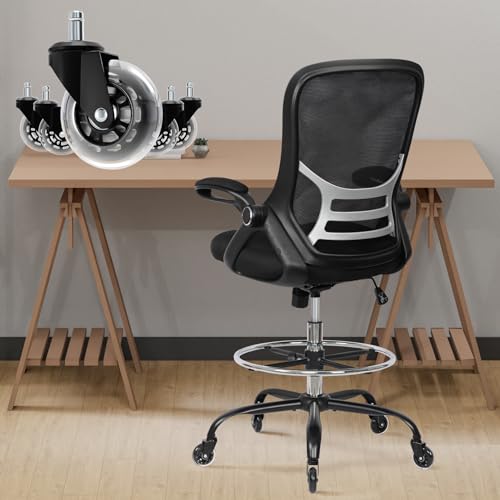
What We Like
- Rubber wheels protect all floor types
- Flip-up armrests save space
- Thick high-density foam seat
Trade-offs
- At 39 lb, it is heavier than most drafting chairs
- No headrest for long drawing sessions
- Mesh back only, no cushion for upper back
A tall overall height of 54.0 inches means this chair reaches standing desks and drafting tables that standard office chairs simply cannot, and the thick high-density foam seat keeps you comfortable through long sketching sessions. The rubber wheels roll silently over wood, vinyl, or carpet without leaving a mark, and the flip-up armrests let you tuck the chair away when floor space is tight. For someone who needs a tall, sturdy stool with genuine ergonomic support, this model delivers where cheaper alternatives skimp on materials and stability.
At 39 pounds, the HYLONE is heavier than the Synorla drafting chair (27 pounds), so moving it between workstations or carrying it upstairs takes more effort. It also lacks a headrest, so if you spend hours leaning back to view your canvas from a distance, the BOLISS High Back Drafting Chair includes one. But if you want a stable, certified base and floor-friendly casters over portability, the HYLONE is a reliable choice for the dedicated artist.
Product photos
Kaleurrier Adjustable Drafting Chair

What We Like
- 400 lb heavy-duty capacity
- Aluminum base for stability
- Height adjusts from 20 to 28 inches
Trade-offs
- No armrests mentioned in specifications
- No armrests included for arm support
A 400 lb weight capacity makes this drafting chair one of the most sturdy options for artists who need a seat that won’t wobble under heavy use. For artists working long hours at a drafting table or standing desk, the 20-to-28-inch height range and contoured high-density foam cushion aim to keep you comfortable through extended sessions without sinking or sagging.
The trade-off comes in weight and materials. At 22 pounds, the Kaleurrier is lighter than the BOLISS High Back Drafting Chair, which weighs 46.2 pounds. The faux leather upholstery is a different material than the mesh back of the Synorla Ergonomic Tall Drafting Chair, so if you tend to run warm while sketching, you might consider the airflow difference. Still, for artists on a budget who need a certified heavy-duty seat with straightforward adjustability, this chair delivers where it counts.
Product photos
Office Star DC Series Drafting Chair

What We Like
- GREENGUARD Certified for low chemical emissions
- One-touch pneumatic seat height adjustment
- Height adjustable foot ring for posture
- Approved for commercial use
Trade-offs
- No lumbar support adjustment mentioned
- Backrest height is fixed at 11.75 inches
A GREENGUARD Certified chair means the materials release very low chemical emissions, so you can spend long hours at the drafting table without worrying about indoor air quality. That certification is the standout reason to choose this model over others if you work in a small studio or a room without great ventilation. The sculptured foam seat and back offer comfortable support, and the adjustable foot ring helps you maintain better posture as you shift between sitting and standing positions.
The vinyl seat and fixed backrest height won’t breathe like the mesh designs found on the Synorla Ergonomic Tall Drafting Chair. If you tend to run warm or need adjustable lumbar support, that other pick might suit you better. But for an artist who prioritizes a cleaner air environment and a straightforward, commercial-grade build, this chair delivers where it counts.
Product photos
Flash Furniture Mesh Drafting Chair

What We Like
- Tilt lock with tension control
- Height-adjustable foot ring
- Breathable mesh back with lumbar support
Trade-offs
- 34-pound weight limits portability
- Foot ring is not height-adjustable for shorter users
A tilt lever with lock-in position and tension control lets you rock back to stretch or lean forward without fighting the chair. The ventilated curved back and lumbar support, paired with breathable mesh, help keep air moving during long sessions. With a seat height that adjusts from 21.5 to 29 inches, this chair works with standing desks, sit-to-stand desks, bar height tables, and drafting tables. The flip-up arms slide out of the way when you need extra reach across a work surface.
Product photos
Steelcase Series 1 Stool Chair
What We Like
- 12-year manufacturer warranty
- Fully adjustable arms and lumbar
- Flexor back system conforms to body
- Designed for 24/7 use
Trade-offs
- Wheels for carpet only, not hard floors
- Stool height limits use at standard desks
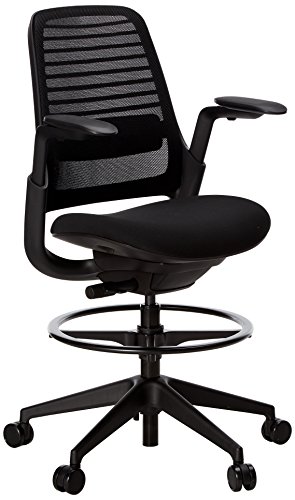
A 12-year manufacturer warranty backs this stool chair, which is designed for continuous use and includes a flexor back system that conforms to your body as you move. The fully adjustable arms and lumbar let you customize support, and the pneumatic seat height adjustment suits standing-height desks or drafting tables. If you want a chair that is built for durability and backed by a long warranty, this model delivers that confidence.
This stool chair is light at just ten pounds, which means it won’t anchor you in place the way a heavier chair like the BOLISS High Back Drafting Chair at 46.2 pounds might. Its carpet-only wheels also limit where you can roll smoothly, so if your studio has hardwood or tile, you’ll want to swap the casters. That said, the Steelcase earns its place for artists who prioritize long-term durability over sheer heft, especially when the warranty backs every adjustment knob and fabric seam for over a decade.
Product photos
How We Evaluated Chairs For Artists
We started by looking at the technical specifications of each chair, focusing on seat height range, weight capacity, and adjustability features. We then compared these specs against the needs of artists who work at drafting tables, standing desks, and standard workstations.
The four criteria that mattered most were height range, lumbar support, seat comfort, and build quality. Height range ensures the chair fits drafting tables, while lumbar support prevents lower back strain during long sessions. Seat comfort depends on cushion thickness and width for extended sitting, and build quality covers weight capacity and materials. We also considered extras like flip-up armrests, foot rings, and casters that protect floors.
A research-led evaluation like this has limits: we haven’t sat in these chairs ourselves, and comfort is deeply personal. But by cross-referencing what manufacturers claim with what owners consistently report, we can point you toward the chairs most likely to work well for your setup.
What To Look For In Chairs For Artists
Choosing an artist’s chair means balancing height, comfort, and adjustability. Here are the key factors to consider before you buy.
Look for a seat height that reaches your drafting table or standing desk, lumbar support that fits your lower back, and a seat cushion that stays comfortable for hours. Armrests that flip up and a foot ring are valuable extras.
Seat Height Range
The most important spec for an artist’s chair is the seat height range. Standard drafting chairs typically adjust from around 20 to 30 inches, but some go higher. Measure your work surface from the floor to the top of your table or desk, then subtract your ideal seated thigh length to find the seat height you need.
If you switch between a drafting table and a standard desk, look for a chair with a wide adjustment range like the Hayelf Drafting Chair, which goes from 22 to 30 inches.
Lumbar Support and Back Design
Lower back pain is the most common complaint from artists who sit for long hours. Look for a chair with adjustable lumbar support that moves up and down to fit your spine. Breathable mesh backs, like the one on the SONGMICS Drafting Chair, help keep you cool during long sessions. If you prefer a cushioned back, consider a chair with a thicker foam pad, but be aware that it may trap more heat.
Seat Comfort and Width
The seat cushion and its width directly affect how long you can sit without discomfort. Thicker foam cushions, like the 5-inch thick molded foam on the BOLISS High Back Drafting Chair, provide better pressure distribution. Wide seats, such as the 22.4-inch option on the BOSMILLER Wide Seat Drafting Chair, are helpful for larger body types or for artists who shift positions often.
- Measure your work surface height and compare it to the chair’s seat height range.
- Check if the lumbar support is adjustable in height, not just fixed.
- Consider whether you need flip-up armrests for close work at a drafting table.
- Look at the weight capacity to ensure the chair will be stable for your body.
- Think about your floor type and choose casters accordingly.
A chair that fits your body and your workspace is the only one that will keep you comfortable through a long drawing session.
Chairs For Artists Compared
The table below compares the key specs of our top picks, including seat height range, weight capacity, and standout features, so you can see at a glance which chairs fit your needs.
| Product | Seat Height Range | Weight | Seat Cushion Thickness |
|---|---|---|---|
| Synorla Ergonomic Tall Drafting Chair | Max 9 in | 27.0 pounds | 3-inch |
| SONGMICS Drafting Chair | 41.3-49.2 in | 27.1 pounds | 3.5 in |
| BOLISS High Back Drafting Chair | 24.8", 32.1" | 46.2 pounds | 5 inches |
| BOSMILLER Wide Seat Drafting Chair | 25.2-32.7 inches | 36.4 pounds | 5.1 inches |
| Hayelf Drafting Chair for Standing Desk | 22"–30" | 20.0 pounds | 2.8" |
| HYLONE Drafting Chair | N/A | 39.0 pounds | N/A |
| Kaleurrier Adjustable Drafting Chair | 20 to 28 inches | 22.0 pounds | N/A |
| Office Star DC Series Drafting Chair | 24", 34" | 28.0 pounds | 2.5" T |
| Flash Furniture Mesh Drafting Chair | 21.5-29 inches | 34 pounds | N/A |
| Steelcase Series 1 Stool Chair | Stool height (pneumatic) | 10.0 pounds | N/A |
Frequently Asked Questions
What height should an artist’s drafting chair be?
The seat height of your drafting chair should let you work with your elbows at a 90-degree angle and your feet flat on the floor or foot ring. For most drafting tables, this means a seat height between 22 and 30 inches. Measure your table height and subtract your thigh length to find the right range.
Is a headrest necessary for an artist’s chair?
A headrest is not essential for most artists, but it helps if you like to lean back between drawing sessions. If you work in a forward-leaning posture at a drafting table, a headrest may not be used much. The best overall pick, the Synorla Ergonomic Tall Drafting Chair, does not include a headrest.
What is the best type of back support for a drafting chair?
Adjustable lumbar support is the most important feature for preventing lower back pain during long sitting sessions. A breathable mesh back can help keep you cool, while a cushioned back provides more pressure relief. Look for lumbar support that moves up and down to fit the natural curve of your spine.
Can I use a regular office chair at a drafting table?
A regular office chair is usually too low for a drafting table. Standard office chairs have a seat height of about 16 to 20 inches, while drafting tables often require a seat height of 24 to 30 inches. A drafting chair or stool with a higher seat range is the better choice for this type of workspace.
How much weight can a drafting chair support?
Drafting chairs typically support between 250 and 400 pounds. For heavier artists, look for chairs with a high weight capacity like the BOLISS High Back Drafting Chair or the Kaleurrier Adjustable Drafting Chair, both rated for 400 pounds. Always check the weight limit to ensure the chair is stable and safe for your body.
The Bottom Line
For most artists, the Synorla Ergonomic Tall Drafting Chair offers the best balance of lumbar support, breathability, and drafting-table-friendly features. It works well for anyone who switches between a standing desk and a drafting table and wants a chair that doesn’t get in the way.
If your priority is staying cool during long sessions, the SONGMICS Drafting Chair with its breathable mesh back and adjustable sponge lumbar support is a strong choice. For heavier artists or those who need extra cushioning, the BOLISS High Back Drafting Chair provides a 400-pound capacity and a thick foam seat.
The single most important factor in choosing an artist’s chair is that it fits your specific workspace. Measure your table height, know your preferred sitting posture, and pick a chair that adjusts to match you, not the other way around.
