
10 Best Brushes For Cutting In Paint in 2026
This post contains affiliate links. As an Amazon Associate, we earn from qualifying purchases.
The Purdy 2.5 Inch Angle Sash Brush is our best overall pick for cutting in paint because its firm nylon/polyester bristles hold their shape through long strokes, making quick work of wall and ceiling edges. For precise work around trim and tight corners, the Purdy Clearcut Dale Angular Trim Brush offers superior control, while the Zibra Palm Pro Cut In Brush reduces hand fatigue during extended sessions.
Cutting in paint, the technique of painting straight edges where walls meet ceilings or trim, is the most time-consuming part of any paint job. A good brush holds enough paint for long, steady lines and keeps its chiseled edge without leaving bristle marks. The wrong brush can turn a weekend project into a frustrating battle with drips and crooked lines.
This guide is based on a careful review of manufacturer specifications, expert round-ups, and patterns in owner feedback. We focused on bristle material, brush width, handle design, and overall value to help you find the right tool for your specific cutting-in needs.
Top 10 Brushes For Cutting In Paint in the Market
Certain content that appears on this site comes from Amazon. This content is provided "as is" and is subject to change or removal at any time.
The Best Brushes For Cutting In Paint, Reviewed
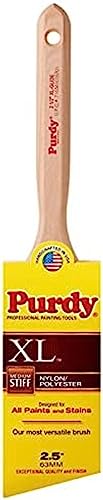
Purdy 2.5 Inch Angle Sash Brush
What We Like
- 2.5-inch width for broad cutting strokes
- Firm nylon/polyester bristles hold shape
- Hardwood handle for comfortable grip
- Made in the United States
Trade-offs
- At 2.5 inches, less precise for tight corners
- Too wide for detailed window sash work
A 2.5-inch width means you can cover more wall edge in a single stroke than narrower trim brushes, which is exactly what makes this brush a favorite for cutting in along ceilings and baseboards. The firm nylon/polyester bristles keep their shape even when you push hard, so you get a clean line without constant re-dipping. It suits painters who want speed and consistency on large rooms, especially when working with thicker paints that need a bit of backbone from the brush.
The trade-off is that firm bristles and a wider head make it less nimble around tight window mullions or intricate trim details. Compared to the Purdy Clearcut Dale Angular Trim Brush, which is narrower, this one sacrifices some finesse for coverage. If your project is mostly long straight runs and you value efficiency over corner precision, this brush delivers exactly that balance.
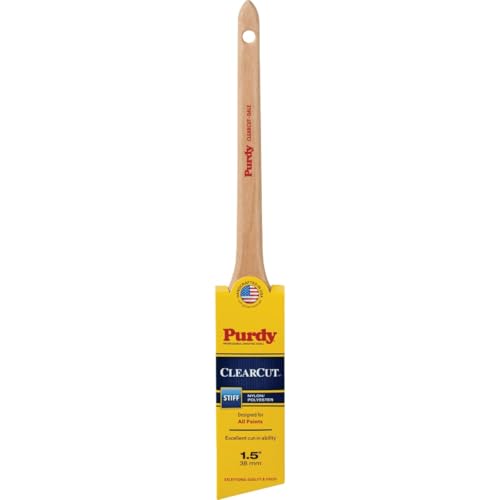
Purdy Clearcut Dale Angular Trim Brush
What We Like
- Stiff Tynex nylon and Orel polyester blend
- Stainless steel ferrule resists corrosion
- Moisture-wicking alderwood handle for control
- Handcrafted in the USA with global materials
Trade-offs
- 1-1/2 inch width covers less area than a 2-inch brush
A 1-1/2-inch brush with stiff Tynex nylon and Orel polyester filaments gives you the precision to trace a clean line along trim and ceilings without feathering. The narrow head slips into tight corners and around window casings where a 2.5-inch brush would smudge, making it the go-to tool for detail work that demands a steady hand. Lightweight at just 0.1 pounds, the alderwood handle wicks moisture so your grip stays secure even after hours of cutting in. This brush suits anyone who values crisp edges over speed, especially when working with latex paints and primers that benefit from the bristle’s stiffness.
Reach is the main difference here: at 1-1/2 inches wide, this brush takes more passes to cover a long baseboard than the Purdy 2.5 Inch Angle Sash Brush, which can knock out straight runs faster. But for the precise cut-in work that defines a professional finish, the narrower head and stainless steel ferrule deliver control that a wider brush cannot match. If your project is all about tight corners and flawless lines, this is the brush to keep in your hand. If you are painting miles of straight trim, pair it with a wider sash brush for the bulk work.
Zibra Palm Pro Cut In Brush

What We Like
- Patented handle designed as hand extension
- 25% more bristle pack-out than standard
- Aluminum inserts with epoxy for durability
- Ultra-light 0.1 lb reduces fatigue
Trade-offs
- Short 8.8-inch length limits reach on tall walls
- 2-inch width is narrow for large flat areas
The Palm Pro handle is the defining feature here: it’s engineered to sit in your palm like an extension of your hand, which translates to precise control and less strain during long cutting-in sessions. At 0.1 pounds and with Smooth Filament technology that provides 25% more pack-out than industry standard brushes, the brush is designed for paint pick-up and controlled release along trim and outlets. This is the brush to consider when comfort matters most, especially for detailed work around door frames and baseboards where your hand stays close to the surface.
At 8.8 inches long, this brush is shorter than the Purdy 2.5 Inch Angle Sash Brush (12.5 inches), so reaching high spots without a ladder may require a longer tool. But the short handle is designed to be an extension of your hand for all-day comfort and maximum control on precise cut-in work around trim, doorways, and outlets.
Product photos
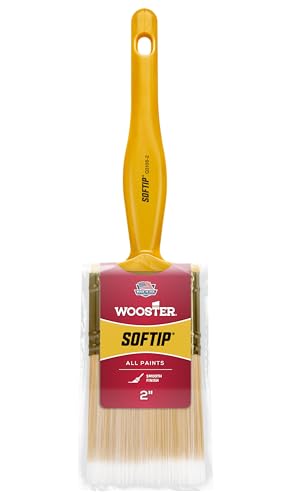
Wooster Softip Paintbrush 2 Inch
What We Like
- Soft brush tips for smooth finish
- Works with latex and oil-based paints
- Brass-plated steel ferrule resists rust
- Chisel trim for precise edge control
Trade-offs
- 2-inch width slower for large wall sections
- Plastic handle less balanced than hardwood
- No angled tip for sash work
The soft brush tips on this 2-inch Wooster are designed to lay paint down without visible brush marks, which is exactly what you want when cutting in along trim or ceilings. The white nylon and gold polyester bristles hold enough paint to cover a straight line without constant dipping, and the chisel trim gives you the control to follow a crisp edge. If your priority is a finish that blends into the rolled wall, this brush delivers that smoothness straight from the bristle design.
The Wooster Softip’s 2-inch width covers less area per stroke than a larger brush such as the Purdy 2.5 Inch Angle Sash Brush. But its soft tips deliver a smooth, even finish with latex and oil-based paints. The plastic Kaiser handle is lighter than the Purdy’s hardwood handle, the Wooster weighs 0.1 pounds versus the Purdy’s 0.2 pounds, so it’s less tiring for detailed trim work. For painters who prioritize a flawless cut-in over speed, this brush is a focused tool for the finish, not a generalist for the whole wall.
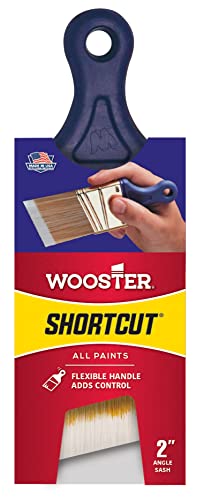
Wooster Shortcut Angle Sash Paintbrush
What We Like
- 2-inch handle adds maneuverability
- Flexible Shergrip fits tight spots
- Nylon/polyester works with all paints
Trade-offs
- Short handle limits grip for large areas
- 2-inch width slower on long straight runs
- No natural bristle option for oil-only purists
The handle is just 2 inches long. That tiny flexible Shergrip handle lets you tuck your thumb right against the ferrule, so you can work into corners where a standard brush won’t fit. It is ideal for painting behind toilet tanks, inside window sash channels, or along baseboards where furniture crowds the wall.
That short handle gives you access to tight spots, but it also limits leverage for long, steady strokes. If you are cutting in a whole room of crown molding, a longer-handled brush such as the Purdy 2.5 Inch Angle Sash Brush offers a different reach. But for the tightest spots, inside cabinets, around door hinges, or between pipes, the Shortcut is the brush that actually fits where your hand needs to go.
Vermeer 2 Inch Angled Paint Brush 4 Pack

What We Like
- 4-pack offers great per-brush value
- Thick synthetic blend holds more paint
- Thinner tips for precision cutting-in
- Wooden comfort grip reduces hand fatigue
Trade-offs
- 2-inch width is narrow for large wall sections
A 4-pack of 2-inch angled brushes with a thick synthetic filament blend means you can load up on paint and cut in longer between dips, saving time on trim and corners. The thinner tip at the end gives you the precision needed for clean lines along baseboards and window sash, while the wooden comfort grip handle makes extended sessions easier on your hand. This set suits anyone who wants multiple brushes ready for different colors or tasks without buying singles, and the blend works with both latex and oil-based paints, so it covers most interior and exterior jobs.
The 2-inch width is well suited for trim, sash, and touch-up work, but if you are painting large wall sections, a wider brush would cover more area per stroke. These brushes are designed to be washed and reused, so they can last through multiple projects. The set gives you four brushes ready for different colors or tasks without buying singles, and the synthetic filament blend works with both latex and oil-based paints, covering most interior and exterior jobs.
Product photos
Shur-Line Pro 2.5 Inch Thin Angled Brush
What We Like
- Thin profile slips into tight gaps
- Holds controlled load for even release
- Works with latex and oil paints
- Cleans up for repeated use
Trade-offs
- No natural bristle option for oil-only purists
- Thin profile lacks stiffness for heavy-duty scraping.
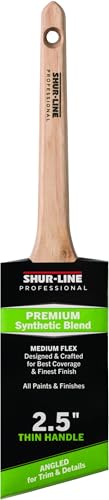
A 2.5-inch thin angled profile that slips into narrow trim gaps and detail spots, so you can cut clean lines without overspray or masking tape. This brush carries a full, controlled load of paint and releases it evenly, meaning fewer reloads and a wet edge that stays workable. It suits anyone painting tight spaces like window sash, door frames, or baseboard edges where a standard angled brush would feel bulky. The sturdy ferrule and comfortable handle reduce hand fatigue during long sessions, and it works with both latex and oil-based paints, primers, and stains.
The synthetic bristles clean up easily with water or solvent, but purists who prefer natural bristle for oil-only work might want a dedicated option. For the majority of cutting-in tasks, though, this brush delivers precision and control without demanding constant reloading.
Pro Grade 2 Inch Angled Paint Brush 3 Pack

What We Like
- Three brushes for multi-room jobs
- Works with latex and oil paints
- Medium stiff bristles for control
- Angled tip for clean cut-in lines
Trade-offs
- 2-inch width slower on large walls
- No natural bristles for oil-based finishes only.
Getting three 2-inch angled brushes in one pack means you can keep cutting in across multiple rooms without stopping to wash a single brush. The medium stiff synthetic bristles hold paint well and resist soaking up too much, so lines stay crisp along trim and ceilings. This is a good choice for anyone who wants professional-level control on a budget, especially DIYers painting several rooms or contractors who need spares ready to go.
The Pro Grade 2 Inch Angled Paint Brush 3 Pack is designed for precision cutting-in and detail work, not for covering large wall sections quickly. At 2 inches wide, it gives you control for clean lines around trim, baseboards, ceilings, and corners. You’ll make more strokes on broad walls compared to a wider brush like the Purdy 2.5 Inch Angle Sash Brush.
Product photos
PinStone 2 Inch Angled Paint Brush Set

What We Like
- Short rubber handle for confined spaces
- Shed-free synthetic bristles hold paint well
- Angled tip creates clean edge lines
- Stainless steel ferrule resists rust
Trade-offs
- 2-inch width covers less area than wider brushes
- Short handle reduces reach on large flat walls
A 2-inch angled brush with a short rubber handle shifts control from your arm to your fingertips, which matters when you’re working inside a window sash or along a baseboard in a cramped corner. The synthetic bristles are shed-free and hold paint without dripping, so you can lay down a crisp line along a ceiling edge without stopping to wipe up spills. This set suits anyone who values precision over speed, especially for trim, cabinets, and touch-ups where a full-size handle would knock against the work.
Tight spaces and steady cut-in lines call for a brush that puts control first. The short rubber handle fits comfortably in the palm, reducing hand fatigue during extended trim work while offering precise maneuverability around window frames and baseboards. A stainless steel ferrule resists rust and keeps the synthetic bristles firmly in place, so the brush holds its shape without shedding. Reviewers note the angled tip glides along edges and corners, laying down smooth paint without drips or streaks. This design makes it a reliable tool for homeowners tackling interior painting projects, touch-ups, or furniture refinishing.
Product photos
Bates Detail Trim Paint Brushes 4 Pack
What We Like
- Four sizes cover fine to broad touch-ups
- Angled bristles help precise edge cutting
- Synthetic bristles smooth paint flow
- Wooden handles offer comfortable control
Trade-offs
- No single wide brush for large wall sections
- No brush wider than 25 mm for large areas
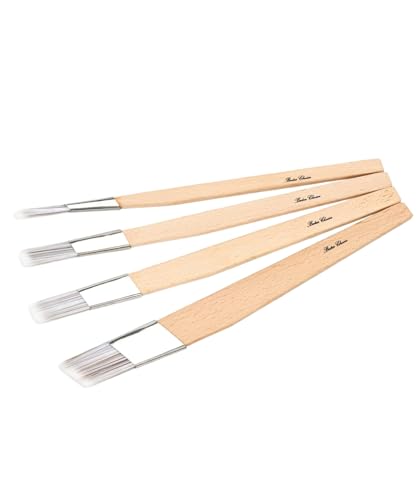
A set that gives you four different brush widths from 6 mm up to 25 mm means you can handle everything from a narrow window sash to a baseboard touch-up without switching brands. The angled bristle design is made for cutting in along edges and corners, so you get clean lines with less bending or wrist strain. This pack suits painters who need variety in one purchase, especially for detailed trim work, door frames, and small repair spots where accuracy matters more than covering a whole wall fast.
None of these brushes are wide enough to replace a standard 2.5-inch sash brush for broad cutting-in along long wall runs. If your main job is trimming out an entire room, a single Purdy 2.5 Inch Angle Sash Brush will cover more ground per stroke. But for anyone juggling multiple trim sizes, touch-ups, and detail corners, this Bates set gives you the right tool for each spot without buying four separate brushes.
Product photos
How We Evaluated Brushes For Cutting In Paint
This guide combines manufacturer specifications, expert recommendations from professional painters, and common patterns found in thousands of owner reviews. The focus is on which features consistently matter most for achieving clean, straight paint lines.
The four criteria that mattered most were bristle composition, brush width, handle ergonomics, and build quality. Bristle material determines how well a brush holds paint and lays it down smoothly. Width affects how much area you can cover per stroke versus how precisely you can navigate corners. Handle shape and weight influence control and fatigue during long sessions. Ferrule construction and bristle setting determine whether a brush will shed or lose its shape over time.
A research-led evaluation has honest limits: it cannot replicate the feel of a brush in your hand or predict how it will perform with a specific paint brand. We prioritized brushes with consistent positive feedback across many users and applications.
What To Look For In Brushes For Cutting In Paint
Choosing a cutting-in brush comes down to matching the tool to your project’s demands. The right brush holds paint, holds its shape, and feels balanced in your hand.
A good cutting-in brush has flagged (split-end) bristles for smooth paint release, a chiseled tip for precise edge work, and a ferrule that is firmly crimped to prevent shedding. Width should match your job: 2 to 2.5 inches for walls, and smaller sizes for trim and sash.
Bristle Material and Quality
Synthetic bristles made from nylon or polyester work with both latex and oil-based paints, while natural bristles (hog or China bristle) are best for oil-based finishes only. Look for flagged tips, these split ends help the brush hold more paint and release it evenly onto the surface. A mix of nylon and polyester often provides the right balance of stiffness and flexibility for cutting-in.
Brush Width and Shape
The most common cutting-in brush width for walls and ceilings is 2 to 2.5 inches. This range covers enough paint for long strokes while still maneuvering around corners. For window sash, baseboard edges, and tight trim gaps, a narrower brush gives better control. Angled tips (sash brushes) make it easier to reach into corners without accidentally painting the adjacent surface.
Handle Comfort and Weight
A brush that feels heavy or unbalanced after an hour of work will cause hand fatigue and shaky lines. Hardwood handles absorb moisture and reduce slipping, while rubberized grips can reduce pressure points. Short handles help in tight spaces but limit reach on tall walls. Consider how long you plan to paint at one time and choose accordingly.
- Check that bristles are firmly set in the ferrule with no loose gaps
- Run your fingers through the bristles to see if any shed
- Test the brush’s weight before paint for a few seconds to gauge balance
- Look for a chiseled tip that tapers to a thin edge
- Verify that the ferrule is corrosion-resistant for long-term use
A high-quality cutting-in brush should feel like a natural extension of your hand, not a tool you are fighting against.
Brushes For Cutting In Paint Compared
The table below compares the ten brushes we evaluated side by side, highlighting their key specifications and best-use scenarios.
| Product | Bristle Type | Handle Material | Brush Width | Weight |
|---|---|---|---|---|
| Purdy 2.5 Inch Angle Sash Brush | Nylon/Polyester | Hardwood | 2.5 inches | 0.2 pounds |
| Purdy Clearcut Dale Angular Trim Brush | Tynex nylon / Orel polyester | Alderwood | N/A | 0.1 pounds |
| Zibra Palm Pro Cut In Brush | Smooth Filament | Patented Palm Pro | 2 inches | 0.1 pounds |
| Wooster Softip Paintbrush 2 Inch | White nylon and gold polyester | Pearl-yellow solid plastic Kaiser handle | 2 inches | 0.1 pounds |
| Wooster Shortcut Angle Sash Paintbrush | Nylon & polyester blend | Flexible purple Shergrip | 2 inches | 0.0 pounds |
| Vermeer 2 Inch Angled Paint Brush 4 Pack | Synthetic filament blend | Wooden comfort grip | 2 inches | 0.1 pounds |
| Shur-Line Pro 2.5 Inch Thin Angled Brush | N/A | Comfortable (unspecified) | 2.5 inches | N/A |
| Pro Grade 2 Inch Angled Paint Brush 3 Pack | Synthetic | N/A | 2 Inches | 0.2 pounds |
| PinStone 2 Inch Angled Paint Brush Set | Synthetic | Rubber short handle | 2 inches | 0.5 pounds |
| Bates Detail Trim Paint Brushes 4 Pack | Synthetic | Wooden | N/A | N/A |
Frequently Asked Questions
What is the best brush width for cutting in paint?
For most wall and ceiling edges, 2 to 2.5 inches is the ideal width. It holds enough paint for long, steady strokes while still allowing you to maneuver around corners. For trim, window sash, and tight gaps, a narrower brush gives better precision.
What is the difference between synthetic and natural bristle brushes?
Synthetic bristles (nylon, polyester, or a blend) work with both latex and oil-based paints and are easier to clean. Natural bristles (hog hair) are best for oil-based finishes only, as they absorb water and become limp when used with latex paints.
How do I clean a cutting-in brush properly?
For latex paint, rinse the brush thoroughly with warm water and mild soap until the water runs clear. For oil-based paint, use mineral spirits or paint thinner. Reshape the bristles with your fingers and let the brush dry flat or hanging by the handle to maintain its shape.
Can I use a cutting-in brush for other painting tasks?
Yes, a good angled sash brush works for painting trim, doors, window frames, and other detailed work. However, it is not ideal for painting large flat surfaces like walls, where a wider roller or brush would be more efficient.
How do I prevent brush marks when cutting in paint?
Use a brush with flagged, chiseled bristles and load it with paint only halfway up the bristles. Apply paint in long, smooth strokes and maintain a consistent angle against the surface. Avoid pressing too hard, which can cause bristle splay and uneven lines.
The Bottom Line
The Purdy 2.5 Inch Angle Sash Brush is the best overall brush for cutting in paint for most homeowners and DIYers. Its 2.5-inch width and firm bristles make quick work of large wall and ceiling edges, while the hardwood handle provides comfortable control. If you need more precision around trim and tight corners, the Purdy Clearcut Dale Angular Trim Brush is the better choice.
For budget-conscious shoppers, the Pro Grade 2 Inch Angled Paint Brush 3 Pack offers solid performance at a lower per-brush cost. For those who paint for long hours, the Zibra Palm Pro Cut In Brush reduces hand fatigue significantly.
The single most important factor when choosing a cutting-in brush is matching the width and bristle stiffness to your specific project. A brush that is too wide for your trim or too stiff for your paint will make every edge a struggle.
