
7 Best Bottom Paint For Trailered Boats in 2026
This post contains affiliate links. As an Amazon Associate, we earn from qualifying purchases.
For trailered boat owners, Pettit Vivid Hybrid Dual Biocide Bottom Paint is the best overall pick because its hybrid hard/ablative formula reduces paint buildup while its burnishable finish withstands repeated launches. The Interlux Micron CSC offers best long-lasting protection, and the TotalBoat Krypton is the best copper-free choice for aluminum hulls.
The challenge with a trailered boat is that the paint must survive friction from bunks and rollers, exposure to air during transport, and then perform underwater. Many bottom paints chip, wear unevenly, or require heavy sanding before each repaint.
This guide is based on manufacturer specifications, expert round-ups, and patterns in owner feedback. We focused on the criteria that matter most for a boat that lives on a trailer, not in the water.
Top 7 Bottom Paints For Trailered Boats in the Market
Certain content that appears on this site comes from Amazon. This content is provided "as is" and is subject to change or removal at any time.
The Best Bottom Paints For Trailered Boats, Reviewed
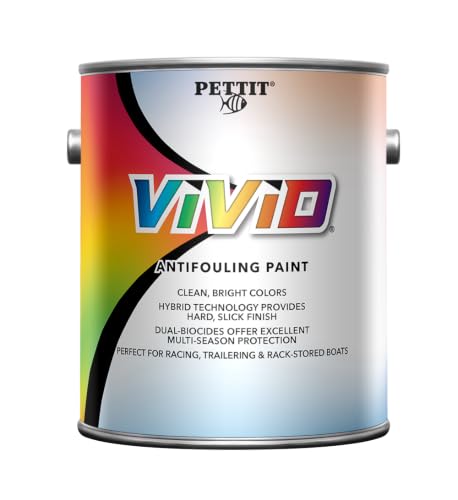
Pettit Vivid Hybrid Dual Biocide Bottom Paint
What We Like
- Hybrid hard/ablative formula reduces paint buildup
- Dual biocide protects against barnacles, algae, slime
- Hard smooth finish withstands trailering and relaunching
- Burnishable for a slick racing surface
Trade-offs
- Requires proper primer system for aluminum hulls
- Heavy at 5 pounds for a gallon of paint
The hybrid hard/ablative formula combines the durability of hard bottom paints with the self-renewing advantages of ablative coatings, so it reduces paint buildup while maintaining long-lasting protection. For boaters who trailer often, that combination means you get a finish that withstands trailering, hauling, and relaunching, yet the self-renewing action keeps future recoats simple. It also burnishes to a smooth surface, which matters if you ever line up at a start line.
The trade-off is that the dual-biocide system (Cuprous Thiocyanate and Zinc Pyrithione) demands a proper primer on aluminum hulls, so alloy-boat owners need to follow the prep steps carefully. Compared to the TotalBoat Krypton, which is copper-free and simpler on aluminum, the Pettit requires that extra primer discipline. But for fiberglass or well-primed aluminum trailers, the combination of trailering toughness and multi-season protection makes this the most versatile pick in the guide.
Product photos
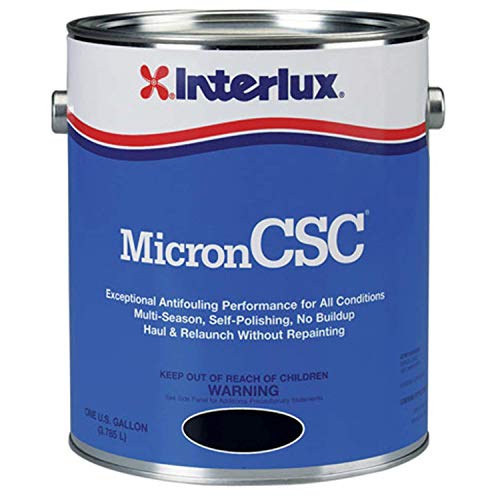
Interlux Micron CSC Antifouling Bottom Paint
What We Like
- 37.2% copper for strong antifouling
- Lasts 20% longer than comparable paints
- Improved resistance to weed and algae
- Suitable for all waters and hull types
Trade-offs
- At 18 pounds, heavy for a gallon can
- Ablative paint wears off over time
- Copper-based, not for aluminum hulls
With 37.2% copper, this ablative paint fights fouling aggressively and keeps working season after season. Interlux claims it lasts 20% longer than other copper-based ablative paints, which means fewer haul-outs and less prep work for a trailered boat owner who wants to stay on the water. It suits both power and sail in any water type, so whether you launch in salt or fresh, the protection stays consistent.
Weight is the main drawback: at 18 pounds per gallon, this can is noticeably heavier than the Pettit Hydrocoat (19 pounds for a gallon, so similar) but much heavier than the Pettit Vivid Hybrid at just 5 pounds. If you carry paint to a remote ramp or mix by hand, that heft matters. Also, because it is copper-based, it is not suitable for aluminum hulls, unlike the copper-free TotalBoat Krypton. For fiberglass, wood, or steel boats that stay in varied waters, the extra copper and longer life make the weight worth it.
Interlux Bottomkote NT Bottom Paint

What We Like
- Formulated for fiberglass hulls
- Black color for uniform coverage
Trade-offs
- At 17.6 lb, heavier than some alternatives
- Heavier than Pettit Vivid Hybrid at 5.0 lb
At 17.6 pounds per gallon, Interlux Bottomkote NT is noticeably heavier than alternatives like Pettit Vivid Hybrid at 5.0 pounds, so you’ll feel the heft carrying the can down a dock. That weight is a simple fact of the product’s formulation for fiberglass hulls, as stated in its description. The black color gives a consistent finish that hides surface imperfections, which is handy for a trailered boat that gets bumped around. This paint is a one-gallon container, so it’s a standard size for a single application.
The weight difference between this paint and lighter options like Pettit Vivid Hybrid is a practical consideration. For a trailered boat that you haul out frequently, the heavier can might be less of an issue than for a moored vessel where every pound counts. If you’re painting a larger hull, the lighter Pettit Vivid Hybrid could be easier to manage. But for a standard fiberglass runabout, this gallon is formulated for the job without any guesswork about compatibility.
Product photos
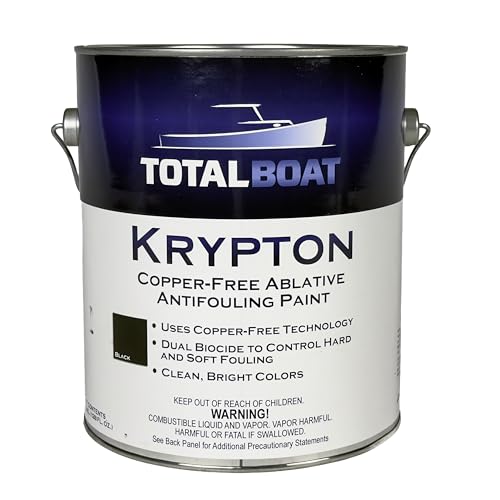
TotalBoat Krypton Copper-Free Antifouling Bottom Paint
What We Like
- Copper-free formula safe for aluminum hulls
- Dual biocide protects against barnacles, slime, algae
- Self-polishing ablative layer reduces paint buildup
- No maximum dry time for flexible launch scheduling
Trade-offs
- Requires priming on bare surfaces with separate product
- Needs 1-2 thin coats, not a single heavy coat
A dual biocide formula that is completely copper-free makes this paint the go-to choice for aluminum boats, outdrives, and pontoons where copper corrosion is a real risk. The ablative self-polishing action gradually wears away, continuously exposing fresh antifouling agents and preventing heavy paint buildup over multiple seasons. With coverage of 500 square feet per gallon and five bright color options, it suits both DIY boaters and pros who want reliable full-season protection across fresh and saltwater.
Bare aluminum or fiberglass hulls need a separate primer (TotalProtect) before painting. The paint also goes on in thin coats rather than a single heavy layer, so plan your prep time accordingly. The no-maximum-dry-time feature means you can paint weeks ahead and launch whenever you’re ready without losing biocide activity.
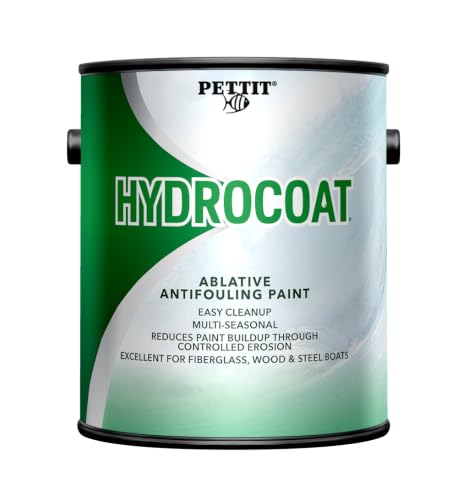
Pettit Hydrocoat Water-Based Ablative Bottom Paint
What We Like
- Water-based with soap-and-water cleanup
- Self-polishing prevents paint buildup
- Unlimited dry time for off-season painting
- Withstands frequent trailering and beaching
Trade-offs
- Copper biocide not suitable for aluminum hulls
- Heavier gallon than some competitors at 19 lb
An unlimited dry time means you can paint this on in the fall, let it cure all winter, and launch whenever spring arrives, no rushed schedule. That flexibility alone makes Pettit Hydrocoat a smart choice for trailered boat owners who store their rigs off-season. The water-based formula cleans up with soap and water, cutting out the harsh solvent odors and messy cleanup typical of traditional bottom paints. It uses copper-based ablative technology, so fresh biocide exposes itself as the coating wears, keeping barnacles and slime at bay in fresh, salt, or brackish water.
Copper biocide rules out aluminum hulls, so if your boat is aluminum, you will need a copper-free alternative like TotalBoat Krypton. At 19 pounds per gallon, this can is heavier than some competitors, but the weight is as listed by the manufacturer. For fiberglass or wood hulls that see frequent trailering, launching, and beaching, Hydrocoat offers a low-odor, high-convenience package that fits neatly into off-season maintenance routines.
Product photos
Rust-Oleum Marine Coatings Antifouling Bottom Paint

What We Like
- Works on fiberglass, wood, and steel
- Copper release prevents barnacle buildup
- Fast 4-hour recoat, 16-hour launch
- Hard smooth finish over aged coatings
Trade-offs
- Quart size covers only 110 sq. ft.
- Requires 16-hour wait before launching
A 16-hour launch time means you can prep and paint a trailered boat over a weekend without rushing. This Rust-Oleum antifouling paint uses copper release to stop barnacles and algae on fiberglass, wood, or steel hulls, making it a versatile option for budget-conscious boaters who trailer their craft between fresh and saltwater. The hard, smooth finish lays down flat over most old coatings, so you don’t need to strip everything before applying a fresh layer.
The most decisive fact about this paint is that it’s formulated for fiberglass, wood, and steel surfaces. That means it won’t work on aluminum hulls, a common material for lightweight trailer boats. Compared to the TotalBoat Underdog, which is specifically marketed for trailered boats and contains 24% copper in a single-season ablative formula, this Rust-Oleum quart covers up to 110 sq. ft. and requires a 16-hour cure before launch. For fiberglass or wood hulls on a tight budget, this is a value-oriented choice.
Product photos
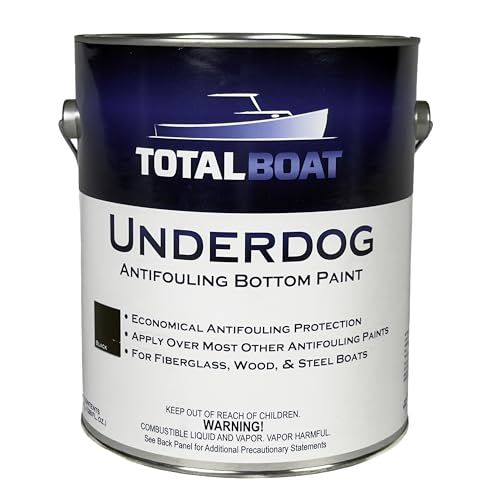
TotalBoat Underdog Antifouling Bottom Paint
What We Like
- Flexible launch timing with no max dry time
- Ablative formula reduces paint buildup
- Easy DIY application with roller or sprayer
- Works over most existing bottom paints
Trade-offs
- Single-season formula needs annual reapplication
- Requires epoxy barrier coat on bare surfaces
With 23.7% copper biocide in an ablative formula, this paint is built for boats that spend more time on a trailer than in the water. The ablative layer wears away gradually as you move, exposing fresh biocide each time you launch, so even if your boat sits dry for weeks between trips, the antifouling protection stays ready. It dries in just 1.5 hours and has no maximum dry time, meaning you can paint weeks ahead and launch whenever you’re ready, perfect for the irregular schedule of a trailered boat.
If you trailer your boat after every outing, this single-season ablative paint keeps maintenance simple and paint buildup low. For the boater who hauls out regularly, that means easy touch‑ups and no need to worry about multi‑season performance. The 23.7% copper biocide fights barnacles, slime, algae, and weeds while the boat is in the water. Just confirm your hull material before buying, since the paint is designed for fiberglass, wood, and steel, not aluminum.
Product photos
How We Evaluated Bottom Paints For Trailered Boats
Our research began with manufacturer data sheets to understand each paint’s chemical composition, application requirements, and dry-time specifications. We cross-referenced these with expert recommendations from marine paint professionals and analyzed patterns in owner feedback across dozens of forums and retailer reviews.
The three criteria that mattered most were abrasion resistance, reapplication ease, and hull compatibility. A paint that flakes off after one trip to the ramp is useless, and one that requires heavy sanding before every repaint defeats the purpose of a trailered boat.
This is a research-based evaluation, not a hands-on test. We cannot tell you how a paint performs after a season on your specific hull in your local waters. The goal is to give you the technical details and owner-reported patterns so you can make an informed choice.
What To Look For In Bottom Paints For Trailered Boats
Choose a bottom paint that balances abrasion resistance with easy recoating, and matches your hull material.
Key criteria: hard or ablative formula, copper or copper-free biocide, recoat and launch timing, coverage per coat, and compatibility with aluminum or fiberglass.
Formula Type: Hard vs. Ablative
Hard paints dry to a tough, smooth finish that resists scrubbing and trailering friction, but they build up over multiple seasons and require sanding before repainting. Ablative paints wear away slowly, releasing biocide as they go, which prevents buildup but may wear off faster on a trailer’s bunks and rollers. Hybrid formulas like the Pettit Vivid blend both traits.
Biocide: Copper vs. Copper-Free
Copper is the most common antifouling agent, effective against barnacles and algae, but it causes galvanic corrosion on aluminum hulls. Copper-free paints use alternative biocides like zinc pyrithione and are safe for aluminum, outdrives, and pontoons. If your boat is aluminum, a copper-free paint like TotalBoat Krypton is mandatory.
Application and Timing
Some paints allow unlimited dry time, meaning you can paint months before launch. Others require launching within a specific window. Recoat windows also vary: some need 4 hours between coats, others require overnight drying. Check the manufacturer’s instructions for your climate.
Rule of thumb: If you trailer frequently, choose a paint that allows flexible launch timing and does not require sanding between coats.
Bottom Paints For Trailered Boats Compared
The table below compares the seven bottom paints by their formula type, hull compatibility, and key application specs.
| Product | Type | Biocide | Coverage |
|---|---|---|---|
| Pettit Vivid Hybrid Dual Biocide Bottom Paint | Hybrid hard/ablative | Cuprous Thiocyanate + Zinc Pyrithione | N/A |
| Interlux Micron CSC Antifouling Bottom Paint | Ablative | 37.2% Copper | N/A |
| Interlux Bottomkote NT Bottom Paint | N/A | N/A | N/A |
| TotalBoat Krypton Copper-Free Antifouling Bottom Paint | Ablative | Dual biocide | 500 sq. ft. per gallon |
| Pettit Hydrocoat Water-Based Ablative Bottom Paint | Water-based ablative | Copper-based | N/A |
| Rust-Oleum Marine Coatings Antifouling Bottom Paint | Hard, smooth, flat sheen | N/A | 110 sq. ft. per quart |
| TotalBoat Underdog Antifouling Bottom Paint | Ablative (single-season) | 23.7% Copper | Up to 500 sq. ft./gal |
Frequently Asked Questions
Can I use copper-based bottom paint on an aluminum boat?
No. Copper causes galvanic corrosion on aluminum hulls. Use a copper-free paint like TotalBoat Krypton Antifouling Bottom Paint instead.
How often do I need to repaint a trailered boat?
It depends on the paint. Ablative paints like the TotalBoat Underdog are single-season formulas and need annual reapplication. Hard and hybrid paints like the Pettit Vivid can last multiple seasons before needing a fresh coat.
Do I need to sand the old paint off before repainting?
Not always. Ablative paints wear away and typically do not require sanding. Hard paints build up over time and may need sanding after several coats. Hybrid formulas reduce this buildup.
Can I apply bottom paint with a roller instead of a sprayer?
Yes. Most bottom paints, including the TotalBoat Underdog, are formulated for easy DIY application with a roller or brush. Spraying is faster but requires more equipment and masking.
How long should I wait before launching after painting?
It varies. The Rust-Oleum Marine Coatings requires a 16-hour wait. Others, like the TotalBoat Krypton, have no maximum dry time, so you can paint weeks or months before launching.
The Bottom Line
For most trailered boat owners, the Pettit Vivid Hybrid Dual Biocide Bottom Paint delivers the best balance of durability, easy recoating, and a burnishable racing finish. It is the pick if you want a paint that handles repeated launches without heavy buildup.
If you own an aluminum boat, the TotalBoat Krypton Copper-Free Antifouling Bottom Paint is your only safe choice among these picks, and it performs well with its self-polishing ablative layer. For maximum endurance between repaints, the Interlux Micron CSC offers the longest protection of the group.
The single most important factor is hull compatibility. Choose a paint that matches your hull material first, then prioritize formula type and application ease. Everything else is secondary.
