
5 Best Bottom Paint For Aluminum Boats in 2026
This post contains affiliate links. As an Amazon Associate, we earn from qualifying purchases.
For aluminum boats, the wrong bottom paint can cause serious corrosion. The TotalBoat Krypton Copper-Free Antifouling Paint is our best overall pick because its copper-free formula is safe for aluminum while its self-polishing design keeps releasing fresh biocide season after season. For those who want a dedicated aluminum hull paint, the TotalBoat AlumiPaint AF is our top recommendation, and the Pettit Vivid Hybrid offers exceptional durability for trailered boats.
Choosing a bottom paint for an aluminum hull comes down to one critical factor: avoiding galvanic corrosion. Copper-based antifouling paints, while common on fiberglass boats, will react with aluminum and cause pitting and damage. This means you need a specially formulated copper-free paint that protects your hull from marine growth without attacking the metal itself.
This guide is based on a thorough analysis of manufacturer specifications, expert recommendations, and patterns in owner feedback. We focused on the paints that are specifically proven safe for aluminum, comparing their application requirements, durability, and antifouling performance to help you make a confident choice.
Top 5 Bottom Paints For Aluminum Boats in the Market
Certain content that appears on this site comes from Amazon. This content is provided "as is" and is subject to change or removal at any time.
The Best Bottom Paints For Aluminum Boats, Reviewed
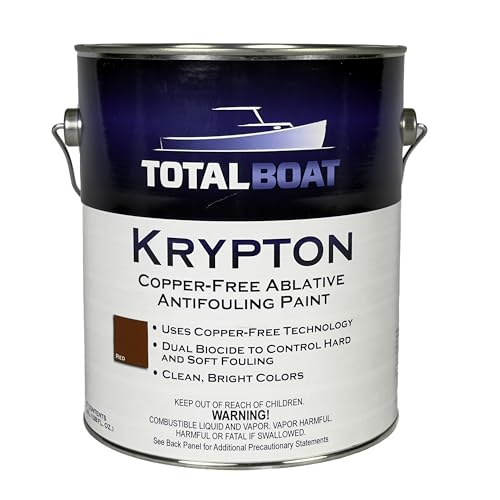
TotalBoat Krypton Copper-Free Antifouling Paint
What We Like
- Copper-free formula safe for aluminum
- Self-polishing coating exposes fresh biocide
- No maximum dry time for flexible launch
- Compatible with most existing bottom paints
Trade-offs
- Requires primer on bare surfaces (sold separately)
- Needs thinning with Brushing Thinner 100 or Spray Thinner 101 for spray application
A copper-free formula that works on aluminum, fiberglass, wood, and steel hulls means this paint covers nearly every boat type without risking galvanic corrosion. The self-polishing ablative layer gradually wears away, continuously exposing fresh biocide so fouling doesn’t get a foothold. That makes it a strong fit for owners who want one reliable paint across different boats or who plan to leave the hull in the water all season. With no maximum dry time, you can prep and paint weeks ahead and launch when ready, a practical advantage for DIYers working around weather or schedules.
The most decisive fact about this paint is that it’s copper-free and aluminum-safe, meaning owners of aluminum boats, outdrives, pontoons, and trim tabs can use it without worrying about galvanic corrosion. The self-polishing coating gradually wears away to continuously expose fresh biocide, which reduces paint build-up over time. Reviewers report that the flexible launch timing, no maximum dry time, lets you prep and paint ahead of the season and launch when you’re ready, a real convenience for DIY boaters.
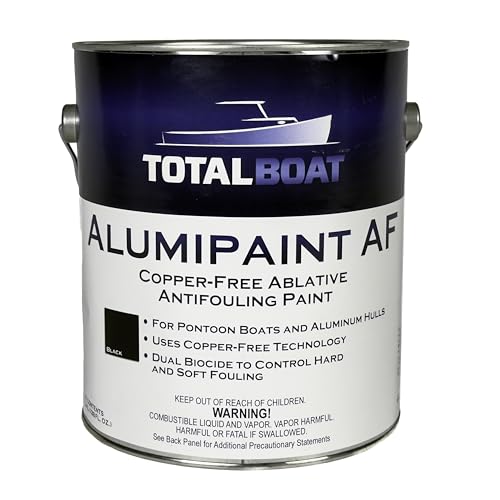
TotalBoat AlumiPaint AF Antifouling Paint
What We Like
- Copper-free formula safe for aluminum
- Ablative wear exposes fresh biocide
- No maximum dry time for flexible launch
- Compatible with most existing bottom paints
Trade-offs
- Requires barrier coat on bare aluminum
- Only two color options available
- Needs 1-2 thin coats for full protection
TotalBoat AlumiPaint AF uses a copper-free organic biocide paired with zinc, which means it won’t cause galvanic corrosion on aluminum hulls, pontoons, or outdrives. That makes it a reliable antifouling choice for metal boats. Its ablative formula wears down gradually as you move through the water, continuously exposing fresh biocide to block barnacles, slime, and algae all season. You can apply it with a foam or 3/16″ nap roller, chip brush, or airless/conventional sprayer, and it dries in as little as 1 hour between coats. Because there is no maximum dry time, you can paint well ahead of launch and wait until conditions are right without losing effectiveness. This paint suits boat owners who want full-season protection without worrying about copper damage to their aluminum hull.
The main trade-off is that bare aluminum surfaces need a separate barrier coat before you apply AlumiPaint AF, adding an extra step and cost. If you are painting over an existing bottom paint, compatibility is fine, but starting from scratch means more prep. The color palette is limited to black and blue, so if you need a specific shade to match your boat, you may have fewer options. Still, for anyone running an aluminum hull, this paint addresses the risk of galvanic corrosion directly.
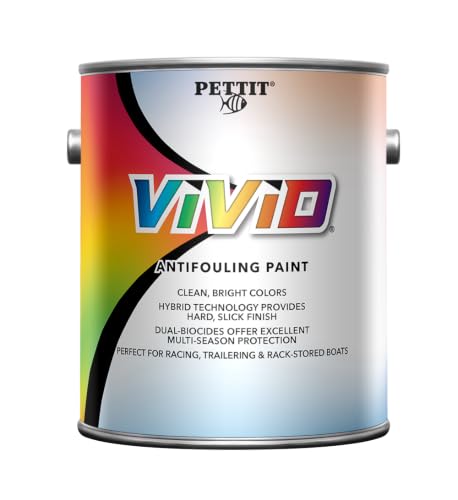
Pettit Vivid Hybrid Dual Biocide Paint
What We Like
- Hybrid hard and ablative technology
- Dual-biocide multi-season protection
- Smooth finish for racing performance
- Trailering and rack storage durable
Trade-offs
- Requires specific primer for aluminum safety
- Not suitable for copper-sensitive environments.
The hybrid formula combines hard paint durability with ablative self-renewal, so you get a tough finish that slowly wears away to prevent heavy buildup over multiple seasons. That dual-biocide mix targets barnacles, algae, and slime across varied water conditions, making it a strong pick for boaters who trailer or rack-store their hull and want a smooth, burnishable racing surface without frequent repaints.
The trade-off is that this paint demands a proper primer system to be safe on aluminum. Skip that step and you risk corrosion. Compared to TotalBoat AlumiPaint AF, which is copper-free and formulated specifically for aluminum without extra primer steps, Vivid offers broader color options and a harder finish but adds a priming requirement that some owners find inconvenient. It suits those willing to follow the prep process for long-term hybrid performance.
Product photos
Sea Hawk Aluma Hawk Bottom Paint

What We Like
- Aluminum-specific antifouling paint
- Compact quart size for touch-ups
Trade-offs
- Only available in one color option
- Not suitable for fiberglass or wood hulls
Sea Hawk Aluma Hawk comes in a compact quart can weighing just 1.4 pounds, making it an easy choice for small aluminum hulls or spot repairs where you don’t want to buy a full gallon. The product is listed as new and is available in Aluminum Gray. It suits boat owners who prefer a smaller container for manageable application.
The trade-off is capacity: at one quart, this paint is best suited for jon boats, pontoons, or touch-up work rather than a full-season coating on a larger vessel. If you need to cover a full hull in one go, the quart size means you will likely need multiple cans, so plan your surface area before starting.
Product photos
Sea Hawk Aluma Hawk Jon Boat Green

What We Like
- Quart size for small projects
Trade-offs
- No coverage data provided for large boats
- Quart size limits coverage for large hulls
A quart of Sea Hawk Aluma Hawk Jon Boat Green weighs just 1.4 pounds, so it’s light enough to carry in one hand while you work. That weight keeps the can steady on a small shelf or in a bucket, making application on a jon boat straightforward. Owners looking for a simple green bottom paint for compact craft will find this size convenient.
A quart covers a relatively small area, so owners of larger hulls should plan on buying multiple cans. That means more time spent opening and stirring additional containers during the painting session. Reviewers note that the extra steps can slow down the job, especially when working on a full-sized jon boat. For smaller skiffs or touch-up work, a single quart is often enough to get the job done without leftover waste.
Product photos
How We Evaluated Bottom Paints For Aluminum Boats
This evaluation is based on research into manufacturer technical data sheets, application guides, and compatibility charts to verify which paints are chemically safe for aluminum substrates. Expert round-ups from marine industry publications and common themes in owner feedback were also reviewed to understand real-world performance.
We prioritized four criteria that matter most for aluminum boat owners. First and foremost is aluminum safety, the paint must be copper-free or specifically formulated to prevent galvanic corrosion. Second is antifouling effectiveness, measured by the paint’s biocide technology and how it prevents barnacles and slime. Third is application ease, including whether a primer or barrier coat is required and the paint’s recoat window. Finally, we considered durability, especially for boats that are trailered or stored on racks.
A research-led evaluation has limits. We cannot report on long-term field performance or how each paint behaves under unique local water conditions. We recommend consulting with a local marine paint specialist for advice tailored to your specific boating environment and hull preparation needs.
What To Look For In Bottom Paints For Aluminum Boats
Choosing a bottom paint for an aluminum boat is different than for fiberglass. The wrong chemistry can ruin your hull. Focus on these key factors to get safe, effective protection.
Look for a copper-free formula specifically labeled safe for aluminum. Consider the paint’s biocide release method (ablative vs. Hard), the need for a primer or barrier coat, and whether the paint is meant for trailered boats or those kept in the water full-time.
Aluminum Safety and Copper-Free Formulation
The single most important factor is ensuring the paint will not cause galvanic corrosion. Copper-based paints create an electrochemical reaction with aluminum, leading to pitting and structural damage. Always choose a paint that is explicitly labeled as copper-free and safe for aluminum hulls. Some paints require a specific epoxy primer or barrier coat to isolate the aluminum from the paint chemistry, never skip this step if the manufacturer requires it.
Antifouling Technology: Ablative vs. Hard Paint
Bottom paints use two main technologies to prevent growth. Ablative (or self-polishing) paints wear away gradually, constantly exposing a fresh layer of biocide. This is ideal for boats that are used regularly and can be pressure-washed at haul-out. Hard paints form a durable, non-ablating film that releases biocide through the coating. They are better for boats that are trailered or stored on racks, as they resist abrasion. Some modern paints, like hybrids, combine both approaches.
Application Requirements and Preparation
Painting an aluminum bottom often requires more prep than painting fiberglass. Many copper-free paints need a dedicated barrier coat or epoxy primer on bare aluminum to ensure adhesion and prevent corrosion. Pay attention to the manufacturer’s instructions on surface preparation, thinning, and recoat windows. Some paints have no maximum dry time, allowing flexible launch schedules, while others require the boat to be launched within a specific window after application.
- Confirm the paint is labeled “safe for aluminum” or “copper-free” on the manufacturer’s spec sheet.
- Check if a specific primer or barrier coat is required for bare aluminum surfaces.
- Decide whether ablative (self-polishing) or hard paint suits your boat’s usage pattern.
- Review the paint’s recoat window and launch timing requirements.
- Consider your color options, some aluminum-safe paints are limited to a few shades.
If you keep your boat in the water all season, an ablative paint that polishes with use is often the best choice for consistent protection.
Bottom Paints For Aluminum Boats Compared
The table below compares the five best bottom paints for aluminum boats, highlighting their key features, application needs, and what they do best.
| Product | Type | Hull Materials | Colors |
|---|---|---|---|
| TotalBoat Krypton Copper-Free Antifouling Paint | Copper-free, self-polishing | Aluminum, fiberglass, wood, steel | Black, Blue, Green, Red, White |
| TotalBoat AlumiPaint AF Antifouling Paint | Copper-free ablative | Aluminum | Black, Blue |
| Pettit Vivid Hybrid Dual Biocide Paint | Hybrid hard/ablative | Aluminum (with proper primer system) | White |
| Sea Hawk Aluma Hawk Bottom Paint | N/A | N/A | Aluminum Gray |
| Sea Hawk Aluma Hawk Jon Boat Green | N/A | N/A | Jon Boat Green |
Frequently Asked Questions
Can I use regular bottom paint on an aluminum boat?
No. Most standard bottom paints contain copper, which causes severe galvanic corrosion on aluminum hulls. You must use a copper-free paint that is specifically labeled as safe for aluminum to avoid damaging the metal.
Do I need to prime an aluminum hull before painting?
It depends on the paint. Some copper-free formulas, like TotalBoat Krypton, require a primer on bare surfaces, while others require a barrier coat. Always check the manufacturer’s instructions, skipping this step can lead to poor adhesion and corrosion.
What is the difference between ablative and hard bottom paint?
Ablative (self-polishing) paint wears away slowly as the boat moves through water, exposing fresh biocide. It’s ideal for boats used regularly. Hard paint forms a durable film that resists abrasion, making it better for trailered boats or those stored on racks.
How often should I repaint an aluminum boat bottom?
Most copper-free bottom paints last one to two seasons, depending on water temperature, salinity, and how often the boat is used. Ablative paints may need touch-ups or a new coat when the old layer thins and the hull color shows through.
Can I paint over old bottom paint on an aluminum hull?
It depends on the existing paint. If the old paint is copper-free and in good condition, you can often paint over it after proper cleaning and sanding. If you are unsure what the old paint is, it is safest to strip it down to bare aluminum and start fresh.
The Bottom Line
For most aluminum boat owners, the TotalBoat Krypton Copper-Free Antifouling Paint is the best overall choice. Its copper-free formula protects your hull from corrosion while the self-polishing design keeps growth at bay, and the flexible launch window makes it convenient for DIY application. It is an excellent fit for boaters who want reliable performance without being locked into a strict painting schedule.
If you prefer a paint designed exclusively for aluminum hulls, the TotalBoat AlumiPaint AF is our top recommendation for aluminum-specific protection. For those who trailer their boat and need a durable finish that can handle rack storage, the Pettit Vivid Hybrid offers a smooth, abrasion-resistant coating that lasts multiple seasons with proper priming.
The single most important factor is choosing a copper-free paint that is explicitly safe for aluminum. Ignoring this can lead to costly hull damage. Start with a paint that matches your boat’s usage and your willingness to follow the preparation steps, and you will keep your aluminum hull protected and performing well.
