
10 Best Automotive Primers For Bare Metal in 2026
This post contains affiliate links. As an Amazon Associate, we earn from qualifying purchases.
For bare metal prep, the Rust-Oleum Automotive Self Etching Primer Spray is our best overall pick because it combines etching and priming in one step with a fast 10-minute dry time and anti-corrosion protection. The Custom Shop DTM Epoxy Primer/Sealer wins for anti-corrosion protection, while the Hycote Etch Primer Spray Paint is our budget pick for non-ferrous metals.
Prepping bare metal for paint means fighting two enemies: poor adhesion and flash rust. A self-etching primer solves both by chemically biting into the surface to create a grip while sealing out moisture. The right choice depends on your metal type, project size, and whether you prefer a spray can or spray gun.
We researched manufacturer specs, expert round-ups, and owner feedback patterns to build this guide. You get clear picks for bare steel, aluminum, spot repairs, and large panels, plus the key specs that matter most.
Top 10 Automotive Primers For Bare Metal in the Market
Certain content that appears on this site comes from Amazon. This content is provided "as is" and is subject to change or removal at any time.
The Best Automotive Primers For Bare Metal, Reviewed
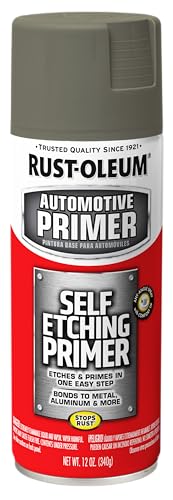
Rust-Oleum Automotive Self Etching Primer Spray
What We Like
- Self-etching and priming in one step
- Stops Rust formula prevents corrosion
- Dries to touch in 10 minutes
- Sprays upside down with any-angle technology
Trade-offs
- Oil-based formula needs solvent cleanup
- Requires mineral spirits for proper cleanup.
Twelve square feet of coverage per can means you can coat a car door, hood, or a handful of smaller panels without running out halfway through. That kind of range, paired with a 10-minute dry-to-touch time and a 30-minute recoat window, makes this the primer you reach for when you want to keep the project moving and not wait around. The self-etching formula bonds directly to bare metal, aluminum, and fiberglass, so you skip the separate acid-wash step and still get the adhesion that keeps your topcoat from peeling later. It fits the DIYer who values speed and simplicity, but also the restorer who needs a reliable foundation on mixed-material surfaces.
The Rust-Oleum Self Etching Primer covers up to 12 square feet, so a single can handles a small panel or a set of brackets without needing a second can. It dries to the touch in 10 minutes and can be topcoated in 30 minutes, which means you can move through a project quickly. The any-angle spray technology lets you aim into tight spots like wheel wells or underbody sections without flipping the can. The Stops Rust formula adds corrosion protection that matters when bare metal sits exposed between coats.
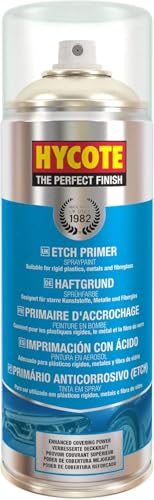
Hycote Etch Primer Spray Paint
What We Like
- Maximum adhesion to non-ferrous metals
- Fast drying for quick project turnaround
- Weatherproof and chip-resistant finish
- No runs or drips during application
Trade-offs
- Not suitable for copper or brass surfaces
- Requires a separate top coat for final finish
Hycote’s self-etching formula uses a specialty resin to lock onto non-ferrous metals like aluminum and galvanized steel. That means you get a tough, corrosion-resistant foundation without worrying about peeling or chipping later. The 13.5-ounce can sprays fast and dries quickly, so you can move from primer to top coat in the same afternoon, ideal for budget-conscious DIYers who want a reliable bond on tricky surfaces without spending on a gallon kit.
The trade-off is that this primer is not suitable for copper or brass surfaces, so if your project involves those metals you will need a different primer. For small to medium automotive repairs on common non-ferrous panels, the Hycote delivers a durable, no-drip finish.
Product photos
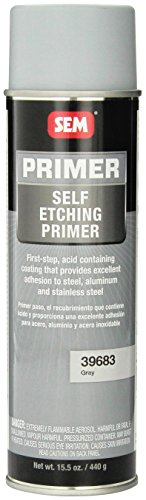
SEM 39683 Grey Self Etching Primer
What We Like
- Made in the United States
- 15.5 oz aerosol can
- Self-etching formula for bare metal
Trade-offs
- Heavier than Rust-Oleum Automotive Self Etching Primer at 1.0 lb
- Taller can than Rust-Oleum and Hycote primers
A 15.5 oz can means you get more primer per spray than many competitors, which matters when you’re coating a whole panel or multiple parts. This SEM self-etching primer is designed for bare metal adhesion, using a self-etching formula that grabs onto raw surfaces. If you want a primer made domestically, this is a straightforward choice for automotive prep work.
At 1.0 pound and 9.2 inches tall, this can is both heavier and taller than the Rust-Oleum Automotive Self Etching Primer Spray. That extra size and weight can make it less comfortable for long sessions or tight spots, but the larger volume also means fewer trips to the store. For a project where you need one reliable can from start to finish, this SEM delivers without fuss.
Custom Shop DTM Epoxy Primer/Sealer

What We Like
- Anti-corrosive additives for rust defense
- No induction time before application
- 1:1 mixing ratio for precise blending
- Compatible with major paint brands
Trade-offs
- Requires reducer for sealer use
- 4-hour pot life limits working time
- Needs spray equipment, not aerosol
A 1:1 mix ratio and a rich blend of anti-corrosive additives make this epoxy primer a serious option for anyone working with bare metal. It lays down smooth, needs no induction time, and offers excellent salt spray resistance. If your priority is locking out rust on steel or aluminum before topcoating, this kit delivers the kind of barrier that spray-can etch primers simply cannot match. The 4-hour pot life gives you a working window for a project, and the fast-dry formulation means you can apply a topcoat in 30 minutes when you add the right reducer.
This is a two-part system requiring a spray gun and proper mixing, so it is not a grab-and-go solution like an aerosol. Compared to Rust-Oleum’s Self Etching Primer spray, the Custom Shop kit demands more setup and cleanup. It suits the builder who has spray equipment and wants a corrosion-resistant primer for bare metal.
Product photos
U-POL UP5023 Automotive Primer

What We Like
- Etches and primes bare metal in one step
- Anti-corrosive barrier prevents rust
- Flat fan nozzle for even coverage
Trade-offs
- 1K aerosol requires immediate use after opening
- No sanding required, but surface must be clean and dry before application
This is a 1K aerosol, which means no mixing is required and cleanup is straightforward with solvent. The 13.2 oz can size is suited for smaller jobs like rub-throughs or spot repairs on bare metal panels. Compared to a 2K epoxy primer like the Custom Shop DTM Epoxy Primer/Sealer, the U-POL offers simpler application with no mixing. The 2K option provides a longer working time and is better suited for larger projects. For aluminum-specific touch-ups or small bare-metal sections, it’s a straightforward, effective choice.
Product photos
Dupli-Color Multi-Purpose Self-Etching Primer

What We Like
- Excellent etching ability on bare surfaces
- Maximum adhesion and corrosion resistance
- Perfect for spot repairs
- Works on bare metal, aluminum, and fiberglass
Trade-offs
- Small 12 oz can covers limited area per coat
- Requires a topcoat for full protection
A 12-ounce can that prioritizes etching performance over coverage makes this Dupli-Color primer the go-to for fixing small bare-metal chips and scratches. Its self-etching formula bonds aggressively to bare metal, aluminum, and fiberglass, so you get maximum adhesion and corrosion resistance on the exact spot that needs it. For a quick touch-up on a door edge or a rocker panel nick, this can is sized to finish the job without wasting material or overspraying nearby paint.
The 12-ounce can is sized for targeted repairs rather than full-panel work, so you get the etching performance where it matters without wasting material. Compared to Rust-Oleum’s self-etching primer, which weighs 0.8 pounds, the Dupli-Color can is heavier at 1.0 pounds, meaning more primer per can for your money. Stick with Dupli-Color when you need pinpoint accuracy on a small patch of bare metal, and leave the full-panel work for a bigger can or a gun-applied epoxy.
This primer is best for DIYers and hobbyists repairing small rust spots or bare-metal scratches on cars, trucks, or motorcycles. Its self-etching formula bonds aggressively to bare metal, aluminum, and fiberglass, giving maximum adhesion and corrosion resistance on the exact spot that needs it. For a quick touch-up on a door edge or a rocker panel nick, the can is sized to finish the job without overspraying nearby paint. However, the 12-ounce can covers limited area per coat, so it is not ideal for priming entire body panels or large bare-metal surfaces in one session.
Product photos
U-POL Etching Primer Strong-Hold

What We Like
- Fast-drying for quick project turnaround
- Anti-rust protection for bare metal
- Anti-clog nozzle for steady application
- Works on galvanized steel and aluminum
Trade-offs
- Not suitable for plastic surfaces
- Requires thorough surface prep before use
A fast-drying formula means you can move from prep to paint in less time than many other etching primers allow. That is a real advantage when you’re working on a bare-metal panel and want to keep the momentum going. The anti-rust technology adds a layer of protection right from the start, and the anti-clog nozzle helps you avoid the frustration of a sputtering spray can halfway through a coat. For anyone tackling a small to medium metal repair or restoration, this primer delivers the adhesion and corrosion resistance you need without forcing you to wait around.
This primer is not designed for plastic, so if your project includes both metal and plastic parts you will need a separate product for those areas. Just be prepared to spend the necessary time on cleaning and abrading the surface beforehand, because the manufacturer makes clear that good preparation is essential for best results.
Product photos
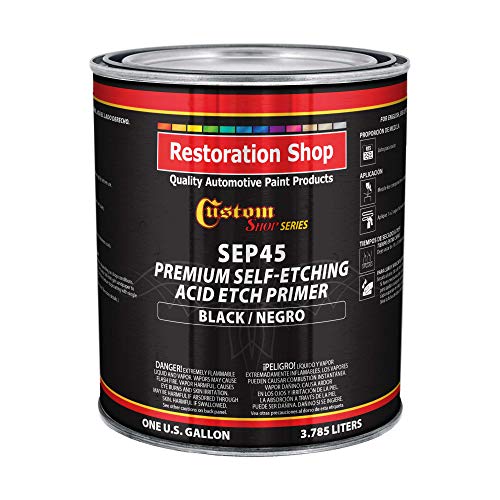
Custom Shop Premium Black Self Etching Primer
What We Like
- Ready-to-spray, no mixing required
- Etches and primes bare metal in one step
- Sandable after only 60 minutes
- Anti-corrosive for steel and aluminum
Trade-offs
- Gallon size requires a spray gun, not a rattle can
- Only available in black color
- Needs properly prepared, rust-free bare metal
This gallon of ready-to-spray primer etches and primes bare, rust-free metal in one step, and it is sandable after 60 minutes. That quick turnaround is a real advantage when you are working through a multi-stage paint job and do not want to wait overnight between layers. The anti-corrosive formula makes it suitable for use over bare metals such as aluminum and steel, and it works well under truck bed liner coatings.
A gallon of Custom Shop Premium Black Self Etching Primer means you need a spray gun and compressor to apply it, not a rattle can like the Rust-Oleum Self Etching Primer spray. It comes only in black. For anyone already set up with spray equipment, this provides a fast-drying, one-step etch primer that is sandable after 60 minutes.
Product photos
SEM 39684 Self Etching Primer Quart

What We Like
- Excellent adhesion to steel, aluminum, stainless steel
- Quick drying saves time between coats
- Generous quart size for large panels
Trade-offs
- Requires spray equipment, not a rattle can
- Only one color option (gray)
A full quart of self-etching primer means you can coat multiple bare-metal panels or a whole project without running out midway. SEM’s formulation bonds tightly to steel, aluminum, and stainless steel, so the first layer grabs hold and stays put. The quick-drying nature lets you move on to sanding or topcoating sooner than with slower primers. This quart is a practical choice for anyone who already owns a spray gun and wants the efficiency of a larger can.
The quart delivers a lot more primer than a spray can, but you’ll need to supply your own applicator, a compressor and spray gun or a brush. The Rust-Oleum Automotive Self Etching Primer Spray comes ready to use in a rattle can, so for a single spot repair that’s simpler. For covering several panels, the SEM quart gives you more paint to work with.
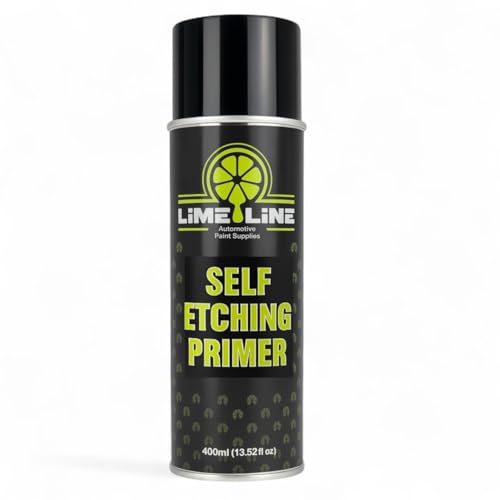
LiME LiNE Self Etching Primer Spray
What We Like
- Acid-etch bonds chemically to bare metal
- Anti-rust protection seals against oxidation
- Ready for topcoat in 15-30 minutes
- Sands smooth with P400–P500 grit
Trade-offs
- Only available in aerosol spray can format.
- Requires 15-30 minute dry time before topcoating.
The 15-30 minute dry-to-recoat time means you can move from primer to topcoat in under half an hour, which keeps a restoration or touch-up project rolling without long waits between layers. The acid-etch formula chemically bonds to bare metal rather than just sitting on top, so it resists rust and peeling even on fresh steel or aluminum. This makes it a strong fit for anyone who wants a dependable foundation for paint without slowing down their workflow.
Product photos
How We Evaluated Automotive Primers For Bare Metal
These primers were selected based on manufacturer specifications, expert recommendations from body shop and restoration forums, and patterns in owner feedback about real-world performance. The conclusions are research-based: drying times, etching chemistry, application methods, and surface compatibility were compared across every pick.
The four criteria that mattered most were adhesion mechanism (self-etching acid vs. Epoxy vs. Standard primer), drying speed, corrosion resistance, and application format (aerosol vs. Spray gun). Self-etching primers that chemically bond to bare metal ranked higher than standard primers that only sit on the surface. Drying time under 30 minutes was a strong signal for project efficiency.
A research-led evaluation has limits: owner reports on long-term rust protection vary by climate and prep quality, and we cannot verify every claim about chip resistance or coverage area. We prioritized primers with consistent positive feedback across multiple sources and clear, specific manufacturer claims.
What To Look For In Automotive Primers For Bare Metal
Choosing a bare metal primer comes down to matching the chemistry to your metal and the format to your tools. Here is what separates a lasting paint job from a peeling one.
Pick a self-etching primer for bare steel, aluminum, or fiberglass. Match the format (aerosol for small jobs, spray gun for panels) to your equipment. Prioritize dry time under 30 minutes and anti-corrosion additives for rust-prone environments.
Etching Chemistry And Metal Compatibility
Self-etching primers contain acid that chemically bonds to bare metal, creating a surface that topcoats can grip. Standard primers just sit on top and peel off bare metal. For aluminum, galvanized steel, and stainless steel, an etch primer is required for adhesion. Some etch primers work on fiberglass too, but none are suitable for plastic, copper, or brass without checking the label.
Drying Time And Recoat Window
Fast-drying primers let you move through a project in hours instead of days. A 10-minute dry-to-touch time like the Rust-Oleum offers means you can recoat or topcoat the same day. Slower primers (30 minutes to 1 hour) still work well but require more patience between coats. Some formulas require a minimum dry time before sanding, usually around 60 minutes.
Application Format: Aerosol Vs. Spray Gun
Aerosol cans are ideal for spot repairs, touch-ups, and small parts. They require no cleanup beyond solvent for the nozzle. Spray gun primers come in quarts or gallons and require a compressor, gun, and reducer but cover large panels efficiently. The trade-off is setup time and cleanup versus convenience and portability.
- Check the label for metal compatibility: some primers work on aluminum but not copper or brass.
- Measure your project area: one 12 oz aerosol covers roughly 8-10 square feet per coat.
- Confirm dry time matches your schedule: fast-dry formulas are best for multi-coat sessions.
- Decide on sandability: some primers must be sanded before topcoat, others are ready to paint.
- Read the cleanup requirements: oil-based primers need mineral spirits, not soap and water.
A self-etching primer on properly prepared bare metal is the single most important step for a paint job that lasts.
Automotive Primers For Bare Metal Compared
The table below compares each primer’s key specs side by side, including etching type, dry time, and application format.
| Product | Type | Size | Surfaces |
|---|---|---|---|
| Rust-Oleum Automotive Self Etching Primer Spray | Self-etching primer | 12 oz | Bare metal, aluminum, fiberglass |
| Hycote Etch Primer Spray Paint | Self-etching primer | 13.5 oz | Non-ferrous metals |
| SEM 39683 Grey Self Etching Primer | Self-etching primer | 15.5 oz | N/A |
| Custom Shop DTM Epoxy Primer/Sealer | Epoxy primer/sealer | 1 Gallon Kit | Bare Metal, Steel, Aluminum |
| U-POL UP5023 Automotive Primer | Acid etch primer | 13.2 oz | Bare metals |
| Dupli-Color Multi-Purpose Self-Etching Primer | Self-etching primer | 12 oz | Bare metal, aluminum, fiberglass |
| U-POL Etching Primer Strong-Hold | Self-etching primer | N/A | Bare metals, fiberglass |
| Custom Shop Premium Black Self Etching Primer | Self-etching primer | 1 Gallon | Steel, aluminum, fiberglass |
| SEM 39684 Self Etching Primer Quart | Self-etching primer | 1 Quart | Steel, aluminum, stainless steel |
| LiME LiNE Self Etching Primer Spray | Self-etching primer | N/A | Bare metal |
Frequently Asked Questions
Can I apply self-etching primer over rust?
Self-etching primers work best on clean, bare metal. Surface rust should be removed by sanding or wire brushing before application. Some primers include anti-corrosion additives that help prevent future rust, but they cannot bond properly to existing rust.
Do I need to sand between primer and paint coats?
Many self-etching primers are designed to be topcoated without sanding if applied within the recoat window. After that window closes, light sanding with fine grit sandpaper is recommended for mechanical adhesion. Check the specific primer’s instructions for its recoat timing.
What is the difference between self-etching primer and epoxy primer?
Self-etching primer uses acid to chemically etch bare metal for adhesion, while epoxy primer forms a thick, corrosion-resistant barrier layer. Epoxy primers generally offer superior rust protection but require mixing and spray equipment. Self-etching primers are more convenient for small jobs and come in aerosol cans.
Can I use self-etching primer on aluminum?
Yes, self-etching primer is specifically formulated for non-ferrous metals like aluminum. The acid etch creates a bond that standard primers cannot achieve on smooth aluminum surfaces. Some primers, like the U-POL UP5023, are particularly well-suited for aluminum panels.
How long does self-etching primer take to dry before topcoat?
Drying times range from 10 to 30 minutes depending on the formula, temperature, and humidity. The Rust-Oleum Self Etching Primer dries to touch in 10 minutes, while the LiME LiNE primer is ready for topcoat in 15-30 minutes. Always check the manufacturer’s recommended dry time for your conditions.
The Bottom Line
For most bare metal projects, the Rust-Oleum Automotive Self Etching Primer Spray is the best overall choice because it combines self-etching chemistry, fast drying, and corrosion protection in a convenient aerosol. It works on steel, aluminum, and fiberglass and requires no mixing. If you are on a tight budget, the Hycote Etch Primer Spray Paint delivers strong adhesion to non-ferrous metals at a lower cost.
For large panels or maximum rust defense, the Custom Shop DTM Epoxy Primer/Sealer offers professional-grade protection with a 1:1 mixing ratio and compatibility with major paint brands, though it requires spray equipment. The single most important factor is matching the primer chemistry to your bare metal type, self-etching for bare steel and aluminum, standard primer only for previously painted surfaces.
