
9 Best Auto Primers In A Spray Can in 2026
This post contains affiliate links. As an Amazon Associate, we earn from qualifying purchases.
For the best auto primer in a spray can, we recommend Rust-Oleum Self Etching Primer Spray for its ability to etch and prime bare metal in one step while stopping rust. For small touch-ups, the Dupli-Color Self-Etching Primer Spray is our Best For Spot Repairs pick, and the Eastwood 2K Epoxy Black Primer takes the award for Best Durable Epoxy Primer.
Getting a paint job to last starts with the right primer, but choosing between self-etching, epoxy, and filler formulas can be confusing. You need a primer that bonds to your specific surface, resists corrosion, and sands smoothly before your topcoat.
This guide is research-based, drawing on manufacturer specifications and patterns in owner feedback to help you pick the best spray can primer for your auto project. We cover nine top options, from fast-drying rust inhibitors to professional-grade 2K epoxies.
Top 9 Auto Primers In A Spray Can in the Market
Certain content that appears on this site comes from Amazon. This content is provided "as is" and is subject to change or removal at any time.
The Best Auto Primers In A Spray Can, Reviewed
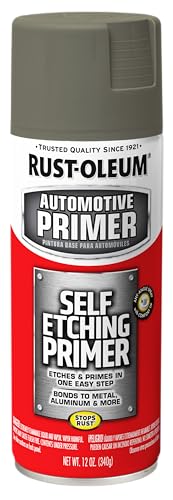
Rust-Oleum Self Etching Primer Spray
What We Like
- Etches and primes in one step
- Maximum adhesion for bare metal
- Stops Rust formula prevents corrosion
- Any-angle spray works upside down
Trade-offs
- Oil-based formula needs solvent for cleanup
- Only 12 sq ft coverage per can
A 10-minute dry time and 30-minute recoat window mean you can move from primer to topcoat in under an hour. That is a real advantage when you are working on a car panel or a bare-metal project and do not want to lose momentum. The self-etching formula bonds directly to bare metal, aluminum, and fiberglass while the Stops Rust layer fights corrosion underneath, so it suits anyone prepping a vehicle for paint or restoring a part that needs long-term protection. The any-angle spray technology also lets you hit tight spots and awkward angles without flipping the can, which keeps the job moving.
The trade-off is that this primer is designed for adhesion and rust prevention, not for filling scratches or smoothing rough surfaces, so if your metal has deep imperfections, you’ll want a filler primer first. Compared to the Dupli-Color Self-Etching Primer, which has similar dimensions and weight, the Rust-Oleum offers any-angle spray capability that can make it easier to reach awkward spots. This primer is built for bare metal, aluminum, and fiberglass, and its Stops Rust formula provides a rust-resistant base coat for vehicles.
Dupli-Color Self-Etching Primer Spray

What We Like
- Excellent etching ability on bare surfaces
- Maximum adhesion and corrosion resistance
- Perfect for spot repairs
- Works on bare metal, aluminum, fiberglass
Trade-offs
- 12 oz can is small for large panels
- Requires a topcoat for UV protection
This primer’s excellent etching ability on bare surfaces means it creates strong adhesion and corrosion resistance on bare metal, aluminum, and fiberglass. That makes it ideal for spot repairs where you need the primer to grip tightly. The flat green finish is designed for automotive body paint prep, and the 12 oz can is sized for small jobs rather than full panels. For a quick touch-up on a scratch or a small rust spot, this can delivers the etching action that helps prevent peeling and rust from spreading, without requiring you to buy a larger can of primer that would mostly go to waste.
For a single spot repair on bare metal, aluminum, or fiberglass, this Dupli-Color self-etching primer delivers maximum adhesion and corrosion resistance right where you need it. The 12 oz can is small for large panels, so if you’re priming a hood or door, the Rust-Oleum Self Etching Primer Spray (0.8 pounds) is a lighter alternative. But for precise, targeted work, this can avoids the waste of overspray on areas that don’t need it.
Product photos
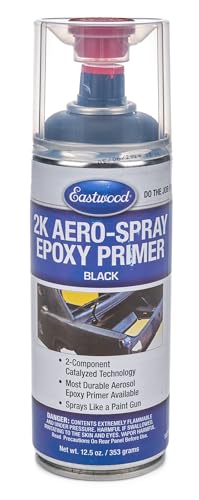
Eastwood 2K Epoxy Black Primer
What We Like
- 2K epoxy for durable, rust-resistant finish
- Direct-to-metal application on steel, aluminum, fiberglass
- 48-hour pot life after activation
- 3-year shelf life unactivated
Trade-offs
- Requires NIOSH-approved respirator and ventilation
- 60-day limited warranty is short for a primer
- Heavier can than some competitors at 1.2 lb
A 48-hour pot life after activation means you can mix this can and keep spraying over two full days without worrying about the catalyst curing inside the nozzle. That pairs with a 3-year shelf life unactivated so you can stock one without watching the calendar. The black epoxy applies directly to bare steel, aluminum, or fiberglass to effectively prevent rust and create a durable finish. This is the pick for anyone who needs a rust-preventing layer on metal panels and doesn’t want to rush through the job.
The safety gear is no joke: Eastwood explicitly calls for a NIOSH-approved respirator and a well-ventilated space away from flame. That is standard for catalyzed epoxy but heavier than a simple self-etching spray like Rust-Oleum’s Self Etching Primer. At 1.2 pounds, the can is heavier than Dupli-Color’s self-etching option at 1.0 pound, so holding it steady for long stretches takes more arm effort. For a durable, direct-to-metal epoxy that stays workable for two days, this one delivers.
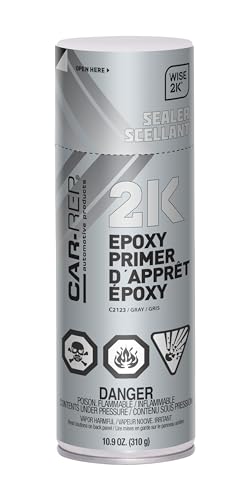
Car-Rep 2K Epoxy Primer Aerosol
What We Like
- No mixing or activation required
- Unlimited potlife for flexible use
- Anti-corrosion pigments for durability
- Wet-on-wet application saves time
Trade-offs
- 11 oz can covers less area than larger options
- Requires humidity in air to cure fully
The Car-Rep 2K Epoxy Primer Aerosol uses Wise 2K Technology that eliminates mixing and activation entirely, giving you an unlimited potlife. That means you can spray a little, set the can aside for weeks, and come back to finish the job without the hardener going bad inside the can. For anyone working on a project in stages, a classic car restoration, a set of carbon fiber panels, or plastic trim pieces, this convenience alone makes it worth reaching for. The primer is designed to provide a durable, anti-corrosive coating for almost all substrates, and the wet-on-wet application lets you lay down a topcoat as soon as the primer is touch dry, speeding up the whole process.
This primer relies on humidity in the air to activate its cross-linking, so in very dry climates or heated indoor shops you may need to wait longer for a full cure. The 11-ounce can is smaller than some other aerosol primers, so for a full car body you will need multiple cans. Still, for the hobbyist or small-project painter who values a no-waste, grab-and-go epoxy primer, this is a smart pick.
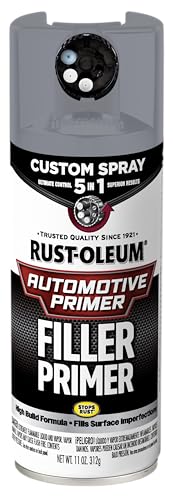
Rust-Oleum Filler Primer 5-in-1
What We Like
- High-build formula fills surface imperfections
- Custom Spray Dial offers five spray patterns
- Quick dry with 10-minute recoat time
Trade-offs
- Coverage limited to 12 sq ft per can
A high-build formula that fills scratches and minor dents in one coat makes this the go-to choice when you need to level a rough surface before topcoating. The Custom Spray Dial lets you switch between five spray patterns, including vertical and horizontal fan, so you can tailor the application to the shape of the panel. It dries fast enough to recoat in ten minutes, which keeps a multi-layer job moving without long waits. For anyone working with metal, wood, or fiberglass who wants a thick, sandable primer layer that also protects against rust, this can delivers exactly that.
This primer fills surface imperfections with a high-build formula, so you can smooth out minor damage without layering on multiple coats of a thinner primer. It covers up to 12 square feet per can, meaning larger jobs may need a second can. The Custom Spray 5-in-1 Dial lets you switch between five spray patterns, including a vertical fan and horizontal fan, which gives you control over coverage on curved panels or tight spots.
SprayMax 2K Epoxy Primer Black
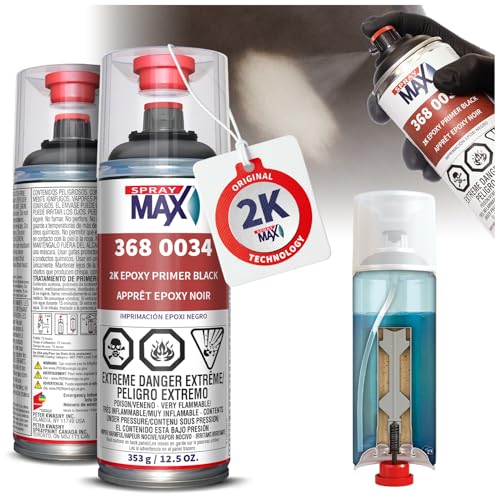
What We Like
- Professional-grade 2K epoxy bonding strength
- Corrosion-resistant on steel and aluminum
- Fast-drying and sandable within hours
- Variable nozzle for precise spray control
Trade-offs
- Black color limits visibility for sanding guide coats
- Nozzle can clog if not cleaned immediately after use
A 2K epoxy formula that activates inside the can means you get the same chemical cross-linking a body shop achieves with a spray gun, but without the compressor or mixing cups. The result is a corrosion-resistant barrier that bonds to bare steel, aluminum, and galvanized metal, and it dusts dry in just 15 minutes so you can keep a restoration moving. That professional-grade adhesion and sealing makes this the go-to for anyone who wants a foundation that topcoats will not lift from later, especially on bare metal panels or after media blasting.
This is a two-component system in one can, so once you press the activator button you have a limited pot life, and the black pigment hides sanding scratches unless you lay a guide coat over it. Compared to the Eastwood 2K Epoxy Black Primer, which also uses catalyzed technology, the SprayMax comes in a slightly lighter can at 0.9 pounds and offers a variable nozzle for better control on curved body lines. For a restoration shop or serious DIY builder who wants true epoxy performance in a rattle can, this is the primer that delivers on that promise.
Dupli-Color Filler Primer Spray
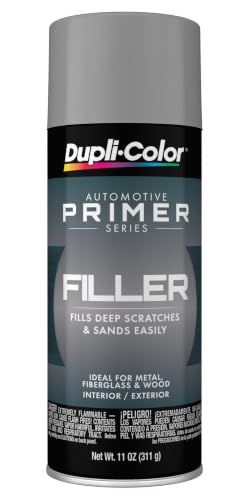
What We Like
- Fills deep scratches and minor imperfections
- High build formula for thick coverage
- Improves top coat adhesion
- Easy sanding properties
Trade-offs
- No rust prevention on bare metal
- Requires a separate etching primer for raw metal
A high build formula means this primer lays down a thick, filling coat that can hide deep scratches and minor surface flaws without requiring multiple passes. That makes it a natural fit for anyone working on body panels or parts that need a smooth, level foundation before the top coat goes on. The easy sanding property keeps the cleanup step simple, so you can knock down any orange peel or dust nibs quickly without fighting the material.
After the base coat cures, this high build formula fills deep scratches and minor imperfections, creating a uniform surface that hides previous repair work. Its easy sanding properties let you knock down any rough spots quickly, so the top coat lays down evenly. The 11-ounce can weighs 0.9 pounds and stands 8.0 inches tall, which keeps it steady on a stand while you spray. Reviewers note that the filler primer improves top coat adhesion, meaning less risk of peeling or chipping down the road.
Product photos
U-POL Sandable Primer Spray

What We Like
- Works on metal and plastic surfaces
- Anti-rust technology for corrosion protection
- Fast-drying for quicker project turnaround
- Anti-clog nozzle for steady application
Trade-offs
- Requires surface prep before use
- Not a self-etching primer for bare metal
- Must mask off surrounding areas for overspray
A fast-drying formula that works on both metal and plastic makes this primer a versatile starting point for any refinishing job. The anti-rust technology adds a layer of protection underneath your topcoat, so you are not just painting over a surface but also guarding against future corrosion. This is the kind of all-around performer that suits a wide range of projects, from touching up a car panel to refreshing a metal toolbox.
You will need to do proper surface preparation, cleaning, degreasing, and sanding, before spraying, which adds a step compared to some other primers. But that extra prep is essential for achieving a smooth, sandable finish, especially on plastics where some etching primers may not be suitable. For those wanting one can that handles multiple jobs without switching products, this is a practical choice.
Product photos
Flex Seal Metal & Auto Primer Spray
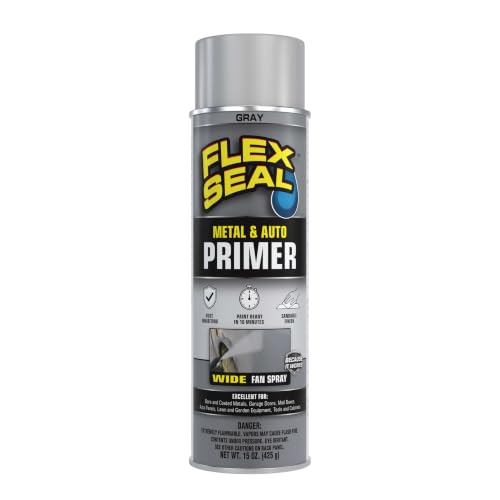
What We Like
- Sandable in 5 minutes
- Paint-ready in 10 minutes
- Rust-inhibiting formula
- Wide fan spray for even coverage
Trade-offs
- Not a self-etching primer for bare metal
- Only one color option (gray)
A 5-minute sandable time and 10-minute paint-ready time means you can move from primer to topcoat in about 15 minutes total. That is ideal for quick auto body repairs or weekend projects where waiting around is not an option. This Flex Seal primer also brings rust-inhibiting protection and a wide fan spray pattern that lays down smooth, even coats on bare or coated metals. It is a strong fit for those who need a fast-drying, heat-resistant base (up to 250°F) and values speed.
Fast-drying and rust-inhibiting, this primer is sandable in 5 minutes and paint-ready in 10, so you can move through a job without long waits between coats. It delivers smooth, even coverage thanks to a wide fan spray pattern, which helps avoid drips and uneven spots on panels. The can holds 15 ounces and is heat-resistant up to 250°F, making it suitable for engine bay touch-ups or other hot areas.
Product photos
How We Evaluated Auto Primers In A Spray Can
We evaluated these auto primers by examining their chemical formulas, application requirements, and surface compatibility as stated by manufacturers. We also analyzed common praise and complaints from owner feedback to understand real-world performance and limitations.
The three most important criteria were adhesion method (self-etching, epoxy, or standard), corrosion resistance, and ease of use. Self-etching primers chemically bond to bare metal, while epoxy primers create a durable barrier. Filler primers level imperfections but need a separate etching coat on raw metal.
We focused on how each product’s strengths and trade-offs match common DIY auto painting scenarios.
What To Look For In Auto Primers In A Spray Can
Choosing the right spray can primer means matching the formula to your surface and the finish you want. The wrong primer can peel, fail to bond, or require extra sanding.
Choose a primer that matches your surface: self-etching for bare metal, epoxy for maximum durability, filler for smoothing imperfections, and all-purpose for plastic and metal.
Surface Compatibility
Not all primers stick to every surface. Self-etching primers contain acids that bite into bare metal, aluminum, and fiberglass for maximum adhesion. Epoxy primers go directly onto metal and offer strong corrosion resistance. Standard sandable primers work on painted surfaces and plastics but lack the bite for raw metal. Check the can for specific surface recommendations before you spray.
Corrosion Protection
Rust prevention is critical on auto body panels. Self-etching primers often include rust-inhibiting compounds, while epoxy primers form a moisture barrier. Some primers, like the Rust-Oleum Self Etching Primer, have a dedicated Stops Rust formula. Filler primers generally provide no rust protection and require a separate etching primer underneath on bare metal.
Build and Sandability
High-build filler primers are designed to fill scratches, pinholes, and minor dents with thick coats that sand flat. Standard primers offer thin, even coverage for smooth surfaces. If you are working with imperfect metal, a filler primer saves time on bodywork. For smooth panels, a thinner primer avoids excessive sanding.
Application and Drying Time
- Check if the primer requires a topcoat for UV protection.
- Look for any-angle spray nozzles for hard-to-reach areas.
- Confirm the recoat and sanding times to fit your workflow.
- Note if the formula needs a respirator or ventilation.
A primer that dries too fast can be hard to work with, while one that dries too slow slows down your project.
Auto Primers In A Spray Can Compared
The table below compares all nine auto primers in a spray can across key specs like surface compatibility, corrosion protection, and drying time.
| Product | Type | Surface Compatibility | Dry to Touch |
|---|---|---|---|
| Rust-Oleum Self Etching Primer Spray | Self Etching | Bare metal, aluminum, fiberglass | 10 minutes |
| Dupli-Color Self-Etching Primer Spray | Self Etching | Bare metal, aluminum, fiberglass | N/A |
| Eastwood 2K Epoxy Black Primer | 2K Epoxy | Car body panels, aluminum, steel, or fiberglass | N/A |
| Car-Rep 2K Epoxy Primer Aerosol | 2K Epoxy | Metals, carbon fiber, most plastics | N/A |
| Rust-Oleum Filler Primer 5-in-1 | High-build | Metal, wood, fiberglass | 10 minutes |
| SprayMax 2K Epoxy Primer Black | 2K Epoxy Primer | Metal, Aluminum & Steel | 15 min |
| Dupli-Color Filler Primer Spray | High build | N/A | N/A |
| U-POL Sandable Primer Spray | All-Purpose | Metal & Plastic | Fast-Drying |
| Flex Seal Metal & Auto Primer Spray | Rust-inhibiting | Bare metal, auto body | 5 minutes |
Frequently Asked Questions
What is the difference between self-etching primer and epoxy primer?
Self-etching primer uses acid to chemically bond to bare metal, providing excellent adhesion and corrosion resistance. Epoxy primer forms a tough, moisture-resistant barrier that can go directly onto metal, fiberglass, and plastics. Self-etching is best for spot repairs and thin coats, while epoxy offers maximum durability for full panels.
Do I need a primer before painting my car?
Yes, primer is essential for proper paint adhesion, corrosion resistance, and a smooth finish. On bare metal, primer prevents rust and gives the topcoat something to grip. On existing paint, primer fills minor imperfections and helps the new color adhere evenly.
Can I use a filler primer on bare metal?
Filler primers are not designed for bare metal because they lack etching agents and rust inhibitors. You must apply a self-etching or epoxy primer first to protect the metal from corrosion. The filler primer then goes on top to level imperfections before sanding and painting.
How long should I wait between primer coats?
Drying times vary by product, but most self-etching and filler primers recommend 5 to 15 minutes between coats. Check the can for specific recoat windows. Epoxy primers often require longer flash times, and some allow wet-on-wet application if topcoated within a certain period.
What safety gear do I need when spraying auto primer?
Always wear a respirator rated for organic vapors, especially with 2K epoxy primers that contain isocyanates. Safety glasses and nitrile gloves protect your skin and eyes. Spray in a well-ventilated area, preferably outdoors or with a ventilation system, to avoid inhaling fumes.
The Bottom Line
For most DIY auto projects, the Rust-Oleum Self Etching Primer Spray is the best overall choice because it etches and primes bare metal in one step while fighting rust. It works well on steel, aluminum, and fiberglass, and the any-angle spray helps you reach tricky spots on panels and frames.
If you need a durable, long-lasting base for a full restoration, the Eastwood 2K Epoxy Black Primer offers professional-grade corrosion resistance. For quick spot repairs on small areas, the Dupli-Color Self-Etching Primer Spray delivers excellent adhesion without wasting product.
The most important factor is matching the primer type to your surface: use self-etching or epoxy on bare metal, filler primers over primed surfaces, and all-purpose primers for plastics. The right choice saves you sanding, rework, and rust down the road.
