
10 Best Air Compressor Paint Sprayers in 2026
This post contains affiliate links. As an Amazon Associate, we earn from qualifying purchases.
The DeVilbiss FLG Gravity Spray Gun earns our best overall pick for its three nozzle sizes and flexible gravity, suction, or pressure feed system. That setup handles everything from thin clear coats to heavy primers. For a quieter session, the SATAjet X5500 HVLP Spray Gun delivers precision with less noise, while the ENDOZER Professional HVLP Spray Gun Set offers the best value for DIYers with three nozzle sets and a pressure gauge included.
Choosing the right air compressor paint sprayer means matching the gun’s CFM requirements to your compressor’s output and picking a feed type that fits your typical spraying angle. Gravity feed guns are lighter and waste less paint, but siphon feed models let you spray at any angle without spilling.
This guide is based on manufacturer specifications, expert round-ups, and patterns in owner feedback across dozens of models. We focused on nozzle options, air efficiency, build quality, and practical features that matter most for getting a smooth finish without overspray.
Top 10 Air Compressor Paint Sprayers in the Market
Certain content that appears on this site comes from Amazon. This content is provided "as is" and is subject to change or removal at any time.
The Best Air Compressor Paint Sprayers, Reviewed
DeVilbiss FLG Gravity Spray Gun

What We Like
- Three nozzle sizes for varied finishes
- Ergonomic handle reduces hand fatigue
- Efficient atomization saves material
- Flexible gravity, suction, or pressure feed
Trade-offs
- 560 ml cup smaller than some competitors
- Gravity feed limits overhead spraying angles
- No built-in gauge on the gun body
Three nozzle sizes, 1.3, 1.4, and 1.8 mm, let you switch from fine basecoats to thicker primers without buying extra tips. That flexibility, paired with efficient atomization that cuts material waste, makes this gun a natural fit for anyone who wants consistent results across different paint types. The ergonomic handle and light-pull trigger also help you keep a steady hand during long sessions, so your finish stays smooth from start to end.
The 560 ml cup is smaller than the 1000 cc cups found on kits like the BANG4BUCK, meaning you’ll refill more often on large jobs. Gravity feed also works best with the gun upright, so tight overhead spots can be awkward. Still, the ability to swap to suction or pressure feed gives you a workaround that most guns at this level don’t offer, making it a versatile choice for serious painters.
SATAjet X5500 HVLP Spray Gun

What We Like
- Whispering nozzle reduces noise levels
- X-nozzle system for finer spray pattern
- Optional digital pressure measuring device SATA adam 2
Trade-offs
- Single nozzle size limits versatility
- Premium positioning requires higher air compressor output
The SATAjet X5500 HVLP spray gun includes a Whispering nozzle that uses optimized flow geometry to noticeably reduce noise levels, a real advantage during long spraying sessions in a garage or workshop. It also delivers a finer, more controlled spray pattern thanks to the X-nozzle system and I/O technology, providing precise material distribution for water-based, solvent-based, and 1K/2K topcoat systems. This makes it a suitable choice for automotive refinishing work where finish quality matters.
The X5500 ships with a single 1.3 mm O nozzle, so it’s built for basecoats and topcoats rather than heavy primers or thick materials. Compared to the DeVilbiss FLG Gravity Spray Gun, which comes with multiple nozzle sizes, this gun focuses on quieter operation and a finer spray pattern. If your work stays in water- and solvent-based basecoats or 1K/2K topcoat systems, the reduced noise and precise material distribution are real advantages.
ENDOZER Professional HVLP Spray Gun Set

What We Like
- Three stainless steel nozzle and needle sets
- Brass air cap with 15-hole design
- Includes pressure gauge and quick adapters
- Effective paint filter included for smooth finish
Trade-offs
- 600 cc cup is smaller than some competitors' 1000 cc cups
- Gravity feed limits positioning compared to siphon feed
- Not suitable for latex paint per manufacturer
Three stainless steel nozzles, 1.4, 1.7, and 2.0 mm, let you switch between thin basecoats and thicker primers without buying extra tips. The brass air cap uses 15 holes to break up paint evenly, which helps avoid blotchy patches when you’re laying down clear coat. A pressure gauge and quick adapters are included, so you can hook it up to a standard compressor and start spraying right away. That makes this set practical for automotive touch-ups, furniture refinishing, or mural work without needing a separate gun for each task.
The trade-off is cup size: at 600 cc, you’ll refill more often than with a 1000 cc cup like the BANG4BUCK HVLP offers, especially on larger jobs like painting a car panel. Gravity feed also means the gun needs to stay upright, which is fine for most bench or stand work. And while the included filter helps keep dried paint bits out of the finish, the product is not intended for latex paint, so house painters should look elsewhere. For a hobbyist or DIYer focused on automotive, craft, or industrial coatings, this is a versatile, well-equipped kit.
Product photos
AEROPRO R500 LVLP Air Spray Gun
What We Like
- Three nozzle sizes for varied viscosities
- Teflon-coated body resists paint buildup
- Two-stage trigger for controlled spray
- LVLP design uses only 3.0-3.9 CFM
Trade-offs
- 600 cc cup is smaller than some competitors
- Gravity-feed cup limits angle of use
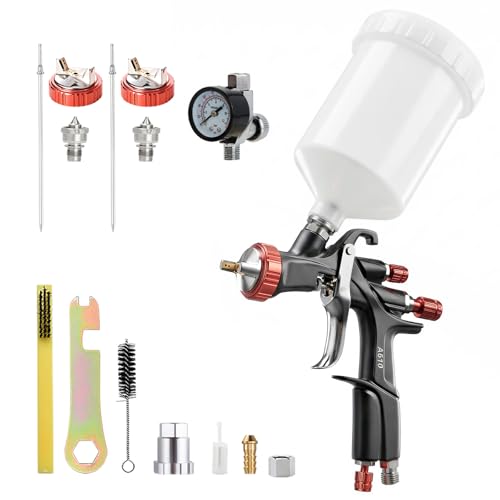
For furniture, cabinets, and automotive touch-up work, this spray gun delivers controlled atomization with efficient air use. Owners report it uses only 3.0 to 3.9 CFM at 2.0 to 3.5 bar, which means a smaller compressor can handle it without constant cycling. The LVLP design keeps overspray low, so you get more paint on the workpiece and less floating in the air. That makes a real difference in a home garage or small shop where ventilation and compressor capacity are limited. The finish quality stays consistent across different materials, from varnish to top coats.
The 600 cc gravity-feed cup is smaller than the 1000 cc cup on the BANG4BUCK HVLP, so you’ll need to refill more often on large projects. Gravity feed also means the gun has to stay upright, which limits spraying at odd angles. Compared to the InoKraft D1, which shares the same nozzle sizes, the AEROPRO’s lower CFM requirement helps if you’re using a small portable compressor, though the smaller cup can slow down production work.
InoKraft D1 LVLP Air Spray Gun Kit

What We Like
- Includes pressure regulator and oil-water separator
- Three nozzle sizes for varied paint types
- Teflon-coated forged aluminum body resists wear
Trade-offs
- At 3.5 lb, heavier than some gravity-feed alternatives
- LVLP design requires higher air compressor CFM than HVLP
The InoKraft D1 comes with three nozzle sizes and a full set of accessories including a pressure regulator and oil-water separator, so you can dial in atomization and keep moisture out of your paint line right from the start. That makes it a strong fit for DIYers who want professional-looking results on cars, furniture, or home projects without hunting down extra parts. The one-piece forged aluminum body with Teflon coating resists paint buildup and cleans up quickly, which matters when you’re working in a garage or driveway rather than a dedicated spray booth.
Weight is a consideration: at 3.5 pounds, the D1 is noticeably heavier than a gun like the ENDOZER Professional HVLP set (2.6 lb), so longer sessions may fatigue your wrist or arm. Still, for someone stepping up from a brush or roller who wants control and a complete kit, the D1 delivers a practical, ready-to-spray package without the premium price tag of a SATAjet X5500.
BANG4BUCK HVLP Gravity Feed Spray Gun

What We Like
- 1000cc aluminum cup holds large batches
- Three nozzle sizes for varied coatings
- Full spray pattern, fluid, and air control
Trade-offs
- Large cup can be tiring for overhead work
- 2.8 lb weight tires arm during overhead work
The 1000cc aluminum cup lets you spray an entire car panel or a large project without stopping to refill. That makes this gun a practical choice for big jobs like automotive refinishing, boat gel coats, or heavy primers. Three stainless steel nozzles, 1.4mm, 1.7mm, and 2.5mm, let you switch from a fine basecoat to a thick polyester primer without buying extra parts. Separate knobs for spray pattern width, fluid flow, and air pressure give you real control over how the paint lays down.
Weight and balance are worth noting. At 2.8 pounds with a full liter cup, this gun feels heavier in the hand than a smaller 600cc model like the ENDOZER Professional HVLP, especially during long overhead or vertical passes. If you mostly spray small touch-ups or detail work, the extra capacity and heft become a drawback rather than a benefit. But for someone who values fewer refills and broad coverage, the BANG4BUCK delivers exactly what its name promises.
Throohills HVLP Siphon Feed Spray Gun Set
What We Like
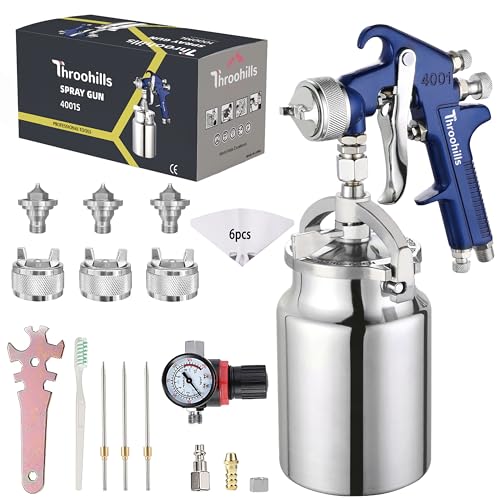
- Three stainless steel nozzle sizes included
- 360° adjustable spray pattern
- 1000cc aluminum cup for longer runs
- Complete kit with regulator and strainers
Trade-offs
- Siphon feed less efficient than gravity feed
- 3.0 lb weight adds fatigue over long sessions
- No needle/nozzle size below 1.4 mm for thin coatings
Siphon-feed guns generally need more air volume than gravity-feed models to pull paint from the cup, so a compressor with decent output is important for consistent spraying. At 3.0 pounds, this gun is heavier than the ENDOZER Professional HVLP set (2.6 lb), which some users may notice during long sessions. For those who already have a capable compressor and value cup capacity and nozzle variety over weight, this Throohills kit offers a practical setup for varied projects.
Product photos
SRQLNTT 819 HVLP Air Spray Gun Kit

What We Like
- Three nozzle sizes for varied coatings
- Disposable cups reduce cleanup time
- 65% paint utilization saves material
Trade-offs
- Disposable cups create ongoing waste
- Requires 3.0-3.9 cfm air supply
A 65% paint utilization rate means you lose far less material to overspray than with conventional guns, so your paint goes further on every job. That efficiency, paired with three nozzle sizes (1.3, 1.5, and 1.7 mm) and disposable cups that eliminate solvent-heavy cleaning, makes this kit a smart choice for budget-conscious DIYers and small-shop owners. They want to stretch their paint supply without sacrificing versatility.
Those disposable cups add consumable waste and a recurring cost that a traditional metal cup would avoid. If you prefer a permanent setup and don’t mind scrubbing cups, a gun with a reusable cup might suit you better. But for anyone focused on cutting paint waste and cleanup time, this kit delivers real value.
Product photos
NEIKO 31213A HVLP Air Spray Gun

What We Like
- One-piece all-steel gun body
- Rust-resistant stainless steel nozzle
- Solid brass cap for durability
- Three adjustable valve knobs for precision
Trade-offs
- Only one nozzle size (1.3 mm) included
- 600 cc cup is smaller than many competitors
A one-piece all-steel gun body sets this sprayer apart from plastic-bodied alternatives, giving it the kind of heft and longevity that matters when you’re spraying day after day. The 1.3 mm nozzle is sized for clear coats and automotive finishes, and the three adjustable knobs let you dial in fluid, fan, and air flow independently. This is a tool built for someone who wants a straightforward, durable workhorse rather than a kit with multiple nozzles they may never swap.
The single 1.3 mm nozzle is ideal for clear coats and automotive finishes, so this gun suits someone who knows exactly what they’ll be spraying. Unlike kits that bundle multiple tips, the NEIKO demands a focused buyer. The 600 cc aluminum cup is standard for this class of gun, and the one-piece steel body with a brass cap gives it the durability a dedicated painter expects.
Product photos
GATTLELIC HVLP Air Spray Gun
What We Like
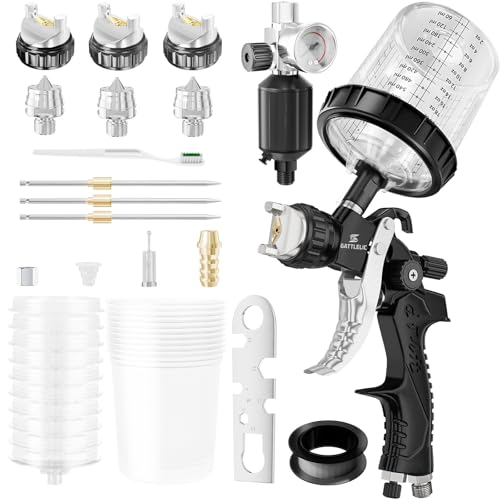
- Three nozzle sizes for varied coatings
- Includes air regulator with reusable filter
- 10 disposable cups reduce cleanup time
- Brass 15-hole hood for fine atomization
Trade-offs
- Nozzle change requires swapping needle too
- 3.3 pounds is heavier than some compact spray guns
Ten disposable mixing cups and a built-in air regulator with a reusable filter come right in the box. That means you can start spraying primers, topcoats, or clear coats without hunting down extra gear. The three included nozzles (1.4, 1.7, and 2.0 mm) let you switch from fine detail work to broad coverage on furniture or automotive panels, and the brass 15-hole hood delivers the kind of uniform atomization that saves paint and reduces overspray. This kit suits anyone who wants a complete setup for small-to-medium projects and hates spending time cleaning traditional cups.
Swapping nozzles requires replacing the corresponding needle as well, so it is not a quick field adjustment. If you prioritize convenience and a full accessory package, this GATTLELIC delivers a remarkably ready-to-use system for the money.
Product photos
How We Evaluated Air Compressor Paint Sprayers
Each spray gun was evaluated by reviewing published specifications, manufacturer documentation, and patterns in owner feedback from multiple sources. This comparison focuses on what each gun offers on paper and what real users consistently report.
The four criteria that mattered most were nozzle size flexibility, CFM efficiency relative to the gun type (HVLP, LVLP, or siphon feed), build materials and ergonomics, and the completeness of the included kit. A gun with three nozzle sizes earned higher marks for versatility, while Teflon-coated bodies and brass air caps pointed to longer service life.
A research-based evaluation has limits: we cannot verify atomization quality or trigger feel without physical testing. What we can do is surface the specs, features, and user-reported patterns that help you shortlist the right gun for your compressor and project type.
What To Look For In Air Compressor Paint Sprayers
The right spray gun starts with matching its CFM requirements to your compressor’s output, then choosing a feed type and nozzle range that fits your typical paint viscosity and project scale.
Match the gun’s CFM to your compressor’s output at the right PSI. Then choose between gravity, siphon, or LVLP feed based on your spraying angles. Look for at least three nozzle sizes if you spray different coatings.
CFM Requirements and Compressor Matching
Every spray gun lists a minimum CFM at a specific PSI. An HVLP gun typically needs a certain CFM at 40 PSI, while an LVLP gun like the AEROPRO R500 LVLP uses only 3.0–3.9 CFM, making it a better match for smaller compressors. If your compressor cannot sustain the gun’s CFM demand, the spray pattern will sputter and you will not get a smooth finish.
Feed Type: Gravity vs. Siphon vs. LVLP
Gravity feed guns draw paint from a cup on top using gravity, which wastes less material and works well for horizontal surfaces. Siphon feed guns use a cup below the gun and a vacuum to pull paint up, letting you spray at any angle including overhead. LVLP (low volume, low pressure) guns combine the material efficiency of HVLP with lower air consumption, making them ideal for small compressors but sometimes heavier than gravity feed alternatives.
Nozzle Sizes and Material Compatibility
A single nozzle size limits you to one viscosity range. Three common sizes are 1.3 mm for thin clear coats, 1.4-1.5 mm for base coats and acrylics, and 1.7-1.8 mm for primers and thicker paints. Guns that include three nozzles, like the ENDOZER Professional HVLP Spray Gun Set, let you switch between materials without buying extra parts.
- Check your compressor’s tank size and CFM rating before choosing any spray gun.
- Decide whether you need to spray overhead or in tight spaces (siphon feed) or prefer less cleanup and less paint waste (gravity feed).
- Look for at least three nozzle sizes if you plan to spray different paints, primers, and clear coats.
- Consider disposable cups if you change colors frequently and want faster cleanup.
A gun’s weight matters more than you think: a heavy gun plus a full cup can tire your arm before the project is done.
Air Compressor Paint Sprayers Compared
The table below compares the key specs and features of each spray gun to help you match the right model to your compressor and project needs.
| Product | Nozzle Sizes | Cup Capacity | Feed Type |
|---|---|---|---|
| DeVilbiss FLG Gravity Spray Gun | 1.3, 1.4, 1.8 mm | 560 ml | Gravity, suction, pressure |
| SATAjet X5500 HVLP Spray Gun | 1.3 mm | 0.6 L / 0.9 L | N/A |
| ENDOZER Professional HVLP Spray Gun Set | 1.4, 1.7, 2.0 mm | 600 cc | Gravity feed |
| AEROPRO R500 LVLP Air Spray Gun | 1.3, 1.5, 1.7 mm | 600 cc | Gravity-feed |
| InoKraft D1 LVLP Air Spray Gun Kit | N/A | N/A | N/A |
| BANG4BUCK HVLP Gravity Feed Spray Gun | 1.4, 1.7, 2.5 mm | 1000cc | Gravity feed |
| Throohills HVLP Siphon Feed Spray Gun Set | N/A | 1000 cc | Siphon feed |
| SRQLNTT 819 HVLP Air Spray Gun Kit | N/A | N/A | N/A |
| NEIKO 31213A HVLP Air Spray Gun | 1.3 mm | 600 cc | Gravity feed |
| GATTLELIC HVLP Air Spray Gun | 1.4, 1.7, 2.0 mm | 600cc | N/A |
Frequently Asked Questions
What size air compressor do I need for a paint spray gun?
You need a compressor that delivers at least the spray gun’s rated CFM at the recommended PSI. Most HVLP guns require a certain CFM at 40 PSI, while LVLP guns like the AEROPRO R500 LVLP need only 3.0–3.9 CFM. A compressor with a larger tank helps maintain consistent pressure during longer spray sessions.
What is the difference between HVLP and LVLP spray guns?
HVLP (high volume, low pressure) guns move a large volume of air at low pressure for good transfer efficiency, but they require a higher CFM compressor. LVLP (low volume, low pressure) guns use less air volume, making them compatible with smaller compressors while still achieving good material savings and a smooth finish.
Can I spray latex paint through an air compressor paint sprayer?
Most gravity-feed HVLP spray guns designed for automotive and furniture painting are not suitable for latex paint, which is thicker and requires a different nozzle and air cap setup. Some siphon feed guns with a larger nozzle can handle latex, but you should check the manufacturer’s specifications before attempting it.
How do I clean a spray gun after use?
Flush the gun with the appropriate solvent (mineral spirits for oil-based paints, water for water-based paints) until the solvent runs clear. Remove the nozzle, needle, and air cap, and soak them in clean solvent. Wipe all parts dry, reassemble, and store the gun with the trigger relaxed to prevent spring fatigue.
What nozzle size should I use for primer?
A 1.7 mm to 1.8 mm nozzle is typical for spraying primer, which is thicker than base coat or clear coat. Many spray gun kits include a 1.7 mm or 1.8 mm nozzle specifically for this purpose. If you only have a 1.3 mm or 1.4 mm nozzle, the primer may not atomize properly and could leave an orange peel texture.
The Bottom Line
The DeVilbiss FLG Gravity Spray Gun is the best overall choice for painters who need professional-grade flexibility with three nozzle sizes and three feed configurations. It suits automotive and refinishing work where material savings and ergonomics matter more than a large cup capacity.
If you are on a budget or just starting out, the ENDOZER Professional HVLP Spray Gun Set gives you three nozzle sets, a pressure gauge, and quick adapters at a value price point. For those with a smaller compressor, the AEROPRO R500 LVLP Air Spray Gun uses only 3.0-3.9 CFM and still offers three nozzle sizes.
The single most important buying factor is matching the gun’s CFM requirement to your compressor’s output. Get that right, and your spray gun will lay down smooth finishes without frustration.
