
10 Best Adhesive Removers For Car Paint in 2026
This post contains affiliate links. As an Amazon Associate, we earn from qualifying purchases.
The 3M Adhesive Remover 03618VOC20 is our best overall pick because its non-abrasive solvents are safe on cured paint and leave no residue behind. For fast spot-treating of tar and sap, the Stoner Car Care Tarminator is a top choice, while the Gtechniq W7 Tar and Glue Remover is ideal for those who need a strong solvent-based formula.
Removing stickers, decals, or tar from your car’s paint is a delicate job. The wrong product can damage your clear coat, leaving swirls or dull spots that are costly to fix. You need a remover that dissolves the adhesive without harming the finish underneath.
This guide is based on research into manufacturer specifications, expert round-ups, and patterns in owner feedback. We evaluated each product for paint safety, effectiveness, and ease of use to help you choose with confidence.
Top 10 Adhesive Removers For Car Paint in the Market
Certain content that appears on this site comes from Amazon. This content is provided "as is" and is subject to change or removal at any time.
The Best Adhesive Removers For Car Paint, Reviewed
3M Adhesive Remover 03618VOC20
What We Like
- Non-abrasive solvents safe on cured paint
- No residue left behind after use
- Works on glass and vinyl too
- Low VOC formula (<20%)
Trade-offs
- Aerosol can limits controlled application
- Only 12 oz per can
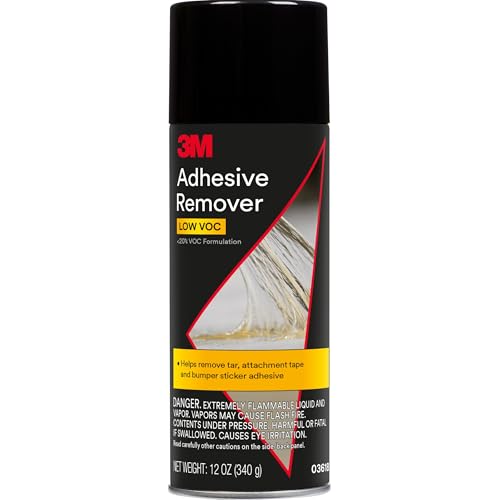
A blend of non-abrasive solvents that quickly dissolve adhesive residue without harming cured paint is exactly what you want when the wrong remover could cost you a repaint. The 3M Adhesive Remover delivers that peace of mind in a 12-ounce aerosol can, leaving no residue behind so you can wipe clean and move on. It is designed for use during and after collision repair, such as removing masking residue, and is safe for nearly all cured automotive paints as well as glass and vinyl. Its low-VOC formula (<20%) meets a stricter emissions standard.
This remover dissolves adhesive residue without harming cured paint, so it’s safe for automotive finishes while also working on glass and vinyl. The 12-ounce aerosol can is easy to handle, though it holds less than the 16.9-ounce Gtechniq W7 Tar and Glue Remover. For quick removal of tape, tar, or wax, it leaves no residue behind.
Product photos
Stoner Car Care Tarminator Tar & Sap Remover

What We Like
- Works in 30 to 60 seconds
- Clear coat safe formula
- Dissolves tar, sap, asphalt
- Pre-wax surface prep ready
Trade-offs
- 10 oz cans need multiple applications for large jobs
- Not suitable for plastic trim or matte finishes
A 30 to 60 second dwell time means this solvent-powered spray cuts through tar, tree sap, and asphalt residue faster than most alternatives, so you can wipe it clean without aggressive scrubbing. The clear-coat-safe formula makes it a solid fit for modern finishes, and the pack of two 10 oz cans gives you enough for spot treatments on bumpers, wheels, or body panels. It also works as a pre-wax surface prep, removing contaminants that would otherwise block wax or sealant bonding.
The 10 oz cans are compact, so you can stash them in a door pocket or glove box. If you are tackling a full vehicle covered in road grime, you may run through them quickly compared to a larger bottle like the McKee’s 37 Road Kill Remover. For quick, targeted removal of tar and sap, this is a fast option.
Product photos
Gtechniq W7 Tar and Glue Remover

What We Like
- Dissolves tar and glue almost instantly
- Safe on protective coatings and waxes
- Easy spray-on, rinse-off application
- Full-strength solvent formula
Trade-offs
- Not suitable for plastic surfaces or trim
- Cannot be used on PPF or wrapped vehicles
A full-strength solvent formula that dissolves tar and glue on contact makes this a fast, no-scrub option for paintwork, wheels, and exhaust tips. The spray-on, rinse-off application keeps things simple, and it’s safe on existing coatings, waxes, and sealants, so you won’t strip your protection while cleaning. It works best on painted metal surfaces and should be kept away from plastics and wraps.
This solvent dissolves tar and glue almost instantly on paintwork, wheels, and exhaust, but it’s not suitable for plastics, PPF, or wrapped vehicles. That means you need to keep it away from any non-painted surface on your car. It’s safe for protective coatings, waxes, and sealants, so you can use it without worrying about ruining your finish.
Gyeon Tar Remover

What We Like
- Safe on coated and uncoated trim and wheels
- Won't strip waxes or sealants
- Safe for ceramic coatings
Trade-offs
- Requires application on cool surfaces only
- Must avoid direct sunlight to prevent streaking
- Needs dwell time before rinsing off
The fast-acting formula breaks down grime in minutes, so you spray it on, let it dwell, and rinse away the mess with no scrubbing that could scratch the paint. For anyone who has invested in a ceramic coating and still needs to tackle sticky tar or sap, this is the obvious choice.
The trade-off is that Gyeon requires application on a cool surface and out of direct sunlight to avoid streaking or premature drying. This adds a step compared to some other adhesive removers, but if coating safety is your priority, that extra attention is worth it. Gyeon Tar Remover is a targeted solution for detailers and DIYers who want decontamination without compromising their paint’s protection.
Product photos
Fast Orange Citrus Blaster Adhesive Remover

What We Like
- Gel formula clings to vertical surfaces
- Safe for automotive paint and interiors
- Removes stickers, tar, and silicone adhesives
- Works on both exterior and interior surfaces
Trade-offs
- Gel requires manual spreading, not spray-on
- 16 oz bottle is smaller than some competitors
A gel formula that adheres to the surface means this remover stays put on vertical panels, hoods, and bumpers instead of dripping off before it can work. That makes it especially useful for decal removal on doors or tailgates where a liquid would run. It handles stickers, silicone adhesives, fresh road paint, asphalt, tar, and other automotive grime without harming the paint underneath, and it is labeled safe for both interior and exterior surfaces. For someone tackling a bumper sticker or old registration decal on a vertical panel, the gel’s cling is the decisive advantage.
A gel formula means you spread it by hand or with an applicator rather than spraying and wiping, which adds a small step to the process. The 16-ounce bottle is a reasonable size for a few jobs, though if you have a full truck bed of decals to strip, you might want a larger container.
LuckyGuard Decal Remover Eraser Wheel

What We Like
- Will not scratch acrylic enamel or clearcoat
- Includes arbor for any electric drill
- Rubber medium density with stop-use line
- Removes vinyl decals, pinstriping, and stickers
Trade-offs
- Requires a drill with max 4,000 RPM
- Best results only between 1,500 and 3,000 RPM
A rubber eraser wheel that spins onto any home drill at 1,500 to 3,000 RPM means you can lift vinyl decals and pinstriping without touching a chemical solvent. The LuckyGuard wheel is designed specifically for acrylic enamel, urethane, and clearcoat finishes, so it won’t scratch or harm the paint underneath. That makes it a natural pick for anyone who wants to remove graphics or adhesive residue from a car, RV, or motorcycle without worrying about dulling the shine or etching the clear layer. The included arbor adapter clicks into nearly any electric drill, and the molded rubber medium density material has a visible stop-use line that tells you when the wheel is worn out.
If your project involves plastic trim or a classic lacquer paint job, a solvent-based remover like the 3M Adhesive Remover is the safer route. But for stripping stripes, badges, or old vinyl from a modern car’s body panels, the LuckyGuard wheel is faster and cleaner than spraying and wiping. Just keep your drill speed between 1,500 and 3,000 RPM, and you’ll peel away layers without the mess of chemicals.
Product photos
Chemical Guys Bug & Tar Remover

What We Like
- Fast-acting formula loosens debris in seconds
- Safe on paint, glass, chrome, and plastic
- Rinses without streaking or residue
- Works as pre-wash to prevent scratches
Trade-offs
- Requires a full wash step afterward
- Not a standalone adhesive remover for heavy residue
A 16-ounce spray that works as a fast-acting pre-wash, this formula is designed to loosen baked-on bugs, tar, sap, and bird droppings in seconds before you even touch the paint. That means you can reduce the aggressive rubbing that often leads to swirls and scratches, making it a smart first step in a careful wash routine. It is safe on paint, glass, chrome, and plastic, and you can apply it by hand or through a foam cannon for even coverage. For someone who wants to protect their clear coat while dealing with stubborn road grime, this offers a gentle but effective starting point.
This product is a pre-wash, not a standalone remover for heavy adhesive or tar buildup. You will still need a full contact wash afterward to finish the job. If you prefer a two-step process that prioritizes paint safety over raw dissolving power, this fits well into a careful detailing routine.
Product photos
TRENUVX Adhesive Remover Spray Kit
What We Like
- Safe on clear coat and painted surfaces
- All-in-one kit with scraper and towel
- Residue-free formula leaves no sticky mess
- Works on glass, mirrors, and sealed surfaces
Trade-offs
- Small 3.4 oz bottle limits coverage on large jobs
- Requires careful ventilation due to strong solvent odor
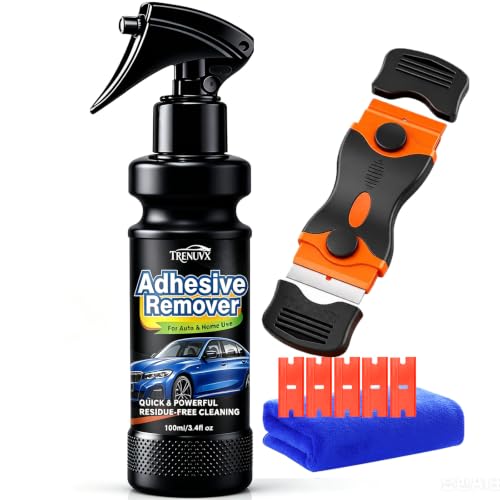
A 3.4-ounce spray bottle means this kit is built for small, focused jobs rather than stripping an entire car. The included plastic scraper, spatula, and microfiber towel give you everything needed to lift stickers, decals, and tape residue without scratching the clear coat. For someone who needs to remove a bumper sticker, old registration tag, or tree sap from a single panel, this is a tidy, affordable solution that keeps the mess contained.
The small volume means you will run out quickly if you try to tackle a full wrap or multiple large decals. Compared to the 12-ounce 3M Adhesive Remover, the TRENUVX kit covers far less area per bottle, but it also costs less upfront and comes with the tools you would otherwise buy separately. Best for occasional spot removal where convenience and safety on paint matter more than bulk capacity.
Product photos
McKee's 37 Road Kill Remover
What We Like
- 128 oz concentrated formula for large jobs
- Dilutable 1:1 for cost-effective use
- Safe on paint, glass, chrome, and clear coats
- Spray-on, wipe-off with no harsh scrubbing
Trade-offs
- 9.0 pounds is heavy for one-handed use
- Requires dilution step before application
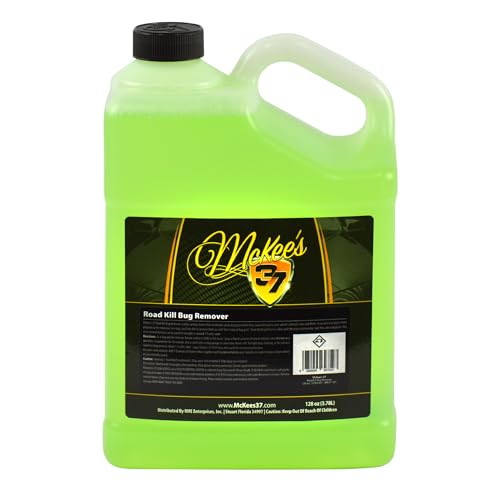
The 128-ounce concentrated bottle is designed to be diluted 1:1 with water, so you get a large supply of ready-to-use remover from a single jug. The formula is gentle on paint, glass, chrome, plastic trim, and clear coats, so you can spray it on, let it sit briefly, and wipe clean without harsh scrubbing. For a shop or enthusiast who works through bug and tar removers quickly, this size saves frequent repurchasing and keeps the cost per use low.
At nine pounds, this jug is not something you want to hold in one hand while spraying. It is better suited to a workbench or a second person. Compared to the 16-ounce Chemical Guys Bug & Tar Remover, McKee’s 37 demands a little setup time for dilution, but you get far more product for the same effort. If you only need to clean a single car once or twice a year, the smaller bottles from other brands will be more convenient. If you want a long-lasting supply that handles heavy grime without scrubbing, this one delivers.
Product photos
YABIKORA Adhesive Remover Spray
What We Like
- Low-VOC, pH-gentle formula protects clear coat
- Lemon-fresh scent with no harsh chemical fumes
- Complete kit includes scraper and plastic blades
- Works on multiple surfaces including glass and plastic
Trade-offs
- Requires several minutes to soften adhesive before scraping
- Small 150ml bottle limits coverage on large jobs
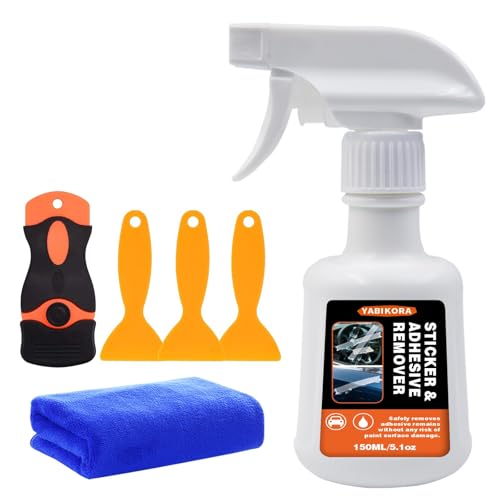
A low-VOC, pH-gentle formula lifts stickers and decals without attacking your car’s clear coat or paint. The lemon-fresh scent avoids the choking chemical fumes typical of industrial solvents, making it comfortable to work with in a garage or driveway. Included scraper and plastic razor blades let you work methodically: spray, wait a few minutes for the adhesive to soften, then scrape cleanly without scratching the surface.
The YABIKORA kit is built around a low-VOC, pH-gentle formula that lifts sticker and decal residue without harming your car’s clear coat or paint. That means you need to spray, wait a few minutes for the adhesive to soften, then scrape with the included scraper and plastic razor blades. The 150ml bottle is compact enough to keep in a glove box, but for larger jobs like full side stripes it will run out quickly. For small decals, bumper stickers, or window tint residue where paint safety and a mild lemon scent matter, this kit works well.
Product photos
How We Evaluated Adhesive Removers For Car Paint
Our research began with a thorough review of manufacturer specifications and safety data for each formula. We looked at the chemical composition, including solvent types and VOC content, to understand how each product interacts with automotive clear coats and paint layers. We also examined patterns in owner feedback, focusing on reports of paint damage or discoloration after use.
The most important criteria were paint safety, speed of action, and application method. Paint safety was non-negotiable, any product that risked damaging the clear coat was ruled out. We prioritized formulas that are explicitly labeled as safe for cured automotive paint. Speed of action mattered for convenience, while application method determined whether a product was suited for vertical panels, large areas, or precise spot treatments.
We also considered value and versatility. A product that works on multiple surfaces, such as glass and chrome, offers more utility. However, a research-based guide has limits: individual results can vary based on paint condition, temperature, and application technique. Our goal is to give you a clear, unbiased starting point for your own decision.
What To Look For In Adhesive Removers For Car Paint
Choosing the right adhesive remover means balancing strength and safety. You want a formula that dissolves the glue without dissolving your paint.
Look for a remover that is explicitly safe for your car’s clear coat. Choose a formula type that matches your job, such as a spray, gel, or eraser wheel. Check the VOC content if you are sensitive to fumes.
Paint Safety and Compatibility
The most critical factor is whether the product is safe for your car’s paint. Look for phrases like “clear coat safe” or “safe on cured paint.” Solvent-based formulas are powerful but can strip waxes, sealants, and ceramic coatings. If you have a coated vehicle, a dedicated ceramic-safe formula like the Gyeon Tar Remover is a better choice. Avoid using any adhesive remover on matte finishes, plastic trim, or vinyl wraps unless the manufacturer explicitly states it is safe.
Formula Type and Application
The formula determines how you apply the product and how well it works on different surfaces. Spray-on removers are fast and convenient for horizontal panels but can drip on vertical surfaces. Gel formulas, like the Fast Orange Citrus Blaster, cling to vertical body panels, making them ideal for decal removal. Eraser wheel tools offer a mechanical option for large decals and pinstriping without chemicals. Consider the size of your job and whether you prefer a chemical or abrasive method.
Speed and Dwell Time
Some removers work in under a minute, while others require several minutes to soften the adhesive. Fast-acting sprays like the Stoner Car Care Tarminator are great for spot treatments, while gel formulas and eraser wheels require more time and effort. If you are removing a large decal, a slower-acting product that gives you time to work may be preferable to a fast-evaporating spray.
- Check the label for “clear coat safe” or “paint safe” before buying.
- Match the formula type to your job: spray for quick spots, gel for vertical panels, eraser wheel for large decals.
- Consider your car’s finish: ceramic coatings need a dedicated safe formula.
- Read the dwell time instructions, some products need several minutes to work.
A good rule of thumb: the stronger the solvent, the more careful you need to be with application.
Adhesive Removers For Car Paint Compared
The table below compares the key features of each adhesive remover to help you see how they stack up side by side.
| Product | Size/Volume | Type/Formula | Safe For | Application Method |
|---|---|---|---|---|
| 3M Adhesive Remover 03618VOC20 | 12 oz | Aerosol can | Cured automotive paint | Spray |
| Stoner Car Care Tarminator Tar & Sap Remover | 10 oz (pack of 2) | N/A | Paint, clear coat, chrome | Spray on, wipe clean |
| Gtechniq W7 Tar and Glue Remover | 16.9 fl oz | Solvent-based | Coatings, waxes, sealants | Spray, rinse off |
| Gyeon Tar Remover | 500ml | Fast-acting spray | Ceramic coatings, paint, trim, wheels | Spray, dwell, rinse |
| Fast Orange Citrus Blaster Adhesive Remover | 16 oz | Gel | Automotive surfaces | Apply gel, wipe |
| LuckyGuard Decal Remover Eraser Wheel | N/A | Rubber eraser wheel | Acrylic enamel, urethane, clearcoat | Use with drill |
| Chemical Guys Bug & Tar Remover | 16 oz | Pre-wash spray | Paint, glass, chrome, plastic | Hand wash or foam cannon |
| TRENUVX Adhesive Remover Spray Kit | 3.4 oz / 100 ml | Spray | Car paint, clear coat, glass | Spray, scrape |
| McKee's 37 Road Kill Remover | 128 oz | Concentrated | Paint, glass, chrome, plastic trim, clear coats | Spray on, wipe clean |
| YABIKORA Adhesive Remover Spray | 150ml / 5 fl.oz | Low-VOC, pH-gentle | Painted metal, glass, plastic, chrome | Spray, wait, scrape |
Frequently Asked Questions
Can adhesive remover damage my car’s paint?
Yes, if you use the wrong formula. Harsh solvents can strip clear coat, dull the finish, or leave etch marks. Always choose a product labeled safe for cured automotive paint, and test it on an inconspicuous area first.
What is the best way to remove a large decal from a car?
For large decals, a combination of heat and an eraser wheel tool is often most effective. The LuckyGuard Decal Remover Eraser Wheel attaches to a drill and removes vinyl without scratching the clear coat. Alternatively, a gel adhesive remover can be applied to vertical panels to soften the decal for peeling.
Is it safe to use adhesive remover on ceramic coated paint?
Only if the remover is specifically formulated to be ceramic coating safe. The Gyeon Tar Remover is designed for this purpose and won’t strip your coating. Standard solvent-based removers will likely damage or remove the ceramic layer.
How do I remove sticker residue without scratching my car’s paint?
Use a paint-safe adhesive remover spray or gel, let it dwell for the recommended time, and then wipe gently with a microfiber towel. Avoid using metal scrapers or abrasive pads. The TRENUVX Adhesive Remover Spray Kit includes a soft scraper and towel for this purpose.
What does low-VOC mean in an adhesive remover?
VOC stands for volatile organic compounds. A low-VOC formula, like the 3M Adhesive Remover with less than 20% VOCs, means fewer harsh fumes and a more pleasant working environment. It is still a solvent, so ventilation is recommended, but it is less intense than traditional formulas.
The Bottom Line
The 3M Adhesive Remover 03618VOC20 is our best overall pick for most car owners. Its non-abrasive, low-VOC formula is safe on cured paint, works on glass and vinyl, and leaves no residue behind. It is the most versatile choice for collision repair, decal removal, or cleaning up masking tape residue.
If you need something different, the Stoner Car Care Tarminator is the best fast-acting spray for spot-treating tar and sap, while the Gtechniq W7 is the top solvent-based option for tough glue. For ceramic-coated vehicles, the Gyeon Tar Remover is the only safe choice. Budget-conscious buyers or those with small jobs can start with the TRENUVX Adhesive Remover Spray Kit.
The single most important factor is paint safety. No matter what you are removing, always verify that the product is safe for your car’s specific finish before you spray.
