
10 Best Paint For Concrete Walls in 2026
This post contains affiliate links. As an Amazon Associate, we earn from qualifying purchases.
The best paint for concrete walls is KILZ Basement and Masonry Waterproofing Paint, which blocks up to 12 PSI of water pressure and resists alkali buildup. For mold and mildew protection, consider the Zinsser WaterTite, and for vertical walls, the INSL-X WaterBlock Acrylic Masonry Waterproofer is a top choice.
Choosing a paint for concrete walls means balancing moisture resistance, durability, and the finish you want. Basement walls need waterproofing, while a decorative interior wall might just need a self-priming formula that hides texture.
This guide is based on manufacturer specifications, expert round-ups, and patterns in owner feedback. We have organized ten top paints by their specific strengths to help you match the right product to your project.
Top 10 Paints For Concrete Walls in the Market
Certain content that appears on this site comes from Amazon. This content is provided "as is" and is subject to change or removal at any time.
The Best Paints For Concrete Walls, Reviewed
KILZ Basement and Masonry Waterproofing Paint

What We Like
- Blocks up to 12 PSI water pressure
- Low-odor formula for indoor use
- Resists alkali buildup on masonry
- Dries to touch in 1 hour
Trade-offs
- Full cure takes 7-14 days
- For below-grade use, fill cracks with hydraulic cement first
With nanotechnology that blocks up to 12 PSI of water pressure, this paint stops moisture from pushing through concrete and masonry walls even in below-grade basements. That level of waterproofing makes it the go-to choice for anyone who needs reliable protection against dampness and seepage on interior or exterior walls. The low-odor formula keeps the job comfortable in enclosed spaces, and a one-hour dry time means you can move through a project without long waits between coats.
The trade-off is patience: the paint fully cures in 7 to 14 days, so you cannot scrub or expose it to heavy moisture right away. For the best waterproofing performance on masonry walls, though, the extra work and wait pay off in long-lasting, alkali-resistant coverage that stands up to tough conditions.
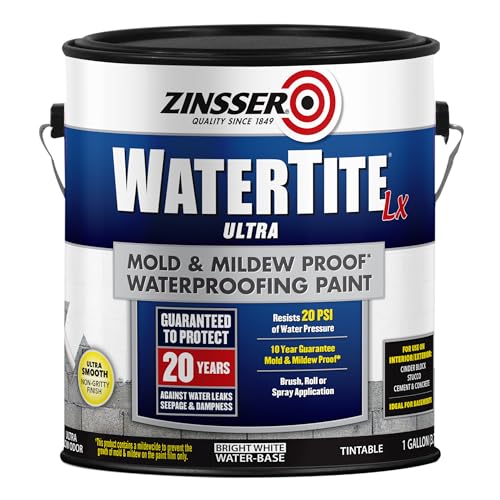
Zinsser WaterTite Mold & Mildew Waterproofing Paint
What We Like
- Resists up to 20 lbs. water pressure
- Ultra low odor for indoor use
- Easy soap and water cleanup
- 15-year waterproof guarantee
Trade-offs
- Only for dry walls before application
- Requires dry surface before application
With water resistance rated up to 20 pounds of pressure, this paint is designed for interior masonry surfaces where dampness and mold are concerns. The ultra low odor and soap-and-water cleanup make it practical for indoor projects where ventilation is limited. The 15-year waterproof warranty and separate 10-year mold and mildew guarantee on the paint film offer long-term protection for those dealing with persistent moisture issues in basements or foundation walls.
This paint stops water seepage and resists up to 20 pounds of water pressure, but you must apply it to a dry wall, so it won’t work on actively leaking surfaces. The gallon weighs 12.2 pounds, a bit less than the KILZ Basement and Masonry Waterproofing Paint at 12.5 pounds, and it comes with a separate 10-year guarantee against mold and mildew on the paint film. If your basement wall is dry and you’re worried about fungus, this gives you that extra protection.
Product photos
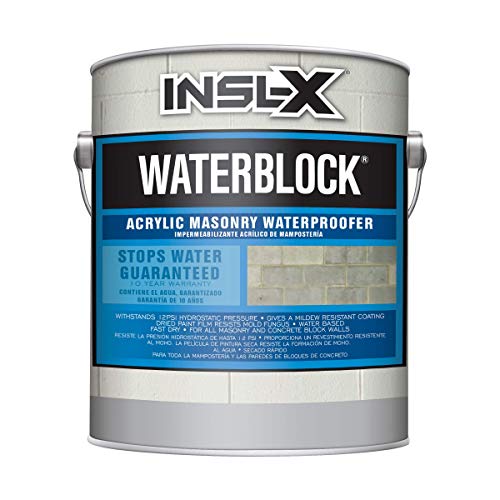
INSL-X WaterBlock Acrylic Masonry Waterproofer
What We Like
- Resists alkali up to pH 13
- Withstands 12 psi hydrostatic pressure
- Fast-drying waterproof coating
- Works on interior and exterior walls
Trade-offs
- Requires temperature between 50-90 °F to apply
- Not suitable for horizontal surfaces like floors.
A 12 psi hydrostatic pressure rating means this coating can handle serious water pressure against basement walls and foundations, not just light dampness. Designed specifically for vertical masonry, it resists alkali up to pH 13, so it won’t break down against fresh concrete or block walls. That makes it a strong fit for anyone sealing a below-grade wall or retaining wall where moisture is a persistent problem.
You need to work within a tight temperature window of 50-90 °F, which can limit winter or midsummer projects. The 11.1-pound gallon is built for vertical hold on basement walls, foundations, and retaining walls. If your main concern is stopping water seepage on upright surfaces, this paint is engineered for exactly that job.
Product photos
Rust-Oleum Watertite Latex Waterproofing Paint

What We Like
- Resists up to 20 lb water pressure
- Ultra low odor during application
- Easy soap-and-water clean-up
- 15-year waterproof guarantee
Trade-offs
- Quart size: covers less area than a gallon
- Bright white only: no color options listed
This paint resists up to 20 pounds of water pressure, so it can handle damp basement walls and interior concrete that see moisture. The latex formula lays down a very smooth, bright white, non-gritty finish that brushes or rolls on easily with ultra low odor. Backed by a 15-year waterproof guarantee and a 5-year mold and mildew-proof paint film, it offers long-term protection without the heavy smell or cleanup hassle.
The quart size covers less surface than a full gallon, so larger wall projects will require multiple units. For smaller areas or patching damp spots, this Rust-Oleum paint at 3.0 pounds is lighter than KILZ’s basement and masonry waterproofing paint, which comes in a gallon and weighs 12.5 pounds. It works well where you want a lightweight, low-odor paint with strong water resistance.
KILZ Self-Priming Masonry, Stucco and Brick Paint

What We Like
- Self-priming on masonry and stucco
- Alkali-resistant up to pH 12.0
- Works on smooth, rough, and textured surfaces
- Cleans up with soap and water
Trade-offs
- Coverage varies widely with texture (250-400 sq ft)
- Flat finish limits moisture resistance vs. glossier paints
Coverage of up to 400 square feet per gallon means one coat can handle a modest wall, but the real story here is the self-priming formula. This paint bonds directly to properly prepared masonry, stucco, and brick without a separate primer coat, saving time and money. It resists alkali up to pH 12.0, a common issue in fresh concrete that can cause ordinary paints to fail. For anyone painting a textured concrete wall, this is the straightforward, no-fuss option that gets the job done in fewer steps.
A flat finish is the key trade-off here: it naturally accentuates textured surfaces like stucco or brick, but that same flatness means it resists alkali up to pH 12.0 rather than offering heavy-duty waterproofing. For above-grade walls where you want water repellency without full waterproofing, this self-priming paint is the efficient choice. If your wall is in a damp basement, the KILZ basement and masonry waterproofing paint is the safer bet, that product is built for concrete and cinder block below grade.
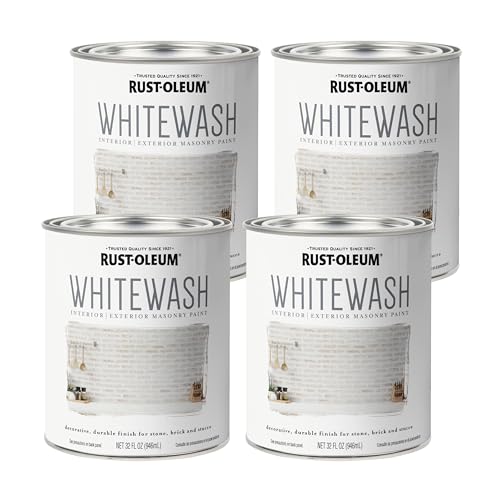
Rust-Oleum Whitewash Masonry Paint
What We Like
- Self-priming and self-sealing formula
- Customizable coverage by diluting with water
- Low odor and low VOC
- Works on interior and exterior surfaces
Trade-offs
- Not designed for waterproofing or hydrostatic pressure
- Quart size covers less area than gallon alternatives
The quart can be thinned with water for lighter coverage and brushed or rolled onto stucco, brick, stone, or wood without needing a separate primer or sealer. Its water-based, low-VOC formula has a low odor, making indoor work more comfortable. Reviewers note it brightens the appearance of highly porous surfaces while letting the natural texture shine through, leaving a smooth matte finish.
This paint is not built to stop water seepage or handle basement moisture problems. If your wall faces active dampness or high hydrostatic pressure, a product like KILZ Basement and Masonry Waterproofing Paint is a better match for that job. For purely cosmetic upgrades on dry interior or sheltered exterior walls, however, the ability to dial in your coverage by adding water and the low-VOC comfort during application make this a smart, fuss-free pick.
Product photos
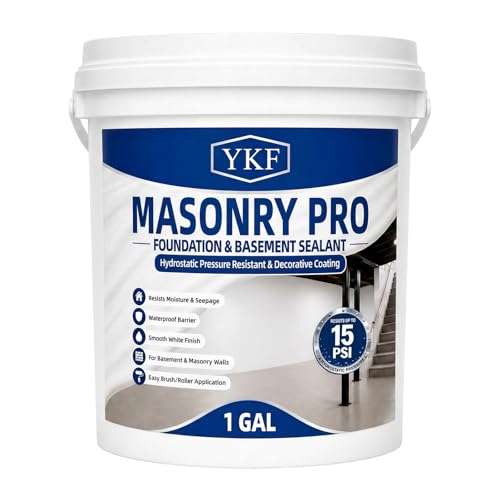
YKF Masonry Pro Foundation & Basement Waterproofer
What We Like
- 15 PSI hydrostatic pressure resistance
- Water-based polyurethane high-solids formula
- Smooth white decorative finish
- Works on dry or slightly damp surfaces
Trade-offs
- Requires active leak and crack repair before application
- 2-hour wait before handling between coats
- Coverage varies with surface porosity and texture
Up to 15 PSI of hydrostatic pressure resistance means this coating is built for demanding basement and below-grade wall conditions where water seepage is a real concern. YKF Masonry Pro uses a water-based polyurethane formula that bonds to properly prepared concrete or masonry, even when the surface is slightly damp, and dries to a clean white finish that hides minor imperfections. For anyone dealing with a foundation wall that actively pushes moisture inward, this is the one that steps up when standard waterproofing paints won’t hold the line.
Preparation matters more here than with some other options, but for good reason. This coating resists hydrostatic pressure up to 15 PSI, which is exactly what you need for below-grade basement walls where water seepage is a real problem. You have to repair active leaks and cracks before applying, and coverage runs about 100 square feet per gallon, though that varies with your wall’s porosity and texture. If your walls are dry and you just want a cosmetic refresh, this might be overkill, but if you’re fighting water intrusion below grade, the extra prep is worth it.
Product photos
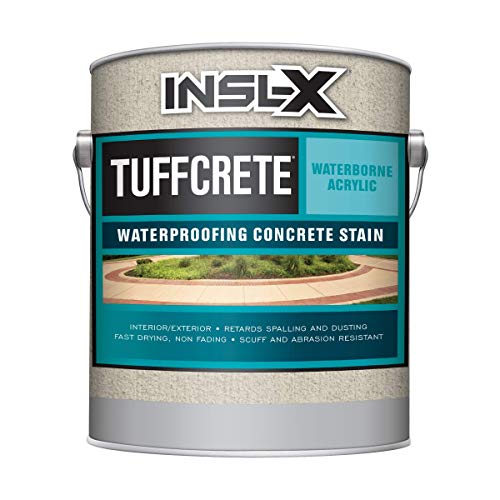
INSL-X TuffCrete Acrylic Concrete Stain Paint
What We Like
- One-coat stain application possible
- Resists cleaning detergents and grease
- Fast drying for quicker projects
- Works on interior and exterior masonry
Trade-offs
- Surface temperature must stay below 90°F
- Two coats needed for opaque finish
A single gallon covers 300 to 400 square feet, so you can stain a sizable concrete wall in one coat as a stain, or apply two coats for an opaque finish. The coating resists cleaning detergents, oils, grease, and scrubbing, making it suitable for surfaces that see regular cleaning. It dries fast, which helps keep the project moving. For anyone who wants a one-coat stain application that holds up to tough conditions, this product delivers.
One coat of this stain gives a translucent stain effect, while two coats deliver an opaque finish. You also need to apply it when the surface temperature is below 90°F, so plan around hot weather. Compared to the KILZ Self-Priming Masonry, Stucco and Brick Paint, another option for masonry, this INSL-X product offers the flexibility of a one-coat stain or a two-coat opaque finish.
Product photos
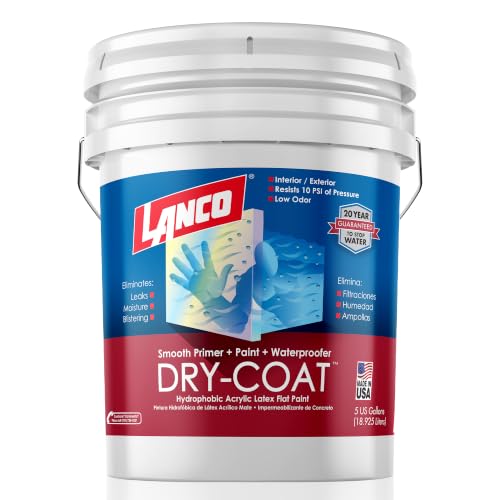
LANCO Dry-Coat Waterproofing Paint
What We Like
- 5-gallon bulk container
- Suitable for interior and exterior
- Smooth finish
- Designed for concrete and foundation walls
Trade-offs
- Heavy at 10 x 10 x 10 inches
- Only available in white
A full 5-gallon bucket means you can coat a large basement wall or foundation in one go without running back to the store. That bulk capacity is what makes this the go-to choice for anyone tackling a big concrete wall project, whether inside or out. The smooth white finish is straightforward and works well as a base for further decoration or as a clean, utilitarian look.
A 5-gallon bucket of paint is a lot to handle and store. The container is 10 inches in each dimension, so it takes up a fair bit of shelf space and isn’t a grab-and-go option for small touch-ups. For a single wall or a patch, the 1-gallon KILZ Basement and Masonry Waterproofing Paint comes in a smaller package. But for a whole room or foundation, this bulk container covers more area in one purchase.
For anyone planning to waterproof a full basement or foundation exterior, this 5-gallon bucket delivers enough paint to cover large areas without multiple store runs. The smooth white finish suits both interior and exterior concrete walls. Just keep in mind that the container is bulky, so it requires storage space and is not meant for small repairs or tight shelves.
Product photos
Meoded Golmex Concrete Look Plaster

What We Like
- Improves fire resistance of concrete
- Protects concrete from moisture damage
- Enhances wall insulation properties
- Hides imperfections on concrete surfaces
Trade-offs
- Requires primer and sealer sold separately
- Two coats plus 24-hour drying between layers
- Needs trowel or spatula, not roller-ready
A lime-cement plaster that improves fire resistance, blocks moisture, and boosts insulation means this finish does more than just look like concrete, it upgrades the wall itself. That makes it a strong pick for anyone who wants a decorative surface that also adds real functional protection, whether indoors or out. The two-coat trowel application and 24-hour drying between layers demand patience, but the result is a smooth, durable finish that hides flaws and stands up to weather.
Time and prep are the real costs here. Unlike a simple roll-on masonry paint, Golmex requires a primer coat, two plaster layers, and a sealer, plus drying time between each. If you want a quick refresh for a basement wall, that extra work won’t appeal. But if you’re finishing a feature wall or exterior concrete you want to look refined and last, the layered system delivers a look and performance that simple paint can’t match.
Product photos
How We Evaluated Paints For Concrete Walls
This guide is based on manufacturer specifications, technical data sheets, and expert round-ups. It also reflects common patterns in owner feedback to give a sense of real-world performance. The goal is to help you compare features and choose with confidence.
The criteria that mattered most were hydrostatic pressure resistance, alkali resistance, and ease of application. Concrete walls in basements are often subject to water pressure underground, so a paint that resists measurable PSI is critical. Alkali from masonry can cause paint to fail, so resistance up to specific pH levels is a key durability factor.
We also weighed coverage, drying time, and whether a formula is self-priming or needs a separate primer. A research-led evaluation has limits: product performance depends on surface preparation, application temperature, and the condition of your concrete walls.
What To Look For In Paints For Concrete Walls
Choosing the right paint for concrete walls starts with understanding your wall’s moisture level and the finish you need.
Look for hydrostatic pressure resistance (measured in PSI) for below-grade walls. Check alkali resistance (pH rating) for masonry durability. Consider low-odor formulas for indoor use and fast drying times for quicker projects.
Hydrostatic Pressure Resistance
For basement and foundation walls, hydrostatic pressure resistance is the most important spec. This number, measured in PSI, tells you how much water pressure the paint can block. Paints that resist 12 to 20 PSI are common for below-grade use. If you have active seepage, look for higher PSI ratings. For dry interior walls, this spec matters less.
Alkali Resistance
Fresh concrete and masonry are alkaline, which can cause paint to blister or peel. A paint that resists alkali up to a specific pH, such as pH 12 or 13, will last longer on these surfaces. This is especially important for walls that were recently poured or that have not fully cured.
Application and Drying
Consider how the paint applies and how long it takes to cure. Some paints require specific temperatures between 50-90 degrees Fahrenheit. Fast-drying formulas let you apply a second coat sooner. Full cure times can range from hours to two weeks, so plan your project timeline accordingly.
- Check the recommended temperature range for application.
- Look for low-odor or ultra-low-odor formulas if painting indoors.
- See if the paint is self-priming or requires a separate primer.
- Verify if the paint is for vertical walls only or can be used on floors.
- Note the number of coats needed for an opaque finish.
For best adhesion, always prepare the concrete surface by cleaning and repairing cracks before painting.
Paints For Concrete Walls Compared
The table below compares all ten paints for concrete walls side by side, including their best use, key specs, and coverage notes.
| Product | Type | Finish | Use |
|---|---|---|---|
| KILZ Basement and Masonry Waterproofing Paint | N/A | N/A | Interior & exterior |
| Zinsser WaterTite Mold & Mildew Waterproofing Paint | Latex-base waterproofing paint | Smooth, bright white, non-gritty | Interior |
| INSL-X WaterBlock Acrylic Masonry Waterproofer | Water-based acrylic | N/A | Interior/exterior |
| Rust-Oleum Watertite Latex Waterproofing Paint | Latex (acrylic copolymer) | Very smooth, bright white, non-gritty | N/A |
| KILZ Self-Priming Masonry, Stucco and Brick Paint | acrylic latex water-base | Flat | Interior/exterior |
| Rust-Oleum Whitewash Interior & Exterior Masonry Paint | N/A | Smooth, matte | Interior & Exterior |
| YKF Masonry Pro Foundation & Basement Waterproofer | Water-based polyurethane | Smooth White Finish | Indoor/outdoor |
| INSL-X TuffCrete Acrylic Concrete Stain Paint | Waterborne Acrylic | N/A | interior or exterior |
| LANCO Dry-Coat Waterproofing Paint | N/A | Smooth | Interior & Exterior |
| Meoded Golmex Concrete Look Plaster | Lime/cement plaster | N/A | Interior and exterior |
Frequently Asked Questions
What is the best paint for concrete basement walls?
The KILZ Basement and Masonry Waterproofing Paint is a top choice for basement walls. It blocks up to 12 PSI of water pressure and resists alkali, making it suitable for below-grade use. For mold and mildew resistance, the Zinsser WaterTite offers a 15-year waterproof guarantee.
Can I paint concrete walls without primer?
Yes, some paints are self-priming and can be applied directly to clean concrete. The KILZ Self-Priming Masonry, Stucco and Brick Paint is designed for this purpose. Always check the manufacturer instructions, as some surfaces may still benefit from a separate primer.
What paint for concrete walls resists water pressure?
Paints that specify hydrostatic pressure resistance in PSI are designed for this. The YKF Masonry Pro resists 15 PSI, while the Rust-Oleum Watertite and Zinsser WaterTite both resist up to 20 PSI. These are ideal for basement and foundation walls.
How do I prepare concrete walls for painting?
Clean the wall to remove dirt, grease, and efflorescence. Repair any cracks with hydraulic cement before painting. Allow the wall to dry completely, as many waterproofing paints require a dry surface. Check the paint’s instructions for specific preparation steps.
What is the difference between concrete paint and concrete stain?
Concrete paint forms a protective coating on the surface and is better for waterproofing. Concrete stain penetrates the concrete for a more natural, decorative look. The INSL-X TuffCrete Acrylic Concrete Stain Paint offers a stain option that resists grease and detergents.
The Bottom Line
For most homeowners and DIYers, the KILZ Basement and Masonry Waterproofing Paint is the best overall choice for waterproofing concrete walls. It offers strong hydrostatic pressure resistance and an alkali-resistant formula that stands up to masonry conditions.
If your main concern is mold and mildew on dry walls, the Zinsser WaterTite offers a long warranty and easy cleanup. For large-scale projects, the LANCO Dry-Coat in a 5-gallon bulk container is a practical choice.
The single most important factor when buying paint for concrete walls is matching the paint’s moisture resistance to your wall’s conditions. A dry interior wall needs a different product than a damp basement foundation.
