
10 Best Watercolour Sketchbooks in 2026
This post contains affiliate links. As an Amazon Associate, we earn from qualifying purchases.
For watercolourists, the paper is as important as the paint. The Arches Watercolor Paper Pad is our best overall pick because its 100% cotton fibers handle heavy washes and reworking without pilling, and it comes in three revered surface textures. For students and daily practice, the Canson XL Series Watercolor Pad offers impressive value, while the Arches Aquarelle Travel Pad is the top choice for artists painting on location.
Choosing the right sketchbook means balancing paper quality, weight, and format against how and where you paint. A 100% cotton sheet behaves differently than a cellulose one, and a pad that won’t buckle under a wet wash can make or break a painting session.
This guide is based on a close look at manufacturer specifications, expert consensus on papermaking, and patterns in what experienced watercolourists report about each pad. We’ve organized the top ten sketchbooks to help you match the right paper to your practice.
Top 10 Watercolour Sketchbooks in the Market
Certain content that appears on this site comes from Amazon. This content is provided "as is" and is subject to change or removal at any time.
The Best Watercolour Sketchbooks, Reviewed
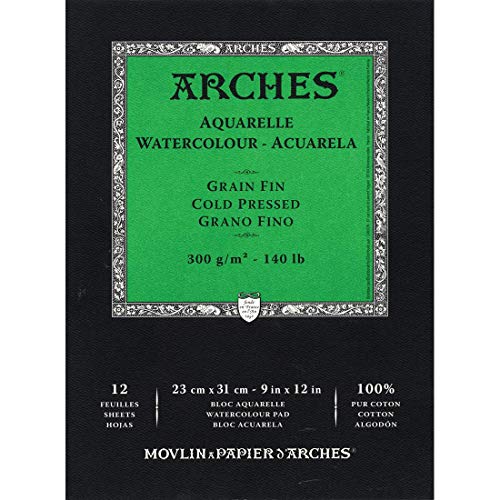
Arches Watercolor Paper Pad
What We Like
- 100% cotton long fibers for durability
- Three revered surface textures available
Trade-offs
- Only one texture option in this pad
- No wire binding for lay-flat use
The 140-pound cold-press paper is made from 100% cotton long fibers, so it resists buckling even under heavy washes and repeated lifting. That durability makes it a reliable surface for finished work or serious practice, and artists who have used cotton paper know it behaves differently from wood-pulp alternatives. The natural white tone provides a clean base for pigments.
This pad only offers cold press texture. If you prefer the slick finish of hot press or the pronounced tooth of rough, you will need a different Arches pad in that texture. Compared to the Hahnemuhle Collection pad, which also uses 300 gsm cotton paper, the Arches pad is heavier at 0.8 pounds versus 0.5 pounds, so it is less portable. For artists who value a paper that can stand up to heavy technique, this is a strong choice.
Product photos
Canson XL Series Watercolor Pad

What We Like
- 30 sheets of 140 lb paper
- Acid-free cold press texture
- Durable surface for repeated washes
- Works with watercolor, pencil, ink, acrylic
Trade-offs
- 7 x 10 in size limits larger paintings
- Not 100% cotton like premium pads
Thirty sheets of 140-pound cold-press paper stand up to repeated washes, so you can scrub and layer without the surface falling apart. The durable paper works with watercolor, pencil, colored pencil, pen, ink, charcoal, pastel, and acrylic, giving you one pad for a wide range of techniques. That makes it a practical choice for anyone who wants a reliable everyday pad without spending a lot.
The 7×10-inch size is smaller than the 9×12-inch Arches Watercolor Paper Pad, so if you plan to paint broad washes or full-page landscapes, you may feel cramped. Reviewers note the paper handles repeated washes well, but it doesn’t have the same feel as cotton-based papers. For quick studies and color mixing practice, the Canson XL delivers reliable performance.
Product photos
Arches Aquarelle Travel Pad

What We Like
- Gelatin sized to the core for color brilliance
- Cotton fibers resist tearing and linting
- Pulp-dyed backboard adds rigidity for plein air
Trade-offs
- Only 15 sheets per pad
- 6 x 10 inch size limits large compositions
- Spiral binding can snag in tight bags
You get only 15 sheets, compared to 30 sheets in the Canson XL Series Watercolor Pad, which is slightly larger at 7×10 inches. That makes this pad feel precious, so you’ll want to save it for finished studies rather than loose experimentation. The backboard’s rigidity and the spiral binding mean it won’t slide as neatly into a slim bag pocket as a glued pad might. But if your priority is a paper that handles blending, overlay, and paint removal without tearing or linting, this travel pad delivers where cheaper alternatives cut corners.
Product photos
Hahnemuhle Collection Watercolor Pad

What We Like
- Cotton fibers for strength and purity
- Vegan and acid-free paper
- Durable surface for demanding techniques
- Natural white cold-pressed texture
Trade-offs
- Only 12 sheets per pad
The 300 gsm cold-pressed cotton paper is durable enough for demanding watercolor techniques, so you can scrub and layer without worrying about the surface breaking down. That natural white finish keeps your colors looking clean and vibrant. With twelve sheets, this pad is a compact choice for finished pieces where paper quality is critical.
You get twelve superb sheets here, not the thirty you might expect from a pad like the Canson XL Series. At half a pound, the paper feels dense and substantial, you’re paying for quality over quantity. For artists who want a few exceptional works rather than a stack of practice pages, this pad delivers. If you need high-volume sketching, the Canson XL offers more sheets at the same weight.
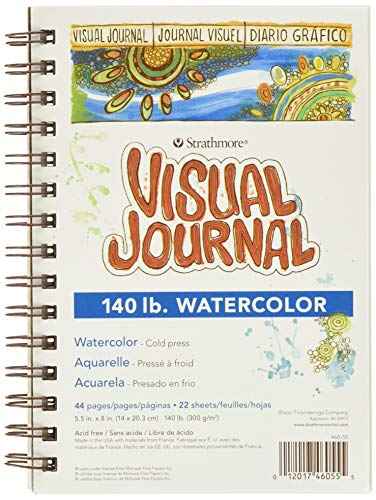
Strathmore Wire Bound Visual Journal
What We Like
- Wire binding lays completely flat
- 140 lb paper handles wet washes
- Acid-free paper resists yellowing
- Compact size for travel or pocket
Trade-offs
- Only 22 sheets limits extended use
- Small 5.5×8 inch page restricts large work
Twenty-two sheets of 140 lb cold press paper give you a textured surface that holds up to watercolor washes without bleeding through. The wire binding lets the journal open flat, so you can work across a spread without fighting a spine. That makes this a natural choice for painters who sketch on location or want a portable studio that tucks into a bag. The acid-free paper also resists yellowing, which matters if you plan to keep these pages as finished pieces.
With only 22 sheets, you will fill this journal faster than a pad that offers 30 or more. The 5.5 x 8 inch format is noticeably smaller than the Canson XL Series Watercolor Pad’s 7 x 10 inch pages.
Product photos
Paul Rubens Watercolor Journal

What We Like
- 100% cotton, acid-free paper
- Heavy 300gsm prevents bleed-through
- Perforated sheets for easy removal
- Built-in storage pocket
Trade-offs
- Only 20 sheets limits long sessions
- Small 5×7 size not for large works
- PU cover less durable than hardbound
Twenty sheets of 100% cotton, 300gsm cold-press paper in a compact 7.5 by 5.1 inch package mean this sketchbook is built for portability and quality, not volume. The heavyweight stock handles wet washes without buckling or bleeding, and the cotton surface lifts color beautifully for layering. It suits the traveling sketcher or painter who wants professional-grade paper in a jacket pocket, not a studio block.
At 20 sheets, you will fill it fast compared to the Canson XL Series pad’s 30 sheets. And while the PU leather cover keeps it light, it lacks the rigidity of a hardbound book if you need a firm painting surface on your lap. For quick studies and on-the-go watercolor, the paper quality justifies the compact size.
Product photos
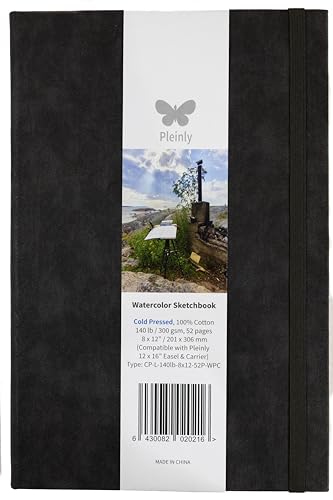
Pleinly Watercolor Sketchbook Journal
What We Like
- 100% cotton for durability and age resistance
- ISO 9706 archival certification
- Lays flat even with heavy water use
- Handles wet-on-wet, masking, and scraping
Trade-offs
- Only 26 sheets limits extended plein-air sessions
- Taping recommended to protect other pages
- Larger 9×12 pads offer more working area
The Pleinly Watercolor Sketchbook Journal uses 100% cotton paper certified to the ISO 9706 archival standard, meaning your washes stay vibrant and your paper won’t yellow or become brittle over decades. Its 300 gsm weight and internal plus external sizing let you pile on wet layers, scrape back highlights, and tape edges without tearing, all while the book stays flat on a table or easel. This is the sketchbook for artists who want their plein-air studies to last as long as their studio work, and who need paper that can handle aggressive techniques without buckling.
With 26 sheets, you’ll fill this book faster than a 30-sheet pad like the Canson XL Series, and at 8×12 inches it’s slightly smaller than the standard 9×12 Arches pad. If you work through sketches quickly or prefer a bigger canvas for sweeping landscapes, those alternatives offer more real estate per sheet. But if archival permanence and cotton fiber performance matter more than sheet quantity, the Pleinly gives you museum-quality paper in a portable hardcover that travels well.
Product photos
Amazon Basics Watercolor Pad

What We Like
- 30 heavy-weight sheets for extended practice
- Acid-free paper for archival longevity
- Cold-press surface suits multiple wet and dry media
- Sturdy chipboard backing and cover for transport
Trade-offs
- 0.7-inch thickness adds some bulk for carrying
- Sheets are not perforated for easy tear-out
Thirty sheets of 140 lb cold-press paper at a generous 9×12 inches mean you can paint, sketch, and experiment for weeks without running out of pages. The acid-free construction ensures your work won’t yellow or degrade over time, which matters if you plan to keep or display finished pieces. This is a pad built for volume practice and exploration, not for a single polished painting.
The pad’s chipboard backing and fold-over cover make it sturdy for studio or classroom use, but the 0.7-inch thickness and 1.6-pound weight mean it’s not the most portable option for a slim bag. Sheets are designed to be removed cleanly from the pad for framing or display, so no special care is needed. For anyone who wants a reliable, no-fuss pad for daily practice, this delivers where it counts.
Product photos
Fuumuui Watercolor Paper Block

What We Like
- 100% cotton paper for vibrant color
- Acid-free for long-lasting artwork
- Glue-bound block with hardboard backing
- Cylinder mold process for uniform fibers
Trade-offs
- Only 22 sheets, fewer than some pads
- Glue binding limits flexibility for single sheets
Twenty-two sheets of 100% cotton cold-pressed paper at 140 lb weight give you the absorbency and texture artists expect from premium watercolor blocks. The cylinder mold process distributes fibers evenly, and the paper offers superior resistance to scratching and erasing when using masking fluids or tapes. Acid-free construction means your work won’t yellow or become brittle over time, making this a practical choice for artists who want cotton paper.
The 22-sheet count is lower than the 30 sheets in the Canson XL Series pad, but the Fuumuui block uses 100% cotton paper, which reviewers say handles wet media without buckling or bleeding. The glue-bound edge keeps each sheet taut while you work, and the hardboard underneath provides a firm painting surface. When a piece is done, individual sheets tear out cleanly with no damage to the edge.
tumuarta Watercolor Sketchbook 100% Cotton

What We Like
- 100% cotton for heavy washes
- Lays flat for two-page spreads
- Round corners prevent paper cuts
- Rubber band closure for travel
Trade-offs
- Small 5×7.5 inch size limits large compositions
- Only 24 sheets, fewer than some competing pads
A 300 GSM 100% cotton cold-press surface in a compact 7.5×5 inch hardbound journal means you can paint wet washes on the go without worrying about buckling or bleed-through. The heavy weight of the paper allows it to be worked on without warping, providing a stable surface for artists. The lay-flat binding lets you work on two-page spreads smoothly, while the rubber band closure keeps sketches safe during transit.
At just 5 inches wide, you won’t be painting large landscapes or full-sheet studies here. The Arches Aquarelle Travel Pad measures 6×10 inches, offering a larger working area. With 24 sheets, this book has fewer pages than some alternatives, so you may go through it more quickly if you paint often. But if your priority is a compact cotton sketchbook that handles wet media without buckling and closes securely for travel, this one fits that need without extra bulk.
Product photos
How We Evaluated Watercolour Sketchbooks
Our evaluation focused on the specifications that determine a sketchbook’s performance: paper composition, weight, surface texture, and binding. We examined manufacturer data on fiber content (cotton versus cellulose), weight in pounds or grams per square meter, and acid-free or archival certifications. We also looked at expert round-ups from professional artists and studied the patterns in owner feedback about how each pad handles wet media.
Three criteria mattered most. First, paper composition, 100% cotton paper offers the best wet-strength, color brilliance, and archival quality, while cellulose blends are a practical choice for practice. Second, paper weight, 140 lb (300 gsm) paper is the standard for watercolour because it resists buckling under heavy washes. Third, binding and format, glue-bound blocks, wire-bound pads, and hardbound journals each affect how the paper lies flat and how easily you can remove a finished piece.
A research-led evaluation has limits. What we can offer is a clear, fact-based comparison of what each sketchbook promises, so you can make an informed choice.
What To Look For In Watercolour Sketchbooks
The right watercolour sketchbook is a balance of paper quality, portability, and format. Here are the key factors to consider before you buy.
Look for 100% cotton paper for the best wet-strength and color vibrancy. A weight of at least 140 lb (300 gsm) prevents buckling. Choose a format, pad, block, or journal, that matches how you work, whether in the studio or on the go.
Paper Composition: Cotton vs. Cellulose
The fiber content is the single most important factor. 100% cotton paper is made from long, strong fibers that absorb water evenly, hold pigment on the surface for brilliant color, and withstand scrubbing, masking, and multiple washes without pilling. Most premium sketchbooks, like the Arches and Hahnemuhle, use cotton. Cellulose or wood-pulp papers, like the Canson XL, are less expensive and still acid-free, but they will not perform as well with heavy wet techniques.
Paper Weight and Surface Texture
Paper weight is measured in pounds (lb) or grams per square meter (gsm). For watercolour, 140 lb (300 gsm) is the minimum for avoiding buckling. Heavier 300 gsm paper, as found in the Paul Rubens journal, is virtually buckle-proof. Surface texture matters too: cold-press has a slight tooth that holds pigment well, hot-press is smooth for fine detail, and rough has a pronounced texture for granulation effects.
Binding, Portability, and Page Count
- Binding: Wire-bound pads like the Strathmore Visual Journal lay completely flat. Glue-bound blocks hold each sheet tight until you cut it free. Hardbound journals are durable for travel.
- Portability: Compact sizes (5×7, 6×10 inches) fit in a bag for plein-air painting. Larger pads (9×12 inches) give more working room but add bulk.
- Page count: Pads with 30 sheets, like the Canson XL and Amazon Basics, are ideal for practice. Premium cotton pads often have fewer sheets (12 to 26) due to higher material cost.
A good rule: buy the best paper composition you can afford, because the paper affects your results more than any other supply.
Watercolour Sketchbooks Compared
The table below compares the top watercolour sketchbooks by paper composition, weight, binding, and page count so you can see the differences at a glance.
| Product | Paper Weight | Surface Texture | Sheets | Dimensions |
|---|---|---|---|---|
| Arches Watercolor Paper Pad | 140 lb | Cold press | N/A | 9"x12" |
| Canson XL Series Watercolor Pad | 140 lb / 300 gsm | Cold press | 30 | 7×10 in |
| Arches Aquarelle Travel Pad | N/A | Cold press | 15 | 6 x 10 inches |
| Hahnemuhle Collection Watercolor Pad | 300 gsm | Cold pressed | 12 sheets | 9×12 Inches |
| Strathmore Wire Bound Visual Journal | 140 lb | Cold Press | 22 sheets | 5.5 X 8 inches |
| Paul Rubens Watercolor Journal | 300gsm / 140lb | Cold Press | 20 | 7.24 * 5.12 Inches |
| Pleinly Watercolor Sketchbook Journal | 140 lb / 300 gsm | Cold Press | 26 | 8 × 12 inches |
| Amazon Basics Watercolor Pad | 140 lb / 300 gsm | Cold-press textured | 30 sheets | 9"x12" |
| Fuumuui Watercolor Paper Block | 140 lb / 300 gsm | Cold pressed | 22 | 9×12 Inch |
| tumuarta Watercolor Sketchbook 100% Cotton | 300 GSM / 140 lb | cold press | 24 sheets | 7.5 x 5 inches |
Frequently Asked Questions
What is the best paper for watercolour painting?
100% cotton paper is widely considered the best for watercolour because its long fibers absorb water evenly, hold pigment on the surface for bright colors, and withstand repeated washes without tearing or pilling. Arches is the most recognized brand for premium cotton paper.
How much does paper weight matter for watercolour?
Paper weight matters a great deal. A 140 lb (300 gsm) paper is the standard minimum for watercolour because it resists buckling under wet washes. Lighter papers will warp and may require stretching. Heavier papers, like 300 gsm, are nearly buckle-proof.
What is the difference between cold-press and hot-press watercolour paper?
Cold-press paper has a slightly textured surface that holds pigment well and is the most versatile for watercolour. Hot-press paper is smooth, making it ideal for fine detail and ink work, but washes can pool and dry unevenly. Rough paper has a pronounced texture that creates granulation effects.
How many sheets should a watercolour sketchbook have?
For daily practice and experimentation, a pad with 30 sheets offers good value. Premium cotton pads often have fewer sheets (12 to 26) because the paper is more expensive. Travel sketchbooks typically have 15 to 24 sheets to keep the book slim and portable.
Can you use both sides of watercolour paper?
You can use both sides of watercolour paper, but the back side of cold-press paper will have a slightly different texture. For finished work, most artists use only one side. For practice and studies, using both sides is perfectly fine.
The Bottom Line
For artists who want the finest surface for finished watercolour work, the Arches Watercolor Paper Pad is the best choice. Its 100% cotton paper, available in three textures, gives you the durability and color brilliance that serious watercolour demands. Beginners and students on a budget should look to the Canson XL Series Watercolor Pad, which offers 30 acid-free sheets at a practical price.
Travelers and plein-air painters will appreciate the Arches Aquarelle Travel Pad for its rigid backboard and premium cotton sheets, while those who need a truly pocket-sized cotton journal should consider the Paul Rubens Watercolor Journal. If archival quality is your priority, the Pleinly Watercolor Sketchbook Journal carries ISO 9706 certification for age resistance.
The most important buying factor is paper composition. Invest in 100% cotton if your work requires heavy washes, reworking, or archival longevity. For practice and exploration, a quality cellulose pad will serve you well. Match the paper to your purpose, and your watercolours will thank you.
