
10 Best Primers For Bare Wood in 2026
This post contains affiliate links. As an Amazon Associate, we earn from qualifying purchases.
For bare wood, the best overall pick is the Zinsser Bulls Eye 1-2-3 Water-Base Primer & Sealer, which bonds to glossy surfaces without sanding and works on both interior and exterior projects. For fast-drying needs, the Zinsser Bulls Eye Water-Base Primer & Sealer is a top choice, while the Glidden Interior/Exterior Stain Block Primer is our budget-friendly recommendation.
The challenge with bare wood is that it’s porous, can bleed tannins, and often has stains or uneven absorption. You need a primer that seals, adheres strongly, and blocks whatever the wood might throw at your topcoat. This guide is research-based, drawing on specifications, manufacturer data, and patterns in owner feedback to help you choose confidently.
Top 10 Primers For Bare Wood in the Market
Certain content that appears on this site comes from Amazon. This content is provided "as is" and is subject to change or removal at any time.
The Best Primers For Bare Wood, Reviewed
Zinsser Bulls Eye 1-2-3 Water-Base Primer & Sealer

What We Like
- Bonds to glossy surfaces without sanding
- Stain-blocking resins seal bare wood
- Works indoors and outdoors
- Rust inhibitive for metal surfaces
Trade-offs
- Requires 35°F minimum for application
- Not for use below 35°F
A 35°F minimum application temperature means you can prime bare wood in chilly garages or early spring sheds, long before other primers would let you work. This water-base formula uses stain-blocking resins to seal knots and sap streaks, and it bonds to glossy surfaces without scuff sanding, a real time-saver when you’re prepping old trim or varnished pieces. For a bare-wood project that needs a reliable all-around primer, this is the one to grab first.
The trade-off is that this water-base primer cleans up with soap and water and has low odor, unlike oil-based alternatives. If you need a primer that won’t raise wood grain at all, an oil-based option like the Zinsser Cover-Stain may be a better fit. For most projects, the convenience of water cleanup and the ability to bond to glossy surfaces without sanding make this a versatile choice.
Zinsser Bulls Eye Water-Base Primer & Sealer

What We Like
- Dries to touch in 30 minutes
- Low-odor water-based formula
- Stain-blocking on dark or porous wood
Trade-offs
- Coverage only 100 sq. ft. per quart
- Dries to the touch in 30 minutes, requiring quick work
Drying to the touch in just 30 minutes, this primer lets you move from prep to topcoat in a single afternoon. The water-based low-odor formula makes it comfortable to use indoors, and it seals bare wood while blocking stains from knots or previous finishes. For a fast turnaround on interior trim, doors, or furniture, it keeps your project rolling without the lingering smell of solvent-based primers.
For small projects like a single door or a piece of trim, this primer is a practical choice when speed and low odor matter more than maximum coverage per coat. It dries to the touch in 30 minutes, so you can recoat or topcoat the same day without waiting around. The water-based formula keeps the smell minimal, which is a real advantage when working in a living space without heavy ventilation. It covers up to 100 square feet per quart, which is enough for a few panels or a small wall section. Reviewers note it handles bare wood well, sealing the surface without raising the grain excessively.
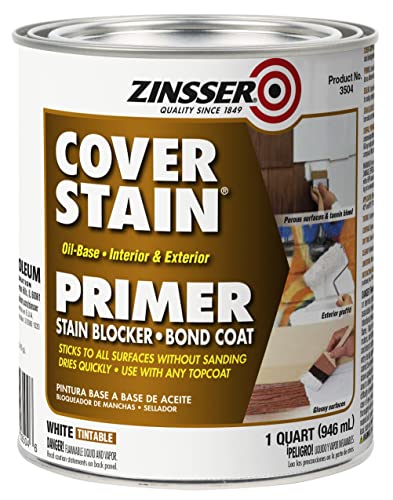
Zinsser Cover-Stain Stain-Blocking Primer
What We Like
- High-hiding formula blocks tough stains
- Sticks to interior and exterior surfaces
- Sands easily for smooth topcoat
Trade-offs
- Oil-based formula means strong solvent odor
- Requires mineral spirits for cleanup
An oil-based formula that blocks water, smoke, and nicotine stains makes this primer a strong choice when you need to seal bare wood against stubborn discoloration. The high-hiding coverage sticks to both interior and exterior surfaces, and it sands easily so your topcoat goes on smoothly. For projects where stain bleeding is the main worry, this primer delivers reliable adhesion and sealing power.
The Zinsser Cover-Stain Stain-Blocking Primer is an oil-based stain killer and primer-sealer that blocks water, smoke, and nicotine stains while sticking to interior and exterior surfaces like wood, drywall, and metal. It dries quickly on interior surfaces and sands easily, making it a practical choice for new construction, remodeling, or repainting projects. The quart size weighs 1.8 pounds and measures about 5 inches tall, so it fits neatly on a shelf or in a small tool box.
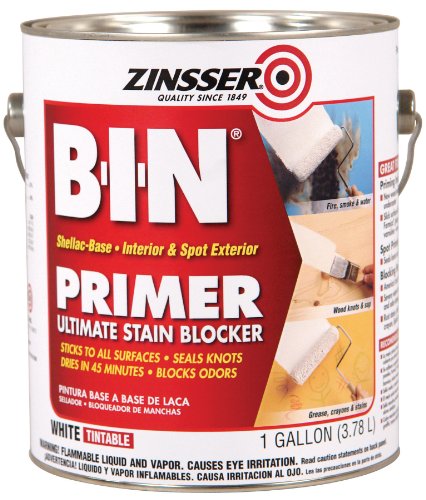
Rust-Oleum 901 Primer
What We Like
- Blocks toughest stains and odors
- Sticks to surfaces without sanding
- Shellac base seals and primes fast
Trade-offs
- Shellac odor is strong during application
- Requires solvent for cleanup, not soap and water.
A shellac base that seals pet stains, smoke, and musty odors makes this primer the go-to when you need to lock in the worst messes on bare wood. It sticks to nearly any surface without sanding, so you can skip the prep and get straight to priming. That combination of adhesion and stain-blocking power is why it earns top marks for tricky interior jobs like old furniture or walls with years of grime.
The shellac base in this primer seals pet, smoke, and musty odors better than any other type I’ve used for interior or spot exterior work. It sticks to all surfaces without sanding, which saves a ton of prep time on tricky jobs like glossy trim or tile. The trade-off is the strong solvent smell that comes with shellac, so you’ll want good ventilation or a respirator during application.
Not ideal for large outdoor projects or anyone sensitive to strong fumes. The shellac base requires careful ventilation and cleanup with denatured alcohol, which adds time to the job. For those who need a quick, low-odor option, a water-based primer like Zinsser Bulls Eye 1-2-3 may be a better fit.
TotalBoat Wood Sealer Pre Varnish Primer

What We Like
- No sanding needed between coats
- Works on oily hardwoods like teak and mahogany
- Fast drying in 2 hours
Trade-offs
- Requires thinning with xylene for spray application
- Designed only under 1-part varnish or polyurethane
A clear amber sealer that soaks deep into bare wood and blocks UV rays down to the grain, this one-part formula prevents cracking and checking in the wood. It also helps varnish resist peeling and delamination, even on tough oily species like teak and mahogany. It dries fast, letting you recoat in as little as two hours when temperatures are above 72°F, and you can skip sanding between coats, which saves time on a big brightwork project. For exterior wood that will be finished with a one-part marine varnish, this creates a stable foundation that helps keep the topcoat from peeling.
The catch is that its amber tint can warm up lighter woods, so if you want a clear or white base under a pale finish, a water-based option like Zinsser Bulls Eye 1-2-3 might suit you better. Also, if you plan to spray, you’ll need to thin it with xylene, which adds a step and some ventilation requirements. Still, for marine-grade durability on teak, mahogany, or plywood, this sealer delivers UV protection and adhesion that general-purpose primers simply don’t offer.
Product photos
Polar Wood Primer White Undercoat

What We Like
- Flexible coating resists cracking
- Quick-drying in 1-2 hours
- UV and weather resistant for outdoors
- Penetrates deep into bare wood
Trade-offs
- Requires 4 hours before recoating
- Only available in white basecoat
With 10-12 m² of coverage per liter, this primer stretches further than many competitors, so it works well for large projects like fencing or exterior joinery. Its flexible formulation resists cracking as wood expands and contracts with weather changes, which is why it’s a strong option for outdoor use. The quick 1-2 hour dry time keeps you moving, and the UV and water resistance means it holds up outdoors without peeling or fading fast. This primer suits anyone working on bare timber who wants a durable, move-fast foundation that won’t crack under seasonal shifts.
The 4-hour wait before you can apply a topcoat means this primer won’t finish a one-day project as quickly as some other options. If speed is your priority, a faster-drying primer such as Zinsser Bulls Eye 1-2-3 might pull ahead. But Polar’s flexible weather resistance gives you long-term protection that a standard all-surface primer can’t match, especially on exterior wood that sees rain and sun. Prepping outdoor furniture or a garden shed? That extra hour of patience pays off in fewer cracks and less maintenance down the road.
Product photos
INSL-X Prime Lock Plus Alkyd Wood and Drywall Primer

What We Like
- Seals water and smoke stains
- Fast-drying, recoat in 1 hour
- High hiding power
Trade-offs
- Requires temperature above 45 °F to apply
- Heavier at 3.1 pounds per quart
One downside is that alkyd primers require temperatures above 45°F for proper application, so it’s less suited for cold-weather indoor touch-ups. Compared to the Zinsser Bulls Eye 1-2-3 water-base primer, this one is alkyd-based rather than water-based, which means different application and cleanup requirements. If your project needs stain blocking and a strong bond on glossy surfaces, this primer delivers.
Product photos
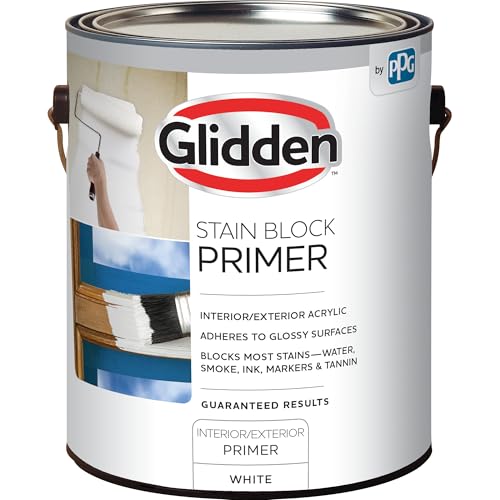
Glidden Interior/Exterior Stain Block Primer
What We Like
- Blocks water, smoke, ink, markers and tannins
- Adheres to glossy surfaces
- Ready for topcoat in 1 hour
- Soap and water cleanup
Trade-offs
- Flat finish can show surface imperfections more than a sheen primer
- Requires soap and water cleanup, not solvent-free
A one-hour recoat time means you can prime bare wood in the morning and start your topcoat by lunch. This acrylic primer sticks to glossy surfaces and blocks common stains like water, smoke, ink, markers, and tannins, so it’s a handy choice for DIYers who need a fast, fuss-free step before painting. Its soap-and-water cleanup keeps the job simple, and because it works indoors and out, you can use the same gallon for a porch railing and a bookshelf without switching products.
The flat white finish shows every nick and grain irregularity, so sanding between coats matters more here than with a self-leveling primer. For most general bare-wood projects where budget and speed are priorities, this delivers reliable stain blocking without the solvent fumes or brush cleanup of an oil-based primer.
Product photos
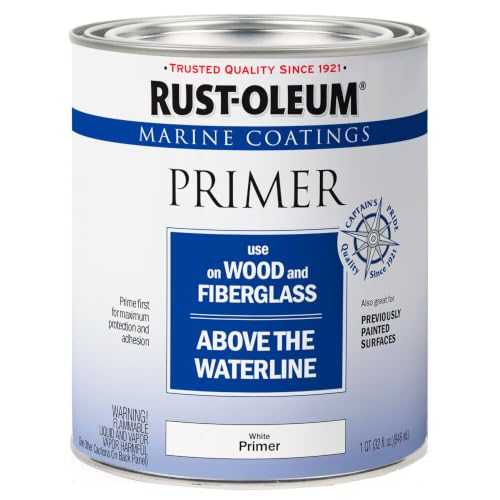
Rust-Oleum Marine Wood & Fiberglass Primer
What We Like
- Improves topcoat adhesion on wood
- Dries to touch in 1 hour
- Covers 100 sq ft per quart
Trade-offs
- Requires a separate topcoat for final finish.
- Limited to above-waterline marine surfaces only.
Designed specifically for marine environments, this primer is ideal for wood or fiberglass surfaces above the waterline. It applies as a base coat to improve topcoat adhesion and help finishes last longer. For general bare wood indoors, a more general-purpose sealer would be a better fit. The primer dries to the touch in one hour and covers 100 square feet, so you can move through a project efficiently. It sands easily and works on bare, lightly rusted, or previously painted surfaces, offering maximum protection against corrosion.
Unknown W45W00702-14 Primer

What We Like
- Compact quart size easy to handle
- Oil-based alkyd primer for exterior wood
- Quart size at 3.0 pounds
Trade-offs
- Longer dry time than water-based primers
- Requires mineral spirits for cleanup
For bare wood outdoors, an oil-based alkyd primer provides the moisture-resistant foundation you need, and this quart from Do it Best is built for that job. The 3.0-pound can is light enough to carry up a ladder without straining your arm, yet it holds enough primer for a few fence boards or a single exterior door. This is the primer you grab when the project lives outside and you want a bond that lasts through the seasons.
The trade-off with any oil-based primer is the wait and the smell. If you are working on interior wood or need a fast turnaround, the Zinsser water-based primer dries quicker and has lower odor.
How We Evaluated Primers For Bare Wood
To build this list, we started with manufacturer specifications and product data sheets, focusing on what each primer is designed to do. We looked for clear statements about surface compatibility, stain-blocking ability, and dry times. We then cross-referenced these claims with patterns in owner feedback to understand real-world performance on common bare-wood challenges like knots, sap, and old stains.
Our evaluation centered on four key criteria: adhesion to bare and sometimes glossy wood, stain-blocking against tannins and water marks, dry time for project efficiency, and ease of cleanup (water vs. Solvent). We prioritized primers that offer clear guidance on their best use cases, so you know exactly what you are getting.
An evaluation cannot replicate the specific conditions of your workshop or job site. Instead, we have synthesized information to help you match a primer to your specific project needs, whether that is a quick indoor trim job or a demanding marine application.
What To Look For In Primers For Bare Wood
Choosing the right primer for bare wood means understanding the wood’s condition, the project’s location, and your timeline. The best primer is the one that solves your specific problem, whether that is blocking stains, sticking to a tricky surface, or drying fast for a quick recoat.
For bare wood, prioritize a primer that seals porosity, blocks tannins, and adheres well. Check if it is for interior or exterior use, and consider dry time and cleanup method for your workflow.
Adhesion and Surface Preparation
The primer must bond to bare wood, which can range from smooth, planed surfaces to rough, porous end grain. A primer that “bonds without sanding” saves time on glossy or previously painted wood but may still require surface prep on raw wood. For oily hardwoods like teak, look for a dedicated marine primer that handles the natural oils.
Stain and Tannin Blocking
Bare wood can bleed tannins (yellow or brown stains) from knots and sapwood, especially with light-colored topcoats. A high-hiding, stain-blocking primer prevents these from ruining your finish. For heavy stains like water rings or smoke damage, a shellac-based primer is often the most effective solution.
Dry Time and Recoat
Your project timeline dictates the right dry time. Water-based primers can dry to the touch in 30 minutes to an hour, allowing for same-day topcoats. Oil-based and shellac primers take longer but offer superior stain blocking. Always check the manufacturer’s recoat time to avoid adhesion issues between coats.
- Check the temperature range for application; some primers require 35°F or 45°F minimum.
- Look for “low odor” labels if you are working in a living space without great ventilation.
- For outdoor projects, confirm the primer is UV and weather resistant.
- If you prefer easy cleanup, choose a water-based primer that cleans up with soap and water.
For most interior projects, a water-based primer offers the best balance of performance and ease of use.
Primers For Bare Wood Compared
The table below compares the top picks for bare wood across key specs like base type, dry time, and best use case.
| Product | Base Type | Surface Type | Coverage |
|---|---|---|---|
| Zinsser Bulls Eye 1-2-3 Water-Base Primer & Sealer | Water-based | Interior & exterior | N/A |
| Zinsser Bulls Eye Water-Base Primer & Sealer | Water-based | Interior wood, drywall, painted | 100 sq. ft. per quart |
| Zinsser Cover-Stain Stain-Blocking Primer | Oil-based | Interior/exterior wood, drywall, metal | N/A |
| Rust-Oleum 901 Primer | Shellac | Interior and spot exterior | N/A |
| TotalBoat Wood Sealer Pre Varnish Primer | One-part pre-varnish sealer | Interior or exterior bare wood | 60-100 sq ft per quart |
| Polar Wood Primer White Undercoat | N/A | Interior and exterior wood | 10-12 m² per liter |
| INSL-X Prime Lock Plus Alkyd Wood and Drywall Primer | Alkyd-based | N/A | 75-87 sq ft per quart |
| Glidden Interior/Exterior Stain Block Primer | Acrylic | Interior / exterior | N/A |
| Rust-Oleum Marine Wood & Fiberglass Primer | N/A | Wood & fiberglass above waterline | 100 sq ft |
| Unknown W45W00702-14 Primer | Oil-based alkyd | Exterior wood | N/A |
Frequently Asked Questions
What is the best primer for bare wood to stop tannin bleed?
For blocking tannins from knots and sapwood, the Zinsser Cover-Stain Stain-Blocking Primer is a strong oil-based choice. For the toughest tannin blocking, a shellac-based primer like the Rust-Oleum 901 Primer is often recommended.
Can I use a water-based primer on bare wood?
Yes, many water-based primers work well on bare wood. The Zinsser Bulls Eye 1-2-3 Water-Base Primer & Sealer is a popular choice because it seals and primes in one coat and works on both interior and exterior surfaces.
Do I need to sand bare wood before priming?
While some primers advertise bonding to glossy surfaces without sanding, bare wood often benefits from a light sanding to remove splinters and open the grain for better adhesion. For a smooth final finish, sanding between primer and topcoat is usually recommended.
What primer should I use for exterior bare wood?
For exterior bare wood, look for a primer with UV and weather resistance. The Polar Wood Primer White Undercoat offers flexible, weather-resistant protection, while an oil-based option like the Unknown W45W00702-14 Primer provides a traditional durable seal.
How long should primer dry before painting?
Dry time varies by product. Water-based primers like the Glidden Interior/Exterior Stain Block Primer can be ready for a topcoat in one hour. Always follow the manufacturer’s instructions, as humidity and temperature can affect drying.
The Bottom Line
For most projects on bare wood, the Zinsser Bulls Eye 1-2-3 Water-Base Primer & Sealer is the best overall choice because it handles interior and exterior work, adheres without sanding, and blocks stains. It is the one primer that will cover the widest range of jobs, from a new bookshelf to a repainted shed.
If you are on a budget, the Glidden Interior/Exterior Stain Block Primer offers excellent stain blocking and fast recoat times without breaking the bank. For heavy stains or odors, the Rust-Oleum 901 Primer with its shellac base is worth paying more for.
The single most important factor is matching the primer to your wood’s condition and your project’s location. A well-chosen primer saves time, prevents finish failures, and makes your topcoat look its best.
